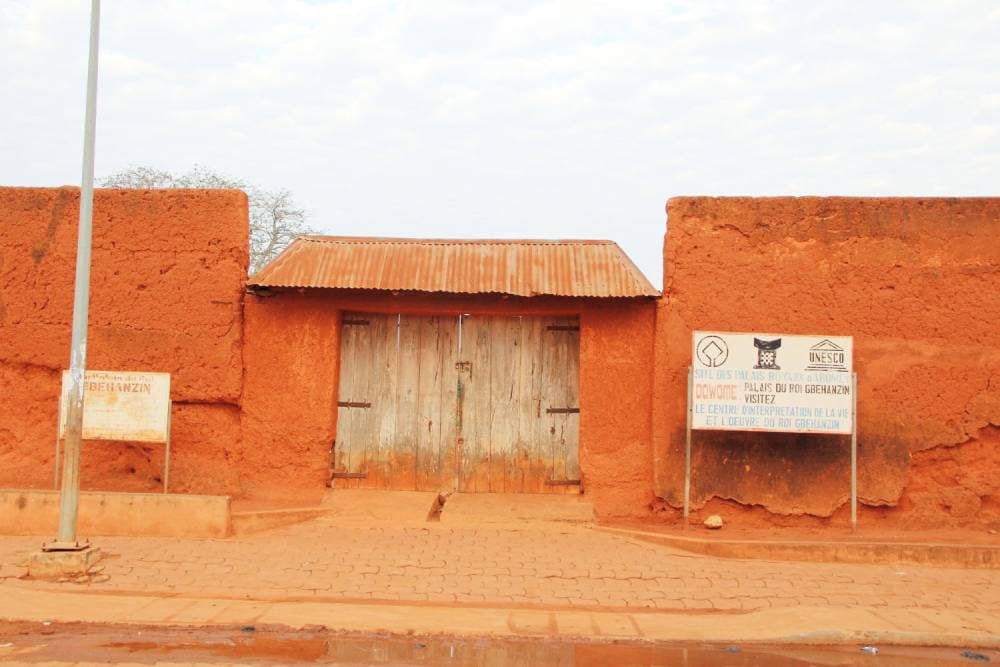
The Kingdom of Dahomey, located in present day Benin in West Africa, stands among the most fascinating civilizations in African history. For more than two centuries, its rulers built a powerful state, organized around a centralized monarchy, a feared army, and a rich culture that continues to shape Benin’s identity today.
At the heart of this history lies Abomey, the former royal capital of Dahomey. It is here that the famous Royal Palaces of Abomey rise, listed as UNESCO World Heritage, majestic witnesses to the power and political genius of this kingdom.
In Abomey, history is not only read in books it is felt in the walls, the symbols, and the living traditions.
With Kiblistours, you don’t just discover history, you live it at the very sites where it was written.
The Royal Palaces of Abomey: A Unique World Heritage
The Royal Palaces of Abomey form one of the most remarkable historical complexes in Africa. Built between the 17th and 19th centuries, they were for nearly three centuries the political, administrative, and spiritual center of the Kingdom of Dahomey.
Each king built his own palace, creating a vast architectural complex that tells the story of the kingdom’s evolution across generations. This exceptional site is distinguished by:
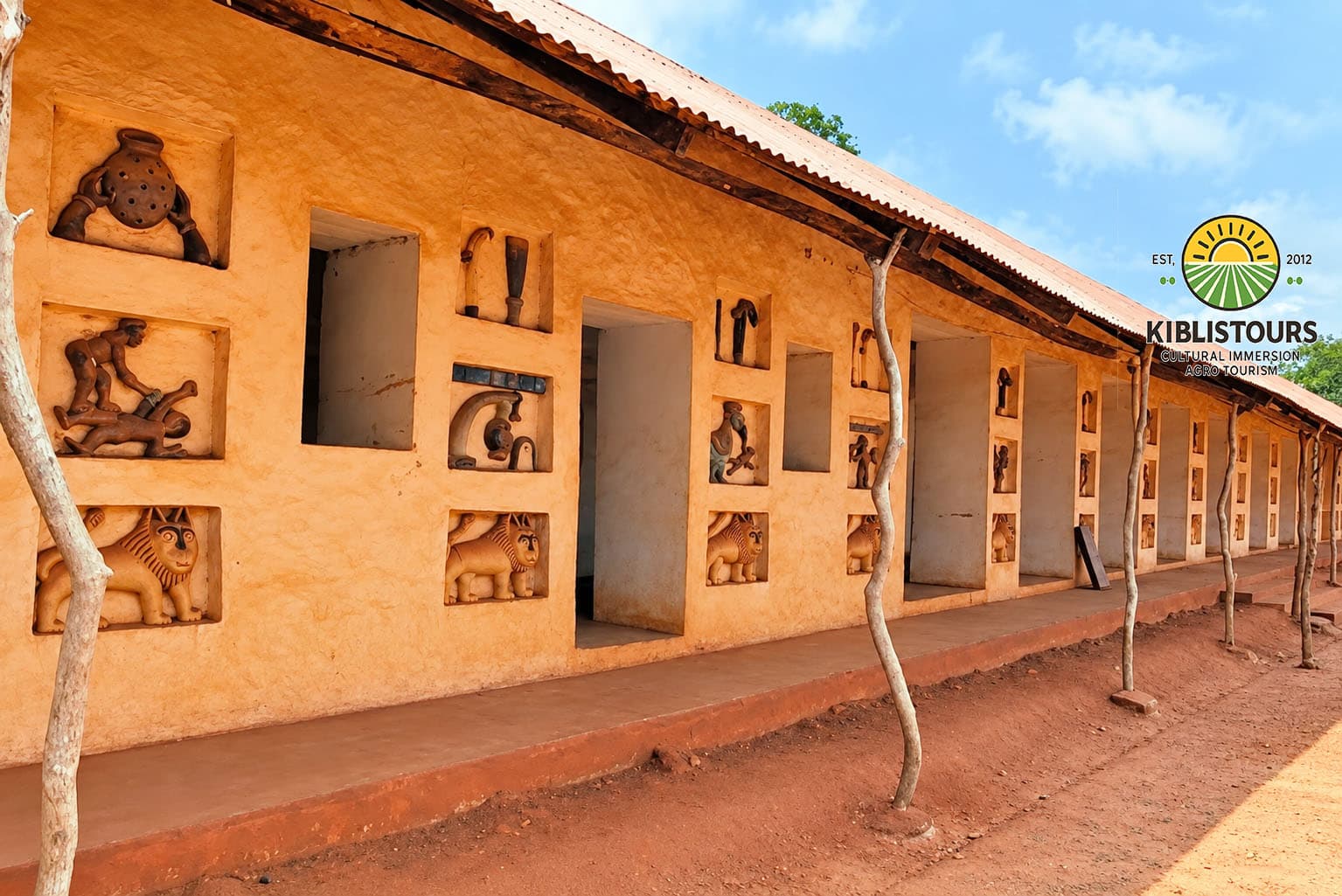
Historical bas-reliefs: The palace walls are decorated with sculpted earthen bas-reliefs, depicting royal symbols, battles, beliefs, and the exploits of rulers. These are true visual archives of Dahomey’s history.
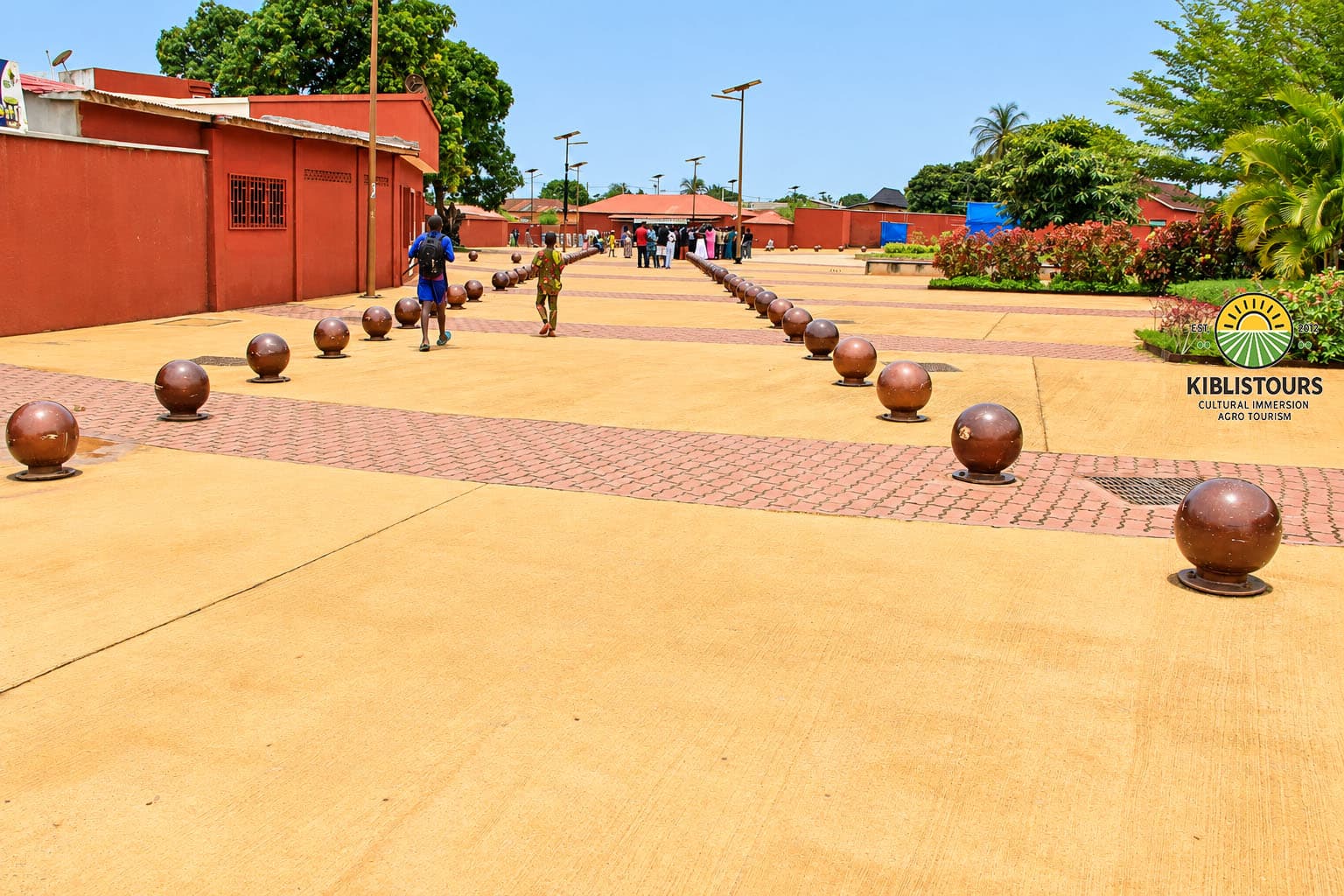
Unique royal architecture: The palaces are organized around large ceremonial courtyards, where royal audiences, sacred rituals, and political ceremonies took place. This layout reflects the power and sophistication of the Dahomean state.
UNESCO World Heritage status: The Royal Palaces of Abomey are inscribed for their outstanding universal value and their major role in West Africa’s political and cultural history.
In Abomey, every wall tells a story and every symbol reveals a fragment of Dahomey’s memory.
The Kings of Dahomey: Builders of a Powerful Kingdom
Over the centuries, several rulers left their mark on Dahomey’s history through political vision, courage, and strategic skill.
Houegbadja (17th century): Founder of the kingdom, Houegbadja established the political and administrative foundations of Dahomey and made Abomey its capital. He laid the groundwork for a centralized state that became one of West Africa’s most powerful.
Agaja (1718-1740): A conquering king and strategist, Agaja greatly expanded Dahomey’s territory and developed trade relations with coastal regions, strengthening the kingdom’s economic influence.
Ghézo (1818-1858): Considered one of Dahomey’s greatest rulers, Ghézo modernized the army, consolidated administration, and reinforced the kingdom’s regional power.
Glèlè (1858-1889): Under Glèlè, Dahomey’s traditions and arts flourished. He helped preserve the institutions and rites that structured Dahomean society.
Béhanzin (1889-1894): The last independent king of Dahomey, Béhanzin became a symbol of African resistance against French colonial conquest. His courage and determination continue to inspire generations.
These rulers shaped a kingdom whose cultural and historical legacy remains one of Africa’s richest.
The Amazons of Dahomey: The Legendary Female Army
Among Dahomey’s most famous symbols were the Amazons, an army composed exclusively of women warriors. Known for their discipline, bravery, and loyalty to the king, they were one of the most feared military forces in the region.
The Amazons stood out for:
rigorous military training
exceptional discipline
remarkable courage on the battlefield
Even today, their story inspires films, historical research, and cultural works worldwide, helping spread Dahomey’s legacy far beyond Africa.
Abomey Today: A Living Memory
Today, Abomey remains one of Benin’s most important historical and cultural centers. Visitors can discover:
the Historical Museum of Abomey, housed in the former royal palaces
the bas-reliefs and symbols of the kings of Dahomey
cultural and spiritual traditions inherited from the kingdom
Every visit to Abomey is an immersion into a heritage that continues to live through stories, ceremonies, and local traditions.
Kiblistours: Living the History of Dahomey
With Kiblistours, exploring Abomey becomes a profound and authentic cultural experience. Our tours allow you to :
explore the Royal Palaces of Abomey with guides passionate about history
meet guardians of traditions and local storytellers
understand the symbols and narratives of the Kingdom of Dahomey
Each journey becomes a living encounter with the history and soul of Benin.