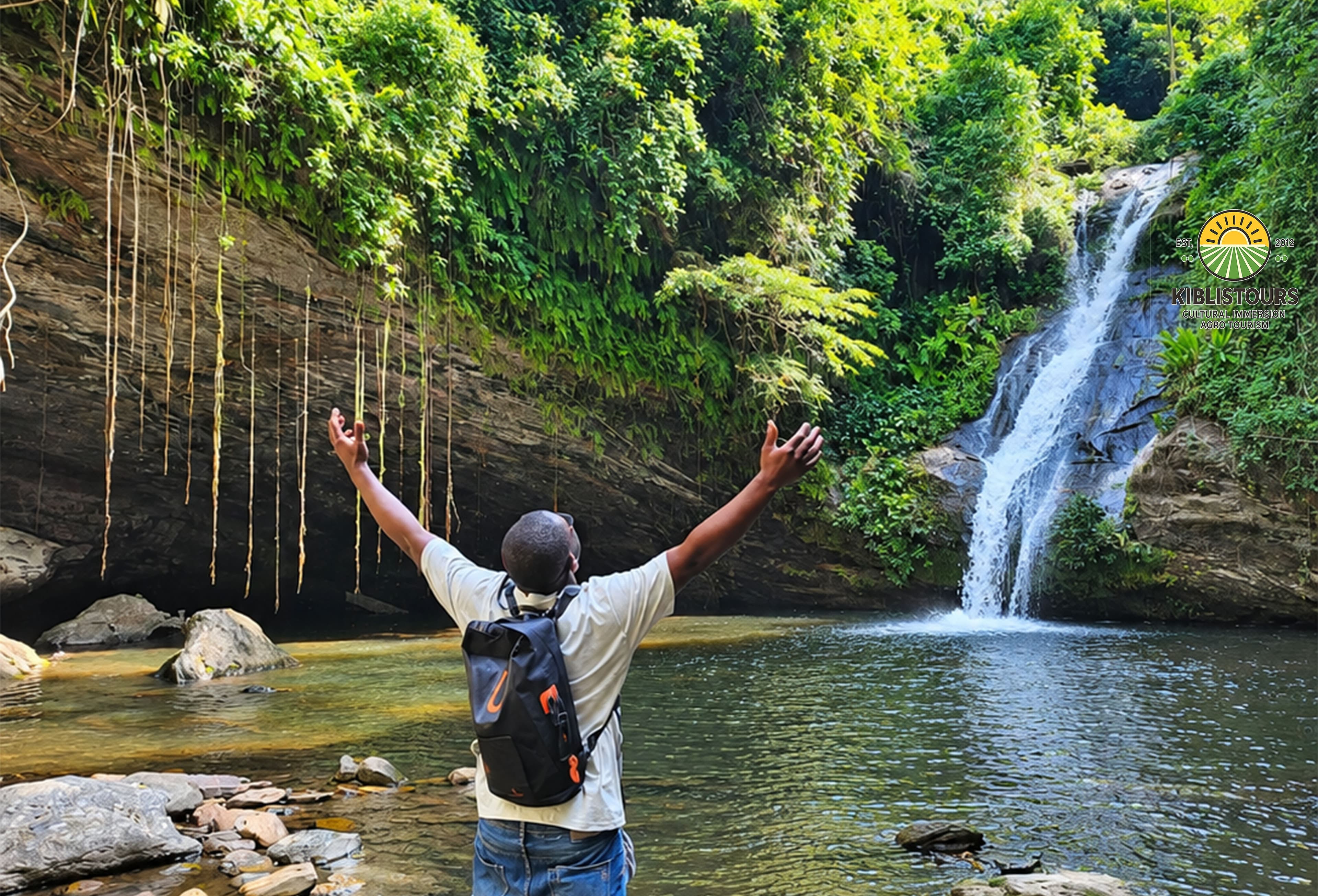
In the morning, Accra awakens to the lively rhythm of bustling markets and car horns. A few days later, you could find yourself standing before the walls of Cape Coast Castle, where the history of the transatlantic slave trade commands silence. Further inland, Kakum's suspended walkways take you high above a dense tropical forest. At Wli, the thunder of a waterfall announces the mountains long before they come into view.
Ghana does not offer just one experience: it opens the door to many different worlds.
For a first visit, the challenge is not to see everything, but to choose destinations that complement one another: history and creativity, city life and nature, guided discoveries and meaningful encounters.
Here are fifteen carefully selected places and experiences, along with practical advice to help you plan a rewarding, well-balanced and respectful journey.
15 Must-Visit Places and Experiences in Ghana
1. Accra: Experience the Energy of Ghana's Capital
Black Star Square | Mustseespots.com
Gender Gaps and Structural Transformation in a New Development Era | Center For Global Development
Jamestown Lighthouse | Accra, Ghana | Attractions - Lonely Planet
7
From Black Star Square and the Kwame Nkrumah Memorial Park to the streets of Jamestown and the bustling Makola Market, Accra sets the tone for your Ghanaian adventure. Colourful fabrics, lively conversations and distinctive architecture reveal a capital city that is both deeply rooted in history and confidently modern.
The Experience Not to Miss
Start with a guided heritage tour, followed by a visit to a local market and a traditional Ghanaian meal. Exploring the city's lively neighbourhoods with a knowledgeable guide makes it easier to connect with local people and understand their everyday lives.
Practical tip: Allow one to two days and start early for outdoor sightseeing.
Discovering Accra, Neighbourhood by Neighbourhood
To truly understand Accra, you need to embrace its contrasts.
In the business districts, modern buildings reflect the ambitions of a growing regional metropolis. In Jamestown, historic façades, streets and harbour activities evoke different chapters of the city's past.
A walking tour does not need to cover everything. It becomes more meaningful when organised around a particular theme, such as Ghana's independence, urban art or commercial life.
Visitors gradually discover that Accra is much more than its monuments and traffic. It is a collection of neighbourhoods, traditions, activities and memories that deserve genuine attention.
For an authentic encounter, take time to meet an artisan, restaurant owner or cultural guide willing to share insights into their work.
Ask questions about materials, techniques and how their professions have evolved, rather than focusing solely on taking photographs.
At the market, stay with your guide, ask permission before photographing stalls and keep your personal belongings close.
The quality of your first day depends less on the number of attractions visited than on the depth of the experiences you enjoy.
When planning your visit, consider traffic conditions and the heat.
An early start makes walking tours more comfortable, while a midday break provides an opportunity to enjoy Ghanaian cuisine without rushing.
Towards the end of the day, a peaceful setting allows you to reflect on your discoveries and prepare for the next stage of your journey.
A successful first day should help you find your bearings, not leave you exhausted.
Who is it for? Travellers who want to understand contemporary Ghana before exploring the country's other regions.
2. Cape Coast Castle: Confronting a Painful Past
Cape Coast Castle - Pivot Consults Ltd.
Cape Coast: A city of history, life and magnificent beaches
9
Reference: UNESCO, Forts and Castles of Ghana — https://whc.unesco.org/en/list/34/
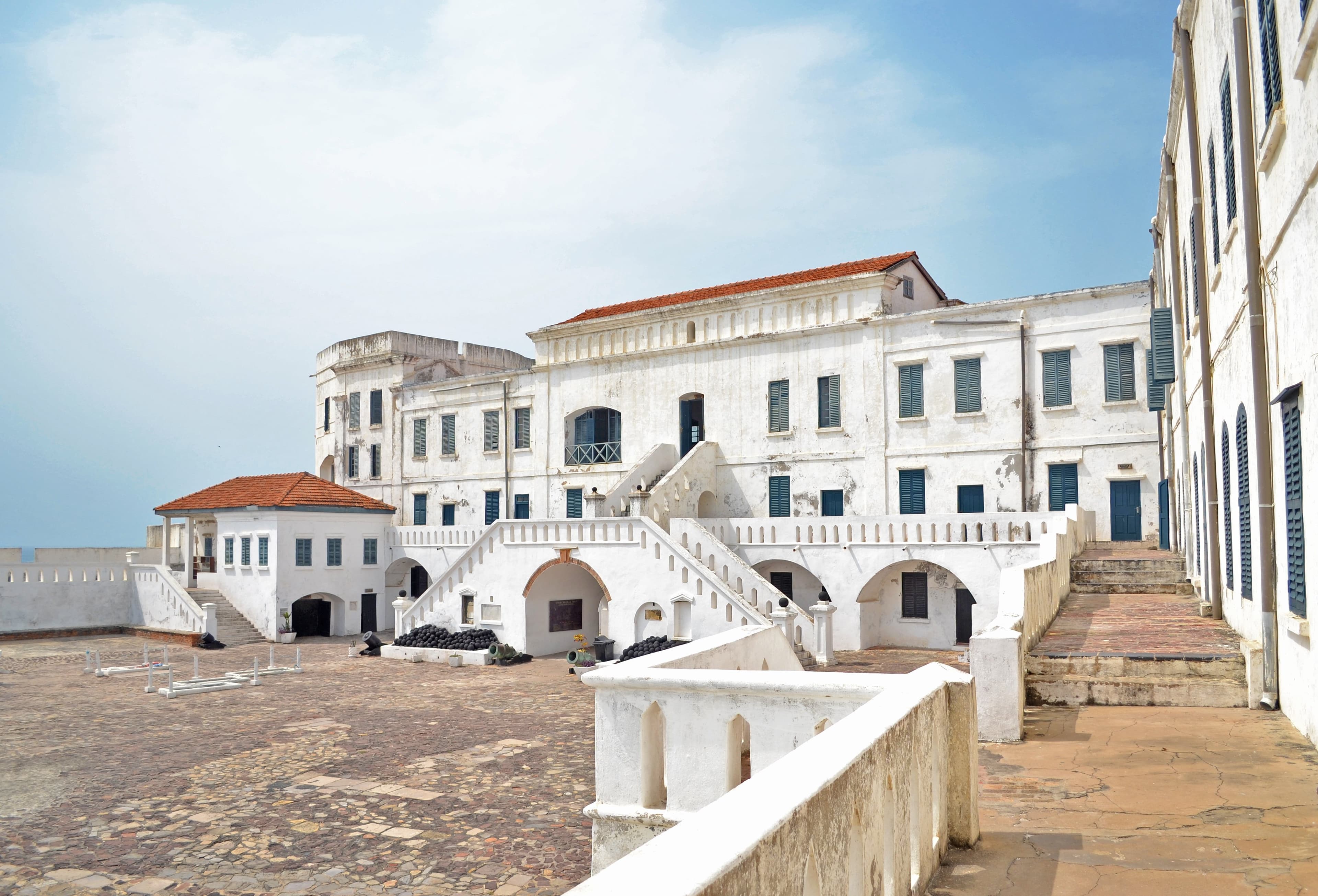
Behind the white walls of this historic fortress, the dungeons and detention chambers bear witness to the role Ghana's coastline played in the transatlantic slave trade.
This is not a place for casual sightseeing. It calls for reflection, sensitivity and a willingness to engage with history.
The Experience Not to Miss
Choose a guided tour, ask questions about the commercial systems and human experiences of the period, and allow yourself time for quiet reflection afterwards.
Practical tip: Allow approximately two hours and approach the visit with respect.
Understanding the Site Before Photographing It
Cape Coast Castle requires a particular kind of attention.
Beyond its fortified architecture lie stories of imprisonment, dehumanisation and the forced crossing of the Atlantic.
A guided tour provides historical context and explains the responsibilities of those involved, but it can also evoke difficult emotions.
There is no need to turn this experience into a conventional tourist activity.
You can listen, ask questions, remain silent and take the time you need to understand.
For some members of the African diaspora, the site carries a deeply personal significance. Other visitors encounter a history whose consequences remain visible across the world today.
The experience becomes more meaningful when visitors distinguish between the different periods of coastal trade, the expansion of the transatlantic slave trade and the fortress's subsequent transformations.
The language used also matters.
It is preferable to speak of enslaved African people rather than defining individuals solely by the condition imposed upon them.
Your guide can also explain why Ghana's coastal forts and castles are collectively recognised as a UNESCO World Heritage Site.
Allow some quiet time after the tour.
Moving immediately from such an emotionally significant visit to a festive activity may feel inappropriate.
A walk through Cape Coast or a thoughtful conversation over a meal can help place this history within the wider story of the city and its present-day life.
Who is it for? Visitors who wish to reflect on and honour the memory of those affected by the transatlantic slave trade.
3. Elmina: Castle, Fishing Harbour and Living Heritage
Elmina Castle, Elmina - Book Tickets & Tours | GetYourGuide
7
Reference: UNESCO, Forts and Castles of Ghana — https://whc.unesco.org/en/list/34/
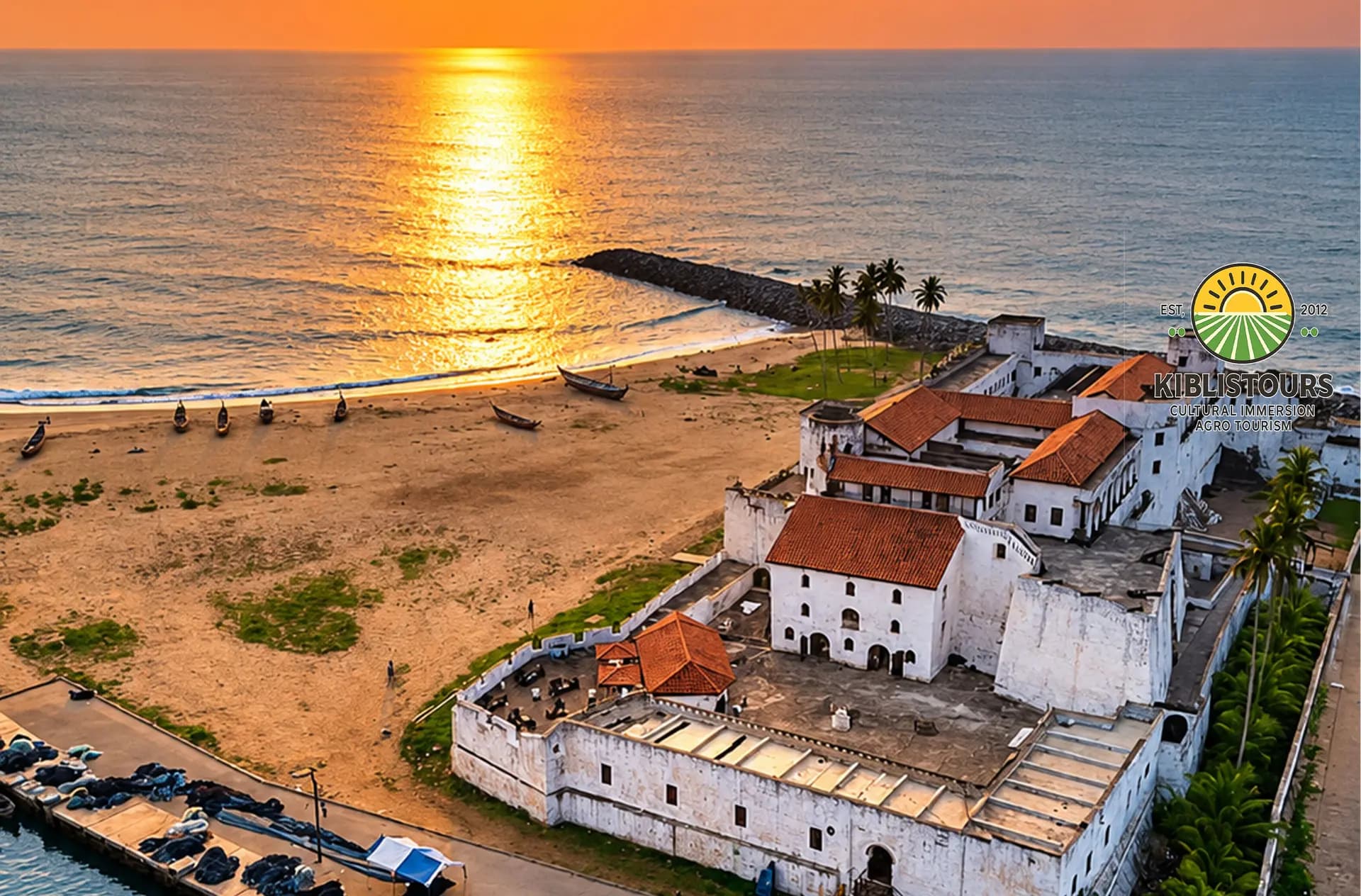
Built by the Portuguese in 1482, St George's Castle in Elmina overlooks a coastline where colourful fishing canoes remain an essential part of everyday life.
The striking contrast between the historic fortress and the bustling fishing harbour makes Elmina a particularly memorable destination.
The Experience Not to Miss
Combine a historical tour of the castle with an opportunity to observe harbour activities from designated areas.
Avoid disrupting the fishermen's work and always seek permission before photographing people.
Practical tip: Allow half a day to a full day. Elmina can easily be combined with a visit to Cape Coast.
Between Historic Fortress and Maritime Economy
Elmina is a destination where several histories intersect without becoming indistinguishable.
The fortress recalls the establishment of early permanent European settlements along this part of the coast and the development of commercial exchanges that gradually became intertwined with the slave trade.
Nearby, the fishing harbour reflects a contemporary world shaped by hard work, traditional knowledge and economic challenges.
The colourful boats are visually striking, but they are not simply picturesque attractions.
They belong to fishing crews whose schedules and working practices are determined by the demands of their profession.
A responsible visit may involve observing activities from authorised viewpoints, followed by conversations facilitated by a guide familiar with the local fishing community.
How is the work divided among crew members? How are the catches sold? What changes have fishermen noticed over the years?
Such questions add depth to the experience without pretending to represent the lives of an entire community.
Any purchases should be negotiated respectfully and without interfering with daily activities.
A morning visit may offer a livelier harbour atmosphere, depending on fishing schedules and weather conditions.
Plan a break between visiting the castle and exploring the harbour so that each experience receives the attention it deserves.
Who is it for? Travellers interested in discovering the relationship between historical heritage and a thriving maritime economy.
4. Kakum National Park: Walking Above the Rainforest
Ghana GeoGuessr 辨識攻略 | MapSensei 中文攻略
Voyage Afrique de l'ouest : A la découverte du Togo & du Ghana - Nomade Aventure
Tropical Forest of Kakum National Park, Ghana
8
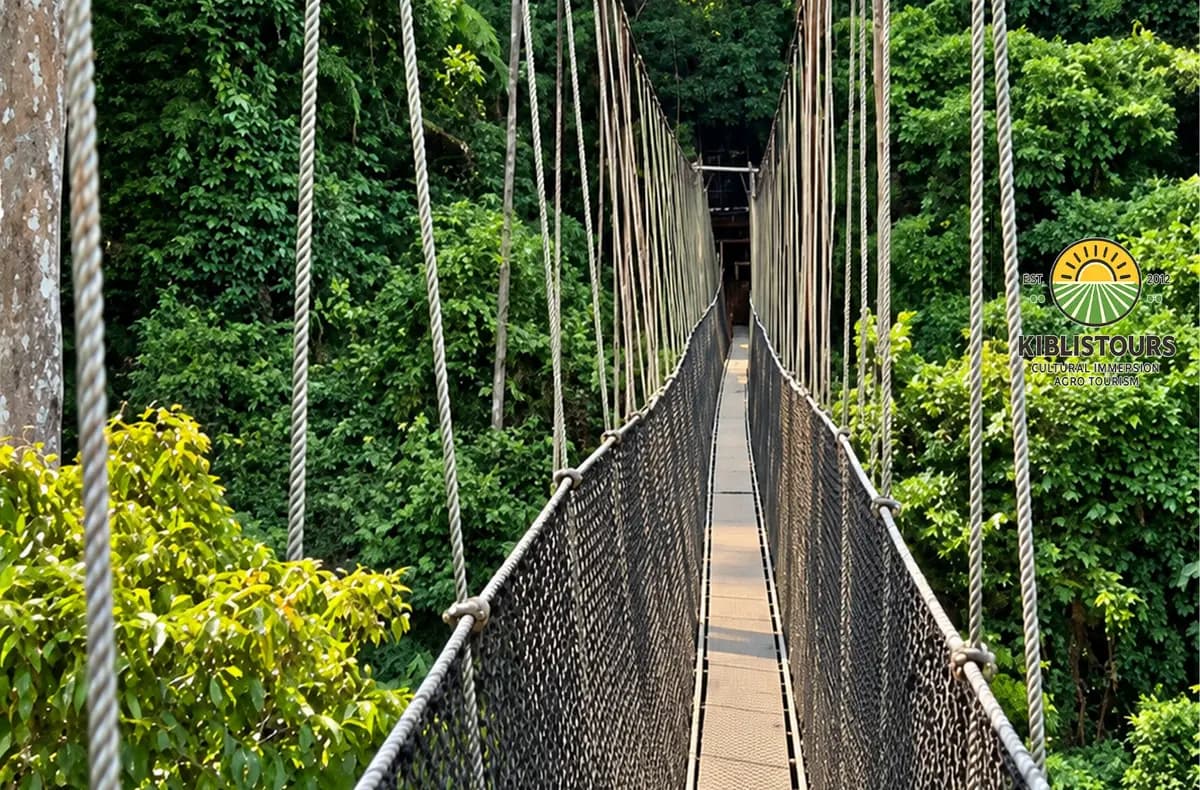
On the suspended canopy walkways of Kakum National Park, the forest takes on an entirely different perspective.
Towering tree trunks, twisting vines and dense foliage form a remarkable green mosaic.
The sounds of the rainforest accompany every step, while wildlife often remains hidden among the vegetation.
The Experience Not to Miss
Experience the famous canopy walkway and, where available, join a guided nature walk.
Wildlife sightings are never guaranteed.
Practical tip: Allow two to four hours. The suspended walkways may not be suitable for visitors with a strong fear of heights.
Discovering the Rainforest Through Your Senses
At Kakum, the experience goes far beyond the excitement of crossing suspended bridges.
The rainforest can also be explored from ground level, where visitors encounter dense vegetation, climbing vines, humid air, insect sounds and constantly changing light.
A knowledgeable nature guide can explain how species interact, the ecological importance of the forest canopy and the challenges of biodiversity conservation.
Wild animals may remain difficult to spot, but this does not diminish the value of the visit.
Instead, it reminds us that a rainforest is not a wildlife exhibition where encounters can be scheduled.
The canopy walkway requires strict adherence to safety instructions and careful consideration of each visitor's comfort with heights.
Children and adults who feel uncomfortable should never be pressured to continue.
Alternative ground-level activities may be discussed with park staff when available.
Closed-toe shoes and drinking water will make the experience more comfortable.
Arriving early often provides a quieter atmosphere.
Avoid shouting, leave no litter and never remove plants or animals from the forest.
Combining Kakum with the historic castles of Ghana's Central Region creates a powerful balance.
After exploring the country's human history, travellers discover another essential dimension of Ghana's heritage: its natural ecosystems.
Who is it for? Nature enthusiasts, rainforest lovers and travellers comfortable exploring elevated walkways.
5. Kumasi: Discovering the Heritage of the Asante Kingdom
View to Besease Traditional Asante Shrine at,Ejisu, Kumasi, Ghana
7
Reference: UNESCO, Asante Traditional Buildings — https://whc.unesco.org/en/list/35/
In Kumasi, the history of the Asante Kingdom lives on through traditional institutions, artistic expression and skilled craftsmanship.
The Manhyia Palace Museum and workshops in the surrounding area offer valuable insights into a cultural heritage that continues to evolve.
The Experience Not to Miss
Discover the art of kente weaving, explore the meanings behind Adinkra symbols and listen to the stories associated with traditional objects.
Whenever possible, visit artisans who are willing to explain their techniques and share their knowledge.
Practical tip: Allow one to two days. The traditional Asante buildings near Kumasi are recognised by UNESCO.
Beyond the Objects: Understanding Their Meaning
In Kumasi, Asante traditions are not frozen in the past.
They remain alive through institutions, ceremonies, traditional knowledge and artistic practices that continue to develop.
Kente, for example, is much more than a brightly coloured fabric.
Its combinations of patterns and colours can communicate messages and reflect particular social meanings.
Similarly, Adinkra symbols represent ideas, values and philosophical concepts.
Meeting an artisan becomes far more rewarding when the conversation explores these meanings alongside the practical realities of production.
Traditional architecture also deserves a place in your itinerary.
UNESCO recognises several historic Asante buildings near Kumasi, whose distinctive relief decorations reflect a rich artistic and symbolic tradition.
However, access conditions and community rules should always be checked before visiting, as some places retain religious or ceremonial significance.
Plan to spend at least one night in Kumasi rather than treating the city as a brief stop along the road.
Combine museum visits, artisan workshops and time at a local market.
Purchasing a well-made handicraft, accompanied by an explanation of its origin, can extend the cultural experience while supporting local craftsmanship.
Who is it for? Travellers passionate about Asante history, traditional arts and craftsmanship, who are willing to spend time discovering local workshops.
6. Wli Waterfalls: Discovering the Cascades in the Heart of the Volta Region
The Ultimate Adventure in Ghana | Much Better Adventures
2026 Wliの滝とタフィ・アトーム・モンキー・サンクチュアリ(日帰り)、提供元:GhanaPeopletour | アクラ, ガーナ - Tripadvisor
Ghana: 2-Day Monkey Sanctuary, Waterfall and Hiking Tour | GetYourGuide
9
Reference: Ghana Tourism Authority, Wli Waterfalls — https://visitghana.com/wli-waterfalls/
The trail leading to the lower Wli Waterfalls winds through a lush, humid landscape filled with vegetation and the sounds of nature. At the end of the walk, water plunges down a towering rock face, while the refreshing spray cools the surrounding air.
The Experience Not to Miss
Set off with a local guide. Reaching the upper falls requires a more demanding hike and separate preparation.
Practical tip: Allow half a day for the lower falls. Wear shoes with good grip and take extra care after rainfall.
Choosing the Right Hiking Experience
The beauty of Wli lies as much in the journey as in the waterfall itself.
Walking through the vegetation builds anticipation: the air becomes increasingly humid, the sound of rushing water grows louder, and the towering rock face gradually comes into view.
The lower falls are a popular destination for many visitors, but the trail remains natural and can become slippery.
The upper falls involve a considerably more challenging hike and should never be presented as a simple family walk.
Before setting off, discuss the hiking duration, elevation changes, trail conditions and return options with your guide.
Bring drinking water, protection for electronic devices and suitable footwear.
Swimming should never automatically be assumed to be permitted or safe. Whether it is possible depends on local conditions and the site's safety instructions.
Who is it for? Hikers and nature lovers attracted by mountain waterfalls and forest trails.
7. Boti Falls: Twin Waterfalls and Remarkable Natural Attractions
Aburi Gardens & Boti Waterfalls: Explore Stunning Views - Landtours
Umbrella Rock, Ghana Eastern Region - Book Tickets & Tours | GetYourGuide
Boti Falls Day Tour: Waterfalls, Umbrella Rock & Three-Headed Palm
Reference: Ghana Tourism Authority, Boti Falls — https://visitghana.com/boti-falls/
In Boti, in Ghana's Eastern Region, a single excursion brings together three complementary natural attractions: the twin waterfalls, whose flow varies with rainfall; Umbrella Rock, recognised for its distinctive shape; and the Three-Headed Palm Tree, whose unusual branching structure immediately catches the eye.
The Experience Not to Miss
Combine all three attractions in a single day, adjusting the visiting order according to weather conditions, site accessibility and the group's physical fitness.
Practical tip: Allow one full day. Waterfall flow and site accessibility may vary.
Three Natural Wonders, One Well-Planned Day
The twin waterfalls are the first highlight of this excursion, although their water flow changes according to rainfall.
Umbrella Rock stands out for its unusual shape and the different viewpoints offered along the trail.
The Three-Headed Palm Tree invites visitors to observe a remarkable botanical feature.
These three stops complement one another, although each offers a different kind of experience.
This diversity makes the excursion particularly appealing to families and small groups, provided the programme is adapted to the amount of walking required.
Steps, slopes and rocky sections can be tiring, especially in hot weather or after rainfall.
Visiting with a local guide makes it easier to organise the stops, discover the stories associated with the attractions and respect designated access areas.
Who is it for? Active families and small groups who enjoy discovering several natural attractions during a single excursion.
8. Mole National Park: Searching for Wildlife in the Savannah
Mole National Park - A Wildlife Adventure in Ghana | GhanaTRVL
Mole National Park | (Official GANP Page)
8
In Mole National Park, in northern Ghana, savannah landscapes alternate between wooded areas and open grasslands.
During a safari accompanied by authorised park guides, visitors may encounter elephants, antelopes, warthogs and a variety of bird species.
However, sightings of any particular species can never be guaranteed.
The Experience Not to Miss
Choose a safari led by authorised park guides and allow sufficient time to explore the area.
The experience depends on the season, local conditions and patience.
Practical tip: Plan at least two nights near Mole to enjoy safaris at different times of day. Book authorised safari activities and allow a separate travel day when coming from southern Ghana.
A Safari Without Guaranteed Wildlife Sightings
In this savannah environment, guides interpret animal tracks and signs around water sources.
Guided excursions at different times of day may offer varied wildlife encounters, although no particular species is guaranteed to appear.
Always follow your guide's instructions, especially during walking safaris.
Never ask to approach an animal too closely or leave authorised routes.
No photograph is worth putting wildlife or visitors at risk.
Mole's remote location requires careful logistical planning.
Spending two nights in the area is often more rewarding than making a brief stop after a long road journey.
This allows visitors to take part in several excursions at different times and discover northern Ghana at a more comfortable pace.
Who is it for? Wildlife enthusiasts who have several days available to explore the savannah.
Reference: Forestry Commission of Ghana, "Mole National Park" — https://fc.gov.gh/mole-national-park/
The park includes savannah habitats and gallery forests. Wildlife sightings remain seasonal and cannot be guaranteed.
9. Nzulezu: Discovering a Community Built on Stilts
Nzulezu (Nzulezo): The Stilt Village of Ghana | GhanaTRVL
10
In Nzulezu, in Ghana's Western Region, a boat journey across Lake Tadane leads to a settlement of wooden houses built on stilts.
This lakeside community is not a tourist backdrop. Its location on the water shapes transportation, daily activities and the social relationships of a living community.
The Experience Not to Miss
Explore the village with local community representatives and respect private homes, daily activities and photography rules.
Practical tip: Allow half a day to a full day at the site, excluding road transfers. Access is by boat and depends on water levels and local conditions.
A Living Community, Not a Tourist Attraction
What makes Nzulezu particularly interesting is the way its residents organise their lives around the water.
Boat transportation, the maintenance of wooden structures and access to essential services are all part of everyday life.
Visits should be conducted with local community representatives, respecting private spaces and community rules.
It is worthwhile to learn about how residents organise transportation, maintain their buildings, access everyday services and interact with their wetland environment.
These questions reveal a distinctive adaptation to life on water without reducing the community to an exotic curiosity.
Avoid intrusive photography, particularly of children, and always seek permission before taking someone's portrait.
Allow extra time for boat access and wear an appropriately fitted life jacket.
Visiting schedules and routes depend on water levels and the community's organisation.
Reference: UNESCO, Ghana's Tentative Lists — https://whc.unesco.org/en/statesparties/gh/tentative/
Nzulezu appears on Ghana's UNESCO Tentative List. This status does not mean that the site has been inscribed on the World Heritage List.
Who is it for? Travellers interested in lakeside lifestyles and meaningful encounters organised with the local community.
10. Busua and Anomabo: Slowing Down Along the Atlantic Coast
Busua Beach - All You SHOULD Know Before Going 2026 (with Reviews)
Fishing Boats Docked on Calm Waters
9
After exploring historic forts and tropical forests, Ghana's coastline offers a different pace of travel.
Walks along sandy beaches, freshly prepared fish dishes and uninterrupted ocean views invite visitors to slow down.
Busua and Anomabo offer distinct coastal atmospheres, and there is no need to visit both during the same journey.
The Experience Not to Miss
Choose a beach according to your itinerary and personal preferences.
Only swim when local conditions have been assessed as safe.
Practical tip: Allow one to two days and remain alert to strong ocean currents.
The Coastline: Between Relaxation and Local Life
Busua and Anomabo offer two different experiences that should not be considered interchangeable.
Busua appeals to travellers wishing to extend their journey with a beach break in western Ghana.
Anomabo allows visitors to include relaxation in an itinerary along the Central Region's coastline, often combined with historical and cultural visits.
In both locations, the beach is more than a leisure destination.
It is also part of a living coastal environment where fishing, trade and food-related activities play important roles.
Sometimes, the most rewarding experience is simply to slow down.
An early-morning walk, a locally prepared fish meal or a conversation with a local service provider may leave a stronger impression than a tightly packed activity schedule.
If water sports are available, check the qualifications of the instructors and the condition of the equipment.
The Atlantic Ocean can produce powerful waves and strong currents.
Swimming should only be considered in areas where competent local personnel have assessed the conditions as safe.
Families travelling with children should exercise particular caution.
A successful beach day combines freedom, relaxation and sensible precautions.
Who is it for? Travellers who want to slow down and enjoy the coast: Anomabo for the Central Region and Busua for western Ghana.
Reference: Ghana Tourism Authority — https://visitghana.com/ (general information on tourist attractions).
11. Aburi: Unwind in the Botanical Gardens
Aburi Botanical Gardens | GhanaTRVL
Aburi Botanical Garden — Ramblin Bill
The Aburi Botanical Gardens and Scenic Tour in Accra | Pelago
7
Perched in the hills of Ghana's Eastern Region, the Aburi Botanical Gardens offer a peaceful walk among mature trees, shaded pathways and diverse botanical collections.
Located within easy reach of Accra, this green retreat is particularly suitable for a relaxing outing or a family excursion.
The Experience Not to Miss
Combine your visit to the gardens with a stop at a local craft workshop, without turning the excursion into a succession of shopping stops.
Practical tip: Half a day is often sufficient to explore the gardens. This relatively undemanding excursion can be combined with a craft-related activity, taking traffic conditions from Accra into account.
A Refreshing Green Escape Near the Capital
The Aburi Botanical Gardens invite visitors to discover plant species, their uses and the history of the site, rather than simply admiring the greenery.
A guided visit can be combined with a nearby craft workshop, without adding unnecessary commercial stops.
Aburi naturally complements a handicraft experience or another attraction in the Eastern Region.
Its proximity to Accra makes it a particularly appealing option for travellers with limited time, families and visitors who prefer less physically demanding activities.
Nevertheless, traffic conditions should be checked carefully, as a short distance on the map does not necessarily mean a quick journey.
Reference: Ghana's Ministry of Tourism, Tourist Sites — https://www.motcca.gov.gh/tourist-sites/
For the Aburi Botanical Gardens, botanical collections, opening hours and access arrangements should be confirmed directly with the site management.
Take time to appreciate the details: the textures of tree bark, the silhouettes of palm trees, the changing light and the ways visitors use the garden spaces.
Avoid picking plants and respect restricted areas.
This destination is a reminder that a nature-based experience can be simple, accessible and memorable.
Who is it for? Families and travellers looking for an accessible botanical walk near Accra.
12. Akosombo and Lake Volta: Discovering Ghana's Waterscapes
A boat named 'CRUISER 240' on a river with a bridge in the background. 1
Clear blue skies on the Volta Lake
10
The surrounding hills and vast waters of Lake Volta invite visitors to slow down and appreciate the landscape.
Around Akosombo, an excursion may combine scenic viewpoints, relaxation and a boat trip, depending on the services available.
The Experience Not to Miss
Confirm boat excursions in advance, along with the conditions for accessing hydroelectric facilities, which are not freely open to visitors.
Practical tip: Allow one to two days. This destination is ideal for travellers seeking a more relaxed pace.
Understanding the Landscape of Lake Volta
At Akosombo, Lake Volta introduces a different chapter of the journey.
Its waters and surrounding hills create a peaceful setting, but the landscape is also closely connected to major hydroelectric infrastructure and a history of territorial transformation.
An informed guide can help visitors distinguish between recreational experiences and the economic, social and environmental issues associated with the dam and the lake.
A boat excursion should be booked with a reputable operator providing appropriate safety equipment.
The duration, itinerary and weather conditions should be clearly explained before departure.
For travellers who prefer not to go boating, scenic viewpoints and relaxation activities may provide alternatives, depending on the facilities available.
This destination is particularly well suited to an itinerary that seeks to balance intensive sightseeing with moments of rest.
It is better to spend sufficient time in the region than to plan a rushed visit simply to take a photograph.
Who is it for? Travellers who appreciate waterside landscapes and a relaxing stay around Lake Volta.
Reference: Volta River Authority, Akosombo Hydroelectric Plant — https://vra.com/our_mandate/akosombo_hydro_plant.php
This reference provides information about the infrastructure, not visitor opening hours.
13. Kintampo Waterfalls: A Refreshing Stop Along the Journey
Kintampo water falls, Ghana. West Africa.
MFA candidate uses art to create ‘Positive Africa’ movement | MSUToday | Michigan State University
Visit Bono East Region: 2026 Travel Guide for Bono East Region, Ghana | Expedia
6
On a journey towards central or northern Ghana, Kintampo Waterfalls offer a welcome opportunity to pause and reconnect with nature.
Water flows over several rocky levels, surrounded by lush vegetation.
The Experience Not to Miss
Include the waterfalls as part of an existing travel route rather than organising a lengthy return journey from Accra solely to visit the site.
Practical tip: Allow one to two hours. Check the available facilities and safety regulations before visiting.
A Natural Stop on the Road to Northern Ghana
Kintampo is particularly valuable when planning a well-balanced itinerary.
Rather than spending an entire day travelling without a break, visitors can interrupt their journey to discover a natural attraction and recharge before continuing.
The waterfalls feature several levels and viewpoints, although accessibility depends on the facilities and conditions at the time of the visit.
Water flow may change with rainfall, and rocky surfaces can become slippery.
Respect safety barriers, avoid exposed edges and never assume that being close to the water means it is safe.
A guided visit helps travellers select appropriate viewing points and better understand the site.
Kintampo should not be presented as a compulsory stop on every itinerary.
For some visitors, it offers a refreshing break and opportunities for photography.
For others, it provides an introduction to the transitional landscapes between Ghana's forested south and its drier northern regions.
Its inclusion in an itinerary should reflect the group's actual pace and interests.
Who is it for? Travellers heading towards central or northern Ghana who would appreciate a nature break along the way.
14. Boabeng-Fiema: Monkeys and Traditional Conservation Practices
Sacred monkeys of Fiema Boabeng forest in Ghana
Ghana's Sacred Monkeys - bioGraphic
Boabeng Fiema Monkey Sanctuary - Monkeys In The Wild
10
At Boabeng-Fiema, in Ghana's Bono East Region, the presence of mona monkeys and black-and-white colobus monkeys is closely linked to local traditions of protection.
The significance of a visit goes beyond wildlife observation: community stories shed light on the relationships between beliefs, habitats and conservation.
The Experience Not to Miss
Stay with your guide, maintain a respectful distance and never feed or touch the monkeys.
Practical tip: Allow two to three hours at the sanctuary with a community guide. Avoid feeding or touching the monkeys, and combine the visit with Kintampo if your itinerary allows.
Conservation Rooted in Local Traditions
The traditions of Boabeng and Fiema illustrate a form of community-based primate conservation.
A local guide explains the sanctuary's rules and the stories associated with them.
Visitors observe the animals from a distance, without attracting or feeding them.
Reference: Forestry Commission of Ghana, "Boaben-Fiema Monkey Sanctuary" — https://fc.gov.gh/boaben-fiema-monkey-sanctuary/
Community protection of the monkeys is based on local traditions complemented by conservation regulations.
Wildlife observation requires a calm and respectful attitude.
Even when monkeys appear accustomed to human presence, visitors should not attempt to touch them, offer them food or deliberately influence their movements.
Photographs should be taken without intrusive flash photography or chasing the animals.
The visit becomes more meaningful when it focuses on coexistence between local residents and wildlife, rather than simply on getting close to the monkeys.
Who is it for? Biodiversity enthusiasts and travellers interested in traditional community approaches to wildlife protection.
15. Ghanaian Gastronomy and Handicrafts: Taste, Learn and Connect
Waakye Recipe | Ghana | AfroKitchen
Best banku and tilapia recipe: step by step guide - YEN.COM.GH
7
A plate of waakye in the early morning, banku served with fish, a shared meal of jollof rice or a kente weaving workshop: some of the most memorable travel experiences come from everyday gestures, flavours and conversations.
The Experience Not to Miss
Book a cooking or handicraft experience that provides fair compensation to the people sharing their skills.
Learn about local customs and allow enough time for genuine interaction.
Practical tip: Allow half a day for a workshop. Culinary and craft experiences can be incorporated throughout your journey.
Discovering Ghanaian Culture Through Food
Exploring Ghanaian cuisine is about much more than ticking dishes off a list.
Waakye reflects the tradition of hearty breakfasts and popular everyday meals.
Banku and tilapia introduce visitors to different textures and ways of combining flavours.
Kelewele highlights the importance of spicy snacks in urban life.
Recipes vary between regions, families and individual cooks.
It would therefore be misleading to suggest that there is only one authentic version of each dish.
A cooking workshop allows visitors to move beyond tasting food towards understanding how it is prepared.
How are ingredients selected?
Which techniques determine the texture of a dough or paste?
How are chilli, salt and sauces balanced?
Travellers take part in the sharing of culinary knowledge and discover the time and care required to prepare traditional dishes.
Food allergies and dietary restrictions should always be communicated in advance.
Combine this experience with a market visit or a weaving workshop to create more opportunities for meaningful encounters, without turning local activities into performances for tourists.
Always ask permission before filming or taking photographs, and ensure that planned demonstrations are fairly compensated.
A successful encounter leaves a lasting impression because it gives the host an opportunity to share their own perspective.
Who is it for? Travellers who want to take part in culinary or craft traditions rather than simply observe them.
When Is the Best Time to Visit Ghana?
The seasonal patterns outlined below are general climate trends, not weather guarantees.
Rainfall varies from year to year, so always check local conditions before setting out on a hike.
Area | Seasonal Patterns | Recommended Activities and Precautions |
|---|---|---|
Southern Ghana and Central Coast (Accra, Cape Coast, Elmina, Kakum) | Rainfall is often heavier around April–June and September–October, with relatively drier periods in between. | Heritage and cultural visits are possible throughout the year. Bring rain protection and take extra care on canopy walkways and wet trails. |
Volta Region (Wli) | Rainfall may increase waterfall flow, while wet trails can make access more difficult. | Guided hiking and waterfall viewing. Adapt the itinerary to participants' fitness levels and the site's safety instructions. |
Eastern Region (Aburi, Boti) | Alternating wetter and less rainy periods, with local variations. | Botanical gardens, landscapes and waterfalls. Check stairways, access conditions and water flow before the excursion. |
Northern Ghana (Mole and surrounding areas) | The dry season is generally more pronounced from November to March, while the rainy season typically runs from April to October. | Guided safaris in accordance with park regulations. Prepare for heat, dust or changing track conditions. Wildlife sightings are never guaranteed. |
For a trip focused on castles and cities, choose a pace suited to the heat.
For waterfalls, seek a balance between water flow and the condition of the walking trails.
For Mole National Park, prioritise travel conditions and the advice of park authorities.
During the Harmattan season, airborne dust may reduce visibility.
How Should You Allocate Your Travel Budget in Ghana?
The following examples illustrate how a total travel budget might be allocated, depending on the number of travellers, accommodation category and distances covered.
These are indicative budget percentages, not actual prices or Kiblistours quotations.
Personal expenses and any applicable travel formalities should be budgeted separately.
Expense Category | 5 Days (Coast) | 7 Days (+ Kumasi) | 10 Days (+ Eastern Region) |
|---|---|---|---|
Transport, fuel and driver | 30% | 35% | 37% |
Accommodation | 30% | 27% | 27% |
Meals and drinks | 20% | 18% | 17% |
Guides, visits and entrance fees | 15% | 15% | 14% |
Contingency allowance | 5% | 5% | 5% |
Total | 100% | 100% | 100% |
Entry Requirements, Health and Budget: Essential Checks Before Travelling
Entry requirements vary according to nationality and travel documents.
Nationals of ECOWAS member countries may benefit from visa exemptions, subject to the applicable conditions.
Before departure, check the validity of your passport or other accepted travel document, any visa requirements and health-related obligations, particularly those concerning yellow fever, with the Ghana Immigration Service and the relevant health authorities.
Do not assume that the rules applicable to a Beninese traveller are identical for all participants.
Travelling to Ghana with Kiblistours
Travel responsibly: ask permission before photographing people, choose local service providers, respect workplaces and places of remembrance, never feed wild animals and follow all safety instructions.
Specific precautions for each destination are provided in the descriptions.
In the event of adverse weather conditions or access restrictions, the order of visits may be adjusted after informing travellers.
Understanding Kiblistours Standard, Premium and VIP Travel Options
The Standard, Premium and VIP categories differ in their services and levels of personalisation.
Standard focuses on essential sightseeing experiences.
Premium offers enhanced experiences and additional comfort.
VIP places greater emphasis on private, personalised service.
The following table outlines these distinctions without automatically applying services offered at other destinations to Ghana.
Group size and included services are specified in the selected tour description and quotation.
Comparison of Kiblistours Travel Categories
Criteria | Standard | Premium | VIP |
|---|---|---|---|
Travel Experience | Essential discoveries | Enhanced experiences and comfort | Privacy and personalisation |
Guidance and Assistance | Scheduled guided visits | Enhanced guidance and activities | Personal guide and private service where specified |
Examples Published for Cotonou | Entrance fees, water and a snack | Local meal and a selected water-based activity | Private driver, Premium meal and personalised photographs |
Group Size and Accommodation | To be confirmed in the selected tour description | Small groups and higher-category hotels are not automatically included | Private arrangements and accommodation must be confirmed |
Transport | Check the booked option | Check the booked option | Premium private vehicle where specified |
These examples are taken from the Cotonou tour descriptions published on the Kiblistours website, consulted on 11 November 2026.
They illustrate the differences between travel categories and do not constitute guaranteed inclusions for excursions in Ghana.
The booking confirmation and quotation must specify transport, meals, activities and overnight accommodation.
Requesting Your Personalised Kiblistours Travel Proposal
To receive a Kiblistours proposal, please provide your travel dates, departure city, number of participants, interests and approximate budget.
Mention any mobility requirements or dietary restrictions so that the itinerary can be adapted accordingly.
Website: https://www.kiblistours.com
Opening Hours and Access to Tourist Attractions
Recommended visiting durations should not be confused with official opening hours.
When preparing your trip, ask for confirmation of opening days, entrance fees and available activities.
Adjustments may be necessary before departure, particularly following heavy rainfall.
For further information, consult the Visit Ghana destination pages:
Wli Waterfalls: https://visitghana.com/wli-waterfalls/
Boti Falls: https://visitghana.com/boti-falls/
Kintampo Waterfalls: https://visitghana.com/kintampo-waterfalls/
The specific conditions applicable to your trip will be detailed in your Kiblistours travel proposal.
End of Part 5 — Climate, Budget, Travel Requirements, Kiblistours Services and Site Access
The translation preserves the complete original content of these sections, including the two tables, all percentages, seasonal information, travel requirements, commercial distinctions and reference links.
Next: Part 6 — Complete FAQ on planning your first trip to Ghana (13 questions and answers) and the article's final conclusion, including the Kiblistours call to action.
Continuer avec la partie 6
Continue la traduction anglaise intégrale avec la partie 6 : toutes les 13 questions et réponses de la FAQ, puis la conclusion et l'appel à l'action Kiblistours, sans omission.
15 Must-Visit Places and Unforgettable Experiences in Ghana
PART 6 — Frequently Asked Questions and Conclusion | Complete English Translation
FAQ: Planning Your First Trip to Ghana
1. Which places should I visit on my first trip to Ghana?
Accra, Cape Coast, Elmina and Kakum provide an excellent introduction to Ghana. Kumasi adds an essential cultural dimension to the experience.
2. Can I explore Ghana in five days?
Yes, provided you limit travel distances. Accra and the Central Coast, or Accra and the Eastern Region, are realistic options.
3. Is Ghana a suitable destination for families?
Yes, provided that travel distances, walking times, activities and safety requirements are adapted to the children's ages.
4. Can I travel to Ghana from Benin?
Yes, particularly by road through Togo, subject to the travel documents and border-crossing requirements in force.
5. Do I need to speak English to travel in Ghana?
English is Ghana's official language and makes communication easier in hotels, restaurants and tourist attractions.
However, you do not need to speak English fluently to travel with appropriate assistance.
A French-speaking guide can facilitate visits when this service is expressly included in the Kiblistours package.
6. Can I visit all fifteen destinations in one week?
No. The destinations are spread across several regions, so selecting five to seven stops is generally preferable.
7. When is the best time to visit Ghana's waterfalls?
Water flow may be stronger after rainfall, but trail conditions and safety considerations should always take priority.
8. What safety precautions should I take when travelling around Ghana?
For long-distance journeys, favour daytime travel, plan regular breaks and allow sufficient time before any flight.
Check local conditions before excursions.
When visiting waterfalls, always respect the decisions of site managers and follow your guide's instructions.
9. How can I travel between Ghana's different regions?
A chauffeur-driven vehicle makes multi-destination itineraries easier to organise.
Public transport may be suitable for certain journeys, but it requires greater flexibility.
For Mole or Wli, plan dedicated travel days.
10. Are hiking activities suitable for everyone?
No. Kakum features elevated canopy walkways, Wli offers hiking routes of varying difficulty, and Boti includes steps and steep sections.
Provide information about children's ages and any mobility limitations before booking.
11. Can I visit waterfalls during the rainy season?
Yes, when site managers authorise access. However, trails and rocks may become slippery.
The attraction of a spectacular waterfall should never take precedence over safety instructions.
12. What is the difference between Standard, Premium and VIP packages?
Standard focuses on essential sightseeing experiences.
Premium offers additional experiences and greater comfort.
VIP provides more personalised private assistance.
Compare the inclusions of your chosen excursion carefully. The package category alone does not determine group size or hotel classification.
13. What should I do if my flight arrives late or a tourist attraction is closed?
Plan an overnight stay upon arrival, allow extra time for transfers and arrange an alternative activity.
The order of visits should remain flexible, without promising access to an attraction that is unavailable.
Conclusion: See Less, Experience More
A first journey to Ghana can bring together the profound silence of Cape Coast, the vibrant energy of Accra, the suspended walkways of Kakum and the discovery of traditional craftsmanship in Kumasi.
The best itinerary is not the one that includes the greatest number of destinations, but the one that gives you enough time to truly experience each place.
Would you like to discover Ghana at your own pace?
Explore the travel experiences offered by Kiblistours at https://kiblistours.com/fr/tours and request a personalised journey tailored to your travel dates, interests and budget.
With Kiblistours, Experience Authentic Africa!