Discover with Kiblistours one of Africa’s most moving historical sites
When a Journey Becomes an Encounter with History
Some journeys allow you to discover landscapes. Others allow you to discover cultures. But there are much rarer journeys: those that enable you to understand a part of the history of all humanity.
The Slave Route in Ouidah, Benin, is one of those exceptional experiences.
Every year, visitors from the United States, Brazil, the Caribbean, Europe, Africa, and the rest of the world walk this path filled with memory. They do not come simply to visit a historical monument. They come to feel, understand, learn, and honor the memory of millions of men, women, and children who were torn from their homeland during the transatlantic slave trade.
Today, the Slave Route has become one of the most important memorial sites in the world. It stands as a symbol of resilience, transmission, and reconnection between Africa and its diaspora.
With Kiblistours, this visit takes on an even deeper dimension thanks to professional, human-centered, and cultural guidance that transforms a simple excursion into an unforgettable experience.
Why is the Slave Route world-renowned ?
The Slave Route of Ouidah is one of the most emblematic sites in African history.
Between the 17th and 19th centuries, millions of people were deported from the coasts of West Africa to the Americas. The Kingdom of Dahomey, whose territory largely corresponds to present-day Benin, occupied a strategic position on the West African coast.
Thanks to its access to the Atlantic Ocean, the region became a major center of commercial exchange.
The city of Ouidah gradually established itself as one of the main ports along the Slave Coast, a historical region stretching along the Gulf of Guinea.
Thousands of captives passed through this city each year before being shipped to various destinations in the Americas.
Today, this route has become a universal memorial site that attracts travelers from all over the world.
Ouidah, at the heart of African historical memory
An Iconic City of Beninese Heritage
Located about forty kilometers from Cotonou, Ouidah is one of the most fascinating cities in Benin.
Its historical, cultural, and spiritual heritage attracts thousands of visitors every year.
The city is known for :
its history linked to the transatlantic slave trade;
its religious heritage;
its globally recognized Vodun culture;
its historical museums;
its memorial monuments;
its Atlantic coastline.
Today, Ouidah represents a true crossroads between past and present.
Visiting this city not only allows travelers to understand the history of the slave trade but also to discover the cultural richness of contemporary Benin.
The main sites to discover along the Slave Route
The Slave Route of Ouidah is marked by several historical and memorial sites that retrace the different stages of the journey imposed on captives before their embarkation to the Americas. Each location tells part of this painful history and now contributes to the duty of remembrance. Following this route allows visitors to better understand the scale of the slave trade and the impact it had on millions of lives.
Chacha square
Chacha Square is one of the most emblematic sites on the Slave Route in Ouidah. This historic site is named after Francisco Félix de Souza, the famous Brazilian slave trader who settled in Ouidah in the 19th century and whose influence profoundly shaped the history of the city and the transatlantic slave trade.
According to historical accounts, captives were gathered, registered, and prepared here before beginning their march toward the coast. Commercial negotiations also took place on this square between European merchants and local intermediaries involved in the slave trade.
Today, Chacha Square remains an essential place for understanding how this human trade was organized. Visitors discover a site steeped in history that illustrates the central role Ouidah played in the slave-trading networks of the time. This site often serves as the starting point for guided tours of the Slave Route.
The Tree of Forgetfulness
The Tree of Forgetfulness is one of the most powerful symbols of the Slave Route. According to tradition, captives were forced to walk around this tree several times before continuing their journey toward the ocean.
The symbolic purpose of this ritual was to make them forget their identity, family, language, beliefs, and past. It represented an attempt to sever their connection with their origins before deportation to an unknown destiny.
Although the original tree no longer exists today, the site retains strong symbolic significance. It reminds visitors of the psychological suffering inflicted upon captives and constitutes an important stage in understanding the human dimension of this historical tragedy.
The Zoungbodji Memorial
The Zoungbodji Memorial is one of the most moving stops along the Slave Route. According to local traditions and historical accounts, this site marks the location of a mass grave where captives who died before departing for the Americas were buried.
This memorial reminds us that many people did not survive long enough to reach embarkation, falling victim to disease, exhaustion, abuse, or the extremely difficult conditions they endured.
Today, the site invites reflection and remembrance. Visitors become aware of the immense human losses caused by the slave trade. For descendants of the African diaspora who travel this memorial route, this stop often represents a particularly intense and emotional moment.
Mass Graves and Places of Remembrance
Along the Slave Route, several sites recall the suffering endured by the men, women, and children who fell victim to the transatlantic slave trade. Among them are places of remembrance and reflection that bear witness to the harsh reality of this period in history.
During the long journey toward the coast, many captives were subjected to extremely difficult conditions. Fatigue, disease, malnutrition, and physical exhaustion weakened countless individuals before they even reached the ships. Some did not survive the forced march.
Today, the mass graves commemorate the memory of these victims whose names and personal stories have often been lost over time. They remind us that behind the statistics of the slave trade were human beings, families, communities, and lives that were brutally disrupted.
For many visitors, these sites represent one of the most poignant stages of the journey. The silence that reigns there naturally invites reflection and contemplation. Faced with these testimonies of the past, visitors become aware of the immense human scale of this tragedy that shaped the history of several continents.
These memorial spaces now play an essential role in transmitting history to future generations. They help preserve the memory of the victims while highlighting the importance of defending the values of freedom, human dignity, and respect for every individual.
Accompanied by Kiblistours’ experienced guides, visitors discover the historical context of these places with sensitivity and respect. The explanations provided help them better understand the realities experienced during that era while encouraging deeper reflection on the consequences of the transatlantic slave trade and the importance of remembrance.
For many people, this stage becomes a moment of profound emotion that gives full meaning to the visit of the Slave Route and reinforces the human significance of this unique memorial experience.
The Tree of Return
The Tree of Return occupies an important place in the beliefs associated with the Slave Route. According to tradition, captives were required to walk around this tree several times before their final departure.
Unlike the Tree of Forgetfulness, this ritual symbolized the spiritual return of their souls to their homeland after death. This belief offered a certain comfort to people who had been torn away from their families and environment.
Today, this site reminds visitors of the strength of African traditions and the way spiritual beliefs accompanied populations through one of the greatest tragedies in human history.
The Door of No Return
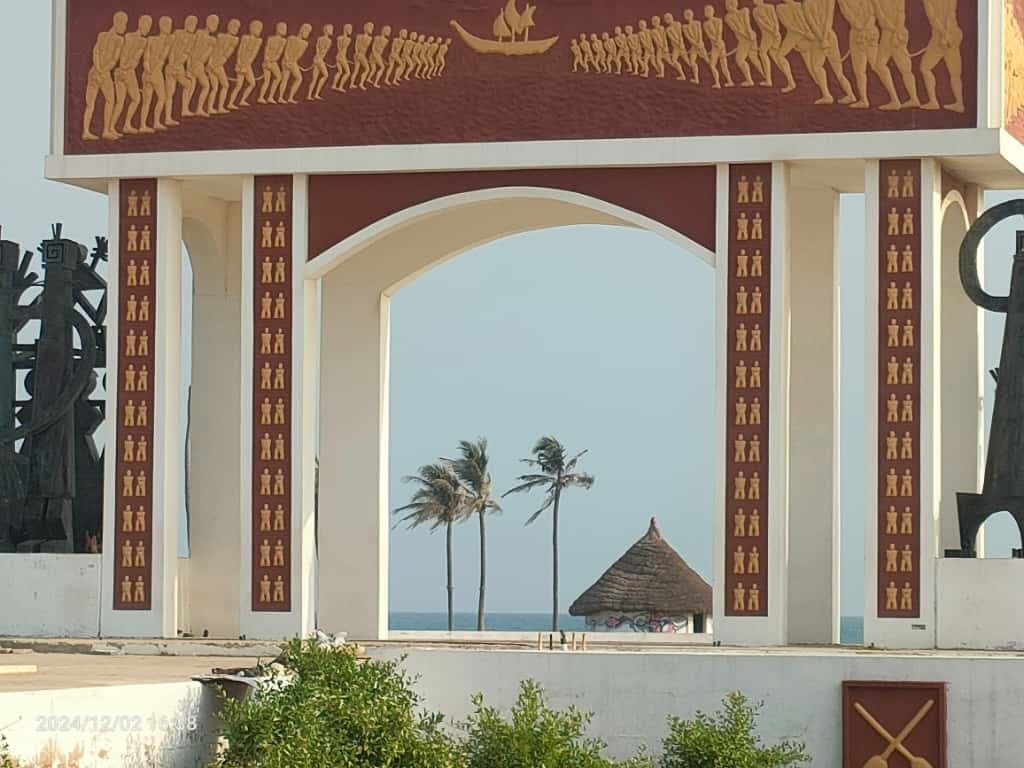
Facing the Atlantic Ocean, the Door of No Return is the most famous monument along the Slave Route and one of the most powerful symbols of the memory of the slave trade in the world.
Built in tribute to the millions of Africans deported to the Americas, it symbolically marks the final point of contact between the captives and their homeland. Beyond this monument lay a one-way journey into the unknown, the permanent separation of families, and the beginning of a new life imposed by slavery.
Its bas-reliefs depict various scenes related to the transatlantic slave trade and pay tribute to the resistance, memory, and dignity of the victims. Facing the ocean, the monument offers a powerful place for reflection on the human, cultural, and social consequences of this period in history.
For many visitors, arriving at the Door of No Return is the most impactful moment of the journey. Kiblistours guides accompany travelers through this discovery with sensitivity and respect, helping them understand the site's significance. Standing before the vast Atlantic Ocean, many experience deep emotion as they imagine the fate of those who crossed this final threshold centuries ago.
Today, the Door of No Return has become a global symbol of remembrance, resilience, and reconnection between Africa and its diaspora, attracting visitors from around the world who come to honor this history and participate in the collective duty of remembrance.
The history of the Slave Route of Ouidah
Exploring these various sites provides a better understanding of the stages experienced by captives before their forced departure to the Americas. However, to fully appreciate the importance of the Slave Route in world history, it is necessary to examine the historical context of the transatlantic slave trade and the role played by the Kingdom of Dahomey and the city of Ouidah.
Understanding the Historical Context
To fully understand the importance of the Slave Route, it is essential to look back at the history of the transatlantic slave trade in West Africa.
For several centuries, complex trade networks developed between Africa, Europe, and the Americas.
The territory of present-day Benin, formerly known as the Kingdom of Dahomey, occupied a strategic position on the West African coast.
Thanks to its access to the Atlantic Ocean, the region became a major center of commercial exchange.
The city of Ouidah gradually emerged as one of the main departure ports for the Americas.
Thousands of captives passed through the city each year before embarkation.
Today, the history of this period is studied in order to preserve collective memory and pass on the lessons of the past.
Ouidah between memory, culture, and renewal
Despite its history deeply marked by the transatlantic slave trade, Ouidah is today a city firmly focused on the future. Far from being defined solely by its past, it has transformed its historical legacy into a source of transmission, dialogue, and cultural promotion.
Over the years, Ouidah has become one of Benin’s leading cultural and heritage centers. The city welcomes visitors from all over the world who wish not only to discover its history but also to understand the traditions, beliefs, and artistic expressions that continue to shape local life.
This ability to preserve memory while fostering cultural development makes Ouidah a remarkable example of resilience and renewal. Here, the past is not forgotten. It is transmitted, explained, and integrated into a dynamic process that enables new generations to understand their heritage while building the future.
As they explore the city, visitors discover a place where history, culture, and tradition blend naturally to create a rich and authentic experience. Ouidah is one of those rare destinations where the past continues to inspire the present, where every neighborhood, every monument, and every encounter tells a part of Benin's identity.
Visitors discover a destination where the following coexist in perfect harmony:
an exceptional historical heritage, shaped by centuries of history and iconic landmarks that reflect the city's significant role in the history of Africa and the African diaspora;
living ancestral traditions, passed down from one generation to the next through ceremonies, customs, traditional craftsmanship, and cultural practices;
deeply rooted spirituality, where Vodun beliefs, Christianity, and Islam coexist in an atmosphere of mutual respect and tolerance, making Ouidah a symbol of dialogue between cultures;
a thriving contemporary art scene, showcased through galleries, sculptures, murals, artists' studios, and numerous initiatives that celebrate Beninese creativity;
cultural tourism that emphasizes meaningful discovery, exchanges with local communities, and a deeper understanding of heritage rather than simply visiting a series of attractions;
Beninese hospitality, renowned for the warmth of its welcome, the generosity of its people, and their genuine desire to share their history, traditions, and way of life with visitors.
This harmonious blend of historical heritage, cultural richness, artistic creativity, and genuine hospitality makes Ouidah a truly unique destination. It appeals equally to history enthusiasts, culture lovers, researchers, members of the African diaspora, and travelers seeking authentic and meaningful experiences.
Every neighborhood, monument, and gathering place tells part of this rich and complex story. Memorial sites stand alongside cultural spaces, traditional ceremonies take place next to modern artistic initiatives, and local communities continue to preserve knowledge passed down through generations.
A City Where Traditions Remain Alive
Unlike many destinations where traditions belong mainly to the past, Ouidah remains a place where cultural heritage is still part of everyday life. Visitors can attend traditional ceremonies, discover Vodun practices, meet local artisans, and interact with residents committed to preserving and transmitting their culture.
This authenticity greatly contributes to the city’s charm and offers a particularly enriching experience for travelers seeking meaningful cultural discoveries.
A Major Center of Cultural Tourism in Benin
Thanks to its exceptional heritage, Ouidah now occupies a central position in the development of cultural tourism in Benin. The city attracts historians, researchers, students, artists, members of the African diaspora, and travelers passionate about history and heritage.
The diversity of experiences available allows everyone to design a journey that matches their interests, whether focused on history, spirituality, art, memory, or human encounters.
A Destination of Hope and Dialogue
Beyond its monuments and historical sites, Ouidah conveys a universal message of resilience and reconciliation. The city recalls the hardships of the past while demonstrating the ability of peoples to preserve their identity, value their culture, and build bridges between generations and continents.
For many visitors, this human dimension is one of the most memorable aspects of their stay. Ouidah is not only a place of remembrance but also a living symbol of cultural rebirth and openness to the world.
It is this unique combination of history, culture, spirituality, and hospitality that makes Ouidah one of the most fascinating and inspiring destinations in West Africa today.
Vodun, A Global Cultural Heritage
The Origins of a Universal Heritage
The discovery of the Slave Route is often associated with that of Benin’s Vodun heritage.
Born in West Africa, this spiritual tradition crossed the Atlantic with the populations who were deported.
Even today, its legacy remains visible:
in Brazil;
in Cuba;
in Haiti;
throughout the Caribbean;
in the United States.
For many people of African descent, visiting Ouidah provides a deeper understanding of the origins of many cultural traditions that are still present in their daily lives.
The Slave Route and the African diaspora : a journey back to one’s roots
For millions of Afro-descendants around the world, the Slave Route in Ouidah represents far more than a historical site or tourist attraction. It serves as a bridge between the past and the present, a place of memory where individuals can undertake a symbolic return to their origins.
Visitors from the United States, Brazil, the Caribbean, the United Kingdom, Canada, France, and many other countries make this journey hoping to reconnect with part of their family and cultural history. Many arrive in Ouidah with profound questions:
Who were my ancestors?
Where did they come from?
What paths did they travel?
What remains today of their heritage?
Even when precise answers cannot be found, walking the Slave Route often provides a powerful sense of reconnection. Following in the footsteps of those who were torn from their homeland allows visitors to better understand the history that shaped Afro-descendant communities around the world.
For many travelers, arriving in Ouidah is a deeply symbolic moment. Discovering the various memorial sites, historical narratives, and living cultural traditions creates an experience filled with emotion and reflection.
For some, it is primarily a spiritual journey. For others, it is a historical, cultural, or educational endeavor. Yet all share the feeling of experiencing something unique that helps them better understand the enduring connections between Africa and its diaspora.
Far beyond a simple visit, the Slave Route offers a space for remembrance, transmission, and reconnection that leaves a lasting impression on those who travel it.
Why is the Slave Route one of Africa’s most moving sites ?
Every country has its historical monuments.
But few places carry such emotional weight.
The Slave Route of Ouidah does not speak only to those interested in the history of Benin or Africa. It resonates with people from every background, regardless of their nationality, culture, ethnicity, or religion. Beyond the historical facts, this journey tells a profoundly human story. It speaks of emotions, values, and experiences that everyone can understand and relate to.
As visitors walk this path of remembrance, many realize that its story extends far beyond the borders of a single country or continent. It reminds us that behind the major events of history were millions of individual lives, families torn apart, dreams shattered, but also an extraordinary capacity to endure, preserve, and rebuild. It is this universal dimension that makes the Slave Route such a powerful and meaningful place.
Throughout the visit, travelers are invited to reflect on values that concern all of humanity:
freedom, the precious right that millions of women, men, and children were deprived of, reminding us that liberty remains one of the most fundamental human rights;
human dignity, encouraging every visitor to recognize the inherent worth of every individual, regardless of their origin, skin color, or personal history;
memory, because a people who understand their past are better prepared to build their future. Preserving these places of remembrance means passing on the lessons of history to future generations;
family, whose separation was one of the deepest tragedies of the transatlantic slave trade. Behind every forced departure was a mother, a father, a child, a brother, or a sister torn away from loved ones;
identity, as this journey helps visitors better understand the roots of many African and Afro-descendant communities while highlighting the importance of preserving cultures and traditions despite the hardships of history;
resilience, embodied by the people who, despite unimaginable suffering, succeeded in preserving their languages, beliefs, craftsmanship, music, spiritual traditions, and cultural heritage for future generations.
What leaves the deepest impression on visitors is not only what they learn but also the personal connections they make along the way. Some think of their parents or children. Others reflect on their own origins, identity, or the meaning of freedom in their own lives. Many say that after walking the Slave Route, they never look at history in quite the same way again.
It is this ability to inspire emotion, reflection, and dialogue that makes the Slave Route far more than a historical landmark. It is a universal place of remembrance where every visitor, regardless of their personal story, can discover a part of themselves and leave with a deeper understanding of our shared humanity.
It is this deeply human dimension that makes the experience so powerful.
Ouidah’s Major Cultural Events
Visiting Ouidah also means discovering a city animated by numerous cultural events that shape local life throughout the year. Beyond its historical and memorial heritage, the city is recognized as one of Benin’s leading cultural centers, where ancestral traditions, spirituality, art, and memory come together.
In Ouidah, culture is not experienced only in museums or through historic monuments. It comes to life every day in the streets, public squares, family courtyards, and the many celebrations that shape the rhythm of the city. Whatever time of year you choose to visit, there is a good chance that you will witness an event, a ceremony, or a cultural gathering that will give you a deeper understanding of the soul of this iconic Beninese city.
The people of Ouidah are deeply attached to their traditions and take great pride in passing them on to future generations. For visitors, this is a unique opportunity to go beyond simply observing and instead immerse themselves in a vibrant culture sustained by women and men who are proud of their heritage. Here, history is not confined to books or museums. It continues to be written every day through traditions, craftsmanship, cultural practices, and community celebrations.
Throughout the year, Ouidah hosts a wide variety of cultural events, including:
cultural festivals, where the sound of traditional drums, songs, dances, performances, Beninese cuisine, and local handicrafts come together to celebrate the country's remarkable cultural diversity;
traditional ceremonies, some of which are open to the public, allowing visitors to respectfully observe ancestral rituals, processions, community celebrations, and certain Vodun practices in their authentic cultural setting;
art exhibitions, held in museums, galleries, and cultural centers, where visitors can admire both contemporary works and traditional handicrafts that showcase the creativity and talent of Beninese artists;
historical conferences and cultural discussions, bringing together historians, researchers, heritage specialists, and members of the African diaspora to explore topics related to the history of Ouidah, the transatlantic slave trade, African kingdoms, and the preservation of historical memory;
events dedicated to African remembrance, encouraging reflection, remembrance, and dialogue while honoring the millions of women, men, and children who were victims of the transatlantic slave trade.
What makes these events truly special is not only their cultural richness but also the atmosphere that surrounds them. The smiles, spontaneous conversations, stories shared by elders, traditional songs echoing through the streets, and demonstrations of ancestral craftsmanship create unforgettable moments of connection and exchange. Many visitors leave with the feeling that they have experienced far more than a sightseeing tour. They have shared a genuine encounter with a people, their history, and their living traditions.
Whatever the season of your visit, Ouidah offers an experience that is both vibrant and deeply human. Here, heritage extends far beyond historic landmarks. It can be found in the voices of storytellers, the skilled hands of artisans, the ceremonies that bring communities together, and the generosity of local people who welcome visitors as honored guests. It is this authenticity that makes Ouidah such a captivating destination and inspires so many travelers to return again.
Among the best-known events are celebrations dedicated to Vodun heritage. These gatherings attract visitors from around the world who come to discover Beninese spiritual traditions through ceremonies, dances, traditional music, and cultural exchanges.
The city also hosts conferences, exhibitions, and educational initiatives dedicated to the history of the transatlantic slave trade, the memory of the African diaspora, and the promotion of Beninese cultural heritage. These events enable researchers, artists, students, and visitors to gain a deeper understanding of Ouidah’s history and its global influence.
The festivities organized throughout the city also offer opportunities to discover the craftsmanship of local artisans, contemporary artistic expressions, Beninese gastronomy, and the many traditions that remain alive within local communities.
For travelers seeking an even more immersive cultural experience, the month of January holds a special place. This period is marked by several major celebrations that showcase Benin’s cultural and spiritual identity and attract numerous international visitors.
These events help keep local heritage alive, strengthen the transmission of traditions to younger generations, and make Ouidah a dynamic cultural destination where history continues to interact with the present.
Participating in one of these events allows visitors to discover another side of Ouidah: a vibrant, creative city deeply committed to preserving its cultural heritage. For many travelers, these experiences are the perfect complement to the discovery of the Slave Route and significantly enrich the overall journey.
Other historical sites to discover around Ouidah
The Ouidah Museum of History
Located in the former Portuguese Fort of São João Baptista de Ajudá, the Ouidah History Museum is one of the most important cultural sites in Benin. It provides visitors with an in-depth understanding of the history of the city, the Kingdom of Dahomey, and the transatlantic slave trade.
Through its permanent collections, historical artifacts, archival documents, photographs, and thematic exhibitions, the museum retraces several centuries of history marked by commercial exchanges, cultural influences, and social transformations that shaped the region.
Visitors can learn valuable information about the relationships between the Kingdom of Dahomey and European powers, the operation of historical trade networks, and the role played by Ouidah in transatlantic exchanges.
The museum also presents elements of Beninese cultural heritage, local traditions, and the evolution of the city over time. This approach places the slave trade within a broader historical context and highlights the cultural richness of the region.
For travelers wishing to deepen their understanding of the Slave Route, the Ouidah History Museum is an essential stop. Kiblistours guides often recommend beginning or completing the memorial route with a visit to the museum in order to gain a more comprehensive perspective on the historical events associated with Ouidah.
Beyond its educational mission, the museum actively contributes to preserving Benin’s historical heritage and passing on collective memory to future generations.
The Sacred Forest
The Sacred Forest of Ouidah is one of the most emblematic spiritual sites in Benin. Located in the heart of the city, it serves as a place of memory, reflection, and practice of traditions linked to Vodun, the ancestral religion deeply rooted in Beninese culture.
According to local beliefs, the forest is inhabited by protective spirits and possesses a sacred dimension that makes it highly respected by surrounding communities. It plays an important role in preserving spiritual and cultural traditions transmitted over generations.
During their visit, travelers discover a pathway lined with numerous statues representing various deities, symbolic figures, and elements of Vodun cosmology. These artworks provide a deeper understanding of traditional beliefs and the important place occupied by the spiritual world in Beninese culture.
The Sacred Forest is also a preserved natural space characterized by calm and serenity. Its atmosphere contrasts sharply with the emotional intensity of the Slave Route and offers visitors another perspective on Ouidah’s cultural identity.
For many travelers, exploring the Sacred Forest is a fascinating experience. It allows them to move beyond common misconceptions about Vodun and gain a better understanding of this spiritual tradition, recognized as a major component of Benin’s cultural heritage.
Accompanied by Kiblistours guides, visitors benefit from respectful and well-documented explanations that enable them to fully appreciate the symbolic, historical, and cultural richness of this exceptional site.
The Beaches of Ouidah
After the emotional intensity of the Slave Route, the beaches of Ouidah offer visitors a place of calm and contemplation. Bordering the Atlantic Ocean, they provide an ideal setting to continue reflecting on the memorial sites while enjoying the natural beauty of Benin’s coastline.
These beaches also hold symbolic importance in the region’s history. It was from this coast that many captives were embarked for the Americas during the transatlantic slave trade. Today, the sound of the waves and the vastness of the ocean invite visitors to reflect on this history while appreciating the peace that now prevails in these places.
Ouidah’s coastline is particularly appreciated for its long stretches of sand, peaceful atmosphere, and preserved natural landscapes. Travelers can take leisurely walks, watch local fishermen at work, or simply enjoy the sea breeze after a day rich in cultural and historical discoveries.
At the end of the day, the beaches become one of the best places to admire the sunset. The golden reflections dancing across the ocean create a breathtaking natural spectacle cherished by visitors and photographers alike. This moment offers a soothing conclusion to the visit of the Slave Route and allows travelers to leave with an experience that is memorable, moving, and inspiring.
For many visitors, this stop facing the Atlantic is far more than a simple moment of relaxation. It provides an opportunity to step back, reflect on the importance of historical memory, and appreciate the cultural and human richness that makes Ouidah one of Benin’s most emblematic destinations today.
https://www.kiblistours.com/search?q=ouidah
How to prepare for your visit
To fully enjoy the experience, it is recommended to bring:
lightweight clothing;
a hat;
water;
comfortable walking shoes;
a camera;
a notebook.
The tour includes several walking sections but remains accessible to most travelers.
Why is memorial tourism so popular ?
Around the world, travelers are increasingly seeking deeper and more authentic experiences.
They want to understand the cultures they discover.
They want to live meaningful experiences.
Today, many travelers are looking for much more than beautiful landscapes. They want to understand the stories behind the places they visit, meet the people who bring those places to life, and experience something genuine. They hope to return home with far more than beautiful photographs. They leave with memories of an experience that has moved them, inspired reflection, and sometimes even changed the way they see the world. This is exactly what the Slave Route of Ouidah offers.
From the very first steps along this historic route, visitors quickly realize that this is unlike any ordinary sightseeing tour. The silence of certain places, the stories shared by local guides, the historic monuments, the centuries-old trees, and the vastness of the Atlantic Ocean create a truly unique atmosphere. Many visitors say they naturally slow their pace, taking time to listen, observe, and reflect on the weight of the history that unfolded here. Some leave deeply moved, others with countless questions, but very few leave Ouidah untouched.
The Slave Route offers an experience where several powerful dimensions come together naturally:
history, by allowing visitors to revisit one of humanity's most significant chapters and gain a deeper understanding of Ouidah's role in the transatlantic slave trade;
culture, through stories, traditions, craftsmanship, and encounters that reveal the richness of Beninese heritage and the remarkable resilience of the communities that have preserved it;
emotion, present at every stage of the journey. Standing before these places of remembrance, many visitors experience a profound sense of reflection as they imagine the fate of the millions of women, men, and children who walked this path, never to return;
spirituality, which naturally accompanies the visit. In Ouidah, Vodun traditions, sacred sites, and ancestral beliefs remind visitors of the essential role that memory, ancestors, and cultural transmission continue to play in local life;
discovery, as every stop reveals another dimension of the city through its historic heritage, monuments, museums, coastal landscapes, and encounters with local people;
reflection, because this journey encourages every visitor to think about the consequences of slavery, the resilience of African peoples, and the importance of preserving this memory so that such a tragedy is never repeated.
What makes this experience so unforgettable is not only what visitors learn, but also what they feel. A conversation with a passionate guide, a story shared by an elder, the sound of the waves crashing near the Door of No Return, or simply a moment of silence while looking out over the Atlantic Ocean can sometimes express more than words ever could. These moments remain with visitors long after they have returned home.
It is undoubtedly for this reason that so many travelers consider the Slave Route one of the most meaningful experiences of their journey through Benin. More than a historical tour, it is an encounter with memory, with humanity, and, quite often, with a deeper understanding of oneself.
Why choose Kiblistours to discover the Slave Route?
At Kiblistours, we believe that travel should be much more than transportation from one place to another.
We design every tour as a human experience.
Our visitors benefit from:
authentic cultural immersion;
reliable historical explanations;
professional organization;
personalized assistance;
high-quality guidance.
Our objective is simple: to showcase the very best of Benin through experiences that leave a lasting impression.
A must-visit destination for any trip to Benin
Whether you are passionate about history, interested in culture, a researcher, a student, or simply a curious traveler, the Slave Route is an essential stop during any stay in Benin.
Few places in the world offer such profound immersion in human history.
Few destinations provide an experience so rich in emotions and lessons.
Visiting Ouidah means discovering an essential chapter of world history.
It also means participating in the preservation of a memory that belongs to all humanity.
The Symbolic Return to the Land of the Ancestors
Many Afro-descendant visitors consider their stay in Benin a return to their roots.
Even when it is impossible to trace the exact origins of their ancestors, simply being on African soil creates a unique emotion.
Standing before the Door of No Return, many experience a mixture of sadness, pride, and hope.
This experience helps strengthen the ties between Africa and its diaspora.
Why the Slave Route attracts visitors from around the world
Today, the Slave Route is one of the most visited historical sites in West Africa.
Its influence extends far beyond the borders of Benin.
Each year, it attracts:
historians;
researchers;
students;
journalists;
culture enthusiasts;
travelers seeking meaningful experiences;
Afro-descendants returning to reconnect with their roots.
This diversity of visitors reflects the universal importance of this place of remembrance.
A story that concerns all humanity
The history of the transatlantic slave trade is not only African history.
It is part of world history.
The consequences of this period influenced the demographics, cultures, economies, and societies of multiple continents.
Visiting the Slave Route therefore provides a deeper understanding of the historical links between Africa, Europe, and the Americas.
The emotions experienced during the visit
One of the most remarkable aspects of the Slave Route is its ability to evoke deep emotions.
Unlike a traditional museum, visitors do not merely observe history.
They walk through it.
Every stage of the route carries a specific meaning.
The silence that surrounds certain sites further intensifies the experience.
Many visitors report that this visit changed their perception of history.
A place of reflection and transmission
The Slave Route invites reflection on universal values:
freedom;
human dignity;
tolerance;
respect for differences;
collective memory.
These themes resonate with visitors from every background.
The Slave Route is often the highlight of a stay in Ouidah.
However, the city offers many other cultural treasures.
Visitors can discover:
Vodun traditions;
historical sites;
museums;
artisan markets;
Atlantic beaches;
local cultural ceremonies.
This diversity makes Ouidah a complete destination for lovers of culture and heritage.
The Vodun Heritage
Benin is recognized as the historical cradle of Vodun.
This spiritual tradition is an integral part of the country's cultural identity.
Visitors can discover:
traditional temples;
cultural ceremonies;
sacred symbols;
historical narratives related to Vodun.
This immersion provides a deeper understanding of one of the major components of Beninese heritage.
Why Choose Benin for a Memorial Journey?
Several West African countries possess sites connected to the transatlantic slave trade.
However, Benin stands out thanks to several strengths.
Remarkable Authenticity
The Slave Route of Ouidah retains a strong historical and symbolic dimension.
The route allows visitors to physically follow the different stages experienced by captives.
Exceptional Cultural Richness
Beyond its memorial heritage, Benin offers:
living traditions;
a fascinating royal history;
a unique Vodun culture;
renowned hospitality;
diverse landscapes.
This richness transforms every trip into a complete and meaningful experience.
Why Visit the Slave Route with Kiblistours?
A visit to the Slave Route deserves high-quality guidance.
At Kiblistours, we do everything possible to provide an immersive and enriching experience.
Our tours are designed to help visitors fully understand the historical and cultural significance of every stage along the route.
A Guided Tour That Brings History to Life
Visiting the Slave Route is not simply about observing monuments or following a historical itinerary. Behind each stage lie stories, symbols, beliefs, and events that truly come to life when explained by an experienced guide.
Without guidance, many visitors discover these historically significant places without fully understanding their importance or the events that occurred there. With a guide, every monument becomes a living testimony of the past. Each stop provides deeper insight into the historical context, the realities of the transatlantic slave trade, and the experiences endured by the men, women, and children who walked this path centuries ago.
Kiblistours guides do more than present dates and historical facts. They place each site within its broader context, explain local traditions, share stories passed down through generations, and help visitors grasp the full human significance of this history.
At Chacha Square, travelers learn about the role this location played in organizing commercial exchanges of the period. At the Tree of Forgetfulness, they understand the symbolic meaning of the ritual imposed on captives. At the Zoungbodji Memorial and other places of remembrance, they become aware of the suffering endured by many victims even before their departure for the Americas.
Arriving at the Door of No Return is often one of the most memorable moments of the visit. Facing the Atlantic Ocean, the guide’s explanations help visitors fully appreciate the historical and emotional significance of this monument, which has become a global symbol of memory and resilience.
This immersive approach transforms a simple tourist visit into a true experience of discovery, reflection, and transmission. Travelers leave not only with a deeper historical understanding but also with a more human perspective on the events that shaped the history of several continents.
With Kiblistours, the Slave Route becomes much more than a site to visit. It becomes a story to understand, a memory to honor, and an experience that leaves a lasting mark on the mind and heart.
Professional Guidance
Our guides passionately share:
the history of Benin;
local traditions;
stories related to the Slave Route;
essential cultural insights.
As a result, every visit becomes a genuine learning experience.
A Personalized Experience
Whether you are traveling alone, with family, or in a group, Kiblistours adapts its tours to your needs.
We offer:
private tours;
tailor-made cultural circuits;
day excursions;
complete stays in Benin.
Our goal is to make every journey unique.
The Role of the Kingdom of Dahomey in the History of the Slave Trade
Understanding the Slave Route also requires understanding the historical context in which it developed.
Between the 17th and 19th centuries, the Kingdom of Dahomey was among the most influential powers in West Africa. Thanks to its political organization, military strength, and strategic position, it maintained commercial relations with several European powers established along the Gulf of Guinea coast.
The history of this period remains complex and continues to be the subject of extensive historical research. Specialists agree that the transatlantic slave trade involved various African, European, and American actors within a vast global economic system.
Today, the Slave Route of Ouidah serves as an essential place for understanding this history in all its complexity.
Visiting these sites allows travelers to approach historical realities with perspective, objectivity, and respect for the memory of the millions of victims involved.
This approach helps strengthen understanding of the past and encourages constructive dialogue about African and global history.
The Kingdom of Dahomey: A Major Power in West Africa
Between the 17th and 19th centuries, the Kingdom of Dahomey emerged as one of the most influential political, military, and economic powers in West Africa. Its territory largely corresponded to present-day Benin, and its centralized organization enabled it to exercise significant control over populations, resources, and regional trade.
The kingdom was ruled by sovereigns with considerable authority. A structured administration, a disciplined army, and strong political institutions contributed to its stability and territorial expansion. The kings of Dahomey gradually extended their influence over neighboring regions, making the kingdom a key player in West African political and commercial relations.
The Dahomean army was particularly renowned for its effectiveness and organization. Among its most famous forces were the Dahomey Amazons, an all-female military corps that left a lasting mark on African history through its courage and discipline. This military power enabled the kingdom to protect its interests, defend its borders, and assert its authority over surrounding territories.
Beyond its military strength, Dahomey also developed a rich cultural and spiritual life. Royal ceremonies, ancestral traditions, religious practices, and the arts occupied an important place in society. This heritage remains visible today through Beninese cultural traditions and the famous Royal Palaces of Abomey, which are listed as a UNESCO World Heritage Site.
Understanding the power of the Kingdom of Dahomey helps visitors better grasp the historical context in which the transatlantic slave trade developed and the role played by the various actors involved during this complex period of African history.
Ouidah: The Kingdom’s Main Commercial Port
Located on the Atlantic coast, Ouidah occupied a strategic position that made it one of the principal commercial centers of the Kingdom of Dahomey. Thanks to its direct access to the ocean, the city served as an interface between the African interior and European merchants established along the coast.
Over the centuries, Ouidah became a major economic crossroads where goods such as palm oil, textiles, agricultural products, metals, and various local resources were traded. Its geographical position encouraged exchanges between African populations and European traders.
However, Ouidah is best known for having played a central role in the transatlantic slave trade. Thousands of men, women, and children captured throughout West Africa were gathered there before being transported to the Americas. The city thus became one of the principal departure points of a human trade that profoundly shaped world history.
The infrastructure and memorial sites still visible today bear witness to this era. Chacha Square, the former commercial districts, the Slave Route, and the Door of No Return all remind visitors of the city’s historical role in Atlantic exchanges. These sites now attract visitors from around the world who wish to better understand this painful chapter of history.
Today, Ouidah is recognized as one of Africa’s leading memorial centers dedicated to the history of slavery. The city plays a crucial role in preserving memory, transmitting historical knowledge, and fostering dialogue between Africa and its diaspora.
How historians interpret this period today
The study of the transatlantic slave trade and the role of African kingdoms continues to generate extensive historical research. Contemporary historians seek to analyze this period with nuance in order to better understand the multiple political, economic, and social factors that contributed to its development.
Current research shows that the slave trade cannot be explained by a single cause nor attributed to a single group of actors. Scholars emphasize the involvement of multiple stakeholders, including European powers, international commercial networks, and certain African kingdoms that participated in trade within a complex geopolitical environment.
This approach helps move beyond simplistic interpretations and provides a more accurate understanding of historical reality. Specialists stress the importance of studying power dynamics, economic interests, and social transformations that characterized the era in order to understand how such a system was able to persist for several centuries.
Today, historians aim not only to document past events but also to contribute to the duty of remembrance. Research helps preserve testimonies, promote historical sites, and encourage collective reflection on the lasting consequences of the transatlantic slave trade.
In Ouidah, as in other memorial sites around the world, this historical work contributes to the reconciliation of memories, the transmission of knowledge to future generations, and the promotion of universal values such as human dignity, justice, and respect for all peoples.
The Slave Route and global heritage preservation initiatives
Preserving the memory of the transatlantic slave trade is now a major international challenge.
For several decades, cultural institutions, international organizations, and Beninese authorities have worked to promote and preserve the Slave Route and its associated memorial sites.
The international project “The Slave Route,” launched by UNESCO, has helped raise global awareness of the historical significance of these places.
This initiative aims to:
preserve the memory of the slave trade;
promote historical research;
encourage intercultural dialogue;
strengthen ties between Africa and its diaspora;
transmit this history to future generations.
Thanks to these efforts, Ouidah is now recognized as one of the principal places of memory for the African diaspora.
Every visit indirectly contributes to supporting the preservation of this exceptional historical heritage.
Testimonials from visitors who have walked the Slave Route
Most travelers leave the Slave Route deeply moved by the experience.
“An Emotion Impossible to Describe”
Many Afro-descendant visitors explain that they feel a special connection when they arrive at the Door of No Return.
For some, it is a moment of symbolic mourning.
For others, it is a form of reconciliation with history.
Many describe a mixture of emotions including sadness, pride, gratitude, and hope.
“A Journey Every Afro-Descendant Should Experience”
Visitors from the United States, Brazil, Haiti, and the Caribbean often describe this experience as one of the most important moments of their lives.
Walking in the footsteps of their ancestors allows them to better understand their cultural heritage and strengthen their sense of belonging to a shared history.
An Experience that touches people of all origins
The emotional power of the Slave Route is not limited to the African diaspora.
Visitors of all nationalities testify to the lasting impact of this experience.
Many leave with a deeper understanding of the values of freedom, human dignity, and collective memory.
The Slave Route Today: A Global Symbol of Memory and Reconciliation
More than just a historical site, the Slave Route of Ouidah has become a universal symbol of memory, resilience, and dialogue between peoples.
Each year, thousands of visitors from Africa, the Americas, Europe, and the Caribbean walk this path steeped in history to better understand the past and participate in a collective duty of remembrance.
In a world where the preservation of historical memory is becoming increasingly important, the Slave Route stands as one of the leading places for reflection on the consequences of the transatlantic slave trade and on the enduring connections between Africa and its diaspora.
Beyond its historical significance, the site also promotes universal values such as human dignity, tolerance, the transmission of knowledge, and intercultural understanding.
Plan your visit to the Slave Route with Kiblistours
Discovering the Slave Route in Ouidah is much more than a tourist activity. It is an experience of remembrance, reflection, and cultural discovery that deserves careful planning according to your interests and expectations.
At Kiblistours, we assist travelers from around the world in organizing their visit to ensure an authentic, enriching, and personalized experience.
Contact Our Team
Our team is available to answer all your questions regarding the Slave Route, the historical sites of Ouidah, and the organization of your stay in Benin.
Whether you are planning an individual, family, academic, or group trip, we help you create a program tailored to your objectives and interests.
Fully Customized Tours
Every traveler has unique expectations. Some wish to deepen their understanding of the transatlantic slave trade, while others are more interested in cultural discovery, Vodun heritage, or interactions with local communities.
For this reason, our tours can be adapted according to your interests, length of stay, budget, and desired level of immersion.
Private Tours for a More Immersive Experience
For travelers seeking greater comfort, flexibility, and privacy, Kiblistours offers private tours of the Slave Route.
This option allows visitors to enjoy personalized guidance, engage freely with their guide, and explore the sites at their own pace.
Private tours are particularly appreciated by families, researchers, journalists, cultural groups, and members of the African diaspora looking for a more personal experience.
Combine the Slave Route with a Complete Cultural Tour
A visit to the Slave Route can easily be combined with many other cultural discoveries in Benin.
Our tours allow visitors to explore Ouidah alongside:
Ganvié, the famous lake village;
Porto-Novo, the cultural capital of Benin;
Abomey and the Royal Palaces of the Kingdom of Dahomey;
Grand-Popo and its Atlantic coastline;
the cultural and natural sites of northern Benin.
This approach enables travelers to discover the full historical, cultural, and human richness of Benin through a comprehensive and memorable journey.
Whatever option you choose, Kiblistours places its local expertise at the service of your trip in order to provide an authentic experience at the heart of Beninese history and heritage.
The Rise of Memorial Tourism in Africa
In recent years, memorial tourism has experienced significant growth around the world.
More and more travelers seek experiences that allow them not only to discover a place but also to understand its history and cultural significance.
This trend is particularly evident at sites connected to collective memory, major human migrations, and events that have shaped world history.
In Benin, the Slave Route has become one of the leading destinations for this meaningful form of tourism.
Visitors do not come merely to admire monuments or take photographs. They seek to understand the realities of the transatlantic slave trade, honor the victims, and better comprehend the impact of this period on the modern world.
This educational and human dimension largely explains Ouidah’s growing appeal among international travelers.
Ceremonies of Return for the African Diaspora
For many Afro-descendants, visiting Ouidah represents a symbolic return to the land of their ancestors.
Over the years, the city has become a privileged meeting place between Africa and its diaspora.
Visitors from the United States, Brazil, Haiti, Cuba, Jamaica, the United Kingdom, and Canada regularly participate in commemorative ceremonies, cultural events, and gatherings dedicated to the memory of the transatlantic slave trade.
These events help strengthen the historical, cultural, and human ties between communities of African descent across the world.
For many participants, passing through the Door of No Return or paying tribute at Ouidah’s memorial sites becomes a deeply symbolic moment marked by emotion, reflection, and sometimes even a profound sense of reconnection with their identity.
International Cultural and Educational Initiatives
The international reputation of the Slave Route is also based on the many cultural, scientific, and educational initiatives developed around this historical heritage.
Researchers, historians, universities, cultural institutions, and international organizations regularly collaborate to document this period of history and transmit this knowledge to future generations.
Conferences, exhibitions, publications, documentaries, and educational programs are frequently organized to raise awareness about the history of the transatlantic slave trade and its contemporary legacy.
These initiatives contribute to making Ouidah a major center for reflection on African memory and intercultural exchanges.
They also help promote Beninese heritage on the international stage.
Ouidah: A Bridge Between Africa and Its Descendants Around the World
Today, Ouidah is much more than a tourist destination.
The city has become a powerful symbol of reconnection between Africa and the millions of people whose roots trace back to the continent.
Through its monuments, ceremonies, cultural heritage, and memorial sites, Ouidah fosters dialogue between generations and among communities shaped by the history of the African diaspora.
This unique mission gives the city a special place in West Africa.
Every visitor discovers not only a history but also a message of hope and reconciliation.
The Slave Route recalls the suffering of the past while demonstrating the capacity of peoples to preserve memory, transmit heritage, and build bridges between cultures.
It is this symbolic power that makes Ouidah one of the most important places of remembrance on the African continent and one of the most impactful cultural experiences a traveler can have in Benin.
Practical guide to visiting the Slave Route in Ouidah
How long does the visit take?
A complete visit to the Slave Route generally lasts between two and four hours, depending on the pace of the group and the depth of explanations provided by the guide.
Travelers wishing to explore the topic in greater detail may dedicate an entire day to discovering Ouidah’s historical sites.
What is the best time to visit?
The most pleasant period generally extends from November to March.
Temperatures are more moderate and weather conditions are favorable for walking tours.
January is especially recommended because of the many cultural events organized throughout the city.
How do you get to Ouidah?
Ouidah is located approximately forty kilometers from Cotonou.
The city is easily accessible by road from Cotonou International Airport.
Visitors can reach Ouidah by private vehicle, taxi, or as part of an organized tour.
Why Visit with a Professional Guide?
The historical richness of the Slave Route deserves detailed explanations.
An experienced guide helps visitors better understand the historical events, the symbols encountered along the route, and the various interpretations associated with this period.
The experience becomes far more immersive and rewarding.
Where Is the Slave Route Located in Benin?
The Slave Route is located in the historic city of Ouidah on Benin’s Atlantic coast, approximately 40 kilometers from Cotonou. This memorial route connects several emblematic sites associated with the history of the transatlantic slave trade and ends at the famous Door of No Return facing the Atlantic Ocean.
How long does a visit to the Slave Route take?
A standard visit generally lasts between two and four hours. However, travelers who wish to deepen their historical understanding can dedicate an entire day to exploring the memorial sites, museums, and monuments associated with this history.
Why is the Slave Route so important?
The Slave Route is one of the most significant memorial sites related to the transatlantic slave trade in West Africa. It retraces the journey taken by thousands of captives before their departure to the Americas. Today, it symbolizes memory, resilience, and historical transmission.
What does the Door of No Return represent?
The Door of No Return is the most emblematic monument along the route. It symbolizes the final glance captives cast upon their homeland before their forced departure to the Americas. Today, it stands as a global symbol of remembrance and reflection.
Is the visit suitable for families and children?
Yes. The tour can be enjoyed by families. Guides generally adapt their explanations according to the age of participants in order to present history in an educational and sensitive manner.
What is the best time to visit the Slave Route?
The period from November to March is generally considered the most pleasant. Temperatures are milder and weather conditions are favorable for walking tours. January is especially popular because of the numerous cultural celebrations held in Ouidah.
What is the connection between the Slave Route and Vodun?
Ouidah is also recognized as one of the principal historical centers of Vodun in Benin. Many visitors take advantage of their stay to explore both the memorial heritage of the Slave Route and the spiritual traditions that contribute to the city’s cultural identity.
Why does the Slave Route attract so many Afro-Descendants?
For many Afro-descendants, this visit represents a symbolic reconnection with their African origins. Even when it is impossible to identify the precise origin of their ancestors, walking this memorial route often becomes a deeply emotional and meaningful experience.
What other sites can be visited in Ouidah?
Ouidah offers numerous attractions including the Ouidah History Museum, the Python Temple, the Sacred Forest, Atlantic beaches, artisan markets, and several monuments linked to the history of slavery and Vodun heritage.
Why choose Kiblistours to visit the Slave Route?
Kiblistours offers cultural tours designed to provide a deep understanding of Benin’s history and heritage. Thanks to experienced guides, visitors benefit from detailed explanations, personalized support, and authentic cultural immersion that greatly enriches the experience.
Is the Slave Route internationally recognized?
Yes. The Slave Route is recognized today as one of the principal memorial sites of the African diaspora. It enjoys international visibility through heritage preservation initiatives and research programs dedicated to the history of the transatlantic slave trade.
Can the Slave Route be combined with other visits in Benin?
Absolutely. Most travelers combine their visit to Ouidah with trips to Ganvié, Abomey, Porto-Novo, Grand-Popo, or the northern regions of Benin. This combination allows visitors to explore the country’s historical, cultural, and natural diversity.