Beneath Makola’s parasols, the light changes colour with every step. Indigo cloth seems to answer the red of a plastic basin; sacks of grain line an alley; a trader shifts a stall to let a cart pass. Voices mingle in Ga, Twi, English and other languages of West African trade. Further on towards Jamestown, the landscape changes. Shops gradually give way to weathered walls, small streets, traces of colonial architecture and then the Atlantic’s salty breeze. Between the two, you have not left Accra: you have simply begun to read it differently.
Visiting Accra in one day does not mean rushing from monument to monument. The best itinerary may fit within a few old-centre neighbourhoods if you give them time. Makola reveals women traders’ economic power, regional movements and a city’s capacity to reinvent itself. Ussher Town and Jamestown illuminate Ga history, European coastal rivalries, memories of slavery, Afro-Brazilian returns, fishing, popular sports and contemporary artistic expression. At every stop, history remains interwoven with present-day activities.
Why explore Makola and Jamestown on the same day?
Two neighbourhoods, one urban history
The connection may seem surprising. On one side is Makola, often cited for commercial bustle; on the other, Jamestown, known for its red-and-white lighthouse and coastal fortifications. Yet their relationship runs deep. A coastal capital grew through more than administrative buildings: markets, transport networks, access to the sea, communities, exchanges and conflicts shaped it. A trader familiar with the week’s deliveries and a fishing family watching sea conditions each contribute to the same urban economy.
An alternative to rushed Accra tours
A Makola-Jamestown day leaves time to observe market organisation, hear a fort’s history and understand the sea’s place in neighbourhood life. The route follows a continuous thread: from goods moving through the capital to Atlantic exchanges that shaped its history.
A visit that does not turn residents into scenery
Makola is a workplace; Jamestown is an inhabited neighbourhood where maritime activities, education, social life and creativity meet. A guide familiar with the area facilitates voluntary exchanges and helps explain how spaces are used. Practical advice at the end details photography and access rules.
Understanding Accra before the walk
Ga Mashie: long before colonial postcards
Accra’s old centre is connected with Ga communities’ history. Jamestown and Ussher Town belong to this geography of Ga Mashie, formed through neighbourhoods, traditional authorities, families, religious places, maritime occupations and social practices that continued evolving through colonial and postcolonial change. Using terms such as “old streets” or “colonial quarter” without discussing those who lived there before and during colonisation starts the story too late.
The coast participated in land and maritime exchanges long before European powers built fortifications. Local populations negotiated, travelled, defended themselves and organised their own institutions. Forts and trading posts later changed economic and political relations: they gave Europeans strategic positions while entering pre-existing African systems. An attentive visit presents these relationships without reducing Ga societies to spectators.
European forts, Atlantic trade and sovereignty
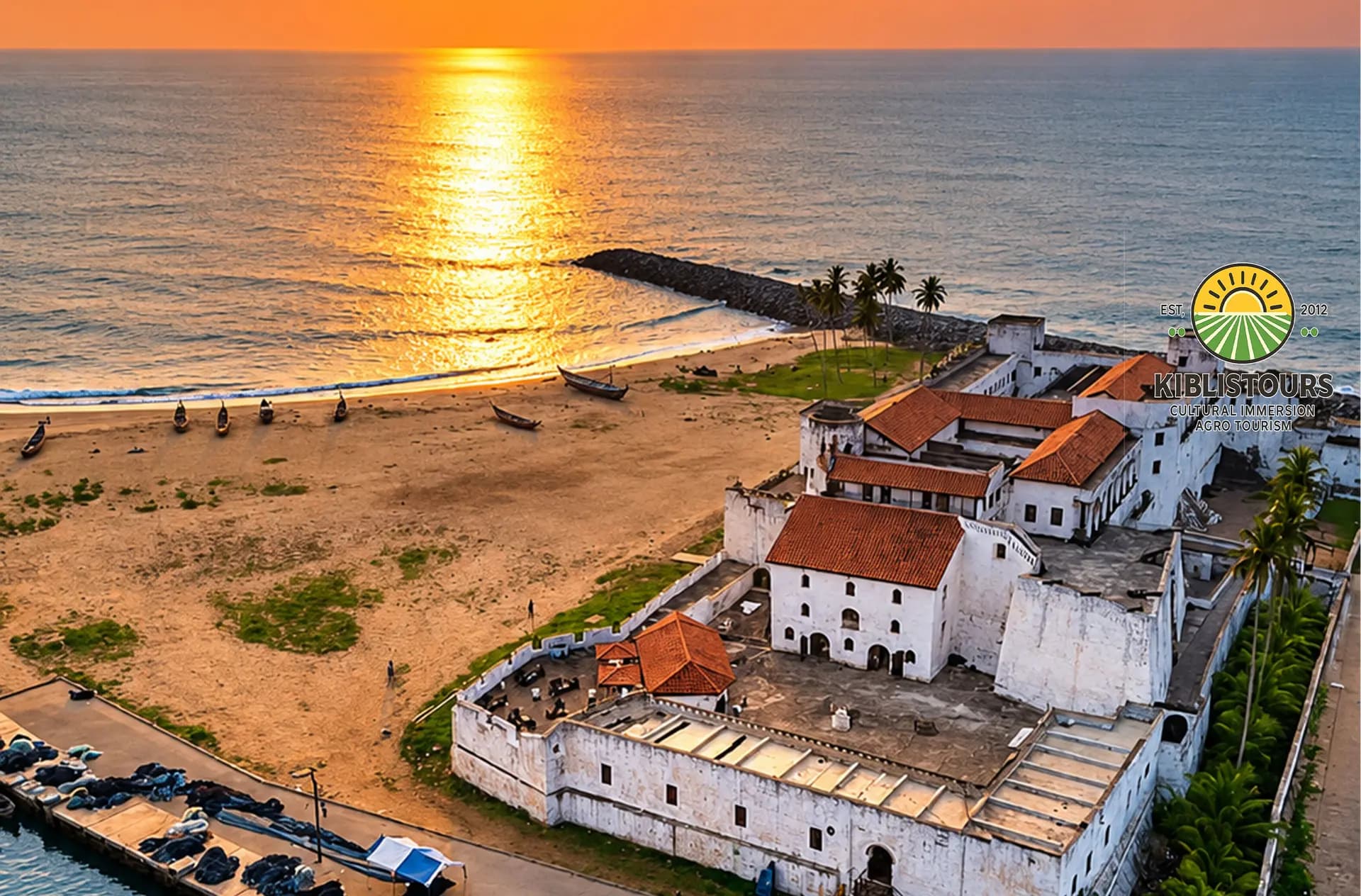
Accra’s seafront was shaped by European establishments, notably British and Dutch. The Ghana Museums and Monuments Board lists James Fort and Ussher Fort among Greater Accra’s forts. They belong to Ghana’s extensive coastal heritage ensemble recognised by UNESCO since 1979, including former places of exchange and domination whose uses changed over centuries. Their military dimension was real, but buildings also served commercial, administrative and, in some cases, prison functions.
This past includes Atlantic commerce and the trade in enslaved people. It requires precise discussion. Forts are more than beautiful silhouettes facing the sea, and the contrast between apparently calm façades and the systems of violence they supported calls for serious interpretation. Conversely, present-day Jamestown cannot be reduced to past suffering. Its residents are building their present: this continuity also deserves attention.
Accra: a living capital rather than an open-air museum
The city changes quickly. Businesses relocate, buildings are restored or demolished, public spaces are redesigned, traffic alters street use and economic practices adapt. Makola particularly illustrates this dynamic. In 2026, the Accra Metropolitan Assembly began redeveloping part of the 31st December Market area, with temporary relocations and trader discussions. Presenting every former market passage as permanently accessible would be misleading.
The market as a first encounter with the city
Morning often reveals Makola differently from the busiest hours. The market cannot be understood from one perspective: streets dominated by textiles lead to spaces focused on food, utensils, footwear, cosmetics or small everyday goods. Traders do not all keep the same hours, and activities may extend beyond formal halls into neighbouring roads. It is therefore better to speak of the “Makola area” than imagine one building with unchanging boundaries.
The Accra Metropolitan Assembly dates the modern market’s establishment to 1924 and describes it as a major wholesale and retail centre. This does not mean trade in Accra began that year; it marks a stage in urban organisation. Since then, Makola has developed through city growth, goods circulation and sellers’ initiatives. Its significance lies as much in social relationships as in the volumes changing hands.
Fabrics: aesthetics, work and trading networks
Fabric rolls are among scenes that strike travellers. Colours stand out from afar, but their interest goes well beyond visual effect. Behind a print lie production, selection, finance and distribution networks. A trader may offer several quality levels, discuss quantities needed for a garment and direct a customer to a dressmaker. Motifs themselves have varying social uses that should not be overinterpreted.
Taking a few minutes to inspect cloth, ask its material and origin, and compare finishing enriches the experience. Makola’s fabrics have diverse origins: their routes reveal Accra’s integration into regional and global networks alongside local preferences and fashions.
Makola’s women and the strength of the everyday economy
Makola’s history is inseparable from women traders. Market studies show its urban economic role, supply systems and recurring tensions between commerce and planning policies. Yet “market women” are not a homogeneous group: experiences vary by products, available capital, location, associations, age and family circumstances.
Redevelopment makes this history tangible: moving a stall changes access to customers, storage and neighbourhood networks. Ask the guide about these changes while leaving traders free to participate in the conversation or decline.
Photographing Makola without interrupting its activities
Such an expressive market makes it tempting to use a camera constantly. Yet not every image is appropriate. A wide scene in a public space, when local conditions permit, requires different consideration from a close identifiable portrait. For a face, shop interior, sensitive stall or recorded conversation, prior consent is the most respectful rule. Accept refusal immediately without negotiation or insistence.
In the busiest alleys, stop out of the way to observe a stall or hear an explanation. You will enjoy the visit more while letting customers, traders and porters move freely.
From Makola towards Ussher Town: recognising Accra’s layers
Leaving the market without leaving commerce
The transition between Makola and historic neighbourhoods has no clear boundary. Stalls, signs, transport and administrative buildings follow one another. Around Okaishie and nearby commercial streets, the guide can highlight supply networks: a customer sees a product on a table, but it has followed a route involving possible imports, storage, credit, carrying and distribution. Looking this way explains why central Accra is both a place of passage and a highly organised economic space.
Keep a few observations in mind during the walk: connections between shops and street trading, storage spaces, crossings and delivery arrangements. These details make the centre’s daily workings visible.
Rawlings Park and changing spaces
Rawlings Park can provide a landmark around Makola according to current access. It also appears in 2026 municipal decisions on temporary relocation sites for traders affected by 31st December Market redevelopment. This reminds us that public space is more than somewhere to cross: it can temporarily become a workplace, transit area and place of negotiation between individual needs and urban projects.
Moving towards High Street can then introduce another dimension of the capital. Roads concentrating offices, institutions, infrastructure and heritage recall that Accra’s history also involves administration. Rather than multiplying façades identified on a map, the experience explains how the port, commerce, local authorities and colonial powers became spatially connected.
Finding the right pace between market, heat and traffic
A city-centre route should be prepared around people as well as distances. Walking conditions depend on pavements, crossings, congestion, works and weather. For a varied group, a few short transfers may be preferable to continuous walking in the sun. Stops are more pleasant when they match accessible places and real needs rather than an imposed stopwatch.
Ussher Fort and the memory of domination
Ussher Fort, also associated with the former Fort Crèvecœur, is an essential landmark in Accra’s coastal history. The Ghana Museums and Monuments Board explains that it began as a Dutch establishment, was transferred to the British in 1868 and was partly rebuilt. It served several uses, including a prison until 1993. The GMMB also states that Kwame Nkrumah, a central figure in Ghanaian independence, was detained there during the colonial period. A single building connects imperial rivalries, coercion, political struggle and heritage-making.
Discovering Ussher Fort can combine exterior interpretation with visits to spaces open to the public. Closure and reopening information from December 2025 reminds us that visitable areas may change. Arrange interior access with site managers; exterior interpretation remains worthwhile.
Standing before the fort already raises essential questions. Why build a fortification at this coastal location? Which interests did it protect? How did its function change? What does turning a former place of confinement into a place of historical transmission mean? These questions are more productive than unexplained dates. They also open discussion of Ghana’s political memory without conflating Nkrumah’s story with earlier centuries of Atlantic commerce.
Discussing slavery with rigour and humanity
Dramatisation is unnecessary to understand the past’s gravity. Trading networks, the trade in enslaved people and colonial regimes operated within complex power relations. Accra’s fortifications belong to this historical landscape alongside the better-known Cape Coast and Elmina castles, but each site has its own chronology and functions. Their histories should not be exchanged to simplify a tourist narrative.
Reading architecture through its transformations
Old walls often bear traces of reuse, repair and wear. A crack or weathered façade can easily become an aesthetic motif. A heritage approach asks more. Which materials were retained? Which parts were added? Which structures need intervention for safety? Monuments do not cross centuries unchanged. Restoration can preserve historical elements while changing visitors’ physical experience.
Continue through Ussher Town’s streets. Current building uses, shops and everyday movements reveal how a historic neighbourhood keeps changing.
Atlantic journeys in the other direction
Jamestown visits are often associated with Africans’ forced departure for the Americas. Brazil House introduces another dimension: returns to Africa by formerly enslaved people or their descendants. The Heritage and Cultural Society of Africa Foundation exhibition on Google Arts & Culture presents Brazil House as a place of remembrance for Afro-Brazilian communities returning from Bahia to West Africa’s coast in the nineteenth century. This deepens the Atlantic narrative without erasing preceding violence.
Returnees brought skills, cultural references, family networks, languages and sometimes Portuguese-origin names. Their paths varied, and exchanges with receiving communities contributed to distinctive local identities. “Tabom” is associated with some of these returning groups. This should not suggest a community frozen in nineteenth-century Brazilian habits: descendants’ history fully belongs to Accra and contemporary Ghana.
Brazil House, around Brazil Lane, thus offers a rare opportunity to discuss movement, memory and belonging. Its interest goes beyond architecture. The house evokes relations between two Atlantic shores, slavery’s ruptures and bonds rebuilt after return. A prepared guide discussion can distinguish the monument itself from the broader history of West Africa’s Afro-Brazilian communities.
The house as a place of remembrance rather than an automatic attraction
Discovering Brazil House may involve exterior interpretation or a visit arranged with those responsible. This connects the building’s history with Tabom communities’ journeys while respecting current uses.
James Fort: history facing the present
James Fort, with Ussher Fort, belongs to the historic coastal structures recognised by Ghanaian heritage institutions. It recalls the strategic importance of maritime access to Accra and British positions along this coast. As elsewhere, avoid mechanically applying narratives and characteristics from a castle in another town. The guide should explain what is known and acknowledge elements not documented by accessible sources.
James Fort provides a viewpoint on relationships between fortifications, streets and coast. Interior visits follow open areas and heritage managers’ instructions; outside, the guide can already explain its location and successive functions.
Jamestown Lighthouse: a symbol, not a promise of climbing
With horizontal red-and-white bands, Jamestown Lighthouse is among Accra’s most recognisable landmarks. The Heritage and Cultural Society of Africa Foundation dates a first British lighthouse to the nineteenth century, before replacement by the current tower in the 1930s. The building recalls navigation and British coastal presence while becoming a symbol of the neighbourhood’s image. It is an ideal starting point for discussing the city’s longstanding relationship with the sea.
Looking at the coast without taking over workspaces
Approaching the sea changes the walk’s sensory rhythm: moister air, coastal smells, moving vehicles and equipment, and boat-related activities. Depending on accessible public viewpoints, you can perceive links between neighbourhood, fishing and port infrastructure. Technical zones are not freely accessible walking areas. Slipways, preservation facilities, operational quays and guarded spaces follow safety rules and professional uses.
New infrastructure and evolving uses
Jamestown’s new fishing harbour was inaugurated in September 2024. Ghana’s Ministry of Transport presents it as a complex combining a harbour basin, fish market, cold storage and processing spaces. These functions involve more than architectural modernisation: they affect work organisation, catch preservation, fishers’ and women traders’ incomes, movements and safety conditions.
Recent reporting confirms the harbour is more than a brochure project. In a report published on 3 November 2026, the Ghana News Agency, drawing on interviews with management, reported growth in users from about 400 fishers the previous year to over 500. This dated information supports discussion of contemporary activity without assuming all facilities are open to tourists. Port uses evolve, and a figure observed at one time must not become a permanent characteristic.
Visitors can understand the whole chain: going to sea, landing, carrying, sorting, preserving, selling, preparing and distributing. Women often play major roles in fish trading and processing, although exact functions and divisions of labour vary. Discussion can cover better preservation’s effects or differences between small-scale fishing and broader commercial networks. Entering a technical facility is unnecessary to grasp these questions.
Between modernisation and community concerns
Infrastructure projects may inspire hope as well as questions. Before the harbour opened, fishing professionals publicly expressed concerns about their role in governance and expected benefits. Presenting only the inaugural ribbon would erase this dimension. A balanced account mentions ambitions to improve economic conditions while recalling that infrastructure success also depends on adoption by the people concerned.
It is useful to end this stop with observation from a distance, possibly accompanied by conversation with an available local participant. The guide must ensure that the exchange is welcome and questions respect current professional duties. Concerns about incomes, prices or conflicting uses are not anecdotes to extract for free. Good economic tourism begins with basic ethics of encounter.
Jamestown beyond the forts: Ga culture, sport and creativity
Bukom and the boxing tradition
Jamestown and nearby Bukom hold a particular place in Ghanaian boxing’s imagination. This is not an invented cliché to attract sports enthusiasts. Historian Emmanuel Akyeampong studied links between Ga fighting traditions, Bukom’s popular spaces and organised boxing’s emergence in the first half of the twentieth century. His work shows sport embedded in social relationships, local identities and individual ambitions.
Murals and artistic expression
Murals and artistic initiatives reveal contemporary perspectives on old neighbourhoods. Visible works change over time: use the route to observe themes, materials and creativity’s place in public space.
Jamestown is associated with Chale Wote street-art festival history and creative initiatives drawing attention to Accra’s popular spaces. A temporary cultural event must not be confused with permanent entertainment. Outside festivals, visits can explore exhibition spaces actually open, works visible from public areas and initiatives encountered en route. Exchanges with artists or collectives also need prior contact.
Festivities without staged folklore
Ga celebrations and traditions belong to communities’ calendars and lives. The guide can explain meanings and practices; attending an event depends on its date and organisers’ welcome.
If the walk encounters music or a gathering, let the guide assess observation possibilities. Discussing a celebration’s meaning can also enrich a visit outside its actual period.
A Makola-Jamestown day: the recommended itinerary
Indicative programme from commercial discovery to the coast
The following programme suggests 8.30 a.m.-4.30 p.m., excluding travel to and from your hotel. Times are reference points: traffic, weather, Makola works, breaks and permissions may require a different order. Start at an agreed meeting point near the accessible Makola area; end in Jamestown near the lighthouse or another selected public point. Walking is prioritised, with a short taxi or dedicated-vehicle transfer if needed.
Indicative time | Stop and meeting point | Travel / experience | Break and conditions |
8.30-8.45 a.m. | Agreed Makola entrance (confirmed accessible side) | Meeting; guide’s welcome; orientation on foot | Check access affected by works |
8.45-10.15 a.m. | Accessible Makola alleys | Walking: textiles, occupations, exchanges and commercial scenes | Stop only without obstructing stalls |
10.15-10.35 a.m. | Around Makola | Water and toilet break subject to availability | 20 min rest |
10.35-11.20 a.m. | Okaishie / Rawlings Park surroundings | On foot; interpreting commercial neighbourhoods | Avoid construction areas |
11.20 a.m.-12.15 p.m. | Ussher Town / Ussher Fort | On foot or short transfer; historical interpretation | Interior only if confirmed |
12.15-1.05 p.m. | Agreed restaurant in the old centre | Lunch break; short transfer possible | 50 min; meal according to booking |
1.05-1.50 p.m. | Brazil House and neighbouring streets | Walking; Tabom memory and Afro-Brazilian returns | Interior visit only with permission |
1.50-2.45 p.m. | James Fort and Jamestown Lighthouse | Walking: fortifications and lighthouse exterior | No climb assumed included |
2.45-3.35 p.m. | Public viewpoint on Jamestown’s coast | Observing fishing occupations and harbour context | Remain outside technical facilities |
3.35-4.30 p.m. | Jamestown streets / agreed finishing point | Exchanges, conclusion and arranged return if included | Estimated arrival depending on traffic |
The role of a meal in a day of discovery
Lunch extends the city’s discovery. According to taste, choose somewhere serving Ghanaian food or a quieter place for discussion. Jollof rice, waakye, banku or fish may inspire your choice; select the restaurant and menu according to availability and dietary needs.
If a site is closed: retaining the route’s meaning
Closure may favour exterior fort interpretation, another commercial alley or a walk through historic streets. What matters is retaining the day’s thread: urban commerce, Atlantic memory and coastal life.
Visiting Accra with Kiblistours: Standard, Premium and VIP
One destination, three ways to organise the day
Standard, Premium and VIP let you choose your preferred support and comfort. The table below outlines each option; consult the offer page for actual services and available extras.
For offers available on the Kiblistours website, select your option and available extras: the price is calculated automatically for your configuration. For a particular route or service absent from the configurator, contact the team for a personalised proposal.
Item to compare | Standard | Premium | VIP |
Route | Essential stops from Makola to Jamestown | Same connecting theme, deeper exchanges | Stops adapted to the group’s interests |
Preferred arrangements | Structured programme | Small group and more flexible pace | Private group |
Transport to select | Walking and transfers offered on the page | Shorter walking sections and comfortable transfers | Dedicated vehicle if offered and selected |
Support | Essential cultural commentary | In-depth interpretation | Personalised assistance |
Meals and activities | According to selected services | According to selected services | Personalised choices according to possibilities |
A family option that respects children’s needs
Makola and Jamestown can spark children’s curiosity: recognising colours, understanding an occupation, seeing a lighthouse or comparing buildings from different periods. But market density, heat, traffic and some places’ historical weight require adjustments. Families can reduce time in crowded alleys, add breaks and discuss sensitive subjects using age-appropriate language.
Parents should communicate mobility, dietary and health needs beforehand. A guide does not replace supervising children in streets or respecting dangerous zones. If the pace becomes too demanding, dropping a stop is better than forcing the route. A family excursion’s quality is measured by shared enjoyment of learning rather than a long list of places seen.
An itinerary for history and photography enthusiasts
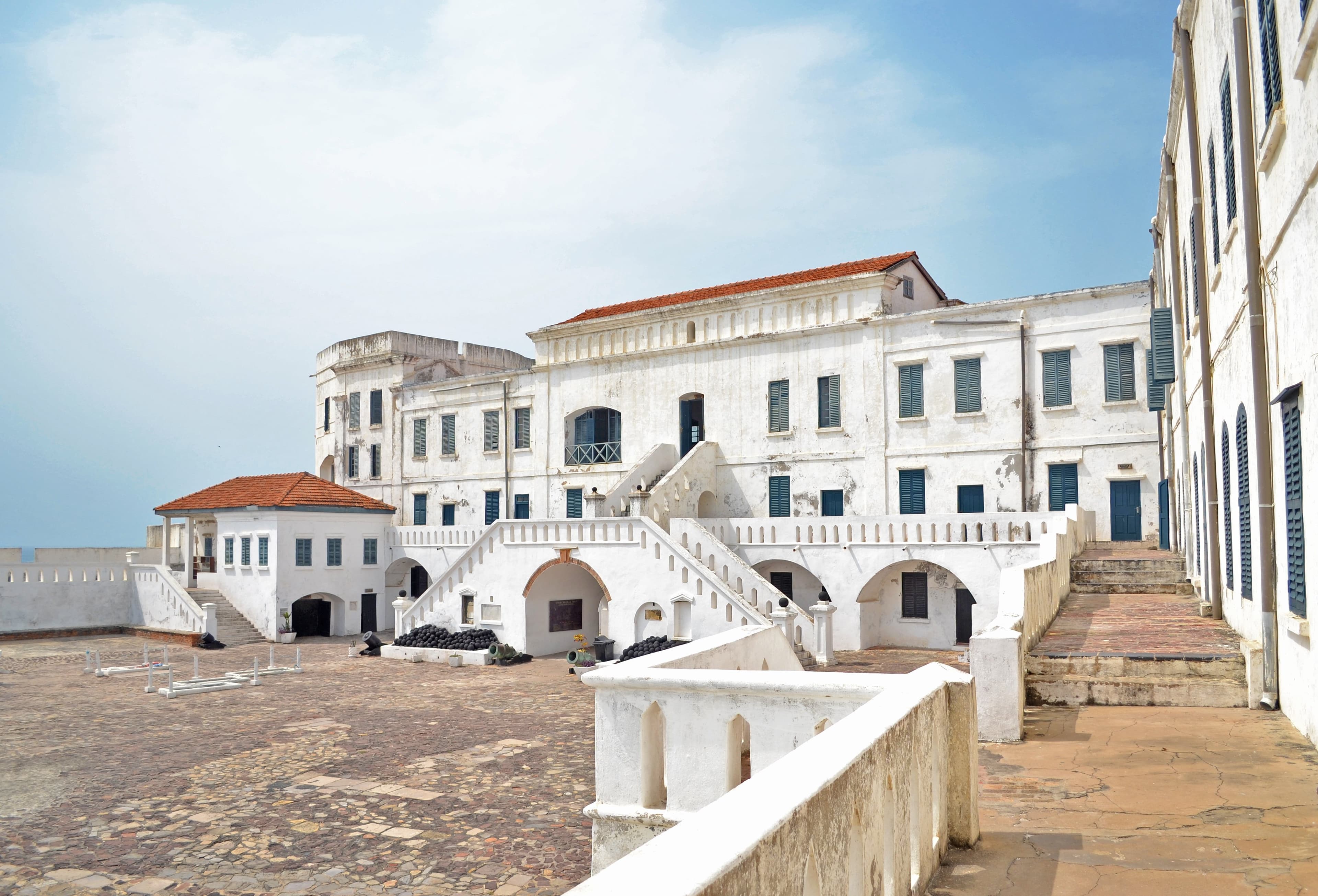
History enthusiasts can explore European fortifications, Ga history, urban commerce’s evolution, independence memory and Afro-Brazilian returns. A well-constructed visit always distinguishes documented facts from interpretation. Readers wanting more can extend their stay to Cape Coast and Elmina, two other major Ghanaian coastal-history stops, without suggesting they belong to the same Accra day.
Photographers can explore stall colours, architectural textures and lighthouse lines. Preparing a theme - occupations, urban transformations or relationships with the sea - makes a coherent photographic account. Objects, façades and equipment can tell much without multiplying portraits.
To enrich a multi-day Ghana itinerary, the Kiblistours blog also offers 15 places and experiences for a first trip and a deeper exploration of Cape Coast Castle. These resources extend urban experience towards other places of remembrance and nature without artificially adding same-day stops.
Practical advice for a comfortable and respectful visit
When to go and how much time to allow
Allow a full day, indicatively 8.30 a.m.-4.30 p.m. The timetable details stops; add journeys to and from your accommodation.
Accra’s heat and humidity justify closed shoes, water, sun protection and regular breaks. In the rainy season, some passages become slippery. Bring a light rain layer, avoid flooded streets and accept postponing an outdoor stop when conditions prevent comfortable exploration.
What budget should you allow for this Accra day?
Price varies by option and selected services: guiding, transport, meals and any admission. For an available offer, configure your day on the Kiblistours website to obtain the amount corresponding to your choices.
Before booking, check inclusions, exclusions, meeting point, transfers and whether the price applies per person or to the group. For a tailor-made programme not configurable online, request a personalised proposal.
Safety, privacy and accessibility
Travel light, keep valuables secure and follow crossing instructions. Ask consent before a portrait, close-up video or photograph in a private space; respect every refusal. Remain in publicly accessible areas: worksites, private courtyards and technical harbour facilities are not part of an unrestricted walk. Climbing the lighthouse requires explicit permission.
Travellers with reduced mobility may encounter uneven pavements, steps, crowded areas and varying access in old buildings. Guaranteeing a fully accessible route without prior inspection would be incorrect. An adapted solution may prioritise easily reached interpretation points, more frequent transfers and fewer stops. Communicate needs before the programme’s final design.
FAQ: visiting Makola and Jamestown in Accra
Can you discover Makola and Jamestown in one day?
Yes. The suggested programme connects market, historic neighbourhoods and coast in a day, with a pace adapted to participants.
Do you need a guide to visit Makola Market?
A guide is not essential for every walk, but helps with navigation and cultural understanding of the market and historic neighbourhoods.
Is Makola open during the 2026 works?
Works affect part of the commercial area, particularly the 31st December Market. The route must follow alleys accessible at the time of visiting.
Can you enter Ussher Fort and James Fort?
Entry depends on open spaces and heritage managers’ instructions. Plan exterior interpretation if an interior visit is impossible.
Can you climb Jamestown Lighthouse?
Only with explicit permission. Exterior discovery remains possible from accessible viewpoints.
What does Brazil House represent?
Brazil House is a place of remembrance associated with Afro-Brazilian returns to West Africa and the history of communities known as Tabom. It enables discussion of Atlantic movement in several directions after slavery’s ruptures. An interior visit is considered only with permission.
Can you visit Jamestown’s new fishing harbour?
The harbour is a professional space. The itinerary prioritises a public observation point; entry to facilities requires specific agreement.
Which languages are spoken in these neighbourhoods?
You may hear Ga, Twi, English and other languages used by residents, traders and visitors from different regions. Assuming a single language characterises everyone would be inaccurate. A guide can facilitate communication without claiming to translate every conversation.
Can you freely photograph traders and fishers?
Ask consent before close-up photography and respect refusals. Detailed rules appear in the practical advice.
Is the visit suitable for children and older travellers?
Yes, if adapted to abilities and needs. The route can be shortened, breaks increased and some stages covered by transfer. Sensitive historical themes can be explained appropriately for children’s ages. Accessibility constraints must be reviewed before confirmation.
Are Makola and Jamestown enough to understand Accra?
No, but they provide a particularly strong introduction. They address exchanges, Ga culture, the colonial period, Atlantic memory and urban transformation. Independence monuments, museums, other markets and contemporary neighbourhoods deserve additional visits during a longer stay.
What is the difference between Standard, Premium and VIP for this day?
Standard prioritises essential stops, Premium comfort and exchanges, and VIP personalisation for a private group. Available services and prices appear on the offer page; site-access permissions remain independent of your option.
Conclusion: leaving Jamestown without leaving its history
At the day’s end, the most lasting memory may not be a monument. It may be how a stall is organised despite crowds, a guide’s explanation before a fort, the idea that a Jamestown house carries stories of returns from Brazil, or a new understanding of a harbour’s meaning for families living from the sea. Market, streets and Atlantic then cease to be separate images: they become chapters of one Accra history.
From Makola to Jamestown, Ghana’s capital reveals a depth missed by rushed visits. It tells of commerce and creativity, colonisation and resistance, Atlantic movements and present-day transformation. Above all, it reminds us that a historic neighbourhood does not belong to the past: it belongs first to those who live, work and pass something on there. Respecting this reality gives travel its full value.
Book here: choose your option and available extras to organise your Accra discovery with Kiblistours. For a particular route, contact our team.