A Castle Overlooking the Ocean, a History Spanning Continents
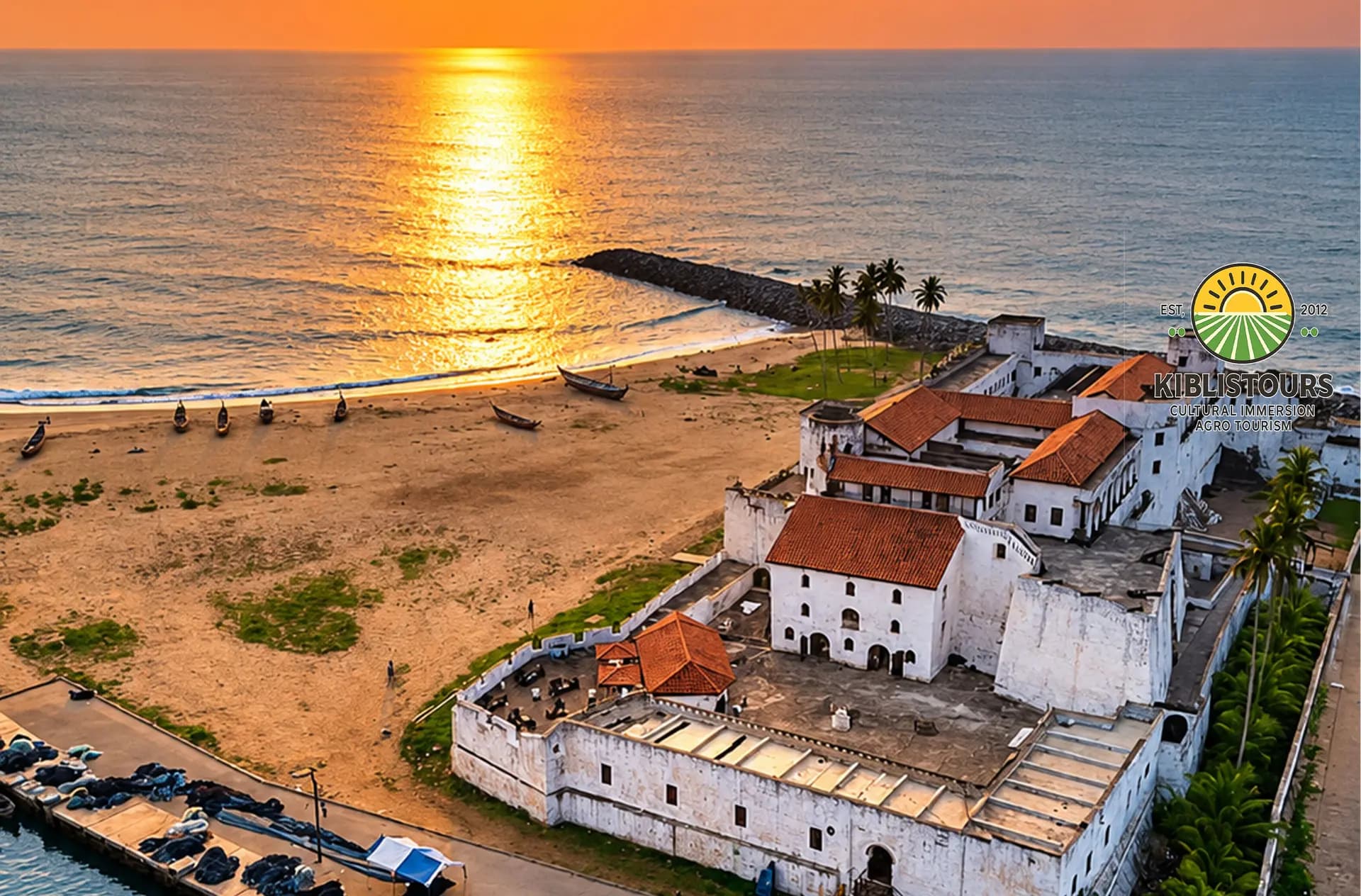
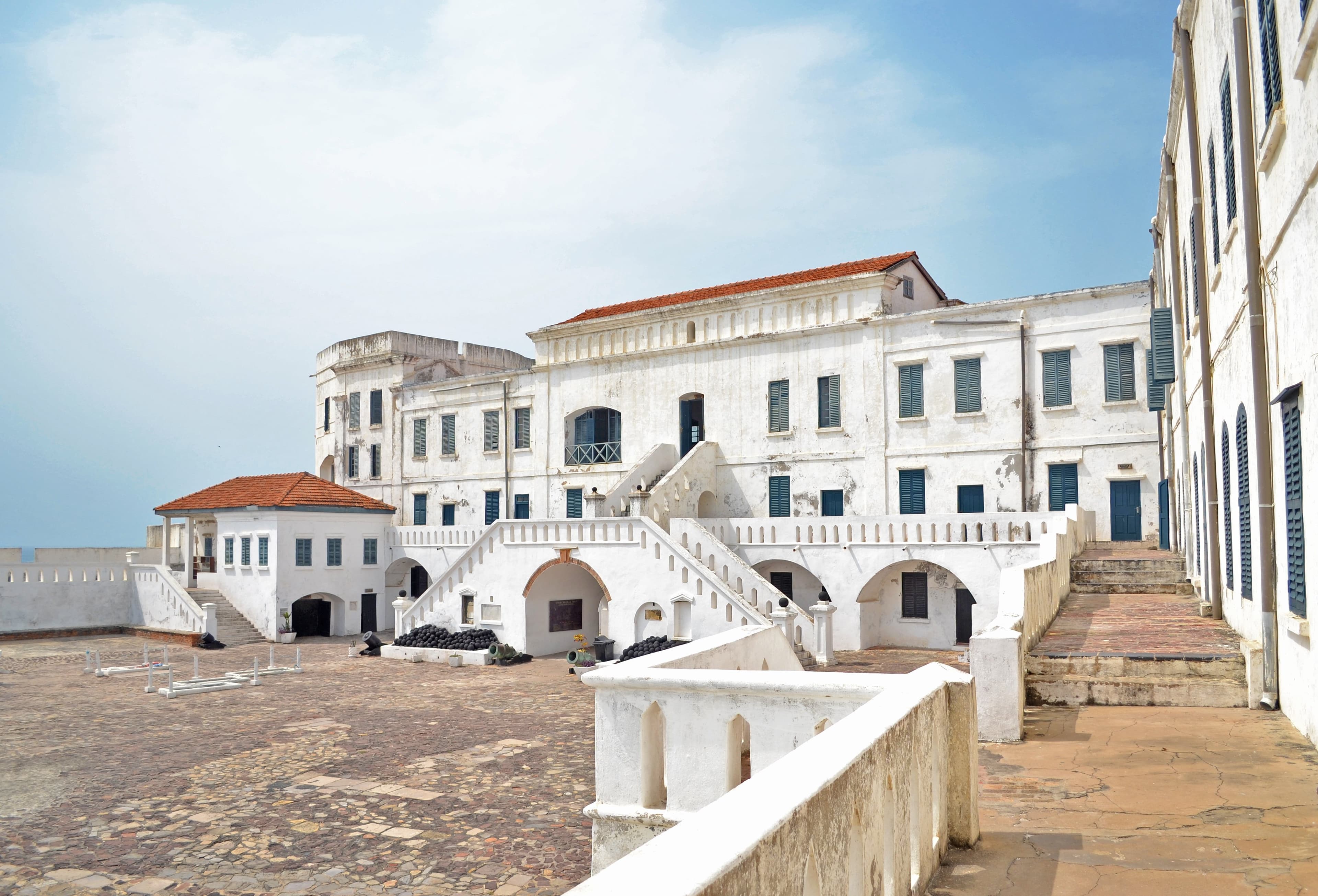
On the shores of the Atlantic Ocean, in the Ghanaian city of Cape Coast, an imposing white fortress overlooks the waves and the bustling activities of the coastline. At first glance, its sunlit courtyards, defensive walls and terraces suggest a historic monument in a particularly striking location. Yet stepping through its entrance reveals a far more complex history: one of trade, imperial rivalries, the transatlantic slave trade, and the collective memory shaped by these events.
Visiting Cape Coast Castle is therefore about much more than admiring military architecture. The experience invites visitors to reflect on the power relations that shaped the West African coast, the economic mechanisms that enabled the forced deportation of millions of Africans, and the lasting consequences of this history for contemporary societies.
The dungeons, the governors' quarters and the famous Door of No Return provide tangible reminders of historical events that are sometimes discussed only in abstract terms in textbooks.
The castle also serves as a meeting point for different perspectives on history and remembrance. Ghanaians visit to deepen their understanding of their national history; visitors from other African countries discover a major chapter of the continent's past; and members of the African diaspora sometimes undertake deeply personal journeys of remembrance.
Other travelers come to understand how the Atlantic world developed and why the legacies of slavery and colonialism remain relevant today.
This guide offers an informed, respectful and accessible approach to visiting Cape Coast Castle. It explores the site's main historical developments, describes its most significant spaces, distinguishes documented historical facts from accounts requiring caution, and provides practical advice for planning a visit.
It also suggests nearby attractions and different ways to incorporate this remarkable heritage site into a journey through Ghana with Kiblistours.
1. Cape Coast: Understanding the City Before Entering the Castle
Cape Coast is located in Ghana's Central Region, west of Accra. Its position along the Gulf of Guinea partly explains its historical importance in maritime trade.
Today, the city combines administrative functions, commercial activities, fishing, education and heritage tourism. The castle does not stand in an isolated landscape: it forms part of a living urban environment that has been inhabited and transformed over generations.
Long before European forts were established, this coastline was already integrated into African trading networks. The Fante communities, in particular, maintained economic and political relationships with territories farther inland.
Agricultural products, fish, textiles and gold circulated through trading systems governed by established practices and agreements that existed well before European ships arrived.
This distinction is essential: the history of Cape Coast did not begin with the construction of the castle.
The establishment of a European fortress subsequently transformed regional power dynamics. Controlling landing points, merchandise, taxation and political alliances became increasingly important.
Negotiations and conflicts involved representatives of European trading companies, local authorities and commercial intermediaries. The castle's history cannot therefore be understood separately from that of the African societies surrounding it.
Visitors benefit from exploring the city before or after touring the castle. Fishing boats, commercial streets and community gathering places demonstrate that Cape Coast is not merely a place associated with historical suffering.
It is a contemporary community with its own livelihoods, aspirations and cultural heritage.
Responsible tourism should recognize both dimensions: remembrance of the past and respect for present-day life.
Traveling by road from Accra generally takes several hours, depending on traffic and the departure point.
For a day trip, an early departure is advisable, while attempting to visit too many attractions without sufficient breaks should be avoided.
Spending a night in Cape Coast or Elmina often allows travelers to explore the region at a more comfortable pace.
2. From the First Trading Posts to Carolusborg Fort
Portuguese navigators began visiting the coastline of present-day Ghana in the late fifteenth century. They were particularly interested in gold and established various trading points.
At Cape Coast, commercial facilities existed before the construction of the large fortress visible today.
It is important to distinguish these early trading posts from the military structures built later. Attributing the entire present-day castle to the Portuguese would be a historical oversimplification.
In 1653, the Swedes began constructing a permanent fort, generally known as Carolusborg.
This development marked a decisive stage in the site's history.
The fort served both commercial and military purposes: securing stored goods, protecting the trading company's interests and demonstrating a lasting presence along the coast.
The seventeenth century was characterized by intense competition among European powers.
Trading posts and forts frequently changed hands following military operations, agreements and rivalries.
Cape Coast experienced several such changes of control.
The involvement of African actors in these developments should not be overlooked. Local alliances and political relationships along the coast also played important roles.
In 1665, the British took control of the fort.
Under British administration, the structure was gradually expanded and reorganized.
Defensive walls, storage areas, administrative offices, residential quarters and detention facilities formed part of a complex designed to support maritime commerce.
Over time, the trade in enslaved people became a central component of these activities.
These successive developments explain why Cape Coast Castle cannot be associated with a single construction date or a uniform architectural style.
The monument reflects centuries of modifications, extensions and changes in function.
During a guided tour, visitors may wish to ask which sections correspond to different historical periods and which architectural elements have undergone restoration.
3. Cape Coast Castle and the Transatlantic Slave Trade
To understand the historical significance of Cape Coast Castle, it is necessary to place it within the wider system of the transatlantic slave trade.
For several centuries, men, women and children were captured, sold, forcibly displaced and transported across the Atlantic Ocean to the Americas.
Their forced labor supported plantation economies and other sectors of colonial production.
This trade in human beings contributed significantly to the accumulation of wealth throughout the Atlantic world.
The routes through which captives reached the coast varied.
Some were captured during wars and conflicts, while others were victims of raids, kidnappings or systems of enslavement.
African actors participated at different stages of the networks of capture and sale, while European companies and merchants organized much of the financing, purchasing, maritime transportation and access to colonial markets.
Historical responsibilities were therefore multiple, but they should neither be confused nor automatically presented as equivalent.
Cape Coast Castle functioned as a place of transit, detention and administration within this system.
Enslaved people were held there before being forced aboard ships.
Conditions of captivity were dangerous and dehumanizing, marked by overcrowding, deprivation and violence.
The length of detention varied.
Precise figures associated with particular chambers or years must be treated cautiously, as estimates commonly repeated in tourism narratives are not always supported by comparable historical records.
Passing through the castle represented only one stage in a much longer chain of suffering.
After coastal detention came the Atlantic crossing, commonly known as the Middle Passage.
Deported Africans faced disease, hunger, violence and death aboard slave ships.
Those who survived were subsequently subjected to sale and forced labor within slaveholding societies.
Visiting the castle reveals the physical infrastructure of this system: detention chambers, controlled passageways, military installations and administrative spaces where decisions were made.
However, the experience should not reduce enslaved people to an anonymous mass.
Each individual had a language, family relationships, beliefs, skills and a personal history.
The slave trade sought to erase this individuality by treating human beings as commodities.
It is equally important to remember acts of resistance.
Resistance took many forms: before capture, during detention, aboard ships and within slaveholding societies.
It was not limited to collective rebellions.
It also included preserving cultural practices, helping others, escaping captivity and transmitting memories across generations.
A historically rigorous account recognizes these actions without romanticizing the violence endured by those who were enslaved.
4. The Male Dungeons: The Architecture of Imprisonment
Descending into the male dungeons is, for many visitors, one of the most emotionally challenging moments of a Cape Coast Castle tour.
The thick walls, limited lighting and sometimes oppressive atmosphere immediately convey the purpose of these spaces.
However, the sensations experienced by today's visitors cannot reproduce the suffering endured by the people historically imprisoned there.
Conditions at the time were considerably harsher, and the monument itself has undergone transformations.
Men held in these chambers were deprived of their freedom and subjected to severe overcrowding.
Sanitation facilities were inadequate, access to food and water could be limited, and ventilation was insufficient for the number of people confined within the spaces.
These conditions encouraged the spread of disease and intensified physical and psychological suffering.
Guides often explain how captives were grouped together and monitored.
Certain figures concerning the capacity of the chambers are frequently repeated.
Such numbers should be presented as estimates when historical records do not permit precise verification.
The purpose of visiting the dungeons is not to identify the most shocking statistic, but to understand the mechanisms of dehumanization.
Visitors may find it useful to pause and observe the floors, openings, passageways and connections between the chambers.
Architecture is never entirely neutral.
Here, it physically reflects decisions about surveillance, control and the movement of imprisoned people.
The contrast with the bright spaces located on the upper floors becomes particularly striking.
Visitors who are sensitive to enclosed spaces may find entering the dungeons difficult.
It is advisable to inform the guide beforehand and, if necessary, request an adapted itinerary.
Understanding history does not require placing oneself in physical distress.
Respecting the memory of those who suffered begins with careful attention to historical facts and human dignity.
5. The Female Dungeons: Violence, Separation and Women's Memories
The female dungeons remind visitors that the transatlantic slave trade affected individuals differently according to gender, age and personal circumstances.
Enslaved women experienced the loss of freedom and the violence inherent in the system, but they also faced specific risks, including sexual violence and separation from their families.
Discussing these experiences requires precise language and considerable sensitivity.
Sensationalized accounts do not necessarily honor victims more effectively.
On the contrary, they may distract attention from the wider structures of domination and exploitation.
Responsible historical interpretation explains what is known, distinguishes documented testimony from assumptions, and allows visitors to ask questions.
Family separation is central to this history.
Slave-trading networks separated spouses, parents, children and entire communities.
Some separations were permanent.
Others led to attempts to locate relatives, the preservation of oral traditions and memories transmitted within African diaspora communities.
Visiting Cape Coast Castle can help travelers understand this deeply personal dimension of a global historical phenomenon.
It is equally important not to portray African women solely as passive victims.
Historical research and records of slavery reveal forms of resistance, solidarity and reconstruction.
Although these experiences can sometimes be difficult to document specifically at Cape Coast, they form part of the broader history of the slave trade and slavery.
When visiting with school groups or families, this section requires particular preparation.
The level of detail should be adapted to the participants' ages, questions should be encouraged, and unnecessarily disturbing descriptions should be avoided.
A meaningful heritage visit should encourage lasting reflection rather than seek to provoke immediate emotional reactions at any cost.
6. The Door of No Return: A Symbol Between History and Remembrance
The Door of No Return is probably the most widely recognized feature of Cape Coast Castle.
It symbolizes the passage through which enslaved Africans were taken from the fortress toward the shore and the boats that transported them to slave ships.
For many, this departure meant the forced loss of their homeland, loved ones and freedom.
Today, the expression Door of No Return holds a central place in the language of historical remembrance.
In just a few words, it captures the magnitude of an immense historical rupture.
Nevertheless, it is important to distinguish the contemporary symbolic significance of the doorway from the precise architectural history of its openings, which may have changed over the centuries.
The symbol remains powerful without the need to present unverified historical details as established facts.
For descendants of enslaved Africans, this location may represent a search for meaning, identity and belonging.
Some visitors experience a moment of quiet reflection.
Others feel anger, sadness or emotions that are difficult to describe.
There is no single expected emotional response.
Guides should respect this diversity of reactions without imposing their own interpretations.
The Door of No Return also has considerable educational significance.
It invites reflection on how societies commemorate injustice, transmit historical narratives and build connections between generations.
Memory does not replace history.
Rather, it gives history a personal and emotional dimension, while historical research helps verify, qualify and contextualize the stories being told.
Visitors are encouraged to avoid staged photography at this location and respect those who wish to reflect in silence.
A brief moment of quiet contemplation may be more meaningful than continuous commentary.
Above all, a visit should never transform past human suffering into a mere backdrop for tourism.
7. Living Quarters, Chapel and Ramparts: The Contradictions Within a Single Building
One of the most disturbing aspects of Cape Coast Castle is the proximity between the dungeons and the areas reserved for European officials.
The administrative rooms and residential quarters offered living conditions that were incomparable to those endured by enslaved people held captive below.
The contrast between the upper floors and the detention chambers illustrates the hierarchy of power embedded in the building's architecture.
The offices and living quarters remind visitors that the slave trade was organized through decisions, accounting systems, commercial transactions and institutions.
The violence did not result solely from isolated acts of cruelty. It formed part of an organized commercial and administrative system.
Understanding this organization helps visitors move beyond a purely emotional interpretation of the monument and recognize the economic and political structures that sustained the transatlantic slave trade.
The presence of religious spaces within some of the coastal fortresses also raises important historical and moral questions.
The Christian religious practices of certain European administrators coexisted with the exploitation of enslaved people.
This contradiction should be examined carefully, without assuming that everyone living during that historical period shared identical beliefs or behaved in the same way.
The ramparts and cannons, meanwhile, highlight the military functions of the castle.
Fortresses were designed to protect commercial interests, deter potential enemies and control access to strategically important locations.
Their coastal positions provided clear views of approaching ships and movements along the shoreline.
Although the panorama visible today is spectacular, it reflects a geography that once served strategic military and commercial purposes.
Looking out over the Atlantic Ocean from the castle's terraces, visitors may reflect on the striking contrast between the natural beauty of the landscape and the building's historical functions.
This tension should not be overlooked.
It is one of the reasons why visiting Cape Coast Castle leaves such a lasting impression on those who experience it.
8. After the Slave Trade: Abolition, Colonial Administration and New Functions
The British abolition of the slave trade in 1807 marked an important historical turning point, but it did not bring slavery itself to an immediate end.
It is essential to distinguish between the abolition of the slave trade, which sought to prohibit the buying, selling and transportation of enslaved people, and the abolition of slavery, which addressed their legal status and exploitation.
Within the British Empire, emancipation began during the 1830s, through complex arrangements and transitional periods.
Following the decline of the transatlantic slave trade, Cape Coast Castle continued to serve administrative functions.
Cape Coast occupied an important position in the history of British presence on the Gold Coast.
Institutional changes and the growth of other political centers, particularly Accra, gradually transformed the city's role.
The castle also became associated with the broader history of education, administration and the development of colonial institutions.
These successive functions should be understood within their historical contexts, without allowing them to diminish the significance of the violence that occurred during earlier periods.
A historic monument may have served several purposes over time, sometimes reflecting deeply contradictory values and practices.
During the twentieth century, the historical and commemorative significance of Cape Coast Castle became increasingly recognized.
Conservation policies, restoration projects and the establishment of museum spaces contributed to its transformation into a heritage attraction.
These developments also raised new questions.
How can the castle's history be presented without oversimplification?
How can its architectural structures be preserved?
And how can visitors with widely different expectations, cultural backgrounds and personal connections to this history be welcomed appropriately?
Independent Ghana gradually incorporated these monuments into both national and international historical narratives.
They bear witness to foreign domination, long-established commercial relations and the importance of preserving historical memory.
Their conservation is therefore both a cultural heritage responsibility and an educational priority.
9. UNESCO World Heritage Status: Recognition and Responsibility
In 1979, Cape Coast Castle was inscribed on the UNESCO World Heritage List as part of the collective property known as “Forts and Castles, Volta, Greater Accra, Central and Western Regions.”
The castle was therefore not listed as an isolated monument.
Instead, UNESCO recognized a collection of historic structures documenting several centuries of trade, conflict and domination along the Ghanaian coast.
This inscription highlights the universal significance of these sites.
Their history concerns not only Ghana but also West Africa, Europe, the Americas and African diaspora communities around the world.
The maritime routes connecting these regions played an important role in shaping the modern Atlantic world, with profound human and economic consequences.
International recognition does not eliminate the challenges associated with preserving these historic buildings.
Coastal structures are exposed to humidity, salt spray, severe weather and pressures resulting from tourism.
Restoration efforts must preserve the authenticity of historical architectural elements while ensuring visitor safety and facilitating the transmission of historical knowledge.
UNESCO recognition should not lead visitors to overlook the communities living around these monuments.
Living heritage exists within a broader social and geographical environment, where residents maintain their livelihoods, cultural practices and everyday activities.
Whenever possible, the economic benefits generated by tourism should contribute to supporting local communities and heritage conservation initiatives.
For travelers, UNESCO World Heritage status provides an important indication of a monument's historical significance.
However, it does not guarantee that every anecdote shared during a guided tour is supported by documentary evidence.
The most rewarding approach combines the emotional experience of visiting the castle with information drawn from reliable institutional sources and historical research.
10. The Cape Coast Castle Museum: Connecting the Monument with Historical Knowledge
The museum located within Cape Coast Castle provides an opportunity to deepen visitors' understanding of the architectural spaces they have explored.
Depending on the collections and exhibitions available at the time of the visit, travelers may discover historical maps, documents, artifacts and explanations concerning commercial networks, African societies and the transatlantic slave trade.
Maps are particularly valuable for avoiding an overly narrow interpretation of this history.
They demonstrate that enslaved Africans originated from different regions and that their destinations in the Americas were far from uniform.
Slave-trading routes evolved over time according to historical periods, the European powers involved and the demands of colonial markets.
Objects associated with captivity require careful historical interpretation.
Shackles or representations of slave ships should never be viewed merely as curiosities.
They provide evidence of coercive practices, transportation methods and an economic system founded on the denial of human freedom.
A meaningful museum visit should also explore African societies before and during the period of the slave trade.
African political institutions, artistic traditions, languages, agricultural practices and trading networks were rich and diverse.
Reducing African history solely to the slave trade would represent a serious distortion of historical perspective.
Before leaving the museum, visitors may find it useful to reflect on two or three questions that remain unanswered.
Where did the people imprisoned at Cape Coast Castle originally come from?
How did local African authorities negotiate with European trading companies?
How are descendants of enslaved Africans reconnecting with the continent today?
Such questions can help guide the remainder of a journey through Ghana and encourage further personal reading and historical exploration.
11. Cape Coast and the African Diaspora: Return, Cultural Transmission and the Limits of Genealogy
Cape Coast Castle holds an important place in heritage and remembrance journeys undertaken by members of the African diaspora.
For some visitors, traveling to Cape Coast offers an opportunity to reconnect with a history that has often been transmitted in fragments through family memories, cultural traditions, historical archives and collective narratives.
Such a journey can be profoundly personal.
However, visitors should not be led to believe that visiting a particular castle can establish with certainty the exact departure point of an ancestor.
Slave-trading routes were numerous, and the surviving documentary evidence is frequently incomplete.
Reliable genealogical research requires the careful comparison of several different types of historical sources.
Ghanaian initiatives aimed at strengthening ties with the African diaspora, particularly the 2019 Year of Return, have helped introduce these historic sites to a wider international audience.
These initiatives have also encouraged discussions about cultural identity, citizenship, investment and relationships between Africa and its diaspora communities.
Nevertheless, every visitor experiences this journey differently.
Some seek a spiritual experience.
Others are primarily interested in historical understanding, cultural exchange or discovering contemporary Ghana.
High-quality tourism services should respect these different motivations without promising a particular emotional response or personal revelation.
Reconnecting with Africa can also involve meeting contemporary communities, discovering local languages, experiencing traditional and modern cuisines, appreciating artistic expressions and exploring the country's landscapes.
Cape Coast Castle opens a doorway into the past, but the journey should not end there.
Contemporary Ghana possesses creativity, cultural richness and diversity that deserve to be appreciated in their own right.
12. Cape Coast or Elmina: Two Complementary Heritage Experiences
Located near Cape Coast, the town of Elmina is famous for St. George's Castle, founded by the Portuguese in 1482.
Both monuments belong to the same UNESCO World Heritage property, but they differ in their original construction periods and historical political developments.
Elmina is particularly associated with the beginnings of permanent Portuguese presence along this section of the West African coastline.
Its history reflects successive periods of Portuguese, Dutch and British control.
Cape Coast, whose permanent fortification dates back to the mid-seventeenth century, is closely associated with British expansion and the administration of the Gold Coast.
Visiting both castles allows travelers to compare their architecture, defensive installations, detention chambers and approaches to museum interpretation.
This comparison helps demonstrate that the transatlantic slave trade was not a single, uniform historical episode.
It was an evolving system involving different European powers and numerous African territories.
For travelers with only one day available, it may be preferable to explore one castle thoroughly rather than rush between several attractions.
With two days, combining Cape Coast Castle and Elmina Castle becomes considerably more comfortable.
Visitors can also include time to explore the coastline and discover the daily activities of local fishing communities.
It is equally important not to regard the two castles as interchangeable.
Each has its own history, architectural features and distinctive relationship with the surrounding town.
A knowledgeable guide can help visitors appreciate these differences without simply repeating the same historical narrative at both locations.
13. Planning Your Visit: Duration, Access, Opening Hours and Budget
Cape Coast Castle is generally explored through a guided tour.
According to information published by the Ghana Museums and Monuments Board (GMMB), the main guided tour lasts approximately 45 minutes.
In practice, allowing between one and a half and two and a half hours provides sufficient time to explore the castle's different areas, visit the museum and appreciate the ramparts without rushing.
According to the opening hours currently published by the Ghana Museums and Monuments Board (GMMB), Cape Coast Castle welcomes visitors daily from 9:00 a.m. to 4:30 p.m.
On August 10, 2026, Ghana's Minister of Tourism announced an extension of visiting hours until 10:00 p.m., following trials of nighttime visits.
However, this announcement does not confirm daily availability, specific visiting times, access conditions or potential additional charges.
Any visit scheduled after 4:30 p.m. should therefore be confirmed directly with the castle before booking.
The entrance fees of GHS 20 for Ghanaian adults and GHS 80 for non-Ghanaian adults come from a fee schedule dated July 1, 2023.
The GMMB indicates that entrance fees have been revised, without providing an updated schedule in the information referenced here.
Consequently, these amounts should not be considered guaranteed admission prices in November 2026.
When traveling from Accra, visitors should allow plenty of time for the journey.
Traffic congestion, road conditions and stops along the way can significantly affect travel times.
A day trip is possible, but it can be tiring.
For an itinerary that also includes Elmina Castle or Kakum National Park, spending a night in the region offers greater flexibility.
For a comfortable visit, choose closed-toe or non-slip shoes, lightweight clothing, drinking water and sun protection.
Some surfaces may be uneven, staircases narrow and dungeon chambers poorly lit.
Visitors with reduced mobility should inquire in advance about accessibility throughout the monument.
Photography regulations may vary.
Visitors should request permission when necessary, particularly in museum galleries and places of remembrance.
For organized groups, advance booking or coordination may help facilitate the visit, although current admission procedures should still be confirmed.
The overall cost of visiting Cape Coast Castle is not limited to the entrance fee.
Depending on the itinerary, the budget may also include transportation, guiding services, meals, accommodation, additional excursions and travel coordination expenses.
Prices for Kiblistours packages are provided through personalized quotations, clearly distinguishing included services, optional activities and personal expenses.
14. When to Visit Cape Coast and How to Plan a Stay in Ghana's Central Region
Cape Coast can be visited throughout the year.
The coastal climate is generally warm and humid, with periods of varying rainfall.
Weather conditions mainly influence travel comfort, outdoor activities and forest excursions.
There is no single ideal season that suits every traveler.
The months from December to February are often popular for tourism.
However, this does not mean temperatures are always cool or that rainfall is entirely absent.
At other times of the year, the vegetation may be especially lush and green, although greater flexibility may be needed when organizing excursions.
A balanced itinerary could include a morning visit to Cape Coast Castle, followed by an afternoon exploring the city.
For a two-day stay, Elmina Castle and Kakum National Park can be incorporated, depending on opening hours, traffic conditions and the group's preferred pace.
Families traveling with young children may appreciate itineraries with fewer stops and more frequent breaks.
Travelers particularly interested in history may wish to dedicate additional time to discussions with their guide and exploration of the museum.
University groups can prepare research questions or organize a short reflection and discussion session following the visit.
Members of the African diaspora may prefer to allow additional time for personal contemplation and remembrance.
Finally, it is advisable to include some flexibility for unexpected circumstances.
The most rewarding journeys are not necessarily those that include the greatest number of attractions.
They also provide opportunities for deeper understanding, meaningful encounters and personal reflection.
15. What to See and Do Around Cape Coast
Kakum National Park is one of the Central Region's leading nature attractions.
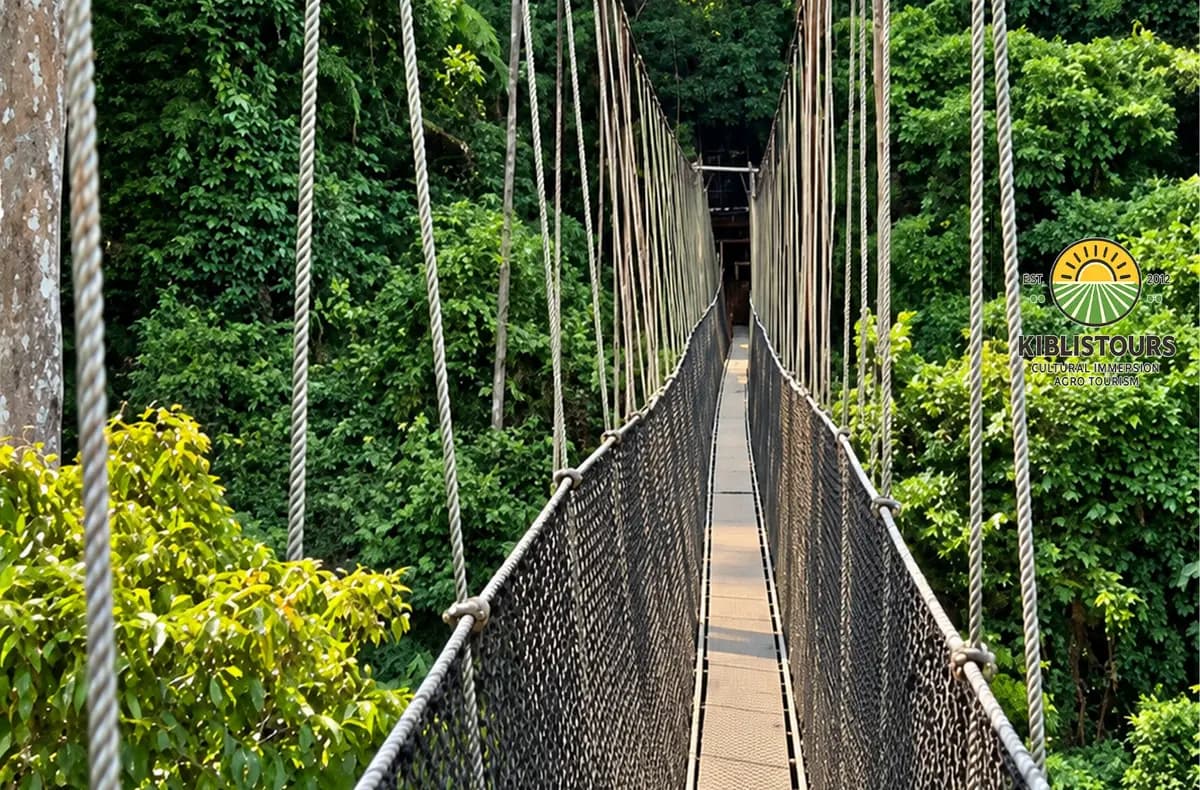
Its tropical rainforest and suspended canopy walkway provide a striking contrast to the historical experience of visiting Cape Coast Castle.
Exploring the park offers opportunities to learn about biodiversity, environmental conservation and relationships between ecosystems and local communities.
Access conditions for the canopy walkways should be confirmed before departure.
For a deeper exploration of the region: Elmina Castle: History, Visitor Experience and Remembrance — Kiblistours Blog.
Elmina is another major heritage destination.
Its historic castle, fishing harbor and urban environment provide additional perspectives on the history of coastal trade.
Visits should be conducted with respect for residents.
The harbor's activities are part of everyday working life, not performances organized for tourists.
The city of Cape Coast itself also deserves attention.
Its streets, shops, community spaces and maritime activities offer insights into contemporary Ghanaian life.
A local guide can explain daily customs, economic activities and selected cultural traditions while avoiding generalizations about the communities.
Markets and restaurants offer opportunities to discover Ghanaian ingredients and traditional dishes.
A culinary break after the castle visit can be enjoyable.
However, it is preferable not to move immediately from the emotionally demanding dungeon tour to noisy entertainment.
Allowing time for quiet reflection and discussion can help visitors process what they have experienced.
For longer stays, the Central Region can be combined with other Ghanaian destinations according to travelers' interests.
Possible themes include historical heritage, ecotourism, urban culture and visits to rural communities.
Itineraries should be designed around realistic travel distances and the time available, rather than promising an excessive number of attractions.
16. Responsible Heritage Tourism: Respecting Historical Memory and Supporting Local Communities
A heritage site such as Cape Coast Castle requires an ethical approach to tourism.
The purpose of a visit is not to seek dramatic images of suffering or use the dungeons as photographic backdrops.
Visitors' primary responsibilities are to listen carefully, follow the site's guidelines and recognize the dignity of the people whose experiences form part of its history.
Photography should be approached with sensitivity.
Humorous poses or staged photographs inside detention chambers are inappropriate.
Other visitors may be experiencing strong emotions, and their privacy and personal space should be respected.
Permission should also be obtained before photographing other individuals.
Guides play a central role in responsible heritage interpretation.
Professional historical interpretation distinguishes established facts, estimates and oral traditions.
It avoids unverifiable statistics and unnecessarily dramatized accounts.
Acknowledging historical uncertainty does not diminish the significance of the events being discussed.
On the contrary, historical accuracy is itself a form of respect.
Tourism can contribute to the local economy by creating employment and business opportunities for guides, drivers, accommodation providers, restaurant operators and artisans.
These benefits should be encouraged without reducing local communities to passive participants in the visitor experience.
Meaningful cultural encounters require reciprocity, fair compensation and respect for local residents.
Finally, the educational experience can continue after the visit through reading, discussion and learning.
The knowledge gained at Cape Coast Castle becomes even more valuable when it encourages travelers to question prejudices, understand the lasting legacies of slavery and pass on more accurate historical narratives to future generations.
17. Visiting Cape Coast Castle with Kiblistours: Three Experiences to Discover Ghana's History
With Kiblistours, discover Cape Coast Castle, one of Ghana's most significant historical landmarks and a major place of remembrance associated with the transatlantic slave trade.
Whether you are traveling alone, as a couple, with family or in a group, explore our three travel packages — Standard, Premium and VIP — designed to meet different expectations in terms of comfort, guidance and personalization.
17.1. Standard - Cape Coast: Following the Footsteps of History
Duration: 1 Day | Departure: Accra | Package: Group Excursion
Discover the main historical areas of Cape Coast Castle during an enriching cultural excursion.
Accompanied by a guide, explore the castle's historic courtyards, male and female dungeons, fortifications and famous Door of No Return.
Historical explanations will help you understand the castle's role in the transatlantic slave trade and its importance in African collective memory.
This package focuses on the essential historical experience in a friendly, accessible group setting.
Highlights
Guided discovery of Cape Coast Castle and its history.
Visits to the dungeons and the Door of No Return.
Greater understanding of the history and remembrance of the transatlantic slave trade.
Group excursion departing from Accra.
An experience suitable for individual travelers and groups.
17.2. Premium - Cape Coast and Elmina: Two Castles, One Shared History
Duration: 2 Days / 1 Night | Departure: Accra | Package: Small-Group Tour
Deepen your understanding of Ghana's historical heritage by combining visits to Cape Coast Castle and Elmina Castle.
At Cape Coast, explore the spaces that bear witness to the transatlantic slave trade.
At Elmina, discover a fortress built by the Portuguese in 1482, which became one of the most important surviving monuments associated with centuries of trade and European presence along the West African coast.
Between the two castle visits, enjoy the atmosphere of the coastal towns and discover the landscapes of Ghana's shoreline.
This experience provides additional time to understand the history, engage in meaningful discussions with your guide and appreciate the distinctive features of each site.
Highlights
In-depth exploration of two castles included in a UNESCO World Heritage property.
Cultural and historical guidance throughout the experience.
Travel in a small group.
One overnight stay along the Ghanaian coast.
Time to explore Cape Coast and Elmina.
A more relaxed pace than a single-day excursion.
17.3. VIP - Cape Coast, Elmina and Kakum: Remembrance, Heritage and Nature
Duration: 3 Days / 2 Nights | Departure: Accra | Package: Private Tour
Enjoy an exclusive private experience combining major chapters of Ghanaian history with the beauty of the country's natural landscapes.
Your journey begins at Cape Coast Castle, where the dungeons, defensive structures and Door of No Return bear witness to the history of the transatlantic slave trade.
Continue to Elmina to explore its historic castle and discover the cultural environment of this maritime town.
The journey then takes you to Kakum National Park, renowned for its tropical rainforest and suspended walkways high above the forest vegetation.
With a personalized itinerary, dedicated assistance and a pace tailored to your preferences, this package combines historical discovery, remembrance tourism and immersion in Ghana's natural environment.
Highlights
Private, personalized tour.
Guided visits to Cape Coast Castle and Elmina Castle.
Exploration of Kakum National Park.
Private vehicle and dedicated travel assistance.
Two nights in higher-category accommodation.
An itinerary adapted to travelers' preferred pace.
An experience particularly suitable for couples, families and members of the African diaspora.
Explore more Kiblistours travel experiences: Kiblistours destinations • Available tours • Travel tips and stories from the blog.
17.4. Book Your Ghana Heritage Experience with Kiblistours
The three packages represent customizable travel experiences.
The services actually included, any exclusions, participation requirements and prices are detailed in a personalized quotation and confirmed at the time of booking.
Whether you wish to discover Cape Coast in a single day, explore the history of Ghana's castles in greater depth, or combine cultural heritage with nature, Kiblistours will assist you in organizing your journey.
Kiblistours - Experience Authentic Africa.
Official website: https://www.kiblistours.com
For excursions to Cape Coast or Kakum National Park: Explore Kiblistours Tours.
For more travel experiences in Ghana: Discover Kiblistours Destinations.
To deepen your historical knowledge: Read Our Article About Elmina Castle.
To explore available packages and request a personalized quotation: Visit Kiblistours.