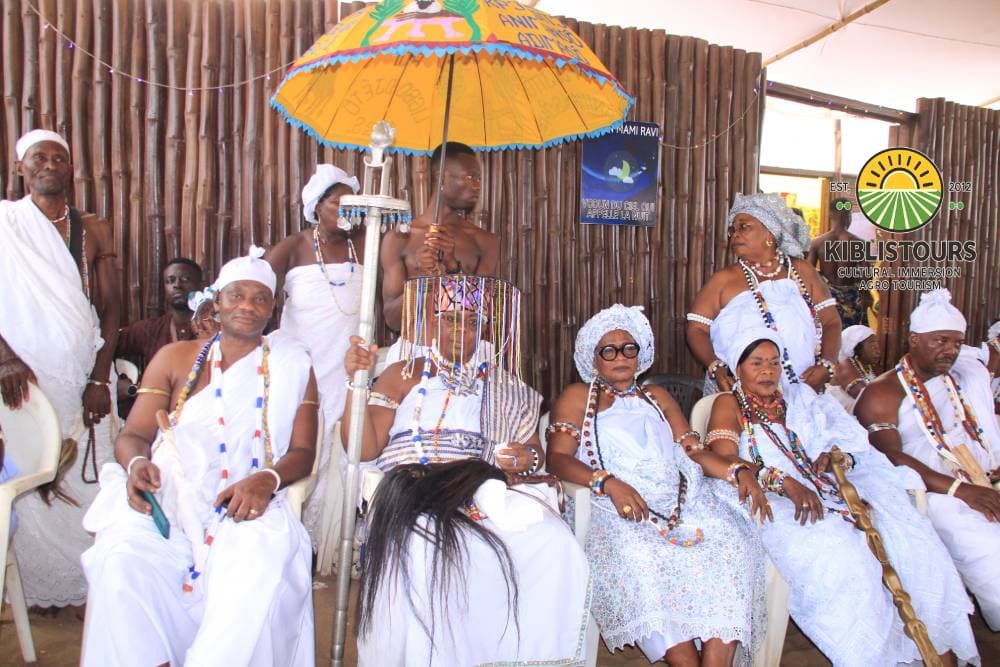
There are countries you visit by following an itinerary, photographing a few monuments, and gradually ticking off the places listed in a guidebook. And then there are destinations you discover differently, because they require time, curiosity, and, above all, a genuine willingness to meet the people who bring them to life.
Benin undoubtedly belongs to this second category.
Here, travel is not simply a succession of museums, monuments, and landscapes photographed before moving on to the next destination. It unfolds gradually through encounters, stories being told, markets explored, villages discovered, traditions explained, and conversations that allow you to see the country from a different perspective.
You can begin your day facing the Atlantic Ocean in Cotonou, listen a few hours later to the history of the former Kingdom of Dahomey in Abomey, cross the waters of Lake Nokoué by canoe in Ganvié, or walk in the footsteps of the transatlantic slave trade in Ouidah. Yet when the journey comes to an end, the memories that stay with you the longest are not necessarily the ones you photographed.
It may be a conversation with an artisan, the smile of a market vendor you met along the way, a story told by a guide, the gentle sound of a canoe gliding across the lake, or a new flavour discovered around a table. These are often the moments, sometimes unexpected, that give a journey its true depth and create the feeling that, for a few moments, you have stopped being merely a spectator.
Welcome to authentic Benin.
With Kiblistours, our ambition is to help you discover this destination through four dimensions that represent much of its richness: culture, Vodoun, nature and, above all, human encounters.
Discover in this article: Abomey • Porto-Novo • Vodoun • Ouidah • Ganvié • agritourism • tours in Benin
Why Choose Benin for an Authentic Journey in West Africa?
On the map of West Africa, Benin appears as a relatively narrow country located between Togo and Nigeria. Yet travelling across the country from south to north is enough to understand just how misleading this first impression can be, as landscapes, histories, traditions, and ways of life change considerably along the way.
From the Atlantic coastline to the landscapes of the north, from historic cities to lakeside communities, from urban markets to rural villages, each stop offers a new perspective on the country and reveals a different side of Benin.
Benin also has an exceptionally rich history. The Royal Palaces of Abomey bear witness to the history of the Kingdom of Dahomey and have been inscribed on the UNESCO World Heritage List since 1985. Ouidah preserves the memory of the transatlantic slave trade while remaining a key destination for understanding Vodoun. Porto-Novo tells another side of the country's story through its architecture, museums, traditions, and Afro-Brazilian influences, while Ganvié reveals a lakeside civilization whose daily life is largely organized around water.
Further north, the landscapes change once again, opening the door to other traditions, communities, and natural environments. This geographical progression is, in fact, one of the pleasures of travelling through Benin: visitors gradually observe changes in vegetation, architecture, economic activities, and sometimes cultural practices, creating the impression of discovering several different worlds during a single journey.
Benin is therefore particularly well suited to travellers who are not simply looking for beautiful landscapes but who also want to understand what they see. The country's history, beliefs, everyday practices, and contemporary transformations provide countless opportunities for conversations with guides and the people encountered along the way.
Travelling across Benin therefore quickly reveals that there is no single way to tell the story of this country, because Benin has many faces that meet, complement one another, and gradually allow travellers to understand the depth of its history and culture.
Beninese Culture: Discovering a Heritage That Continues to Live
Beninese culture is not limited to objects preserved in museums or monuments inherited from the past. It continues to live through spoken languages, markets, clothing, cuisine, ceremonies, artisanal practices, music, family stories, and the many forms of transmission that still connect generations.
This dimension is particularly important for understanding the difference between a simple tourist visit and a genuine cultural experience. A monument can be observed quickly, but its meaning often becomes clear only when someone explains why it exists, what it represents, and the place it still holds in collective memory.
It is precisely this living culture that Kiblistours seeks to introduce to travellers, giving as much importance to the places visited as to the explanations and the people capable of revealing their meaning.
Abomey: Stepping into the History of the Kings of Dahomey
Located approximately 130 to 150 kilometres from Cotonou, depending on the route taken, Abomey is one of the key destinations for understanding Benin’s pre-colonial history. For several centuries, the city was the political centre of the Kingdom of Dahomey, whose successive rulers left behind a considerable architectural, artistic, political, and symbolic heritage.
The Royal Palaces of Abomey, inscribed on the UNESCO World Heritage List since 1985, form an exceptional heritage complex associated with the history of the kingdom. According to UNESCO, the site represents essential material evidence of the Kingdom of Dahomey and preserves palaces, royal spaces, and various elements that help visitors understand its organization and symbolism.
However, visiting Abomey simply by memorizing a few names and dates would mean missing much of what makes it so fascinating. The visit takes on another dimension when you seek to understand why certain rulers were associated with particular animals or symbols, what the recades conveyed, how royal power was organized, and the roles played by different groups within Dahomean society.
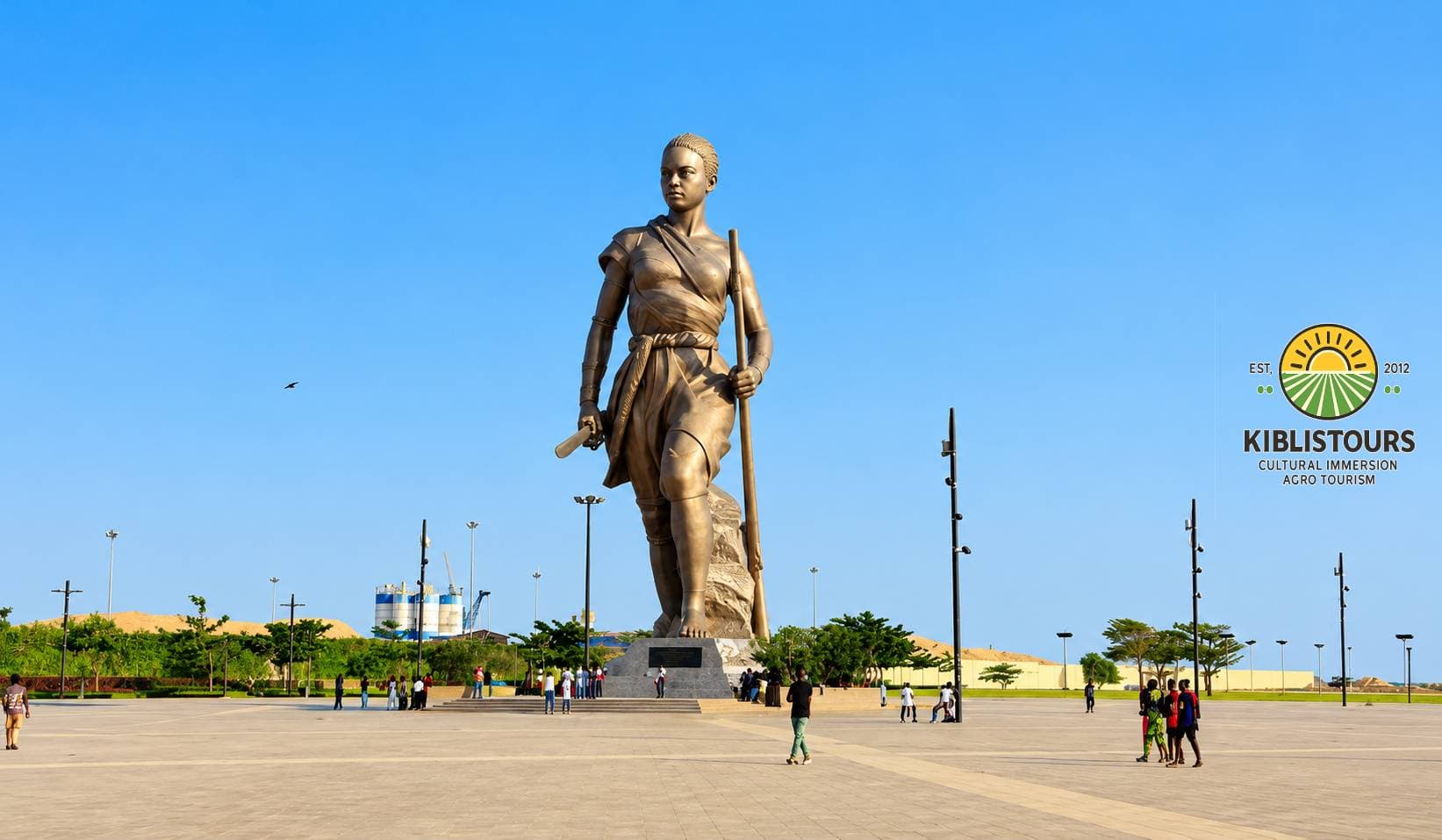
The history of the kingdom’s female military units also deserves to be placed within its historical context to avoid reducing it to contemporary popular representations. With appropriate guidance, the objects, symbols, and buildings begin to speak to one another, and Abomey gradually ceases to be merely the memory of an ancient kingdom and becomes a gateway to understanding a complex civilization.
An in-depth visit also helps visitors understand that Abomey’s heritage is not limited to its buildings. The memory of the kingdom continues to live through families, traditions, stories, ceremonies, and various forms of knowledge passed down through generations. This continuity between tangible heritage and living memory gives the city a particular depth.
Porto-Novo: Taking the Time to Discover Another Side of Benin
Porto-Novo is the official capital of Benin, but many travellers focus their stay on Cotonou and devote only a few hours to the city. Yet doing so means missing a valuable opportunity to discover a city whose identity has been shaped by the intersection of several historical and cultural influences.
Porto-Novo’s architecture, historic districts, places of worship, markets, and cultural institutions make it possible to observe different layers of Beninese history within the same urban space, particularly influences resulting from exchanges between Africa, Brazil, and the Atlantic world.
Porto-Novo is particularly well suited to slow exploration. By walking through some of its neighbourhoods, observing the façades, visiting cultural sites, and taking the time to talk with local residents, travellers gradually discover a city that does not necessarily seek to impress at first sight but reveals its personality to those who take the time to listen.
This way of travelling also encourages a different perspective on architecture. An old façade can tell the story of human movement between several continents, while a neighbourhood may preserve, in its layout or traditions, traces of successive historical periods. The guidance of someone capable of connecting these elements can transform an urban walk into a living interpretation of history.
Understanding Vodoun in Benin Beyond the Stereotypes
For many international travellers, the word “Vodoun” still evokes images shaped by cinema, popular literature, and certain Western representations that have greatly simplified, and sometimes even distorted, far more complex religious and cultural traditions.
Travelling to Benin offers precisely the opportunity to move beyond these representations and understand Vodoun within its historical, cultural, and social context.
Vodoun: A Religious, Cultural, and Social Reality
In Benin, Vodoun is a living reality whose expressions may vary according to communities, regions, and traditions. It notably involves relationships between human beings, various deities or spiritual forces, ancestors, certain elements of nature, and systems of knowledge transmission governed by their own rules.
There are therefore places, practices, dignitaries, prohibitions, and forms of knowledge that cannot be understood in just a few minutes or reduced to an attraction designed for visitors.
Kiblistours’ approach is therefore based on explanation, respect, and contextualization, because a sacred place should never be treated as a mere backdrop, a ceremony should not automatically become a tourist attraction, and people entrusted with religious responsibilities are certainly not performers placed at the disposal of visitors.
This distinction is essential because it profoundly transforms the way travellers discover Vodoun, allowing them to move beyond exotic curiosity towards a genuine process of cultural understanding.
For visitors, this also means accepting that not everything is accessible or may be photographed. Certain forms of knowledge belong within specific contexts, and some spaces are governed by rules that must be respected. Authenticity does not mean gaining unlimited access; it means understanding that respecting these boundaries is itself part of the experience.
Ouidah: Where Memory, Spirituality, and History Meet
It is difficult to discuss Vodoun in Benin without mentioning Ouidah, a city that holds a special place in the country’s religious and cultural history, as well as in the memory of the transatlantic slave trade.
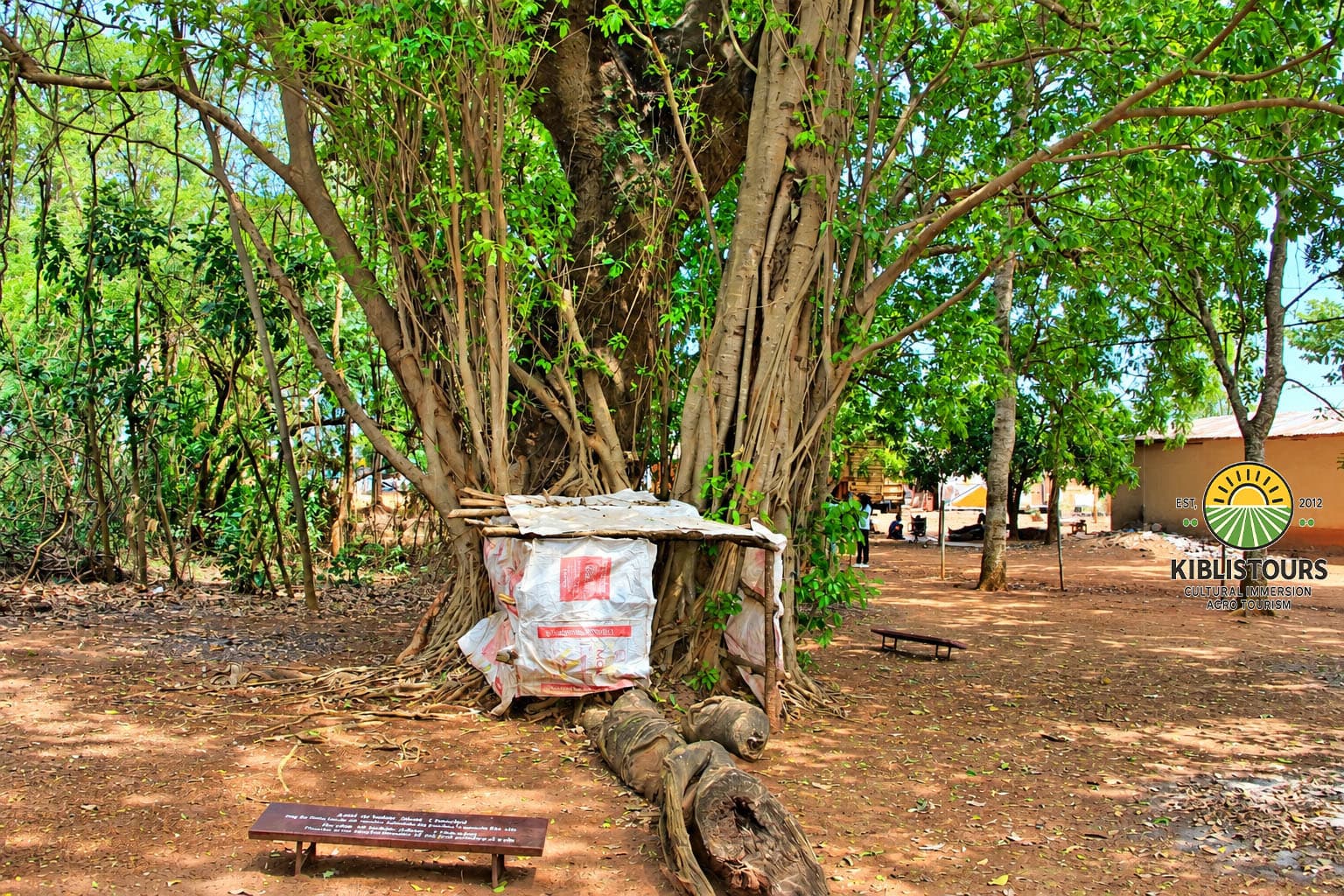
Travellers can discover the Temple of Pythons, various spaces associated with Vodoun traditions, as well as several memorial sites connected to the history of the slave trade. Ouidah is also associated with the Slave Route, which leads to the Door of No Return overlooking the Atlantic Ocean.
This visit deserves to be undertaken with the necessary time and respect, because behind the monuments and historical landmarks lie the individual journeys of women, men, and children who were victims of systems of enslavement and forced displacement. Responsible tourism should make it possible to understand this history without turning it into an attraction, and this is also what gives Ouidah its particular depth: memory, spirituality, history, and contemporary life all come together within the same place.
Ouidah also demonstrates why Benin cannot be properly discovered through a single perspective. In the course of one day, travellers may encounter the history of the slave trade, religious traditions, colonial heritage, contemporary art, and the everyday life of a rapidly changing city. These dimensions do not cancel one another out; they coexist and give the destination a particularly strong identity.
Ganvié: Discovering Benin from Lake Nokoué
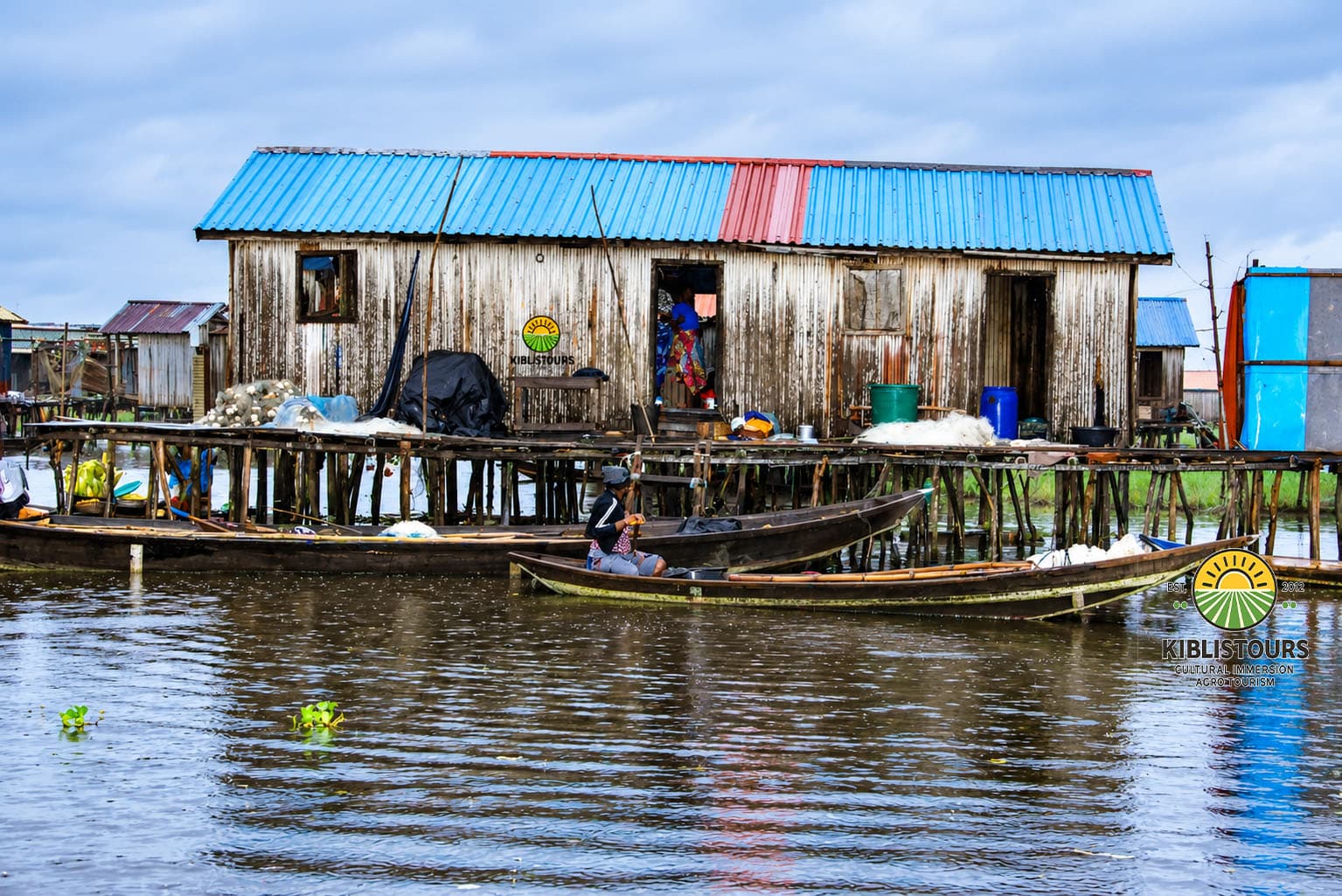
As the canoe gradually leaves the landing stage and makes its way onto Lake Nokoué, the landscape changes and the pace of the journey seems to slow naturally. Houses appear above the water, boats transport people or goods, and various daily activities gradually reveal a social organization closely connected to the lakeside environment.
Often nicknamed the “Venice of Africa,” Ganvié nevertheless deserves to be discovered for what it truly is rather than through a comparison with a European city. Ganvié is, above all, Ganvié, with its history, its people, its environment, and its own forms of social organization.
Understanding a Community Shaped by Water
The history of Ganvié is notably associated with the Tofin people and the historical upheavals caused by conflicts and the slave trade in the region. Over time, a social and economic organization adapted to the lakeside environment developed, and water continues to play an essential role in local life today.
The canoe serves as a means of transportation, the lake is an important economic space, homes are adapted to their environment, and fishing and trade contribute to the organization of daily life.
For travellers, the experience becomes particularly interesting when it goes beyond a simple boat ride. Understanding how families live, how homes are built, how the local economy functions, what environmental changes are affecting the lake, and how tourism can make a positive contribution to the community can transform a traditional excursion into a genuine experience of human and cultural discovery.
Ganvié also reminds us of an essential principle of community-based tourism: the place being visited is, first and foremost, a living environment. Residents are not there to serve as a backdrop for visitors. A respectful experience therefore requires limiting intrusive behaviour, asking permission before taking certain photographs, and favouring activities that bring genuine value to the local economy.
Benin’s Still-Little-Known Natural Heritage
When tourism in Benin is discussed, history, heritage, and Vodoun often take centre stage. Yet the country also has remarkable natural environments that make it possible to complement cultural experiences with the discovery of landscapes and biodiversity.
From Lake Nokoué to the Landscapes of Northern Benin
Benin offers a wide variety of environments, including wetlands, lakes, lagoons, mangroves, agricultural areas, forests, hills, and savannahs.
In the south, water accompanies a significant part of the journey, while the landscapes gradually change as you travel north. This diversity makes it possible to create itineraries combining historical heritage, cultural encounters, and nature discovery.
Nature is not separate from human activities either. Agricultural landscapes, fishing areas, forests, and water resources directly contribute to local economies and ways of life. Discovering them alongside people who know these territories makes it possible to understand the sometimes complex relationships between conservation, agriculture, fishing, economic development, and adaptation to environmental changes.
Pendjari and the Natural Heritage of Northern Benin
In the north-west of the country, the W-Arly-Pendjari Complex, inscribed on the UNESCO World Heritage List, is a transnational property shared by Benin, Burkina Faso, and Niger. It constitutes a major group of West African savannah ecosystems and is home to remarkable biodiversity.
However, any excursion to certain areas of northern Benin must be prepared with particular care. Access conditions, instructions from the authorities, and official security recommendations must always be checked before travelling, as tourism should never come at the expense of the safety of travellers or host communities.
Rural Benin: When the Journey Takes You Through Fields and Villages
There is another way to discover Benin: temporarily leaving the major tourist sites behind, taking a secondary road, entering a farm, observing the crops, and understanding the work that takes place before a product reaches the market or your plate.
Depending on the region and the season, this experience may offer the opportunity to observe the cultivation of cassava, maize, vegetables, or other crops, and then understand certain stages of harvesting, processing, or marketing. When conditions allow, travellers may also take part in an agricultural or artisanal activity and, above all, interact with the women and men whose work sustains rural communities.
This approach offers a considerable advantage: it provides an opportunity to discover contemporary Benin. Historical heritage is essential, but the country is also made up of farmers, processors, entrepreneurs, artisans, and families who develop solutions every day to make a living from their activities and pass on their know-how.
From Farm to Table: Understanding What You Eat
Agritourism in Benin creates a particularly tangible connection between territory, agriculture, food, and culture.
Imagine a day beginning in a cassava field, where a female farmer explains her work, the techniques she uses, the challenges she faces, and how her production contributes to her family’s income. The experience can then continue through the different stages of processing before some of these products appear a few hours later in the meal you share.
Lunch is no longer simply a moment when you eat. It becomes the culmination of a story that began in the field and provides an opportunity to understand the connections between agricultural production, know-how, food, household livelihoods, and the local territory.
This approach also gives travellers the opportunity to better understand the true value of a product. Behind a dish served at the table often lie several hours of work, knowledge passed down within families, climatic and economic constraints, as well as distribution and marketing channels that remain invisible to those who simply consume the final product.
It is precisely this human dimension that gives agritourism its full meaning.
Markets: Experiencing the Energy of Everyday Life in Benin
To understand a country, walking through a market can sometimes be just as instructive as visiting a museum. The colours of fabrics, conversations, negotiations, the aromas of spices and fresh produce, fruits, fish, handicrafts, and greetings exchanged between traders provide another way of experiencing and understanding Benin.
A Beninese market is not simply a place where people come to buy or sell goods. It is also an economic and social space where information, know-how, culinary traditions, and human relationships circulate.
In Cotonou, Porto-Novo, Abomey, and many other cities, markets therefore tell part of the story of everyday life. When accompanied by a guide who can explain what they are seeing, travellers begin to notice details they would probably have overlooked on their own: a product becomes the starting point of a story, a fabric reveals a particular meaning, and a spice can lead to the discovery of a recipe.
Taking the time to speak with a vendor or craftswoman also provides an opportunity to discover another dimension of local trade. Travellers gradually understand where certain products come from, how they circulate between regions, how prices change, or why certain items hold a particular place during festivals and ceremonies.
Tasting Benin: Discovering the Country Through Its Cuisine
It would be difficult to claim to have truly discovered Benin without exploring its cuisine, as its food traditions also tell the story of its regions, agricultural production, and family traditions.
Depending on the region, the season, and local customs, travellers can discover a variety of dishes prepared with maize, cassava, yam, beans, fish, meat, vegetables, sauces, and spices.
However, the most memorable culinary experience is not necessarily the one enjoyed in the most sophisticated restaurant. It may take place in a small local establishment, within a community, at a producer’s home, or around a table where someone simply takes the time to explain what you are eating, how the dish is prepared, and why it holds a particular place in local food traditions.
Cuisine then becomes a language through which travellers can understand the land using their senses, while naturally creating moments of connection between visitors and local people.
A gastronomic tour can also connect several stages of the journey. A product first observed in a field may later be found at the market before appearing in a kitchen, while a recipe tasted in one region may be prepared differently a few hundred kilometres away. In their own way, these variations tell the story of Benin’s cultural diversity.
Human Encounters: What You Will Truly Take Home from Benin
When people are asked what left the strongest impression on them after a journey, the answer is not always the name of a monument or a landscape. Very often, it begins with the memory of someone they met along the way and the story that person shared.
This is probably where one of the greatest treasures of travelling in Benin can be found. It may be a passionate guide in Abomey placing a royal symbol in its historical context, an artisan patiently explaining her craft, a fisherman met in Ganvié, a female farmer sharing her daily life, or a restaurant owner telling the story behind a recipe.
Each of these people holds a part of the country that printed guidebooks and search engines will never be able to fully tell.
However, these encounters should not be artificially staged to create the impression of manufactured authenticity. A successful experience is based on a balanced exchange in which the person you meet retains their dignity, their time, and their freedom to share what they genuinely wish to show.
Travelling as a Visitor Rather Than a Mere Spectator
Authentic travel does not mean pretending to “live like the locals” for a few hours. Rather, it means accepting an invitation to discover a reality that is not your own, with enough respect, curiosity, and openness to listen before judging or taking photographs.
This approach may seem simple, but it profoundly changes the way we travel because it places human relationships on the same level as the discovery of monuments and landscapes.
It also allows travellers to return home with a more nuanced understanding of the country. Benin is no longer associated only with a few iconic images; it becomes a living territory inhabited by people whose aspirations, challenges, projects, and achievements are very much part of the present.
Travelling with Kiblistours: Our Vision of Authentic Benin
At Kiblistours, we do not simply want to take travellers from one tourist site to another. Our ambition is to create a meaningful connection between the different stages of the journey, so that each visit helps travellers better understand the next.
Why visit Abomey before or after Ouidah? What connections exist between certain historical events, contemporary traditions, and the places visited? Why did Ganvié develop on the water? What can a farm teach us about contemporary Benin? How can we encounter a community without disrupting its daily life?
A good tour should not simply tell travellers where to go. It should help them understand why each stage is worth experiencing.
An Approach Based on Immersion and Understanding
The experiences designed by Kiblistours seek to combine heritage and history, in order to place each destination within its broader context; cultural immersion and local encounters, whenever these can be organized with respect for the communities involved; guides and tour leaders capable of explaining the realities observed; gastronomy, as another way of discovering the country through its flavours; nature and landscapes, whenever the itinerary allows; and responsible tourism, to ensure that each experience respects people, traditions, and heritage.
This approach also means that an itinerary can be adapted to the traveller’s profile. Someone passionate about history will not necessarily have the same priorities as a family, a photographer, a traveller interested in spiritual traditions, or someone wishing to devote more time to rural communities.
The objective is therefore not to claim that travellers can see “all of Benin” in just a few days, but rather to enable them to understand enough of the country to return home with a more accurate, more human, and often deeper perspective.
Which Tour Should You Choose to Discover Benin?
For a First Discovery of Benin
An itinerary combining Cotonou, Ganvié, Ouidah, Porto-Novo, and Abomey provides an excellent introduction to the different dimensions of southern and central Benin. This journey combines history, heritage, memory, spirituality, lakeside civilization, gastronomy, and urban life without reducing the experience to a single theme.
It also helps limit excessive travel time and allows more time to be devoted to each destination, which is particularly important for travellers discovering the country for the first time.
For a Deeper Immersion
With more time available, the itinerary can incorporate rural, artisanal, or agritourism experiences, as well as other destinations. The pace then becomes deliberately slower, allowing more time for meaningful encounters and avoiding the feeling of rushing from one tourist site to another.
This option is particularly suitable for travellers who want to understand the contemporary realities of Benin rather than limiting their stay to the country’s best-known sites.
For a Fully Personalized Journey
Some travellers come primarily to understand Vodoun, while others wish to explore the history of the Kingdom of Dahomey in greater depth, learn about the memory of the transatlantic slave trade, trace their African roots, or focus on photography, crafts, gastronomy, agritourism, and encounters with local communities.
There is therefore no single ideal tour for everyone. The best itinerary is the one that matches your story, your pace, your expectations, and your curiosity.
How to Make the Most of Your Journey in Benin
To enjoy a truly enriching experience, it is best not to try to see everything in just a few days. An overly packed itinerary can quickly turn a journey into a race, whereas four experiences enjoyed to the fullest can leave more lasting memories than ten visits rushed through too quickly.
Do not hesitate to ask your guide questions either, because a seemingly simple question can spark a fascinating conversation and reveal an aspect of a place that you would never have discovered on your own.
Photography should also remain respectful, particularly when it involves people, ceremonies, spiritual sites, or certain community activities. Asking permission before taking photographs is a simple gesture that helps create a more respectful relationship with the people you meet.
It is also useful to remain open to differences in pace and organization. Travelling in another country sometimes requires adapting your habits, and this flexibility often allows you to enjoy the experience more fully rather than constantly comparing what you discover with what you already know.
Finally, always leave a little room for the unexpected, because an unplanned encounter, a conversation that lasts longer than expected, a stop in a village, or a local activity can sometimes become one of the most precious memories of your journey.
Why Responsible Tourism Matters in Benin
Travelling inevitably creates an impact on the places we visit, which raises an essential question: what kind of impact do we want to leave behind?
When an experience involves a community, an artisan, a guide, a restaurant owner, or a local producer, tourism can contribute to income generation, the promotion of local know-how, and the transmission of certain forms of heritage. However, making this contribution positive requires respecting a number of simple but essential principles.
People must be treated with respect, traditions should not be artificially transformed into performances, photographs should be taken with consent whenever required, sacred places must be approached according to their rules, and local services should be fairly compensated.
Responsible tourism also means considering how the money spent during a journey circulates within the local economy. Choosing local guides, artisans, producers, and service providers whenever possible helps distribute the economic benefits of tourism more widely.
Protecting the environment is naturally part of this approach. Limiting waste, respecting natural areas, avoiding disturbing wildlife, and following instructions in sensitive areas are simple actions that help reduce the impact of visitors.
For Kiblistours, authenticity should therefore not be merely a marketing promise: it must begin with respect for the people and places that make the journey possible.
The Benin You Will Talk About When You Return Home
At the end of your journey, your phone will probably contain countless images: Ganvié seen from a canoe, traces of Abomey’s royal past, a street in Porto-Novo, the ocean in Ouidah, a bustling market, a dish tasted for the first time, or a landscape glimpsed along the way.
Yet when someone asks you what Benin was like, you may find it difficult to answer in a single sentence, because you will not remember only the places you visited. You will probably also remember the person who told you the story of their region, the person who explained their profession to you, an unexpected conversation, or simply a moment when you put your phone away because you no longer wanted to take photographs, but simply to look, listen, and understand.
You may also remember how the journey changed the way you perceive certain African realities. A successful journey does not simply provide answers; it can also raise new questions and inspire you to return to explore what you have not yet discovered.
Perhaps it is at that moment that the expression “authentic Benin” will truly take on its full meaning.
Plan Your Journey to Benin with Kiblistours
You can discover Benin by following a list of recommended sites, but you can also choose a journey that helps you understand what you have come to see, meet the people who bring these places to life, and connect the different stages of your itinerary to a broader story.
Kiblistours designs experiences that combine the country’s major heritage sites with the guides, communities, artisans, producers, and local stakeholders who continue to contribute to their transmission and to the life of these destinations today.
Whether your journey is primarily cultural, historical, spiritual, family-oriented, gastronomic, photographic, or simply guided by your curiosity, your itinerary can be designed around the length of your stay, your interests, your preferred pace, and the level of comfort you are looking for.
Your Journey to Benin Deserves an Itinerary That Reflects Who You Are
To receive a tailored proposal, simply provide Kiblistours with your travel dates or preferred travel period, the number of participants, your desired length of stay, the experiences that particularly interest you, and your preference for a Standard, Premium, or VIP package.
Based on this information, Kiblistours can create an experience designed around the way you want to travel rather than imposing a generic programme. This personalization makes it possible, in particular, to balance visiting and travel times, devote more time to the experiences that genuinely interest you, and select a level of support that matches your expectations.
Ready to discover Benin differently? Request your personalized itinerary now and receive a proposal tailored to your dates, your budget, and your interests.
FAQ – Authentic Travel in Benin with Kiblistours
What Is the Best Time to Visit Benin?
Benin can be visited at different times of the year, but the best period depends on the regions you plan to visit, weather conditions, cultural events, and the experiences you are looking for. The timing of your trip should therefore be taken into account when designing your itinerary so that activities can be adapted to local conditions.
Can You Discover Vodoun Without Taking Part in a Ceremony?
Yes. It is entirely possible to discover the history, symbols, certain sites, and the cultural significance of Vodoun through explanations provided by qualified guides and knowledgeable local experts, without taking part in a ceremony. This approach already provides a better understanding of a tradition that is often portrayed in a stereotypical way abroad.
Can Ganvié Be Visited in One Day?
Yes. Ganvié can be visited as a day trip from Cotonou or the surrounding area. However, the quality of the experience depends more on the content of the visit than on its duration, as an experience enriched with historical, social, and cultural explanations allows travellers to go much further than a simple canoe ride.
How Many Days Do You Need to Discover Benin?
Several days are recommended for a first exploration of southern and central Benin. A longer stay makes it possible to include more community-based, rural, cultural, or nature experiences while travelling at a more comfortable pace and devoting sufficient time to meaningful encounters.
Does Kiblistours Offer Private Tours?
Depending on the package, itinerary, availability, and travellers’ needs, Kiblistours can offer private and customizable experiences. The specific arrangements should be confirmed when planning or booking the trip.
Can Kiblistours Tours Be Organized in French and English?
Depending on the availability of guides and tour leaders, the experience can be adapted to the travellers’ preferred language. It is recommended that you specify your preferred language when making your initial request so that appropriate support can be arranged.
Can a Tailor-Made Tour Be Created in Benin?
Yes. An itinerary can be designed around specific interests such as heritage, the history of Dahomey, Vodoun, the memory of the transatlantic slave trade, gastronomy, crafts, agritourism, nature, or encounters with local communities.
Is Benin Suitable for Travellers Looking for an Authentic Cultural Experience?
Yes. The country’s historical, cultural, religious, gastronomic, and human diversity makes it possible to create particularly enriching journeys, especially when the itinerary prioritizes time, quality guidance, contextual understanding, and respect for the communities visited.
Can the Journey Combine Culture and Nature?
Yes. An itinerary can perfectly combine cultural destinations such as Abomey, Ouidah, or Porto-Novo with lakeside, rural, and nature-based experiences. However, the feasibility of certain stages, particularly in northern Benin, must be checked according to access conditions and the security recommendations applicable at the time of travel.
Why Choose Kiblistours to Discover Benin?
Kiblistours favours an approach that combines the discovery of sites, cultural understanding, human encounters, and itinerary personalization. The objective is to enable travellers to understand the places they visit rather than simply accumulate tourist stops.
Is a Trip to Benin Suitable for Families?
An itinerary can be adapted for families by adjusting travel times, the pace of visits, and the types of activities offered. The children’s ages and the family’s expectations should be specified during the planning stage so that an appropriate programme can be designed.
Can Gastronomic and Agritourism Experiences Be Included in the Tour?
Yes. Depending on the itinerary, the season, and local availability, experiences related to gastronomy, agricultural production, food processing, or crafts can complement heritage visits and offer travellers an opportunity to discover a more everyday side of Benin.