There are journeys we take to get a change of scenery, discover a few monuments, photograph new landscapes, and taste a different cuisine. Then there are journeys that go much further, because they gently encourage us to let go of certain preconceived ideas, listen more closely, and look differently at the places and people we encounter.
A journey through Benin and Togo can become one of those experiences.
At first, you may arrive with a few images of West Africa in mind. You have heard about Vodun, Ganvié, the ancient kingdoms of Benin, colourful markets, the beaches of the Gulf of Guinea, or the lush landscapes of Togo. You may have read a few guidebooks and carefully planned your itinerary.
But very quickly, reality becomes richer than you had imagined.
In Cotonou, you discover a city that seems to be constantly in motion, driven by its markets, motorbikes, shops, restaurants, and the energy of its people. In Ganvié, the pace changes as the canoe moves away from the landing stage and life on the lake gradually reveals itself. In Ouidah, the history of the transatlantic slave trade meets another essential dimension of the country: Vodun traditions, which remain alive and deeply rooted in certain communities.
In Abomey, the palaces and stories associated with the Kingdom of Danxomè take you back through several centuries of political and cultural history. Then, when the road takes you towards Togo, a new chapter of the journey begins. Lomé reveals its coastal energy, markets, and lively neighbourhoods, while Kpalimé and its surroundings open the door to a greener Africa, shaped by hills, agriculture, craftsmanship, and encounters with rural communities.
Gradually, you stop simply “visiting” two countries.
You begin to understand how their histories intersect, how their peoples moved across the region long before contemporary borders existed, and how traditions, religions, trade, agriculture, cuisine, and modernity continue to shape this part of West Africa today.
This is precisely what a cultural tour through Benin and Togo offers: not simply seeing Africa, but taking the time to truly encounter it.
Why Discover Benin and Togo on the Same Journey?
Benin and Togo share a border, a coastline along the Gulf of Guinea, and a long history of human, cultural, and commercial exchanges. Yet each country has a strong enough identity for crossing from one to the other to genuinely feel like opening a new chapter of the journey.
It is this combination of proximity and diversity that makes a Benin–Togo tour particularly rewarding.
In Benin, travellers can move within just a few days from the vibrant energy of Cotonou to the lakeside world of Ganvié, before discovering Ouidah, Abomey, or Porto-Novo. Each destination offers a different perspective on the country: economic and contemporary in Cotonou, historical and spiritual in Ouidah, royal in Abomey, lakeside in Ganvié, and political and heritage-focused in Porto-Novo.
In Togo, the journey continues in a different atmosphere. Lomé offers the opportunity to discover a capital city open to the ocean, while roads leading inland gradually take travellers towards more rural and mountainous landscapes. Around Kpalimé in particular, agriculture, craftsmanship, nature, and community life offer another way of connecting with the country.
Combining the two countries makes it possible to avoid a uniform view of West Africa. Over just a few hundred kilometres, landscapes change, languages evolve, architecture transforms, and traditions take different forms, even while numerous historical and cultural connections remain visible.
The journey then becomes a constant comparison, but never a competition between two destinations. Above all, travellers discover two complementary ways of experiencing a region whose richness lies precisely in its diversity.
Cotonou: Stepping Straight into Contemporary Benin
For many international travellers, Cotonou is their first encounter with Benin. The arrival can be intense: heavy traffic, motorbikes, shops, markets, restaurants, modern buildings, vendors set up along certain roads, and almost constant economic activity immediately create the impression of a city that never stays still for very long.
Yet Cotonou deserves more than simply being an overnight stop before setting off for the country’s best-known tourist attractions.
Taking a few hours to explore the city provides an opportunity to understand contemporary Benin before discovering its historical heritage. Markets, neighbourhoods, cultural spaces, restaurants, and workshops offer a first glimpse of a young, entrepreneurial, and creative urban society, where traditions coexist with the rapid transformations of modern life.
Markets: Your First Encounter with Everyday Life
Entering a Beninese market accompanied by someone who knows the area allows you to move very quickly beyond simple observation. Behind the stalls of vegetables, spices, cereals, fish, fabrics, and processed products lies an economic and social organization that visitors do not always perceive at first glance.
Sometimes, all it takes is stopping in front of an unfamiliar product and asking how it is grown or prepared for a conversation to begin. A vendor explains a recipe, a trader tells you where a product comes from, a guide places it within its cultural context, and suddenly what looked like a simple walk becomes a first lesson about the country.
This, too, is another way of travelling: understanding that places that seem ordinary to local residents can become extraordinarily informative for those who genuinely take the time to observe them.
Ganvié: Understanding a Community That Has Built Its Relationship with Water
As the canoe gradually leaves the landing stage and heads towards Ganvié, the atmosphere changes. The sound of vehicles disappears, the horizon opens up, and the first buildings begin to appear on the water.
Ganvié is often introduced to travellers through a now-famous expression: the “Venice of Africa.” The comparison is easy to understand, but it becomes reductive when it prevents visitors from seeing the town for what it truly is: a place with its own history and a community that has developed, over time, a unique relationship with its lakeside environment.
Here, water is not simply the backdrop to a tourist excursion. It influences transportation, economic activities, fishing, trade, and many aspects of everyday life.
Visiting Ganvié Without Turning Its Residents into an Attraction
An authentic experience also involves knowing how to look.
When arriving in an environment so different from what we are accustomed to, the temptation to immediately photograph every scene is natural. Yet the people we encounter are not extras placed within a tourist setting.
Taking the time to understand before taking photographs, asking permission when necessary, and respecting moments of privacy help establish a much healthier relationship with the place and its people.
This attitude may seem like a minor detail in the organization of a journey. Yet it profoundly changes the quality of the experience.
Ouidah: Looking at History Without Looking Away
Some cities are discovered primarily through their monuments. Ouidah asks more of the traveller.
It requires visitors to encounter several histories at once: the history of local societies, the transatlantic slave trade, the relationship between Africa and its diasporas, as well as Vodun and the spiritual traditions that continue to hold an important place in Benin’s cultural identity.
It is precisely this layering of histories that makes Ouidah so fascinating. The city cannot be understood through a few photographs or a hurried visit.
The Memory of the Transatlantic Slave Trade
Exploring places associated with the transatlantic slave trade requires sensitivity and restraint. Behind these historical routes lie millions of human lives disrupted by slavery, forced displacement, and the separation of families.
For visitors from the African diaspora, this dimension may take on a particularly personal meaning. For other travellers, it offers an essential opportunity to place the history of West Africa within a global history whose consequences continue to be studied and debated today.
Responsible guidance therefore does not seek to artificially dramatize the experience. Instead, it provides explanations, distinguishes as far as possible between established facts and transmitted narratives, and gives each visitor the time needed to absorb this history.
To explore further: UNESCO documents the Major Sites of the Slave Route in Benin, which have been included since 2021 on the Tentative List submitted by Benin. This heritage initiative covers several areas associated with this history and helps place Ouidah within a broader historical context.
Discovering Vodun Beyond the Stereotypes
Vodun offers another gateway to understanding Benin, provided that visitors are willing to set aside some of the representations conveyed by international popular culture.
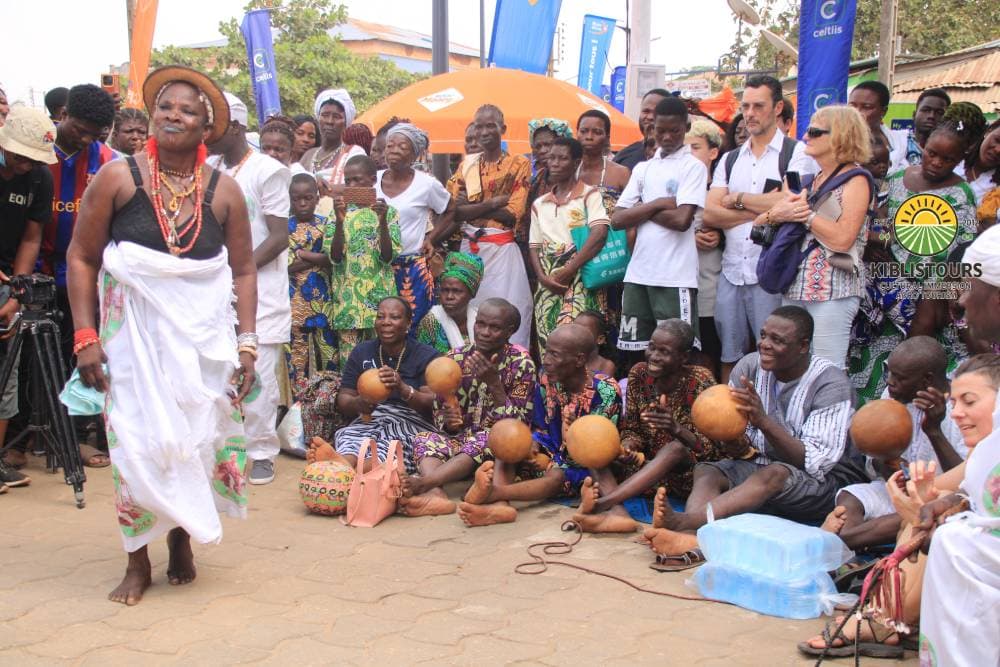
It is not a spectacle created for visitors, but a complex system of beliefs, practices, deities, symbols, communities, and traditions whose expressions may vary according to different regions and lineages.
A respectful discovery therefore requires listening to those who understand these traditions and accepting certain boundaries. Not everything should be photographed, not everything can be explained to a visitor, and some practices belong to religious or community life.
Paradoxically, respecting what cannot be seen or known is itself an essential part of an authentic journey.
https://kiblistours.com/fr/destinations/ouidah-offre-decouverte-spiritualite?formula=standard
Abomey: Entering the Memory of the Kingdom of Danxomè
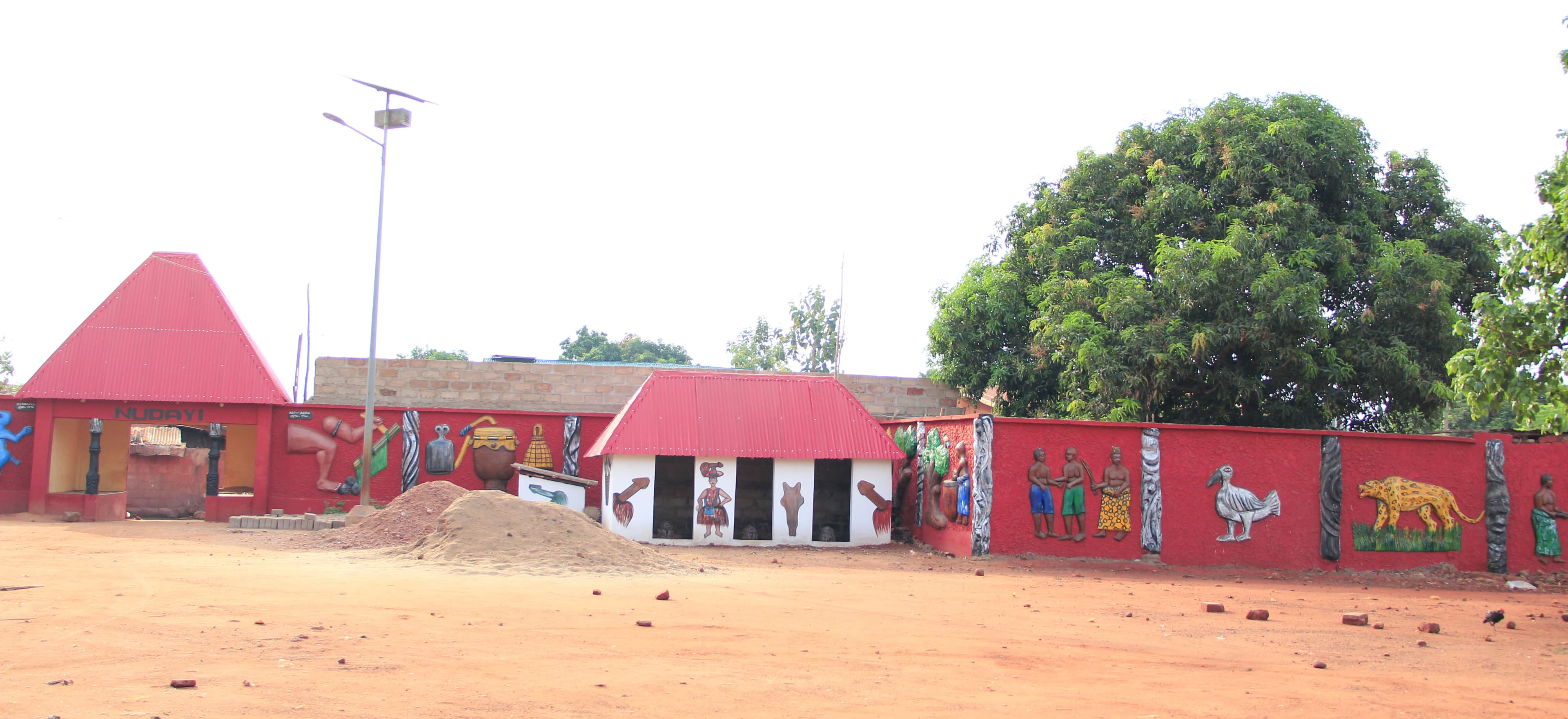
In Abomey, the journey takes on yet another dimension. You enter a territory deeply shaped by the history of the former Kingdom of Danxomè, generally known in many historical sources as Dahomey.
Discovering the royal palaces and the traditions associated with the sovereigns provides an opportunity to explore several centuries of political, military, social, artistic, and religious history. The symbols associated with the kings, the stories passed down through generations, and the heritage objects all bear witness to the existence of an organized power that profoundly shaped the history of the region.
But Abomey becomes truly fascinating when you move beyond the simple chronology of royal reigns.
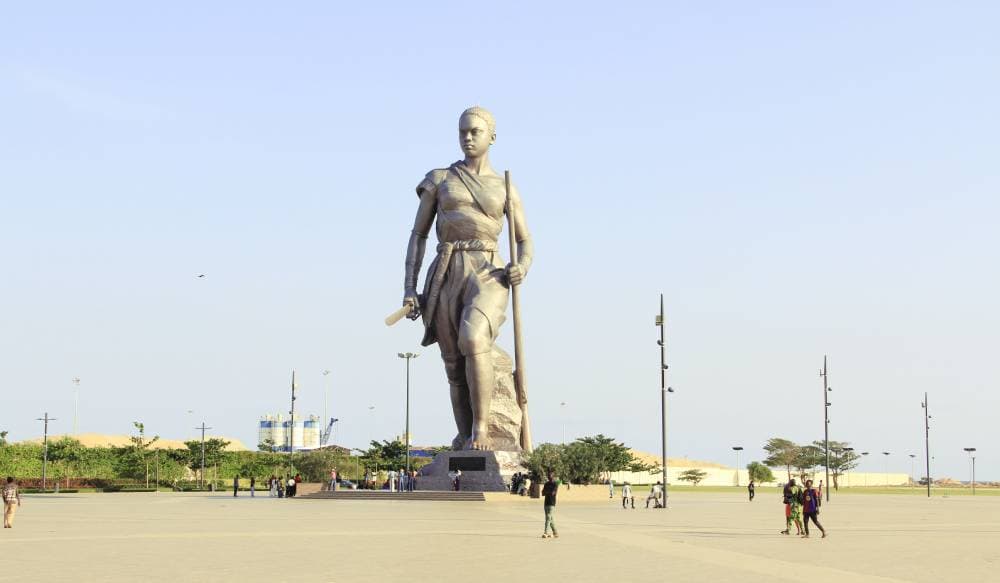
Why were certain symbols associated with particular sovereigns? How was power organized? What role did women play in certain institutions of the kingdom? How are historical events still narrated today?
These questions help us understand that precolonial African history cannot simply be reduced to an introduction preceding European colonization. It has its own dynamics, conflicts, political systems, achievements, violence, and transformations.
This is often one of the moments when travellers truly begin to change the way they perceive the history of the continent.
Heritage landmark: the Royal Palaces of Abomey have been inscribed on the UNESCO World Heritage List since 1985. The complex constitutes a major material testimony to the Kingdom of Dahomey and its organized power. UNESCO also highlights the exceptional historical, cultural, and architectural value of these palaces.
Porto-Novo: Discovering Benin’s Multiple Influences
Porto-Novo has a different atmosphere from Cotonou. The administrative capital invites visitors to slow down and observe the traces left by different periods of its history.
Its architectural heritage, markets, traditions, cultural institutions, and certain Afro-Brazilian influences bear witness to the movements and exchanges that have shaped the region over several centuries.
Porto-Novo therefore offers an opportunity to understand an essential dimension of Benin: its identity is not uniform. It has been shaped by different peoples, languages, beliefs, kingdoms, migrations, and external influences.
This diversity accompanies the traveller all the way to the point where the road approaches the Togolese border.
From Benin to Togo: A Political Border Amid Shared Histories
Crossing the border between Benin and Togo is an interesting moment in a combined tour.
Administratively, you are entering another country. From a human and cultural perspective, however, the transition is more subtle.
The peoples of West Africa travelled, traded, migrated, and formed alliances long before today’s borders were established. As a result, certain communities, languages, and traditions can be found on both sides of national boundaries.
For travellers, crossing the border therefore becomes an opportunity to reflect on the difference between a modern state and a cultural space.
Then, the first kilometres travelled in Togo begin to reveal their own distinctive characteristics.
The landscape, urban habits, certain architectural features, and the organization of villages gradually create the feeling of having entered a new country, while still remaining at the heart of a deeply interconnected regional history.
Lomé: Discovering a Capital Facing the Ocean
Lomé should not be considered merely a stopover between the border and Togo’s inland regions. The capital has enough personality of its own to deserve time and attention.
The city stretches along the Gulf of Guinea and combines commercial activity, residential neighbourhoods, markets, craftsmanship, cultural spaces, and everyday urban life. As in Cotonou, part of its appeal lies less in constantly searching for spectacular monuments than in observing daily life.
Lomé’s Markets: Where Trade Meets Culture
Markets are an excellent gateway into Togolese society. Fabrics, food products, spices, handicrafts, and goods from different regions bear witness to the historical and contemporary importance of trade.
A local guide can transform this visit into a genuine cultural experience by explaining the products, customs, social codes, and stories behind certain activities.
The objective is no longer simply to “visit the market,” but to understand how it contributes to the economic and social life of the city.
Lomé Beyond the Stereotypes
Like Cotonou, Lomé is a contemporary African city. Here, you encounter entrepreneurs, students, creators, artisans, and families living at the intersection of cultural heritage and modern aspirations.
This may seem obvious, but it is worth emphasizing because travelling authentically in Africa does not mean looking only for what appears traditional or ancient.
True discovery also means observing how African societies are shaping their present.
Kpalimé: When the Journey Enters Green Togo
As you leave Lomé and head towards Kpalimé, the scenery gradually changes. The vegetation becomes denser, the hills draw closer, and agriculture becomes a more prominent feature of the landscape.
The region is a particularly interesting destination for travellers attracted by nature, craftsmanship, agricultural products, and encounters with rural communities.
Here, the journey naturally slows down.
Discovering the Region on Foot
A hike around Kpalimé takes on a whole new dimension when you are accompanied by someone who truly knows the area.
A tree ceases to be simply a tree when you learn about its traditional uses. A plant takes on a different meaning when you discover how it is used in local food or medicinal preparations. A field tells an economic story when you understand what it produces, how it is cultivated, and to whom the harvest will be sold.
Gradually, the landscape becomes a book that someone teaches you how to read.
And this understanding is often more memorable than the beauty of the scenery itself.
Coffee, Cocoa and Agriculture: Meeting the People Behind the Products
Coffee and cocoa immediately bring to mind products consumed around the world. Yet few consumers have had the opportunity to meet the people involved in the first stages of their production.
Depending on the farms that are accessible, the season, and local conditions, an agritourism experience can provide a better understanding of certain crops, how they are harvested and processed, and the economic realities faced by producers.
Sometimes, this encounter changes something very simple: the next time you hold a cup of coffee or a piece of chocolate, you no longer see only a product.
You also think about the land and the people who are part of its story.
Atakpamé and the Central Regions: Going Beyond Togo’s Best-Known Destinations
For travellers with more time available, continuing towards central Togo offers an opportunity to broaden the experience considerably.
The Atakpamé region offers hilly landscapes and serves as an interesting transition point between the south of the country and the more northern regions. The surrounding areas provide greater opportunities to observe rural life, agricultural activities, and the diversity of Togolese communities.
The further the journey continues inland, the more obvious it becomes that Togo cannot be reduced to Lomé and Kpalimé.
Despite its relatively modest size, the country offers a remarkable succession of landscapes and cultures. A longer itinerary can therefore gradually lead towards other regions, depending on the time available, travel conditions, and the visitor’s interests.
Togolese Craftsmanship: When Objects Tell the Stories of the People Who Make Them
A souvenir purchased during a journey can be a simple decorative object. It can also become an extension of an encounter.
In Togo, as in Benin, different forms of craftsmanship provide an opportunity to discover the techniques, materials, and creativity passed down or reinvented by artisans.
Textiles, sculpture, woodwork, basketry, decorative objects, and other local products can take on an entirely different value when you meet the person who actually makes them.
Watching an artisan at work also helps you understand the time required to create an object. This naturally changes the way you perceive its price and value.
Responsible tourism sometimes begins with gestures as simple as this: buying less, but understanding more about what you buy and, whenever possible, supporting those who produce locally.
Gastronomy: A Journey Within the Journey
You can learn a great deal about a country by observing what its people put on their plates.
In both Benin and Togo, dishes made with maize, cassava, yam, vegetables, fish, meat, sauces, and condiments reflect the resources available, regional habits, and family traditions passed down through generations.
A meal becomes particularly interesting when you go beyond simply asking the name of the dish.
How is it prepared? What ingredients are used? Are there different versions depending on the region? On what occasions is it eaten? Who taught you this recipe?
These few questions transform a tasting experience into a cultural conversation.
And sometimes, years after the journey, it is a flavour that you remember even before the name of a monument.
The True Luxury of a Benin–Togo Tour: Having Time
In the world of travel, luxury is often associated with a beautiful room, a high-end vehicle, a prestigious restaurant, or personalized service. These elements naturally contribute to the comfort of a stay, but an authentic journey through Benin and Togo reveals another, much rarer form of luxury: truly having the time needed to connect with people.
Having time to talk with an artisan rather than simply photographing their workshop in a few seconds. Listening to a producer explain their work. Sitting down to share a meal. Asking a guide questions. Waiting a few minutes because a ceremony or community activity does not follow the timetable of a tourist programme.
This time is not wasted.
It is often precisely at that moment that the journey truly begins.
Authentic Travel Does Not Mean Looking for an Africa Frozen in the Past
The term “authentic” is widely used in tourism, sometimes to the point of losing part of its meaning.
For Kiblistours, discovering authentic Africa does not mean searching for villages that have remained artificially cut off from the modern world, nor asking local people to play a traditional role in order to satisfy visitors’ expectations.
Today’s Benin and Togo are contemporary societies. Young people use social media, entrepreneurs create businesses, cities are changing, families adapt their lifestyles, and traditions themselves continue to evolve.
Authenticity lies precisely in this reality.
A traditional leader may use a smartphone. An artisan may sell their creations online. A farmer may combine knowledge inherited from their parents with new production techniques.
There is no contradiction.
Authentic Africa is not an Africa that stands still.
It is an Africa that tells its own story about its past, lives its present, and builds its future.
A Journey That Should Also Benefit the Places You Visit
The success of a tour should not be assessed solely through the traveller’s satisfaction.
Another question deserves to be asked: what value does tourism leave behind in the places it passes through?
Whenever possible, working with local guides, artisans, producers, restaurant owners, drivers, boatmen, locally owned accommodation providers, and community initiatives helps distribute the economic benefits of travel more widely.
This does not mean that a single trip can solve the economic challenges of a region. Such a promise would be unrealistic.
But the choice of partners and service providers matters.
Every tourism-related expense can contribute to supporting an activity, rewarding a skill, and promoting local expertise.
Benin and Togo: Two Countries, but How Many Experiences?
A cultural journey through Benin and Togo can take very different forms depending on the person travelling.
For a history enthusiast, the itinerary may devote more time to Ouidah, Abomey, Porto-Novo, and heritage sites.
For a traveller interested in African spiritual traditions, the discovery of Vodun can be explored in greater depth, with the necessary respect and guidance.
For a nature and agritourism enthusiast, Ganvié, Kpalimé, plantations, rural areas, and encounters with producers can play a more prominent role in the journey.
For a member of the African diaspora, certain stages related to the history of the transatlantic slave trade and the relationship between Africa and its diasporas may take on a more personal dimension.
For families, couples, or small private groups, the pace can also be adapted to allow enough time for spontaneous discoveries.
This is precisely why a personalized itinerary may be preferable to a completely standardized programme.
Kpalimé: When the Journey Enters Green Togo
As you leave Lomé and head towards Kpalimé, the scenery gradually changes. The vegetation becomes denser, the hills draw closer, and agriculture becomes increasingly present in the landscape.
The region is a particularly interesting destination for travellers attracted by nature, craftsmanship, agricultural products, and encounters with rural communities.
Here, the journey naturally slows down.
Discovering the Region on Foot
A hike around Kpalimé takes on a whole new dimension when you are accompanied by someone who truly knows the area.
A tree ceases to be simply a tree when you learn about its traditional uses. A plant takes on a different meaning when you discover how it is used in local food or medicinal preparations. A field tells an economic story when you understand what it produces, how it is cultivated, and to whom the harvest will be sold.
Gradually, the landscape becomes a book that someone teaches you how to read.
And this understanding is often more memorable than the beauty of the scenery itself.
Coffee, Cocoa and Agriculture: Meeting the People Behind the Products
Coffee and cocoa immediately bring to mind products consumed all over the world. Yet few consumers have had the opportunity to meet the people involved in the first stages of their production.
Depending on the farms that are accessible, the season, and local conditions, an agritourism experience can provide a better understanding of certain crops, how they are harvested and processed, and the economic realities faced by producers.
Sometimes, this encounter changes something very simple: the next time you hold a cup of coffee or a piece of chocolate, you no longer see only a product.
You also think about the land and the people who are part of its story.
Atakpamé and the Central Regions: Going Beyond Togo’s Best-Known Destinations
For travellers with more time available, continuing towards central Togo offers an opportunity to broaden the experience considerably.
The Atakpamé region offers hilly landscapes and is an interesting point of passage between the south of the country and the more northerly regions. The surrounding areas provide greater opportunities to observe rural life, agricultural activities, and the diversity of Togolese communities.
The further the journey continues inland, the more obvious it becomes that Togo cannot be reduced to Lomé and Kpalimé.
Despite its relatively modest size, the country offers a remarkable succession of landscapes and cultures. A longer itinerary can therefore gradually lead towards other regions, depending on the time available, travel conditions, and the visitor’s interests.
Togolese Craftsmanship: When Objects Tell the Stories of the People Who Make Them
A souvenir purchased during a journey can simply be a decorative object. It can also become an extension of an encounter.
In Togo, as in Benin, different forms of craftsmanship provide an opportunity to discover the techniques, materials, and creativity passed down or reinvented by artisans.
Textiles, sculpture, woodworking, basketry, decorative objects, and other local products can take on an entirely different value when you meet the person who actually makes them.
Watching an artisan at work also helps you understand the time required to create an object. This naturally changes the way you perceive its price and its value.
Responsible tourism sometimes begins with gestures as simple as this: buying less, but understanding more about what you buy and, whenever possible, supporting those who produce locally.
Gastronomy: A Journey Within the Journey
You can learn a great deal about a country by observing what its people put on their plates.
In both Benin and Togo, dishes made from maize, cassava, yam, vegetables, fish, meat, sauces, and condiments reflect the resources available, regional habits, and family traditions passed down through generations.
A meal becomes particularly interesting when you no longer simply ask for the name of the dish.
How is it prepared? What ingredients are used? Are there different versions depending on the region? On what occasions is it eaten? Who taught you this recipe?
These few questions transform a tasting experience into a cultural conversation.
And sometimes, years after the journey, it is a flavour that you remember even before the name of a monument.
The True Luxury of a Benin–Togo Tour: Having Time
In the tourism industry, luxury is often associated with a beautiful room, a high-end vehicle, a prestigious restaurant, or personalized service. These elements naturally contribute to the comfort of a journey, but an authentic trip through Benin and Togo reveals another, much rarer form of luxury: having the time genuinely needed to meet people.
Having time to talk with an artisan instead of photographing their workshop in a few seconds. Listening to a producer explain their work. Sitting down to share a meal. Asking questions of a guide. Waiting a few minutes because a ceremony or community activity does not operate according to the timetable of a tourist programme.
This time is not wasted.
It is often precisely at that moment that the journey truly begins.
Travelling Authentically Does Not Mean Looking for an Africa Frozen in the Past
The term “authentic” is widely used in tourism, sometimes to the point where it loses part of its meaning.
For Kiblistours, discovering an authentic Africa does not mean searching for villages that have supposedly remained artificially disconnected from the modern world, nor asking local residents to perform traditional roles to satisfy visitors’ expectations.
Today’s Benin and Togo are contemporary societies. Young people use social media, entrepreneurs create businesses, cities are changing, families adapt their habits, and traditions themselves continue to evolve.
Authenticity lies precisely in this reality.
A traditional chief may use a smartphone. An artisan may sell their creations online. A farmer may combine knowledge inherited from their parents with new production techniques.
There is no contradiction.
Authentic Africa is not a motionless Africa.
It is an Africa that tells its own past, lives its present, and builds its future.
A Journey That Should Also Benefit the Places It Visits
The success of a tour should not be measured solely by the traveller’s satisfaction.
Another question deserves to be asked: what value does tourism leave in the places through which it passes?
Whenever possible, working with local guides, artisans, producers, restaurant owners, drivers, canoe operators, local accommodation providers, and community initiatives helps distribute the economic benefits of travel more widely.
This does not mean that a single trip can solve the economic challenges faced by a community. Such a promise would be unrealistic.
But the choice of partners and service providers matters.
Every tourism-related expense can help support an activity, reward a skill, and enhance local know-how.
Benin and Togo: Two Countries, but How Many Experiences?
A cultural journey through Benin and Togo can take very different forms depending on the person travelling.
For a history enthusiast, the itinerary may devote more time to Ouidah, Abomey, Porto-Novo, and heritage sites.
For a traveller interested in African spiritual traditions, the discovery of Vodun can be explored more deeply with the necessary respect and guidance.
For a nature and agritourism enthusiast, Ganvié, Kpalimé, plantations, rural areas, and encounters with producers can occupy a more important place in the itinerary.
For a member of the African diaspora, certain stages connected to the history of the transatlantic slave trade and the relationships between Africa and its diasporas may have a more personal significance.
For families, couples, or private small groups, the pace can also be adapted to preserve enough time for spontaneous discoveries.
This is precisely why a personalized itinerary may be preferable to a completely standardized programme.
Example of an Itinerary for an Authentic Benin–Togo Tour
For a first discovery, an itinerary can begin in Cotonou, continue to Ganvié, Ouidah, Abomey, and Porto-Novo, before crossing the border into Togo and travelling to Lomé, then Kpalimé and, depending on the time available, Atakpamé or other parts of Togo.
Around ten days can provide a good introduction to both countries, but a two-week stay offers greater freedom to slow down, include encounters with local communities, devote more time to rural experiences, and avoid turning each day into a succession of transfers and visits.
However, there is no perfect itinerary for everyone.
The best tour is the one that suits the traveller.
Standard, Premium or VIP: Choosing How You Want to Travel
Kiblistours can adapt the level of support and comfort according to travellers’ expectations, budget, and the type of experience they are looking for.
| Experience | Standard | Premium | VIP |
| Support | According to the programme | Enhanced personalized support | Highly personalized private support |
| Transportation | Comfortable vehicle depending on the tour | Private air-conditioned vehicle | High-end private vehicle, subject to availability |
| Accommodation | Selection adapted to the tour | Higher-category accommodation | High-end selection depending on the destination |
| Cultural experiences | Main visits included in the programme | In-depth discoveries | Personalized experiences depending on local possibilities |
| Local encounters | Depending on the itinerary | Selected encounters | Private or in-depth encounters whenever feasible |
| Gastronomy | Discovery of local specialities | Enhanced culinary experiences | Personalized selection |
| Flexibility | Predefined programme | Greater flexibility | Largely tailor-made itinerary |
| Assistance | Assistance during the tour | Personalized assistance | Enhanced support and concierge services |
The exact services are confirmed when the journey is designed, depending on the duration, season, local availability, and services actually accessible.
Why Travel Through Benin and Togo with Kiblistours?
Organizing a journey is not simply about booking a vehicle, a hotel, and a few visits.
A successful journey also requires understanding the places you travel through, selecting the people who are able to tell their stories, and creating a pace that allows visitors to listen, observe, and interact.
It is with this approach in mind that Kiblistours designs its experiences.
Our ambition is to offer cultural tours in Benin and Togo that allow travellers to discover the major sites without overlooking everything that exists between them: villages, markets, artisans, producers, local cuisine, traditions, landscapes, and human encounters.
The guide therefore plays an essential role. Their job is not simply to provide a date or the name of a monument. They provide context, facilitate exchanges, and help travellers understand what they are seeing without claiming to speak on behalf of the communities they encounter.
How to Prepare for Your Journey to Benin and Togo?
How Much Time Should You Allow?
For a first combined discovery of both countries, around ten days provides a reasonable starting point. However, a stay of twelve to fifteen days allows for a more comfortable pace and the inclusion of more local experiences.
A longer stay becomes particularly worthwhile if you wish to travel further inland in Togo or explore other regions of Benin.
When Is the Best Time to Travel?
The best time depends on the itinerary, the regions visited, the climate, road conditions in certain areas, and any cultural events the traveller may wish to experience.
Rather than imposing the same programme throughout the year, it is preferable to adapt certain stages of the journey to the season and check local conditions before departure.
Can a Fully Private Tour Be Organized?
Yes. A private tour makes it possible to adapt the duration of each stage, the level of comfort, the areas of interest, and certain experiences to travellers’ expectations.
History, Vodun, heritage, gastronomy, craftsmanship, photography, nature, agritourism, community encounters, or a combination of several themes can therefore serve as the guiding thread of the itinerary.
What Formalities Should You Plan For?
Entry and travel requirements may
FAQ About Travel in Benin and Togo
Can Benin and Togo Easily Be Combined in the Same Tour?
Yes. Their geographical proximity makes a combined tour particularly appealing. However, border-crossing formalities must be properly planned, and the itinerary should be realistic enough to avoid spending an excessive part of the journey on the road.
Are Benin and Togo Good Destinations for a First Trip to West Africa?
Benin and Togo offer a wide variety of experiences within relatively accessible distances: history, heritage, cities, traditions, gastronomy, nature, craftsmanship, and rural areas. This complementarity can provide an excellent introduction to West Africa for travellers who want to go beyond a conventional beach holiday.
Can You Discover Vodun During the Journey?
Yes, provided that the experience is approached respectfully and with proper cultural context. Vodun traditions should not be presented as a spectacle. Some practices may be accessible to visitors, while others remain private or reserved for the communities concerned.
Can You Meet Local Communities?
Yes, when these encounters are organized with the consent of the people concerned and without artificially disrupting their daily lives. The objective should remain exchange and understanding, rather than staging a supposed form of authenticity.
Can Agritourism Be Included?
Yes. Depending on the regions, seasons, and farms that are accessible, the tour can include agricultural experiences, encounters with producers, and certain activities related to the processing or tasting of local products.
Can the Journey Be Fully Customized?
Yes. The duration, destinations, level of comfort, pace, and areas of interest can all serve as the basis for designing a personalized private tour.