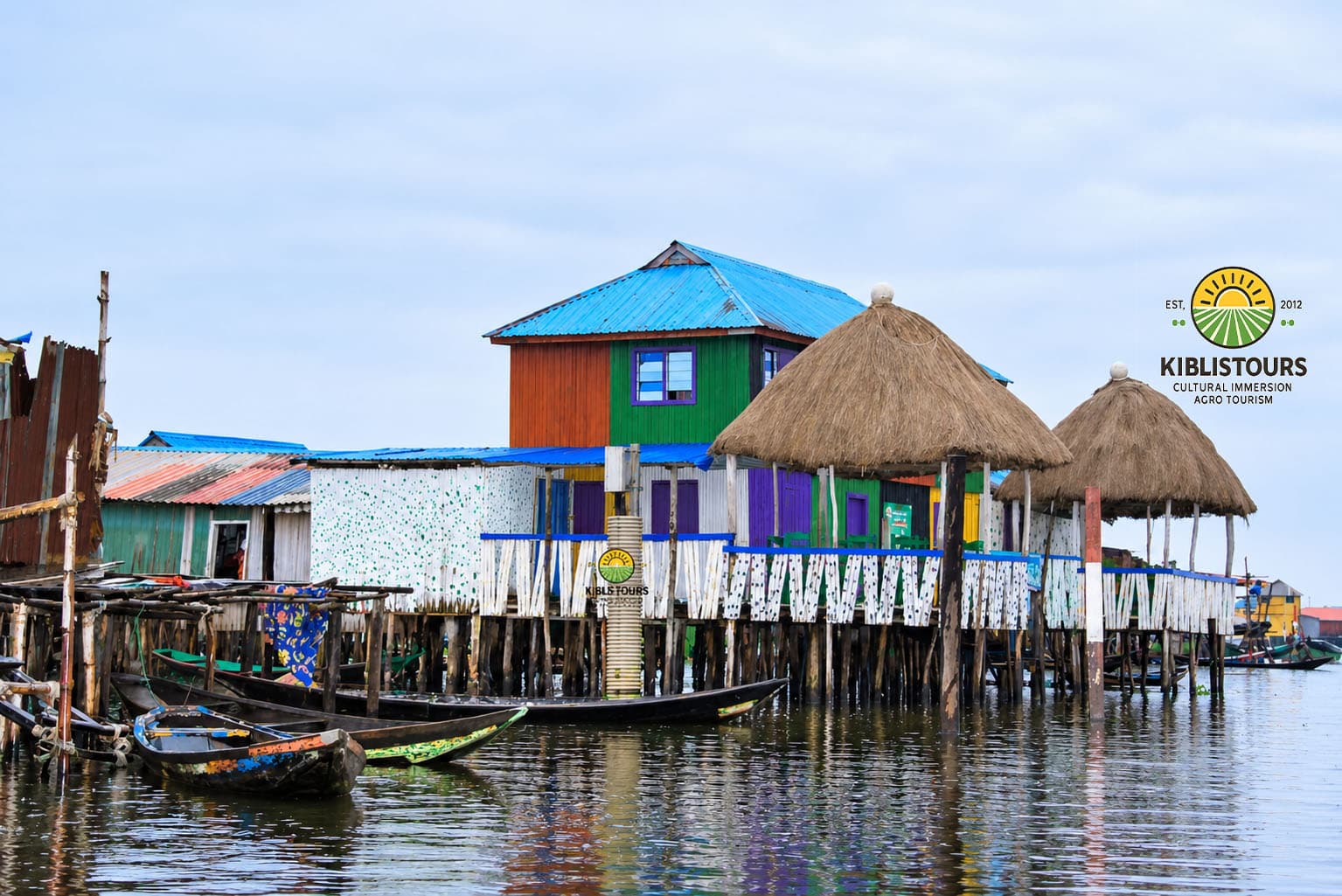
Ganvié, Much More Than a Journey into the Heart of Tourism in Benin
Some destinations captivate you with their landscapes.
Others impress you with their history.
And then there are a few places, much rarer, that completely transform the way we see the world.
Ganvié is one of those places.
When travelers plan their first trip to Benin, they often imagine discovering royal palaces, beaches, and sites associated with Vodun heritage. Few, however, expect to find, in the middle of a vast lake, an entire town where a whole community has lived on the water for centuries.
Yet that is exactly what awaits them.
As the pirogue moves away from the shore, the sounds of the city gradually fade away. The roar of car engines gives way to the gentle lapping of water against the hull of the boat. The frantic pace of everyday life seems to disappear. Time slows down.
Marc, who came from Belgium, still remembers his first journey by pirogue :
"I thought I was going to visit an unusual village. Ten minutes after we left, I had already forgotten about my phone. I was simply looking at the lake. I never expected to feel such a sense of calm."
A few minutes later, the first houses appear.
Standing on long wooden stilts, they seem to float above Lake Nokoué. Then come the schools, shops, restaurants, places of worship, artisans' workshops, and residents moving around by pirogue just as people elsewhere use cars.
Very quickly, one thing becomes clear : here, water is not simply part of the scenery. It is a street, a public square, a workplace, a means of transportation, a source of food, and an entire way of life.
It is this uniqueness that makes Ganvié one of the most extraordinary destinations in West Africa and one of the most iconic sites for tourism in Benin.
Every year, travelers from all over the world cross Lake Nokoué to discover this unique lakeside village, often nicknamed the Venice of Africa. But while this comparison makes it easier to picture Ganvié, it ultimately fails to capture what makes the place truly special.
Because Ganvié is unlike any other destination.
This is not a town built to impress visitors.
It is a living community shaped by history, resilience, and human ingenuity.
A place where more than three centuries of history continue to be written every single day.
Visiting Ganvié is therefore not simply about admiring an extraordinary landscape. It is about entering, for a moment, into the intimate world of a people.
It is about understanding how an entire community transformed an environment once considered hostile into a genuine place to call home. It is about discovering another way of inhabiting the world. And it is precisely this authenticity that leaves such a profound impression on travelers.
Many arrive expecting nothing more than a short excursion from Cotonou.
They imagine taking a few photographs, enjoying a pirogue ride, buying a souvenir, and then leaving.
But they quickly discover that Ganvié offers much more.
They leave with a deeper understanding of Benin's history.
With profound respect for the ingenuity of the local communities.
With memories of faces, smiles, and encounters that give travel an entirely different meaning.
Because in Ganvié, emotion does not come only from the beauty of the landscape. It comes from the people and from the everyday moments you share with them, even if only for a few hours.
That is what transforms a simple visit into a genuine African cultural experience.
Ganvié, a Unique Lakeside Village
Located about ten kilometers north of Cotonou on the vast Lake Nokoué, Ganvié is today considered the largest lakeside village in Africa.
Tens of thousands of people live here permanently, in an environment where almost everything revolves around water.
The houses are built on stilts anchored deep into the lakebed.
Canals replace streets.
Boats replace cars.
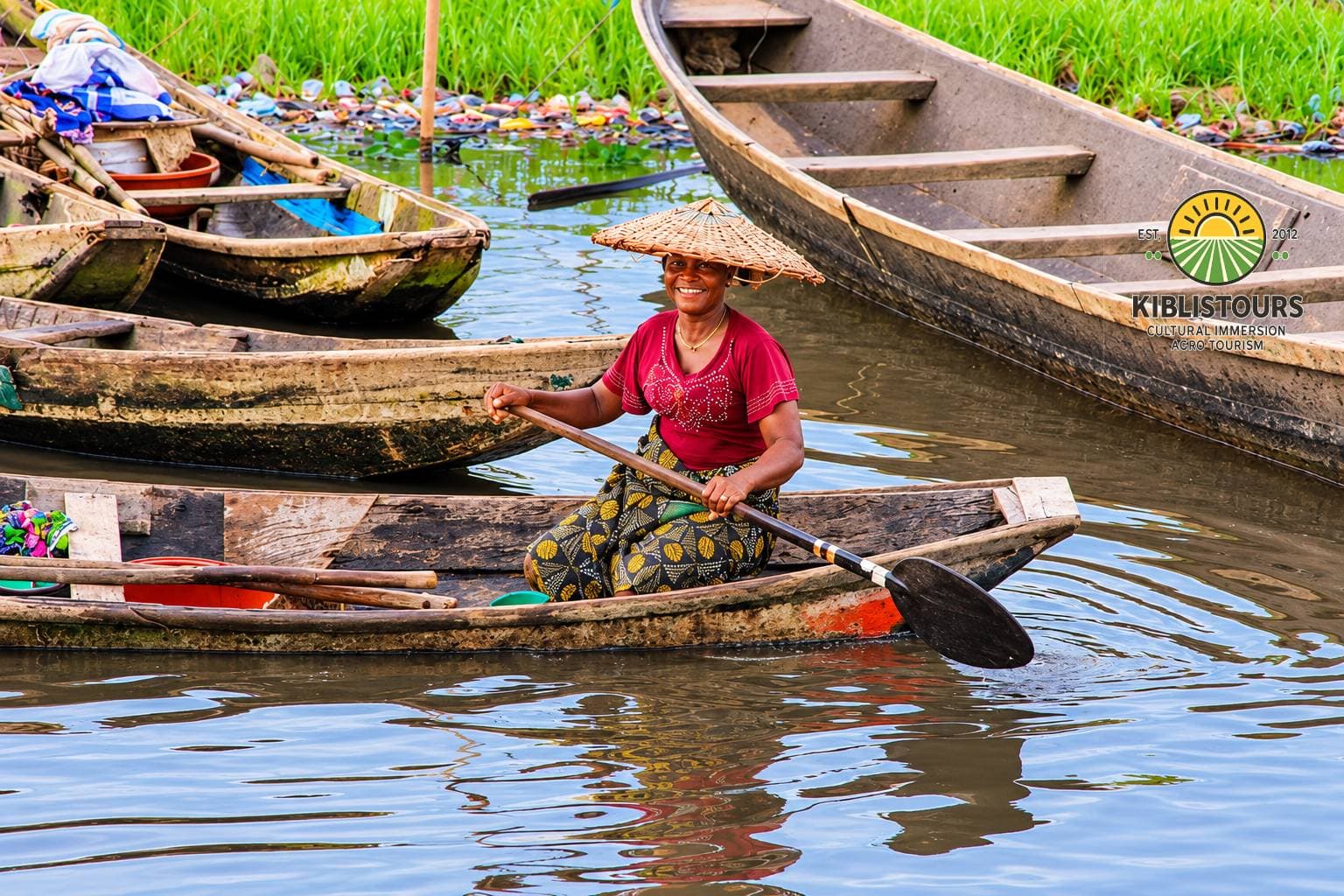
Even children learn from a very young age to handle a paddle with an ease that amazes visitors.
The sight is fascinating.
At dawn, the first pirogues leave the houses and head toward the fishing grounds.
Later in the morning, other boats carry students to their schools.
Women traders then travel through the different floating neighborhoods selling vegetables, smoked fish, fruit, fabrics, and everyday necessities.
In the afternoon, artisans continue their work while fishermen gradually return with their catch.
As the sun begins to set, golden light envelops the stilt houses, giving the village an almost surreal atmosphere.
To a visitor, every moment seems worthy of a photograph.
But to the residents, it is simply another ordinary day.
And that is precisely what makes Ganvié so authentic.
Nothing has been staged for tourists.
Life simply goes on.
Visitors are not watching a performance.
They are discovering real everyday life.
Ganvié in a Few Figures
Estimated population: between 30,000 and 40,000 inhabitants
Location: Lake Nokoué, southern Benin
Distance from Cotonou: approximately 10 kilometers
Average travel time by pirogue from the landing stage: 20 to 30 minutes
Recommended visit duration: half a day to a full day
Founded: 17th century
Approximate surface area of Lake Nokoué: 150 km² during the dry season
Altitude: a few meters above sea level
Main activities: fishing, trade, handicrafts, and tourism
A History Born from Courage and the Quest for Freedom
To understand Ganvié, we need to travel back several centuries.
In the 17th century, the Kingdom of Dahomey went through a period marked by wars and raids linked to the slave trade. Many communities living in the region sought refuge in order to escape capture.
Among them were the Tofinu people.
According to tradition, they made a decision as bold as it was unexpected: to settle in the middle of Lake Nokoué.
This choice was no accident.
At the time, the warriors of the Kingdom of Dahomey observed a religious prohibition that prevented them from fighting on the waters of the lake. The Tofinu realized that the lake could become a natural refuge where they would be relatively protected.
They therefore built the first houses on stilts.
Over the years, these temporary settlements developed into a true village and eventually into a town. Generations followed one another. Building techniques evolved. Economic activities developed. A culture deeply connected to the lake gradually took shape.
The name "Ganvié" is often interpreted as meaning "we survived" or "we are finally safe," a meaning that recalls the founding role of the village as a refuge from oppression.
Beyond its etymology, Ganvié remains a powerful symbol of resilience, freedom, and human adaptability.
This history gives every visit a particular depth.
As travelers navigate between the stilt houses, they are not simply discovering an extraordinary landscape.
They are moving through a place of memory.
A place where every generation has contributed to preserving a unique heritage.
And perhaps this is where Ganvié's true power lies: behind the beauty of its landscapes is a profoundly human story that continues to move everyone who takes the time to listen.
Why Is Ganvié Such an Exceptional Heritage Site ?
Ganvié is not simply one of Benin's most famous tourist attractions. The village also represents historical, cultural, and human heritage of exceptional value.
Several elements explain its importance:
the history of the Tofinu people and their resistance to the raids of the 17th century;
unique lakeside architecture;
traditional fishing techniques passed down through generations;
a way of life entirely organized around Lake Nokoué;
exceptional cultural and spiritual richness;
its inclusion on UNESCO's World Heritage Tentative List.
Ganvié demonstrates humanity's remarkable ability to transform a challenging environment into a sustainable and harmonious living space.
Why Ganvié Leaves Such a Lasting Impression on Travelers from Around the World
There are destinations whose landscapes we admire without ever becoming truly attached to them. We visit them, photograph them, and eventually they become just a few more images among the hundreds stored on our phones.
Ganvié is different.
Of course, visitors are impressed when they first discover this vast town built on Lake Nokoué. The houses seem to float, pirogues glide silently between the homes, and it is immediately easy to understand why the village is so often called "the Venice of Africa."
Yet this first image is almost never what remains most deeply engraved in their memories.
It is what happens afterward.
The simplest moments.
The most ordinary ones.
The moments no one can schedule.
During an early-morning visit, for example, a small pirogue may slowly approach a school built on stilts. A father firmly holds his paddle while his two children, impeccably dressed in their school uniforms, keep their schoolbags carefully balanced on their laps to protect them from splashes.
With a few perfectly controlled movements, the boat pulls alongside a small wooden landing.
The children jump out with surprising agility, greet their classmates, and head toward their classroom while their father quietly begins the journey home.
For the people of Ganvié, this scene is completely ordinary.
For a visitor from Europe, America, or Asia, it can become one of the most memorable images of the entire journey.
A few minutes later, a woman trader crosses your path.
Her pirogue is filled with bowls of tomatoes, peppers, plantains, and smoked fish, whose aroma mingles with the cool morning air.
Before continuing on her way, she exchanges a few words with your guide and smiles.
The conversation lasts only a few seconds, yet it immediately reminds you that Ganvié is not a tourist attraction.
It is a town that lives, works, and evolves according to the rhythm of its people.
As the journey continues, so do the surprises.
A teenager quietly repairs a fishing net on the family terrace.
Two women chat from one house to another without ever leaving their pirogues.
An elderly man sitting in front of his home quietly watches the boats pass, greeting the people he knows with a simple wave.
None of these scenes is extraordinary.
They happen every day.
And that is precisely why they move travelers so deeply.
Many people arrive in Ganvié expecting nothing more than a short excursion.
They imagine admiring an unusual landscape, taking a few photographs, and then continuing toward another destination in Benin.
Then time seems to slow down.
Gradually, you stop looking only at the houses.
You begin to notice the people.
You observe the way they move, interact, work together, and organize their daily lives around the lake.
Water is no longer simply part of the scenery.
It becomes a connection.
A meeting place.
A street.
A market.
A playground.
A workplace.
A living heritage.
This transformation in perspective is undoubtedly one of the reasons so many travelers continue talking about Ganvié months after returning home.
Some remember the softness of sunrise over the lake.
Others recall the silence between the passing pirogues.
Many remember the people above all.
A smile received for no particular reason.
A greeting from a distance.
A child waving before disappearing behind a row of stilt houses.
These are tiny moments.
They appear in no travel guide.
Sometimes they last only a few seconds.
Yet they give a journey a depth that even the most spectacular monuments cannot always provide.
Perhaps this is the true privilege of visiting Ganvié.
You do not simply discover an architectural achievement or a spectacular landscape.
For a day, you enter the intimate world of a community that has learned, over several centuries, to live in harmony with its environment.
And as the pirogue slowly begins its journey back toward the shore, many travelers realize that it is not the houses or photographs they will ultimately take home with them.
They leave with faces, voices, glances, and the feeling that, for a few hours, they experienced another way of inhabiting the world.
Sophie, a traveler from Switzerland, recalls :
"What I remember most isn't the houses on stilts. It's the woman who smiled and waved at me from her pirogue. We didn't speak the same language, but that smile sums up my entire journey through Benin."
Living on Water, Discovering a Unique Civilization
After discovering Ganvié's fascinating history and understanding why this lakeside town has become one of the greatest symbols of tourism in Benin, one question almost always comes to travelers' minds.
A Typical Day in Ganvié
5:30 a.m. - 7:00 a.m.: fishermen leave and the sun rises.
7:00 a.m. - 8:30 a.m.: children leave for school.
8:30 a.m. - 11:00 a.m.: the floating market gradually comes to life.
11:00 a.m. - 1:00 p.m.: handicraft and commercial activities.
1:00 p.m. - 3:00 p.m.: lunch and family life.
3:00 p.m. - 6:00 p.m.: fishermen return.
6:00 p.m. - 7:00 p.m.: sunset over Lake Nokoué.
How Is It Possible to Spend Your Entire Life… on a Lake ?
The answer goes far beyond a few houses built on stilts.
Ganvié is a real town.
A town where water replaces roads.
Where pirogues replace cars.
Where, over the centuries, residents have developed a way of inhabiting their environment unlike anywhere else.
It is precisely this extraordinary organization that transforms a simple excursion into an unforgettable cultural immersion.
When you visit Ganvié, you quickly discover that every detail of daily life tells a story of ingenuity, adaptation, and solidarity.
A Town Entirely Built on Water
At first glance, Ganvié can seem almost unreal.
Hundreds of houses rise from the lake.
Some are modest.
Others are more imposing.
A few even have several levels.
Yet they all rely on the same principle: sturdy wooden stilts driven deep into the bed of Lake Nokoué.
Contrary to what many people imagine before arriving, this is not a small tourist village.
Ganvié is a genuine town.
As you navigate through it, entire neighborhoods gradually come into view.
Schools, places of worship, small shops, workshops, restaurants, health centers, and community spaces. In other words, everything a community needs to live almost entirely on the water.
Visitors are often surprised by how well organized life seems.
Everything appears to function naturally.
For the residents, there is nothing extraordinary about this way of life.
They were born here.
So were their parents.
And their grandparents before them.
This way of life is simply their normality.
It is the visitor whose points of reference begin to change.
Houses on Stilts: Architecture Born from Human Ingenuity
Building a house in the middle of a lake is a considerable challenge.
Yet over generations, the people of Ganvié have gradually perfected this technique.
The stilts are made from types of wood particularly resistant to moisture.
They are firmly driven into the lakebed to support the weight of the houses.
The houses themselves are mainly built from wood, sometimes combined with more modern materials.
Traditionally, roofs were made from plant leaves, although in some cases these have gradually been replaced by metal sheets.
Each family adapts its home according to its needs.
Some houses have a dedicated cooking area.
Others have a small workshop.
Some even accommodate several generations living under the same roof.
Balconies play an essential role.
They are used to welcome visitors, repair fishing nets, prepare meals, dry fish, or simply enjoy the cool air from the lake.
To a traveler, these houses form an extraordinary landscape.
To the people who live in them, however, they represent above all a long history of knowledge and craftsmanship passed down from generation to generation.
Pirogues : Here, They Replace Cars
In most cities around the world, people own a motorcycle, bicycle, or car.
In Ganvié, the pirogue is far more than a simple means of transportation.
It is essential.
Children learn to paddle from a very young age.
Before they even know how to ride a bicycle, many already know how to handle their boat with remarkable precision.
Movement across the water shapes the rhythm of the entire day.
Children travel to school.
Women traders deliver their goods.
Fishermen head out to check their fishing installations.
Families visit relatives.
Artisans transport their materials.
Even essential services rely on pirogues.
Emergency services.
Teachers.
Healthcare workers.
Tour guides.
Everyone moves across the water.
Watching this constant ballet of boats is an experience in itself.
There are practically no traffic jams.
Boats cross paths with remarkable fluidity.
Everyone knows the canals perfectly.
Visitors, on the other hand, quickly lose their sense of direction.
A local guide therefore becomes invaluable in helping them understand this remarkable floating geography.
A School Where Students Arrive… by Pirogue
One of the scenes that leaves the greatest impression on visitors is undoubtedly the sight of Ganvié's schools.
In the morning, as the sun gently rises over Lake Nokoué, dozens of children take pirogues to school.
Some are accompanied by their parents.
Others already navigate on their own.
The youngest wear their school uniforms while carefully protecting their schoolbags from the water.
For most travelers, this completely unfamiliar scene perfectly illustrates the remarkable adaptability of the local population.
Education remains a priority.
Only the journey to school is different.
Instead of traveling along a paved road, students cross the canals.
Once they arrive, the pirogues are tied up near the school buildings before classes begin.
It is an image that remains in visitors' memories for a long time.
David, from Canada, recalls:
"Seeing children travel to school by pirogue completely surprised me. Back home, children take the bus. Here, they paddle with incredible ease. They do it so naturally that you immediately understand this is simply their way of life. That image has stayed with me ever since."
The Floating Market: The Economic Heart of Ganvié
It is impossible to understand Ganvié without discovering its famous floating market.
From the earliest hours of the day, women traders leave their homes in pirogues loaded with goods.
Some carry freshly harvested vegetables.
Others sell smoked fish, tropical fruits, spices, maize, gari, palm oil, drinks, and everyday household items.
All transactions take place directly on the water.
The boats draw alongside one another.
Negotiations begin.
Smiles accompany the conversations.
Deals are made without anyone ever stepping out of their pirogue.
For a foreign visitor, the scene is fascinating.
But this is not an attraction staged for tourists.
It is simply how the local economy works.
Residents buy their food and everyday products just as people do anywhere else.
The only difference is that everything happens on the lake.
This authenticity is precisely why the floating market is one of the highlights of any visit to Ganvié.
Maria, a traveler from Spain, remembers:
"A woman trader offered me a piece of smoked fish to taste. We laughed together even though we didn't speak the same language. It became one of my favorite memories of the trip. That was when I realized just how sociable and welcoming the people are."
Want to Discover Ganvié Differently ?
Imagine yourself gliding across Lake Nokoué in a pirogue, watching the village wake up, meeting its residents, and discovering the secrets of a community that has lived on the water for more than three centuries.
With Kiblistours, enjoy an authentic cultural immersion accompanied by passionate guides.
Book your experience now and discover Benin differently.
https://kiblistours.com/search?q=Ganvi%C3%A9
Fishing : At the Heart of the Local Economy
For centuries, fishing has remained one of Ganvié's main economic activities.
Lake Nokoué is home to a wide variety of fish species, allowing many families to earn their living from the lake.
At dawn, fishermen leave their homes.
Their experience tells them where to find the best fishing areas.
They set their nets.
They check the acadjas, traditional fishing installations made from submerged branches that create favorable habitats for fish, or use other techniques adapted to the lake environment.
This knowledge is passed on to younger generations from an early age.
It is not learned only from books.
It is lived.
Children gradually begin accompanying their parents.
They observe.
They participate.
They learn to understand the lake's cycles.
They learn to respect its natural resources.
This close relationship with the environment is one of the foundations of Tofinu culture.
Papa Hounsou, a fisherman in Ganvié, sums up his attachment to the lake in a few words:
"The lake has fed us for generations. My father taught me to fish here, and today I teach my children. When visitors take the time to understand our way of life, it makes us happy. They discover that Ganvié is, above all, our home."
A Community Where Solidarity Remains an Essential Value
One of the aspects that touches travelers most is undoubtedly the strong sense of solidarity that exists in Ganvié.
Life on the water requires people to help one another.
Building a house.
Transporting materials.
Organizing a ceremony.
Dealing with difficulties.
All of these situations often bring several families together.
This social cohesion can also be seen during traditional festivals, weddings, and religious celebrations.
Visitors quickly feel this warm atmosphere.
Greetings are frequent.
Smiles are spontaneous.
Interactions are sincere.
Even when residents and visitors do not speak the same language, they often find a way to communicate.
A gesture.
A laugh.
A glance.
These encounters often become some of the most precious memories of the journey.
Maman Joséphine, who has lived in Ganvié all her life, smiles when asked what gives the village its strength:
"Here, we all know one another. When a family needs help, the neighbors are there. Living on the water has taught us to rely on one another, and that solidarity is what makes Ganvié a true community."
Tofinu Traditions : A Living Heritage
Ganvié is deeply connected to the Tofinu people.
Beyond its history, the community has preserved many traditions that continue to shape everyday life.
Family ceremonies.
Songs.
Dances.
Stories passed down orally.
Traditional craftsmanship.
Cuisine.
Practices connected to the lake.
All these traditions contribute to Ganvié's cultural identity.
Unlike some destinations where heritage has become frozen in time, here it remains alive.
Traditions are not presented as a performance.
They continue to be part of everyday community life.
Travelers therefore discover a culture that is lived naturally, without staging.
Spirituality Deeply Rooted in Everyday Life
As in many parts of Benin, spirituality occupies an important place in the lives of Ganvié's residents.
Different religious beliefs coexist harmoniously here: Christianity, Islam, and traditional religions, including practices associated with Vodun.
The lake itself is regarded with profound respect.
It feeds.
It protects.
It connects people.
This special relationship between people and their environment is an essential element of the local culture.
For visitors, understanding this spiritual dimension makes it possible to see Ganvié from a much richer perspective.
Between Preservation and Modernity
Like communities everywhere in the world, Ganvié is evolving.
Electricity has gradually expanded into several areas.
Mobile phones are widely used.
Younger generations are connected to the rest of the world.
Some homes are adopting more modern materials.
Motors sometimes replace paddles.
Yet Ganvié continues to preserve its identity.
The challenge today is to improve residents' living conditions while preserving an exceptional heritage recognized as one of the most remarkable in West Africa.
Initiatives promoting responsible tourism, the protection of Lake Nokoué, and the enhancement of local knowledge and craftsmanship are playing an increasingly important role.
Visitors themselves contribute to this balance when they choose to experience Ganvié in a way that respects its residents, their culture, and their environment.
Ganvié Facing the Challenges of the 21st Century
Like many communities around the world, Ganvié faces several major challenges:
demographic pressure;
pollution of Lake Nokoué;
the effects of climate change;
preservation of local traditions;
balancing modernity and heritage;
development of responsible tourism.
Preserving Ganvié means protecting not only its houses on stilts, but also its knowledge, collective memory, and unique way of living with water.
Why This Immersion Touches Travelers So Deeply
At the end of their visit, many travelers realize that what they will remember about Ganvié is not only the beauty of its landscapes.
They will remember children laughing as they paddle with incredible ease.
Fishermen greeting visitors at sunrise.
Women traders bringing the floating market to life.
Families sitting on their wooden terraces, surrounded by the gentle movement of the lake.
Above all, they will remember that they discovered much more than a village built on water.
They encountered a community that has transformed the constraints of its environment into a genuine strength.
A community that reminds us that travel becomes truly meaningful when it allows us to understand other ways of life, other histories, and other ways of seeing the world.
And that is precisely what makes Ganvié an essential destination for anyone who wants to discover Benin beyond the clichés.
"I Realized That Ganvié Was Much More Than a Village"
"Before traveling to Benin, I had seen dozens of photographs of Ganvié online. I thought I would discover an unusual village built on water, take a few pictures, and then move on to another destination.
But something changed within the first few minutes of our journey in the pirogue.
The silence of the lake, the children heading to school, the fishermen greeting our boat... everything felt different from anything I had experienced before.
At one point, we passed a woman trader laughing with her customers in the middle of the lake. A few minutes later, an artisan was making a paddle while his son watched him carefully.
That was when I understood that Ganvié was not a tourist attraction.
It was a living community.
As we headed back toward Cotonou, I watched the houses slowly disappear behind us. I already knew that I would never forget that day.
Ganvié taught me that travel is not only about discovering new landscapes. It is also about discovering new ways of living and seeing the world."
Pierre, traveler from France
What to Do in Ganvié ? The Experiences That Make This Destination Unforgettable
There are destinations where you simply check monuments off a list before moving on.
Ganvié is not one of them.
Here, there is no hurried succession of sites to visit.
There is a rhythm to embrace, encounters to experience, and moments to savor.
More than a place to discover, Ganvié is an experience to live.
Many travelers arrive with a very clear program in mind: a pirogue ride, a few photographs, and a return to Cotonou before the end of the day.
But those who take the time to slow down leave with something far more valuable: the feeling of having come close to another way of living, thinking, and seeing the world.
Here are the experiences that make Ganvié one of the must-see destinations for tourism in Benin.
1. Navigate by Pirogue Through the Heart of the Lakeside City
If there is one activity that perfectly captures the spirit of Ganvié, it is navigating by pirogue.
From the first strokes of the paddle or the moment the small motor starts, a sense of calm settles in.
Water becomes your road.
Houses replace buildings.
Canals take the place of avenues.
Little by little, the city disappears behind you.
Your phone stops being a priority.
The noise fades away.
You enter a world where everything seems to move at a different pace.
Your guide begins telling you the history of the village.
They point out a school.
Then a family home.
A temple.
An old neighborhood.
Each stop becomes an opportunity to understand this extraordinary lakeside town a little better.
As the journey continues, you realize that the pirogue is not merely a means of transportation.
It lies at the very heart of everyday life.
Watching residents move around with remarkable ease is already an experience in itself.
Children paddle confidently.
Fishermen cross paths with women traders.
Families transport their shopping.
Visitors gradually become simple observers of a community going about its everyday life.
2. Watch Ganvié Wake Up at Sunrise
For many photographers and experienced travelers, sunrise is the most beautiful time of day in Ganvié.
The first rays of light gently illuminate Lake Nokoué.
The water takes on golden shades.
The silhouettes of the houses are reflected on the surface.
Fishermen leave their homes.
Birds begin their dance above the lake.
The air is still cool.
The silence is broken only by the sound of paddles touching the water.
This atmosphere offers a completely different view of Ganvié from the one experienced by visitors arriving later in the day.
The village seems to awaken gradually.
Everything feels more peaceful.
More intimate.
It is also one of the best times to take natural photographs without large crowds.
3. Discover the Famous Floating Market
It is impossible to visit Ganvié without spending time at its floating market.
Far more than a simple commercial space, it is the true economic and social heart of the community.
From their pirogues, women traders sell an incredible variety of products.
Freshly harvested vegetables.
Smoked fish.
Seasonal fruits.
Spices.
Maize.
Gari.
Palm oil.
Local drinks.
Everyday household items.
All exchanges take place entirely on the water.
Pirogues move alongside one another.
Goods pass from one boat to another.
Conversations become animated.
Laughter fills the air.
For visitors, the scene can seem almost unreal.
For residents, it is simply an ordinary market.
This authenticity is precisely why the floating market remains one of travelers' favorite moments in Ganvié.
4. Meet the People of Ganvié
What truly distinguishes Ganvié from other tourist destinations is the people who live there.
Residents generally welcome visitors with simplicity.
A smile.
A greeting.
A few words exchanged through the guide.
These small moments give the journey an entirely different dimension.
They offer a glimpse into the realities of everyday life.
How a family organizes itself.
How children grow up.
How elders pass on their knowledge.
How everyone contributes to community life.
These exchanges remind us that travel is not only about landscapes.
It becomes truly meaningful when it creates human connections.
5. Understand Traditional Fishing Techniques
Lake Nokoué has supported the people of Ganvié for centuries.
Fishing remains an essential activity today.
During your visit, your guide may explain the different techniques used by local fishermen.
You will notably discover the famous acadjas, traditional installations made from submerged branches that create favorable habitats for fish.
This traditional technique perfectly illustrates the ingenuity of local communities.
It also demonstrates the deep connection between residents and their environment.
Understanding these practices changes the way you see Ganvié.
You no longer see only a village built on water.
You discover an entire economic system adapted to a unique environment.
6. Admire the Architecture of the Stilt Houses
As you travel through Ganvié, you quickly notice that every house has its own character.
Some are built entirely from wood.
Others combine several materials.
Some have wide terraces overlooking the lake.
Others prioritize more functional spaces.
Your guide will often explain how these buildings evolve from generation to generation.
How families gradually extend their homes.
How they maintain the stilts.
How they adapt to changing water levels.
This architecture is not only beautiful.
It is the result of several centuries of experience.
7. Discover Local Handicrafts
Ganvié does not depend solely on fishing.
Many artisans also preserve traditional forms of craftsmanship.
Depending on your itinerary, you may meet pirogue builders, woodcarvers, weavers, or artisans who transform water hyacinth into decorative objects.
These creations demonstrate the residents' ability to make use of the natural resources found in their environment.
Buying a locally made object is also a practical way to support the community's economy.
More than a souvenir, it is a story you take home with you.
Thomas, from France, recalls :
"While watching an artisan make a paddle, I realized that what I was buying wasn't just a tourist souvenir. It was the result of knowledge passed down through several generations, and it also gave me the opportunity to truly live in the moment while learning something new."
8. Observe Remarkable Biodiversity
Lake Nokoué is not only a living environment for local communities.
It is also home to rich biodiversity.
During your journey, it is not unusual to see different species of birds.
Herons.
Egrets.
Cormorants.
Kingfishers.
Depending on the season, other migratory species further enrich this already remarkable landscape.
For nature lovers, this ecological dimension adds even more depth to the visit.
Ganvié is not only a cultural heritage site.
It is also a natural heritage area.
9. Photograph One of Benin's Most Beautiful Landscapes
Photography enthusiasts often consider Ganvié one of the most photogenic places in West Africa.
The light changes constantly.
The reflections of houses on the water.
Colorful pirogues.
Market scenes.
Children paddling.
Sunsets.
Every moment offers a new composition.
However, a beautiful photograph is not only about technique.
It also requires respect.
Before photographing someone, it is always best to ask for permission.
This attitude encourages more genuine interactions and demonstrates real consideration for residents.
Very often, a simple smile is enough to create a moment of connection.
10. Taste Local Culinary Specialties
A journey to Ganvié would be incomplete without discovering its local cuisine.
Fish naturally occupies a central place.
Grilled.
Smoked.
Served with traditional sauces.
Depending on the restaurants and experiences available, visitors can also enjoy a variety of Beninese specialties prepared with fresh ingredients from the surrounding area.
Sharing a meal often allows travelers to continue conversations with residents and discover another side of local culture.
As everywhere in the world, food tells a story.
It speaks of the resources available.
Family traditions.
Cultural influences.
And everyday habits.
How Much Time Should You Allow to Visit Ganvié ?
One of the most frequently asked questions concerns the ideal duration of a visit.
The answer depends primarily on what you are looking for.
A two- to three-hour excursion allows you to discover the main areas of the village, navigate across the lake, and observe everyday life.
A half-day visit gives you more time to interact with residents, explore the floating market, discover a few artisan workshops, and fully enjoy the atmosphere of the village.
For travelers passionate about photography, culture, or history, a full day is often the best option.
It allows you to experience Ganvié without rushing.
To take your time.
To observe.
To listen.
And to allow yourself to be surprised.
What Is the Best Time of Year to Visit Ganvié ?
One of Ganvié's greatest advantages is that it can be visited all year round.
Each season has its own charm.
During the dry season, navigation is particularly pleasant, and conditions are ideal for excursions.
During the rainy season, the lake offers greener landscapes and a different atmosphere, often greatly appreciated by photographers.
Whatever the season, morning visits are highly recommended.
The light is softer.
Temperatures are more comfortable.
And daily activity is particularly intense.
Common Mistakes Visitors Make
Certain habits can limit the quality of the experience.
The first is trying to visit Ganvié too quickly.
If you stay for only one hour, you may see the scenery.
But you will miss its soul.
Another common mistake is taking endless photographs without actually taking the time to observe.
Ganvié deserves more than a simple collection of pictures.
Finally, many visitors choose an excursion without specialized guidance.
Yet without explanations from a guide who knows the history and local traditions well, much of Ganvié's cultural richness remains invisible.
Common Misconceptions About Ganvié : What Almost Every Traveler Thinks Before Arriving
It only takes a few minutes with a local guide to realize something: almost every visitor arrives in Ganvié with a preconceived image in mind.
They have seen a few photographs online.
They have heard about the "Venice of Africa."
They have watched a short video on social media.
And yet, after only a few minutes on the water, many admit with a smile:
"In the end... it's nothing like what I imagined."
This reaction occurs so frequently that it has almost become part of the experience.
Here are the most common misconceptions and what visitors actually discover once they are on the lake.
"Ganvié Is a Village Built Only for Tourists."
This is probably one of the comments guides hear most often.
At first glance, it might seem logical.
The stilt houses are spectacular, pirogues move in every direction, and visitors arrive from all over the world.
Yet it only takes a few minutes to understand that Ganvié was never built to attract travelers.
Very often, while a guide is explaining the history of the Tofinu people, a pirogue carrying bags of rice or containers of water quietly passes through the canal.
A few moments later, another boat carries children returning from school.
Then a woman stops in front of a house to sell vegetables before continuing toward another neighborhood.
None of these moments is organized.
They would happen even if there were no visitors at all.
And that is precisely what makes Ganvié so authentic.
"The Residents Spend Their Entire Lives Fishing."
This assumption usually disappears within the first half hour.
Of course, fishing remains an essential activity.
But if you look carefully around you, you discover a much more diverse town.
A teacher welcomes her students.
A carpenter repairs a pirogue.
A woman trader transports fruit.
A young man delivers construction materials.
A restaurateur prepares lunch.
During an excursion, a guide may even pause briefly to allow a pirogue carrying several wooden planks for the construction of a new house to pass.
This simple scene reminds visitors that Ganvié is, above all, a town where everyone has their own occupation, just as anywhere else.
"One Hour Is More Than Enough to Visit Ganvié."
This is often what travelers think before they arrive.
Then something changes.
At first, you photograph the houses.
Then you begin watching the people.
After that, you listen more closely to your guide.
And without really noticing, you gradually stop checking the time.
It is not uncommon for a visitor to ask:
"Can we stay a little longer near the floating market ?"
Or simply:
"I'd like to see this neighborhood again before we leave."
Because Ganvié cannot be discovered like a monument.
It is understood gradually.
Every canal reveals another scene from everyday life.
Every encounter brings another story.
"Ganvié Is Like Venice."
The comparison is convenient.
It helps people imagine a town built on water.
But that is almost where the similarities end.
Venice was shaped by maritime trade.
Ganvié was born from a quest for freedom.
Venice has palaces.
Ganvié has family homes built and maintained across several generations.
In Venice, canals have become major tourist routes.
In Ganvié, they remain above all the streets of everyday life.
Some visitors even make this observation themselves before the end of their visit:
"In the end, the only thing they really have in common is water."
And that remark sums it up perfectly.
Ganvié possesses an identity entirely of its own.
"Children Learn to Swim First."
This idea often makes residents smile.
Of course, children grow up surrounded by water.
But what surprises visitors most is their extraordinary ability to handle a pirogue.
One morning, while a group of travelers watched students leaving for school, a girl of about ten years old calmly steered her boat while her younger brother held their schoolbags.
Seeing her navigate with such confidence, several visitors exchanged amused glances.
One of them quietly whispered:
"At her age, I could barely ride a bicycle..."
Everyone in the pirogue burst out laughing.
As simple as it may seem, this little moment perfectly captures the remarkable adaptability of Ganvié's residents.
"The Residents Are Completely Cut Off from the Rest of the World."
Once again, reality is very different.
People in Ganvié use mobile phones.
Students continue their education.
Traders work with neighboring towns.
Families regularly travel to Cotonou.
The village evolves with the times while preserving what makes it unique.
Perhaps this balance is what impresses visitors most.
Ganvié is neither a museum frozen in the past nor a town that has abandoned its traditions.
It moves forward while remaining deeply connected to its history.
Ultimately, the Greatest Surprise Lies Elsewhere...
After several hours on the lake, many travelers realize that the greatest discovery was not what they expected.
They thought they were coming to admire a town built on water.
They leave having encountered a community.
They thought they were visiting a tourist attraction.
They leave with memories of faces, conversations, smiles, and everyday scenes that appear in no travel guide.
And perhaps this is Ganvié's greatest richness.
The landscapes attract travelers.
But it is the people who make them want to return.
Why Every Visit Is Different
No two visits to Ganvié are exactly alike.
The colors of the lake change according to the time of day.
Activities vary with the seasons.
Encounters depend on the moment.
Every family.
Every artisan.
Every fisherman.
Every woman trader has a different story to tell.
This spontaneity is precisely why so many travelers say that Ganvié is far more than a tourist site.
They experience something deeply human.
An experience that invites them to slow down, observe, and appreciate things that the pace of modern life sometimes makes us forget.
Ganvié, an Essential Stop on Any Journey Through Benin
For many international visitors, Ganvié is one of their first major discoveries in Benin.
And very often, this visit changes the way they see the country.
They arrive with preconceived images.
They leave with a story.
A story of courage.
Adaptation.
Solidarity.
And beauty.
They understand that Benin is not simply about monuments or landscapes.
Its greatest wealth lies in the women and men who keep its heritage alive every day.
Ganvié is undoubtedly one of the most beautiful examples of this.
Preparing Your Visit, Discovering Benin Differently, and Living an Unforgettable Experience
After navigating across Lake Nokoué, meeting the people of Ganvié, and discovering the fascinating history of this lakeside town, one thing becomes clear to most travelers: this visit is unlike any other.
Ganvié is not a place you simply pass through before continuing your itinerary.
It is a destination that invites you to slow down.
To observe.
To listen.
To understand.
And it is often this approach that transforms a simple excursion into a lasting memory.
But to enjoy the experience fully, a few practical tips can make all the difference.
How to Prepare Properly for Your Visit to Ganvié
Although Ganvié is easily accessible from Cotonou, good preparation can make the experience far more enjoyable.
Choose light, breathable, and comfortable clothing suited to Benin's tropical climate.
A hat or cap, sunglasses, and sunscreen are strongly recommended, particularly during the dry season.
It is also advisable to bring a bottle of water, a fully charged camera or smartphone, and a bag that can protect your belongings from splashes.
Comfortable shoes are generally sufficient, as most of the visit takes place by pirogue.
And finally, take your time.
Ganvié is not a destination to experience in a rush.
The most beautiful memory is not always the one you photograph.
It is often the one you take the time to truly live.
Ganvié, Venice or Amsterdam ?
Destination | Distinctive Feature |
Venice | Historic Italian city |
Amsterdam | Urban canal network |
Ganvié | Largest lakeside village in Africa |
Bangkok | Floating markets |
Alleppey | Indian lakeside villages |
Ganvié stands apart because of its history, born from a quest for freedom, and because of a way of life that has continued naturally for several centuries.
How to Get to Ganvié
Ganvié is easily accessible from Cotonou.
From Cotonou International Airport :
drive to the landing stage: 30 to 45 minutes;
pirogue crossing: 20 to 30 minutes;
average total travel time: approximately one hour.
Visitors can choose between:
a half-day excursion;
a full-day visit;
a personalized cultural immersion with a local guide.
To make the most of the experience, morning visits are particularly recommended.
Why Visit Ganvié with a Guide ?
It is possible to book a simple pirogue ride.
You will certainly discover a magnificent landscape.
But you may leave without truly understanding what you have seen.
Who are the Tofinu people?
Why are the houses built this way?
How does the floating market work?
What are the acadjas?
Why are certain traditions still so deeply rooted?
All these questions can be answered with the help of a guide.
A good guide does more than show you a place.
They give it meaning.
They explain details that would otherwise go unnoticed.
They share stories that appear on no signboard.
They also make it easier to interact with local residents while respecting their culture and privacy.
In the end, you are no longer simply discovering landscapes.
You are understanding the women and men who bring them to life.
Traveling to Ganvié Also Means Helping Preserve a Living History
When preparing for a trip, we naturally think about the landscapes we are going to discover, the photographs we will bring back, or the souvenirs we will buy.
Yet in Ganvié, many visitors quickly realize that their presence can have another kind of impact.
Here, every visit tells a story, but it also contributes, in its own way, to keeping the story of the community alive.
As you navigate through the village, your guide seems to know almost every neighborhood.
They greet fishermen, exchange a few words with a woman trader, or stop to ask how an artisan is doing in front of his workshop.
These greetings may seem insignificant.
Yet they remind us of something essential: behind the houses on stilts are families who live here throughout the year.
One morning, while a small group of travelers was watching an artisan repair a pirogue, one visitor approached and asked how long such a task could take.
With the guide translating, a conversation began.
The artisan simply explained that some boats served several generations within the same family and were maintained with the same care that people elsewhere might give to a family home.
The conversation lasted only a few minutes.
Before leaving, several travelers decided to buy a small hand-carved miniature paddle that the artisan had displayed near his workshop.
It was not a major purchase.
But the gesture had meaning.
They were not simply taking home a souvenir.
They were leaving with an object made by someone they had just met, now knowing the story and craftsmanship behind that piece of wood.
A few hundred meters farther away, a restaurant owner is finishing lunch preparations.
The smell of grilled fish blends gently with the aroma of spices while children play near the terrace.
Travelers sit around the table, taste local specialties, and speak with their host through the guide's translations.
Very often, these moments become some of the warmest of the day.
Because they do not feel like a tourist service.
They feel like an invitation.
Over the years, many residents of Ganvié have come to understand that visitors do not come only to admire the village.
They also come to hear its story, understand its way of life, and meet the people who keep it alive.
This evolution is important.
It encourages artisans to preserve their skills.
It gives value to the stories handed down by elders.
It reminds younger generations that their heritage is of interest to people who sometimes travel from very far away.
A local guide once shared that, after a visit, a teenager from the village came to ask him why so many foreigners wanted to discover Ganvié.
The guide simply replied:
"Because what is ordinary to you is extraordinary to many other people."
That sentence remained in the minds of several people who were there that day.
It perfectly summarizes the spirit of responsible tourism.
Responsible tourism is not only about reducing your environmental impact.
It is also about recognizing the value of a culture, taking the time to understand it, and helping preserve it through simple gestures.
Of course, Ganvié today faces many challenges.
Population pressure, changing lifestyles, the preservation of Lake Nokoué, and the effects of climate change all require constant attention.
But these challenges make the preservation of the village even more important.
Every respectful visit, every artisan supported, every meal shared in a local restaurant, and every guide chosen to tell the village's story contributes, on its own scale, to this effort.
Travel then takes on a different meaning.
You no longer come simply to see Ganvié.
You participate, modestly, in helping this lakeside town continue to pass its story on to future generations.
And perhaps this is what distinguishes the journeys we remember for a long time.
They do not simply allow us to discover a place.
They also give us the feeling that we have left something positive behind, even through very simple actions.
At Kiblistours, this belief guides every one of our visits.
We believe a successful excursion is one that creates a lasting memory for the traveler while also bringing real value to the communities that welcome them.
In Ganvié, this philosophy takes on its full meaning.
Because protecting such an exceptional heritage is not only about preserving stilt houses.
Above all, it means preserving stories, knowledge, skills, expressions, smiles, and this unique way of living with the lake that residents pass on, often without even realizing it, to everyone who takes the time to meet them.
Why Choose Kiblistours to Discover Ganvié ?
At Kiblistours, we believe that travel should not be reduced to a succession of places visited.
Our ambition is to help travelers discover Benin through its history, cultures, traditions, and above all, its people.
For Ganvié, we have chosen an approach based on the quality of the experience.
Every visit is designed to help travelers better understand this lakeside town and build a genuine connection with its heritage.
Our tours prioritize :
accompaniment by a professional Kiblistours guide, passionate about Benin's history and culture;
the involvement of a local guide, who shares personal experience and in-depth knowledge of the village;
a well-paced visit that leaves time to observe, ask questions, and fully enjoy each stage;
respectful encounters with residents whenever conditions allow;
safe and comfortable organization for individual travelers, families, groups, and professionals.
We believe that a successful journey is one that leaves a lasting impression on the traveler while contributing to the recognition and enhancement of local communities.
Ganvié, an Essential Stop on a Benin Itinerary
Ganvié can easily be explored on a half-day or full-day excursion from Cotonou.
But for travelers who want to discover the country in greater depth, this visit can be included in a more complete itinerary.
After Ganvié, many travelers continue their journey to :
Cotonou
Benin's economic capital, Cotonou attracts visitors with its vibrant atmosphere, markets, cultural life, cuisine, and beaches.
Ouidah
An emblematic city in the history of the slave trade and a major center of Vodun heritage, Ouidah is one of the most important cultural destinations in West Africa.
Porto-Novo
Benin's administrative capital offers a remarkable blend of Afro-Brazilian, colonial, and royal influences.
Abomey
Listed as a UNESCO World Heritage Site, Abomey allows visitors to discover the history of the former kings of Dahomey and one of Africa's most important historical heritages.
Grand-Popo
Between the ocean, lagoons, and fishing villages, Grand-Popo is an ideal stop for travelers looking for peace and nature.
The Tata Somba
In northern Benin, these impressive fortified houses demonstrate the architectural ingenuity of the peoples of the Atacora region.
By combining these different destinations, travelers discover the full cultural, historical, and natural diversity of Benin.
Tourism That Also Benefits Local Communities
Traveling to Ganvié also means contributing to the development of the local economy.
Guides.
Fishermen.
Artisans.
Restaurant owners.
Pirogue operators.
Traders.
All of them contribute to welcoming visitors.
Choosing responsible tourism helps support these activities while encouraging the preservation of an exceptional heritage.
It is also a way of recognizing the knowledge and skills of communities that have maintained this unique relationship with Lake Nokoué for several centuries.
Travel then becomes an exchange.
The visitor discovers a culture.
And the community benefits from the positive impacts of that encounter.
A Day in Ganvié : The Small Moments That Turn a Simple Visit into an Unforgettable Memory
It is just before seven in the morning when your pirogue gently leaves the landing stage.
At this hour, Lake Nokoué is still almost completely calm.
A fine mist floats above the water while the first rays of sunlight begin to draw long golden bands between the stilt houses.
For a few moments, no one speaks.
Even the travelers who were chatting only minutes earlier naturally lower their voices.
There is something about the light, the silence, and the feeling of slowly gliding across the water that simply invites you to look.
Then Ganvié begins to wake up.
In the distance, a fisherman quietly lifts one of his nets.
His movement is precise, almost automatic, as if he has repeated it all his life.
Farther away, a woman sweeps the wooden terrace of her home before placing a few kitchen utensils in the sun.
One child crouches at the edge of a landing platform to rinse a small bowl while another carefully secures a pirogue before leaving for school.
Nothing is spectacular.
And yet everything seems extraordinary.
The guide smiles as he watches the travelers' expressions.
He knows this reaction.
He sees it almost every day.
"At first, everyone looks for the best angle for a photograph. Then, almost without realizing it, the cameras gradually come down. Travelers prefer watching what is happening around them rather than looking at it through a screen."
A few minutes later, a small pirogue approaches from the opposite direction.
Two young boys are sitting inside, their schoolbags carefully placed in front of them.
One holds a paddle almost taller than he is, while the other repeatedly checks that their notebooks remain dry.
They wave at your boat before disappearing between two rows of houses.
Someone in the group smiles.
"Back home, children take the bus. Here, they take a pirogue..."
Everyone laughs softly.
But behind the amusing remark lies genuine admiration.
Franck, a visitor from Belgium, explained :
"I don't think I had spent an entire morning without checking my phone in years."
Claire, from Canada, added :
"I felt as though I had been invited into the lives of the people, not into a tourist attraction."
A few hundred meters farther on, the floating market begins to come alive.
Women traders arrive one after another, their pirogues filled with vegetables, smoked fish, fruit, maize, and condiments.
The boats come alongside one another without ever colliding.
Conversations begin before the boats have even completely stopped.
People negotiate.
They joke.
They exchange news.
They also take time to ask about a child, a relative, or a neighbor.
Trade here is never only about money.
It is also part of community life.
While your guide explains how the market works, one vendor calls out to a customer she clearly knows well.
They both burst into laughter before a few tomatoes quietly change boats.
The scene lasts less than a minute.
Yet it says a great deal about the closeness between residents.
As the pirogue continues, your guide deliberately slows near a house where a man is working with wood.
Under a small open shelter, he patiently shapes a paddle.
Every movement of his tool is measured.
Beside him, a young boy watches carefully, as if silently memorizing every gesture.
The guide explains that many skills are still passed on this way: through observation, repetition, and time spent together across generations.
At that moment, several visitors stop taking photographs.
They simply watch.
Because they understand that some images cannot truly be captured.
They have to be experienced.
Around midday, the smell of grilled fish begins drifting from several restaurants built on stilts.
The tables overlook the lake directly.
Pirogues moor right in front of the terraces.
During lunch, the conversations change.
People are no longer talking only about Ganvié.
They begin discussing the differences between ways of life, what they have discovered, and the remarkable ability of local residents to transform constraints into resources.
One traveler comments that they have barely checked their phone since leaving.
Even they seem surprised.
As if the rhythm of the lake had quietly replaced the pace they were used to.
In the afternoon, the journey continues at a calmer pace.
The sun is higher.
The canals are busier.
Children play near the houses.
An elderly woman washes a few utensils beside her terrace.
A fisherman repairs a net while talking to a neighbor a few meters away.
Time seems to stretch.
No one appears to be in a hurry.
And, without really knowing why, the travelers also begin to slow down.
When the pirogue finally heads back toward the landing stage, silence settles over the group once again.
This time, it is different from the silence of the morning.
It feels more like the silence you experience when leaving a place where you have felt at peace.
Before stepping out, many people take one last look at the houses slowly disappearing into the distance.
They already know they will show many photographs when they return home.
But deep down, they sense that those photographs will not be what best tells the story of Ganvié.
They will speak instead about the little girl confidently paddling to school.
The woman trader laughing with her customers in the middle of the lake.
The elderly artisan making a paddle while his grandson watched carefully.
Or the moment when, without even noticing, they had put away their camera simply to watch life unfold.
This is often how Ganvié leaves its mark.
Not through one spectacular monument.
But through a succession of simple, deeply human moments that give the journey a special meaning and return to memory unexpectedly long after the traveler has gone home.
At the end of the visit, Philippe, a traveler from France, simply summed up his experience :
"I thought I was going to visit a village. In the end, I met people who taught me things and discovered another way of life that I found truly remarkable."
Did You Know ?
Children in Ganvié often learn to handle a pirogue before they even know how to ride a bicycle.
Some families have lived on the lake for several generations.
The floating market is one of the oldest in Benin.
The acadjas are a unique traditional fishing technique.
Ganvié is included on UNESCO's World Heritage Tentative List.
FAQ : Everything You Need to Know Before Visiting Ganvié
Where Is Ganvié Located ?
Ganvié is located on Lake Nokoué in southern Benin, about ten kilometers from Cotonou.
Why Is Ganvié Called the Venice of Africa?
Because most houses are built on stilts and transportation takes place mainly by pirogue.
How Much Time Should You Allow to Visit Ganvié?
Between two hours and a full day, depending on the level of immersion you are looking for.
Can You Visit Ganvié from Cotonou ?
Yes. Ganvié is one of the best day trips from Cotonou.
What Is the Best Time of Year to Visit Ganvié ?
Ganvié can be visited throughout the year, although mornings during the dry season generally offer particularly pleasant conditions.
Can Children Take Part in the Visit ?
Yes. Excursions are suitable for families, provided all safety instructions are followed.
Are the Pirogues Safe ?
Excursions organized by professionals use appropriate boats and follow applicable safety rules.
Can You Take Photographs ?
Yes, but it is recommended to ask for permission before photographing local residents.
How Long Does the Pirogue Ride Last ?
It generally lasts between one and three hours, depending on the itinerary chosen.
Are There Restaurants in Ganvié ?
Yes. Several establishments offer local specialties, particularly fish-based dishes.
Can You Buy Local Handicrafts ?
Yes. Various artisans offer sculptures, decorative objects, and traditional creations.
Is Ganvié a UNESCO World Heritage Site ?
Ganvié is currently included on UNESCO's World Heritage Tentative List, which represents an important stage in a potential future nomination process.
Why Do People Live on the Water ?
The village was founded by the Tofinu people, who were seeking refuge from raids during the 17th century. The lake provided them with a natural sanctuary.
What Is the Best Time of Day to Visit Ganvié ?
Morning is generally the ideal time to enjoy beautiful light and observe the community's daily activities.
Can You Visit Ganvié Without a Guide ?
Yes, but a guide helps you better understand the history, traditions, and way of life of the residents.
Should You Book Your Visit in Advance ?
During busy tourist periods or weekends, advance booking is recommended to ensure the availability of guides and boats.
What Travelers Rarely Say... but Almost All Feel in Ganvié
There is something guides often notice.
At the beginning of the visit, travelers ask a lot of questions.
"How many people live here ?"
"How deep is the lake ?"
"How long have the houses been here ?"
Then, as the journey continues, the questions become less frequent.
Not because curiosity disappears.
But because another feeling slowly takes its place : the desire simply to observe.
Sometimes an entire group remains silent for several minutes.
No one asks them to.
The silence comes naturally.
You listen to the gentle sound of water against the pirogue.
The steady rhythm of a paddle.
The call of a bird crossing the lake.
Ganvié has this remarkable ability to subtly change our pace.
At first, many visitors want to see everything.
Photograph everything.
Understand everything.
Then, little by little, that desire gives way to another.
To take your time.
To look.
To listen.
To breathe.
As your pirogue moves slowly across the water, you begin to notice details that you probably would never have paid attention to elsewhere.
A woman greeting her neighbor from her terrace.
Two fishermen exchanging a few words before returning to work.
A child bursting into laughter after splashing his brother with his paddle.
An elderly woman quietly feeding a few chickens on a wooden platform.
Nothing extraordinary.
And yet, these scenes often remain more vivid in memory than the most beautiful panoramic views.
An amateur photographer once shared that he had come to Ganvié hoping to capture the most beautiful images of his journey through Benin.
When he returned home, he realized that his favorite photographs were not those of sunrise or the wide views over the village.
They were simply the photographs in which everyday life appeared.
A woman trader laughing.
An artisan focused on his work.
A child watching a pirogue pass by.
He had understood that sometimes, an emotion tells a deeper story than a landscape.
This feeling stays with many visitors even after they return home.
A few days later, when they show their photographs to friends and family, they rarely begin by describing the stilt houses.
Instead, they talk about the woman who smiled at them as she passed.
The elderly man who raised his hand to greet them.
The family gathered on their terrace sharing lunch.
Or that extraordinary silence that covered the lake at sunrise.
These memories may seem almost insignificant.
Yet they are often the first ones to return.
Perhaps because they remind us of something we sometimes forget in our everyday lives: beauty is not always found in what is spectacular.
It can also be hidden in the simplest gestures.
Ganvié possesses precisely this quiet strength.
It never tries to impress.
It does not seek to dazzle.
It simply exists, faithful to its history, its rhythm, and its people.
And it is precisely this simplicity that moves so many travelers.
Many leave with magnificent photographs.
But when they are asked, several weeks later, what they truly remember about Ganvié, they do not immediately talk about the landscapes.
Instead, they describe a feeling.
Calm.
Serenity.
The kindness of the people.
The feeling of having discovered a place where time does not seem to disappear, but simply flows differently.
Perhaps that is what we truly take away from Ganvié.
Not only images.
But a different way of seeing the world.
And sometimes, once back home, a quiet desire to rediscover some of that slowness, simplicity, and humanity that Lake Nokoué seems to offer to those who take the time to travel across it.
A Destination That Stays in Your Memory
Some destinations impress you.
Others entertain you.
Ganvié does more than that.
It invites you to see things differently.
To see the relationship between people and nature differently.
To see the idea of community differently.
To understand differently how a population transformed an environment into a genuine place to live.
When you leave Lake Nokoué, you will of course take beautiful photographs with you.
But they are not what will return most often to your mind.
You will remember the silence.
The smile of a child paddling with remarkable ease.
The fisherman greeting you as you pass.
The women traders exchanging goods from one pirogue to another.
The houses that seem to float between the sky and the water.
Then you realize that Ganvié did not simply show you another landscape.
It offered you another way of looking at the world.
And that is precisely what makes the most beautiful journeys so powerful.
They do not change the places.
They change the people who visit them.
Ready to Discover Ganvié ?
Whether you are passionate about history, a photography enthusiast, traveling with your family, a curious explorer, or simply looking for an authentic experience, Ganvié opens the doors to a truly unique world.
With Kiblistours, experience this remarkable destination in the best possible conditions, accompanied by passionate guides who will offer you much more than a simple visit : a genuine encounter with the soul of Benin.
Contact us today to organize your visit :
📱 WhatsApp : https://wa.me/0190721761
📧 Email : [email protected]
🌍 Website : www.kiblistours.com