Accra is more than its bustle and monuments. In the morning, traders arrange their fabrics and baskets at Makola Market. A few streets away, the story of independence takes shape in a memorial park. In Jamestown, houses, workshops and boats remind us that the Atlantic is more than a postcard view: it is also a place of work, remembrance and shared knowledge. In the evening, conversations continue over a Ghanaian meal as the city changes pace. Two days allow you to experience this diversity without claiming to have exhausted the capital’s possibilities.
To visit Accra in 48 hours, group your stops together: museums, independence and the arts on the first day; Makola, Jamestown and the coast on the second. This guide offers a flexible itinerary, a Saturday–Sunday alternative, a budget for two adults and transport advice. The aim is to explore the city with enough time for visits, meals and conversations.
Whether you arrive by air or by road from Cotonou and Lomé, allow two full days. Kiblistours can create a programme around your dates, budget and preferred comfort level. Article revised on 16 November 2026: published prices are reference figures; other expenses are estimates. Availability for your stay is specified in the quotation.
Clickable contents - Go directly to your chosen section.
Accra in two days: the essential itinerary at a glance
Time | Main stop | What to discover | Precaution |
Day 1, morning | National Museum of Ghana | Understanding the country’s main historical periods | Confirm opening hours and price |
Day 1, late morning | Kwame Nkrumah Memorial Park | Independence, remembrance and Pan-Africanism | Check ticket and visiting time |
Day 1, afternoon | Accra Arts Centre | Craftspeople, textiles, conversations and considered purchases | Ask before photographing |
Day 1, late afternoon | Independence Square and Osu | National symbols, then dinner | Access varies according to events |
Day 2, morning | Makola Market | Commercial life, products and fabrics | Adapt the route to works |
Day 2, late morning | Jamestown and Usshertown | Historic neighbourhoods and an inhabited coastline | Local guide; recheck fort closures |
Day 2, afternoon | Cultural option or Labadi Beach | Du Bois if open, otherwise art and coastal relaxation | Sea: do not assume swimming is safe |
This route requires two full days and at least one overnight stay. Allow two nights instead if you arrive the evening before or leave the following morning. Group journeys in a pre-booked vehicle and retain breaks: some areas can be explored on foot, but the whole itinerary is unsuitable for continuous walking in the heat.
Opening hours prices and access to the main sites
Reference information consulted on 16 November 2026. Ticket categories, opening hours and access to rooms may change; confirm your chosen visits for your travel date.
Place | Opening hours / situation | Prices and access conditions |
Kwame Nkrumah Memorial Park | Mon. - Sat. 9 a.m. - 7 p.m.; Sun. 10 a.m. - 7 p.m. | GHS 100/non - Ghanaian adult; GHS 30/child. Opening subject to events. |
National Museum of Ghana | Daily, 9 a.m. - 4.30 p.m. (published) | GHS 80/non - Ghanaian adult on a still-visible schedule described as predating a revision. Current amount unconfirmed: contact the GMMB for your visiting date. |
W.E.B. Du Bois Centre | Mon. - Fri. 9 a.m. - 4 p.m.; Sat. 10 a.m. - 3 p.m.; closed Sunday | Price unconfirmed; check accessible areas during works. |
James Fort and Ussher Fort | Temporarily closed since 18 December 2025 | Do not plan an interior visit until an official reopening is announced. |
Makola / Arts Centre | Hours vary by area and trader | No guaranteed general visiting fee; guides and workshops must be agreed separately. |
Labadi and the coast | Depending on establishment, access and weather | Check any admission charges; do not assume swimming is safe. |
Why visiting Accra deserves at least forty-eight hours
A contemporary capital, more than an open-air museum
Accra is an administrative capital, a workplace, a creative centre and a landscape of memories. A taxi crosses modernised avenues, turns into a shopping street, passes a public building and suddenly reaches an area where fishing activities still set the day’s rhythm. This contrast does not mean that the city is divided into “modern” and “traditional” worlds; these realities constantly intersect. A trader uses a phone to manage orders, a young artist combines an old motif with a contemporary aesthetic, and a guide connects Ghana’s independence with present-day debates.
A visit therefore benefits from asking questions rather than applying labels: who works here? Why is this monument in this location? What role do markets play in the urban economy? Which stories do residents want to pass on? Two days allow you to begin answering these questions without turning the city into a spectacle.
Three connecting themes: trade, history and the Atlantic
Accra’s markets provide a first thread. They reveal occupations, distribution networks, agricultural produce, clothing and skills, alongside the practical realities of an urban economy that does not stop for visitors. Museums and monuments offer a second perspective: precolonial history, colonisation, independence in 1957, state-building and Pan-African thought cannot be told in a single building. The seafront, finally, recalls the port, fishing, forts and the Gulf of Guinea’s place in the exchanges and tragedies of Atlantic history.
Connecting these three themes rather than collecting selfies makes your stay more coherent. A conversation with a craftsperson after the museum can illuminate what passing on heritage means; observing fishing activities offers a view of the coast beyond the beach; a meal supports learning without being reduced to a cliché about spicy food.
The right pace: two full days with room for flexibility
Traffic in Accra varies with working hours, rain and events. Choose two or three priority stops each day and treat the others as options. A start around 8.30 or 9 a.m. suits this framework, subject to the first site’s opening time and your hotel’s location.
Leave room for flexibility: an exhibition may hold the group’s attention, a market may be too crowded, or the weather may favour staying indoors. A longer visit is often more rewarding than an extra rushed stop.
Day 1 in Accra: museums, independence and Ghanaian creativity
9 a.m. - National Museum of Ghana: beginning with the broader histories
The National Museum of Ghana on Barnes Road is one of the best starting points for discovering Accra in two days. Its managing body, the Ghana Museums and Monuments Board (GMMB), describes it as a space devoted to archaeology, ethnography, art and the diversity of the country’s cultures. Rather than beginning your stay with a catalogue of monuments, enter with a question: how do objects tell us about societies, practices and historical change? Textiles, materials, representations and temporary collections then become reference points for understanding what you will later see in the streets.
Keep the visit selective. You can spend time with three or four groups of exhibits, then discuss their meaning with a guide. An adult passionate about history may linger; a family may prefer asking children to choose an object to describe. Avoid assuming that a museum tells one uniform national story: Ghana encompasses many languages, regions and traditions, and each collection deserves to be understood in context.
The GMMB publishes daily opening hours of 9 a.m. - 4.30 p.m. A fee of GHS 80 per non - Ghanaian adult remains visible on an older schedule, but the managing body indicates that admission charges are being revised: ask for the current price before booking. This avoids basing your budget on an outdated amount. Consult the National Museum
Around 11 a.m. - Kwame Nkrumah Memorial Park: giving independent Ghana a human face
After the museum, head to Kwame Nkrumah Memorial Park to explore independence and Pan-African thought. Its paths offer a moment of reflection after the city-centre traffic. Nkrumah’s role is best situated within the broader history of mobilisation, the women and men involved in the country’s emancipation, and the political debates that followed.
Begin with a date, 6 March 1957, and discuss what it represents: the end of British colonial rule over the Gold Coast, the birth of the independent state of Ghana, and a widely discussed moment in African anticolonial movements. The memorial connects this history with contemporary remembrance. A guided visit can also address debates surrounding Nkrumah’s political legacy without turning the site into a one-sided narrative.
The official website publishes opening hours of 9 a.m. - 7 p.m. Monday to Saturday and 10 a.m. - 7 p.m. on Sunday. Non-Ghanaian adult admission is advertised at GHS 100; separate categories exist for students and children. Check the applicable category and access to visiting areas for your date. Memorial opening hours and admission prices
1 p.m. - Lunch: tasting Accra without rushing
Mealtimes matter in a two-day itinerary because they offer a breathing space between stories and encounters. Look for an identifiable establishment suited to your group and near the next stop. The menu may include jollof rice, waakye, bean-based red - red, fish or a plantain dish, but not every speciality is served everywhere and preparation varies. Ask the person cooking for advice rather than assuming there is a single “authentic” version of each recipe.
Lunch can become a moment of discovery: what accompaniments are offered? How is the dish eaten? What place does it have in working and family life? But the meal should also remain enjoyable. Stay hydrated, communicate any allergies and give children appropriate choices. In a large city, authenticity does not imply poor hygiene or discomfort; you can choose a well-kept restaurant while discovering local cooking.
2.30 p.m. - Accra Arts Centre: entering the world of workshops
Near the memorial area, the Centre for National Culture, often called the Accra Arts Centre, combines craft sales, artistic creation, textiles, worked objects and cultural activities. Its institutional website presents exhibition spaces, a craft market and sections devoted to weaving, ceramics and visual arts, among others. It is ideal for visitors who want to understand what they are buying before making a purchase: the difference between a mass-produced item and a carefully crafted piece, between printed fabric and woven cloth, between a souvenir and an original artwork.
Take time to ask craftspeople how they work, how long a piece takes, whether its motif has a particular meaning and where the materials come from. Do not confuse every colourful cloth with kente, or describe every symbol as an ancient tradition without evidence. A good guide helps identify techniques and ensure that people welcoming the group are fairly paid for their time. Bargaining may be part of the experience, but should remain respectful: obtaining a very low price by humiliating someone is no tourist achievement.
To go beyond shopping, request a demonstration or workshop booked in advance. You can then devote time to a particular technique rather than relying on an improvised activity. Ask permission before photographing people.
4 p.m. - Independence Square and Black Star Gate: a city of symbols
In the late afternoon, the open spaces of Independence Square, also known as Black Star Square, offer a striking contrast with market lanes. They reveal the importance of public ceremonies and symbols of sovereignty. Black Star Gate, the Independence Arch and the monument to the Unknown Soldier should be understood through their political and commemorative functions: these are civic places, more than monumental backdrops.
The square hosts ceremonies and may be subject to temporary restrictions. Plan an outdoor exploration from authorised areas; access to a monument or guarded zone depends on instructions on site. A guide can explain the symbols without any need to climb.
Evening - Osu: dinner, conversation and the contemporary city
For dinner, choose a restaurant in Osu or near your hotel, depending on your group’s budget and preferences. Restaurants, conversations and any live music reveal another dimension of Accra. Arrange your return to the accommodation and keep the evening manageable before visiting Makola the next morning.
The most interesting moment may be a conversation after dinner: what did you remember from the museum? Which Arts Centre object raised the most questions? How does the history of independent Ghana illuminate developments in other African capitals? This exchange gives continuity to the journey. Plan a sensible finish to the evening, especially if you want to explore Makola the following morning.
Day 2 in Accra: Makola, Jamestown and the Atlantic horizon
8.30 a.m. - Makola Market: understanding an urban economy in motion
Makola is not a setting arranged for tourists. It is a living commercial area, connected with markets and streets where textiles, food, everyday products and wholesale and retail activities intersect. Traders work to demanding schedules; vehicles, customers and porters share sometimes narrow spaces. Understanding Makola begins with recognising this reality: a visit is acceptable only if it does not obstruct transactions or turn traders into extras in a scene.
In 2026, redevelopment of the 31st December Market is changing part of the Makola area. The Accra Metropolitan Assembly has announced trader relocations and phased works. This does not mean that all of Makola is closed: agree with your guide on a route adapted to accessible passageways, trading activity and crowd levels. Read the municipal update on Makola
Choose one area rather than trying to cross everything: fabrics, food produce or everyday goods. Stop away from transactions and keep your belongings close. If noise or crowd density tires the group, shorten the walk.
At the market, look beyond shopping to observe occupations
A good Makola visit can become a practical economics lesson. Where do products come from? How do traders obtain supplies? What distinguishes retailing, wholesaling and processing? Which objects are made in Ghana and which come from abroad? These questions are more instructive than a souvenir catalogue. They also show that the urban economy depends on organisation, services and relationships of trust, rather than disordered activity.
11 a.m. - Jamestown and Usshertown: history within inhabited neighbourhoods
Heading towards Jamestown and Usshertown takes you from the busiest commercial streets to historic neighbourhoods associated with old coastal Accra. The lighthouse, forts, residential streets and fishing activities belong to several layers of history: European forts, colonial transformations, resistance, maritime work and contemporary creativity. Describing the area simply as a “picturesque fishing village” would be misleading: families live here, people work here and private spaces must be respected.
An accompanying guide who knows the neighbourhood helps interpret places and facilitate conversations. Prioritise authorised public spaces; quays, fishing areas, workshops and homes are not necessarily open to visitors. Residents must be able to continue their work and daily lives.
The GMMB announced the temporary closure of James Fort and Ussher Fort from 18 December 2025 until further notice for maintenance, conservation and safety assessments. The itinerary therefore provides for an outdoor exploration of the neighbourhood. Entering either fort requires an officially confirmed reopening.
Jamestown Lighthouse: admiring it without promising a climb
The lighthouse is an iconic landmark in Jamestown’s urban landscape. Its interest lies as much in its silhouette as in the relationship between navigation, the coastline and community activities. Good interpretation can explain why port cities develop coastal landmarks, how maritime infrastructure changes and the roles of different sea-related occupations. You can also observe contrasts between historic buildings, homes and traffic routes.
The programme may include a view of the lighthouse from an authorised area. Climbing depends on permission and safety conditions to be confirmed with the managing body; it is not part of the visiting framework described here.
Forts, remembrance and narratives: telling history without shortcuts
James Fort and Ussher Fort each have their own history. Their successive uses and place in Atlantic exchanges must be explained accurately, without automatically applying the narratives of Elmina or Cape Coast. An exterior visit can draw on the GMMB’s historical resources.
This stop can also prompt broader reflection: how does a city live with buildings whose histories are painful? How can heritage be preserved without erasing nearby residents? Which occupations and creative practices develop in a neighbourhood rich in memories? Travellers wishing to explore coastal forts further can extend their stay beyond Accra with a separate visit to Cape Coast or Elmina. The Kiblistours article Elmina Castle: history, visiting and remembrance provides additional context while distinguishing between the sites.
1 p.m. - Lunch break before the eastern neighbourhoods and coast
After the market and Jamestown, settle down for lunch at a chosen establishment. Depending on the rest of the programme, remain in the centre or move towards Cantonments, Osu or Labadi. A proper rest makes the afternoon more enjoyable.
2.30 p.m. - W.E.B. Du Bois Centre option: a visit subject to renovation works
The W.E.B. Du Bois Memorial Centre for Pan-African Culture in Cantonments normally provides an opportunity to explore Pan-African history beyond Nkrumah’s life alone. Du Bois, an African American intellectual and activist, spent the final years of his life in Ghana. The site connects personal journeys, intellectual exchanges and projects of emancipation. A well-guided visit can show that Pan-Africanism is a tradition of debate, solidarity and sometimes divergent projects, rather than a uniform slogan.
The Centre advertises opening hours of 9 a.m. - 4 p.m. Monday to Friday and 10 a.m. - 3 p.m. on Saturday; it is closed on Sunday. A restoration project announced in February 2026 was scheduled to run until early 2027. Ask which areas are accessible before selecting this option. On Saturday, favour a morning visit, as in the weekend alternative below. Prepare your visit to the Du Bois Centre
If visiting the Centre is not possible, choose an open gallery, a pre-booked artistic encounter or a longer break before the coast. Keeping just one cultural option for this afternoon improves the programme.
4.30 p.m. - Labadi: encountering the Atlantic while respecting its power
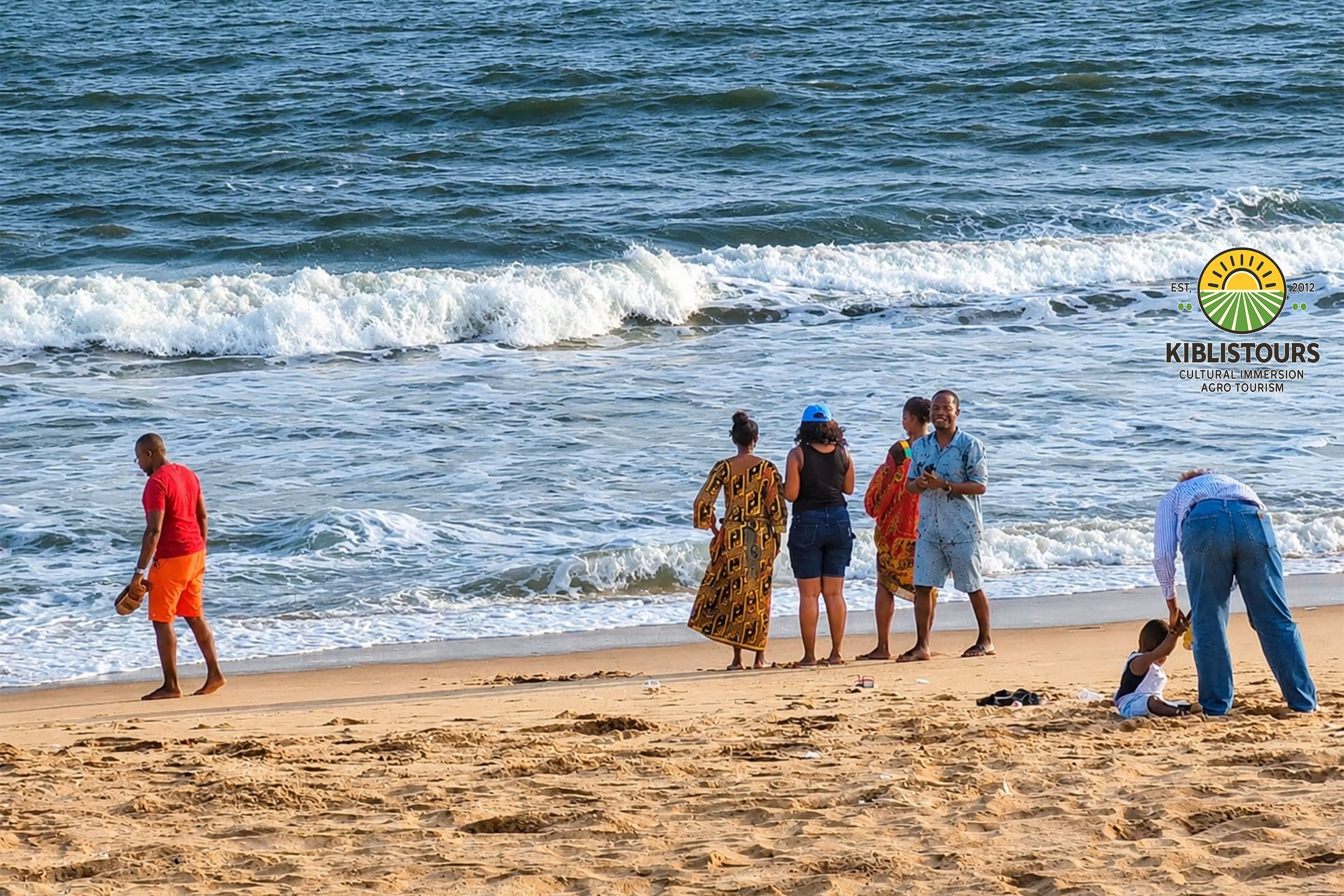
Labadi offers an opportunity to pause facing the Atlantic: a walk in an authorised area, a meal or relaxation at an identifiable establishment. Visitor numbers and activities vary by day. Distinguish admission to a developed area, food and drinks, and any entertainment in your budget.
British travel advice highlights dangerous currents and undertows along Ghana’s southern coastline. For this itinerary, prioritise walking and the views: do not consider swimming an included activity. Stay with your group, supervise children and belongings, and follow local instructions.
Alternatives that make these two days practical
Accra on Saturday and Sunday: the right itinerary when Du Bois closes on Sunday
For a Saturday–Sunday stay, schedule the Du Bois Centre on Saturday only if visiting areas are accessible. Its weekly closure requires a different programme on Sunday. The following arrangement limits unnecessary journeys across the city.
Saturday - Du Bois Centre around 10 a.m. if access is confirmed, then lunch and a transfer towards the centre. Next choose Makola and a short outdoor walk in Jamestown according to available time. If Du Bois is inaccessible, start at Makola in the morning and allow more time for Jamestown or the arts.
Sunday - National Museum from 9 a.m., then the Nkrumah memorial after 10 a.m. and lunch. Finish with just one stop: the Arts Centre, Independence Square or the coast. For an evening departure, reserve the airport transfer time first, then adapt the visits.
Adapting the programme for works or rain
If access to part of Makola is difficult, choose another passage or a craft visit with your guide. The Arts Centre presents creative occupations and souvenir sales; it does not replicate the economy of a large everyday market. This difference forms part of the route’s interpretation.
In heavy rain, prioritise an open museum, exhibition, pre-booked workshop or a break at your accommodation. If Jamestown is unsuitable for a comfortable walk, limit the stop to a few authorised viewpoints. These adaptations keep both days enjoyable without multiplying journeys.
What budget should you allow for two days in Accra?
Distinguishing official ticket prices from the actual cost of a stay
To compare budgets, separate individual tickets from shared expenses such as the vehicle, guide and double room. The actual service duration matters as much as its description: check guiding hours, transfers and included meals. Someone already accommodated in Accra will have different costs from a couple needing an overnight stay.
The memorial publishes GHS 100 per non-Ghanaian adult. Ask the GMMB for the National Museum’s current price: its older GHS 80 schedule is not used in the calculation below. Workshops, demonstrations and beach areas may also involve extra expenses depending on your chosen activities.
Comparing a shared visit with a private stay
Shared arrangements can reduce per-person vehicle and guiding costs when a departure is offered. They involve a common schedule and agreed meeting points. A private option provides greater freedom over pace, themes and breaks. Always compare services of equivalent duration and content.
Costed example for a couple: two days and one night in Accra
Example for two non-Ghanaian adults, a double room, two days of visits and one night. The memorial is counted at the published price of GHS 100 per person; hotel, transport, meals, guiding and contingency funds are estimated allowances, not supplier quotations. The National Museum is excluded pending its current price, as are flights, insurance, purchases, workshops and any beach admission fees.
Item for two adults | Indicative budget GHS | CFA equivalent |
Nkrumah memorial | 200 | 10,100 |
National Museum | Add after confirmation | To be confirmed |
One night in a double room | 500 - 900 | 25,300 - 45,600 |
Vehicle and transfers over two days | 600 - 1,100 | 30,400 - 55,800 |
Meals and drinks for two | 400 - 700 | 20,300 - 35,500 |
Guide and assistance over two days | 500 - 900 | 25,300 - 45,600 |
Contingency reserve | 150 - 300 | 7,600 - 15,200 |
SUBTOTAL EXCLUDING MUSEUM | 2,350 - 4,100 | 119,100 - 207,800 |
The estimated subtotal is GHS 2,350–4,100 for the couple, excluding the National Museum, or approximately CFA 119,000–208,000. It covers two days and one night: add the museum, optional activities and another night if your schedule requires it. This planning budget is not a Kiblistours selling price.
Understanding the conversion into CFA francs
Indicative rate on 16 November 2026: GHS 1 ≈ CFA 50.68. This rate is calculated from EUR rates published by the West African Monetary Agency (WAMA). Table values are rounded to the nearest CFA 100 and exclude commissions and exchange-rate margins. For payment, use the rate actually applied by your financial provider.
How can you get around Accra without losing half your stay?
Choosing a sensible starting point
In Accra, two places close on a map are not necessarily close in travel time. For a stay centred on museums and the coast, your accommodation neighbourhood strongly affects journeys. Areas around the centre, Osu or certain business districts may facilitate particular visits, but check your hotel’s exact address and traffic at departure time. A very comfortable hotel far from your stops can ultimately reduce useful sightseeing time.
On the first day, group together the National Museum, Nkrumah memorial, Arts Centre and Independence Square. On the second, begin with Makola and Jamestown, then finish towards the east of the city. This avoids repeated journeys between distant areas. It does not eliminate congestion; it simply limits unnecessary travel. A car with a driver cannot prevent delays, but makes breaks and adjustments easier.
Private driver, pre-booked taxi or local transport?
A private vehicle with a driver offers clear luggage arrangements, agreed meeting points and control over return times. It is particularly relevant for groups, children and first-time visitors. The quotation should state whether fuel, waiting time, any tolls and journeys to the beach are included. The driver must be identifiable, insured and informed of the actual places selected.
Pre-booked taxis and app-based services may suit independent travellers. Check the driver’s identity and vehicle before getting in. Local public transport follows different rhythms; with only two days and several museum opening times to consider, it may require more time and changes.
Planning transfers and the journey to the airport
Allow separately for leaving the hotel, traffic, accessing the site and the visit itself. The table’s ranges provide a general planning guide; recalculate journeys using your accommodation’s exact address and intended time. Rain and events can extend these intervals.
If flying on the second evening, first set your airport departure time according to the airline’s instructions and traffic conditions. Keep the final activity flexible and allow time to collect your luggage. Labadi or another neighbourhood visit can be dropped to protect this transfer.
Practical table: time allowances between Accra neighbourhoods
Indicative ranges in a pre-booked vehicle, excluding visiting time. These provide planning margins and are not real-time traffic measurements.
Journey | Indicative allowance | Point to watch |
National Museum → Nkrumah memorial | 20 - 50 minutes | City-centre traffic and arrival at the memorial |
Nkrumah memorial → Arts Centre | 5 - 25 minutes | Short journey that may still be delayed |
Arts Centre → Independence Square | 10 - 25 minutes | Access sometimes controlled during events |
Independence Square → Osu | 20 - 50 minutes | Late-afternoon congestion |
Makola → Jamestown | 15 - 45 minutes | Markets, narrow streets and parking difficulties |
Jamestown → Du Bois (Cantonments) | 35 - 80 minutes | Generous allowance required, especially on Saturday |
Du Bois → Labadi | 20 - 55 minutes | Depends on the exact beach area |
Jamestown → Labadi, without Du Bois | 35 - 75 minutes | Alternative if the Centre is inaccessible |
When to visit Accra: seasons, weather and atmosphere
The relatively dry season: easier walking without guaranteed blue skies
Greater Accra has a tropical climate with variations in heat, humidity and rainfall. Relatively dry months can favour walking visits and coastal outings. Nevertheless, it can be hot, the air may be dusty during harmattan, and any day’s weather may differ from climate averages. Bring a hat, water and opportunities to rest in the shade. Choosing a season does not replace checking forecasts a few days before departure.
A market is generally more comfortable early in the day, before heat and traffic build up. A museum visit can be rescheduled if a shower makes outdoor walking less pleasant. On the coast, wave strength and safety matter much more than an attractive sunset forecast on social media.
During the rains: keeping a backup plan
On rainy days, plan an indoor activity and protect your devices. Streets and steps can be slippery; suitable shoes and a shorter visit improve comfort. Allow time to reach the alternative venue without rushing.
For an exhibition, festival or performance, check the official programme and book if necessary. A confirmed activity can replace a stop; it is better to give it that place than add it to an already full day.
Visiting Accra with children, older travellers or reduced mobility
With children: turning sites into accessible stories
The National Museum and Nkrumah memorial can be very informative for school-age children if abstract explanations are limited. Choose a few objects, explain independence through symbols and let children ask questions. The Arts Centre can provide more tangible discoveries: fabrics, shapes, materials, techniques and occupations. A practical demonstration nevertheless requires a confirmed facilitator and appropriate safety arrangements.
Makola is a busy workplace: a pushchair or a child sensitive to noise may not be comfortable there. In that case, limit the visit to an accessible area or choose another commercial experience. In Jamestown and by the sea, keep children closely supervised, away from boats, traffic areas and the water. A guide never replaces the accompanying adult’s responsibility.
With older travellers: protecting the pace rather than multiplying stops
Some travellers want to hear historical accounts without walking long distances. The programme can prioritise longer guided visits in two places, with drop-offs near entrances and breaks in identified spaces. Before booking, ask whether benches are available, where toilets are located, which routes have steps and whether rooms can be visited without prolonged standing.
The coast can be enjoyed from a terrace rather than by walking on sand. In Jamestown, a few interpreted stops and a short walk may suffice. Ask about practical movement conditions before choosing a visit.
Accessibility of sites and transport
For particular mobility needs, check access to entrances, rooms and toilets: steps, ramps, paths, seating and walking duration. Describe useful adaptations to Kiblistours so that appropriate visits and a suitable vehicle can be chosen.
Formalities and safety: preparing for Accra before sightseeing
Passports, visas and entry rules: distinguishing nationality from residence
To reach Accra from abroad, every traveller must check the rules applicable to their nationality and travel document. The Ghana Immigration Service lists ECOWAS nationals, including Beninese nationals, among visa-exempt nationalities. This exemption does not remove entry checks, document requirements or any other formalities. A resident of Benin with another nationality does not necessarily benefit from the same rules. Travellers arriving by road must also prepare transit and entry requirements for Togo separately.
Use Ghana’s official checker with your nationality and passport type. Follow the result “Visa-Free”, “ETA Required” or “eVisa Required”; visa exemption does not imply the absence of an electronic procedure. For minors, prepare applicable authorisations and family documents. Ghana’s official checker
Electronic health declaration before arrival
The Ghana Health Service portal presents the health declaration as mandatory for arrivals. Complete the form before the Port Health counter and keep the QR code offline. A parent or guardian completes the procedure for a child under 12. This declaration is separate from immigration formalities and the vaccination certificate.
Yellow fever, malaria and travel precautions
Ghana requires proof of yellow fever vaccination under current rules and any applicable medical exceptions. Consult a doctor or travel medicine centre well in advance, particularly for infants, people with contraindications and travellers with particular risks. Malaria risk also warrants an individual assessment of preventive measures, including any prescribed medication and protection against mosquitoes.
Heat, hydration, food hygiene and the management of chronic conditions should not be left until the last moment. Appropriate medical insurance and useful healthcare contacts should form part of your preparation.
Markets, beaches and photographs: precautions for responsible travel
At Makola, keep phones, money and valuables out of sight and agree on a meeting point. Keep your original passport somewhere safe and an accessible copy with you during visits. Arrange returns to the hotel, particularly after dark.
Ask before photographing anyone and respect restrictions around guarded facilities. In fishing neighbourhoods, do not enter a working area without permission. At the beach, supervise children and belongings and favour activities out of the water.
Accra in two days with Kiblistours: Standard, Premium or VIP?
Standard - Two days to understand the essentials
Description. Standard prioritises essential stops and shared arrangements when the departure allows: heritage, crafts and historic neighbourhoods. The group follows a common pace, with planned breaks.
Services to request. Transport suited to the group, assistance during agreed periods, tickets for selected sites and an outdoor walk in Jamestown. The quotation specifies any meals and overnight accommodation, participant numbers and meeting points.
Experiences and practical information. An introduction to Ghana at the museum, symbols of independence, and an exploration of occupations and commercial life. Suitable for travellers wanting shared arrangements and budget control. Dates, group size and prices are specified in the proposal.
Premium - A small group, greater depth and more comfort
Description. Premium prioritises a small group, a more flexible pace and more time with hosts and specialists. It suits travellers wanting to explore history and skills in greater depth while maintaining comfortable transport.
Services to request. A reserved vehicle for agreed stages, in-depth guiding, a selected lunch and accommodation in your preferred category if an overnight stay is planned. A demonstration or workshop can replace a visit, following a booking with the partner.
Experiences and practical information. A more focused museum selection, a conversation with a craftsperson and a heritage walk at your own pace. Specify your priorities when enquiring so that the extra time focuses on experiences that interest you.
VIP - Accra at your pace with a private programme
Description. VIP prioritises a private programme for a couple, family or pre-formed group. You choose the main themes history, creativity, gastronomy or neighbourhoods and the pace is adapted to participants.
Services to request. A private vehicle and driver, dedicated guide, pickups at agreed addresses, and accommodation and meals selected according to your preferences. The quotation specifies service durations, tickets, optional activities and particular needs.
Experiences and practical information. More freedom to extend a visit, shorten a walk or arrange a specialist encounter. This option suits tight schedules and specific interests; it does not change public sites’ access rules.
Included services exclusions and preparation
The three options describe levels of organisation to request, with prices and availability established for your dates. Only services listed in the quotation are included. Clarify overnight stays, meals, airport transfers, tickets and workshops in particular. Allow separately for purchases and personal expenses; flights, insurance and entry formalities should be considered included only if the proposal expressly states this.
Cancellation, amendments and payment: rules to understand before booking
Before booking, read the total amount, price validity period, deposit requirements and cancellation or amendment rules. The proposal should also explain how a site closure or programme change would be handled. Keep these terms with your stay confirmation.
Extending your stay: from central Accra to other Ghanaian experiences
Cape Coast and Elmina: adding time for historical remembrance
After two days in the capital, the central coast can extend the journey for those interested in the transatlantic slave trade, fortifications and port cities. Organise this extension over several stages rather than attaching it to the end of your second day in Accra. A day of museums and markets does not reasonably leave time to reach Cape Coast, visit a historic castle in depth and return to the capital without excessive fatigue.
Visiting Elmina Castle in particular requires sensitive interpretation and time for reflection. To prepare this extension, consult the Kiblistours article Elmina Castle in Ghana: history, visiting and remembrance on the Atlantic coast. Site opening hours, admission charges and access conditions must be confirmed separately before booking.
Cocoa and the Eastern Region: following another Ghanaian story
Travellers interested in agriculture and gastronomy can choose an extra day to discover Ghana’s cocoa history and, depending on providers, visit a heritage or processing site. A cocoa discovery experience, plantation visit and chocolate workshop should not be treated as interchangeable: they involve different places and arrangements. A family may prefer a short, practical activity; an agricultural professional may want to explore practices and value chains in greater depth.
The Kiblistours guide Discovering Ghana’s cocoa farms and chocolate makers offers ideas for organising this extension. These activities are not automatically included in the Accra visit: they require specific dates, transport and confirmations.
The Volta Region and Liati Wote: slowing down, walking and meeting people
For a longer stay, the Volta Region offers hills, villages and rural experiences that go well beyond a simple city excursion. Reserve extra days, check distances and arrange local guides. A village encounter requires hosts’ consent, agreed payment for organised activities and particular attention to photography and privacy.
To understand this approach, the Kiblistours article Rural immersion in a Ghanaian village: Liati Wote explains how to turn a journey into an experience of meeting people. This extension should not be added at the last minute to a two-day Accra stay: it deserves a programme of its own.
FAQ - What can you do in Accra in two days?
Are two days enough to visit Accra?
Yes, for an initial discovery: history and arts on the first day, markets and historic neighbourhoods on the second. Keep two or three priority stops each day, with the others optional according to your pace.
Which places are essential for a first stay?
The National Museum, Nkrumah memorial, Arts Centre, Independence Square, Makola and Jamestown form a coherent selection. Labadi can complete the route if time and conditions allow.
Which Accra market should you visit: Makola or the Arts Centre?
Makola reveals trade in everyday products; the Arts Centre focuses more on crafts and creative work. They complement each other. Adapt your Makola route to construction works and accessible areas.
Is Kwame Nkrumah Memorial Park open on Sunday?
Yes, its official website announces 10 a.m. - 7 p.m. on Sunday and 9 a.m. - 7 p.m. Monday to Saturday. Events may affect access.
How much is admission to the Kwame Nkrumah memorial?
The advertised public price is GHS 100 for a non-Ghanaian adult. Student and child categories have their own prices; choose the category matching your circumstances.
Is the National Museum of Ghana open every day?
The GMMB publishes daily opening hours of 9 a.m. - 4.30 p.m. Ask for its current price: the still-visible GHS 80 non-Ghanaian adult schedule is described as predating a revision.
Can you visit Jamestown’s forts in 2026?
The GMMB notice provides for the closure of James Fort and Ussher Fort from 18 December 2025 until further notice. Plan an exterior exploration; entry requires an officially confirmed reopening.
Can you climb Jamestown Lighthouse?
Climbing is not included in the suggested route. It requires the managing body’s confirmation of access and safety; the exterior view remains a stop on the neighbourhood walk.
Can the W.E.B. Du Bois Centre be included in the itinerary?
Yes, if visiting areas remain accessible despite the restoration project. The Centre advertises 9 a.m.–4 p.m. on weekdays and 10 a.m.–3 p.m. on Saturday; it is closed on Sunday.
Where can you see the sea in Accra?
Labadi offers a relaxation option, while Jamestown introduces coastal occupations and history. Favour walking: sea currents can be dangerous.
What can you do in Accra in two days with children?
Choose short visits, a few museum objects and suitable craft activities. Limit Makola if crowds tire the children and keep regular breaks. Maintain close supervision near the coast.
Can you visit Accra on foot?
Within a neighbourhood, yes. Between main stops, pre-booked transfers reduce fatigue, distances and time lost in connections.
What budget should you allow for two days in Accra?
The example for two adults, two days and one night is GHS 2,350–4,100, approximately CFA 119,000–208,000 at the indicative rate of 16 November 2026. Add the National Museum and optional activities. This is a budget example, not a Kiblistours package price.
What is the best time to visit Accra?
Choose according to your availability, allowing shaded breaks and indoor activities if it rains. Relatively dry periods often make walking easier, but check the weather before your stay.
Do Beninese nationals need a visa for Ghana?
Ghana’s published rules exempt Beninese nationals from visas. Also check other documents and the official checker’s result for any electronic authorisation.
Is a health declaration required for arrival in Ghana?
Yes, the Ghana Health Service portal presents it as mandatory. Complete it before the health counter and keep the QR code; for a child under 12, the parent or guardian completes the form.
How should you organise two days in Accra on Saturday and Sunday?
Schedule Du Bois on Saturday if visits are accessible. On Sunday, prioritise the National Museum and Nkrumah memorial, then one final stop according to departure time. Makola can be scheduled on Saturday morning if you do not select Du Bois.
How do you book a two-day Accra tour with Kiblistours?
Contact Kiblistours with your dates, traveller numbers, departure address, particular needs and preferred comfort level. The proposal will specify the programme, price and terms before confirmation. Contact Kiblistours
What are the cancellation conditions for a Kiblistours stay in Accra?
Deadlines, charges and refund possibilities are those communicated with your proposal and the terms accepted before payment. Read them before confirming, particularly for services provided by third parties.
Conclusion: two days can already make Accra a meaningful encounter
At the end of these two days, your finest memory may not be a list of monuments. It may be how a craftsperson explained their work, the discovery of an object at the National Museum, a question prompted by the Nkrumah memorial or the contrast between a busy market and the sound of the Atlantic. Cities are understood gradually, through observed gestures and stories placed in context. Accra does not promise to reveal itself entirely in forty-eight hours; it offers enough starting points to make you want to return.
A good stay leaves room for encounters while respecting traders’ work, places of remembrance and the group’s pace. Two well-organised days connect history, creativity and urban life without turning every discovery into a race against time.
Book here - request your personalised quotation to discover Accra with Kiblistours. Choose your dates, priority experiences and comfort level: we invite you to prepare a programme suited to your stay. Book here
Kiblistours - Experience Authentic Africa.