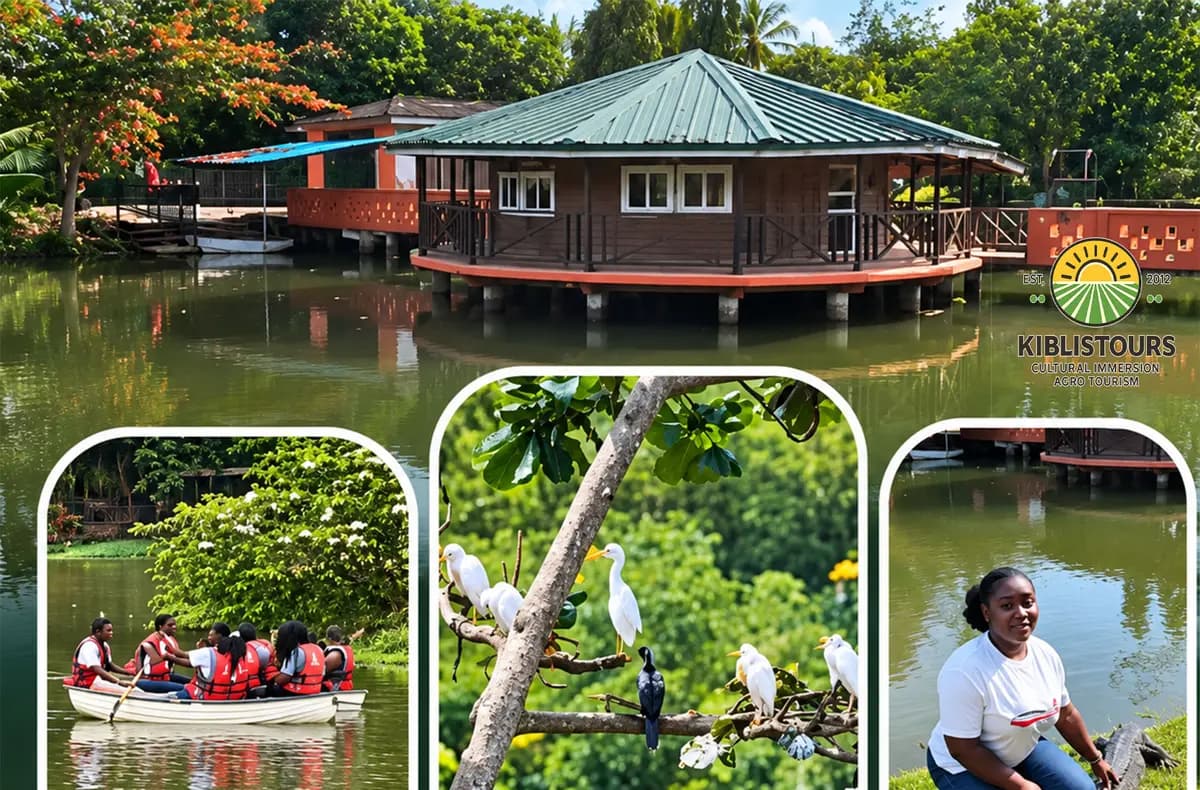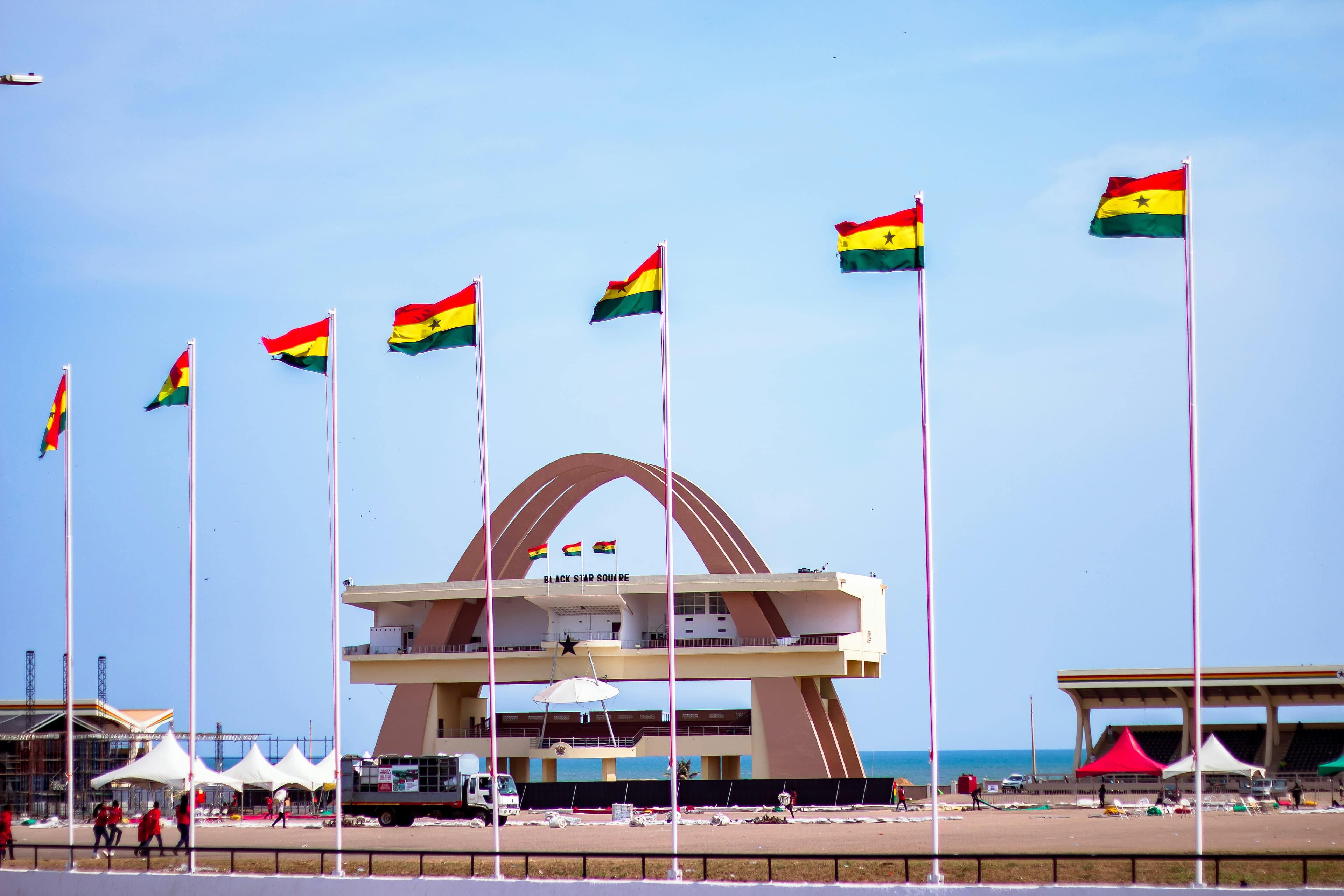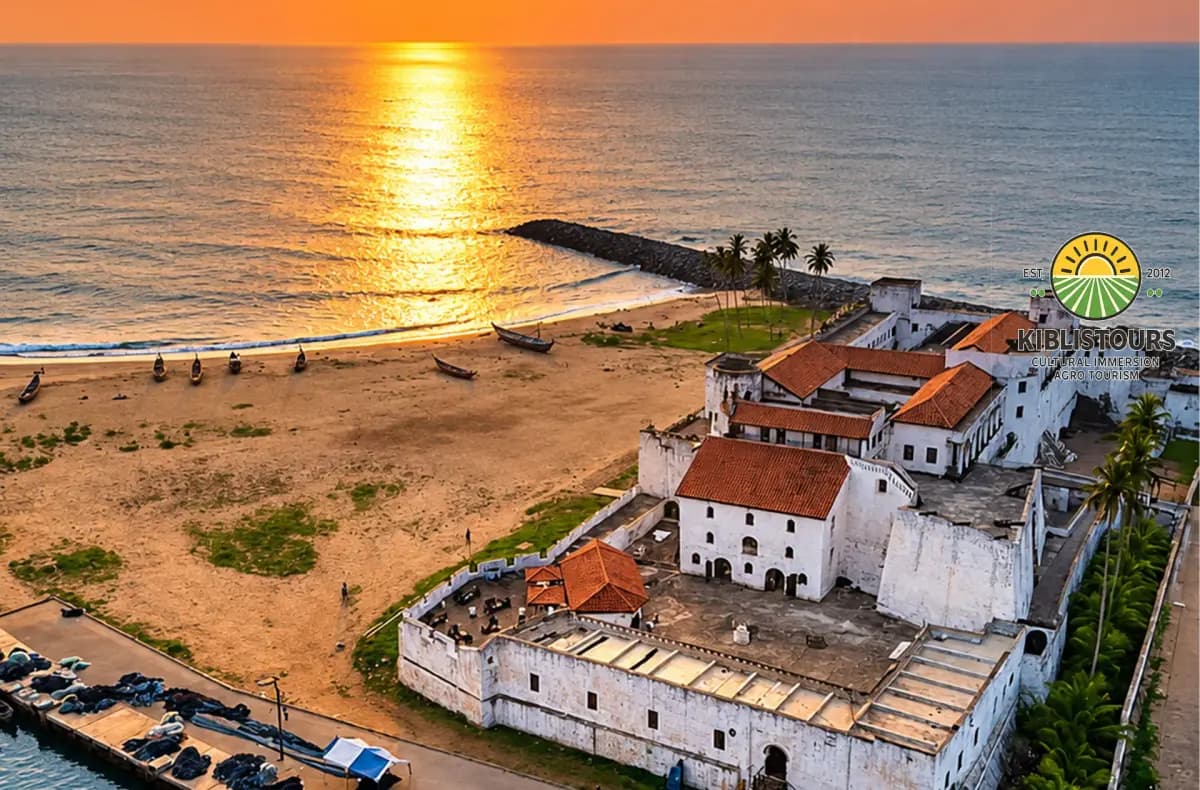
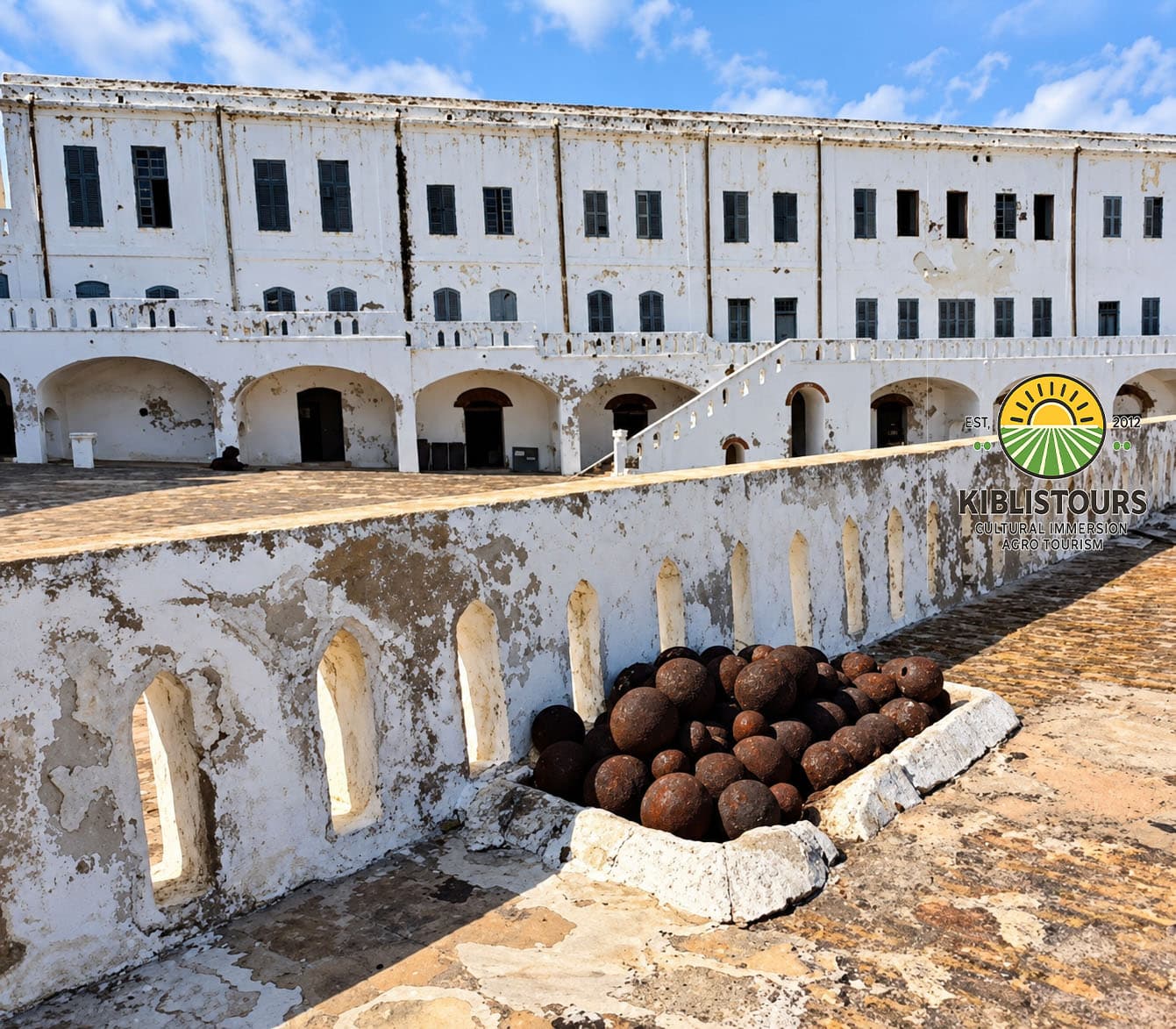
At Assin Manso, a path leads to the Donkor Nsuo River. On Ghana’s central coast, Cape Coast and Elmina castles overlook the Atlantic Ocean. Together, these three places allow visitors to trace some of the stages in the forced deportation of enslaved people, from inland areas to the coast. They also reveal how Ghanaian communities and African diasporas preserve and pass on this history today.
This guide explains the role each site played in the history of the transatlantic slave trade and helps you plan your visit. Two days allow you to explore the castles and, depending on the route, reach Assin Manso. Allow three days to devote time to all three stops, conversations with guides and quiet reflection.
Why follow Ghana’s Route of Remembrance?
A historical journey that goes beyond visiting monuments
A monument may impress us with its size and age. A place of remembrance raises further questions: who built it, who occupied it, who suffered there, and who tells its story today? The fortifications along the Ghanaian coast combine both dimensions. They bear witness to long-established trading networks, rivalries between European powers and the central role of certain coastal trading posts in the Atlantic slave trade. They also show how violence could be organised alongside seemingly ordinary administrative, religious and commercial activities.
A Ghanaian, African and global history
The history of Cape Coast and Elmina belongs first and foremost to the people of present-day Ghana, their leaders, communities and social transformations. It is also part of African history, because routes of capture and movement stretched far beyond today’s national borders. Finally, it is part of world history: people were forcibly transported to the Americas, where their forced labour enriched colonial economies and profoundly reshaped societies.
A heritage shared with African diasporas
For many travellers of African descent, the sites along the Ghanaian coast hold deeply personal meaning. They may represent a stage in a search for identity, a tribute to ancestors or a way of passing a legacy on to children. Other visitors come primarily to learn, pursue research or teach history. These motivations are not mutually exclusive, and no particular emotional response should be imposed. Some people choose silence in the places where captives were held; others want to ask many questions or talk with their loved ones.
Understanding the slave-trade routes before you travel
The Gold Coast before European fortresses
Long before the castles were built, societies in the region engaged in trade, agriculture, fishing and complex political networks. Coastal settlements were connected to forest areas and inland regions. Gold in particular attracted merchants and sustained exchanges extending far beyond the coastline. The arrival of the Portuguese in the late fifteenth century therefore took place in a world that was already populated, organised and linked by trade routes.
From gold to the transatlantic slave trade
Not all forts and castles were built at the same time or solely for the same purposes. Several were initially established to protect and organise the trade in gold and other goods. Over time, as colonial plantations expanded in the Americas, the trade in enslaved people became increasingly important. Spaces were adapted for confinement, control and forced embarkation. Their uses changed with rivalries among maritime powers and shifts in the economy.
Capture, forced marches and transit sites
People taken to the castles could come from different territories, following conflicts, raids, convictions or other forms of captivity. Their journeys varied and cannot be reduced to a single route. Forced marches could be long and dangerous. Transit centres enabled traders and intermediaries to gather captives before transferring them to coastal establishments. In contemporary remembrance, Assin Manso is particularly associated with one of these stages.
The Atlantic crossing and its human consequences
At the coast, embarkation did not mark the end of violence but the beginning of a forced crossing, often under appalling conditions. The “Middle Passage” refers to this stage of the sea journey to the Americas. Survivors were then subjected to systems of slavery and forced labour, particularly on plantations and in other colonial activities. Family separations, loss of freedom and violence affected generations.
Cape Coast Castle: understanding the memory of forced deportation
Cape Coast: a city beyond its castle
Cape Coast lies on Ghana’s central coast. It is home to universities, residential neighbourhoods, fishing activities, businesses and cultural spaces. The castle is a major stop for visitors, but reducing the entire city to a backdrop for the slave trade would be misleading. Before or after the visit, a guided walk through accessible areas offers a sense of this coexistence: everyday life in a contemporary city alongside an internationally renowned monument.
1653: the fort’s origins and changes of control
The fortified structure from which Cape Coast Castle developed was established by the Swedes in 1653, before undergoing several changes of occupation and extensive alterations. The British later made it an important centre of their presence on the Gold Coast. It is more accurate to speak of the castle’s gradual development than to assume that the present monument was built all at once and remained unchanged. Its spaces reflect successive extensions, different uses and changing military or administrative priorities.
The dungeons: bearing witness without turning suffering into spectacle
The dungeons are among the most emotionally demanding parts of the visit. Their enclosed architecture and the guides’ explanations help visitors understand the conditions imposed on captives. Yet accounts that seek to heighten drama should be approached with caution. The harshness of this history needs no embellishment through unverified figures, invented scenes or exaggerated comparisons. Information should be grounded in historical, archaeological and museum sources, while acknowledging what remains uncertain.
The Door of No Return: a symbol of rupture
The Door of No Return, associated with forced embarkation, is among Cape Coast Castle’s best-known symbols. Its significance rests on an immense historical reality: for many people transported to the Americas, departure meant an irreversible separation from their homeland and loved ones. The ocean view may be beautiful today, but here it evokes the violence of an imposed crossing, not a freely chosen maritime adventure.
Contrasts between spaces of power and spaces of captivity
The castle’s layout raises questions about the distribution of space and privilege. Facilities used for administration, defence or worship existed alongside places of confinement and violence. This proximity reveals a disturbing feature of systems of domination: exploitation could be administered alongside practices considered ordinary by those who benefited from them. Observing movement through the building therefore invites reflection on power relations and how they are expressed in architecture.
What the museum can teach younger generations
Cape Coast Castle is a powerful resource for historical education. School pupils and university students can explore international trade relations, the transatlantic slave trade, slavery, abolitionist struggles and the formation of collective memory. Preparing before the visit makes it possible to define a few research questions. What were the castle’s original functions? How did the site change? What traces have been preserved, and what testimonies are missing? Who determines how the past is told today?
Elmina Castle: five centuries of history on the Atlantic coast
São Jorge da Mina and the year 1482
St George’s Castle at Elmina was built by the Portuguese in 1482. UNESCO describes it as one of the oldest surviving European buildings outside Europe. The date is an important milestone in Atlantic trade history, but the monument was initially closely connected to the gold trade. Activities linked to the slave trade developed and changed over time. It would be historically inaccurate to describe every space and function of the castle as having been identical from its foundation.
From Portuguese rule to the Dutch period
The Dutch seized Elmina from the Portuguese in 1637. The castle continued to be altered and used amid commercial and political rivalries. It remained under Dutch control until it was transferred to the British in 1872. This chronology shows why the building cannot be assigned to the history of a single European nation. Several powers ruled it, and trade evolved over time, while local populations continued to negotiate, resist or adapt to conditions that were sometimes profoundly unequal.
Places of detention and the organisation of the slave trade
At Elmina too, the places of confinement recall the conditions imposed on people deprived of their freedom. Visitors can explore spaces associated with captivity and embarkation. A guide’s role is to place them within the castle’s chronology and explain how a trading system treated men, women and children as commodities. Terminology matters: speaking of “enslaved people” recalls their humanity and the fact that their condition was imposed on them.
The Door of No Return at Elmina
Elmina’s Door of No Return likewise embodies the memory of forced departures. Visitors to both castles may be tempted to photograph one door after the other and assume they tell exactly the same story. Yet each site has its own history, transformations and relationship with the surrounding town. Understanding these differences deepens the experience. The symbol should not obscure the uniqueness of each place or the diversity of human journeys.
Elmina, its fishing harbour and its living community
A visit to Elmina should not end at the castle gate. Subject to local conditions, visitors may observe activity at the harbour, fishing boats, commercial exchanges and elements of the town’s built heritage. This additional perspective matters: Elmina is not frozen in an era of violence, and its residents are not defined solely by the fortress’s history. They maintain contemporary cultural practices and economic initiatives.
Fort Saint-Jago and Elmina’s strategic landscape
Notice du Ghana Museums and Monuments Board sur le fort Saint-JagoGhana Museums and Monuments Board information on Fort Saint-Jago
The Saint-Jago hill, crowned by Fort Coenraadsburg, offers another perspective on the military landscape. It highlights defensive concerns and the rivalries among powers seeking to protect maritime trade. The fort’s history is linked to the confrontations that enabled the Dutch to capture Elmina Castle in the seventeenth century. Understanding the relationship between the hill and the coastal fortress helps visitors grasp strategies for controlling territory.
Why visit both castles instead of just one?
Cape Coast and Elmina are often presented together, but their interest lies in more than their proximity. Elmina offers insight into the Portuguese presence from 1482 and subsequent changes under Dutch rule; Cape Coast sheds more light on the growth of a fortified trading post from the seventeenth century and the importance of British involvement. Comparing them reveals successive empires, changing commercial activities and the ways buildings endured through several centuries.
Assin Manso: the Last Bath and remembrance of inland routes
Why Assin Manso is essential to this itinerary
The castles chiefly tell the story of the final African stage of many forced deportation journeys before the Atlantic crossing. Assin Manso shifts attention inland. Located in Ghana’s Central Region, the site is linked to transit routes taken by captives on their way to the coast. Heritage narratives describe it as a place of gathering, passage and a “last bath” before the journey continued to forts and castles.
Donkor Nsuo, known as the Last Bath River
The Donkor Nsuo River lies at the heart of the Assin Manso memorial site. According to the Ghana Tourism Authority and the district assembly, captives were washed here before continuing their march towards the coast. The “last bath” refers to this stage in the account passed down at the site. Routes to the coastal fortresses varied according to captives’ origins and the networks organising their movement.
Walking to the river: an experience of reflection
The path to the river contrasts with the fortified courtyards on the coast. Vegetation and the natural surroundings give the place a peaceful appearance, which can feel unsettling in light of its history. This very contrast encourages reflection: a tranquil landscape today carries the memory of a brutal system. Guides may invite visitors to observe the site, listen to its story and respect spaces considered commemorative or symbolic by the community.
Memorial graves and symbolic returns
Two graves illustrate the connections forged between Assin Manso and the diasporas. According to the Ghana Tourism Authority, they contain the remains of Lady Crystal, brought back from Jamaica, and Carson, returned from New York. Their reburial in Ghana gave tangible form to a commemorative homecoming. The site hosts tributes during Emancipation Day celebrations.
The Wall of Return and the role of diasporas
The site also includes a memorial space often described as a “Wall of Return”, associated with the symbolic inscription of names and recognition of a renewed connection with Africa. This is a contemporary commemorative feature, not a historical register capable of identifying visitors’ ancestors. The distinction is essential: the act of returning has personal and collective meaning, but it is not genealogical proof.
Commemorations and Emancipation Day
Assin Manso is associated with Ghana’s Emancipation Day commemorations, traditionally celebrated around 1 August. Ceremonies may highlight the history of the slave trade, descendants’ memories and the importance of freedom. For travellers, attending a commemoration may enrich the journey, but arrangements for each edition should be checked with the organisers. It would be unwise to announce a specific programme, timetable or access conditions without official confirmation.
Cape Coast, Elmina and Assin Manso: three complementary sites
Different historical functions
Although they form one Route of Remembrance, the three sites did not serve the same function. Cape Coast and Elmina were fortified coastal settlements associated with trade, defence, administration and, at different times, the detention of captives. Assin Manso is linked to an inland transit point and gathering activities. Visitors therefore gain an understanding on several scales: a continental system of forced movement, a coastal trading post and a transatlantic maritime route.
Similarities that illuminate the system’s violence
Common themes run through all three places: deprivation of liberty, the commodification of human beings, forced movement and family separation. The castles reveal spaces built to control trade and people; Assin Manso reminds us that the same violence also extended along inland routes. Taken together, they invite reflection on transport networks, the logistics of the slave trade and the administrative dehumanisation that accompanied transactions.
World Heritage forts and castles
The forts and castles along Ghana’s coast were inscribed on the UNESCO World Heritage List in 1979 under the title “Forts and Castles, Volta, Greater Accra, Central and Western Regions”. This collective property includes Cape Coast Castle and St George’s Castle at Elmina, among several other monuments. The inscription recognises their significance for the history of Afro-European relations, the gold trade and the transatlantic slave trade.
Suggested itineraries for exploring the Route of Remembrance
A two-day itinerary with one night in the region
For visitors with limited time, a two-day, one-night programme in the Cape Coast area is a possible starting point. Day one can be devoted to arrival, an in-depth tour of Cape Coast Castle, time to speak with the guide and a modest exploration of the city. On day two, visit Elmina Castle and consider Assin Manso depending on your departure point, traffic conditions and the time genuinely available. Omit a stop if the day becomes too crowded.
Three days for a more in-depth historical journey
A three-day stay usually offers a more comfortable pace. The first day can focus on Cape Coast: its museum, memorial spaces, a respectful walk and discussion of historical facts. The second can be spent in Elmina, including the castle and the harbour town. The third can be reserved for Assin Manso, the river and commemorative spaces, before returning. This arrangement leaves more time for questions and limits emotional or physical fatigue.
Indicative comparison: two or three days on the Route of Remembrance
Use these two itineraries to choose your pace. Overnight stays are in the Cape Coast or Elmina area. If you have two days, first confirm whether your return journey allows for a complete visit to Assin Manso.
Criterion | 2 days / 1 night | 3 days / 2 nights | To be confirmed in the quotation |
Stops | Day 1: Cape Coast; day 2: Elmina and, depending on schedule/route, Assin Manso | Day 1: Cape Coast; day 2: Elmina; day 3: Assin Manso | Final order depends on departure point and traffic |
Overnight stays | 1 night in the Cape Coast / Elmina area | 2 nights in the region | Accommodation category, room and breakfasts |
Travellers | Adults and small groups with limited time | Families, diaspora travellers, educational groups and visitors wishing to explore in greater depth | Accessibility, age and pace of visits |
Basic services | Local transport, coordination and scheduled guided tours | Local transport, coordination, guided tours and extended discussion time | Tickets, meals, guides and services specified by package |
Main advantage | A compact introduction to all three places if feasible | A more relaxed journey with time for reflection and historical context | Adequate time at each site |
From Accra: plan the stops realistically
Accra is a common gateway for travel to Ghana. Departing from the capital for the Central Region requires allowing for traffic conditions, which can significantly affect travel times. A day trip limited to one or two sites may be possible depending on the group’s circumstances, but it is not reasonable to routinely promise a comfortable one-day visit to Cape Coast, Elmina and Assin Manso from Accra. The number of stops should not outweigh the quality of the visits.
From Cotonou: plan a Ghana tour with Kiblistours
For travellers living in Benin or seeking to combine several West African countries, a tour from Cotonou is possible, subject to border-crossing formalities, the transport selected and the total duration. Such a journey may pass through Lomé and Accra before reaching the Cape Coast area. The exact route should reflect the group’s profile, road conditions and the rules applicable to travellers according to their nationality and documents.
A journey of remembrance for different types of travellers
For travellers of African descent seeking a deeper connection
For some members of the African diaspora, visiting Ghana’s castles is a profoundly personal experience. It may form part of a symbolic homecoming, historical research or the passing on of family heritage. The programme should therefore allow optional time for reflection, provide opportunities to talk with guides and avoid turning the emotional significance of remembrance into a spectacle. Any desired ceremonies should be discussed with site managers and comply with their rules.
Thoughtful support also helps establish realistic expectations. The sites provide access to the collective history of the slave trade; without evidence, they cannot establish that an identified ancestor passed through a particular door. This caution does not diminish the journey’s power. It protects visitors from misleading promises and leaves room for a personal, freely chosen and sincere connection with the places.
For families with children and teenagers
A family visit can be rewarding when the content is suited to children’s ages and sensitivities. Before departure, adults can explain in simple terms what freedom, captivity and forced displacement mean. On site, it is helpful to explain that some rooms, especially dungeons, may evoke strong emotions. Children should never be forced to enter a space that frightens them or take part in a ritual they do not understand.
For schools, universities and associations
Educational institutions can turn this Route of Remembrance into a meaningful learning project. Before travelling, participants can study a map of Atlantic trade, compare sources and prepare questions for guides. On site, they can examine changes to the historic buildings, the role of memorial installations and how a museum develops its interpretation. Afterwards, presentations or discussions offer an opportunity to revisit both knowledge and emotions.
For school groups, careful organisation is essential: adult supervision, advance booking, required permissions, suitable transport and coordination with site managers. Leaders must ensure students can leave a space if they need to. High-quality educational tourism depends on preparation, not on accumulating sites or seeking dramatic reactions.
For history and heritage enthusiasts
History enthusiasts can explore changes in sovereignty, military architecture, trade records and the evolution of public remembrance. Elmina and Cape Coast allow visitors to compare two fortresses with different timelines and occupying powers. Assin Manso offers another perspective on inland routes and heritage that is not monumental in the traditional sense. Together, they provide a more nuanced understanding of Atlantic trade and domination.
Visiting responsibly: useful rules and attitudes
Respecting the dignity of victims and local residents
A place of remembrance is not a setting for sensational content. Visitors should choose appropriate clothing, behave discreetly and show respect to guides, other groups and local communities. Photography must follow site rules; avoid humorous poses or staged scenes of captivity. There is no need to photograph a dungeon, grave or doorway to prove that you understand its meaning.
Respect also extends to surrounding towns and villages. Ask permission before photographing anyone. Do not interrupt people at work or press residents with personal questions. If a community encounter is included in the programme, its format and any compensation should be transparent. Responsible travel recognises communities as partners, not props in a tourist narrative.
Giving local guides a central role
Ghanaian guides and heritage staff play an essential role in sharing knowledge about the castles and Assin Manso. Their on-the-ground experience complements historical resources and helps visitors understand how the places are experienced today. It is better to check whether an official or authorised guided tour is available than to assume an outside escort may provide all interpretation inside the sites.
For French-speaking visitors, the language of interpretation should be agreed before booking. A French-speaking Kiblistours escort can assist with coordination and communication, but a French-speaking local guide should not be guaranteed without confirmation. Interpretation arrangements may be explored where permitted. Distinguishing logistical assistance, translation and heritage guiding protects the quality of the experience.
Knowing how to listen and making room for silence
Visits to places of confinement can stir difficult feelings. Guides should not require travellers to express sadness publicly or participate in symbolic gestures. Reactions differ with each individual’s background. A pause after Cape Coast or Elmina may help the group regain a calm pace. That time is not wasted: it is part of a journey that calls for reflection as well as attention.
Planning your stay: access, duration and practical information
How do you get to Cape Coast and Elmina?
Cape Coast and Elmina lie on the coast west of Accra. If departing from Accra, plan to stay overnight near Cape Coast or Elmina if you wish to visit both castles and continue to Assin Manso. Group the coastal visits together and allow extra time between your expected arrival and the start of a guided tour.
How do you get to Assin Manso?
Assin Manso is located in the Central Region along the Cape Coast–Kumasi road. The Ghana Tourism Authority places the memorial approximately 40 km along this route. The final day of the tour can be devoted to Assin Manso before returning. The best time slot depends on your accommodation location and the remaining journey.
When should you visit Ghana’s central coast?
Historical sites can be visited at different times of the year, but weather affects travel comfort and outdoor activities. The region experiences wetter periods and relatively drier periods. Rain can make some paths slippery and complicate travel. For a comfortable visit, avoid overloading each day and retain some flexibility.
What are the castles’ opening hours and admission fees?
Ghana Museums and Monuments Board (GMMB) information pages list daytime opening hours of 9:00 a.m. to 4:30 p.m. for both castles. In August 2026, the Ministry of Tourism announced an extension into evening hours. Confirm the applicable visiting hours for your date with the site manager, especially for a late visit, along with current admission fees and any guiding charges.
Check official information: Cape Coast Castle • Elmina Castle • GMMB admission feesCape Coast CastleElmina CastleFrais d’entrée du GMMB
Online sources consulted on 23 November 2026.
For Assin Manso, confirm opening hours, admission fees and the condition of the path to the river. For school groups or visitors with reduced mobility, ask which areas are accessible and where the group can rest.
Entry requirements, health and safety: essential checks
Ghana’s entry requirements depend, among other things, on the traveller’s nationality, passport type, length of stay and regional agreements. Travellers should consult the relevant consular authorities before departure and should not assume the same formalities apply to all group members. Health requirements, particularly yellow fever vaccination, should also be checked against official sources and, for individual circumstances, with a healthcare professional.
How is the tour price calculated?
The quotation takes into account the departure point, number of travellers, vehicle, number of nights, meals, admission tickets and guiding. To compare two per-person prices, check that they cover the same stops and services. For a group, the vehicle cost can be shared among participants.
Provide your proposed dates, number of adults and children, departure point and preferred language. The quotation sets out the services, payment arrangements and cancellation conditions.
A historical journey with Kiblistours: Standard, Premium or VIP?
Criterion | Standard | Premium | VIP |
Duration | 2 days / 1 night | 3 days / 2 nights | 3 days / 2 nights |
Visits | Cape Coast and Elmina. Assin Manso depending on the route and schedule. | All three sites, one main stop per day. | All three sites, at a pace adapted to the group. |
Transport | Shared vehicle | Air-conditioned vehicle for a small group | Dedicated vehicle and driver |
Accommodation | Simple category, with breakfast | Comfort category, with breakfasts | Superior category, with breakfasts |
Admission tickets | As specified in the quotation | As specified in the quotation | As specified in the quotation |
Standard: a cultural group tour
Over two days and one night, explore both castles with a tour escort and the sites’ guides. Travel is in a shared vehicle, with simple-category accommodation and breakfast. Assin Manso may be added on day two if the schedule allows enough time for the journey, the walk to the river and the visit. Departure depends on the minimum number of participants stated in the quotation.
Premium: greater flexibility and comfort
Over three days and two nights, spend one day at each stop: Cape Coast, Elmina and then Assin Manso. The small group travels in an air-conditioned vehicle and stays in comfortable accommodation with breakfast. The pace allows more time for questions to guides and breaks. Group size and room category are specified in the quotation.
VIP: a private itinerary tailored to the traveller
Over three days and two nights, travel with a dedicated driver, vehicle and escort. Accommodation is in a superior category, with breakfast. The order of visits, break times and discussions can be adapted to your group, subject to site schedules and regulations. Visits inside monuments follow the conditions set by their managers.
For all three packages, admission tickets and meals other than breakfast are included when listed in the quotation. International flights, visas, insurance and personal expenses remain the travellers’ responsibility unless otherwise stated in writing.
Frequently asked questions about Ghana’s Route of Remembrance
Where are Cape Coast, Elmina and Assin Manso located?
Cape Coast and Elmina are two towns on Ghana’s central coast. Assin Manso lies further inland, on the road linking the Cape Coast area to Kumasi. Together, they connect coastal fortifications with historic inland transit routes.
Why visit Cape Coast Castle?
Cape Coast Castle offers insight into the changes undergone by a seventeenth-century fortification, its role in Atlantic trade and the memory of captivity and forced deportations. A guided tour helps explain the building’s history without reducing it to the Door of No Return alone.
What is the difference between Cape Coast Castle and Elmina Castle?
Elmina Castle was founded by the Portuguese in 1482 and captured by the Dutch in 1637. The fort from which Cape Coast Castle developed was built by the Swedes in 1653 and later enlarged by the British. Both visits show how fortifications with different histories were used in the transatlantic slave trade.
What was Assin Manso’s historical role?
Assin Manso is associated with inland slave-trade routes and the Donkor Nsuo memorial site, often called the Last Bath River. The visit explains a transit stage before the march to the coast. This does not mean that everyone who was deported passed through this location.
What does the Door of No Return mean?
It symbolises the rupture caused by forced embarkation for the Americas. Its commemorative significance lies in separation, imposed exile and lives transformed by violence. Today, it also encourages reflection on the symbolic homecomings of descendants to the African continent.
Are Cape Coast and Elmina UNESCO World Heritage sites?
Yes. Both castles form part of a group of forts and castles along the Ghanaian coast inscribed on the World Heritage List in 1979. The inscription covers the group of heritage sites, rather than each monument individually.
Can you visit all three sites in one day?
This depends on your starting point, traffic and the time allocated to each visit. For a more meaningful experience, it is better to spread the stops over two or three days. An overly rushed visit can undermine historical understanding and tire participants.
How much time should you allow for each castle?
Allow time for the guided tour, plus some additional time for the museum, questions or a break. If you visit both castles on the same day, account for the journey between Cape Coast and Elmina.
Can families take this tour?
Yes, with preparation appropriate to the children’s ages. Adults should explain sensitive themes, adjust the pace and never force a child into a distressing space. School groups may arrange additional educational support.
Is the tour suitable for older travellers?
It depends on individual abilities and the sites’ actual accessibility. Stairs, narrow spaces, heat and natural trails may pose challenges. Request detailed information before booking and plan a suitable programme without assuming that every area is accessible.
Are guided tours available in French?
French-speaking assistance may be arranged, but availability must be confirmed for the chosen dates. Official guiding within the monuments is subject to site managers’ rules and should not be assumed to be included.
Should admission tickets be booked in advance?
Advance checking is recommended for groups and trips on fixed dates. Procedures, prices and access conditions can change. Organisers should confirm these details with the relevant site managers before promising admission.
What is the best time to visit Assin Manso?
Choose a time slot that allows for the walk, explanations and quiet reflection. The decision depends on the weather and the overall tour schedule. Check whether the site is actually open rather than relying solely on local administrative opening hours.
How much does an excursion to Cape Coast, Elmina and Assin Manso cost?
Kiblistours sets the price according to the route, group size and package selected. The quotation specifies transport and accommodation costs, as well as included admission fees and meals.
Can this journey be combined with other experiences in Ghana?
Yes. Depending on the duration of your stay, this route can be included in a broader Ghana itinerary with cultural or nature-based stops. It is important, however, to preserve sufficient time for the places of remembrance rather than treating them as quick stops between attractions.
Plan your journey along the Route of Remembrance
Cape Coast and Elmina castles shed light on the organisation of the slave trade along the coast. At Assin Manso, the river and memorial spaces help visitors understand the forced marches and the place this history occupies in the lives of diasporas today.
To plan your tour with Kiblistours, share your dates, departure point, number of travellers and preferred package. The team will send you a detailed itinerary and quotation.
Réservez iciBook here
More to read about Ghana
Elmina Castle, histoire et visiteElmina Castle: history and visiting information • Ghana’s cocoa farms and chocolate makers • Rural immersion in Liati WoteFermes de cacao et chocolateries du GhanaImmersion rurale à Liati Wote