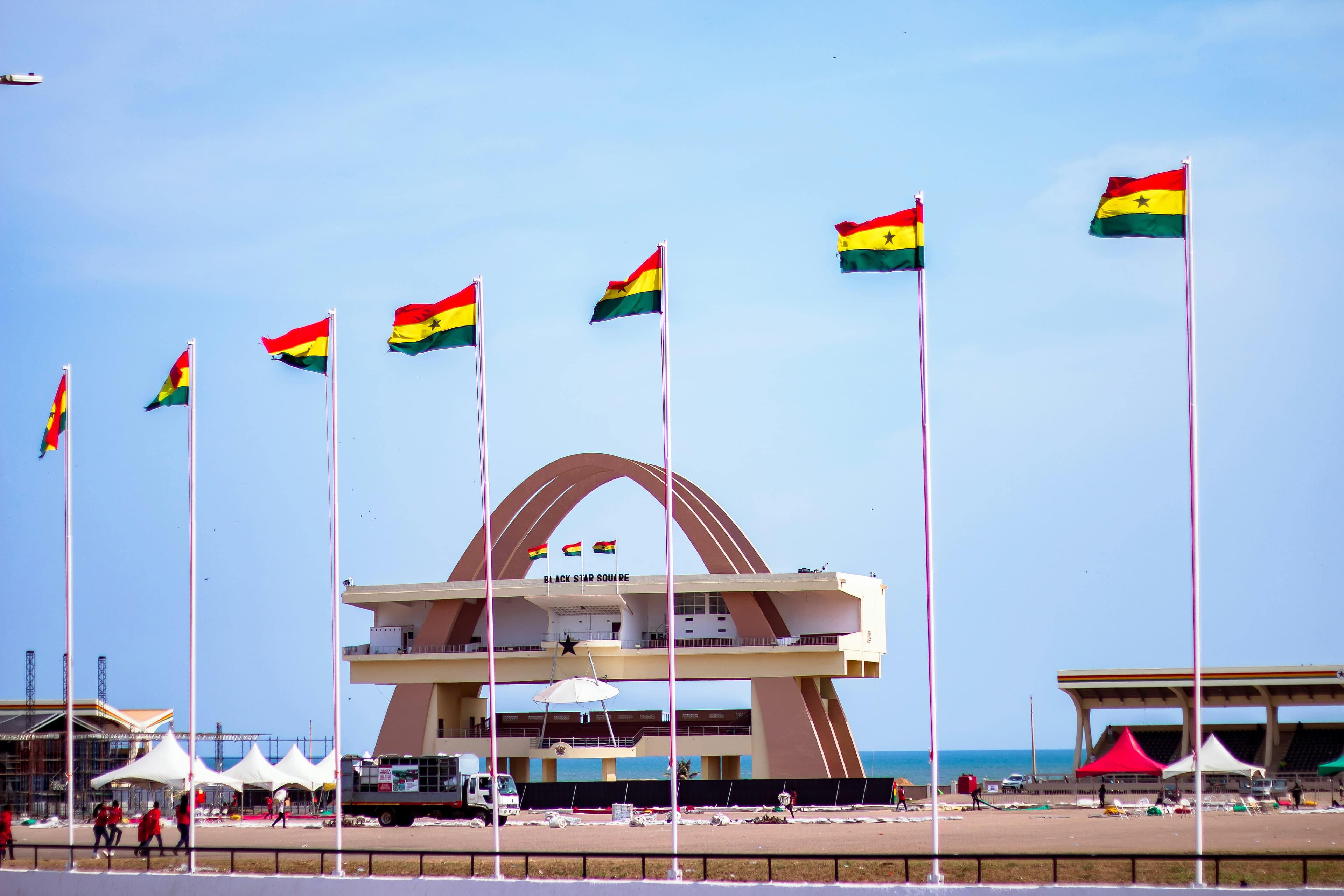
In Accra, a journey often begins amid movement: a taxi finds its way between vehicles, a trader rearranges her fabrics, horns mingle with music and the aroma of lunch drifts from a small kitchen. Yet leaving the city in the morning can be enough to discover another Ghana. The road climbs towards Aburi’s cool hills, crosses Shai Hills’ rock-studded savannah, follows the Volta towards Akosombo or stretches towards the beaches where river and ocean meet at Ada. Further away, Kakum’s forest, Cape Coast’s walls and Wli’s waterfalls invite you to slow down and spend the night outside the capital.
What can you do near Accra in a day? Where should you go for a weekend in Ghana?
The right answer depends on more than kilometres. A successful excursion considers traffic leaving Accra, visiting hours, the season, the group’s fatigue and time spent with residents.
A day is not measured by how many photographs you bring back, but by the quality of what you had time to understand.
In this guide, we have selected seven complementary destinations. Aburi and Shai Hills are particularly suitable for a day close to Accra. Boti works as a long active day or a weekend; Akosombo and Ada suit both formats. The central coast and Wli deserve at least one night. Choose gardens, savannah, waterfalls, river landscapes or heritage according to your available time and appetite for walking.
Driving times are indicative and depend on your departure neighbourhood, traffic and weather. Booking arrangements and practical advice appear at the end of the guide.
The 7 excursions from Accra at a glance
Excursion | Best format | Indicative drive from Accra | Main experience | Usual effort |
1. Aburi and the Akuapem Hills | One day | About 1-2 hr | Botanical garden, crafts and cocoa heritage | Easy |
2. Shai Hills | One day | About 1-2 hr | Savannah, wildlife, rocks and Shai history | Easy to moderate |
3. Boti, Umbrella Rock and three-headed palm | Long day or weekend | About 2 hr 30 min-4 hr | Waterfalls, hiking and natural curiosities | Moderate |
4. Akosombo and Lake Volta | One day or weekend | About 2-3 hr | River, landscapes and cruise if confirmed | Easy to variable |
5. Ada Foah and the Volta estuary | One day or weekend | About 2-3 hr | Mangroves, riverside culture and relaxation | Easy to variable |
6. Cape Coast, Elmina and Kakum | Weekend recommended | About 3-5 hr to Cape Coast | Atlantic remembrance and tropical forest | Easy to moderate |
7. Wli and the Volta hills | Weekend or three days | About 5-8 hr depending on route | Waterfall, forest and guided hiking | Easy to difficult according to route |
The table shows one-way driving time from Accra, excluding visits and breaks. Allow extra time for traffic, particularly when leaving and returning to the capital.
Choosing the right excursion from Accra
A day trip is not a compressed weekend
For a day near Accra, choose Aburi if you enjoy gardens and crafts, or Shai Hills if you prefer open landscapes and a guided walk. Boti suits travellers willing to devote more time to driving and walking. With two or three days, the central coast and Wli offer deeper experiences. Your first decision is therefore about pace: a gentle outing, an active day or a proper escape with an overnight stay.
A night outside Accra also changes the quality of encounters. It allows another question for a guide, a lingering meal or time to enjoy the landscape on waking. For a weekend, choose one region and explore it attentively: you will remember more than from a scattered itinerary.
Leaving early without sacrificing comfort
In Accra, a few kilometres can take unexpectedly long, especially in heavy traffic. Set departure time according to your hotel and itinerary rather than a universal schedule. Meeting before 7 a.m. can help for Boti or Cape Coast; it is not essential for every family heading to Aburi. Allow for the actual return to your accommodation, particularly if you have dinner booked or a flight the next day.
Leave room for the unexpected: a shower may extend lunch, while a conversation with a craftsperson may become the day’s highlight. A balanced programme allows this flexibility and reserves the most physical activities for when the group still feels energetic.
1. Aburi and the Akuapem Hills: a green breathing space near Accra
Beneath the botanical garden’s tall trees
Imagine the change of atmosphere: as the road climbs towards the Akuapem Hills, the landscape softens. In Aburi, rows of tall palms, shaded paths and diverse tree species invite a slower pace. Aburi Botanical Gardens, opened in the late nineteenth century, bring together botanical history, landscaping and a popular place to walk. The Ghana Tourism Authority dates the opening to 1890 and highlights tropical collections. This is more than a “green corner”: species selection, maintenance and educational uses tell part of the region’s history.
Under the trees, take time to compare bark textures, leaf shapes and roots emerging from the ground. Ask the guide to choose a few species and explain their origins and uses: this makes a livelier discovery than a list of names. With children, suggest an observation game without collecting plants. With a camera, look for contrasts between avenues, trunks and openings of light.
Crafts, villages and cocoa: extending the experience
Extend the walk with a stop at a craftsperson available to welcome you. Observe a piece’s design, the tools and finishing techniques. A conversation about working time or wood selection gives another value to an object you take home. Ask permission before photographs and agree on arrangements for any demonstration. Buying remains a personal choice; a prepared encounter can also involve payment for the time devoted to visitors.
To give the day an agricultural dimension, consider Mampong-Akuapem, associated with Tetteh Quarshie and Ghana’s cocoa history. Choose beforehand between a historical discovery and a farm visit: they do not show the same things. On a farm, ask how a pod becomes a marketable bean, what work follows harvesting and what determines product quality. Observable activities depend on the season and the farm’s operations. Arrange this stop by appointment. (Source: Visit Ghana)
This agricultural focus gives the day particular meaning: visitors connect plants, occupations, economic history and local production. It suits curious families, students, travellers interested in value chains and those seeking a slower experience. Nevertheless, choose garden + crafts or garden + cocoa discovery rather than adding a distant third site simply to “fill” the programme.

A typical day with time for breaks
Example day in Aburi: depart around 8 a.m., spend about two hours in the botanical garden, have lunch around 12.30 p.m., then stop for crafts or a pre-arranged cocoa discovery. Begin returning around 3.30 p.m. These times are indicative and adapt to your departure point and traffic.
Bring comfortable shoes, water and shower protection. The visit can be short and contemplative or more detailed according to the group’s interests. For travellers with mobility difficulties, clarify usable paths, resting opportunities and toilet access.
A moment to savour
Allow a long enough lunch to discuss what you have observed. If you enjoy agriculture, connect the visit with a simple question: which occupations and stages lie behind a product we consume daily? In Aburi, this curiosity turns a green walk into an exploration of the area.
Key point: Aburi is the most flexible option for a nature-and-culture day near Accra. Its success depends on selecting one or two complementary experiences rather than repeated detours.
2. Shai Hills: savannah, rocks and remembrance close to the capital
A nature reserve unlike tropical forest
East of Accra, Shai Hills Resource Reserve stands out for rocky hills rising from a mosaic of savannah, shrubs and trees. The scenery changes without crossing the country. The Forestry Commission places the reserve on the Accra Plains and presents it as a meeting point of Shai history, terrain and wildlife. Baboons, some monkeys and numerous bird species are reported, but appearing in a brochure does not guarantee a sighting on your visiting day.
At the start, let your eyes adjust to the savannah’s colours. Movement in the grass, a bird call or a silhouette on a rock become clues to interpret with the guide. Keep your distance and do not feed animals. Shai Hills also rewards this patient observation in a landscape very different from Aburi’s gardens.
Caves, rocks and a long history of human presence
The rock formations are more than viewpoints. They relate to Shai communities’ history, former uses of the hills and population movements. The Ghana Tourism Authority mentions caves, including Se Yo and Obonu Tem, and traces of former Shai settlement. A cultural excursion should therefore not present the reserve as an empty setting where only animals matter. Exploring relationships between landscape, shelter and human history deeply enriches the visit.
Choose the route with your guide: some observation points require little walking, while rocky sections need more balance. Accessible caves and permitted climbs depend on ground conditions. If you prefer a gentle route, prioritise landscapes and historical interpretation over an uncomfortable ascent.
Choosing between a gentle outing and a more active hike
For a family day, combine a short circuit, landscape observation and a few interpreted stops. Experienced walkers can request a more demanding hike. In both cases, interest comes from reading the terrain: why do trees cluster in certain places? How have rocks provided shelter? What clues help the guide locate animals?
For Shai Hills, consider leaving around 7 a.m., spending a guided morning in the reserve and having lunch before returning to Accra. Landscapes and walking opportunities change with the season; rocks require greater care after rain.
A day for learning to look
Before leaving the reserve, ask everyone to choose a memorable detail: a landform, bird, plant or story. This short conversation works with children and adults alike. It gives space to discoveries beyond animal sightings alone.
Key point: choose Shai Hills for a day of savannah, varied terrain and history, with a route adapted to your appetite for walking.
3. Boti, Umbrella Rock and the three-headed palm: three wonders in a day
When the forest reveals its twin waterfalls
The road to Boti Falls in the Eastern Region crosses inhabited landscapes and greener areas around Koforidua. On arrival, sounds often introduce the visit: walkers’ voices, birds, rustling leaves, then water when flow allows. The Ghana Tourism Authority presents Boti as twin waterfalls whose appearance changes greatly with the seasons. Local accounts sometimes describe a “male” and “female” waterfall; these are storytelling traditions to be presented as such, not scientific facts.
The path to the falls’ base includes a substantial staircase, often described as having around 250 steps. Going down is one thing; climbing back in the heat is another. Closed, non-slip shoes, water and a pace suited to the group are essential. Respect barriers and managers’ decisions when water is abundant. A pool’s photographic appeal guarantees neither permitted swimming nor freedom from dangerous currents.
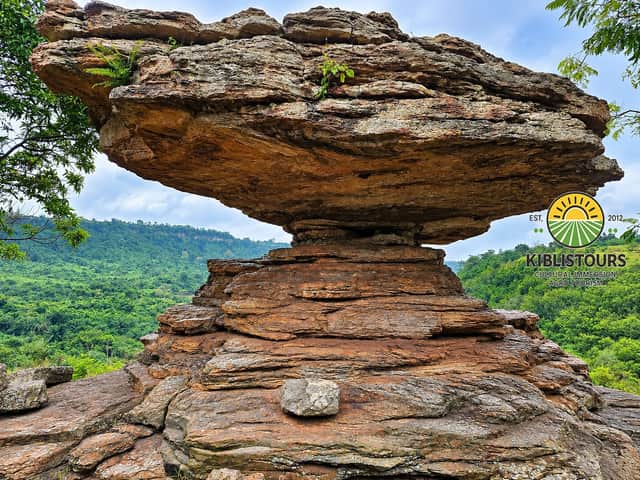
Umbrella Rock: striking terrain and a walk to prepare
The day continues towards Umbrella Rock, remarkable for a silhouette broader at the top than at the base. It is generally reached after a walk whose length and condition vary by route. Trails may include slopes, stones and slippery sections after rain. The experience is more than a photography exercise: the formation invites observation of how terrain and erosion shape landscapes, while the guide can explain associated stories.
Umbrella Rock particularly suits those who enjoy walking before reaching a point of interest. For a group with varied abilities, choose a shortened version or devote more time to the falls. Enjoyment depends on shared, well-judged effort.
The three-headed palm and choosing your route
The final stop draws attention to an unusual botanical detail: a palm with a branching crown. After water and rock, the tree completes the discovery of Boti’s landscapes. Observe without damaging it, then ask the guide about local palm uses. The route combining the falls, Umbrella Rock and this tree differs from the tour devoted to palms in Boti and Yiwase: choose according to the places that interest you.
Would you like to combine these three discoveries? Consult the Kiblistours “Three unmissable sights of Boti” page to choose Standard, Premium or VIP. The tour devoted to palms in Boti and Yiwase is a separate experience: select the page corresponding to the actual sites you want to visit.
A very early start or an overnight stay?
For Boti, consider departing around 6 a.m. and arriving late morning. After the falls and lunch, continue to Umbrella Rock and the palm; the guide may reverse the order according to terrain. A weekend with a night near Koforidua allows deeper exploration of regional crafts, food and landscapes.
Between Boti’s stops, allow proper time for lunch and recovery. If walking to Umbrella Rock is your priority, retain energy for the trail and stair climb. If waterfalls are your main interest, choose timing according to flow and spend longer at the falls and their surroundings.
Key point: Boti offers the greatest variety for combining water, rock and botanical curiosity, provided you do not underestimate physical effort and the day’s length.
4. Akosombo and Lake Volta: an escape among water, hills and energy
The Volta River: a landscape that also tells Ghana’s story
Around Akosombo, the landscape changes scale. Hills surround the water, roads skirt elevated terrain and boats become tiny points on a vast horizon. Lake Volta resulted from construction of Akosombo Dam, a major infrastructure project in Ghana’s economic history. The Volta River Authority describes a hydroelectric station on the Volta River and a reservoir of immense area. These places therefore involve landscapes, energy, territorial transformation and riverside communities.
The landscape invites understanding of links between water and daily life: electricity production, transport, economic activities and changes to territories. Ask the guide to discuss the dam’s effects on riverside populations too. This human perspective enriches the hills and reservoir while giving meaning to structures visible along the journey.
Visiting the dam is not automatic
Access to the dam and power station depends on Volta River Authority authorisation. To organise your escape, prioritise river landscapes and activities booked in advance; a technical visit can supplement the programme when authorised. This way you enjoy Akosombo even without entering the hydroelectric facility.
Adomi Bridge, visible around Atimpoku, is another remarkable river landmark. Depending on the programme, a stop somewhere safe can introduce road connections, the economy of crossings and the river’s role in movement. Photographing a bridge must not involve a dangerous stop: the best viewpoints respect traffic rules and authorised access.
Choosing a Lake Volta boat trip
A cruise can become your escape’s highlight. Dodi World and Dodi Princess II are among options presented on the national tourism website. Choose the sailing before fixing the rest of the programme: departure day, duration, boarding and any meals determine the day’s arrangements. (Source: Visit Ghana, Dodi World)
On the water, the terrain appears differently and distances gain another dimension. If you prefer remaining ashore, use the time for a riverside lunch and a walk in an accessible area. For couples, a waterside night encourages a peaceful escape; among friends, a boat trip can structure a livelier weekend.
A contemplative day or a weekend by the water
In one day, combine Akosombo’s landscapes with a riverside lunch and, if desired, a pre-booked water activity. A weekend allows a longer boat trip or relaxed enjoyment of the banks on waking.
For any sailing, choose an identified operator and life jackets suited to everyone, including children. When choosing accommodation, consider views, access, meals and distance to the boarding point. These details contribute more to comfort than an overloaded programme.
Taking time for the landscape
For a couple’s weekend, keep free time between arrival and dinner. For a family, favour accommodation where meals and journeys remain simple. On waking, a relaxed breakfast facing the landscape can become the moment you sought when leaving Accra.
Key point: Akosombo particularly suits a restful weekend combining river landscapes, hydroelectricity discovery and pre-booked sailing.
5. Ada Foah: where the Volta meets the Atlantic
The estuary: a changing, living landscape
At Ada Foah, travellers discover a distinctive geography: the Volta’s waters join the Atlantic Ocean among banks, beaches, villages and wetlands. The Ghana Tourism Authority describes Ada as a destination for leisure, sailing and nature observation. The river mouth draws the eye, but should not be reduced to a seaside backdrop. Currents, sediment, tides and human activities shape an area that changes with seasons and hours. (Source: Visit Ghana, Ada Foah)
The best start may be an interpreted walk near an accessible point to understand the difference between riverbanks and the seashore. Birds move according to the hour, boats respond to local activities and villages follow rhythms unrelated to organised visitor entertainment. A respectful excursion does not claim to “discover an authentic village” by entering without consent. It favours a prepared exchange with someone available, or discreet observation from a public place.
Mangroves, birds and riverside occupations
Wetlands around the estuary perform important ecological functions. Mangroves, where present along your chosen route, support some aquatic organisms and protect riverbanks. A small-boat outing can explain these environments if arranged with a local operator familiar with access rules. Birdwatching does not guarantee any particular species; binoculars and patience are more useful than promises of exceptional encounters.
Fishing and trading deserve as much attention as landscapes. Fish arrive, are sorted, sold or processed through varied networks. Visitors can explore techniques, seasons and occupations without hindering operations or photographing people against their wishes. Tasting local food can complement this exchange, but honestly clarify which meals are included or excluded.
Enjoying the shore and choosing a boat outing
At Ada, “beach” naturally suggests swimming. Yet a river mouth is an environment where currents and sea conditions must be taken very seriously. An attractive panorama provides no safety indication. Swimming should not be presented as an automatic part of the outing; it depends on local instructions, suitable areas and appropriate supervision. Be particularly cautious near the meeting of river and ocean waters.
A boat trip, kayaking or another water activity should be offered only when the operator and safety measures are confirmed. Wearing a life jacket is a basic rule, not an option. Children need equipment fitted to their size. If weather deteriorates, replacing sailing with a meal, cultural exchange or riverside observation remains a worthwhile experience, not a poor substitute.
A day outdoors or a night by the water?
Ada can be explored in a day around the estuary, lunch and a walk or supervised activity. A weekend better suits rest: sunset, a relaxed breakfast and landscapes observed at different hours. Choose accommodation according to your desired comfort and services.
Ada suits couples, groups of friends and families wanting a waterside break without travelling very far. It also offers interest for educational travel about coastal environments. Yet the estuary can be enjoyed without motorised activities or a busy programme. Experience often comes from time devoted to the landscape, conversation and local food.
A break centred on local flavours
At lunch, ask for a fish dish if you wish, stating preferences and any allergies. Take time to discuss products and preparation methods with your host when available. This break gives a tangible continuation to riverside discoveries.
Key point: Ada Foah is our “river and ocean” escape, particularly suited to a weekend. Success depends on a safe, respectful programme rather than multiplying water activities.
6. Cape Coast, Elmina and Kakum: a weekend between remembrance and forest
Cape Coast: entering history without rushing
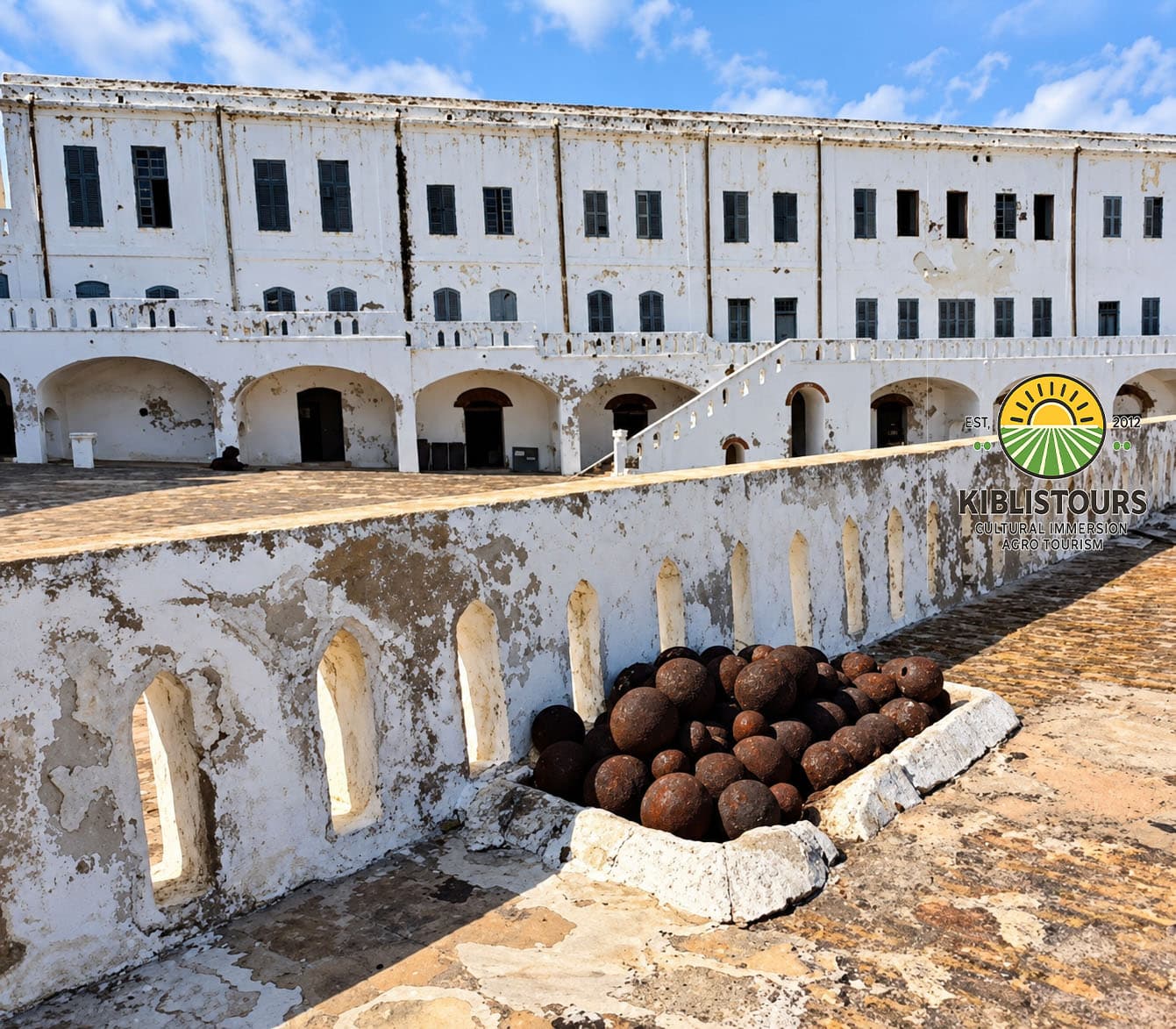
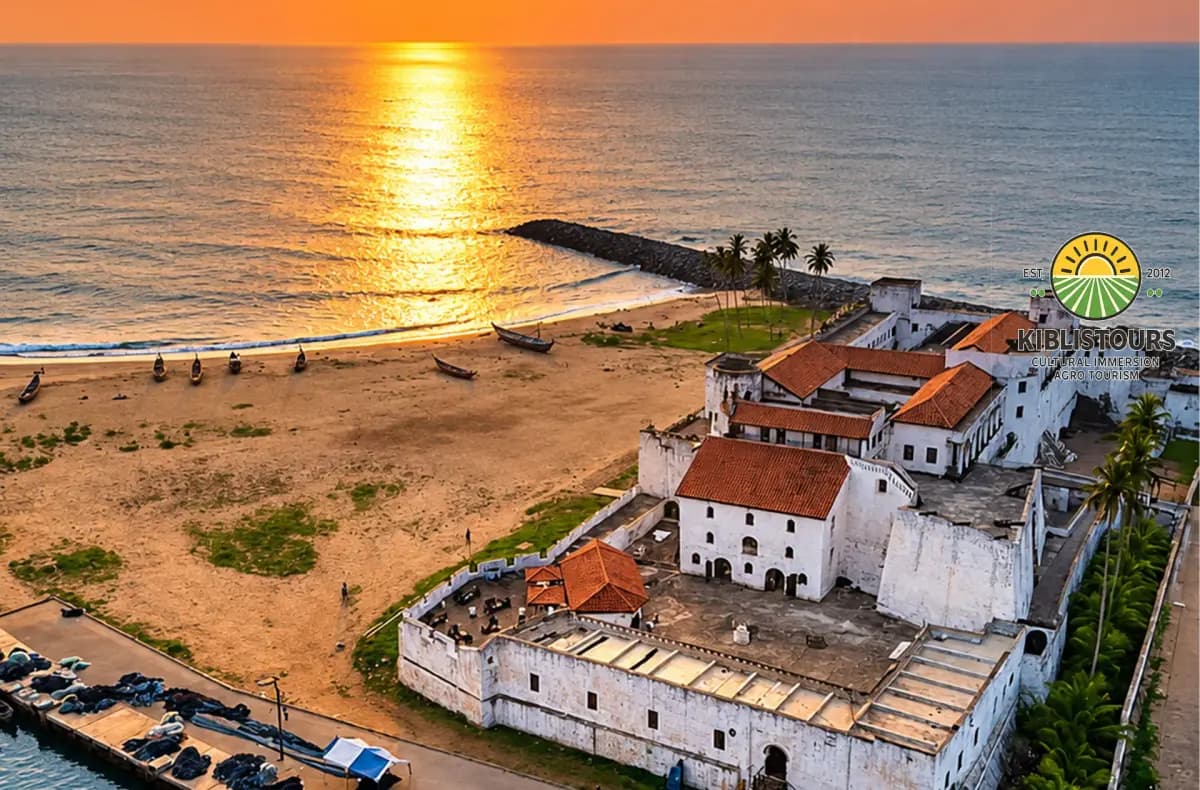
Leaving Accra for Cape Coast means following the coast towards a town where monumental heritage stands beside markets, schools, residential streets and maritime activities. Cape Coast Castle is among the best-known places for understanding Atlantic exchanges, European domination and the transatlantic trade in enslaved people. The visit requires time and restraint: dungeons and detention spaces must not be treated as sensational attractions, and explanations should distinguish documented history from uncertain anecdotes.
Travellers of African descent, families, history enthusiasts and curious visitors do not necessarily experience the place in the same way. Some feel intense emotion; others ask historical questions or seek to understand an economic system’s workings. There is no compulsory response. A professional guide supports visitors without imposing an emotional performance. Today’s town also deserves attention: residents are not permanent extras in a painful past.
Elmina: another fortress and another chronology
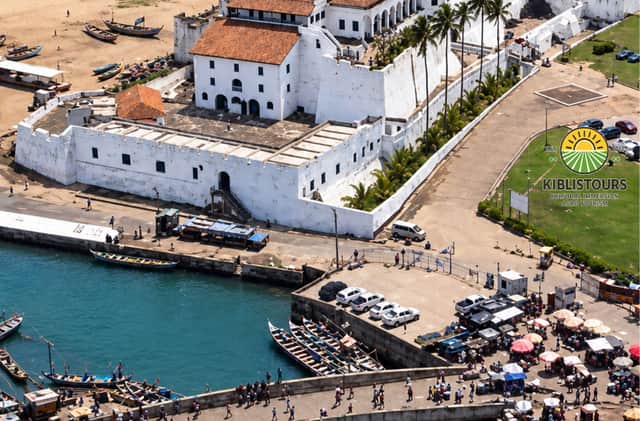
Nearby, Elmina Castle, also called St George’s Castle, offers another chapter of European presence on the coast. Its Portuguese origins date to 1482; its history continues under other administrations within commercial and political contexts changing over centuries. Comparing Elmina and Cape Coast avoids assuming that all forts were built simultaneously, by the same actors or for the same functions. Both invite consideration of pre-existing African networks, power relations and contemporary memories.
Elmina is also a living town whose fishing activities and streets deserve attentive exploration. You can observe the coast from accessible places, but boats, landing areas and workspaces are not settings the group may enter freely. Close-up photographs require consent. A local lunch or urban walk usefully complements the castle visit if the programme retains space.
To explore further before departure, Kiblistours offers an article on Cape Coast Castle’s history and visiting, alongside a guide to Elmina Castle, its history and the memory of the Atlantic coast. These readings enrich the visit without replacing local explanations.
Kakum: changing perspective above the forest
At Kakum National Park, the forest offers a radically different experience. Trees rise high, light crosses the foliage and sounds multiply when you attend to the environment. The famous suspended walkways are its best-known attraction, but the park is more than photographs taken above the canopy. The Forestry Commission also highlights guided trails, biodiversity and cultural plant uses.
The walkway can unsettle visitors afraid of heights. Before buying the activity, ask whether ground-level walks are possible and which conditions apply to different ages and profiles. Rain sometimes makes elements less enjoyable or causes restrictions; the operator may adapt the route for safety. Reusing an old canopy-walk price as though it covered every activity and visitor category would be misleading. Transport from Cape Coast, guides and additional services must be budgeted separately.
A two-day programme with breathing space for visits
Saturday: travel to Cape Coast, visit the castle and explore part of town before staying overnight in Cape Coast or Elmina. Sunday: devote the day to Kakum and Elmina before returning to Accra. Visit order adapts to site hours and weather.
A one-day Accra-Cape Coast-Elmina-Kakum round trip leaves little time for historical interpretation. A weekend is preferable; a third day allows deeper visits or rest beside the ocean. With children, prioritise age-appropriate explanations.
Preparing a remembrance visit
Before departure, discuss the group’s expectations. Some travellers want to examine historical facts; others have a personal connection with memories of the slave trade. Allow quiet time afterwards and avoid immediately following visits with noisy entertainment. The forest can provide a transition if everyone’s pace is respected.
Key point: this is the most comprehensive escape for combining World Heritage, Atlantic history and forest discovery. Time gained through an overnight stay has real cultural value.
7. Wli Waterfalls: a weekend beneath the Volta hills
The road to Wli is part of the journey
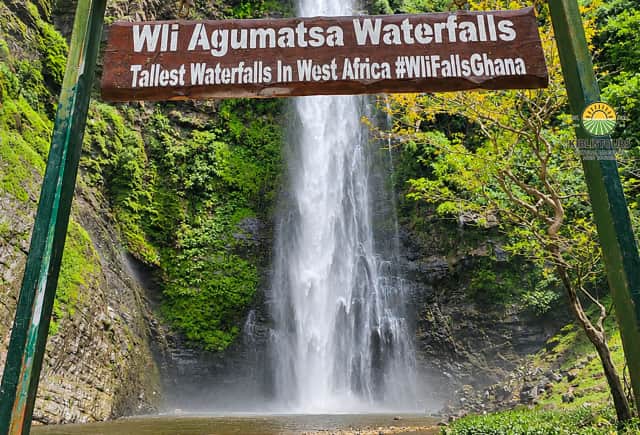
In the Volta Region near Hohoe and the Togolese border, Wli Waterfalls is reached after a substantially longer drive than nearby excursions. The road crosses varied landscapes, towns and hilly areas. Leaving Accra in the morning, walking to the falls and returning that evening risks turning a lovely hike into an exhausting day. Wli therefore appears here as a weekend escape, with two nights worth considering for greater comfort when conditions justify them.
The morning after arrival, enter a cooler, greener environment along a trail crossing the river on footbridges. The sound of water gradually approaches, then the landscape opens onto the lower waterfall. The place invites quiet, respectful photographs and attention to the guide. A well-guided route also allows discussion of forest ecology and communities’ relationships with water and hills.
Lower or upper falls: very different levels of effort
The lower falls are reached by a path generally accessible to independent walkers, with several water crossings on bridges. Allow walking, rest and return time according to fitness and trail conditions. The upper falls are different: steeper slopes, longer duration and sustained effort. Suggesting both are included in a “Wli” option without reading the details would be inaccurate. Local guides are essential for understanding actual difficulty and choosing permitted routes.
The wet season often strengthens the spectacle of water, but may also make slopes dangerous. Swimming beneath the lower falls is possible only if managers authorise it and conditions are compatible with the group’s safety. Slippery stones and moving water require caution. A photograph under the waterfall must never matter more than safety.
Preparing your visit and booking the right
route
For Wli, first choose the route that suits you: lower falls for an initial discovery or a more demanding upper-falls hike.
Discover the Kiblistours “Wli Waterfalls” page, choose your option and configure the available extras to obtain the price corresponding to your selections. For an initial discovery, favour the lower falls. An upper-falls hike requires a specific request according to your walking ability.
A realistic weekend: driving, overnight stay, walking and return
Day 1: leave Accra in the morning, drive with breaks, settle into accommodation near Wli or Hohoe and take a light walk if time and availability allow.
Day 2: leave early for the visitor centre, hike with a guide to the lower falls, rest, eat and return towards Accra. This final day can be long. For children, older travellers or a group preferring an unhurried pace, a second night is often most comfortable: hiking then occupies day two and the return takes place on day three.
The route described remains in Ghana and requires no crossing into Togo. A third day allows exploration of the village and landscapes before returning.
Key point: Wli suits travellers wanting to devote their escape to forest and hiking.
Standard, Premium or VIP: designing your excursion with Kiblistours
The three options meet different priorities. The following table helps you select your desired comfort and support; exact services appear on each offer’s page.
Selection criterion | Standard | Premium | VIP |
Your priority | Discover essential stops | Prioritise comfort and exchanges | Personalise a private stay |
Preferred arrangements | Structured programme | Small group and more flexible pace | Programme adapted to your group |
Transport to request | Vehicle suited to the route | Greater comfort and flexible transfers | Dedicated vehicle |
Support to choose | Guiding for planned visits | More in-depth interpretation | Personalised assistance |
Meals to clarify | Simple meals or free time | Selected restaurants | Individual preferences and requirements |
For a weekend | Suitable basic accommodation | Comfortable accommodation | Accommodation according to your preferences |
Services to choose for each excursion
The table below brings together suggested destination experiences and options to consider.
Excursion and suggested format | Programme to design | Options or details |
Aburi - day trip | Botanical garden and craft stop or cocoa discovery | Cocoa by appointment; meals and transport according to selected configuration |
Shai Hills - day trip | Reserve, observation and adapted guided route | Choice of route and transport within the reserve |
Boti - day trip or weekend | Falls, Umbrella Rock and three-headed palm | Night near Koforidua to extend; route according to mobility |
Akosombo - day trip or weekend | Riverside landscapes and exploration of the area | Cruise by reservation; dam access subject to authorisation |
Ada - day trip or weekend | Estuary and exploration of the banks | Boat trips and other water activities on request |
Cape Coast, Elmina and Kakum - two days | Two castles and forest discovery; one night | Detail Kakum activities, room, meals and guides |
Wli - two or three days | Guided hike to the lower falls; one or two nights | Upper falls by specific request according to ability and terrain |
Unselected activities, personal purchases, tips and individual supplements remain your responsibility unless the booked offer states otherwise. For an overnight stay, check accommodation, room occupancy and included meals.
Practical advice before leaving Accra
Transport and respect for places
Choose a vehicle suited to passengers and luggage, and avoid routes requiring a late return after a long hike. For water activities, confirm the operator and safety equipment. In natural areas, follow the guide’s rules and do not approach animals to feed them. In villages, markets and fishing areas, ask permission before photographing people and never treat workplaces as freely accessible attractions.
How to calculate your excursion budget from Accra
On the offer page, choose Standard, Premium or VIP and available options: the website automatically calculates the price for your configuration. For a particular route or a service absent from the configurator, contact Kiblistours. The table below presents the main expense categories.
Escape | Main budget factors | Choices to control costs |
Aburi | Transport and selected visits | Choose the garden and just one additional stop |
Shai Hills | Transport, admission and guiding | Choose route duration before booking |
Boti | Long journey and three stops | Share the vehicle and plan meals |
Akosombo | Any sailing and accommodation | Choose between riverside outing and cruise |
Ada Foah | Boat, activities and any overnight stay | Fix the water-activity programme beforehand |
Cape Coast, Elmina and Kakum | Transport, three visits and accommodation | Allow two days and share a room if desired |
Wli | Long journey, guiding and one or two nights | Compare totals for two- and three-day formats |
Before booking, check inclusions and exclusions, whether the amount applies per person or to the whole group, and booking terms.
To control the total, choose your main experience first. In Aburi, a garden-and-crafts day limits detours; in Akosombo, a riverside walk and a long cruise involve different budgets. For Wli, compare two days and one night with three days and two nights: the difference shows the price of additional comfort. Remember personal purchases and activities added on site.
Which months to choose for your excursion
In southern Ghana, usual seasonal references distinguish a main rainy period around March or April to June or July, followed by renewed rains around September to November. Dates and intensity vary by region and year. The indications below help select an experience; weather in the days before departure remains decisive.
Excursion | Preferred period according to your aim | Point to consider |
Aburi and Shai Hills | December to February for drier paths | Heat and dust possible; leave early |
Boti and Umbrella Rock | Periods after rainfall for flow; a dry day for walking | Flow sometimes low in the dry season; slippery trails after rain |
Akosombo and Ada | December to February to reduce rain risk | Sailing depends on weather and operator; season does not imply safe swimming |
Cape Coast, Elmina and Kakum | December to February to combine heritage and forest | Castles possible year-round; consider rain and walkway conditions |
Wli | December to February to prioritise walking; wetter periods for more water | Upper route subject to terrain conditions and guide’s decision |
For forecasts and regional characteristics. For waterfalls, also request local information about flow and trail conditions a few days before visiting.
Packing your bag and adapting the route
Pack grippy shoes, water, sun protection, a light rain layer and protection for your phone or camera. For castle visits, dress respectfully. For a night outside Accra, bring a small, easy-to-carry bag and keep essentials within reach during the drive.
An excursion described as “easy” is not necessarily accessible to a wheelchair user, someone with balance difficulties or a very young child. Boti’s steps, Shai Hills’ rocks, Kakum’s bridges and Wli’s trails require separate checks. Describe mobility needs beforehand; the team can suggest a shorter route, alternative viewpoints or another destination. Adapting is preferable to promising unverified accessibility.
FAQ: seven excursions from Accra
What is the best day trip from Accra?
Aburi for gardens and crafts, Shai Hills for savannah, Boti for a more active day. With young children or limited time, favour the first two.
Can you visit Boti Falls and Umbrella Rock on the same day?
Yes: the falls, Umbrella Rock and three-headed palm can be combined in a long day. This route requires walking on uneven trails and climbing the falls’ stairs.
Can Aburi and Shai Hills be combined in one day?
It is possible with a reduced programme and private transport. However, one destination allows deeper discovery.
Is one day enough for Cape Coast, Elmina and Kakum?
To explore all three with proper visiting time, favour two days and a coastal overnight stay. A day is better suited to a smaller selection.
Can you visit Wli Waterfalls from Accra without staying overnight?
Favour two days and one night for the lower falls, or three days to separate the hike from the long return journey.
Are Boti and Wli impressive all year?
Flow varies with rainfall. Boti may have little water in the dry season; wetter periods often enhance the spectacle but make trails more slippery.
Can you go onto Akosombo Dam or visit the power station?
Only if the Volta River Authority authorises the visit for your date. The excursion can also focus on riverside landscapes.
Is a Lake Volta cruise included in the Akosombo excursion?
Only if it forms part of the services selected in your booking.
Is Ada Foah suitable for a family with children?
Yes, with age-appropriate activities, safe observation areas by the beach and sufficient breaks. The river-ocean meeting point requires particular vigilance: do not assume swimming near the estuary is safe. Boat outings need a qualified operator and suitable life jackets.
Which sites require the most physical effort?
Umbrella Rock, Boti’s many steps, some Shai Hills hikes and especially Wli’s upper route can be demanding. Kakum also has suspended walkways that may unsettle people afraid of heights. Discuss difficulty individually rather than reducing it to a single label.
How much does a Kiblistours excursion from Accra cost?
The price appears on the offer page according to your option and selected extras. The budget section above explains what to compare.
Where can you book an excursion or weekend from Accra?
Find the Boti and Wli pages in this article and other offers in the Ghana catalogue. For a specific request, contact our team. Contact Kiblistours.
Conclusion: leaving Accra to discover seven faces of Ghana
There are countless ways to leave Accra; the finest are not necessarily the longest. In Aburi, a shaded avenue encourages curiosity about trees and occupations. At Shai Hills, savannah and stone tell another territory’s story. In Boti, water and rock awaken the desire to walk. At Akosombo and Ada, the river becomes landscape, energy, sailing and daily life. On the central coast, castles and forest call for time to remember. Finally, at Wli, the journey is worthwhile when you accept a slower pace beneath the hills.
Choose the escape that suits you: a botanical walk, a day’s hike, a waterside break or a weekend of historical discovery. Kiblistours helps prepare a route adapted to your pace, with stops, encounters and rest considered together.
Book here: choose your escape and design your journey with Kiblistours.