Ghana : A Destination That Can Also Be Explored Through Its Costs
In Accra, a plate of waakye served in a modest local eatery tells a different travel story from dinner on a terrace overlooking the Atlantic. On the way to Cape Coast, the question is not just the ticket price: it is also how much time you have to visit a castle, listen to a guide and reach your accommodation before nightfall. Farther north, reaching Mole National Park turns a simple “transport” line into a major itinerary decision. That is why a travel budget for Ghana can never be reduced to a daily figure.
Wondering how much to budget for a trip to Ghana, what a week in the country costs or how to compare transport, hotel and sightseeing prices? This guide brings together essential spending categories, frequently overlooked expenses and a calculation method suited to solo travellers, couples, families and groups. The suggested itineraries illustrate possible choices without inventing Kiblistours selling prices or presenting unconfirmed rates as established facts.
The Main Expenses to Compare First
Before setting your budget, identify the main categories: accommodation, food, transport, admission and guides, personal expenses, insurance and an emergency reserve. A room is generally charged per room per night; private transport may be charged for the entire group; and many admissions and purchases are charged per person. Understanding these differences is essential for comparing packages accurately.
Expense | Pricing unit to check | Calculation method | Details to confirm |
Accommodation | Room / night | Number of nights × confirmed room price | Occupancy, taxes, breakfast, cancellation |
Meals and drinks | Person / meal | Meals not included × confirmed price | Drinks, dietary requirements, group menus |
Local transport | Group / trip or day | Confirmed group transport price ÷ travellers sharing it | Vehicle, mileage, driver, fuel, tolls |
Sightseeing and guides | Person, group or activity | Actual admission tickets and guiding services planned | Visitor category, activities, local guide |
Miscellaneous and contingency | Two separate categories | Planned miscellaneous costs + reserve of 10–15% of subtotal | Avoid double counting; identify excluded charges separately |
When comparing proposals, use the same dates, itinerary and number of travellers. Separate costs charged to the group from those charged to each participant and from optional charges. This gives you a budget suited to your actual plans rather than a
currency. An amount quoted in US dollars or euros should not be converted using an exchange rate remembered from several weeks earlier. The Bank of Ghana publishes reference rates, while banks, cards and foreign-exchange bureaux apply their own terms. A small exchange-rate buffer helps keep currency movements from becoming unpleasant surprises. Keep the original currency of each quotation until the final comparison: accommodation priced in USD and an admission ticket paid in GHS cannot be compared meaningfully without using the same exchange-rate date.
A Good Habit: Distinguish Published Prices, Estimates and Quotations
A rate shown on a website may be a useful reference, provided its date and visitor category are checked. Hotel prices depend on dates and booking conditions. A travel quotation specifies services, travel dates, number of travellers, payment terms and exclusions. For every significant expense, record the source, pricing unit and incidental charges so that you compare equivalent services.
The Five Variables That Make the Biggest Difference
Season, number of travellers, trip length, distances and service level influence the total more than a small difference in meal prices. Two people sharing a room and vehicle can reduce their individual costs. Conversely, three nights in three different towns mean more transfers, baggage handling and wasted time. A holiday limited to Accra and Cape Coast may be more affordable than a tour including Mole. Travellers who value encounters, markets and local food do not necessarily need luxury hotels to have a rewarding experience.
What a Complete Travel Budget Includes
A comprehensive budget includes pre-departure expenses, travel to Ghana, arrival transfers, overnight stays, food, local transport, visits, guides, communications, insurance and a contingency reserve. Add commonly overlooked costs: short transfers to attractions, parking, banking fees, baggage, drinking water, laundry, toilets, optional tips and single-room supplements. For an organised trip, ask specifically whether admission fees, meals, local guides and taxes are included.
How Much Does Transport Cost in Ghana?
Getting to Ghana: By Air or Road
For travellers arriving from Europe or North America, the international flight can be a major expense. Compare fares including baggage, connections, arrival times and change conditions. Travelling overland from Benin or Togo may be an option, taking into account individual stages, border checks, breaks and final transfers. International airfares should be listed separately when they are not included in the booked service.
From Accra Airport to Your First Hotel
Arriving at Accra's international airport raises a practical question: pre-booked taxi, hotel transfer, ride-hailing app or an arranged pickup? Compare the full cost of reaching your actual neighbourhood, not a generic airport fare. Time of day, traffic, luggage, passenger numbers and possible waiting time all affect the amount charged. Confirm the meeting point and price before departure.
Tro-Tros: Everyday Ghanaian Travel
Shared minibuses, commonly called tro-tros, provide relatively inexpensive travel in many urban and intercity areas. They also offer a glimpse of daily life: departures when enough seats are filled, conversations with fellow passengers, busy roads and stops sometimes far from attractions. The apparent low fare must be weighed against travel time, connections, heat and the difficulties of travelling with suitcases. They are best suited to independent travellers with flexible schedules.
Taxis, Ride-Hailing and Agreeing on Fares
In Accra, ordinary taxis and ride-hailing services offer more flexibility than public transport. Check your exact destination, traffic conditions and any waiting charges. For taxis without a meter, agree on the fare before setting off. The cost of a ride can vary considerably with traffic, time and neighbourhood. Several short journeys in one day may eventually cost more than one well-planned excursion; grouping nearby visits is both a budget and an environmental strategy.
Intercity Buses: When Time Becomes a Cost
Coaches connect major towns and can remove the need to hire a vehicle for long stretches. When comparing options, consider not only the ticket but also taxis to and from bus terminals, luggage, arrival times and onward transport to your destination. An overnight departure may save the cost of a room, but it can also increase fatigue and reduce enjoyment of the next day. Comfort and reliability vary between operators and service classes.
Private Car With Driver: Freedom and Better Budget Control
A chauffeur-driven vehicle is especially useful for multi-stop journeys through Accra, Cape Coast, Elmina, Kakum, Koforidua or the Volta Region. Its price covers more than fuel: the vehicle, driver, maintenance, insurance, parking, tolls, meals and sometimes the driver's overnight accommodation may all appear in the quotation. Families and small groups can share these costs. Ask for the vehicle description, luggage capacity, planned mileage, waiting charges and terms for changing the itinerary.
Northern Ghana and Mole: Beware of Long Distances
Mole National Park is not a quick day trip from Accra. Travel towards Tamale and then to the park area requires specific arrangements, possibly an intermediate overnight stop and additional costs. The cheapest-looking route on paper may not be the most realistic in terms of time. Compare road transport, possible domestic flights and final transfers. Including Mole in a seven-day itinerary generally means dropping some southern stops or increasing the transport budget.
Fuel, Tolls and Logistical Allowances
Fuel prices change and should not be fixed in an evergreen article. In November 2026, the National Petroleum Authority revised its minimum prices, but these do not necessarily match the prices actually paid at petrol stations. For a road tour, obtaining a detailed transport package price is better than multiplying a theoretical distance by a fuel price. Allow for congestion, detours, stops and programme changes agreed with the operator.
How Much Should You Budget for Accommodation?
Accra: Neighbourhoods, Prices and Experiences
In Accra, prices vary widely between guesthouses, well-located city hotels and international properties. A cheaper room far from attractions may increase taxi spending and time lost in traffic. Compare neighbourhoods against your itinerary and request the total price for your dates, with taxes and breakfast either included or clearly identified separately.
Cape Coast and Elmina: Stay Close to History
Staying overnight in the Central Region lets you explore the forts and castles without rushing from Accra, then reach Kakum early the next morning. Accommodation may be in town, on the coast or slightly inland. Location shapes the experience: an evening stroll, access to a market, ocean views or peace and quiet. Ask whether breakfast is included and whether transfers to the castle or park are charged. In an area where distances seem short on a map, road conditions and traffic still matter.
Busua and the Western Coast: The Value of Slowing Down
A night in Busua may offer the chance to watch fishermen return, walk along the beach or take part in water activities when conditions permit. Guesthouses and beach properties offer very different standards. Compare rooms by exact location, season, facilities, taxes, included meals and cancellation policies instead of applying an average price to the entire coast.
Volta: Why a Well-Placed Overnight Stay Matters
To discover Wli, Amedzofe or villages in the Volta Region, staying near the starting point may be more useful than choosing a prestigious hotel farther away. An overnight stay leaves time for trails, encounters and breaks. Check water and electricity supply, fans or air conditioning, mosquito nets and dining options. Modest accommodation can be excellent, but its facilities should be described accurately rather than assumed.
Mole: Book Accommodation Around Your Activities
In Mole, accommodation choices are closely linked to the timing of guided outings. Staying inside or near the park area makes early departures easier, while accommodation farther away adds travel. Prices and availability may be tight at certain times. Check park-access requirements, activity times and ranger bookings separately from the room rate. Staying nearby does not automatically mean that a safari is included.
How to Read a Room Rate
For two travellers sharing a room, the individual accommodation cost is calculated as the total room cost divided by two, provided double occupancy is allowed at the confirmed rate. A solo traveller may have to cover the whole room price. Add any applicable taxes, breakfasts, extra beds, transfers and cancellation charges. Families should also check actual room capacity and policies for children.
Tourist Seasons and Holidays
Holiday periods, major events and some weekends may push accommodation prices higher, especially in Accra and coastal areas. Booking early can expand your choices, but a non-refundable fare is not always the best saving. Check event calendars, public holidays, deposit policies and change conditions. Last-minute savings are possible but are not a dependable strategy for groups or multi-stop journeys.
How Much Should You Budget for Food in Ghana?
Your First Meal: A Taste of Local Life
Food budgeting begins with choosing the atmosphere you want. At a chop bar, portions, accompaniments and sauces are often selected by sight. In an air-conditioned restaurant in Accra, the setting and service may account for more of the bill. Neither is inherently more authentic: they are simply different experiences. For a balanced trip, alternate local meals, restaurants selected for their quality and more comfortable stops as your itinerary allows.
Waakye, Jollof and Banku: What You Are Really Paying For
Waakye combines rice and beans, often with accompaniments priced according to portion size. Jollof, a seasoned rice dish, may be served simply or with meat or fish. Banku is frequently accompanied by grilled fish and sauces. The final price therefore depends on the protein, portion size, garnishes and venue. Asking about extras before ordering prevents unfair comparisons between a basic dish and a complete meal.
Fish on the Coast: Enjoyment and Sensible Spending
In Busua, Cape Coast or Elmina, a fish meal can be a highlight, especially when it is freshly grilled. Species, sizes and prices change with the catch. Ask whether pricing is per fish, portion or weight, and whether side dishes are included. Choosing a place where food storage and hygiene appear satisfactory matters more than saving a few cedis. Travellers with allergies should explain their needs clearly.
Breakfast and Drinks
Breakfast included in your room can simplify expenses, but check what it contains and when it is served. Drinking water, beverages and snacks are important budget items during hot days. A reusable bottle and a reliable water source are useful. Personal refreshments that are not included in a package should be budgeted separately.
A Better Way to Budget for Food
Instead of inventing a fixed meal price, obtain or record prices for simple local meals, mid-range restaurants and any special meals planned at your stops. Multiply confirmed prices by the number of meals not covered by your package. Allow separately for dietary requirements, water and pre-ordered group meals.
Eating as a Family or Group
Families may keep food spending under control by choosing accommodation with breakfast, sharing some dishes and avoiding journeys made solely to find a restaurant. For groups, a pre-agreed menu makes costs and timing easier to manage. However, group catering must respect preferences, allergies and dietary restrictions. In an organised quotation, distinguish full board, half board and meals at travellers' own expense; also specify whether drinking water during excursions is included.
Sightseeing and Experiences: How Much Does Exploring Cost?
Accra: Heritage, Markets and Museums
A day in Accra can combine the Kwame Nkrumah Memorial Park, historic neighbourhoods and markets. The memorial's admission schedule, consulted in November 2026, lists an entry fee of GH₵100 for a non-Ghanaian adult and GH₵25 for a Ghanaian adult: https://knmp.gov.gh/visiting-hours-rates/ . These figures are not the price of a guided tour and should be checked again for the actual date of the visit. At markets, focus on learning about local crafts, making respectful purchases and seeking consent before taking photographs.
Cape Coast Castle and Elmina Castle: Visits That Deserve Time
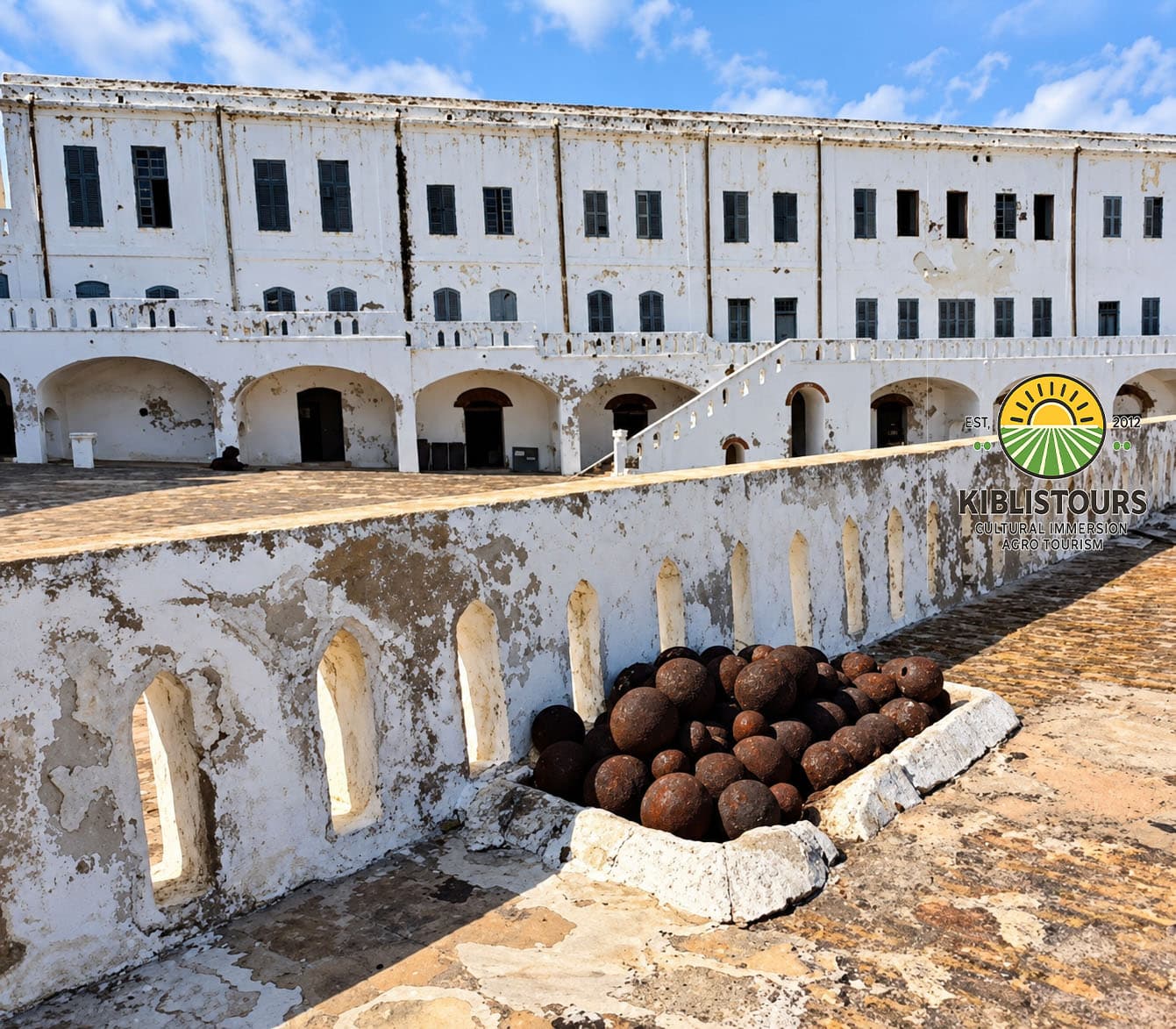
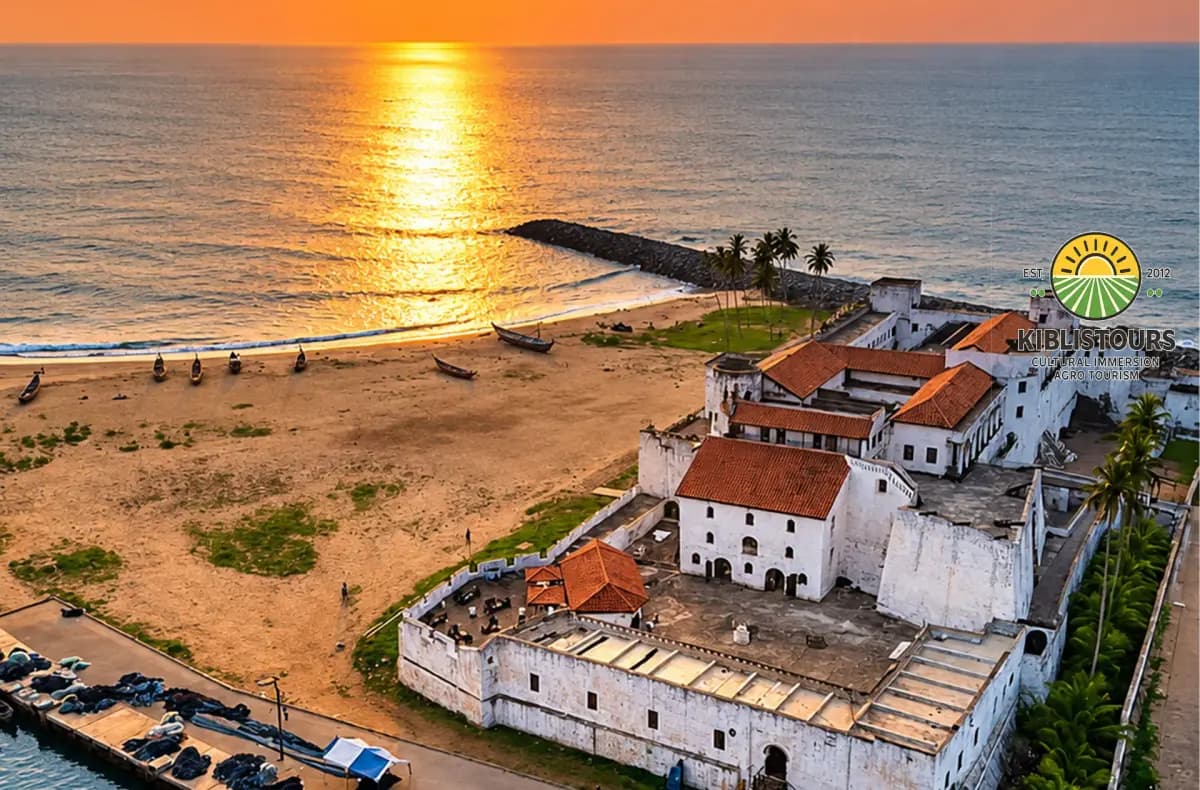
The castles at Cape Coast and Elmina are sites of remembrance associated with the transatlantic slave trade. Allow time for historical explanations and the emotions these visits may evoke. Fee schedules published by the Ghana Museums and Monuments Board have been revised, so some figures still appearing online should not be treated as guaranteed current rates. Check admission conditions, visitor categories, the availability of a guide and any photography restrictions directly.
To explore the castle's history before your visit, read “Elmina Castle in Ghana: History, Visiting and Remembrance on the Atlantic Coast”: https://kiblistours.com/fr/blog/elmina-castle-au-ghana-histoire-visite-et-memoire-sur-la-cote-atlantique .
Kakum: The Canopy Walkway and the Forest
Kakum National Park combines forest exploration, the suspended canopy walkway and, depending on conditions, other activities. Costs depend on the visitor category, the activities actually selected, guiding and transport. Without a reliable, consistent and up-to-date official fee schedule, no amount is quoted here. Ask the park management to confirm applicable charges before finalising your plans. Institutional information: https://fc.gov.gh/kakum-national-park-assin/ .
Wli: Lower and Upper Waterfalls
In the Volta Region, Wli offers different experiences: a walk to the lower falls or a more demanding route to the upper falls, depending on the trail. Please note that two pages under the Visit Wli domain publish conflicting charges for certain visitor categories. Quoting one as the applicable fee without written confirmation would therefore be misleading. See https://tour.visitwli.com.gh/entry-fees/ and https://www.app.visitwli.com.gh/entryfee , then request confirmation of the rate for your chosen route and any additional services: guide, transport, meals and equipment.
For Wli, specify your preferred trail, acceptable level of difficulty, departure point, guiding requirements and number of travellers so that Kiblistours can prepare a suitable proposal. The Kiblistours “Wli Waterfalls” listing presents Standard, Premium and VIP options. In the published Standard package, the hike covers the lower falls; the upper-falls route is not included. Before paying, check carefully whether the transfer from Accra is part of the displayed price or an option you have selected: the description and booking module must lead to the same summary of services.
Boti and Umbrella Rock: Include the Right Services
In eastern Ghana, Boti Falls, Umbrella Rock and the three-headed palm tree may form a coherent day out, depending on access conditions and the itinerary. The real cost combines transport from Accra or Koforidua, admission charges at each site, guiding and refreshments. Walking routes and stairs may require different arrangements depending on participants. The excursions “The Three Must-See Attractions of Boti” and “The Remarkable Palm Trees of Boti and Yiwase” do not include the same sites: the latter does not automatically include Boti Falls or Umbrella Rock. Consult the inclusions specific to each listing and to the accepted quotation.
For Boti and Umbrella Rock, request an itinerary that clearly distinguishes the sites visited, admission fees, walks and transport; the services must match your chosen package. The “Three Must-See Attractions of Boti” listing brings together Boti Falls, Umbrella Rock and the three-headed palm tree. The separate “Three-Headed Palm Tree – Ghana” listing features two remarkable palm trees, at Boti and Yiwase, but excludes the falls and Umbrella Rock. Compare inclusions before choosing your excursion. This distinction also applies to visiting the two palm trees at Boti and Yiwase, which is a different excursion from the complete Boti–Umbrella Rock–three-headed palm circuit.
Kintampo: A Nature Stop That Fits Your Route
Kintampo Falls can enrich a journey northwards or an exploration of the Bono East Region. Their budget value depends on the route: a lengthy detour for a short visit does not offer the same value as a stop already included in a planned circuit. Ask about admission fees and any extra activity charges, then confirm opening hours and site conditions. Allow for rest breaks and the needs of your group instead of adding stops simply to fill the programme.
For Kintampo, request a proposal specifying your departure town, transfers, admission charges and activities actually selected. To see how Kintampo and Boabeng-Fiema fit into a route, consult our guide to 15 places and experiences in Ghana.
Mole: Admission Alone Does Not Cover a Safari
At Mole, distinguish park admission, any vehicle charges, ranger services, the walking or driving safari, its duration and accommodation. No complete current safari price was established from an accessible official fee schedule during this review. Figures found in commercial guides are not guaranteed: a quotation must be prepared after the operator or park directly confirms services and charges. Institutional source: https://fc.gov.gh/mole-national-park/ .
For Mole, ask for a proposal that lists transfers, overnight stays, admission, ranger services and guided outings separately, so you can understand each component.
Experiences Without an Admission Ticket
City encounters, walks along accessible public beaches, markets and culinary discoveries can enrich a trip without a ticket for every activity. That does not mean everything is free: paying for a guide, transport, refreshments or a community contribution may be appropriate. Choose activities that respect residents, their spaces and their right to control how their images are used. A responsible travel budget makes room for fair payment of local professionals instead of always seeking free experiences.
Planning the Budget for a Seven-Day Trip: Method and Routes
For seven days and six nights, begin with a day-by-day programme: departure and arrival towns, sites to visit, overnight stops and travel time. Then use confirmed prices to calculate group transport, room costs, individual meals and admissions, and guiding services. The following table provides a calculation framework without hypothetical prices. It can be adapted for independent travel or a Standard, Premium or VIP package.
Expense | Verifiable basis | Pricing unit | Calculation for each traveller |
Accommodation | Actual room price × number of nights | Group or room | Total room cost ÷ occupants sharing the cost |
Meals | Meals not included × confirmed price | Person | Sum of meals for each traveller |
Transport | Vehicle quotation for the planned journeys | Group | Total transport cost ÷ travellers sharing it |
Sightseeing | Confirmed admission + guide + activity charges | As specified for each service | Individual charges + share of collective costs |
Planned miscellaneous costs | Connectivity, laundry and other planned expenses | Person | Sum of selected optional expenses |
Reserve and total | Subtotal + separate 10–15% contingency reserve | Depending on the scope | Do not add a reserve already included |
How to Share Transport Costs — First request the TOTAL vehicle price for the chosen route, then divide it by the number of travellers sharing that cost. The group price should reflect vehicle type (car, minibus or 4×4 as appropriate), stops, actual mileage to be established, days of vehicle use, driver, fuel, tolls, parking and any overnight accommodation for the driver. Meals and admission fees generally remain individual expenses. A useful proposal sets out costs and inclusions rather than relying on an unjustified daily allowance.
Budget-Friendly Route: Accra, Cape Coast and Elmina
A solo traveller could spend two nights in Accra, three in the Cape Coast area and a final night in Accra. They might favour simple accommodation, public transport when practical and a limited selection of paid attractions. That leaves room for markets, local food and a thorough historical visit. This approach calls for independence and tolerance of unexpected changes. Choosing a more comfortable transfer for a difficult journey does not stop the trip from being budget-friendly.
Comfort Route: Heritage and Nature
Two travellers sharing a room can combine Accra, Cape Coast, Elmina and Kakum, then add another nature excursion if journey times allow. Hiring a vehicle for selected days makes the sequence of stops easier. Meals can alternate between local places and carefully chosen restaurants. Shared room costs are divided among occupants, while meals and most admissions remain individual charges. The main benefit is saving time and exploring sites more thoroughly without constantly checking connections.
Private Route: A Comfortable Pace and Dedicated Support
A private trip may include a dedicated vehicle, higher-category accommodation and guided visits while keeping time free. The price depends on the vehicle, actual number of days required, mileage, group size, rooms and level of support. Private travel does not mean that every site and activity is exclusively reserved. The proposal will specify confirmed services, options and any contingency funds retained by the traveller.
Budgeting by Duration: Three, Five, Ten or Fourteen Days
Three Days: A Focused Introduction to Ghana
For a three-day stay, avoid covering too many regions. Accra and its surroundings, or a trip focused on Cape Coast and Elmina, provide a more coherent experience than crossing the country. Fixed costs for arrival, departure and transfers weigh more heavily relative to the length of the stay. Using one base reduces baggage handling, waiting and hotel changes. A short trip may seem expensive per day if a private vehicle is hired for only a few people; ask for a specific itinerary before comparing packages.
Five Days: A Good Balance in Southern Ghana
Five days make it possible to combine urban heritage, the coast and a nature excursion at a reasonable pace. Moving between regions increases spending, but additional nights spread certain transfer costs over more days. To control the total, group nearby attractions and favour well-located accommodation. A day in Kakum, a castle visit and time on the coast can make a rewarding trip without an excessively tight schedule. Pre-book group meals only when doing so provides a real benefit.
Ten Days: Discovering More Sides of Ghana
Ten days make it possible to combine Accra, the Central Coast, the Volta Region or a journey northwards. The key choice is to limit unnecessary detours. A logical one-way route can save mileage and create more opportunities for encounters than repeated return journeys. A longer stay adds nights and meals but may also make slower, less expensive transport practical. For a cultural trip, include days with no long journeys: they are often the most memorable.
Fourteen Days: Should You Include Mole?
Two weeks may make a north–south circuit more realistic, especially if Mole National Park is a major priority. The budget must then account for one or more long travel stages, accommodation near the park and guided outings. Distances may justify more comfortable transport. To avoid unpleasant surprises, request costs by route segment and distinguish sightseeing days from days mainly spent on the road. Ghana is better explored with purposeful breaks than by racing constantly from one attraction to another.
Standard, Premium and VIP: How Should You Compare Kiblistours Packages?
At Kiblistours, Standard, Premium and VIP describe different approaches to travel, not fixed national prices. Services depend on the destination, travel dates, number of travellers and agreed programme. The table highlights the main criteria for comparison without promising services that are absent from the package listing or accepted quotation.
Indicative comparison (only the package listing/quotation confirms services) | Standard | Premium | VIP |
Approach | Structured discovery and cost control | More comfort and a smaller group | Private itinerary and personalised pace |
Transport | Shared or organised according to the listing | Greater comfort and flexibility as quoted | Private vehicle if included in quotation |
Accommodation | Practical category to be confirmed | Higher comfort depending on itinerary | Personalised choice subject to availability |
Guiding and support | Guide/tour escort according to programme | Enhanced support according to programme | Assistance tailored to the group |
Meals | Included only when expressly listed | Selection to be specified in quotation | Choices suited to agreed preferences |
Visits | Admissions expressly listed in the offer | Additional time or activities to be specified | Personalised experiences subject to feasibility |
Beach Trips: Pay for Time at the Destination
A Standard package might prioritise the main coastal stops and simple accommodation. Premium may focus on a more convenient location and a less rushed pace, if specified in the quotation. VIP may let couples or families adjust times and stops. The important factors are how many nights are actually spent by the sea, which transfers are included and how freely you can enjoy Busua or another beach—not just the package label.
Wli and Boti: Compare the Trails, Not Just the Vehicles
For hiking trips, check difficulty, duration, the local guide, water, lunch and admission fees. A visit to Wli's lower falls involves a different level of physical exertion from the upper-falls route. Similarly, a visit to Boti alone is not the same as a programme that includes Umbrella Rock. Premium or VIP services cannot remove the site's natural constraints; when provided, they primarily change logistical comfort and personalisation.
Mole: Ask for a Detailed Breakdown of the Safari
At Mole, the tour price should specify accommodation, transfer from the arrival town, admission charges, ranger services, and the type and duration of the outing. Standard may meet the needs of travellers seeking an essential introduction; Premium may offer greater comfort and more balanced timing; VIP may be built around a private pace. These are broad approaches, not automatic promises. Wildlife sightings are unpredictable and cannot be commercially guaranteed.
Ask for a Useful Quotation, Not Just a Final Price
A good Kiblistours quotation states the dates, group size, hotels or categories, meals included, transport, visits, guides, booking charges, cancellation terms and exclusions. It should also specify payment arrangements and opportunities to change the itinerary. To compare two quotations, place the services side by side. A cheaper offer may simply include more meals at your own expense, fewer visits or a lower accommodation category.
For travel inspiration in Ghana, browse the Kiblistours blog articles on Elmina and Ghanaian destinations. Your route and the services included in Standard, Premium or VIP are detailed in a personalised proposal.
To request a complete proposal, provide your preferred dates, group size, destinations, comfort level and priority services. Kiblistours will itemise transport, accommodation, meals, support, admission to attractions and exclusions.
Often-Overlooked Expenses: Entry Requirements, Health, Connectivity and Contingencies
Visas and Entry Requirements
The Ghana Immigration Service indicates that citizens of ECOWAS member states, including Benin, Togo, Côte d'Ivoire and Nigeria, are exempt from visas under the arrangements described on its website. Other travellers should check their status according to nationality and passport type. Do not automatically apply an eVisa fee to everyone: the rules and charges depend on each traveller's circumstances. Check the permitted length of stay, documentary requirements and official health conditions before buying a non-refundable ticket.
Vaccinations, Health and Insurance
Health spending may include pre-travel consultations, vaccinations required or recommended for your circumstances, personal medication and suitable insurance. Yellow fever requirements should be checked with the relevant authorities and a healthcare professional. Low-cost insurance that excludes certain activities may be inadequate. Read the medical coverage limits, deductibles, assistance provisions and repatriation terms. Health expenses should not be hidden under “miscellaneous” when they represent a genuine obligation.
Mobile Phones, Internet and Payments
A local SIM card or eSIM can make travel, translation and communication with service providers easier. Compare plans based on coverage in the regions you will visit: an option that works well in Accra may not perform the same way in rural areas. Cash withdrawal and currency conversion fees depend on the bank. Carry more than one way to pay without travelling with excessive cash. In a group, appointing one person to manage small shared expenses can simplify the records.
Tips, Shopping and Handicrafts
Tipping is optional spending to consider in light of service quality and local customs, not a substitute for a guide's agreed payment. Buying crafts at markets and workshops can support producers, but should always be voluntary. Avoid turning every encounter into a required transaction. For bulky purchases, include shipping and any customs formalities in the true cost. A separate souvenir allowance helps you stay in control without giving up the pleasure of discovery.
The Contingency Reserve
Keeping a reserve equal to 10–15% of your on-the-ground budget is a prudent recommendation, not an official charge. Calculate it AFTER establishing the confirmed subtotal for transport, accommodation, meals, visits and mandatory charges: reserve = subtotal × 10–15%. Show it on a separate line from “miscellaneous”, which covers only small planned costs such as connectivity or laundry. Do not count it twice if it is already included in a quotation. Optional personal spending, insurance and excluded tickets should be listed separately.
Ten Practical Ways to Travel Better Without Wasting Money
Build a Geographically Logical Route
Grouping nearby destinations avoids unnecessary backtracking. Accra, Cape Coast and Elmina fit together more naturally than a series of separate day trips from the capital. If the Volta Region is on the programme, spending one or two nights there may avoid an exhausting day. Transport costs should be judged in kilometres but also in useful time and comfort. A day saved on the road can be more valuable than a small reduction in room prices.
Choose the Experiences That Truly Matter
A list of fifteen attractions does not guarantee a successful trip. Choose a few meaningful experiences: understand history at Elmina, walk at Wli, discover food in Accra or observe Mole's landscapes. Build the rest around those priorities. This approach limits the accumulation of paid admissions and leaves space for spontaneous encounters. It also helps Kiblistours design a coherent journey rather than a checklist of places visited too quickly.
Compare Per-Person and Group Costs
For a family or four friends, a private vehicle may become competitive when its price is shared. But rooms, meals and individual admissions still need to be added. Compare packages under two headings: fixed group costs and variable costs per participant. A single-room supplement can change the result. This approach prevents misunderstandings when a displayed “from” price assumes a minimum number of participants.
Check What Is Included
An attractively priced excursion may exclude lunch, admission, the local guide or transport from the hotel. Requesting a written list of inclusions and exclusions is the best way to compare. “Transfer”, “accompaniment”, “guided tour” and “site admission” do not mean the same thing. At Wli, Boti and Mole, the exact trail or type of outing is as important as the destination name.
Do Not Underestimate the Season
Holidays, major gatherings and school breaks can increase demand for rooms and vehicles. Shifting departure by a few days may offer more choice without necessarily guaranteeing a lower price. The rainy season may reduce some costs but can affect trail accessibility and the suitability of certain activities. A sensible saving is choosing dates that fit your plans, not simply the date with the cheapest airfare.
Leave Some Meals Unplanned
Not every meal needs to be included in a tour. A free evening may allow you to try a recommended restaurant or decide according to your appetite. Conversely, a lunch arranged during a long excursion can make the programme run more smoothly. The right balance depends on the group: families with children, travellers with dietary restrictions and large parties may prefer more planned meals. The quotation should distinguish meals at your own expense from those provided.
Book the Most Important Nights First
Your first night after a late arrival, a night near a trailhead and a night close to Mole are often more important than others. Booking these first helps secure your itinerary. Less constrained nights may offer greater flexibility. Compare cancellation and payment conditions, especially for multi-stop journeys. A cheap but unchangeable reservation can become costly if the programme changes.
Respect and Pay Local Guides Fairly
Hiring a local guide can deepen your understanding of a place and contribute to the destination's economy. Budget for the guide as a genuine service rather than an arbitrary extra. Ask which language they speak, their role, the duration of their services and any site rules. At places of remembrance, a qualified guide adds historical understanding; in natural areas, a guide may also help with orientation and group management.
Keep an Expense Sheet
Before leaving, create a simple table: item, currency, cost per person or group, quantity, total, source and whether the amount is confirmed or estimated. During the trip, keep receipts and adjust your reserve. This method avoids discovering on the final day that small purchases have exceeded your souvenir allowance. It is especially useful when several participants share transport while paying separately for food and shopping.
Spend for the Quality of the Experience
The smartest saving is not always the smallest expense. A well-located overnight stay can save two hours of travel; a knowledgeable guide can bring a historic site to life; a suitable vehicle can make a hike accessible to a family. Conversely, a more luxurious hotel does not automatically improve a village encounter or a nature experience. Spending according to your travel goals is the best way to protect both your budget and the quality of the trip.
Attraction Fees: Check the Right Information
Admission prices for some attractions, such as the Kwame Nkrumah Memorial Park, are published on institutional websites. At Wli, two rate schedules on Visit Wli portals do not agree: contact the attraction for the rates actually applicable on your visiting date. Prices for Kakum, Boti, Kintampo, Mole and the castles are not reproduced without reliable confirmation. Even a confirmed admission ticket never amounts to the full price of an excursion.
Before confirming any reservation, check included charges and services, visitor categories, possible additional guide fees and change conditions. For organised packages, the personalised proposal is the reference document.
FAQ: Budgeting for a Trip to Ghana
How Much Should You Budget for One Week in Ghana?
For seven days and six nights, the total depends on your stops, number of travellers, shared rooms and vehicle costs, and chosen services. Price each item against the actual itinerary and confirmed rates, then add a separate 10–15% reserve if it is not already provided for. Kiblistours prepares personalised quotations for its Standard, Premium and VIP packages.
Is Ghana Expensive for Tourists?
Ghana offers a wide range of choices. Local food and some public transport may be affordable, while international hotels, private transfers and long distances can quickly increase the total. The country cannot simply be labelled “cheap” or “expensive”. A meaningful comparison looks at a specific itinerary and equivalent comfort levels, rather than an isolated national average.
How Much Does a Night in Accra Cost?
Rates differ greatly according to neighbourhood, dates and property standard. Booking platforms may display category averages, but these change with availability and do not guarantee the price of an individual hotel. Compare final prices including taxes and consider how location affects transport. Couples can calculate a per-person cost from a shared room, while solo travellers should allow for a possible single-room supplement.
How Much Does a Visit to Kakum Cost?
At Kakum, the cost depends on visitor status and the activity chosen, particularly the canopy walkway and guided visits. Without a reliable current rate schedule, no amount is quoted here. Add any confirmed admission fee to transport, guiding and meals if these are part of your plans: they are not automatically included in the park ticket.
How Much Should You Budget for a Safari at Mole?
A safari involves more than park admission. You need to consider travel to the park, an overnight stay if necessary, admission, ranger charges and the type of outing. A complete quotation specifies whether the vehicle and guide are charged to the group or per person. Wildlife sightings naturally vary. For a short trip to Ghana, transport to Mole may represent a substantial share of the total budget.
Is It Better to Travel Alone or in a Group?
Travelling alone gives you full control over your pace but often means paying the entire room cost and some transport charges yourself. Couples and small groups can share fixed expenses, although admissions and meals still increase with each person. Organised tours may simplify logistics and offer structured support. Always compare the total per-person price using the exact group size and room category.
Do You Have to Pay for Visits in Cedis?
Admission and local expenses are often displayed in cedis. Arrange a payment method accepted at the site and check directly with the managers. Some travel companies may quote packages in euros or US dollars. Do not convert amounts mentally using an outdated rate: use the exchange rate applicable on the payment date, accounting for card and currency-exchange charges.
Do Travellers From Benin Need a Visa?
The Ghana Immigration Service lists citizens of Benin among ECOWAS nationals exempt from visas under its published arrangements. However, travellers must still check travel documents, entry conditions and health requirements for their departure date. The rules for other nationalities are not necessarily the same. A travel agency can help prepare the information, but only the competent authority determines the entry conditions.
How Can You Reduce Costs Without Losing Authenticity?
Choose a geographically coherent route, limit hotel changes, select a few meaningful experiences and eat good-quality local food. Share transport where suitable while paying guides and service providers fairly. Authenticity is not measured by the lowest price: it grows out of meaningful encounters, respect for residents and time spent in each place. Careful planning prevents more unnecessary expense than constant bargaining.
Which Kiblistours Package Is Best?
The best option depends on your expectations. Standard is suited to an organised discovery with attention to cost; Premium seeks greater comfort and flexibility depending on the tour; VIP is designed for travellers who want a private, personalised experience. Exact services, hotels and included visits should be checked in the listing or quotation. A higher price is worthwhile only if the additional services genuinely improve your trip.
Is Transport Always Included in Kiblistours Excursions?
No—you should not assume it is. Some listings describe an organised transfer while the booking configurator may offer transport as a separate option. Before confirming, check the departure point, vehicle, driver, return journeys and transfers between sites in the written summary. Compare the price for services actually selected, not a general interpretation of the Standard, Premium or VIP label.
How Can You Avoid Counting the Contingency Reserve Twice?
First separate planned expenses, even minor ones (water, connectivity, laundry and short transfers), from funds set aside for unexpected costs. Calculate the reserve on the subtotal of budgeted items, using 10–15% as a personal safety margin, and add it only once. If a contingency provision already appears in the quotation, ask whether it is included in the price or retained by the traveller.
How Can You Compare Standard, Premium and VIP Without a Single Fixed Trip Price?
Request three proposals for the same dates, destinations and number of travellers. Then compare accommodation, transport, guides, meals, visits, group size, cancellation conditions and exclusions. A higher-category package is attractive only when its additional services match your needs. For tours combining several regions, a detailed quotation is more useful than an average daily price.