Some heritage sites seem designed to be seen. They dominate the landscape, raise their walls toward the sky, and announce their importance even before visitors know their history. Palaces, fortresses, temples, and monuments often belong to this architecture of visibility.
At Agongointo-Zoungoudo, in the municipality of Bohicon, Benin, the relationship with heritage is almost reversed. Here, you must first look at the ground, then accept a disconcerting idea: what you can see on the surface represents only part of the story.
Kiblistours offers you this tour to discover Bohicon and fully experience its cultural and local treasures.
Cotonou -Bohicon -Abomey -Dassa -Savalou -Cotonou
Beneath this ground lie underground structures built by humans, generally known as Ahwando or Ahouando. Documentation submitted to the UNESCO World Heritage Centre describes cavities excavated in tropical ferruginous soil, featuring different geometric shapes and located approximately ten metres below the surface. Spaces interpreted as living quarters and shelters, particularly for warriors, as well as rooms and wells, are mentioned.
Yet reducing Agongointo to an underground curiosity would mean missing what truly matters. This place bears witness to a profound knowledge of the land, technical ingenuity developed long before the advent of modern excavation machinery, and a distinctive way of using the earth itself as a means of protection.
The site also opens a window onto the history of the Kingdom of Danxomè, defensive strategies, territorial organisation, the transmission of knowledge, and the role of oral traditions. Above all, it requires us to make an essential distinction between what sources allow us to establish, what archaeology can reasonably interpret, what communities transmit, and what still remains unknown.
When you realise that Agongointo lies approximately nine kilometres from Abomey, another interpretation becomes possible.In Abomey, royal architecture tells the story of how power was represented. In Agongointo, architecture seems to have sought discretion.
In Abomey, power reveals itself. In Agongointo, architecture disap pears.
Between these two places lies one of the most remarkable historical journeys that can be undertaken in Benin.
Agongointo-Zoungoudo at a Glance
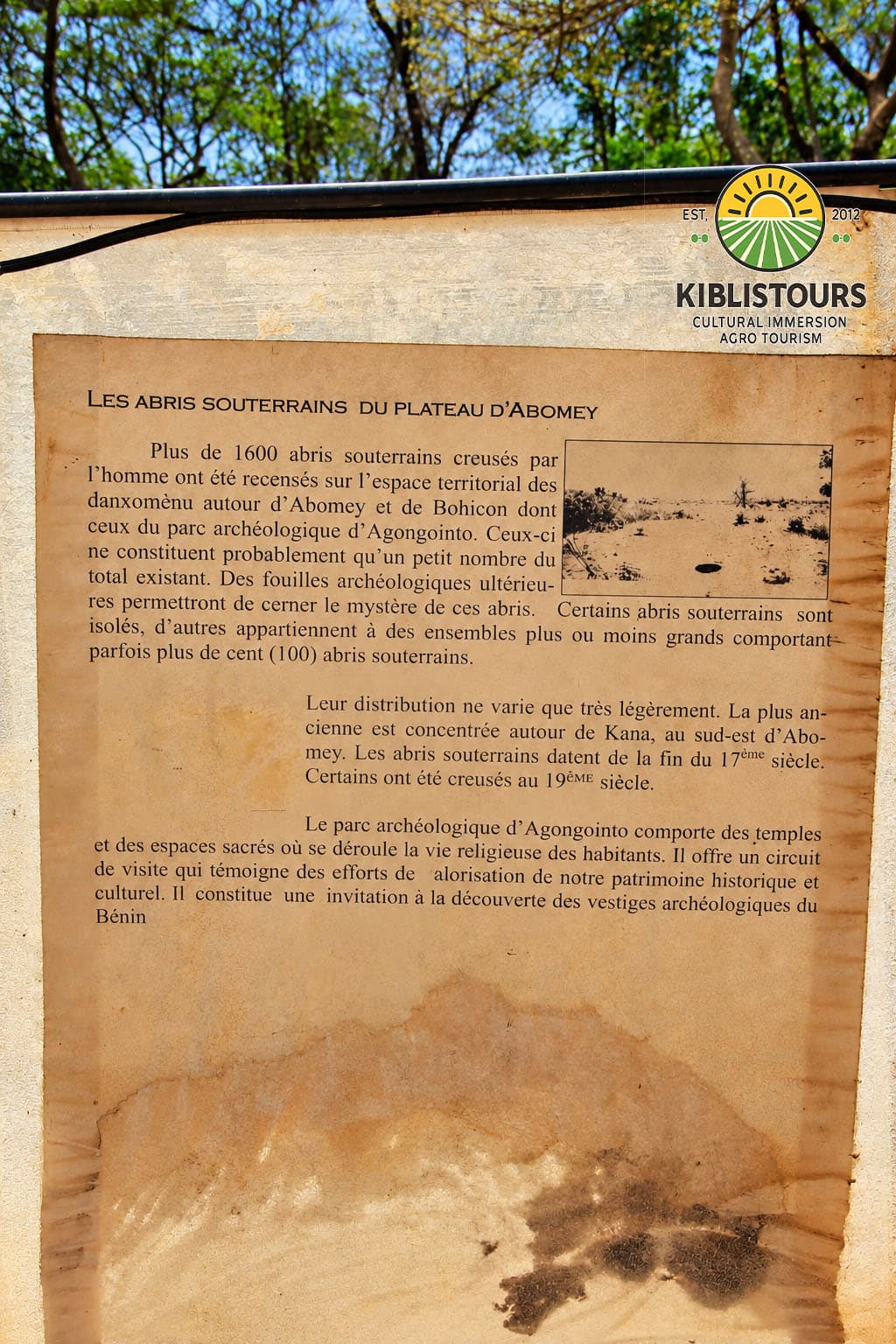
The underground village of Agongointo-Zoungoudo is located in Bohicon, in the Zou Department of central Benin. It lies very close to Abomey, the former capital of the Kingdom of Danxomè and one of the country’s major heritage destinations.
The site has appeared on the UNESCO World Heritage Tentative List in the cultural category since 19 June 1998. This distinction is important: Agongointo-Zoungoudo is not currently inscribed on the World Heritage List.
A Tentative List is an inventory of properties that a State may consider nominating for possible future inscription. Agongointo’s presence on this list therefore reflects its potential heritage value, but it should not be presented as definitive World Heritage status.
This nuance in no way diminishes the importance of the site. Its real history is remarkable enough without attributing to it a status it does not yet possess.
According to the official information submitted to UNESCO, the underground structures are believed to have been built in the 16th century and are associated with the reign of Dakodonou. The documentation nevertheless uses cautious wording based on the information currently available. This caution should be preserved, as not all questions concerning the dating, chronology, and precise functions of the cavities have been definitively resolved.
February 1998: When a Modern Road Encountered a Buried History
The contemporary story of Agongointo begins with a road construction project.
In February 1998, work was underway on the construction of a bypass in Bohicon. It was in this context that the Danish company DANISAuncovered the underground structures now associated with the village of Agongointo-Zoungoudo.
Beneath the ground that modern infrastructure was about to transform lay another infrastructure, much older and invisible from the surface. The encounter carries powerful symbolism: a road intended to organise contemporary movement revealed architecture bearing witness to another era and another way of using the land.
The construction project was supposed to transform the landscape. Ultimately, it was the landscape that forced the present to look at its past.
The word “discovery,” however, must be used with caution. February 1998 marks the documented modern uncovering of the site during roadworks. This date does not necessarily mean that no local residents or communities had previously known about some of the cavities.
In many societies, a place may be known locally long before it is inventoried by an administration, studied by researchers, or incorporated into a heritage policy. Institutional recognition is an important stage in the life of a heritage site, but it does not always mark its beginning.
Why Is It Called an Underground Village?
The expression “underground village” immediately stimulates the imagination. It may evoke an entire city carved beneath the earth, complete with streets, houses, and interconnected tunnels.
This image is spectacular, but it needs to be qualified.
Official documentation describes a collection of excavated cavities featuring different shapes and spaces. It does not allow us to state that there was a continuous underground city organised exactly like a modern settlement beneath the surface.
That reality is no less fascinating. Once the image of an immense secret city is set aside, a deeper question emerges: why would a society devote so much time, effort, and knowledge to creating multiple spaces beneath the earth?
To answer this question, we must look at the Ahwando not as simple holes, but as genuine underground architecture.
The Ahwando: When Earth Becomes Architecture
Our usual understanding of construction is based on adding material. Foundations are laid, walls are raised, a framework is installed, followed by a roof. Architecture gradually emerges above the ground.
At Agongointo, the principle is almost the opposite. Space is created by removing material. The earth is no longer merely the foundation of the architecture: it becomes the architecture itself.
To create a usable space, the builders had to remove enough earth while preserving sufficient mass around and above it to keep the structure stable. Every opening, every widening, and every passage altered the balance of the structure. The greater the depth, the more significant the constraints became.
They had to address several practical challenges:
identify areas where the soil was sufficiently stable;
organise access and movement;
remove excavated earth;
create spaces suited to their intended uses;
ensure adequate air circulation;
provide access to water;
minimise the risk of collapse as much as possible.
The Ahwando therefore bear witness to a dialogue between human needs and the characteristics of the land.
It would be anachronistic to claim that their builders used contemporary concepts of geology, soil mechanics, or civil engineering. Yet it would be equally unfair to imagine that they worked at random.
For thousands of years, humans have developed knowledge through observation, experience, comparison, and transmission. Wet soil does not behave like dry soil. Loose earth does not react like compact earth. A wall that is too thin can become dangerous, while certain shapes withstand pressure better than others.
Such observations can accumulate, be transmitted, and refined until they become genuine technical knowledge, even when they are not expressed using modern scientific vocabulary.
Agongointo is a clear testament to this empirical understanding of materials and the surrounding environment.
We may not know the names of all those who mastered these skills. The result of their work, however, remains.
Approximately Ten Metres Underground: When a Number Becomes an Experience
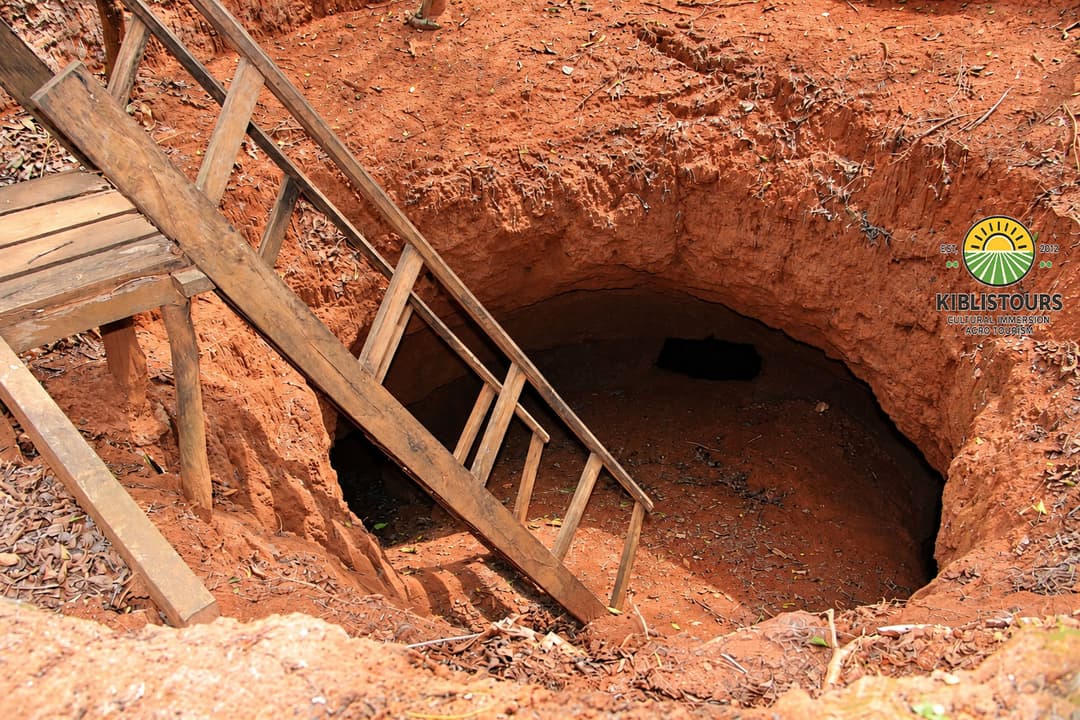
Official documentation places the cavities approximately ten metres below the surface.
Written on a page, that figure may seem almost abstract. Experienced physically, it takes on an entirely different meaning.
As you descend, natural light diminishes, sounds change, and the sky gradually disappears from view. The earth that only moments earlier lay beneath the visitor’s feet becomes their entire environment.
This depth transforms the visit into a sensory experience. It allows visitors to physically understand the constraints faced by the builders and potential occupants.
How did they determine the necessary depth? How did they remove the excavated material? How did they organise access to water? How did they renew the air? How did they light the spaces without excessively altering the interior atmosphere?
Not all of these questions have yet received definitive answers. Their existence is not a weakness of the site. On the contrary, they represent one of its greatest scientific and educational strengths.
Agongointo is not simply a place where visitors observe ancient structures. It is a place that invites them to consider how a society solved complex problems within a demanding environment.
Geometric Shapes That Reveal Intention
Official documentation mentions different geometric shapes and indicates that the cavities were created according to precise plans.
This information is fundamental. Digging without organisation creates a cavity. Designing a space to fulfil a purpose creates architecture.
Decisions had to be made about where excavation should begin, how certain spaces should be connected or separated, how much material should remain in place, and how occupants could move through the structures.
This does not mean that the builders necessarily drew plans in the way a modern architect would. Planning may have been mental, oral, transmitted through apprenticeship, or based on previously tested models.
In every case, there was a deliberate architectural intention.
The traveller is therefore not merely visiting an ancient space. They are attempting to understand a way of thinking about material, depth, security, and the use of territory.
Living Quarters, Refuge and Defence: What the Sources Allow Us to Say
The Tentative List documentation describes the cavities as spaces used for habitation and as shelters for warriors. It specifically mentions bedrooms, kitchens, living areas, and wells.
This description constitutes an important institutional reference. It should not, however, be transformed into a detailed narrative where information is lacking.
Identifying a space as a kitchen does not allow us to describe with certainty the meals prepared there. Referring to a bedroom does not tell us precisely who slept there. Mentioning a shelter for warriors does not allow us to arbitrarily determine the number of occupants, the duration of their stay, or the military event with which each structure may have been associated.
Responsible heritage interpretation must know where to stop when the evidence stops.
Such restraint does not weaken the story. On the contrary, it protects the site from invented narratives that may temporarily attract attention but ultimately undermine its credibility.
The Wells: An Essential Clue to Underground Organisation
The presence of wells is one of the most interesting elements in the description of the site.
Water is a fundamental requirement for any prolonged human presence. The longer a group must remain in a space, the more essential access to this resource becomes.
In a defensive context, having access to water without frequently returning to the surface could also provide an obvious advantage. Every additional trip outside could increase exposure and compromise the secrecy of the refuge.
The wells therefore suggest that human needs were incorporated into the design of certain structures. They show that the builders were not merely creating underground volumes, but attempting to make those spaces usable.
A well alone, however, cannot determine the exact number of occupants, the length of their stay, or the precise methods of water supply. It is an important clue, but not a complete answer.
Breathing and Lighting Underground
Whenever several people occupy an enclosed space, air quality becomes essential. Occupants consume oxygen and produce carbon dioxide. A light source based on combustion can also alter the interior atmosphere.
Available documentation does not allow us to claim that a sophisticated system comparable to “ancient air conditioning” existed. Such an expression may sound appealing, but it is insufficiently supported by evidence.
Lighting raises the same need for caution. At significant depth, natural light becomes limited. Solutions must necessarily have been considered for certain activities, but their exact nature should not be stated without sufficient archaeological or historical evidence.
These unknowns can become educational tools. Rather than inventing an answer, a good guide can explain the constraints, present reasonable hypotheses, and show why certain questions remain unanswered.
Saying “we do not yet know” is not an admission of weakness. It is a sign of seriousness.
Dakodonou and the History of the Kingdom of Danxomè
Documentation submitted to UNESCO associates the structures with the 16th century and the reign of Dakodonou, who is presented in historical traditions as one of the founding figures of Danxomè.
This attribution gives the site a distinctive place in the history of the kingdom. It must nevertheless be expressed with the caution required by the available sources.
Ancient chronologies can be reconstructed from oral traditions, genealogies, material remains, archaeological research, and written documents originating from different periods. These sources do not all serve the same purpose and do not always answer the same questions.
Oral tradition may preserve names, events, representations of power, and collective memories. Archaeology can examine materials, forms, traces of occupation, and physical transformations. Historical documents may provide additional information, but they too reflect the context and perspective of their authors.
Understanding Agongointo therefore requires these different categories of sources to be brought into dialogue without automatically transforming any one of them into absolute truth.
To go beyond the stories and gain a deeper understanding of Agongointo on the ground,Kiblistours invites you to discover this heritage through a tour combining history, places of memory, and cultural immersion.
Cotonou - Natitingou - Boukoumbé - Tanguiéta
Agongointo and Abomey: Two Architectures, One Complementary History
Agongointo and Abomey should not be regarded as two unrelated stops. Their proximity makes it possible to create a genuine historical journey through the world of Danxomè.
In Abomey, the royal palaces evoke sovereigns, dynasties, ceremonies, and the representation of power. They show how architecture could make political authority visible.
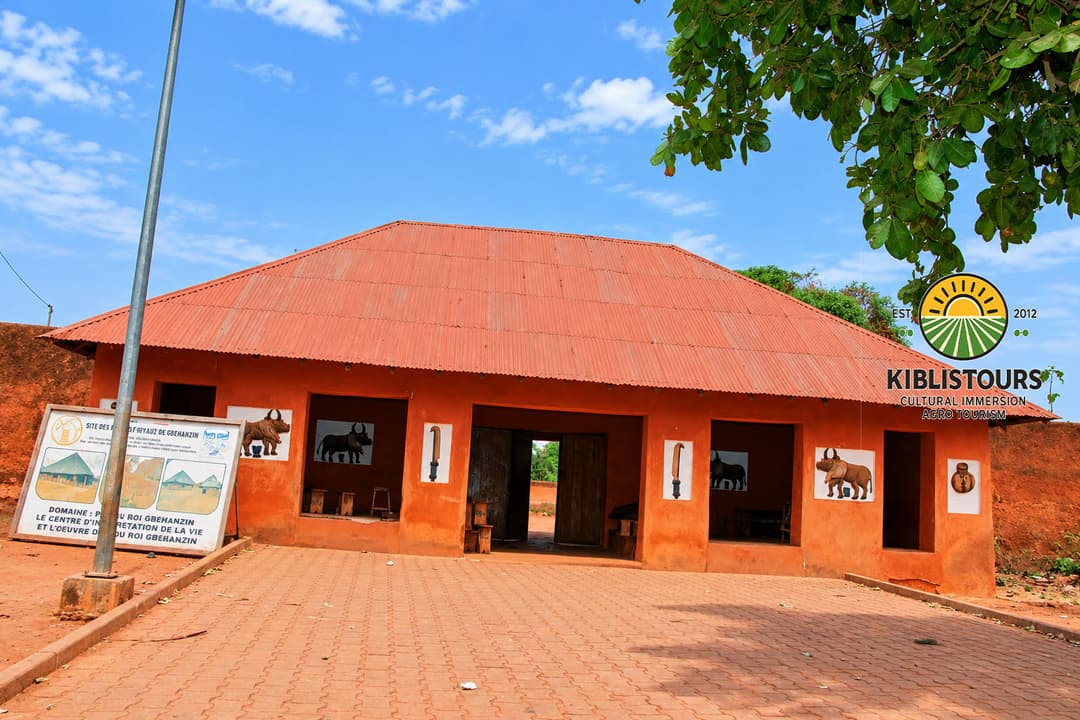
At Agongointo, attention shifts toward the land, depth, protection, technical constraints, and the work of builders whose names have not necessarily reached us.
The kings left names. The workers left spaces.
These two memories do not oppose one another. They complement each other.
Beginning the visit at Agongointo allows travellers to first enter the depths, observe the material, and understand the constraints of the land. When they later reach Abomey, the kingdom no longer appears solely through its sovereigns and palaces. It has already acquired a technical and territorial dimension.
Starting in Abomey creates a different experience. Visitors first discover the centre of power, after which Agongointo changes their perspective. Following architecture designed to express authority, they encounter architecture whose effectiveness may have depended precisely on its discretion.
There is therefore no universally superior order. The quality of the experience depends above all on how the two sites are connected and interpreted.
Bohicon: Much More Than a Stop Along the Way
Agongointo, Secrets of the Underground Village
Circuit de 7 jours ( That includes Bohicon )
The discovery of Agongointo should not overshadow Bohicon itself.
The city is an important crossroads in central Benin. It has a vibrant commercial life, traditional know-how, a distinctive cultural identity, and a culinary heritage that can extend the visitor’s experience.
Since 2021, Bohicon has been part of the UNESCO Creative Cities Network in the field of Gastronomy. This recognition opens an interesting perspective: an excursion to Agongointo can also become an encounter with local products, culinary techniques, and specialities.
The visit then gains greater coherence. Heritage is no longer treated as an isolated object beneath the earth, but as one component of a living territory.
Taking time to discover Bohicon can also generate greater economic benefits for restaurateurs, artisans, guides, transport providers, and other local stakeholders.
A Visit Suitable for Families, Students and Curious Travellers
Agongointo has considerable educational potential.
The site provides opportunities to explore history, archaeology, architecture, geology, oral transmission, conservation, and the organisation of ancient societies. For children and students, it transforms abstract concepts into concrete questions.
How do you create a space beneath the earth? How do you ensure its stability? How do you obtain water? How do you breathe and see underground? Why choose depth rather than height?
A guide does not need to artificially provide a definitive answer to every question. They can explain what the sources establish, present a reasonable hypothesis, or acknowledge that some information remains unknown.
Young visitors then stop passively receiving history. They begin thinking with the site itself.
Access and descent conditions must nevertheless be adapted to the age, mobility, and comfort level of each participant.
Agongointo and Travellers from the African Diaspora
For some travellers from the African diaspora, coming to Benin goes far beyond conventional tourism. The journey may be connected to a search for identity, family history, the memory of the Atlantic slave trade, or a desire to discover African societies beyond representations learned abroad.
Agongointo can take on a particular significance in this context. The structures provide material evidence of organisational, adaptive, and construction abilities developed within an ancient African society.
That reality is powerful enough on its own. There is no need to invent a specific ancestral connection between a visitor and the historical occupants of the site.
Respectful interpretation should not arbitrarily tell someone that their ancestors lived in Agongointo. Instead, it should invite them to observe what this heritage reveals about human ingenuity, knowledge of the land, and the historical depth of African societies.
Emotion should never be created at the expense of truth.
Preserving Agongointo Before Promoting It
Underground heritage is fragile. Visitor traffic, humidity, vibrations, erosion, heavy rainfall, and development work nearby can all affect its conservation.
Tourism development must therefore remain compatible with protecting the site.
This involves, in particular:
regular monitoring of the condition of the structures;
appropriate management of visitor numbers;
clear signage;
precise safety rules;
continuous guide training;
rigorous documentation;
involvement of local communities;
fair distribution of economic benefits.
Technology can also contribute to conservation. Photogrammetry, three-dimensional modelling, and digital surveys can document volumes and monitor certain changes without replacing archaeological research.
These tools could also make the site accessible in other ways to people who are unable to descend, particularly through virtual tours or educational reconstructions.
Digital technology should not replace heritage. It should help us understand, document, and transmit it.
Practical Tips for Visiting Agongointo-Zoungoudo
Before travelling, it is advisable to check opening conditions, descent possibilities, admission fees, and access conditions. These may change depending on conservation measures, weather conditions, or work being carried out at the site.
Bring:
closed shoes with good grip;
comfortable clothing suitable for the heat;
water;
sun protection;
a small, lightweight bag;
protection for devices sensitive to humidity or dust.
Visitors with claustrophobia, respiratory problems, vertigo, or mobility difficulties should mention their condition before the visit. An adapted itinerary may allow them to discover the history of the site without necessarily undertaking a deep descent.
The guide’s instructions must be followed. Visitors should avoid unnecessarily touching the walls, removing soil, leaving rubbish, or entering unauthorised areas.
Photographs should be taken in accordance with the rules in force at the site and with respect for people’s image rights.
Agongointo in One Day from Cotonou
An excursion to Agongointo can be organised from Cotonou in a single day, provided you leave early enough and follow a realistic itinerary.
A coherent programme could include:
an early-morning departure from Cotonou;
discovery of Agongointo-Zoungoudo;
a gastronomic stop in Bohicon;
a visit to Abomey and its royal heritage;
return to Cotonou at the end of the day.
This itinerary brings together three complementary dimensions: depth in Agongointo, a living territory in Bohicon, and royal power in Abomey
For travellers seeking greater comfort, two days provide a more in-depth experience. The site can be explored without rushing, Bohicon can be given a meaningful place in the itinerary, and sufficient time can be devoted to understanding Abomey’s heritage.
In this context, luxury takes on a simple definition: having the time to understand.
Choose Kiblistours to fully enjoy this experience.
Cotonou -Bohicon- Abomey -Dassa -Savalou -Cotonou
Which Kiblistours Experience Should You Choose?
Standard Package: Discover the Essentials
The Standard package allows you to visit Agongointo in good conditions, with organised transportation, knowledgeable assistance, and serious historical contextualisation.
An affordable price should never mean less reliable history.
Premium Package: Deepen the Experience
The Premium package may include greater comfort, a more flexible pace, an enhanced gastronomic experience in Bohicon, more time at major sites, and complementary experiences depending on availability.
VIP Package: Personalise Your Journey
The VIP package can be designed around the traveller’s particular interests: history, architecture, photography, gastronomy, culture, education, or a diaspora journey.
A private vehicle, adapted schedules, personalised assistance, and flexibility are the true elements of value.
Luxury never means circumventing conservation rules. It means enjoying better conditions in which to understand the heritage.
Why Visit Agongointo with Kiblistours?
Visiting a historical site is not simply about getting there. The quality of the experience depends on preparation, guidance, and the way in which the site is connected to the other dimensions of its territory.
With Kiblistours, the experience is built around five principles:
contextualised history that distinguishes facts, interpretations, and traditions;
a coherent itinerary connecting Agongointo, Bohicon, and Abomey;
organisation adapted to the traveller’s pace and preferred level of comfort;
a respectful relationship with heritage and local communities;
assistance before and during the visit to confirm practical arrangements.
You are therefore not simply coming to see an underground village. You are coming to understand why it exists, what it reveals, and why its preservation matters.
FAQ About the Underground Village of Agongointo-Zoungoudo
Where is Agongointo-Zoungoudo located?
The site is located in the municipality of Bohicon, in the Zou Department of Benin, approximately nine kilometres from Abomey.
When was the site discovered?
Its documented modern uncovering dates back to February 1998, during construction of a bypass. The Tentative List documentation attributes this discovery to the Danish company DANISA.
Are the Ahwando natural caves?
No. The documentation describes them as human-made cavities excavated in tropical ferruginous soil.
How deep are the cavities?
The official documentation mentions a depth of approximately ten metres below the surface.
What were the Ahwando used for?
According to official documentation, some of the structures are believed to have served as living quarters and shelters for warriors. Bedrooms, kitchens, living areas, and wells are among the features mentioned.
Who is believed to have built Agongointo?
Documentation submitted to UNESCO associates the structures with the 16th century and the reign of Dakodonou, while maintaining caution in light of the current state of knowledge.
Is Agongointo a UNESCO World Heritage Site?
No. The site has appeared on Benin’s Tentative List since 19 June 1998. Its presence on this list does not constitute definitive inscription on the World Heritage List.
Why combine Agongointo and Abomey?
The two sites offer complementary perspectives on Danxomè. Agongointo highlights the territory, depth, and underground architecture, while Abomey tells the story of royal power, dynasties, and political memory.
Can Agongointo be visited with children?
Yes. The site has strong educational potential. The itinerary should, however, be adapted to their age, mobility, and comfort in underground spaces.
Is the visit suitable for people with claustrophobia?
An adapted itinerary may allow visitors to discover the history of the site without undertaking a deep descent. It is important to mention any concerns before the visit.
What should visitors wear?
Comfortable clothing and closed shoes with good grip are recommended.
Can visitors take photographs?
Photography depends on the rules in force at the time of the visit. Site instructions and people’s image rights must be respected.
What is the best time to visit Agongointo?
The site can be incorporated into an itinerary at different times of the year. Weather conditions and access should nevertheless be checked, particularly during periods of heavy rainfall.
What are the opening hours and admission fees?
This information may change. It is advisable to confirm it when making your reservation.
Is a guide necessary?
Yes. Much of the site’s value lies in understanding its architecture, historical context, and the scientific questions it raises.
Can Agongointo be visited from Cotonou in one day?
Yes. An excursion combining Agongointo, Bohicon, and Abomey is possible when departure is early enough and the itinerary is properly organised.
Ready to discover Benin differently?
Agongointo, Secrets of the Underground Village
Imagine your journey, we create the experience.
Plan your trip with Kiblistours