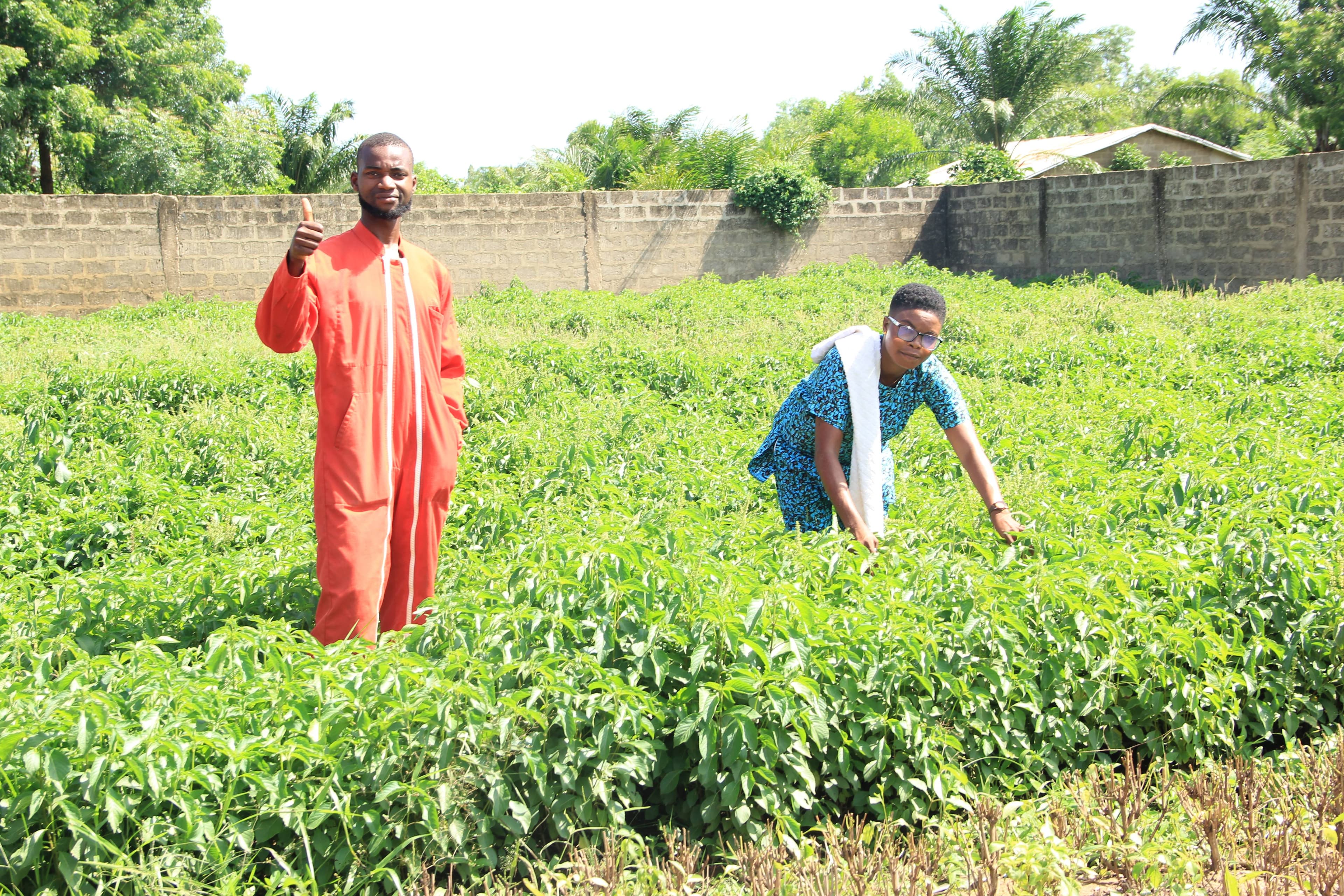
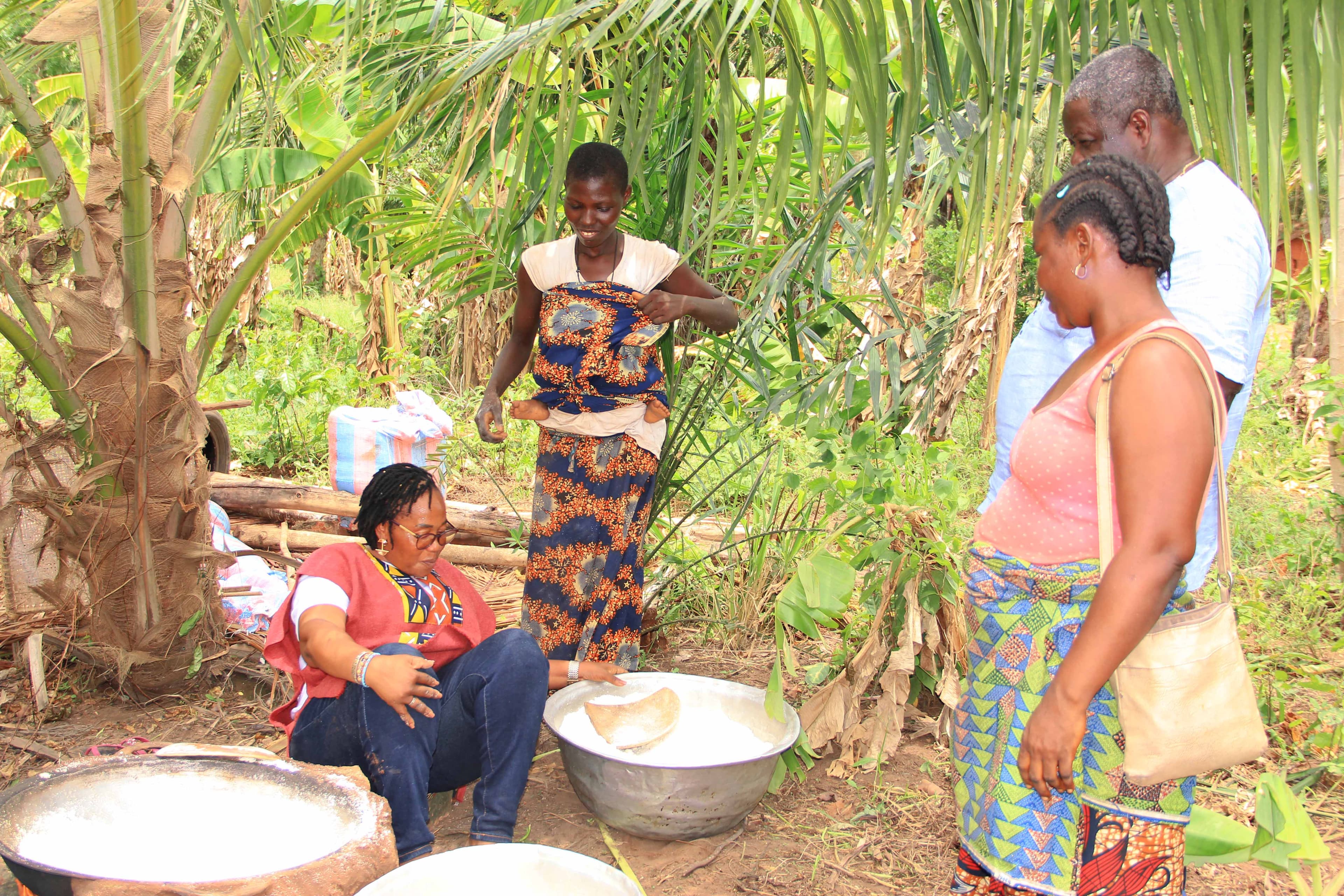
In many villages in Benin, the day begins even before the cities wake up. A farmer walks through his plot to check his crops. A processor prepares the cassava that will become gari. A young person feeds the poultry, helps on a plantation or takes out a phone to photograph the products of the family farm.
These actions may seem ordinary to those who perform them every day. Yet for a traveler who has never seen a pineapple grow, observed a cashew tree or followed the stages of cassava processing, they open a door onto a world of know-how, patience and ingenuity.
This is where agritourism takes on its full meaning: at the crossroads of agriculture, travel, gastronomy, heritage and the local economy. In Benin, it can do far more than enrich a tourist itinerary. When well organized, it can create additional income for producers and open up new professions for rural youth.
This prospect matters all the more because agriculture still accounted for around 40,2% of total employment in Benin in 2025, according to ILO modeled estimates published by the World Bank and ARAA/ECOWAS. Agritourism will replace neither agriculture nor employment policies. It does, however, raise an essential question: what if some of tomorrow’s opportunities could be created around the wealth that already exists in Benin’s rural areas?
This idea is part of a broader movement toward the professionalization of rural and tourism occupations. In Benin, recent policies and programs emphasize both the integration of young people into agri-food value chains and the improvement of the quality of tourism services. The challenge is therefore not simply to create visits, but to develop skills, services and sustainable income around local territories.
What is agritourism?
Agritourism encompasses tourism experiences directly linked to agriculture, farms, local products, their processing and rural know-how. It is not about taking visitors to a field and leaving a few minutes later. Its value comes from meeting, explanation and understanding.
· visit a farm and meet the people who keep it running;
· discover a plantation, livestock farm, beekeeping or market-gardening activity;
· observe certain stages of processing and understand the technical skills involved;
· taste local products or take part in preparing a meal;
· discover a rural market and marketing channels;
· buy certain products directly from producers or processors;
· take part in an activity adapted to visitors when safety and the farm’s operating rhythm allow it.
A farm remains, first and foremost, a place of work. Responsible agritourism therefore does not turn rural life into a spectacle. It creates a space for sharing knowledge in which visitors learn while local stakeholders retain control over how their activity is presented.
Why Benin has genuine agritourism potential
From the humid south to the landscapes of the north, Benin offers a great diversity of products: pineapple, cassava, maize, rice, cashew, oil palm, market-garden crops, beekeeping, livestock farming and many other activities. This diversity is already an economic asset. It can also become a tourism asset.
The raw material for the experience therefore already exists: fields, farms, markets, processing units, kitchens, landscapes and, above all, the knowledge accumulated by producers. The challenge is not to invent a tourist setting, but to organize safe, respectful and remunerative encounters around realities that genuinely exist.
Beninese pineapple: from field to experience
Pineapple perfectly illustrates this potential. PACOFIDE estimates Benin’s annual fresh pineapple production at around 450,000 tonnes and indicates that the sector contributes about 1.2% of national GDP and 2% of agricultural GDP. “Sugarloaf,” an emblematic specialty, also provides an immediately recognizable identity.
In the southern production basin, particularly around Allada and neighboring municipalities, a visitor can discover everything that comes before the fruit bought at the market: land preparation, planting, maintenance, ripening, harvesting, sorting and processing. Suddenly, pineapple is no longer just a product. It becomes a story, a profession and a territory.
Cassava and gari: making everyday know-how visible
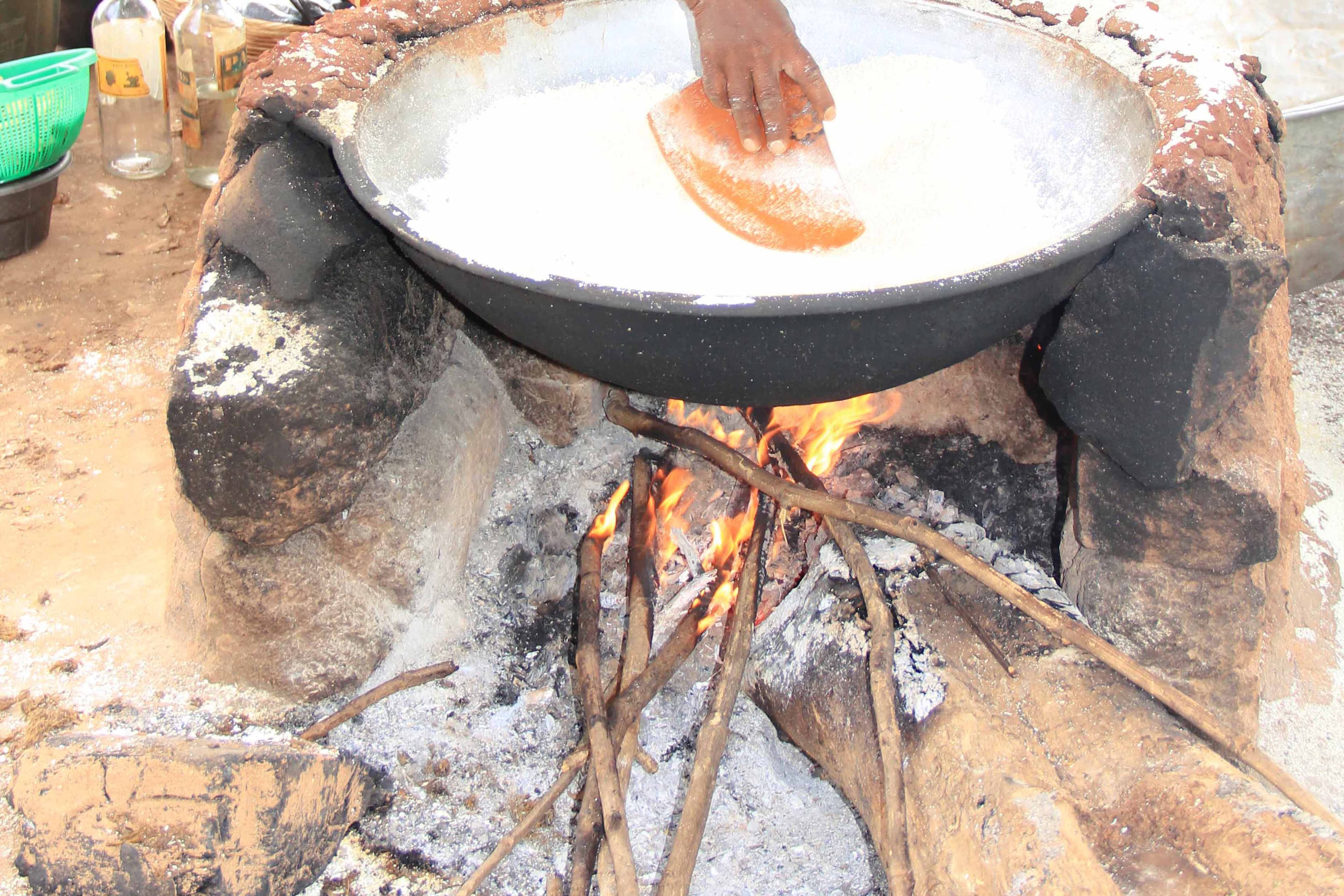
Cassava offers an equally meaningful experience. Many travelers know gari without realizing how many stages separate the fresh root from the product they consume. Observing part of this processing, listening to a processor’s explanations and tasting the product make it possible to understand the value of the work behind an everyday food.
When this sharing of knowledge is voluntary and remunerated, the know-how itself becomes a source of additional value, without ceasing to belong to those who practice it.
Cashew: when processing and employment come together
The cashew sector demonstrates very concretely the potential for job creation around agricultural value addition. For the 2022–2023 season, PACOFIDE reports national production of 201,051.918 tonnes. It also indicates that, for every 1,000 tonnes of nuts processed, factories can employ around 300 to 350 workers and that women account for about 70% of their workforce.
These figures concern processing, not agritourism. But they illustrate an essential principle: when a territory does more than sell a raw material and develops additional activities around it, employment opportunities multiply. Agritourism can add another layer: visits, interpretation, catering, transport, direct sales, digital content and guiding.
Agritourism creates jobs far beyond the field
This is probably one of the most promising aspects for young people. It is not necessary to own several hectares to participate in an agritourism value chain.
· local guide or activity facilitator;
· driver and logistics provider;
· interpreter;
· cook or restaurateur;
· photographer and videographer;
· booking manager;
· sales representative or partnerships officer;
· content creator and social media manager;
· artisan or seller of local products;
· entrepreneur designing rural tours.
Agriculture thus becomes the core of a small service ecosystem. A single visitor can generate value for several people over the course of one day.
A smartphone can become a work tool
Imagine a 24-year-old whose parents have been farming for years. The young person does not necessarily want to do exactly the same job, but knows how to film, take photographs, post on social media and respond quickly to messages. They may speak French, English and a local language.
These skills may be precisely what a farm lacks in order to become visible to travelers. The young person can tell the producer’s story, manage inquiries, accompany a group or connect several stakeholders to create an itinerary. The phone that was mainly used for communication then becomes a genuine marketing tool.
From rural youth to young entrepreneur
A young person can also go further and create their own service. They identify several willing producers, a processor, a place to have lunch, a driver and a few artisans. Taken separately, each has an activity. Together, they can form an experience.
The entrepreneur’s role is then to connect these resources: organize schedules, build the story of the day, manage bookings, ensure quality and work with agencies or travelers. Their main capital is not necessarily land. It is their ability to turn scattered resources into a coherent experience.
More than 60,000 young people: why professional integration is a central issue
In June 2025, the World Bank approved US$41.3 million in additional financing to strengthen the Youth Inclusion Project in Benin. The extension is intended in particular to support the integration of around 60,500 vulnerable young people into agri-food value chains and wage employment, with an initiative additionally targeting 1,000 young people in poultry value chains.
These beneficiaries are not presented as agritourism workers. The figure nevertheless shows how strategic youth integration and agri-food value chains are. Agritourism can complement this ecosystem by creating activities at the intersection of agriculture, services, digital technology and travel.
When a day of tourism circulates money within a territory
Imagine a small group leaving Cotonou in the morning. A driver provides transportation. On arrival, a young guide welcomes the visitors. A producer presents the farm. A processor shares her know-how. A cook prepares lunch. At the end of the visit, travelers buy honey, gari, fruit or cashew nuts.
The day’s budget is no longer captured by a single service. It circulates among several professions. This is where agritourism can become a genuine local development tool: not simply bringing in visitors, but increasing the share of their spending that directly benefits the territory.
Direct sales: when the product gains a face
After meeting a producer, we no longer buy in quite the same way. A jar of honey becomes the honey of the beekeeper met a few hours earlier. A bag of cashew nuts brings a plantation to mind. Gari recalls the person who explained how it was processed.
The product gains a story. This relationship can encourage direct sales, provided, of course, that quality, hygiene and marketing requirements are respected.
Rural women must benefit directly from the value created
Women play an essential role in many processing, marketing and catering activities. Data from the cashew sector are particularly telling: PACOFIDE estimates that women represent around 70% of the workforce in cashew nut processing units.
Agritourism can open up additional sources of income around cassava, fruit, cereal, oil and shea processing, market gardening, cooking or the sale of processed products.
Showing a woman’s work does not constitute an economic benefit. Paying her fairly for her contribution does.
When the traveler stops being a spectator
A producer shows a plant to a visitor and asks how long they think it will take before harvest. The answer is wrong. The producer smiles, explains, and then the conversation moves on to the seasons, rainfall, prices, market difficulties and family transmission.
Within a few minutes, the visitor is no longer simply looking at a field. They begin to understand a life, a profession and a territory. It is often in these simple exchanges that the strongest travel memories are born.
Can agritourism slow rural exodus?
It would be an exaggeration to claim that agritourism alone can solve rural exodus. Decisions to leave are linked to employment, education, healthcare, infrastructure, services and personal aspirations.
But when a young person can generate income in their own territory through guiding, digital services, catering, transport, processing or entrepreneurship, an additional option emerges. The aim is not to prevent young people from leaving. It is to genuinely give them a choice: to leave if they wish, but also to be able to build something where they live.
The conditions for truly responsible agritourism
Train stakeholders
Hospitality, safety, guiding, hygiene, pricing, customer service and marketing are skills. Stakeholders must be able to receive support before regularly welcoming visitors.
Respect the farm’s operating rhythm
A farm remains, first and foremost, a place of production. Schedules, seasons and group size must be decided with the producer. Tourism adapts to the farm, not the other way around.
Ensure safety
Machinery, animals, tools, heat or uneven terrain can present risks. Not everything that is interesting to observe is necessarily suitable for visitor participation.
Pay transparently
Each person must know what they contribute and what they receive. An experience described as community-based only makes sense if local stakeholders genuinely benefit from the value created.
Respect consent
A person living in a village is not automatically available to be photographed or filmed. Respect for dignity and privacy must remain non-negotiable.
The role of tourism agencies and operators
Not all producers have the time or desire to become tourism professionals. Nor do they need to. An agency can act as an interface: identify suitable farms, coordinate services, prepare visitors, organize transportation, manage bookings and collect feedback.
The right model is to allow everyone to remain within their area of expertise while participating in the value created.
From promise to proof: the verifiable commitments of a Kiblistours experience
For an agritourism experience to be credible, Kiblistours must not present an activity as guaranteed if it has not yet been confirmed in the field. A farm, processing workshop or encounter is included in an itinerary only after its availability, reception conditions and the consent of the people concerned have been validated.
This requirement is operational proof in itself: the offer announced to the traveler must correspond to what can genuinely be organized at the time of the stay. It also helps avoid improvised visits, artificial staging and commercial promises disconnected from the agricultural season.
When a visit is actually carried out, Kiblistours can document the experience with the participants’ consent: territory visited, type of production, stakeholders involved, services paid for, any direct purchases, and feedback from the traveler or partner. These elements gradually make it possible to build verifiable field evidence.
At this stage, this article deliberately presents no false testimonial and no farm as a “Kiblistours partner” without verifiable evidence. This choice strengthens editorial credibility: it is better to add genuine proof after a confirmed experience than an appealing testimonial that cannot be authenticated.
A national framework that confirms the need for professionalization
The professionalization of tourism is also a recognized issue in Benin. The Government of Benin, with support from the World Bank and the World Tourism Organization, has notably launched a capacity-building program for a cohort of 54 guides in order to improve the quality of services offered to travelers.
In the agricultural sector, PACOFIDE aims in particular to improve the incomes of value-chain stakeholders, create jobs and support young people and women as entrepreneurs or employees. These orientations do not constitute proof of Kiblistours’ agritourism results, but they reinforce the relevance of a model that connects agriculture, services, tourism skills and local value.
Kiblistours: helping travelers discover territories rather than simply pass through them
At Kiblistours, we believe that a trip to Benin is not simply a succession of sites to photograph. Heritage is also found on farms, in markets and kitchens, in agricultural landscapes and in practices passed down from one generation to the next.
Our approach favors experiences prepared according to the territory, the season and the actual availability of local stakeholders. We prefer a simple, sincere and well-organized encounter to an artificial staging of rural life.
Consent. Respect. Understanding. Safety. Local benefits.
What can an agritourism day with Kiblistours look like?
In the morning
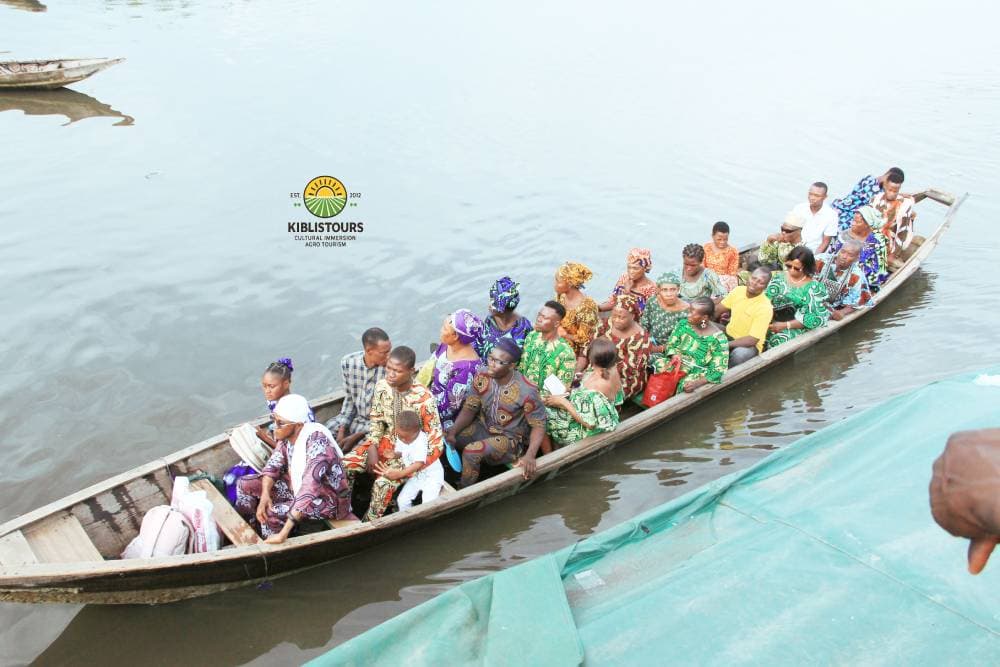
Departure from the agreed meeting point. During the journey, the guide introduces the territory, its products and the rules for the visit.
On the farm
Meet a willing producer. They present their background, crops and the realities of their activity. Visitors can ask questions and observe what is relevant at that time of year.
From product to processing
When conditions allow, the experience continues with a male or female processor to understand what happens between harvest and the product that is consumed.
Around the table
A local meal extends the experience. The ingredients are no longer anonymous: they are connected to the territories and people encountered.
Before returning
A market, an artisan or direct sales can round out the day. Travelers leave with products, but above all with a better understanding of where they come from.
Measuring what actually remains in the territory
The number of visitors is not enough to measure the success of an agritourism program. The most useful indicators are those that show the value created locally.
· number of young people and women paid;
· income paid to local stakeholders;
· amount of direct sales;
· number of partner farms and service providers;
· additional activities created;
· visitor and community satisfaction;
· share of tourism spending retained within the territory.
This perspective makes it possible to distinguish rural tourism that merely passes through from rural tourism that contributes.
How can agritourism be further developed in Benin?
· map farms and know-how suitable for welcoming visitors;
· train young people in guiding, digital tools and marketing;
· connect producers, processors, restaurateurs, artisans and transport providers;
· improve packaging and direct sales of products;
· create tours adapted to agricultural seasons;
· strengthen partnerships between tourism professionals and agricultural stakeholders;
· document the income actually generated locally;
· promote experiences to Beninese and international travelers.
Ten solid, safe and respectful experiences are worth more than one hundred improvised visits.
FAQ: agritourism in Benin
What is the difference between rural tourism and agritourism?
Rural tourism covers many experiences carried out in rural areas. Agritourism is more directly linked to farms, agricultural production, its processing and the associated know-how.
Do you have to be a farmer to work in agritourism?
No. Guiding, transport, catering, photography, video, sales, translation, digital services and tour organization can all create opportunities.
What products can you discover in Benin?
Depending on the territory and the season: pineapple, cassava, cashew, maize, rice, market gardening, honey, livestock farming and other local products.
https://kiblistours.com/fr/agrotourisme
Can visitors take part in farm work?
Sometimes, but only when the activity is suitable, safe and accepted by the producer. Observation may be preferable for certain operations.
Are the experiences the same all year round?
No. Agriculture is seasonal. A visit may therefore change depending on the time of year, and this seasonality is part of its authenticity.
How can you verify that the community benefits from the visit?
You need to look at who is paid, which products are purchased locally and what share of the services remains within the territory. A responsible operator should be able to explain this value chain.
Experience rural Benin differently with Kiblistours
What if, on your next trip to Benin, you did more than taste a local product and instead met the person who grows it, discovered the practices used to transform it and shared a moment with the people who bring the territory to life?
With Kiblistours, depending on the season and local availability, your itinerary can include an agritourism immersion built around genuine encounters: a farm, a processing unit, a tasting, local cuisine, a rural market and direct purchases from the people you meet.
Are you traveling alone, as a couple, with family, with friends or in a small group? Tell us your dates, the number of participants, your departure point and what you would like to discover. We will build a proposal adapted to realities on the ground rather than a standardized experience.
Do not simply pass through Benin. Meet it. Listen to its producers, taste its local products, understand its know-how and make your journey an experience that also leaves value where it is lived.
Kiblistours – Experience Authentic Africa.