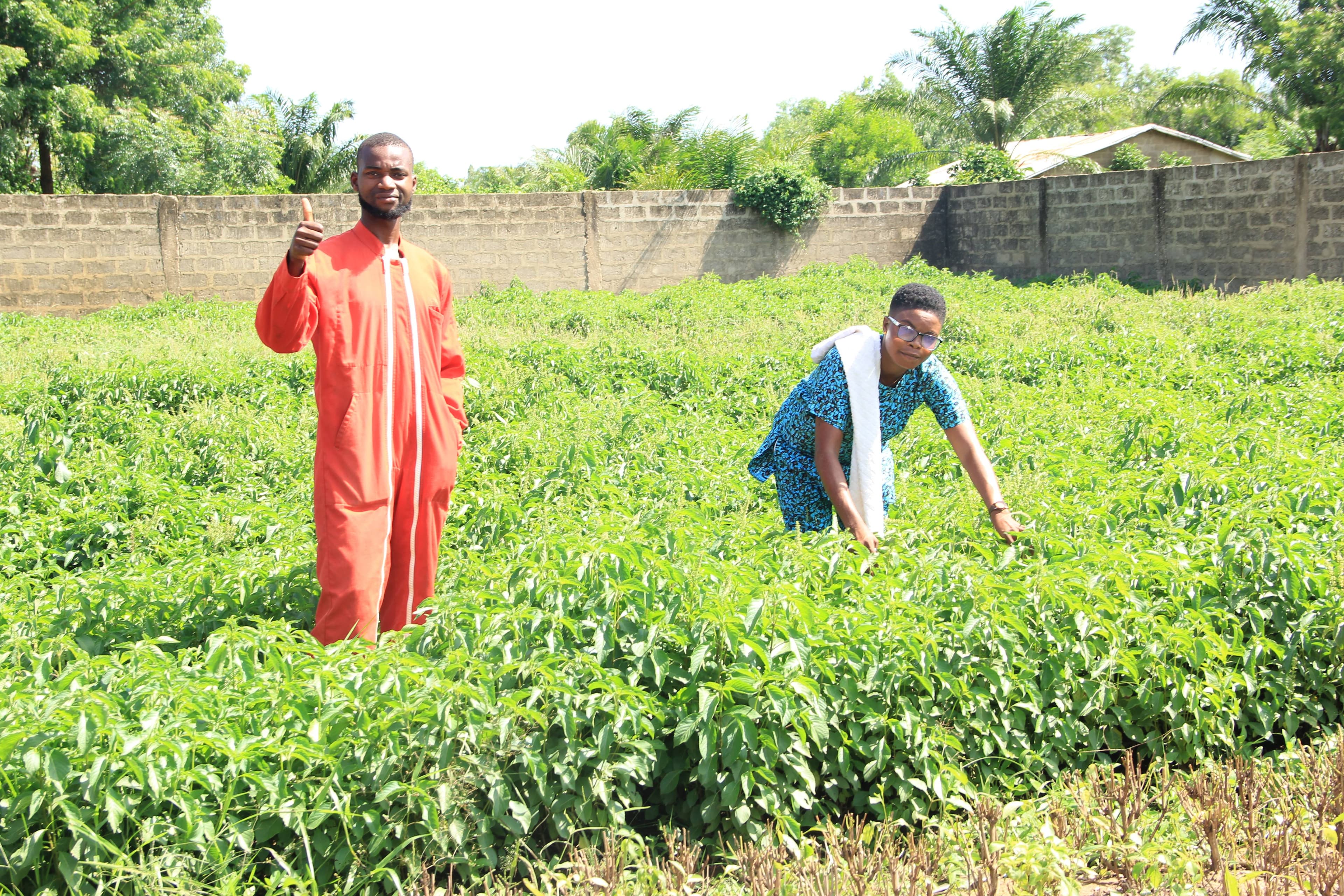
There are trips from which you return with a gallery of photographs and a list of places checked off. And then there are trips that leave you with something else: the memory of a face, the smell of the earth after the rain, the taste of a fruit picked at just the right moment, the sound of a mortar, a conversation beneath a tree, or a few gestures learned from someone who has repeated them for years. Agritourism in Benin belongs to this second way of travelling.
In Benin, this approach takes on a special dimension. Agriculture is not simply a backdrop glimpsed between two tourist sites: it shapes landscapes, feeds families, brings markets to life, supplies processing units and maintains a deep connection with cuisine and the rhythms of rural life.
Benin’s agricultural policies currently place significant emphasis not only on production but also on local processing, particularly in the cassava, rice, cashew, pineapple and cotton value chains. This dynamic gives even greater meaning to tourism that seeks to understand what happens between the field, the workshop, the market and the plate.
Read our article below:
From Farm to Table in Benin: An Authentic Agritourism Experience
Agritourism in Benin therefore does not simply mean “visiting a farm.” It means entering, with the consent of those who work there, into a living territory. It means learning why a particular crop is grown here, how it changes with the seasons, which techniques are used to produce or process it, what challenges farmers face, and how knowledge is passed down from one generation to another.
From the humid south to the landscapes of central Benin and then to the northern savannahs, the country offers a diversity of terroirs that makes this form of travel particularly rewarding. Pineapple, cassava, maize, rice, market gardening, yam, cashew, livestock farming, fishing and food processing make it possible to imagine very different experiences, provided one essential rule is respected: never artificially manufacture the authenticity you claim to seek.
https://www.gouv.bj/article/3539/secteur-agricole-benin-mise-transformation-locale-productions/
Read our article:
This guide has precisely that objective: to show how to discover Benin through its countryside, farmers, food and know-how, while giving travellers practical guidance for choosing an experience that is responsible, meaningful and profoundly human.
What Is Agritourism in Benin?
Agritourism lies at the crossroads of agriculture, territorial discovery and hospitality. It can take the form of a farm visit, a guided walk through an orchard, an introduction to market gardening, a discovery of food processing, a meeting with livestock farmers, a visit to a market or a meal prepared with local products.
What distinguishes a genuine agritourism experience from a simple visit is understanding. Travellers do not come merely to see: they want to learn. Why does the farmer choose a particular variety? When does harvesting take place? How is the product preserved? How much is consumed locally, sold or processed? What roles do women, young people, cooperatives and traders play?
This dimension is particularly relevant in Benin, where agriculture remains an essential sector of economic and rural life. National agricultural statistics and value-chain development programmes reflect the diversity of production and the importance attached to processing and market access.
For visitors, this reality offers a rare opportunity: to understand the country through everyday practices. A cassava field, a pineapple plantation or a processing workshop can become a gateway to much broader issues: food, climate, income, knowledge transmission, entrepreneurship, the role of women, community organisation and the relationship with the land.
Read our offer below:
Why Benin Has Strong Potential for Agritourism
Agricultural Diversity That Changes from One Region to Another
Benin is a relatively narrow country stretching from south to north, but its geography crosses several different environments. Travellers leaving the coast and heading towards the centre and then the north gradually see changes in vegetation, soils, crops, eating habits and landscapes.
This diversity becomes even more significant when viewed alongside the country’s current agricultural ambitions. For the 2026–2027 farming season, the Government is targeting, among other things, 3.4 million tonnes of cereals, 9.46 million tonnes of roots and tubers, 500,000 tonnes of pineapple and 250,000 tonnes of cashew nuts. These are campaign targets, not results that have already been achieved.
For travellers, these figures simply provide a sense of scale: behind the plots, workshops and markets they visit are value chains that occupy a strategic place in Benin’s agricultural economy.
In the south, experiences can notably revolve around pineapple, cassava, market gardening, maize, products from wetland environments and small-scale food processing. In central Benin, yam, cassava, cereals and cashew provide other ways of understanding the territory. Further north, crop production is more closely combined with livestock farming and savannah landscapes.
This diversity helps avoid a common misconception: the belief that there is a single “typically Beninese” rural experience. On the contrary, there are several agricultural Benins, several calendars and several ways of working the land. A good tour should reveal this diversity without turning cultural differences into folklore.
Read our article below:
Value Chains That Tell a Story Beyond Production
One of the strengths of agritourism is that it does not stop at the farm. Agricultural products continue their journey: they are sorted, transported, processed, packaged, sold and cooked. The Government of Benin also places emphasis on the local processing of agricultural products, particularly cassava, rice and cashew. For travellers, following this chain adds considerable depth to the visit.
Take cassava. Seeing it grow is a first discovery. Observing its processing then helps visitors understand how much work is required before obtaining a familiar product such as gari. Finding it later at a market and finally in a meal connects agriculture, economics and cuisine within a single day.
The same applies to cashew. The cashew nut eaten as a snack may appear simple, but the reality of its production and processing is far more complex. PACOFIDE presents cashew as a value chain with strong potential for wealth and job creation, with women playing an important role in processing. A well-designed experience can therefore also highlight the economic and social role of a value chain.
Read information from the Government of Benin on the local processing of agricultural products
A Food Culture Deeply Connected to the Land
Travelling through agriculture inevitably means travelling through cuisine. Products grown in the fields do not remain there: they become pastes, flours, sauces, drinks, side dishes and family meals. This continuity gives agritourism a sensory dimension that few other forms of tourism possess.
Visitors can see a raw ingredient in the morning, watch part of its transformation, find it again at the market and then taste it in a prepared dish. At that moment, the meal ceases to be merely a tourist service. It becomes the conclusion of a story that began several hours earlier.
Read our article below:
12 Agritourism Experiences to Enjoy in Benin
The activities below are ideas for experiences to be developed with farmers and partners who are genuinely available. Their feasibility depends on the seasons, field conditions, weather and, above all, the agreement of the people hosting visitors. Authenticity means accepting precisely this element of reality.
1. Walk Through a Pineapple Plantation and Discover This Fruit Differently
For many travellers, pineapple begins at the market or at breakfast. On a plantation, the perspective changes immediately. Visitors discover a low-growing plant, a production cycle that takes time and a succession of farming practices that the final consumer generally knows nothing about.
A visit can begin by understanding the plot: land preparation, selection and planting of planting material, maintenance, weed management, ripening and the criteria used to determine the right harvesting time. The farmer can explain differences in quality, buyers’ requirements and the challenges encountered between production and marketing.
Discover the pineapple field experience in Allada
The tourism experience becomes even more meaningful when a tasting is connected to what has just been explained. The fruit is no longer anonymous: it has a place, a farmer, a season and a story.
Explore Kiblistours agritourism experiences
2. Follow Cassava from the Field to Gari
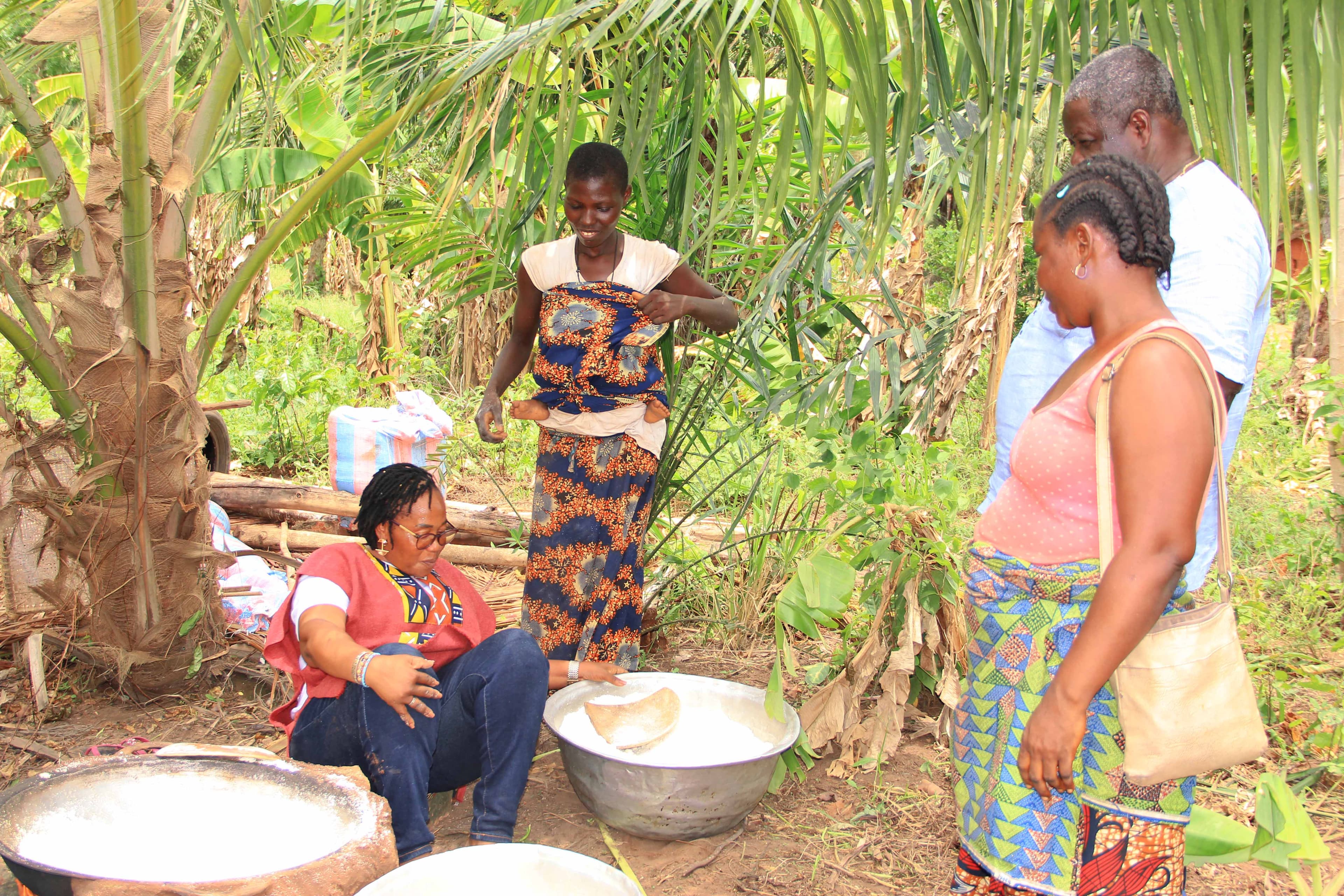
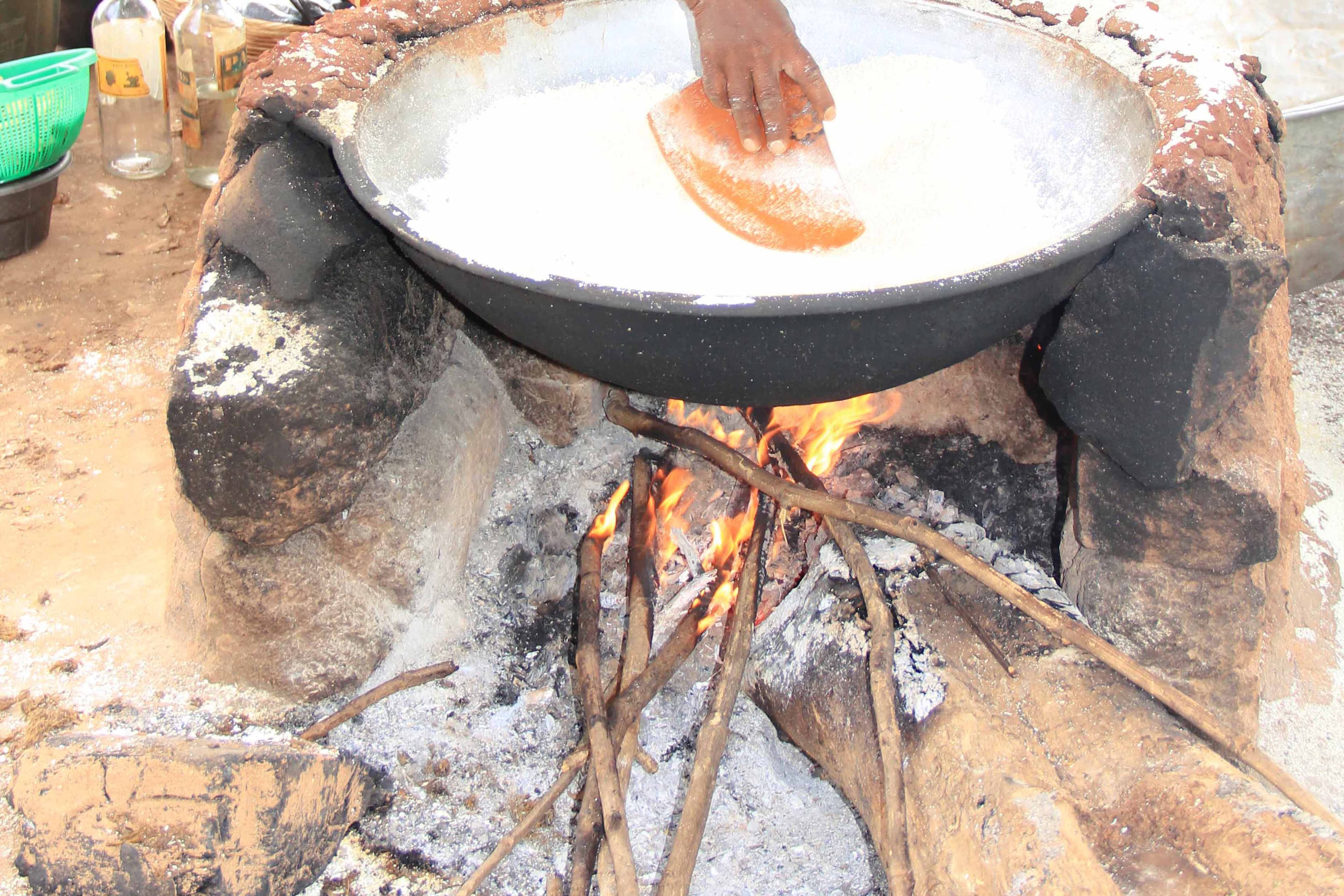
Cassava is one of the best entry points for explaining what an agricultural value chain really is. In the field, travellers discover a plant. In the processing unit, they discover a process. At the market, they discover a commercial product. On the plate, they discover a food culture.
Depending on how the site is organised, several stages can be observed: receiving and preparing the roots, peeling, washing, grating, pressing, sieving and then cooking or roasting. Each stage opens up a conversation about working time, hygiene, equipment, the quality of the final product and how knowledge has been acquired.
Such a visit also provides an opportunity to discuss local processing. In 2026, Beninese authorities once again highlighted this issue through investments in cassava and other agricultural processing facilities.
Read our article below:
3. Step into a Market Garden and Understand the Work Behind the Vegetables
A market garden may look modest from a distance. Walking through it with the person who cultivates it reveals a complex system: beds, seedlings, water, nurseries, maintenance, harvesting and market outlets.
Visitors quickly discover that market gardening depends on daily observation. One plant needs water, another needs harvesting, a disease appears, or a market day is approaching. This close connection with the farmer’s decisions makes the visit highly educational.
Read our offers below:
Discover the agricultural experience at Fonsa Awicodji
When conditions allow, light participation may be offered: watering a bed, transplanting seedlings, harvesting a few vegetables or helping with sorting. The aim is never to “play farmer” for ten minutes, but to experience firsthand the precision and effort behind a product that can later be purchased in just a few seconds.
Read our article below:
4. Discover Cashew, from Tree to Kernel
Cashew nuts are known internationally, but their agricultural origins and the stages required to obtain the kernel we eat remain largely unknown. An experience centred on cashew can connect orchards, harvesting, marketing, processing and employment.
On a plantation, the farmer can explain tree maintenance, harvesting, nut quality and variations from one season to another. In a processing facility suitable for visitors, the experience can continue with the discovery of certain processing and packaging stages.
The subject also provides an opportunity to discuss the role of women in the agro-industry. PACOFIDE data indicate a significant female presence in the workforce of cashew-processing units. Agritourism therefore becomes an opportunity to talk not only about a product, but also about employment, added value and economic empowerment.
Read official information from the Government of Benin on agricultural export value chains
5. Discover Yam as an Agricultural Product, Food and Cultural Marker
Yam deserves more than a simple tasting. In several regions, it connects the agricultural calendar, food, trade and social practices. Understanding how it is grown and harvested allows travellers to appreciate the dishes in which it is used in a completely different way.
A visit may begin with mounds or ridges, depending on the practices observed, before exploring seed selection, crop maintenance and harvesting periods. Discussions can then continue around culinary uses and the social meanings associated with new harvests in certain communities.
Yam thus becomes much more than a product to taste: it provides a way to understand agricultural practices, eating habits and cultural transmission together.
https://www.youtube.com/watch?v=KdFL0RjbxTI
6. Understand the Ouémé Valley Through Water, Agriculture and Fishing
In the Ouémé Valley, water is not a secondary feature of the landscape. It influences movement, productive activities and the way communities adapt to the seasons. The Lower Ouémé Valley is also included on UNESCO’s World Heritage Tentative List.
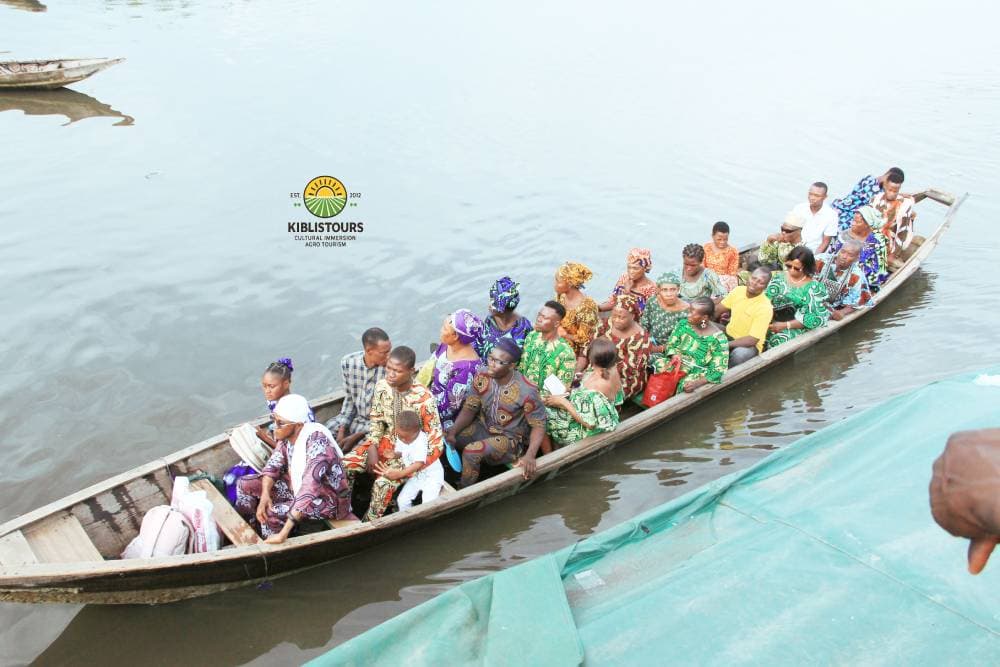
An agritourism experience there can combine observation of the landscape, discovery of agricultural activities adapted to the environment, discussions about fishing and meetings with local stakeholders. The guide plays an essential role here: helping visitors understand what they are seeing rather than simply passing through a spectacular landscape.
View the UNESCO page on the Lower Ouémé Valley
This approach is particularly interesting for travellers who want to understand the relationship between the environment and livelihoods. Water can be a resource, a transportation route and a source of fertility, but also a constraint when conditions become difficult.
7. Meet Livestock Farmers and Understand the Relationship Between Animals, Land and Families
Beninese agriculture is not limited to crop production. Livestock farming is part of many production systems and provides an opportunity to explore other realities: animal feed, water, health, reproduction, mobility, sales and relationships with crop farming.
A meeting with livestock farmers must be particularly well prepared. Animals are not photographic props, and certain practices follow professional or cultural principles that visitors may not understand. It is therefore important to follow the instructions of the farmer and guide.
Read our article below:
When properly organised, this encounter can challenge many simplistic ideas about livestock farming in West Africa. It reveals families making economic decisions, managing risks, adapting their practices and passing on knowledge.
8. Move from Raw Products to Artisanal Processing
One of the most powerful experiences is discovering what happens after harvesting. Processing means adding labour, know-how and often value to an agricultural product. Depending on the region, this may involve cassava, cereals, fruit, nuts or other products.
Travellers can observe tools, techniques, waiting times, hygiene rules and the ways quality is assessed. When participation is authorised and safe, trying a simple task immediately provides a sense of how difficult it can be.
This stage also makes it possible to meet people other than those working in the fields: women processors, entrepreneurs, cooperatives, and employees of artisanal or semi-industrial facilities. Agritourism then reveals an entire economic ecosystem surrounding agriculture.
Discover Kiblistours agricultural processing experiences
Read information from the Government of Benin on local agricultural processing
9. Visit a Market with a Different Perspective
A market takes on a different dimension when you already know where some of its products come from. After visiting a plantation, field or workshop, seeing those same products again on market stalls closes part of the loop.
Accompanied by a guide who understands local practices, travellers can learn to identify products, understand certain units of sale, observe differences in quality and discover how goods circulate between producers, intermediaries, retailers and consumers.
A market is also a social space. People exchange information, negotiate, maintain business relationships and build reputations. A respectful visit should therefore avoid disturbing vendors or photographing people without their consent.
https://www.directtriphub.com/fr/lieu/marche-dantokpa-cotonou
10. Cook and Share a Meal Made with Local Products
The meal is often the moment when all the previous stages come together. An ingredient seen in the field, then processed or purchased at the market, finally arrives in the kitchen. The recipe then becomes another form of knowledge transmission.
Depending on the experience, travellers may simply observe, participate in certain preparations or learn the basic principles of a dish. The aim is not to turn a family kitchen into a standardised cooking class, but to understand how ingredients are selected, combined and prepared.
Sharing a meal also creates a different kind of conversation. Discussions become less formal: people talk about tastes, memories, family and what they eat in their own countries. This is often where the distance between visitor and host genuinely begins to disappear.
Discover Kiblistours’ “farm-to-table” approach
11. Stay Overnight in a Rural Area and Experience a Different Rhythm
A few hours’ excursion allows you to see. A night can sometimes allow you to feel. Where suitable accommodation is available, extending the experience in a rural setting offers a different perception of the territory: the end of the day, meal preparation, nighttime tranquillity, early-morning awakening and the resumption of daily activities.
However, the experience should not be romanticised. Rural accommodation may be simple, and comfort conditions must be clearly communicated: sanitation, water, electricity, ventilation, mosquito nets, meals, road access and mobile network coverage. Authenticity never excuses a lack of information.
The stay must also preserve families’ privacy. Hosting a traveller requires time and can sometimes change household routines. Payment and accommodation rules should therefore be agreed transparently.
12. Build a “Field-to-Table” Day
For a first introduction to agritourism, the most coherent option is often a day built around a single storyline. The morning begins with a farmer. Travellers discover the crop and discuss farming practices. The second stage shows processing or marketing. Lunch then highlights the products they have seen.
The afternoon can continue at a market, with an artisan, in a village or at a nearby cultural site. The aim is to create a territorial narrative rather than a succession of unrelated stops.
This format works particularly well because it gives meaning to the journey. Visitors do not collect activities: they follow a story and gradually understand how several people contribute to the life of the same product or territory.
View Kiblistours agritourism offers
Responsible Agritourism: Communities Are Not a Backdrop
A farm is first and foremost a workplace. A home is a private space. A village is a place where people live. This obvious reality should guide every agritourism experience. The fact that travellers pay for an activity does not give them unlimited rights over people, images or spaces.
The first principle is consent. Permission should be requested before taking photographs. An activity must be accepted. A cultural encounter should never be improvised at the expense of the people involved. The second principle is fair compensation: when people provide their time, a meal, a demonstration, guiding or accommodation, their contribution should be clearly valued.
The third principle concerns group size. A small farm may comfortably welcome a few visitors but be completely disrupted by an excessively large group. The fourth principle concerns staging: it is better to discover an activity that is genuinely being practised than to ask someone to artificially repeat a gesture solely for a photograph.
Finally, responsible tourism means accepting that certain things may not be accessible. A family event, sacred space, intensive work period or unexpected situation may lead a partner to change or refuse a visit. Respecting that decision is part of the journey.
Discover Kiblistours’ approach to authentic travel in Benin
How Agritourism Can Benefit Local Communities
When properly designed, agritourism can diversify income around a farm. Farmers can be paid for their time; someone from the village can provide guiding services; another person can prepare the meal; a processing unit can sell its products; and an artisan or trader can benefit from visitors passing through.
This local circulation of tourism spending is important. It helps prevent all the value generated by travel from remaining concentrated in transport or urban accommodation. It can also encourage direct sales, which can be particularly meaningful when travellers wish to purchase a product after meeting the person who produced or processed it.
Agritourism in Benin: A Driver of Employment and Income for Rural Youth
There is also a less quantifiable benefit: recognition. Everyday practices may seem ordinary to the people who perform them, even though they represent remarkable technical, culinary or cultural heritage. A visitor’s respectful curiosity can contribute to recognising their value, provided that the know-how is not reduced to a caricature.
For these benefits to be real, however, tourism organisation must be transparent. Who is paid? For what? At what rate? How many visitors can be accommodated? What share goes to the guide, host, restaurant or organisation? These questions are less visible than a beautiful photograph, but they determine the ethical quality of the tourism product.
What Is the Best Time for Agritourism in Benin?
The best time depends first and foremost on what travellers want to see. Agriculture follows a calendar, and visible activities vary according to the season, geographical area and climatic conditions of the year.
Travellers interested in a particular harvest should therefore not settle for a generic promise. What is actually happening at the time of the trip needs to be checked. A plantation can still be interesting outside harvest season if the farmer explains the production cycle, but the experience will not be the same.
Rainy periods can make some roads and paths more difficult while offering greener landscapes and intense agricultural activity. Drier periods often make travel easier but correspond to different types of farm work. There is therefore no universally perfect season.
This reality should become a commercial advantage rather than a problem: instead of selling the same activity twelve months a year, a serious operator can offer seasonal experiences. Travellers then discover what is genuinely happening in the region when they arrive.
Plan your trip to Benin with Kiblistours
Where Can You Enjoy Agritourism Experiences in Benin?
The South: Atlantique, Ouémé, Plateau, Mono and Couffo
Southern Benin makes it easy to combine rural experiences with major tourist destinations. Depending on the partners involved, experiences may focus on pineapple, cassava, market gardening, maize, local processing, fishing and wetland landscapes. The proximity of Cotonou, Abomey-Calavi, Ouidah, Porto-Novo and the Ouémé Valley makes it easier to organise day trips or combined stays.
In Atlantique, territorial data from INStaD notably show the strong presence of cassava and maize among crops grown by agricultural households, with more market-gardening-oriented profiles in certain lakeside municipalities. This local diversity strengthens the case for designing visits around specific territories rather than offering a generic agricultural experience.
View agritourism experiences in Atlantique
Central Benin: Zou and Collines
Central Benin offers an excellent transition between historical heritage and local terroirs. Around Abomey and throughout the Collines region, food crops, cassava, yam, cereals and cashew make it possible to understand the territory through its crops, markets and know-how.
The presence of processing facilities also makes it possible to go beyond a simple field visit: depending on the season and available partners, a stop can connect production, processing and tasting while showing how agricultural products fit into the local economy. This complementarity makes Zou and Collines particularly suitable for itineraries combining heritage, terroirs and rural encounters.
Discover Abomey and other destinations in Benin
The North: Borgou, Donga, Atacora and Alibori
In northern Benin, agritourism takes on another dimension: savannah landscapes, cereal crops, yam, cashew and livestock farming provide another way of understanding Borgou, Donga, Atacora and Alibori. Depending on the season and available partners, an immersion can combine meetings with farmers or livestock keepers, discovery of processing practices and discussions about adapting to climatic conditions.
Here more than anywhere else, distances encourage fewer stops and more time in each place, so that genuine encounters remain at the heart of the journey.
An Ideal Agritourism Day: Sample Itinerary
Imagine leaving your accommodation early in the morning. As the city gradually disappears behind you, the guide introduces the region, its main agricultural products and what you are about to discover. Upon arrival at the partner farm, the experience begins with greetings and introductions. This stage matters: you do not enter a working farm as though you were entering a museum.
The farmer then tells the story of the activity. How long have they worked here? Which crops are grown? How do they choose their farming calendar? Who buys their products? What has changed in recent years? The answers immediately add a human dimension to the visit.
The walk through the farm comes next. Visitors observe plants, soils, tools and farming practices. If participation is planned, it remains simple and supervised. The aim is to understand, not to slow down the work.
At the end of the morning, the itinerary may continue to a processing unit. The product changes form and visitors discover a new category of stakeholders. Discussion can focus on quality, equipment, packaging, markets and sometimes difficulties accessing finance or raw materials.
Lunch uses products connected to the territory as much as possible. The guide links what has been seen to what is being served. The afternoon may continue with a market, an artisan, a heritage site or a short walk.
On the return journey, the different stages of the day begin to connect: the farm sheds light on the workshop, the workshop gives new meaning to the market, and the meal brings together everything that has been learned. This continuity gives the excursion its real depth.
View Kiblistours tours in Benin
Combining Agritourism, Culture and Heritage
Ouidah + Rural Terroirs
A day trip or longer stay can combine the memory and heritage of Ouidah with a rural experience in the surrounding area. The aim is to show that the territory is not limited to its historical sites: it also has an agricultural economy, products, markets and gastronomy.
Visit Ouidah in Benin: Slave Route, Vodun and Immersion in the Heart of the African Soul
Abomey + Agriculture in Zou
The Royal Palaces provide access to a major political and cultural history. To prepare for this stage, you can also consult the Kiblistours guide to visiting Abomey from Cotonou. Adding an agricultural experience to the same trip brings visitors into the present: it shows how these territories live today and connects heritage, food and economic activities.
Ouémé Valley + Agriculture and Fishing
This combination is particularly coherent because the environment becomes the common thread. Visitors understand how water influences the landscape, activities and movement.
View the UNESCO page on the Lower Ouémé Valley
Discover destinations in Benin with Kiblistours
Atacora + Terroirs + Heritage + Nature
In north-western Benin, an itinerary can connect architecture, communities, agriculture, landscapes and nature. However, enough time must be allowed: multiplying the number of stops in a single day would undermine the very immersion being sought.
Discover destinations in Benin with Kiblistours
Practical Tips Before an Agritourism Experience
- Choose closed or sufficiently sturdy shoes for paths and farm plots.
- Wear lightweight clothing that is also appropriate for local customs and community visits.
- Bring water, a hat, sun protection and insect repellent; add rain protection depending on the season.
- Inform the organiser before departure of food allergies, medical restrictions, special diets or mobility difficulties.
- Ask before photographing or filming people, homes or certain activities.
- Do not pick, taste or handle any product unless invited to do so.
- Avoid giving money or gifts directly to children.
- Carry some cash for direct purchases when appropriate, without turning the visit into a compulsory shopping session.
- Be prepared for some flexibility in the schedule: real agricultural activities remain the priority.
- Listen to the explanations before searching for the perfect photograph: the experience will generally be richer.
Plan your trip with Kiblistours
Which Travellers Are Particularly Suited to Agritourism?
Families can find a strong educational dimension in these experiences: children can finally connect familiar foods with their origins. Travellers interested in gastronomy discover ingredients before they reach the kitchen. Photographers encounter fascinating landscapes and practices, provided they respect people’s image rights.
Travellers from the diaspora may also find in agritourism a different way of reconnecting with territories, foods or family practices. For some, a rural day can revive memories; for others, it reveals a Benin they previously knew mainly through cities or family stories.
Authentic Travel in Benin: Culture, Vodun, Nature and Encounters with Kiblistours
Students, researchers, development professionals and agriculture enthusiasts can explore these conversations in greater depth, while remembering that a tourist visit does not replace professional research. Finally, travellers who simply want to slow down often find exactly what they are looking for: less consumption of tourist sites and more genuine presence.
Travel with Kiblistours: Creating Immersion Rather Than an Attraction
At Kiblistours, the ambition is not to turn the Beninese countryside into a tourist backdrop. A successful experience must be built around partners who are genuinely available, activities compatible with their daily lives and a level of comfort communicated transparently.
The programme can be very simple: half a day on a farm followed by a tasting. It can also become more comprehensive: meeting a farmer, discovering processing, visiting a market, sharing a meal, exploring heritage and spending a night in a rural area. Everything depends on the time available, the travellers’ profile, the season and the hosting capacity of the partners.
This personalisation is essential. A family with young children does not have the same needs as a group of students, a couple seeking a private immersion or a traveller passionate about agricultural value chains. Kiblistours’ role is therefore to create a coherent journey rather than simply stacking activities together.
Whatever option is chosen, the objective remains to offer a genuine discovery of the territory without imposing the rhythm of tourism on those who live and work there.
FAQ – Everything You Need to Know About Agritourism in Benin
What Is Agritourism?
It is a form of tourism that allows travellers to discover agricultural activities, farmers, processing methods and local terroirs. In Benin, it can also be connected to gastronomy, markets, livestock farming, fishing and community life.
Discover agritourism in Benin with Kiblistours
Can You Really Visit Farms in Benin?
Yes, but visits must be confirmed before departure. Farms are working environments, so access depends on the host’s availability, the season and the activities underway. Kiblistours can verify these elements when preparing the itinerary.
Can Visitors Participate in Farm Work?
Sometimes, but only when the farmer authorises it and the task is suitable for visitors. Some activities require specific skills, involve risks or should not be interrupted.
Which Agricultural Products Can You Discover?
Depending on the region and season: pineapple, cassava, maize, rice, yam, cashew, market-garden crops and various livestock or fishery products, as well as processing activities.
View available agritourism experiences
Is Agritourism Suitable for Children?
Yes. Many experiences are highly educational. However, duration, heat, walking, interactions with animals and sanitary conditions should be adapted to the children’s age.
Do You Need to Be Physically Fit?
Not necessarily. A plantation visit may involve walking over uneven terrain, but many activities remain accessible to people with an ordinary level of fitness. Any mobility difficulties should be mentioned before booking.
What Is the Best Time to Visit?
There is no single best period. If you are looking for a particular harvest, processing activity or crop, provide your travel dates before booking so the programme can be adapted to what is genuinely observable at that time.
Can You Stay Overnight in a Rural Area?
Yes, in some cases, when partners have appropriate accommodation facilities. Comfort may be simple and should be clearly described before departure.
Can You Take Photographs?
Photography is part of travel, but it should never come before the encounter. When photographing people, homes, ceremonies or certain spaces, explicitly ask permission and follow the instructions of your host or guide. A refusal should naturally be respected.
Is Agritourism Responsible Tourism?
It can be, provided that partners give their consent and are fairly compensated, group sizes remain appropriate for local hosting capacity, and the activity respects work, the environment and privacy.
Does the Money Spent Benefit Farmers?
That depends on the organisational model. A good experience should make it possible to clearly identify the services provided locally: hosting, guiding, meals, workshops, accommodation or direct sales.
Can You Buy Products Directly?
Often, yes, when farmers or processing units sell them. Direct purchases can be a meaningful extension of the experience, but they should never be imposed on visitors.
Can Agritourism Be Combined with a Visit to Ouidah?
Yes. It is even a particularly relevant combination for a day trip or longer stay: heritage and memory in Ouidah, followed by the discovery of a terroir, product or know-how in the surrounding area, depending on available partners.
Discover Ouidah with Kiblistours
Can Abomey and Agritourism Be Combined?
Yes. This combination is particularly interesting for connecting historical heritage with the contemporary economic life of Zou.
Read the Kiblistours guide to Abomey
How Much Time Should You Allow?
Half a day is enough for an initial targeted experience. A full day makes it possible to connect production, processing and a meal. Two days or more are suitable for a genuine immersion.
Is Agritourism Suitable for Diaspora Travellers?
Yes. It can offer a more intimate relationship with terroirs, food and know-how while avoiding reducing the journey to visits to iconic tourist sites alone.
Can a Private Experience Be Organised?
Yes, when the partner and chosen programme allow it. A private option is particularly suitable for couples, families and small groups seeking more time for conversation, a flexible pace and personalised assistance.
What Should You Bring?
Suitable shoes, lightweight clothing, a hat, water, sun protection, insect repellent and, when appropriate, rain protection. Specific requirements depend on the activity.
How Can You Avoid an Artificial Tourist Experience?
Choose programmes that clearly explain what depends on the season, host availability and activities genuinely underway. A credible experience accepts that a programme may change rather than artificially guaranteeing the same scenes throughout the year.
How Can You Book with Kiblistours?
Send your dates, number of travellers, desired experiences, preferred level of comfort and any dietary or mobility requirements. Kiblistours will then check which partners and activities are available before proposing a coherent and feasible programme.
View all Kiblistours agritourism experiences
Discover destinations in Benin
Read more articles on the Kiblistours blog
References and Resources
To learn more about the information presented in this article on agritourism in Benin, agriculture, terroirs, agricultural processing and the heritage of the regions visited, here are the main resources available for consultation.
Institutional and Heritage Sources
- Government of Benin: the agricultural sector focuses on local processing
- Government of Benin: modernisation of agricultural export value chains, particularly pineapple and cashew
- UNESCO: Lower Ouémé Valley
- UNESCO: World Heritage in Benin
Kiblistours Resources on Agritourism
- Agritourism in Benin – Kiblistours
- From Farm to Table in Benin: An Authentic Agritourism Experience
- 7 Agritourism Experiences in Benin to Discover the Country Away from Ordinary Tourist Routes
- Agritourism in Benin: A Driver of Employment and Income for Rural Youth
- AGRITOURISM IN BENIN: EXPERIENCE AUTHENTIC AFRICA WITH KIBLISTOURS
- Authentic African Experience: Agritourism in Benin
- Why Agritourism Is Attracting Travellers from Around the World — and Why You Should Experience It in Benin with Kiblistours
Discover Kiblistours Experiences
- All Kiblistours Agritourism Experiences
- Destinations in Benin with Kiblistours
- Kiblistours Tours and Trips
- Kiblistours Blog: Travel, Culture, Gastronomy and Agritourism
Plan Your Experience
Would you like to organise an agritourism experience in Benin, check availability for your travel dates, or build an itinerary combining agriculture, gastronomy, heritage and encounters with local communities?