Some journeys send you home with a memory card full of photographs. Others leave you with something harder to file away: a voice heard in a courtyard, a glance exchanged in a market, the silence that settles over a place of remembrance, the aroma of a dish you discovered by chance, or the story of a king you thought you knew until you heard it told where it actually happened. Benin often belongs to this second kind of journey.
Imagine a morning in Abomey. The heat has not yet taken over and the city is slowly waking up. In front of the royal palaces, your guide is not simply reciting dates from memory. Instead, the symbols, people and stories are placed within the wider history of the Kingdom of Danxomè: its ambitions, rivalries, alliances and the ways that memory still shapes the city today. As the story unfolds, the walls stop looking like ruins. They become an entrance into a far more complex political, military and spiritual world.
A few days earlier in Ouidah, the atmosphere may have felt completely different. The memory of the transatlantic slave trade asks for another pace. Some visitors have many questions; others become quiet. Facing the Atlantic at the Door of No Return, everyone processes the meaning of the place in their own way. Then the journey changes tone again. Porto-Novo reveals its many influences, Ganvié asks you to see daily life from the water, while central Benin, through Agongointo-Zoungoudo, Dassa-Zoumè and Savè, opens up landscapes and stories that many itineraries pass too quickly.
That variety is what gives cultural travel in Benin its depth. Within a few hundred kilometres, you can move from a lively coastal metropolis to a royal city, from a lakeside community to a place of remembrance, from an artisan's workshop to granite hills. Benin cannot be reduced to a single image, and that is precisely what makes it so compelling.
At Kiblistours, we believe a good cultural tour should never feel like a race from one attraction to another. It should connect places, stories and people. It should leave enough time to understand what you are seeing, ask one more question, enjoy a meal without watching the clock, and allow an unexpected encounter to become more memorable than something carefully scheduled.
“A journey becomes truly immersive when you stop trying to see everything and start giving yourself time to understand.”
At a glance: what does a cultural tour in Benin look like?
A cultural tour in Benin can last from five days to two weeks or longer. For a first visit, many itineraries focus on the South and Centre: Cotonou, Porto-Novo, Ganvié, Ouidah, Abomey, Agongointo-Zoungoudo, Dassa-Zoumè and Savè. Northern destinations can also add extraordinary depth when travel conditions, security and logistics allow them to be included with confidence.
Duration, however, is only part of the equation. Two seven-day tours can feel completely different. One may be packed with kilometres and quick visits; the other may include fewer stops, richer encounters and genuine time to settle into each place. We generally recommend the second approach.
A comfortable journey balances road time, guided visits, free moments, meals, craft or culinary experiences and, just as importantly, breathing space. The goal is not to fill every hour. It is to build an itinerary that feels coherent and rewarding.
Why choose Benin for a cultural journey in Africa?
When people imagine tourism in Africa, they often think first of safaris, vast wildlife reserves or beaches. Benin offers something different. Its strength lies in the remarkable concentration of history and living culture: pre-colonial kingdoms, the memory of the transatlantic slave trade, Vodun spiritual traditions, Afro-Brazilian influences, craftsmanship, food, contemporary urban culture and local traditions all meet within a relatively compact country.
One country, many stories
Abomey tells the story of a powerful kingdom and a political system that left a lasting mark on the region. Ouidah confronts the history of the slave trade while remaining a major centre of spirituality and living culture. Porto-Novo brings together Yoruba, Afro-Brazilian and royal influences alongside a vibrant contemporary creative scene. Ganvié reflects a distinctive relationship with Lake Nokoué. Further north in the centre, the hills of Dassa-Zoumè and Savè, together with the underground structures of Agongointo-Zoungoudo, offer other ways of reading the country's past and the ingenuity of its communities.
This diversity teaches visitors something essential: there is no single, uniform Benin. Languages, local histories, customs, forms of authority and cultural expressions change from one region to another. A thoughtfully designed itinerary should help you feel that diversity rather than flatten it.
Culture lives beyond museums
Museums, palaces and heritage sites matter enormously, but they tell only part of the story. Much of Beninese culture is discovered through ordinary gestures: a market seller explaining how she prepares a product, an artisan describing the meaning of a pattern, a family inviting you to taste a dish, or a guide translating an expression that has no exact equivalent in English.
These simple moments often stay with travellers the longest because they give a human dimension to what has been learned at heritage sites. History becomes less abstract. It reconnects with the people living in those same towns and landscapes today.
What does an authentic, immersive cultural tour really mean?
The words “authentic” and “immersive” are used so often in tourism that they can lose their meaning. For us, authenticity is not about searching for a frozen picture of the past or asking communities to perform an imagined version of Africa for visitors. It is about meeting a place as it is: with its heritage, changes, contradictions and modern life.
Looking is not the same as meeting
You can walk through a market, take fifty photographs and leave without understanding what is happening around you. Or you can spend twenty minutes in a workshop and, through a thoughtful conversation, discover an artisan's journey, the meaning behind the work, the challenges involved and how the craft is passed on. The difference is not the number of activities. It is the quality of attention.
Immersion begins with listening
A journey becomes richer when you arrive with questions rather than a checklist. Why does a particular symbol appear on a wall? Why is a ceremony organised in a certain way? Why are some photographs allowed while others are not? Why might two people tell the same story differently? The answers remind us that living cultures are never completely simple or uniform.
Authenticity and comfort are not opposites
There is still a belief that a journey must be difficult to be authentic. That is not necessarily true. You can stay in a comfortable hotel, travel in a private vehicle and still experience local realities at close range. Conversely, simple accommodation does not guarantee immersion if the itinerary remains superficial.
The right level of comfort is the one that leaves you present and available for the journey. Some travellers prefer simplicity; others want air-conditioning, a higher-category room and more services. Kiblistours adapts the level of comfort without sacrificing the cultural quality of the experience.
Cotonou: begin with Benin as it is today
Cotonou is often treated as little more than an arrival point. Yet spending a few hours or a full day here helps you understand contemporary Benin before stepping deeper into its history. Busy traffic, zemidjan motorcycle taxis, markets, changing neighbourhoods, restaurants, art spaces and new infrastructure immediately reveal an energetic, entrepreneurial city.
What can you do in Cotonou?
The programme naturally depends on your arrival time and preferred pace. A first introduction might include a market, a contemporary art space, a walk through selected neighbourhoods, a food experience or simply time to observe the city with someone who can explain what you are seeing.
We generally avoid overloading the first day. After an international flight, your body needs time to adjust. It is also a good moment to review the itinerary calmly, explain a few local customs and answer those first questions that always come with arriving somewhere new.
Porto-Novo: a capital built from encounters and layers of history
Only around thirty kilometres from Cotonou, Porto-Novo already changes the mood of the journey. Benin's political capital feels calmer, yet its history is extraordinarily dense. Royal, Yoruba, Afro-Brazilian, Christian, Muslim and contemporary influences coexist in its architecture, practices and cultural life.
Porto-Novo belongs to UNESCO's Creative Cities Network in Crafts and Folk Art, a fitting recognition for a city where know-how, artistic expression and family heritage remain deeply important.
A city that rewards a slower pace
Porto-Novo reveals itself to travellers who are willing to slow down. A façade may tell a story of return from Brazil. A courtyard may reveal an older form of family organisation. A workshop can show how a traditional skill is being reinvented for a contemporary market. These details are what give the visit its real depth.
Meeting artisans without turning their work into a show
When an artisan encounter is possible, we remember that this is a professional at work, not an attraction. Their time has value. Asking questions, listening to their story, understanding the materials they use and, when you wish to buy something, purchasing directly can create a more balanced and respectful exchange.
Ganvié: learning to see life from the water
In Ganvié, the journey literally shifts perspective. The road disappears and the pirogue takes over. Water is no longer simply scenery; it shapes mobility, commerce and everyday life. This relationship with Lake Nokoué is far more interesting than the familiar nickname “Venice of Africa.”
The European comparison may attract attention, but it does not do justice to Ganvié's own history. The community should not be viewed as a curiosity. It is a living place, with routines, constraints, changes and challenges of its own.
Visiting a lived-in place requires sensitivity
A home is not a backdrop, a family is not automatically a photographic subject, and everyday life is not staged for visitors. Asking permission, following your guide's advice and accepting that a photograph may sometimes be inappropriate are all part of travelling respectfully.
Why good interpretation changes the experience
Without context, you may mainly remember houses over the water. With thoughtful guidance, you begin to understand the history of settlement, local economic activities, fishing, changing forms of housing, environmental issues and tourism's place in community life. Ganvié then becomes much more than a beautiful image.
Ouidah: memory, spirituality and the Atlantic
Ouidah is one of those cities where several dimensions of a journey overlap. The memory of the transatlantic slave trade is unavoidable, but the city cannot be reduced to that history. It is also a major centre of Vodun, a place of cultural exchange and a coastal city that continues to evolve.
The Slave Route: visiting without oversimplifying
Walking through places associated with the transatlantic slave trade can be deeply moving. The guide's role is essential because documented historical facts, traditions of remembrance and stories simplified over time for tourism should not be confused. Serious interpretation does not diminish emotion; it gives it a more accurate frame.
The Door of No Return: knowing when to leave space for silence
Facing the ocean, some visitors want to talk while others prefer silence. For travellers from the African diaspora, the experience can feel especially personal. Good accompaniment respects this range of reactions and never dictates how someone should feel.
Understanding Vodun without folklore
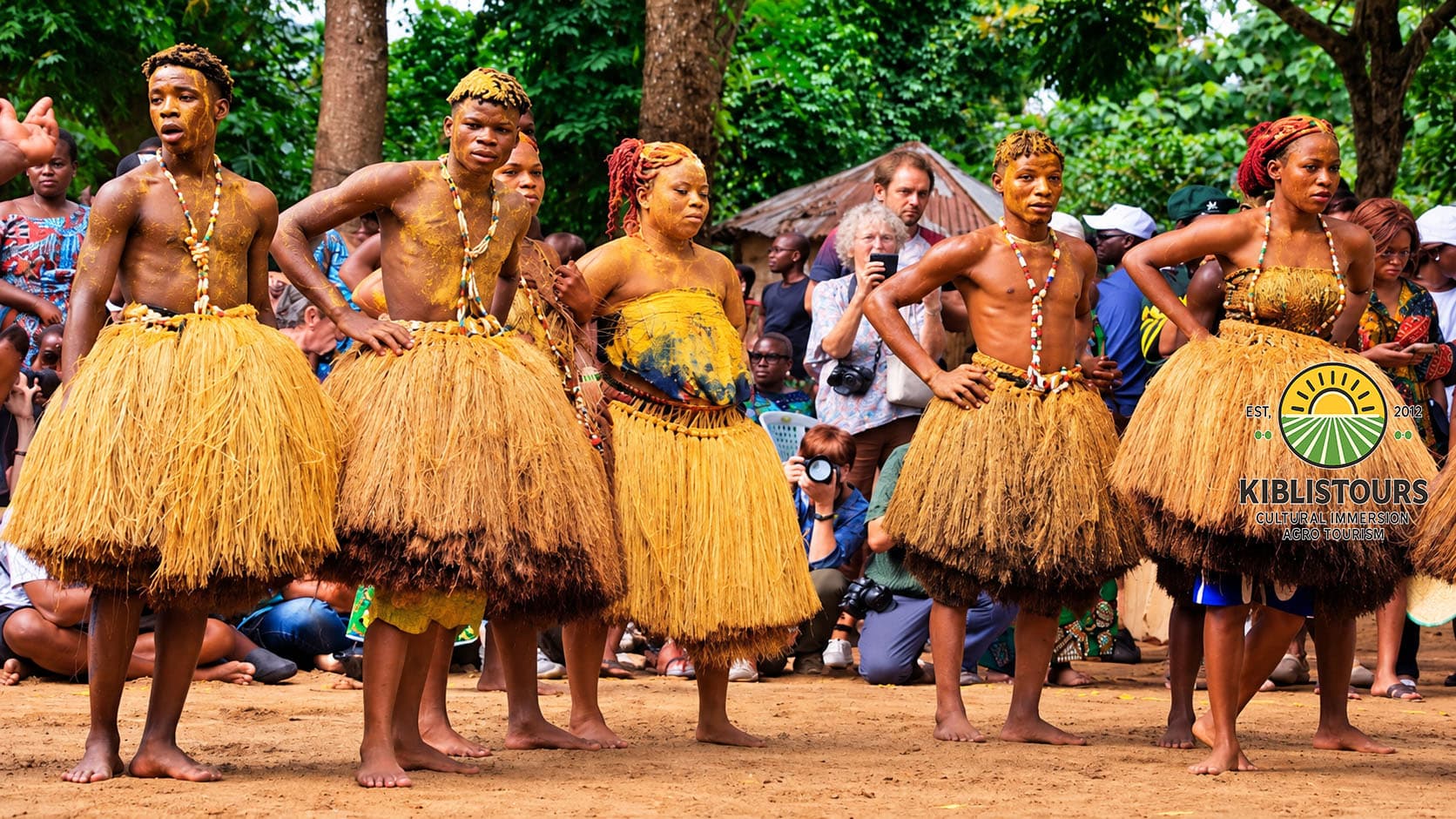
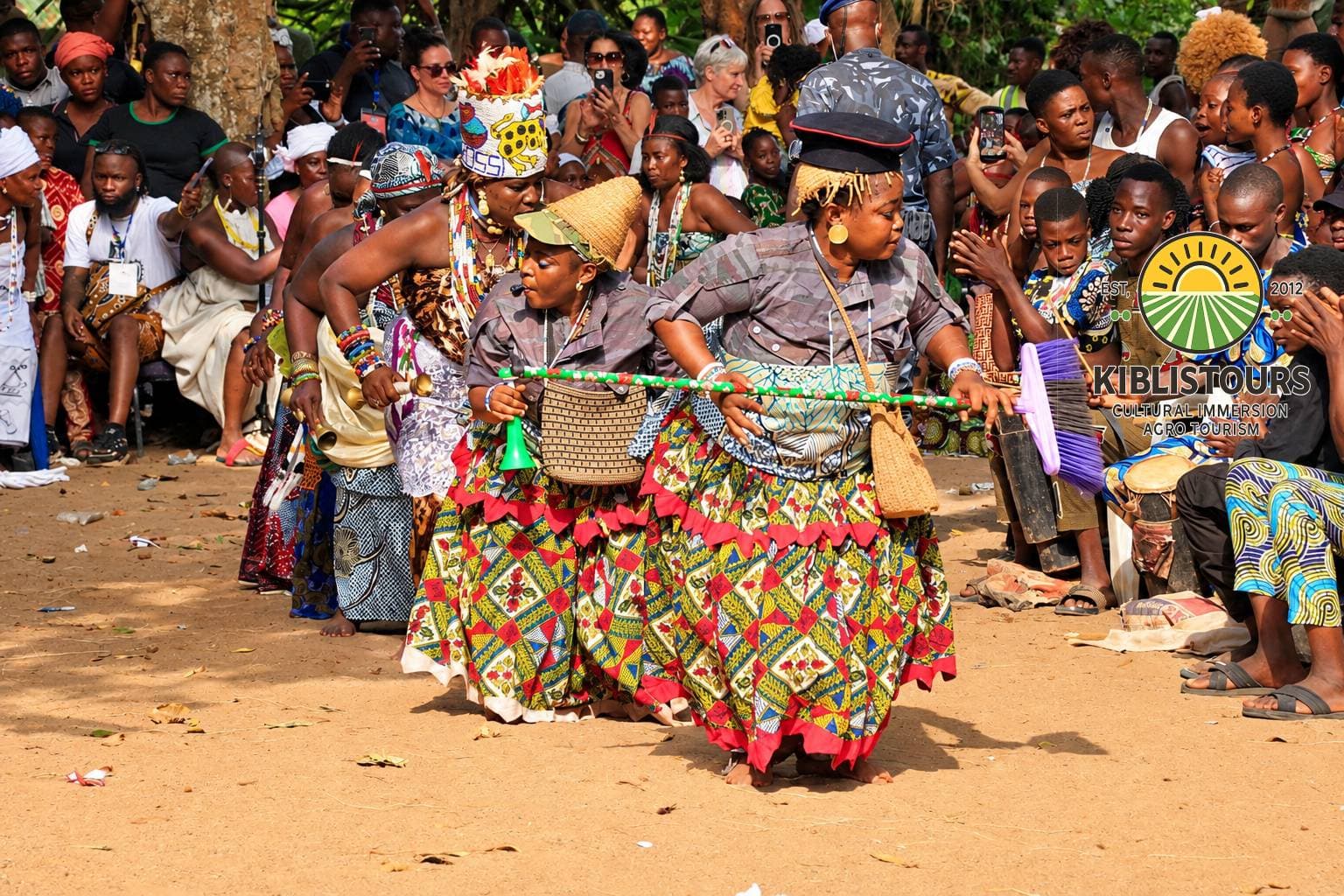
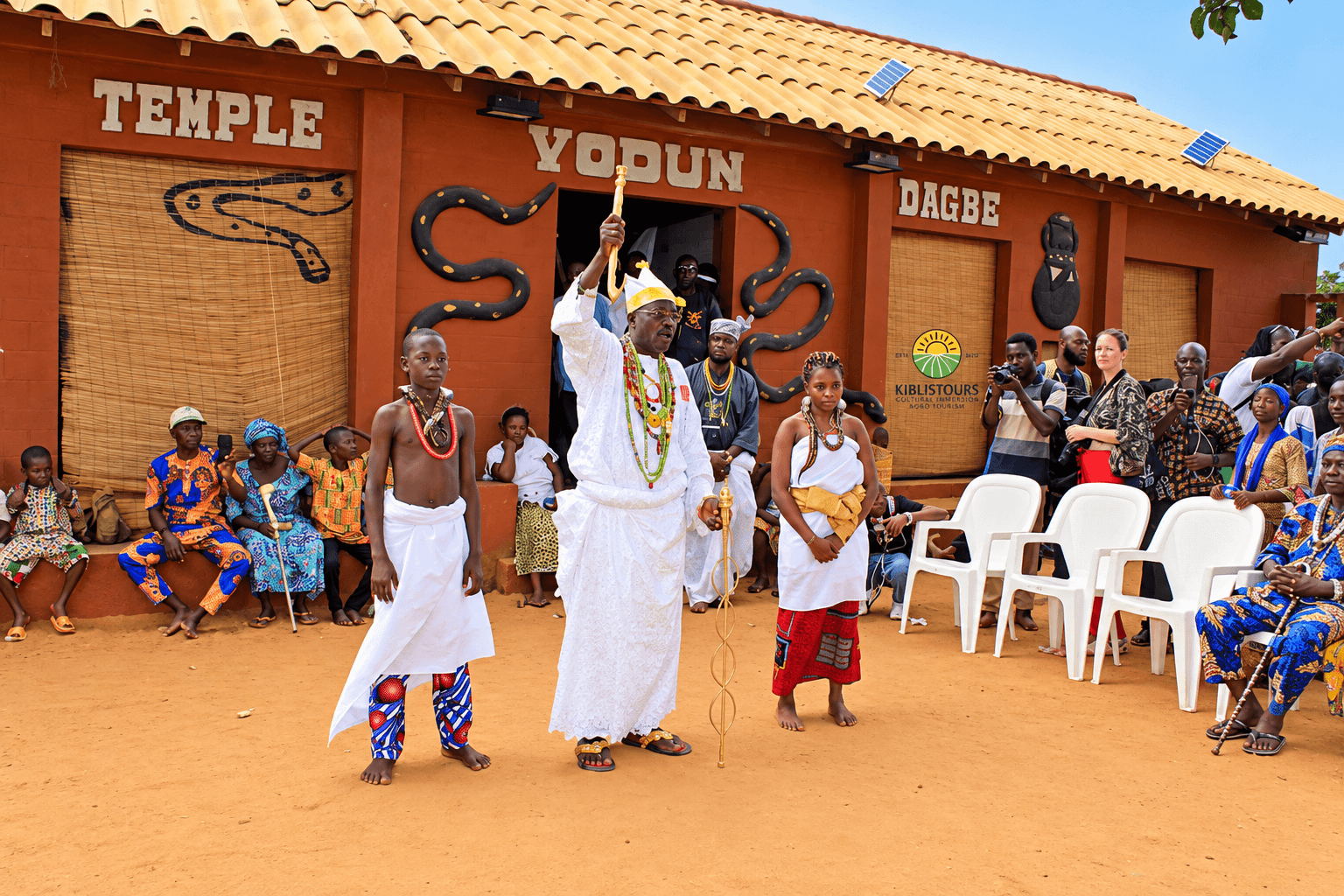
Vodun is frequently reduced to caricature. In Benin, it is rooted in beliefs, social practices, community relationships and ways of understanding the visible and invisible worlds. Some expressions are public; others are not. Some images may be taken, while others require permission. The most important thing is to approach this world with curiosity and humility.
Festivals and major cultural events
Ouidah's major cultural events can add extraordinary energy to a stay. They also require specific planning: accommodation fills quickly, traffic conditions can change and some sites become very busy. Official dates should always be confirmed before building a journey around an event.
Abomey: when walls tell stories of power
Abomey is one of the places where good guidance transforms the visit. Without context, you may admire buildings and bas-reliefs. With the right explanations, you discover a royal capital, political institutions, succession stories, alliances, conflicts, symbols of power and a memory that remains strongly present in the city.
The Royal Palaces of Abomey, inscribed on UNESCO's World Heritage List, are among Benin's most important heritage sites. Their value goes beyond monumental architecture: they help visitors understand how the rulers of Danxomè represented authority and inscribed their history into space.
Bas-reliefs as visual archives
Animals, weapons, battle scenes and symbolic objects: the bas-reliefs are not simply decoration. They refer to mottos, historical episodes and qualities associated with different rulers. Once you begin to learn how to read them, your way of looking changes. A motif is no longer just a motif; you begin asking what story it carries.
Abomey beyond the palaces
To keep the visit from feeling like a history lesson, it is worth including contemporary Abomey too: the market, crafts, food, historic neighbourhoods or encounters when possible. Abomey is not a city frozen in the past. History continues to shape identities, families and practices today.
Agongointo-Zoungoudo: another history, beneath the ground
Near Bohicon, Agongointo-Zoungoudo offers a fascinating counterpoint to Abomey. Where the palaces tell stories of power, the underground structures open conversations about protection, insecurity and the ways communities sought to survive during troubled periods.
That contrast makes the stop particularly meaningful. It reminds us that history is never only the story of rulers. It is also the story of how ordinary communities responded to the pressures of their time.
A natural transition towards central Benin
Including Agongointo also improves the rhythm of the journey. Instead of leaving Abomey for one long direct drive, the itinerary creates a gentler transition towards Dassa-Zoumè and Savè. The road itself becomes part of the cultural narrative, with places that speak to one another.
Dassa-Zoumè: when the landscape changes the rhythm
As you travel into central Benin, Dassa-Zoumè's granite formations reshape the horizon. After the coast and the southern plains, the visual change immediately feels like entering another region. The town and its surroundings offer cultural, spiritual and scenic interest.
Depending on the time available, a visit can combine walking, local history, religious sites and conversations with people from the area. Dassa-Zoumè is also a practical stop that prevents overly long driving days and gives central Benin a genuine place in the itinerary.
Savè: stopping where many travellers simply pass through
Savè is the kind of town that rewards curiosity. Many travellers cross it on their way north without really stopping. Yet its hills, landscapes and cultural identity can create a quieter, more intimate stage of the journey, away from the country's most visited sites.
This is often where the difference between a standard tour and a tailor-made journey becomes clearest. There may not be one famous monument that everyone must photograph. The value may come from a walk, a conversation, a meal, a viewpoint or a local story you would never have discovered by staying only on the classic route.
Giving central Benin the place it deserves
Adding Savè and Dassa-Zoumè also distributes the journey more naturally and prevents Benin from being reduced to the Cotonou-Ouidah-Abomey triangle. For travellers with ten days or more, this extension creates breathing space and a fuller understanding of the country.
What about northern Benin?
Northern Benin has tremendous cultural and scenic richness. The traditions of communities in Atacora and Donga, the history of Nikki, the Gaani festival, the architecture of Koutammakou and northern landscapes naturally make travellers want to continue farther.
A responsible itinerary, however, should never present these destinations as automatically available. Travel conditions in some northern areas and near certain borders can change. Security should therefore be checked during planning and again shortly before travel.
Important: any extension to Nikki, Natitingou, Boukombé, Koutammakou or another northern destination should be confirmed according to information from Beninese authorities, applicable official travel advice, local conditions and operational realities. If a stop cannot be maintained safely and comfortably, the itinerary should be adjusted, replaced or postponed.
Koutammakou: a cultural landscape, far more than architecture
Koutammakou, associated with Batammariba communities and their traditional dwellings, is remarkable for the close relationship between architecture, environment, social organisation and cultural practices. The Beninese part was added in 2023 to the existing World Heritage inscription in Togo.
A meaningful visit should go beyond admiring buildings. It should help visitors understand how homes fit into the landscape, how space is organised and why certain practices cannot be separated from the territory. Access to people and homes should never be assumed.
Nikki: royal memory and the Gaani
Nikki is particularly known for its royal heritage and the Gaani, a major cultural gathering of the Baatombu world. When conditions allow a visit, it offers a very different perspective from Abomey: another political history, other traditions and other symbols of power. As with other northern destinations, the visit should be planned carefully and reconfirmed according to current conditions.
How long should you spend on a cultural tour of Benin?
The best duration is not the one that lets you cover the most kilometres. It is the one that gives you enough time to understand each place without turning the journey into a string of dawn departures and late-night arrivals. Here are four formats Kiblistours can use as a starting point before personalising your trip.
5-day cultural tour: the essentials of southern Benin
This format works well for travellers with limited time or those adding Benin to a wider West African itinerary. It deliberately stays in the South to avoid excessive driving.
Day 1: Cotonou
Welcome, transfer, hotel check-in and a first introduction depending on arrival time. A short city discovery or food experience can be added, but the priority is to settle in and review the journey ahead.
Day 2: Porto-Novo
Travel to the political capital for a day exploring history, Afro-Brazilian influences, heritage and craftsmanship. The exact content is adapted to opening times and your interests.
Day 3: Ganvié, then Ouidah
Discover Lake Nokoué and Ganvié before continuing to Ouidah. Arriving later in the day allows for a gentle first encounter with the city rather than rushing straight into visits.
Day 4: Ouidah
A full day devoted to the memory of the transatlantic slave trade, local heritage and a respectful introduction to Vodun. The pace can be adjusted according to your interests, sensitivities and the activities accessible at the time.
Day 5: Ouidah, Cotonou and departure
Depending on your flight time, the morning can include an additional visit, free time or a final food stop before returning to Cotonou.
7-day cultural tour: add Abomey without rushing
Seven days allow you to go deeper without sacrificing comfort. Four days remain focused on the South, while Abomey and Agongointo add a stronger royal and historical dimension.
· Day 1: Cotonou and first immersion.
· Day 2: Porto-Novo, heritage and craftsmanship.
· Day 3: Ganvié and onward journey to Ouidah.
· Day 4: Ouidah, memory and spirituality.
· Day 5: Travel to Abomey, with suitable stops along the way.
· Day 6: Abomey, royal palaces, symbols and cultural life.
· Day 7: Agongointo-Zoungoudo, then return to Cotonou.
This is an excellent first-time itinerary because it connects contemporary Benin, royal heritage, the memory of the slave trade, lakeside life and several forms of living culture.
10-day cultural tour: the South, Abomey and central Benin
With ten days, central Benin can be included coherently. Rather than forcing an extension north, we prefer to give Dassa-Zoumè, Savè and the places in between the attention they deserve. This reduces fatigue and introduces travellers to a Benin that is often missing from classic itineraries.
· Days 1-4: Cotonou, Porto-Novo, Ganvié and Ouidah.
· Days 5-6: Abomey and Agongointo-Zoungoudo.
· Day 7: Dassa-Zoumè and an introduction to central Benin.
· Day 8: Savè, its hills, town and local experiences when available.
· Day 9: A cultural, craft, culinary or rural experience, followed by a gradual return south.
· Day 10: Cotonou, free time and departure.
14-day cultural tour: take time to enter the country
Two weeks give you genuine freedom. The South and Centre can be explored without rushing, with extra nights in places that deserve more time. If conditions allow a northern extension, it can be added after verification. Otherwise, the available days can be used for community experiences, food, crafts, a beach extension or lesser-known places in the South and Centre.
A fourteen-day itinerary therefore does not need to be frozen months in advance. It should preserve room to adapt. This flexibility matters in a country where cultural events, local availability, weather or travel conditions can change the order of visits.
Which format suits you?
Duration | Main destinations | Best suited to |
5 days | Cotonou, Porto-Novo, Ganvié, Ouidah | A short first discovery |
7 days | Southern Benin, Abomey, Agongointo | Culture and heritage |
10 days | South, Abomey, Dassa-Zoumè, Savè | A deeper, balanced journey |
14 days | South, Centre and possible extension depending on conditions | Full cultural immersion |
Private tour or small group: which style is right for you?
There is no universally superior option. It depends on how you like to travel. A private tour is especially suitable if you want to adjust timings, spend longer at particular places, choose your accommodation level or shape the trip around a specific theme.
Private travel: the freedom to slow down or go deeper
A history enthusiast may want more time in Abomey. A photographer may prefer particular hours of light. A family may need more breaks. A traveller from the diaspora may wish to spend longer in Ouidah or focus more deeply on remembrance. A private journey makes those adjustments possible without imposing a group's pace.
Small groups: connection and shared discovery
Travelling with others can be wonderfully sociable. Conversations between participants can enrich visits and some costs can be shared more efficiently. We nevertheless favour reasonably sized groups when the programme includes workshops, personal encounters or spaces where a large number of visitors would diminish the quality of the experience.
What determines the price of a cultural tour in Benin?
It would be easy to publish one fixed price, but that figure would rarely be meaningful. The cost of a tour depends on its duration, the number of travellers, vehicle type, accommodation level, distances, included meals, activities, specialist guides and the season.
Duration and distances
A ten-day programme does not simply cost twice as much as a five-day trip. Some expenses are fixed while others depend directly on the kilometres travelled. Itineraries into central or northern Benin require more fuel and driving time.
Number of travellers
A solo traveller carries certain vehicle and guiding costs alone. With two, four or six travellers, some of those expenses can be shared, changing the per-person price.
Comfort level
A simple guesthouse, a comfortable hotel and a high-end property meet different expectations. Your quotation should reflect the level you actually want rather than placing you in an accommodation category that does not suit you.
Activities and meals
Pirogue trips, workshops, specialist guides, private visits, events, culinary experiences and included meals can all affect the budget. That is why Kiblistours prefers to ask a few precise questions before preparing a proposal.
To receive a genuinely useful quotation, simply tell us your dates, number of travellers, preferred duration, comfort level and the experiences that interest you most. From there, Kiblistours can build a coherent itinerary and budget.
When is the best time to visit Benin?
Benin can be visited at different times of year, but the experience changes with the season and region. The dry season generally makes road travel easier and appeals to travellers who prefer less rain. Some periods can, however, be very hot and dusty, particularly farther north.
Travelling during the rainy season
The rainy season brings greener landscapes and a different quality of light. It can be a beautiful time to travel if you are comfortable with less predictable weather. Rain does not necessarily mean an entire day is lost, although some roads or activities may be affected.
Building a trip around a festival
Major cultural events can provide an excellent thread for a journey. They also require more advance planning: accommodation is in higher demand, traffic patterns may change, activities run to fixed schedules and crowds can be significant. We recommend confirming official dates before booking flights or accommodation.
Travelling to Benin from the African diaspora
For some travellers from the African diaspora, a stay in Benin can feel more intimate than an ordinary cultural holiday. Ouidah in particular may evoke strong emotions connected with the memory of the transatlantic slave trade. Yet it would be reductive to assume that every diaspora traveller is seeking the same experience.
Some come to explore family or collective history, others to understand spiritual traditions, discover pre-colonial kingdoms, meet contemporary creators or simply enjoy a holiday in West Africa. A personalised itinerary respects those individual motivations without imposing a single narrative.
Food: discovering the country through taste
A cultural journey that ignores food leaves part of the country unexplored. Dishes, markets and eating habits tell regional stories too. Maize, yam, cassava, beans, fish, sauces, vegetables, spices and local produce appear in countless forms depending on the family and region.
The experience becomes even richer when you understand what you are eating. How is the dish prepared? Is it everyday food or reserved for particular occasions? Is there a different version elsewhere in the country? Why is a certain ingredient bought here rather than somewhere else? Questions like these turn a meal into a cultural experience.
From market to plate
When the programme and local conditions allow, visiting a market before a meal or culinary experience helps connect ingredients with the dishes they become. You notice colours, aromas, bargaining, shopping habits and the rhythm of local commerce. It is a simple way to make food culture come alive.
Craftsmanship: take home a story, not just a souvenir
Buying directly from an artisan can become an experience in its own right. A sculpture, textile or decorative object takes on another value when you know who made it, what material was used and the story behind it. Whenever possible, direct purchases also allow more of the benefit to reach the creator.
The aim is not to turn every encounter into a shopping stop. It is to give travellers a chance to understand the work. Sometimes you leave with an object; sometimes you leave with a conversation and a deeper appreciation of a skill.
Photography with respect
Benin offers remarkable scenes, but a photograph should never come at the expense of the person being photographed. In a market, workshop, village or ceremony, it is often best to ask permission when the situation calls for it.
In spiritual or ritual settings, rules may be stricter. A public event does not automatically mean every image is permitted. Your guide can help explain what is appropriate, but the principle is simple: when in doubt, ask. If the answer is no, respect it.
How to prepare for your first cultural journey in Benin
Start with what matters to you
Before choosing cities, ask yourself what genuinely draws you to Benin. History? Kingdoms? Vodun? The memory of the slave trade? Crafts? Food? Photography? Community experiences? Your answer makes it much easier to design a journey that feels personal.
Do not overload the programme
A day with three major visits and several hours on the road can look efficient on paper. In reality, it quickly becomes exhausting. We prefer to leave room for meals, unexpected moments, conversations and those small unscheduled stops that often give a journey its flavour.
Keep some flexibility
A workshop may be closed, a ceremony may move, a road may take longer than expected or a conversation may deserve an extra hour. An overly rigid itinerary turns every change into a problem. A well-designed programme can adapt without losing its purpose.
Why travel with a local guide?
Today, you can book a hotel, find an address and organise transport from your phone. What technology cannot replace so easily is context. A good local guide explains what you are seeing, helps you understand social codes, facilitates certain encounters, translates when needed and knows when it is better to speak or simply allow a traveller to experience a moment in silence.
That value becomes especially clear in places where history, tradition and living practices overlap. It is not only about knowing the road. It is about offering the keys that help travellers form their own understanding of the country.
Why choose Kiblistours for your cultural tour of Benin?
Kiblistours was born from a simple conviction: travel can be organised professionally while remaining genuinely connected to the places visited. We do not want to turn Benin into a catalogue of attractions. We prefer to design journeys that connect places and give travellers time to understand what they discover.
Tailor-made journeys, not copy-and-paste programmes
Two travellers do not necessarily come for the same reasons. That is why we adapt duration, destinations, pace, comfort and experiences. A five-day stay is not designed like a two-week journey, and a family does not travel in the same way as a small group of friends or a passionate history lover.
Encounters prepared with respect
When meetings with artisans, communities or cultural actors are possible, we favour a respectful approach. The goal is not to enter everywhere or photograph everything. It is to create meaningful exchanges that respect the time, privacy and rules of the people welcoming visitors.
Organisation grounded in reality
Weather, availability, events, road conditions and security can change. Promising that everything will remain exactly the same months later would be unrealistic. Part of our role is to anticipate change and propose sensible alternatives when necessary.
One ambition: help you experience Benin, not simply visit it
At the end of your stay, we hope you remember the heritage sites, of course, but also the people, conversations, flavours and unexpected moments. That is what our signature means: “Experience Authentic Africa.”
FAQ: Cultural tours in Benin
Which itinerary is best for a first visit to Benin?
A seven-day tour combining Cotonou, Porto-Novo, Ganvié, Ouidah, Abomey and Agongointo-Zoungoudo is an excellent starting point. It reveals several sides of the country without forcing an exhausting pace.
How many days do I need to visit Benin?
Five days allow for an introduction to the South. Seven to ten days create a more balanced journey. Two weeks are ideal for exploring central Benin more deeply and, when conditions allow, considering more distant extensions.
What are the main cultural places to visit?
Ouidah, Abomey, Porto-Novo and Ganvié are among the best-known stops. Agongointo-Zoungoudo, Dassa-Zoumè and Savè add a complementary perspective on central Benin.
Can I visit Benin on a private tour?
Yes. Private tours are particularly well suited to travellers who want to personalise their pace, accommodation, timings and interests.
Is Benin suitable for families?
Yes, provided distances, departure times and the number of activities are adapted to the children's ages. A family itinerary should include more breaks and avoid too many long driving days.
Do I absolutely need a guide?
Not for every journey or transfer. However, a knowledgeable guide adds real value at historical, community and spiritual sites, especially where context is essential to understanding what you see.
Can visitors attend a Vodun ceremony?
Some events are public, but not every ceremony is open to visitors. The rules set by communities and those responsible for the place must always be respected.
Can I photograph ceremonies?
Not automatically. Permission to attend a ceremony does not mean that every photograph is allowed. Always follow the guidance given on site.
Is Benin especially meaningful for travellers from the African diaspora?
It can be. Ouidah and other places of remembrance may have particular resonance, but the programme should always reflect each traveller's personal motivations rather than assume a single experience.
What is the best season to travel?
It depends on your route and the experiences you want. The dry season often makes road travel easier; the rainy season offers greener landscapes. Festival-focused journeys should be organised around confirmed official dates.
Can I combine culture, nature and the beach?
Yes. Depending on the length of your stay and current travel conditions, a journey can combine heritage, lakeside experiences, landscapes, nature and time by the sea.
How much does a private tour cost?
The price depends on duration, number of travellers, accommodation, vehicle, meals, activities and distances. Kiblistours prepares a personalised quotation based on those choices.
How far in advance should I book?
The earlier you plan, the easier it is to secure the accommodation and experiences you want, especially around major events or periods of high demand.
Are the itineraries fixed?
No. They can be adapted to your interests, pace, budget and travel conditions. Some stops may also be changed when security or logistics require it.
How do I book a tour with Kiblistours?
Simply send us your intended dates, number of travellers, preferred duration, comfort level and the experiences you are looking for. Kiblistours can then propose a personalised itinerary and quotation.