Travel to Benin: Culture, Vodun, Heritage, Nature and Encounters
There are destinations people visit for their monuments, landscapes or beaches. And then there are countries that you truly begin to understand through the people you meet, the stories you hear, the gestures you observe and those unexpected moments that no travel itinerary can entirely plan.
Benin belongs to this second category.
One morning in Ouidah, the city slowly awakens. Motorbikes begin to move through the streets, market stalls are set up and conversations accompany the start of the day. A few hours later, you may find yourself facing the Atlantic Ocean, on a coastline deeply marked by the memory of the transatlantic slave trade. Between these two moments, an artisan may have explained the meaning of a motif, a guide may have given you a key to understanding Vodun, and a meal may have introduced you to a flavour whose name you had never even heard before.
This, too, is what it means to travel through Benin: moving from a place to a story, from a story to an encounter, and then from an encounter to a more intimate understanding of the country.
From the Royal Palaces of Abomey to the spiritual traditions of Ouidah, from the stilt houses of Ganvié to the heritage of Porto-Novo, from the hills of Dassa-Zoumè to the landscapes of Grand-Popo, from bustling markets to villages, forests and communities that continue to pass down their knowledge, Benin gradually reveals its many faces.
At Kiblistours, our ambition is to help you discover Benin differently. It is not simply about taking you from one tourist attraction to another, but about helping you understand what you see, meet the people who bring these places to life and feel what a photograph alone cannot always convey.
Welcome to a journey where history meets the present, where spirituality engages with everyday life, and where the most precious memories are not necessarily the ones you had planned.
Why travel to Benin?
Within a relatively compact territory, Benin brings together remarkable cultural, historical and natural diversity. In just a few days, a traveller can move from the energy of Cotonou to the memory of Ouidah, continue to Abomey, navigate Lake Nokoué at Ganvié and explore Porto-Novo. The journey can then continue towards central or northern Benin, discovering other landscapes, communities and traditions.
To prepare for this discovery, you can also consult our complete guide to an authentic and cultural journey through Benin.
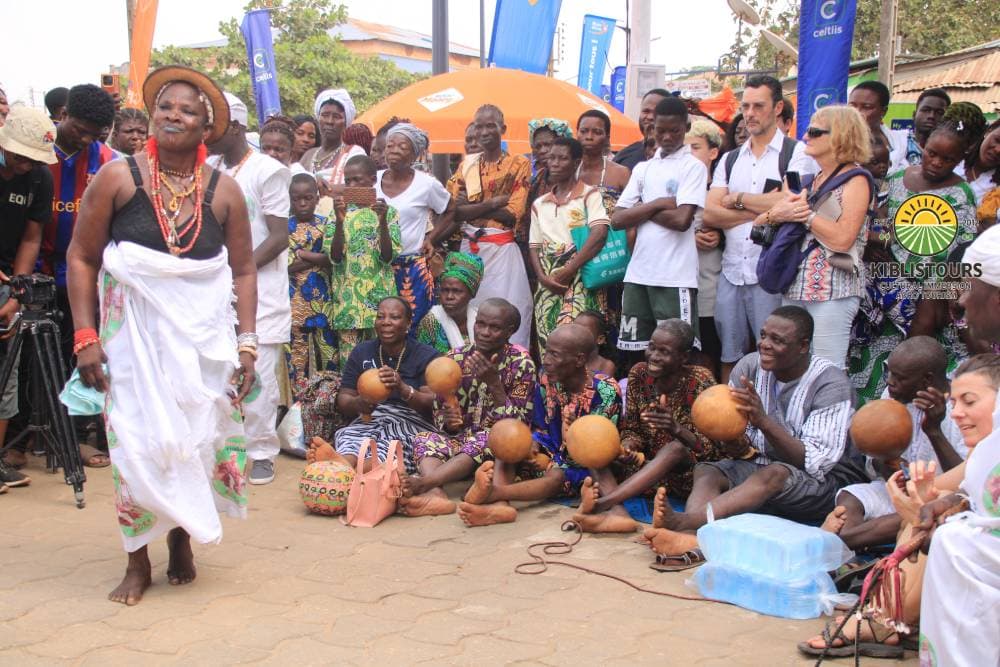
But reducing a Benin tour to a succession of places would mean missing what matters most. The true thread running through the journey is human. Here, history does not live only in museums: it is also passed down through oral traditions, families, objects, symbols and gestures. Culture is not limited to performances: it accompanies markets, celebrations, craftsmanship, ceremonies and everyday life. Spirituality, meanwhile, does not belong only to the past; it continues to play an important role in many communities.
Discovering Benin therefore sometimes requires slowing down. A conversation may last longer than expected. An artisan may pause their work to explain a motif. A local guide may tell a story that suddenly gives new meaning to the monument standing before you. Far from wasting time, these moments often give the journey its depth.
Benin and Vodun: Discovering a Living Spirituality
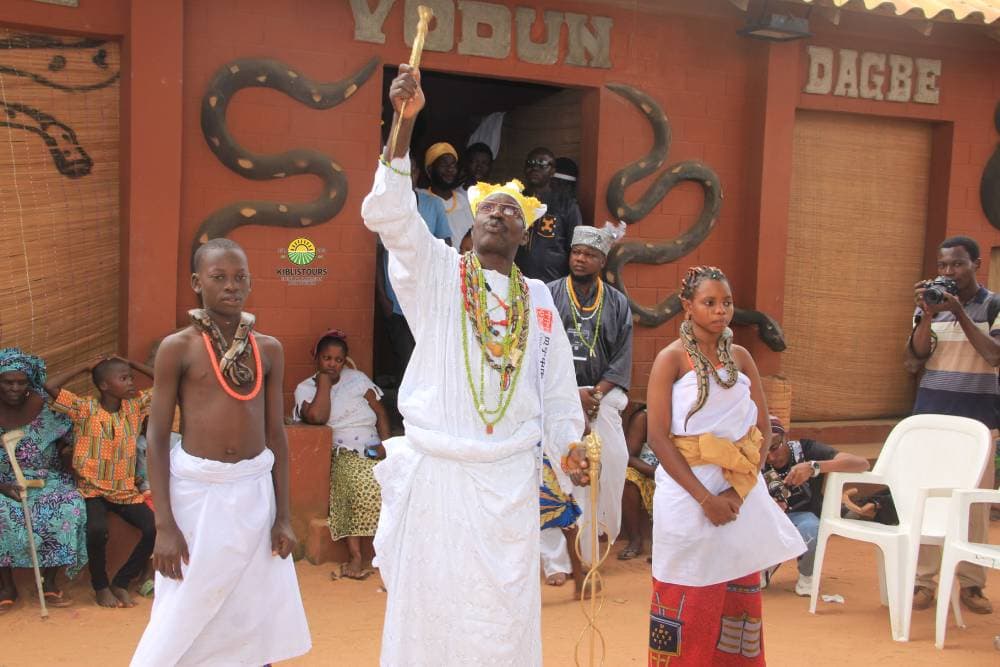
It would be difficult to speak about Beninese culture without mentioning Vodun. Benin is one of its major historical centres, and different expressions of this tradition spread beyond the African continent, particularly in the context of forced displacement linked to the transatlantic slave trade.
Even today, Vodun is connected to the history, traditions, communities and cultural identities of many Beninese people. Yet some travellers arrive with perceptions shaped by films, sensationalist stories or popular imagery that reduce “voodoo” to magic, dolls or mystery.
The cultural, social and religious reality is infinitely more complex. Vodun refers, among other things, to relationships with deities, ancestors, forces of nature and the community. It encompasses rituals, systems of transmission, values and particular understandings of the visible and invisible worlds.
To explore this dimension before your trip, discover authentic Benin through culture, Vodun, nature and encounters.
A cultural journey centred on Vodun should therefore begin with a simple attitude: listen before judging.
When the Questions Change, the Perspective Changes
The following scene is not presented as the testimony of a specific client; it illustrates the kind of change that quality cultural mediation can encourage. A traveller arrives with questions focused on what seems strange to them. The guide explains a symbol, then someone from the community speaks about ancestors, family, protection or the place of certain traditions in major moments of life.
Gradually, the questions change. “Is it dangerous?” gives way to “What does this symbol mean?”, “Why does this tradition exist?” or “What role does it play in your community?” The traveller does not necessarily leave sharing the beliefs they encountered, but they may leave with a more accurate understanding of the cultural world that was presented to them.
This is an essential distinction: travel does not impose a belief; it opens a space for understanding.
To learn more: Explore authentic Benin: culture, Vodun, nature and encounters with Kiblistours.
Ouidah: Where History, Memory and Spirituality Meet
Among the places to visit in Benin, Ouidah holds a special place. The city is strongly associated with the history and contemporary expressions of Vodun, while also occupying a major place in the memory of the transatlantic slave trade. But Ouidah is also a living city, with its residents, artists, neighbourhoods, traditions and openness to the ocean.
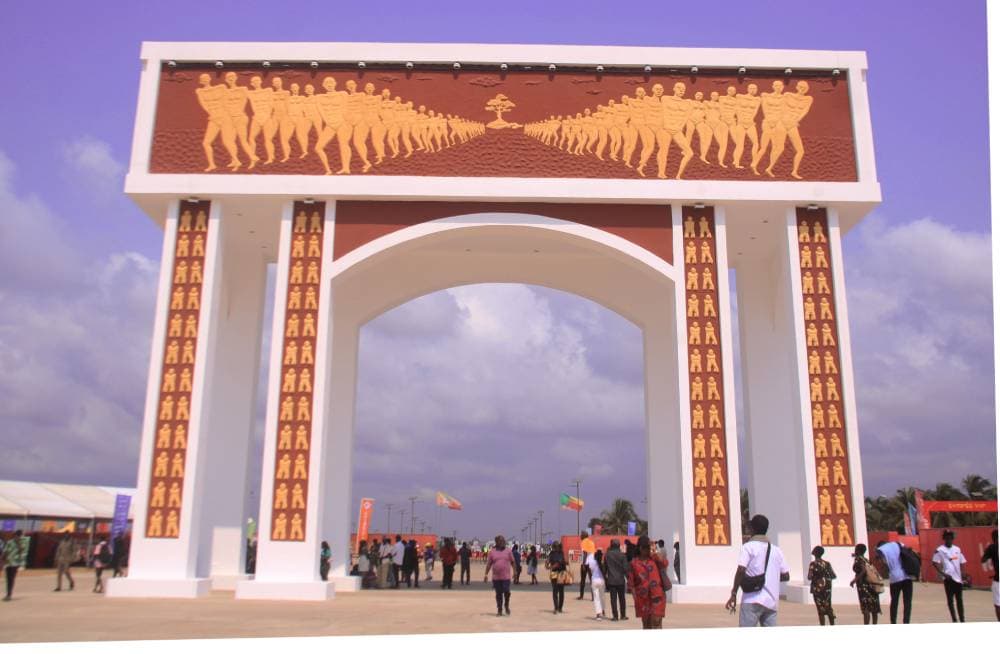
Discovering it requires more than taking a photograph in front of a monument. The Slave Route invites visitors to place these locations within their historical context. As you move towards the coast, the explanations give the landscape another dimension, all the way to the Door of No Return.
Facing the ocean, conversations may naturally come to a halt. It is not always necessary to fill every second with commentary. Some places need silence.
UNESCO – Routes of Enslaved Peoples: Resistance, Liberty and Heritage.
You may have read many pages about the transatlantic slave trade before arriving. Yet walking through a territory associated with this history and looking at the ocean from this coastline can create a different, more sensitive and personal understanding. When properly guided, travel can allow information to become experience, without confusing emotion with historical truth.
Explore Ouidah with Kiblistours
Abomey: Entering the Memory of the Kingdom of Danxomè
In Abomey, the journey takes another direction. Visitors enter the history of the Kingdom of Danxomè, whose legacy remains essential to understanding part of Benin's political and cultural history.
The Royal Palaces of Abomey have been inscribed on the UNESCO World Heritage List since 1985. UNESCO presents them as a major material testimony to the kingdom and highlights the organisation of the palaces, their architecture, bas-reliefs and relationship with Aja-Fon cultural principles.
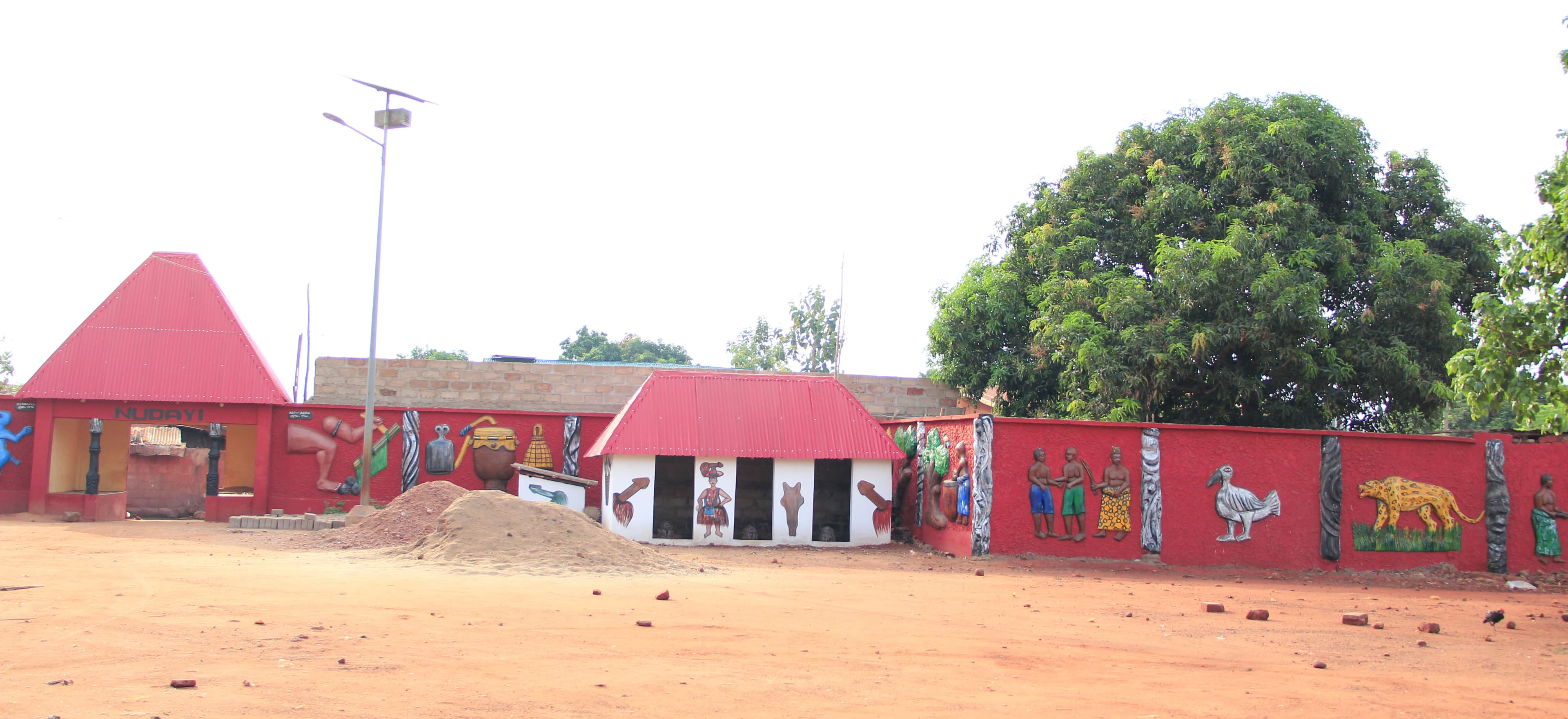
A visit becomes especially meaningful when a guide draws attention to a detail you would probably have overlooked on your own: an animal, a motif, a motto, a bas-relief or a royal symbol. What first appeared decorative becomes a language. History no longer appears as a succession of dates, but as a memory transmitted through architecture, stories, objects and symbols.
It is often at this point that heritage ceases to be merely something you look at: it becomes something you begin to decipher.
Official heritage source: UNESCO – Royal Palaces of Abomey.
Discover Kiblistours tours of Abomey and Dassa-Zoumè
Ganvié: When the Pirogue Becomes a Street
Discovering Ganvié, on Lake Nokoué, is often one of the most striking experiences of a stay in Benin. As soon as you leave dry land, the sounds of the road fade away and another landscape gradually appears: stilt houses, boats loaded with goods, fishermen, women traders and residents moving across the water.
Here, the pirogue is not simply a tourist attraction. It is part of mobility, work and the everyday organisation of the community. Understanding this changes the way you see the village.
When faced with a woman selling goods from her boat, a visitor's first instinct may be to take a photograph. Thoughtful guidance reminds you that this is not a stage set: the boat is also a workplace, and the person being photographed has a right to respect and consent.
Photography becomes secondary. You are no longer simply looking at a spectacular image; you begin to understand a way of living, working and organising life around water. That is the difference between seeing Ganvié and beginning to understand it.
Discover Ganvié and its lakeside experiences with Kiblistours
Porto-Novo: A Capital Revealed Through Its Details
Porto-Novo has a personality of its own. Architectural heritage, Afro-Brazilian influences, Yoruba legacies, museums, traditions and contemporary urban life coexist here. You may arrive for a monument and leave remembering a façade, an object, a street or a conversation even more vividly.
The capital often reveals itself to those willing to walk, observe and allow a guide to draw their attention to what may initially seem ordinary. An old house can open a conversation about movement between Africa and the Americas; an object can lead to a tradition; a neighbourhood can reveal multiple layers of history and cultural influence.
Porto-Novo is a reminder that a successful journey is not an accumulation of famous places. It is also about learning how to look.
Explore Porto-Novo and other Kiblistours destinations in Benin
Encounters: When the Most Beautiful Memory Was Not Planned
A few years after a journey, memory does not always preserve the itinerary in order. It often remembers a person, a conversation, a meal, a laugh, a gesture or an unexpected situation. In Benin, these moments can occur in a market, workshop, pirogue, village, farm or around a table.
Consider a typical scene, without attributing it to a real client: you ask an artisan how long they have practised their craft. They answer briefly, then mention their father. A second question leads them to show you a tool, then an object. They explain a technique learned in their youth and describe how their profession has changed. What was supposed to be a ten-minute stop becomes a much longer conversation.
That evening, when someone asks what impressed you most, the main monument may not be the first thing you mention. You talk about that artisan because a craft suddenly acquired a face.
This is why time devoted to encounters is not wasted time. When they are natural, respectful and unstaged, these encounters can become one of the most precious parts of the journey.
Also read: Authentic travel in Benin: culture, Vodun, nature and encounters with Kiblistours.
To go further, discover our article Authentic travel in Benin: culture, Vodun, nature and encounters with Kiblistours.
Beninese Markets: Stepping into Everyday Life
To understand a country, you sometimes need to leave the monuments behind and enter everyday life. Markets offer that opportunity. Colours, smells, fabrics, fruit, vegetables, spices, objects and conversations may initially seem to overlap. For a first-time visitor, the first few minutes can be intense; then your eyes adjust, begin to distinguish products, observe exchanges and understand certain gestures.
With appropriate guidance, the market stops being a simple exotic backdrop. It becomes a gateway into local social and economic life.
You stop in front of an unfamiliar product. A vendor answers a question relayed by the guide and explains its name, use or preparation. Sometimes, just a few minutes are enough to transform visual curiosity into a small lesson in everyday life. You came to visit a market; you leave with a story and, above all, a little more understanding.
These encounters are an integral part of the approach developed in Benin Cultural Tours: the ultimate immersive experience for discovering authentic Africa.
To discover the connection between markets, producers and local terroirs: Agritourism in Benin: travelling differently through nature, know-how and traditions.
Taste Benin: When the Journey Continues on Your Plate
It would be a shame to discover Benin only with your eyes. You should also taste it. Beninese cuisine is closely connected to local products, family traditions and the country's different regions. Depending on your itinerary, you may encounter dishes made with maize, cassava, yam, beans, fish, meat, vegetables, sauces and spices.
But cuisine can never be reduced entirely to what is on the plate. A meal is also a social moment. A question about a sauce may involve the person who prepared it; an explanation may lead to a childhood memory or a comparison between different ways of preparing the same ingredient.
This is why a good tour should not organise every day like a race. It should preserve enough flexibility for an interesting conversation to unfold without becoming a logistical problem.
Extend the experience through local terroirs: Discover agritourism in Benin with Kiblistours.
To discover the country through its local terroirs, also explore Kiblistours experiences and destinations in Benin.
Grand-Popo, Mangroves, Forests and Hills: Benin's Natural Side
Benin's heritage is not only historical and cultural. It is also natural. Beaches, mangroves, wetlands, lakes, rivers, forests and hills make it possible to create itineraries where ecotourism, cultural discovery and relaxation complement one another.
At Grand-Popo, the meeting of the river, villages, coastal landscapes and ocean gives the journey a different rhythm. Elsewhere, navigating through wetlands, immersing yourself in a forest or discovering the hills of Dassa-Zoumè provides a counterpoint to palaces, museums and cities.
In these spaces, voices often become quieter naturally. You listen more closely to the water, the birds or the wind moving through the vegetation. Sometimes almost nothing happens, and that is precisely what makes the moment precious. In a world where travel is often organised as a race against time, a few minutes with no obligation to “do” anything can become a genuine luxury.
To continue this discovery, explore Benin's nature, culture and heritage destinations.
For an additional forest immersion: Lokoli Forest in Benin: a guide to an immersive and authentic ecotourism experience.
Read to Better Understand Benin
A journey becomes richer when you have a few keys to understanding what you discover. Stuart Butler's Benin guide, published by Bradt, is a practical resource for preparing your stay. For history, heritage and traditions, it is preferable to cross-reference sources, as the territory of modern-day Benin brings together several kingdoms, peoples, cultures and historical trajectories.
Historical and anthropological studies devoted to Vodun also make it possible to move beyond popular representations. Books prepare your perspective, provide reference points and explanations; the journey then confronts that knowledge with places, voices and contemporary realities.
This is where knowledge and experience can meet, provided that one is never allowed to replace the other.
To complete your preparation, also consult What to do in Benin: complete guide to an authentic and cultural journey.
Travel with Respect
Discovering another culture means accepting that you are temporarily entering other people's world. Respect is therefore not an optional addition to the experience: it is part of it.
Ask permission before directly photographing someone.
Respect restrictions in religious, royal or sacred places.
Do not treat ceremonies as simple tourist performances.
Wear appropriate clothing when the place or tradition requires it.
Avoid intrusive behaviour and follow the instructions of local authorities or community representatives.
Leave no waste at the sites you visit.
Whenever possible, favour local services, skills and products.
If your guide tells you that photography is not permitted, the appropriate response is not to look for a discreet angle. It is to respect the instruction and experience the moment differently. Responsible travel recognises that not everything that can be seen necessarily needs to be captured or published.
This philosophy lies at the heart of our approach to offering an authentic journey through Benin.
How to Prepare for Your Trip to Benin
A beautiful experience begins before arrival. Pack lightweight, breathable and comfortable clothing suited to the climate and planned activities. For villages, hikes, forests or certain natural sites, good footwear is useful. Sun protection and mosquito protection should also be considered depending on the itinerary and season.
To organise the different stages of your stay, you can consult Kiblistours destinations and tours in Benin.
Visa and Entry Requirements
Entry rules can change, so check the requirements corresponding to your nationality on the official Benin Government eVisa portal. Avoid unofficial platforms that use names similar to that of the government portal.
Access Benin's official eVisa portal
Official source to prioritise for entry requirements: Republic of Benin eVisa Portal.
Traveller Health
Before departure, also check official travel and security advice, as recommendations may change depending on the area and period.
Health recommendations depend in particular on your country of departure, length of stay, itinerary and individual circumstances. Consult a healthcare professional sufficiently early, as well as an up-to-date official source. This general information does not replace personalised medical advice.
Consult CDC recommendations for Benin
Travel health reference: CDC – Benin: Traveler View.
Flexibility and Curiosity
Keep some flexibility in your schedule. Traffic, weather, local realities or a particularly interesting encounter may slightly change the course of a day. When properly managed, this flexibility is not a lack of organisation: it allows the journey to remain alive.
Come with questions, too. You do not need to know everything before leaving. Asking why a tradition exists, what a symbol means or how a skill is passed down often opens more interesting conversations than simply looking for a photograph.
Why Choose Kiblistours to Discover Benin?
At Kiblistours, we believe that a successful journey should not be measured solely by the number of sites visited. Of course, we want to introduce you to Benin's major attractions; but we also want you to understand why they matter.
Our approach to travel is about:
understanding a tradition rather than reducing it to an image;
listening to an artisan and discovering the meaning behind their craft;
navigating a lake while learning something about the community that lives around its waters;
discovering a spiritual practice without turning it into a spectacle;
tasting a dish while discovering the customs and stories surrounding it;
encountering Benin through the people who live there.
In other words, we seek to help you spend less time looking at the country from the outside and more time building a relationship with it.
Discover this approach in greater detail in Benin Cultural Tours: the ultimate immersive experience for discovering authentic Africa.
Standard, Premium and VIP Tours: Benin at Your Own Pace
The guidelines below make the three service levels more concrete. They are indicative: the duration, number of stages and final services are always confirmed in the tour description and quotation.
Standard: The Essentials, Well Organised
Indicative duration: half a day to one day.
Format: structured programme centred around the destination's main highlights.
Guidance: local guide or tour assistant depending on the offer.
Transport, meals and tastings: according to the inclusions specified in the tour description.
Flexibility: structured; limited customisation.
Premium: More Time, Comfort and Depth
Indicative duration: one to two days depending on the experience.
Format: more in-depth immersion, with additional time for interactions and selected activities.
Guidance: more personalised, with enhanced comfort depending on the offer.
Meals, tastings or workshops: may be included when provided for in the package.
Flexibility: more adaptable; intermediate level of customisation.
VIP: Private, Flexible and Highly Personalised
Duration: one day to several days, depending on the itinerary created.
Format: private or highly personalised experience designed around the traveller's pace and priorities.
Transport: private; premium vehicle when included in the offer.
Guidance: dedicated guide depending on the tour and services selected.
Flexibility: high, within operational, cultural and logistical constraints; extensive customisation.
Whatever package you choose, the promise remains the same: to help you discover Benin with professionalism, respect and depth, through an experience that reflects who you are.
Choose according to the way you like to travel: Discover all Kiblistours tours and experiences.
What If Your Best Memory Was Not the One You Had Planned?
At the end of your journey, your phone may contain hundreds of photographs: the Door of No Return, a pirogue in Ganvié, a palace in Abomey, a beach, a market, a landscape. Then a few weeks pass and someone asks you what you enjoyed most.
Your answer may not be a monument. You may talk about an artisan who took the time to explain their craft, a market vendor whose conversation led to laughter, a meal that turned into a conversation, a moment of silence facing the ocean or a pirogue crossing during which nobody needed to speak.
Perhaps this is what it means to seek authentic Benin. Not to claim access to a fixed or “pure” version of the country, but to accept encountering a living, diverse and contemporary territory shaped by its landscapes, history, traditions, spiritualities, flavours and, above all, its people.
FAQ: Planning a Trip to Benin
What is the best time to visit Benin?
Benin can be visited throughout the year, but the experience varies according to region, season and the activities you are looking for. Certain periods are particularly interesting for major cultural events, while others are better suited to specific nature-based activities. The best choice therefore depends on your planned itinerary.
To prepare your itinerary, consult our complete Benin travel guide.
What should you visit on your first trip to Benin?
Ouidah, Cotonou, Ganvié, Porto-Novo and Abomey are major stops for a first cultural and historical discovery. Depending on the length of your stay, the itinerary can be extended towards Grand-Popo, Dassa-Zoumè and destinations in northern Benin.
Discover destinations and tours in Benin to build your itinerary.
Can you discover Vodun without being a practitioner?
Yes. A cultural discovery of Vodun does not require you to be a practitioner. What matters is approaching people, places and traditions with respect, curiosity and without judgement.
To better understand this spirituality in its cultural context, discover Ouidah, Vodun and the memory of Benin.
Can you photograph Vodun ceremonies?
Not always. Rules vary depending on the ceremonies, locations and people involved. Permission should be requested, and the instructions of local leaders and guides must be respected.
Is Benin suitable for a first trip to West Africa?
It can be a particularly interesting destination for travellers attracted to history, heritage, African cultures, living traditions, nature and human encounters. Local guidance can help travellers better understand cultural contexts and organise transportation.
To begin preparing your journey, discover why you should visit Benin and what to do during your stay.
Does Kiblistours offer private tours?
Yes, depending on the destinations and available offers. Private or personalised experiences can make it possible to adapt the pace, level of comfort and certain activities to travellers' expectations.
Can culture, Vodun, nature and relaxation be combined?
Yes. An itinerary can combine historical heritage, cultural discovery of Vodun, craftsmanship, gastronomy, boat trips, natural areas, villages and a stay by the sea.
Discover the possibilities in Explore authentic Benin: culture, Vodun, nature and encounters with Kiblistours.
Can tours be customised?
Yes, depending on availability, length of stay, number of participants and interests. Customisation is particularly suitable for private tours and Premium or VIP experiences.
Explore Kiblistours tours and choose the experience that suits you
References and Sources
UNESCO – Royal Palaces of Abomey - Official presentation of the Royal Palaces of Abomey, their historical and cultural significance and their inscription on the World Heritage List.
UNESCO – Routes of Enslaved Peoples: Resistance, Liberty and Heritage — Institutional resource devoted to the history of slavery and the slave trade, as well as their memories and legacies.
Official eVisa Portal of the Republic of Benin - Official source for information and procedures relating to electronic entry visas for Benin.
CDC – Benin: Traveler View - Health information and recommendations for travellers visiting Benin.
Bradt Guides – Benin - Travel guide dedicated to Benin and trip preparation.
Kiblistours – The Slave Route in Ouidah: a guide to a journey of memory, history and emotion
Kiblistours – Explore authentic Benin: culture, Vodun, nature and encounters
Kiblistours – Authentic travel in Benin: culture, Vodun, nature and encounters
Kiblistours – What to do in Benin: complete guide to an authentic and cultural journey
Kiblistours – Destinations in Benin
Kiblistours – Tours and Experiences