In the heart of Ouidah, Vodun Days brings together spirituality, history, music, remembrance, and living heritage. Far more than a cultural gathering, this event invites visitors to discover a city where traditions continue to shape everyday life and connect generations.
Some cities are discovered through their monuments, landscapes, or markets. And then there is Ouidah, where a walk can take you from an ancestral shrine to a historic house before reaching the shores of the Atlantic, silent witnesses to one of the most painful chapters in human history.
In the morning, women traders set up their stalls. Motorcycles pass through intersections, children head to school, and conversations spring up outside shops. Behind this everyday activity lies another reality: that of a city where spiritual practices, family stories, and historical legacies still hold an important place.
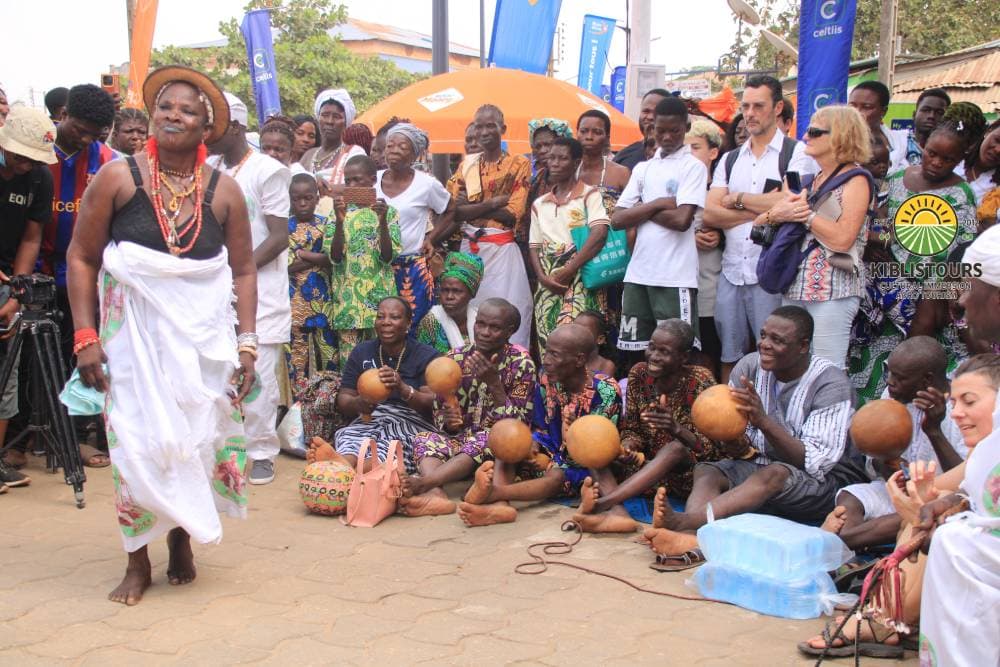
Then, around a street corner, the sound of drums rises.
A crowd gathers. Colorful fabrics appear. An impressive costume made of plant fibers comes to life among the spectators. Some immediately recognize the gestures and rhythms. Others are discovering cultural expressions whose meaning they have yet to understand.
This is often how an encounter with Ouidah begins: with an emotion, a surprise, or a question that inspires a desire to learn more.
During Vodun Days 2027, this atmosphere takes on a special dimension. The city becomes a meeting place for religious dignitaries, artists, local communities, members of the African diasporas, and travelers from many different backgrounds.
Some come to discover major traditional performances. Others want to understand the foundations of Vodun, explore the historical heritage, or reconnect with family memories linked to West Africa.
But Ouidah is much more than its ceremonies and festivities.
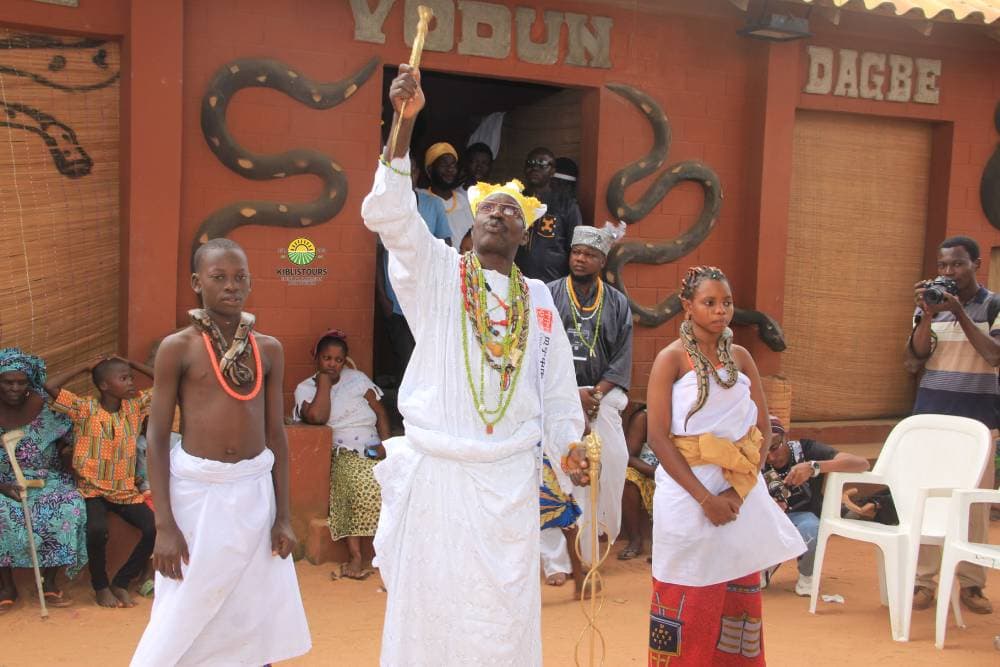
The Temple of Pythons bears witness to a particular spiritual relationship between a community and an animal considered sacred. The Kpassè Sacred Forest preserves stories associated with local royal history. The old neighborhoods tell the story of centuries of political and commercial change. Meanwhile, the Slave Route and the Door of No Return invite reflection on the transatlantic deportation of enslaved people and its consequences.
Each of these heritage sites has its own history. Together, they help explain why Ouidah holds such a distinctive place in Benin's cultural identity.
Through this guide, discover the history of Vodun Days, the traditions that make the event exceptional, Ouidah's iconic landmarks, and the essential information you need to prepare your trip in January 2027.
Vodun Days 2027: Dates, Location, and Essential Information
Vodun Days 2027 is scheduled to take place from January 2 to 9, 2027, in Ouidah, southern Benin. This edition continues the event introduced under the Vodun Days name in January 2024.
However, it is important to distinguish the overall festival period from the specific dates and times of ceremonies, performances, concerts, and other cultural activities.
Visitors should check the updated program before traveling, as venues, schedules, and access conditions may change.
Why Is Ouidah at the Heart of Vodun Days?
Ouidah has historical and spiritual significance that extends far beyond Benin's borders.
The city is home to several well-known sacred sites, including the Temple of Pythons and the Kpassè Sacred Forest. It also preserves religious traditions maintained by different communities and passed down through practices, stories, and specific responsibilities.
Its history is also deeply connected to Atlantic trade.
From the early modern period onward, Ouidah became a major trading center on the Gulf of Guinea coast, particularly in connection with the transatlantic slave trade. This history created lasting ties between West Africa and several societies in the Americas.
Today, Ouidah brings together three complementary dimensions: a spiritual heritage that remains actively practiced, a history of international remembrance, and a particularly dynamic contemporary cultural scene.
What Can Visitors Discover During Vodun Days?
Previous editions have featured various types of events: religious ceremonies open to the public, traditional appearances, dances, concerts, and artistic activities.
Zangbétos, Egungun, and certain dance expressions associated with Vodun traditions are among the performances that particularly attract visitors' curiosity.
Contemporary musical creations, cultural encounters, and public entertainment also contribute to the event's atmosphere.
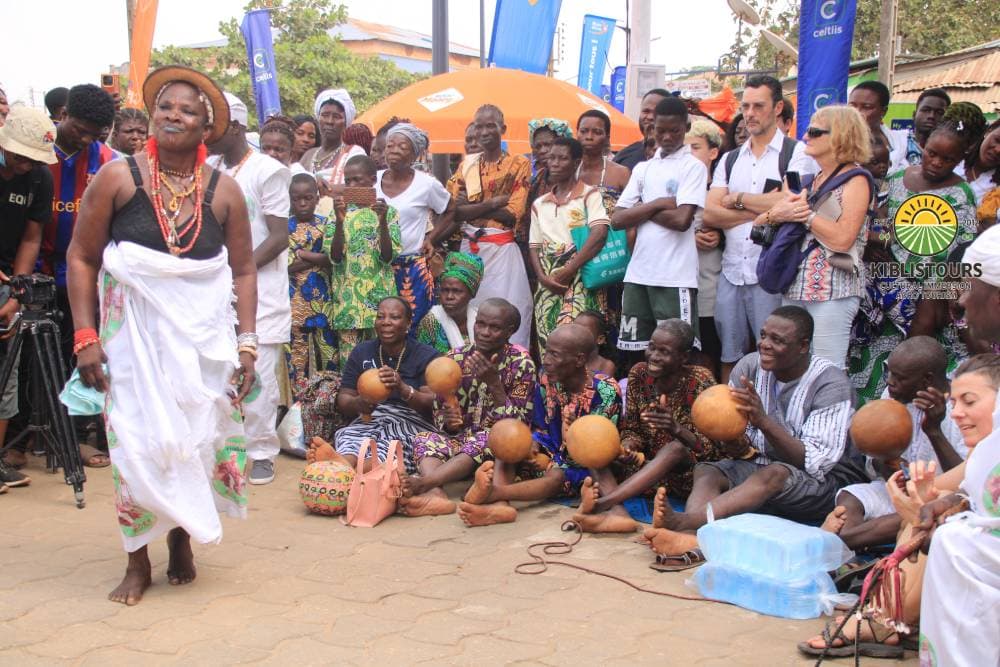
For 2027, visitors should not automatically assume that a performance presented during a previous edition has been confirmed. The final official program remains the reference.
How Did Vodun Days Become an International Cultural Event?
The history of Vodun Days did not begin with its first edition in 2024.
The event is part of a much longer development shaped by the transmission of traditional religions, their gradual recognition in public life, and the promotion of Benin's cultural heritage.
Vodun Before Large Public Celebrations
Long before international festivals emerged, communities practicing Vodun had their own shrines, ceremonies, and religious calendars.
These practices accompanied different aspects of social life: relationships with ancestors, family responsibilities, community protection, and connections with deities.
Their organization varied according to regions, lineages, and traditions.
This diversity is essential to understanding contemporary Vodun. It is not a uniform set of beliefs and practices, but a religious world encompassing distinct expressions, each rooted in its own history.
The 1990s: A Turning Point in the Recognition of Religious Heritage
In Benin, the 1990s marked an important period for the public visibility of indigenous religions.
The process of democratization encouraged new reflections on cultural identities, religious freedom, and the place of traditions in society.
The January 10 celebration gradually became a major national occasion.
This development helped traditional religious practices gain greater recognition as part of Benin's cultural and spiritual heritage.
Ouidah 92: A Historic Festival Held in 1993
One of the landmark events was the international Ouidah 92 festival, held in February 1993 despite the reference to 1992 in its name.
Dedicated to Vodun arts and cultures, the gathering encouraged exchanges between African cultural figures and representatives of the diasporas.
It also helped reshape Ouidah's international image.
The city was increasingly recognized not only as a place of remembrance associated with the transatlantic slave trade, but also as an important center of spiritual heritage and artistic creation.
For a deeper understanding of the city's political and social history, Robin Law's Ouidah: The Social History of a West African Slaving 'Port', 1727–1892 (2004) is a major academic reference.
From the Recognition of Vodun to the Creation of Vodun Days
The launch of Vodun Days in 2024 is part of this historical development.
The new format combines religious events with a cultural program intended for national and international audiences.
Religious dignitaries, artists, public institutions, residents, and tourism professionals participate in different capacities.
This gathering helps introduce a wider audience to several expressions of Beninese heritage while reminding visitors that religious practices are not limited to events organized for tourists.
Ouidah Before Vodun Days: A City Shaped by Centuries of History
To understand Ouidah, it is sometimes necessary to leave the main gathering places and pay attention to the details of its streets.
A façade with Afro-Brazilian influences, a family courtyard, an old commercial building, or the name of a square may reveal a story stretching back several generations.
The city has experienced different political authorities and numerous economic transformations. Its development was shaped in particular by the Kingdom of Hueda, the Dahomean conquest, Atlantic trade, and colonization.
The Kingdom of Hueda and the Origins of the City
Before its incorporation into the Kingdom of Dahomey, Ouidah belonged to the political territory of the Kingdom of Hueda, also known as Whydah in several European sources.
The territory maintained commercial relations with inland populations and merchants operating along the coast.
Economic activities gradually helped turn the region into a strategic area.
Historian Robin Law's research shows how relationships between local authorities, merchants, and foreign actors shaped the city's development.
This history explains why Ouidah's heritage cannot be attributed to a single political or cultural tradition.
The Dahomean Conquest of 1727
In 1727, the Kingdom of Dahomey conquered Ouidah.
This event transformed regional power relations and changed commercial relations with the outside world.
The Dahomean monarchy sought to strengthen its control over coastal trade, while various groups of merchants continued their activities.
Relations between royal authorities, African traders, and European actors were sometimes marked by tensions.
This period helped shape an important part of Ouidah's political history.
Ouidah and the Transatlantic Slave Trade
From the 17th to the 19th century, Ouidah was one of the main embarkation points for people forcibly deported from this part of West Africa.
Captives came from different territories. Slave-trading networks involved political, military, and commercial actors operating within systems of domination and exploitation.
Those deported were deprived of their freedom, separated from their loved ones, and transported to the Americas under extremely violent conditions.
This history left profound consequences in African and American societies alike.
Today, historical research makes it possible to examine the economic and political mechanisms of the trade, as well as the human experiences and social transformations it caused.
Telling Ouidah's history therefore means looking beyond merchants and monuments. It also requires giving proper recognition to the victims, the families torn apart, and the generations affected by these deportations.
Afro-Brazilian Houses: Visible Traces of Atlantic Connections
In certain neighborhoods of Ouidah, old buildings display architectural influences associated with connections to Brazil.
Façades, windows and doorways, decorative elements, and the layout of some homes bear witness to complex cultural exchanges.
Families associated with these buildings sometimes have histories shaped by trade, the return of people of African descent, and social transformations.
These houses remind us that Atlantic connections also involved the circulation of languages, construction techniques, culinary practices, and artistic forms.
The Temple of Pythons: An Immersion into Ouidah's Spiritual Traditions
The Temple of Pythons is among the city's best-known landmarks.
From the moment visitors enter, they discover a world that may challenge their usual understanding of a religious sanctuary.
Here, the python holds a particular spiritual significance.
The visit encourages people to move beyond the surprise of encountering snakes in a sacred space and to understand the stories and practices that give the site its meaning.
Why Is the Python Considered Sacred?
In the local traditions associated with the sanctuary, the python holds an important religious place.
Stories passed down within communities explain its role in their spiritual history.
This relationship cannot be understood solely through the animal's biological characteristics.
It belongs to a broader set of religious representations that give the python a meaning extending beyond its physical presence.
Art historian Suzanne Preston Blier, in African Vodun: Art, Psychology, and Power (1995), examined the relationships between objects, symbols, and concepts of power in different Vodun traditions.
Her research offers valuable insights into these representations without reducing them to exotic curiosities.
What Can Visitors Discover at the Temple of Pythons?
Visitors can learn about the sanctuary's history, the beliefs associated with pythons, and the rules governing life at the temple.
The explanations provided on-site help place religious traditions within their local context.
Observing the animals and listening to the stories can be enough to create a memorable experience. Touching a python is not necessary to appreciate the visit.
The sanctuary's instructions must be followed to protect both visitors and the animals' welfare.
An Experience That Changes How We See the Living World
Discovering the Temple of Pythons can encourage reflection on the different relationships societies maintain with animals.
In some contexts, an animal is primarily viewed through its practical uses or scientific characteristics.
In others, it may also possess religious and symbolic value.
The sanctuary in Ouidah offers an opportunity to discover this particular way of interpreting the living world through traditions that continue to play a role in local spiritual life.
The Kpassè Sacred Forest: Nature, Royal Memory, and Spirituality
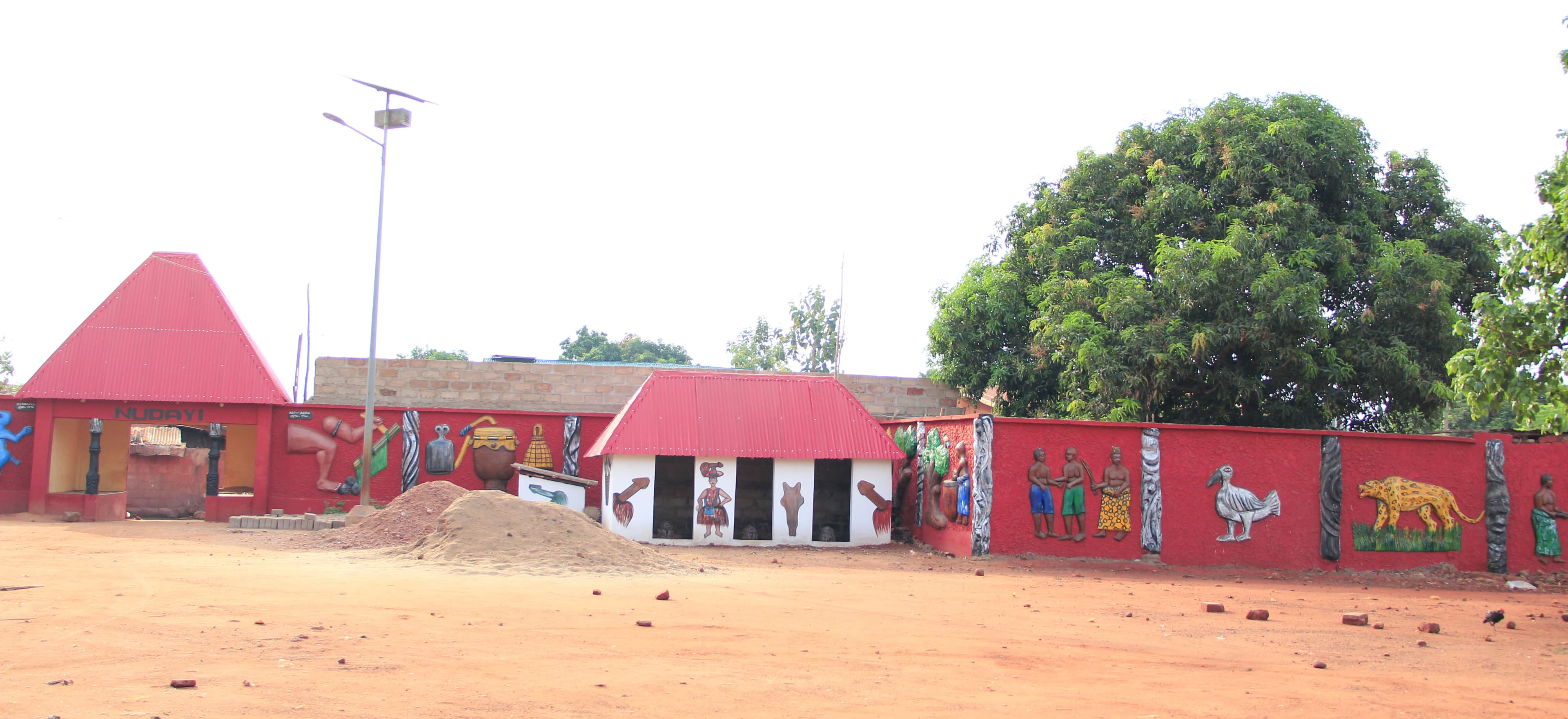
Away from the activity of the main squares, the Kpassè Sacred Forest offers a different atmosphere.
Light filters through the branches. Paths lead toward sculptures and spaces associated with local traditions.
Vegetation, artworks, and stories come together to form a heritage site where nature and culture meet.
The Legend of King Kpassè
The forest is associated with the memory of King Kpassè, an important figure in Ouidah's oral traditions.
Some accounts describe a special relationship between this ruler and a tree on the site.
These stories belong to oral heritage. They should not be presented as historically established facts in every detail.
Their value lies partly in the way they transmit collective memory and enable communities to maintain a connection with their past.
The Forest's Sculptures and Symbols
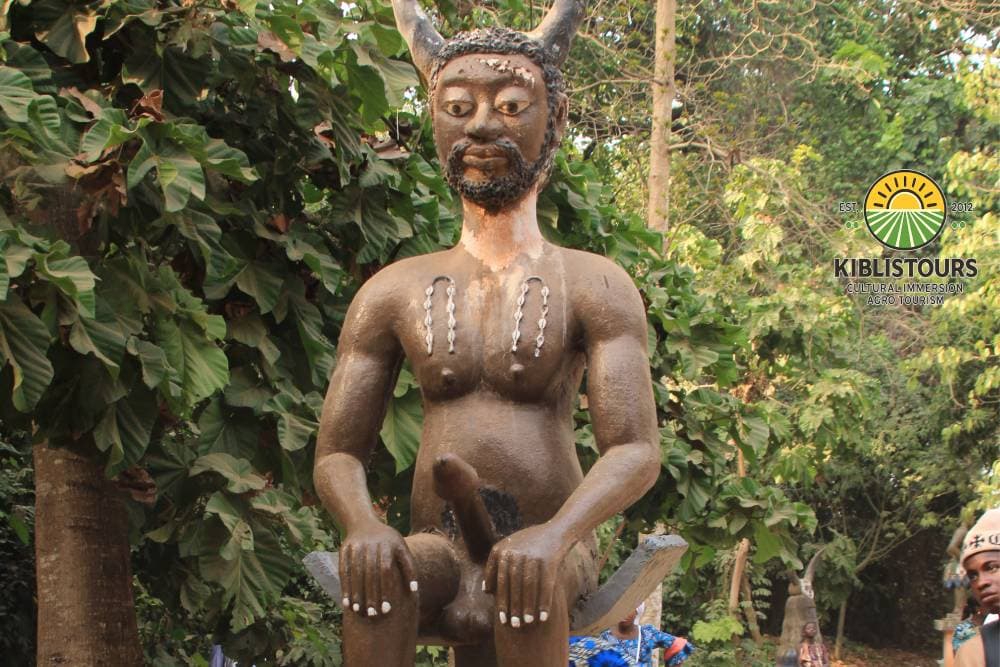
The Kpassè Forest contains various sculptures depicting figures and symbols associated with local traditions.
These works form an artistic language.
They may evoke characters, religious stories, or ways of understanding the world.
For visitors, they offer an opportunity to discover how artistic forms contribute to the transmission of knowledge and cultural representations.
Sacred Forests and Environmental Conservation
In several regions of Benin, wooded areas are preserved because of their religious or cultural importance.
This protection can help maintain certain natural habitats.
However, their state of conservation varies according to local conditions, land pressure, and management practices.
The Kpassè Forest is therefore an interesting example of the relationships between beliefs, memory, and the environment.
The Slave Route: Understanding Ouidah's Places of Remembrance
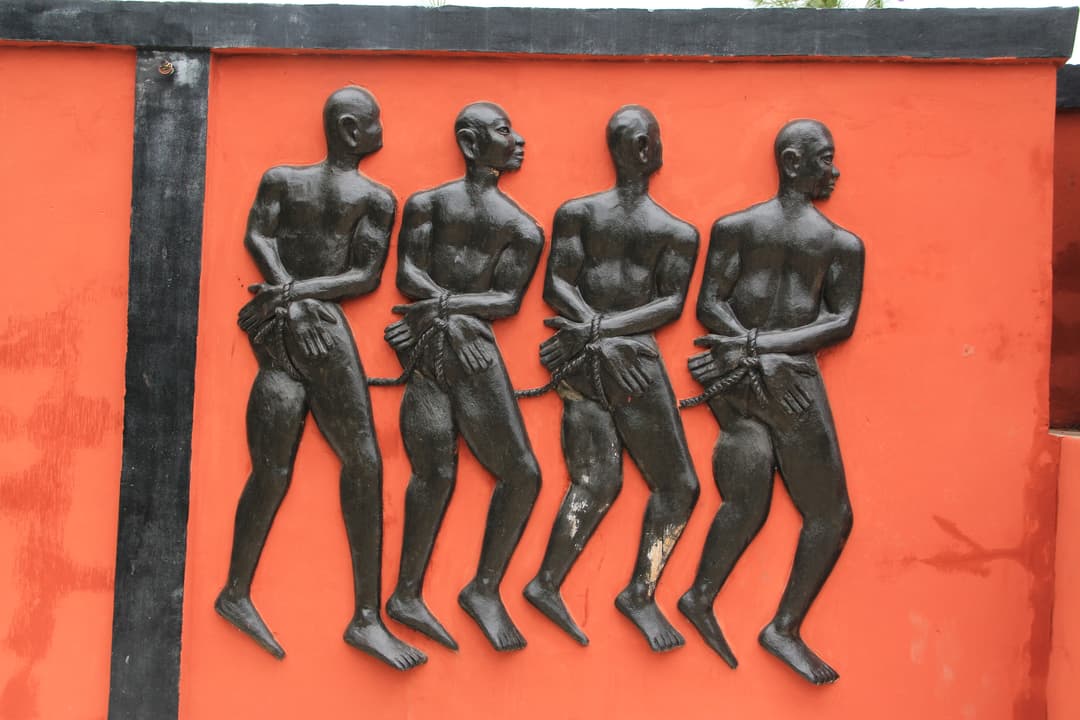
The Slave Route connects several sites associated with the memory of the transatlantic slave trade.
Following this route raises fundamental questions: How did slave-trading networks operate? Which actors were involved in these systems? How can we transmit the history of events marked by violence and dehumanization today?
Monuments, oral accounts, and historical research provide complementary perspectives.
Nevertheless, it is important to distinguish documented events from commemorative representations developed over time.
Place Chacha and Francisco Félix de Souza
Place Chacha is associated with Francisco Félix de Souza, a figure involved in the region's slave-trading networks.
His life illustrates the complex relationships between certain merchants, local political powers, and foreign actors.
It also reminds us that the transatlantic slave trade relied on organized economic systems that victimized millions of men, women, and children.
Robin Law's research provides further insight into the role of merchants and their relationships with the Dahomean monarchy.
The Portuguese Fort and Atlantic Trade
The Portuguese Fort bears witness to the European commercial presence in Ouidah.
Its history provides an opportunity to examine the operation of trading posts, Atlantic exchanges, and relations between local authorities and foreign merchants.
The building is an important landmark in the city's historical heritage.
It recalls the economic and political transformations that shaped Ouidah over several centuries.
Zoungbodji and the Stages of the Memorial Route
Several places associated with the Slave Route are linked to historical accounts or oral traditions.
The Zoungbodji area is among the sites mentioned along the heritage route.
A visit encourages reflection on how societies construct and transmit the memory of painful events.
This approach requires distinguishing established facts, local narratives, and contemporary interpretations.
The Door of No Return: A Monument Facing the Atlantic
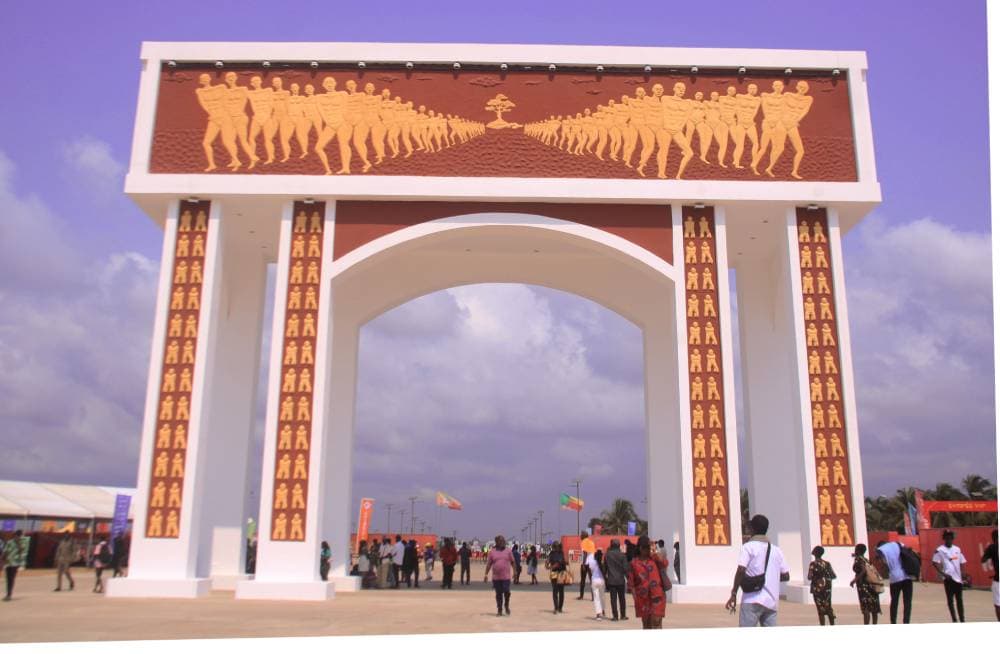
On Ouidah's coastline, the Door of No Return is one of Benin's best-known memorial monuments.
Erected in the 1990s, the monument commemorates the deportation of enslaved people to the Americas.
It is therefore not an architectural remnant from the period of the slave trade, but a contemporary place of remembrance.
Facing the ocean, it recalls the forced crossings endured by men, women, and children who had no choice over their destination.
To explore the history of these places further, discover our guide to visiting Ouidah, the Slave Route, and Vodun heritage.
Zangbétos, Egungun, and Gèlèdé: Traditions with Distinct Meanings
Imagine two events taking place just a few streets apart.
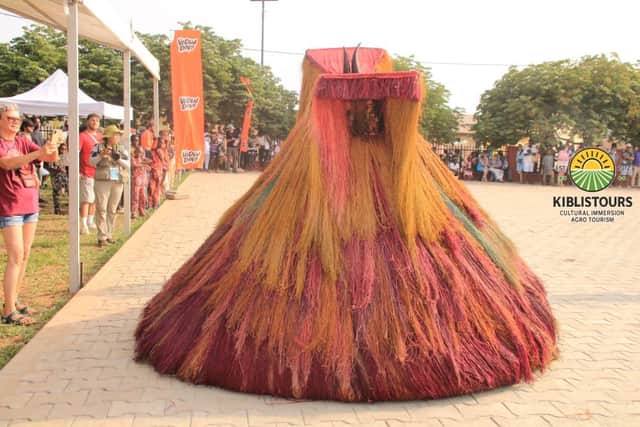
At the first, an impressive costume made of plant fibers spins around. Drums accompany its movements, while spectators carefully follow its performance.
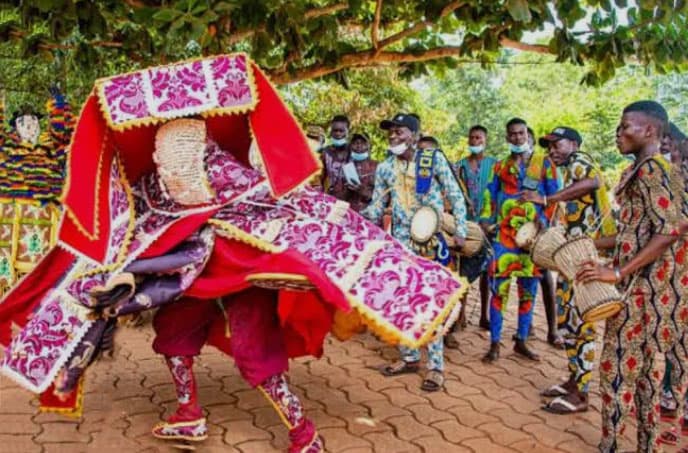
At the second, a figure covered in colorful fabrics moves to the rhythm of the music. The layers of cloth rise, spread out, and fall again as the dance unfolds.
A visitor might think they are watching two variations of the same tradition.
Yet Zangbétos and Egungun have different histories, functions, and meanings.
Zangbétos: The Guardians of the Night
Zangbétos are present in several communities in southern Benin, particularly in cultural areas associated with the Goun people and related groups.
Their conical costumes, made from plant fibers, are their most recognizable visual feature.
In their traditional context, they are associated with community surveillance and protection.
Their history recalls forms of social organization in which security also relied on local institutions.
Public performances allow visitors to observe their costumes, movements, and certain aspects of their organization.
However, these performances do not fully represent all the responsibilities historically associated with this institution.
Egungun: The Presence of Ancestors in Yoruba Traditions
Egungun belong to Yoruba cultural and religious traditions.
Their costumes often consist of many layers of fabric, sometimes richly decorated or embroidered.
Dance brings these fabrics to life.
As the figure turns, the different layers spread outward, creating a moving silhouette.
But Egungun are not simply costumed performers.
They are associated with particular understandings of ancestral presence and relationships between generations.
The work of anthropologist Henry John Drewal and other specialists in Yoruba arts shows how performances, costumes, and gestures can contribute to the construction of religious and social meaning.
Gèlèdé: An Art Form That Tells Society's Stories
Gèlèdé is another major tradition among Yoruba-Nago communities.
It is particularly known for its carved masks, songs, and dances.
Performances may depict scenes from everyday life, social figures, or contemporary subjects.
They give particular importance to women's roles in social and spiritual organization.
UNESCO recognizes the Gèlèdé oral heritage practiced in Benin, Nigeria, and Togo. Proclaimed in 2001, it was inscribed in 2008 on the Representative List of the Intangible Cultural Heritage of Humanity.
This international recognition highlights the importance of passing down the skills and practices associated with the tradition.
Gèlèdé should therefore not be presented as simply a variation of Egungun, even though the two expressions share certain cultural contexts.
Hounvè Dances: When Music Guides Movement
Hounvè dances are among the expressions associated with Vodun events.
For spectators, attention often focuses on the dancers' movements.
Yet the relationship between dance and musical instruments is an essential part of the performance.
Some rhythms announce a sequence. Others accompany gestures or mark a transition.
Drummers must listen to the dancers and coordinate their contributions with the other musicians.
This mastery relies on transmitted knowledge and extensive learning.
Attending such a performance offers an opportunity to appreciate both musical technique and bodily expression.
The Grand Vodun Ceremony: A Major Spiritual Highlight
Among the events associated with Vodun Days, the Grand Vodun Ceremony holds a special place.
It brings together dignitaries and representatives of religious communities for an event whose meaning is primarily spiritual.
Chants, ceremonial gestures, and speeches take place within an organized religious setting.
For visitors, attending a section open to the public can be an impressive experience.
The scale of the gathering, the instruments, and the gestures may raise many questions.
However, a movement, color, or object does not necessarily have the same meaning in every tradition.
Previous editions have given this ceremony an important place, and it is also presented among the highlights of 2027 on the event's official website.
The exact conditions for attendance should be checked in the updated program.
Vodun Days 2027: The Main Festival Venues in Ouidah
The festivities do not take place in a single location.
According to information presented by the organizers, several places in Ouidah are associated with the 2027 edition, including Place Maro, the French Fort esplanade, Place Ninsouxwé, the Kpassè Sacred Forest, the Mami Convent, and various coastal areas.
The Ouidah Arena, Mami Beach Temple, and Festival Village are also among the venues mentioned.
This distribution allows different types of events to be hosted but requires careful planning when moving between locations.
Place Maro: A Space for Cultural Gatherings
Public squares play an important role in Ouidah's urban life.
They serve as meeting places and can host various collective activities.
During Vodun Days, some become spaces for movement and gatherings.
Place Maro is among the venues announced for the 2027 edition.
Visitors should consult the official program to find out which events will take place there.
The French Fort Esplanade
The French Fort esplanade is also among the spaces identified by the organizers.
Its inclusion in the program illustrates how Vodun Days makes use of different historical and urban locations.
It brings contemporary events closer to Ouidah's architectural heritage.
Place Ninsouxwé and Other Festival Spaces
Place Ninsouxwé is among the announced festival venues.
Moving between the different locations can give visitors an opportunity to discover several neighborhoods of the city.
However, it is advisable to consider distances, schedules, and traffic conditions.
Good planning makes it easier to enjoy the activities without unnecessary travel.
The Ouidah Arena and Beachfront Performances
The official website presents the Ouidah Arena, located on the beach, as one of the new attractions announced for 2027.
This venue is intended to host performances as part of its inauguration.
A dedicated performance space could help improve the conditions for welcoming artists and audiences.
However, access arrangements and the detailed program will need to be confirmed before traveling.
Music, Dance, and Contemporary Creativity: When Traditions Inspire Artists
Benin has a rich artistic scene that extends far beyond religious expressions.
Musicians, choreographers, fashion designers, and visual artists explore a wide range of influences.
Some draw inspiration from local cultural references. Others develop creations combining several styles, techniques, and territories.
Vodun Days provides a meeting place for these different approaches.
From Traditional Percussion to Contemporary Musical Creations
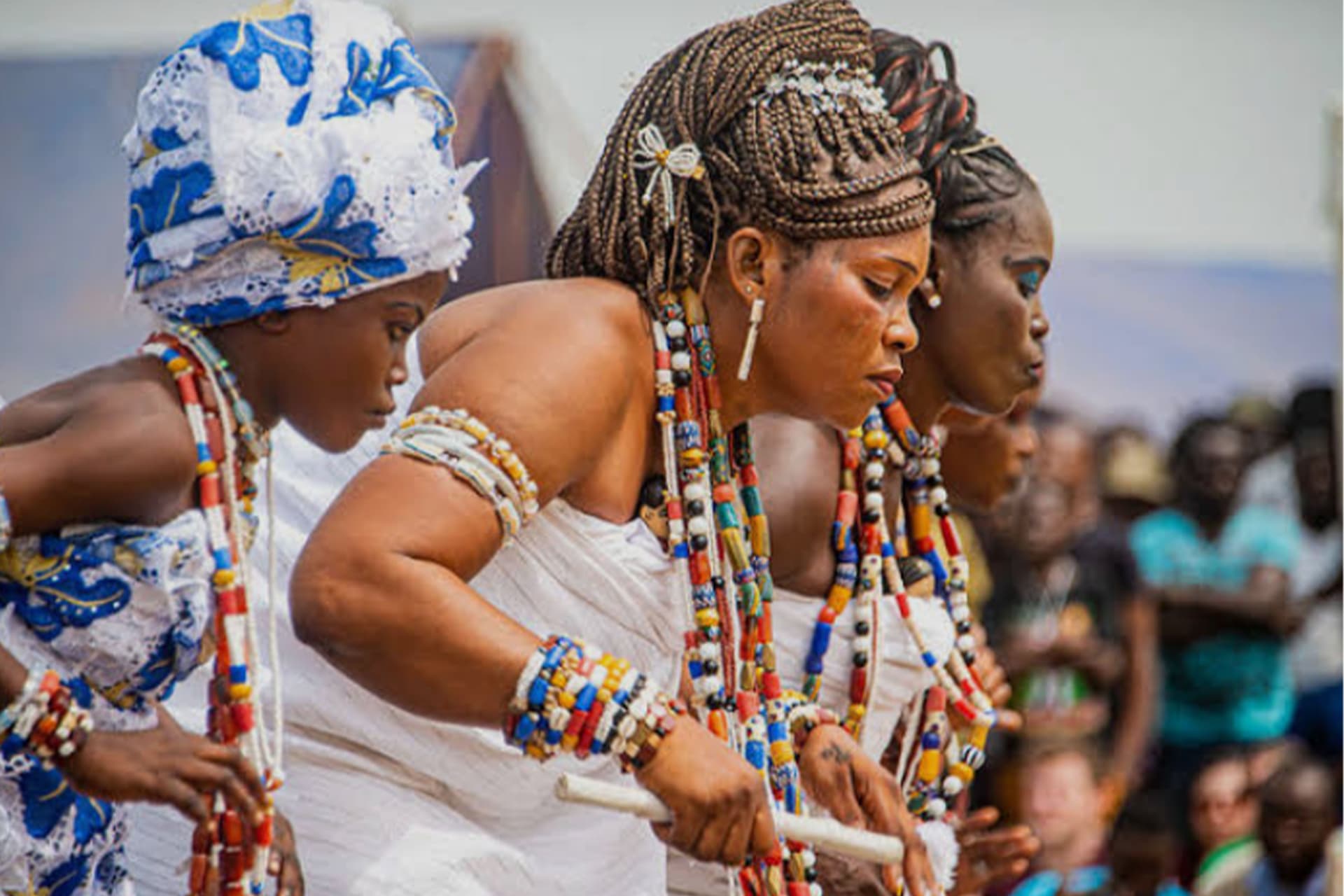
In a percussion ensemble, each instrument may serve a different purpose.
One musician may maintain a steady pattern while another introduces variations.
Coordination between the instruments creates a rhythmic structure that accompanies the dancers.
These techniques can inspire contemporary musical compositions.
Traditional rhythms are sometimes incorporated into new works without those creations becoming religious ceremonies.
This distinction allows audiences to appreciate the full diversity of the artists' work.
Open-Air Concerts: Another Side of Vodun Days
The announced 2027 program includes open-air concerts featuring Beninese and international artists, particularly along the coast.
These performances offer an experience different from religious events.
Travelers who come to discover Ouidah's history can also encounter new musical expressions.
Residents can enjoy artistic performances organized in their city as well.
These concerts contribute to the event's cultural appeal and require appropriate arrangements for sound, lighting, safety, and visitor reception.
Fashion: Between Cultural Heritage and Creative Freedom
Fabrics, accessories, and silhouettes can become forms of artistic expression.
Some designers draw inspiration from traditional patterns or craft techniques, while others favor contemporary forms.
Their work does not necessarily reproduce existing traditions.
It may also reflect a personal aesthetic exploration.
Cultural events give fashion designers an opportunity to present their creations to new audiences.
Artistic Exchanges with the Diasporas
Benin's history maintains deep connections with societies of African descent.
Today, these ties can take the form of artistic collaborations.
Musicians and dancers from Brazil, the Caribbean, and other regions participate in various exchanges with African artists.
These encounters make it possible to explore shared heritage as well as cultural differences that have emerged over centuries of history.
They demonstrate the ability of traditions to inspire new forms of creativity.
Gastronomy and Crafts: Discovering Ouidah's Local Skills
Between events, Ouidah continues to move to the rhythm of its markets, restaurants, and workshops.
These spaces provide opportunities to meet the people who produce, process, and sell different goods.
They offer a practical perspective on local economic life.
Artisans and the Value of Handmade Work
Woodworking, metalworking, textiles, and other crafts play an important role in Beninese craftsmanship.
Objects may serve decorative, artistic, or religious purposes.
Their value depends in particular on the quality of the materials, technical expertise, and the time devoted to making them.
For visitors, talking with an artisan can be just as rewarding as purchasing a creation.
The conversation provides insight into the production stages, the creator's choices, and the skills involved.
The Flavors of Ouidah and Southern Benin
Southern Beninese cuisine makes extensive use of maize, cassava, vegetables, fish, and various sauces.
Akassa, a preparation made from fermented maize, accompanies many dishes.
Amiwo, a seasoned maize dough, is also among the popular specialties.
Recipes vary between families and communities.
The same dish may differ in texture, seasoning, or accompaniments.
This diversity makes gastronomy a particularly enjoyable way to discover the country's eating habits and culinary traditions.
The Producers Behind Local Specialties
Ingredients used in restaurants come from different agricultural and fishing areas.
Maize, vegetables, fruit, and fishery products go through several stages before reaching the plate.
Producers, processors, transporters, and traders all participate in this supply chain.
To discover this dimension of Beninese heritage, explore our article From Farm to Table in Benin: An Authentic Agritourism Experience.
Vodun Days and the African Diaspora: Historical Connections Between Africa and the Americas
In Ouidah, the Atlantic Ocean is more than just a landscape.
It recalls a history of forced deportations that profoundly transformed several continents.
From the 17th to the 19th century, the transatlantic slave trade led to the forced transportation of millions of Africans to the Americas.
These men, women, and children were deprived of their freedom and subjected to violent systems of exploitation.
Despite these conditions, knowledge, languages, and cultural practices continued to circulate and evolve.
The relationships between Benin and the African diasporas are rooted in this history.
Haitian Vodou and Its African Heritage
Haitian Vodou has roots connected to several African religious traditions.
It developed in the context of Saint-Domingue, colonial slavery, and the formation of Haitian society.
Religious practices evolved through contact with different cultural legacies and new social conditions.
Haitian Vodou should therefore not be presented as an unchanged reproduction of the traditions practiced in Benin today.
It has its own history, organizations, and references.
The work of anthropologist Karen McCarthy Brown, particularly Mama Lola: A Vodou Priestess in Brooklyn (1991), helps explain how Vodou practices are embedded in real human and family experiences.
Candomblé and Afro-Brazilian Traditions
In Brazil, Candomblé is one of the religious traditions rooted in African heritage.
Its history is linked to forced deportations, resistance, and the cultural transformations that took place within Brazilian society.
The different traditions of Candomblé reflect multiple influences.
They cannot be equated with a single African religion.
Anthropologist J. Lorand Matory, in Black Atlantic Religion: Tradition, Transnationalism, and Matriarchy in the Afro-Brazilian Candomblé (2005), examines the transatlantic relationships that helped shape these practices.
This research shows that cultural heritage is also formed through historical exchanges and transformations.
Heritage and Remembrance Journeys to Ouidah
For some people of African descent, visiting Ouidah is a deeply personal undertaking.
The Slave Route and the Door of No Return offer an opportunity to approach the history of forced deportations from a territory directly affected by them.
These visits may evoke emotions and questions about family origins.
However, collective memory must be distinguished from individual genealogy.
Available archives do not always make it possible to establish a family's precise origins with certainty.
Nevertheless, the journey can contribute to a better understanding of the historical systems that connected Africa, Europe, and the Americas.
UNESCO and the Memory of the Slave Trade
In 1994, UNESCO launched the international Slave Route Project in Ouidah.
This initiative encouraged research and awareness-raising activities concerning the slave trade, slavery, and their consequences.
It also contributed to international reflection on cultural heritage and forms of remembrance.
UNESCO's resources on the Routes of Enslaved Peoples provide an important reference for exploring these issues in greater depth.
Vodun Days and Ouidah's Economy: What Opportunities Are There for Local Residents?
When Vodun Days begins, activity in certain neighborhoods can change considerably.
Accommodation establishments welcome more visitors. Restaurants prepare their services according to the events. Drivers must adapt their journeys to traffic conditions.
For artisans, the event can provide an opportunity to meet new customers.
However, these effects deserve to be studied beyond general impressions.
Accommodation and Preparing to Welcome Visitors
For a hotel or guesthouse, high occupancy over a few days requires careful organization.
Reservations must be recorded correctly. Rooms must be ready when guests arrive. Advertised facilities must be operational.
The quality of the welcome also depends on staff availability.
A positive experience may encourage a visitor to return to Benin or recommend the establishment.
Conversely, a poorly managed reservation can cause lasting damage to a business's reputation.
Restaurants and Supply Management
A restaurant that usually serves local customers may receive more travelers during the festivities.
This increase in visitors requires planning food purchases, staffing, and service hours.
Restaurant owners must also consider the different dietary habits of their customers.
Hygiene standards, transparent pricing, and consistent service become particularly important.
The benefits may also extend to local producers and suppliers when establishments purchase their products from them.
Transport Operators and Travel Safety
Travel between Cotonou and Ouidah is an important need during Vodun Days.
This is in addition to journeys between accommodation establishments and festival venues.
Transport operators must consider schedules, vehicle conditions, and traffic.
Compliance with the Beninese government's requirements for tourist transportation is essential.
Punctuality and clear pricing also contribute to the quality of the visitor experience.
Artisans and Marketing Opportunities
Artisans can take advantage of the event to present their creations to visitors from different countries.
A sale made during the festivities provides an immediate benefit.
But the effects can continue afterward.
A buyer may recommend a craftsperson, place a future order, or establish a professional relationship.
The ability to explain materials, techniques, and the history of the objects then becomes important.
Environmental and Urban Challenges
Large crowds can also create difficulties.
Waste management, sanitation needs, traffic, and the maintenance of public spaces require particular attention.
Beaches and heritage sites must be protected from damage.
Waste collection systems and maintenance services contribute to the quality of the visitor experience.
They also help preserve residents' living environment.
How Can the Real Economic Impact Be Measured?
It would be unwise to attribute a precise economic impact figure to Vodun Days without reliable data.
A rigorous evaluation should examine tourist overnight stays, local spending, temporary employment, craft sales, and purchases from suppliers.
It should also consider organizational costs and the effects on public services.
These data would make it possible to better understand the event's benefits and identify necessary improvements.
How to Prepare for Your Trip to Vodun Days 2027
Vodun Days takes place in January, a period generally characterized by relatively dry weather in southern Benin.
Preparing for the trip depends on several factors: the country of departure, the number of days available, the events visitors wish to attend, and the desired level of comfort.
How to Get to Ouidah from Cotonou
Ouidah is located approximately 40 kilometers from Cotonou.
International travelers generally arrive at Cotonou Airport before continuing their journey by road.
Travel time varies depending on traffic.
During the festivities, gatherings may cause delays or temporary traffic restrictions.
It is advisable to allow sufficient extra time and consult official information about access arrangements.
Where to Stay During Vodun Days
Accommodation in Ouidah allows visitors to remain close to the main festival venues.
This option can be particularly attractive for those wishing to attend evening activities.
Cotonou generally offers a wider choice of establishments but requires additional travel.
The choice depends on budget, desired comfort, and event schedules.
Before booking, it is important to check the exact location, included services, and cancellation conditions.
What Budget Should You Plan for Vodun Days 2027?
The budget depends on the length of the stay, the country of departure, and the desired level of comfort.
The main expenses include international transportation, accommodation, meals, and local travel.
Visitors should also budget for possible entrance fees to heritage sites, additional activities, and personal purchases.
Access conditions for official festival events should be distinguished from paid tourism services.
Visa Requirements for Entering Benin
Entry requirements for Benin depend on the traveler's nationality.
Some nationals benefit from visa exemptions, while others must apply for a visa.
The official Benin eVisa platform provides information about the applicable procedures.
Travelers should also check passport validity and health requirements, particularly those concerning yellow fever vaccination.
What Clothing and Accessories Should You Bring?
Lightweight clothing and comfortable shoes are suitable for getting around Ouidah.
Sun protection, a reusable water bottle, and a portable power bank can also be useful.
For visits to religious sites, clothing appropriate to the site's rules is recommended.
Travelers should also consider dust, heat, and the duration of events.
Can Families Enjoy Vodun Days?
Vodun Days can appeal to families thanks to its musical, artistic, and cultural activities.
However, some events attract large crowds.
Parents should consider noise levels, heat, and travel between venues.
It is best to schedule rest periods and choose activities suited to children's ages.
Photographing Ceremonies and Visiting Sacred Sites: Rules to Know
Vodun Days includes events open to the public, but some spaces maintain specific religious rules.
Visitors must follow instructions from those in charge and avoid entering restricted areas.
Religious objects should not be handled without permission.
Photography may be permitted in some contexts and prohibited in others.
It is important to seek the consent of the people concerned and avoid interrupting a ceremony to take a photograph.
These precautions allow visitors to discover the traditions while respecting those who practice them.
What Else Can You Discover in Benin After Vodun Days?
Vodun Days provides a wonderful opportunity to discover Ouidah, but Benin's heritage extends far beyond the city.
By continuing their journey, visitors can explore places that reveal other aspects of the country's history, cultures, and ways of life.
Abomey: The Royal Palaces and the History of Dahomey
In Abomey, the royal palaces bear witness to several centuries of political history.
The rulers of Dahomey developed distinctive ways of representing power, particularly visible in the bas-reliefs and the organization of palace spaces.
Royal symbols form a historical language in their own right.
Some evoke events, figures, or qualities associated with the rulers.
The Royal Palaces of Abomey are inscribed on the UNESCO World Heritage List.
Exploring them provides a better understanding of a history closely connected to Ouidah's, while also possessing its own traditions.
Ganvié: A Different Way of Living with the Environment
In Ganvié, traveling by canoe is part of everyday life.
Stilt houses, fishing activities, and commercial exchanges reflect a long-standing adaptation to the aquatic environment of Lake Nokoué.
The community has its own traditions, occupations, and forms of organization.
A visit offers insight into the relationships between residents and their living environment.
However, it is important to remember that Ganvié is first and foremost a living community. Houses, boats, and workplaces belong to people going about their daily activities.
Porto-Novo: Architecture and Cultural Diversity
Porto-Novo, Benin's official capital, has an architectural heritage shaped by several influences.
Old houses, historical buildings, and traditional neighborhoods bear witness to its development.
The city also preserves a variety of cultural and religious expressions.
It offers an opportunity to explore another dimension of southern Benin's history, particularly the relationships between local populations and Atlantic exchanges.
Grand-Popo: Between Lagoon and Ocean
In Grand-Popo, coastal and lagoon landscapes play an important role.
Fishing activities, villages, and natural areas provide opportunities to discover the relationships between communities and their environment.
The region also offers an atmosphere different from Ouidah's large festival gatherings.
Visitors must nevertheless follow local safety instructions concerning ocean currents and swimming areas.
Rural Benin and Agritourism
Farms offer another gateway to Beninese culture.
Pineapple, maize, cassava, and vegetable cultivation involve skills that vary from one region to another.
Meeting producers helps visitors better understand the stages of food production, the techniques used, and the challenges faced.
These experiences provide a perspective that complements historical visits.
They remind us that a country's heritage also lives in the occupations and knowledge of the people who sustain it.
To make the most of this unique experience,Kiblistours offers you carefully selected destinations that combine cultural discoveries, authentic encounters, and unforgettable moments.
Vodun Days Festival 2027 - Three days to experience Ouidah with Kiblistours
Vodun Days 2027 in Benin - 7 Days
Vodun Days 2027 : 10 days of immersion in the heart of Benin’s traditions and treasures
FAQ: 10 Frequently Asked Questions About Vodun Days 2027
1. What Are the Dates of Vodun Days 2027?
Vodun Days 2027 is scheduled to take place from January 2 to 9, 2027, in Ouidah. The detailed program and event schedules should be checked on the official website before traveling.
2. Where Does Vodun Days Take Place in Benin?
The festivities take place in Ouidah, southern Benin. Several venues have been announced, including Place Maro, the French Fort esplanade, Place Ninsouxwé, the Kpassè Sacred Forest, and coastal locations.
3. What Is the Difference Between Vodun and Vodun Days?
Vodun refers to a collection of ancient religious and spiritual traditions. Vodun Days is a contemporary cultural event that showcases certain expressions of this heritage through ceremonies, traditional performances, and artistic activities.
4. Can You Attend Vodun Days Without Practicing Vodun?
Yes. Events open to the public welcome visitors of different beliefs. However, some ceremonies or religious spaces may be reserved for authorized participants.
5. Is Vodun Days 2027 Free?
Access conditions depend on the event. Some activities may be free, while others may require a reservation or payment. Official arrangements should be checked before the trip.
6. What Traditions Can Visitors Discover During Vodun Days?
Vodun Days highlights Zangbétos, Egungun, Hounvè dances, and various religious expressions. The exact events depend on the program for the relevant edition.
7. How Many Days Should You Plan to Experience Vodun Days?
Two or three days allow visitors to attend some events and explore several historical sites in Ouidah. A longer stay provides an opportunity to discover more activities and deepen their understanding of local heritage.
8. How Do You Get to Ouidah from Cotonou?
Ouidah is approximately 40 kilometers from Cotonou. The journey is made by road. During the festivities, it is advisable to allow additional travel time because of the crowds.
9. Can You Photograph Vodun Ceremonies?
Photography may be allowed in certain public areas. Restrictions may apply in shrines and during ceremonies. Visitors must respect instructions and obtain the necessary permissions.
10. Why Does Vodun Days Attract People of African Descent?
Vodun Days offers an opportunity to discover spiritual traditions linked to West African history. Ouidah also holds an important place in the memory of the transatlantic slave trade, which can give the journey a particularly historical and personal dimension.
Conclusion: Ouidah, a Story That Continues to Unfold
When the last drumbeats fade and visitors gradually leave the gathering places, Ouidah returns to its everyday rhythm.
Markets continue their activities. Artisans return to their workshops. Families gather in their neighborhoods. In the shrines, religious life continues independently of the calendar of major public events.
The monuments, however, remain.
They recall the kingdoms that shaped the region, Atlantic exchanges, forced deportations, and transformations whose consequences still reach across generations.
It is this historical and human depth that makes Ouidah so distinctive.
Vodun Days 2027 offers an opportunity to discover a city where spiritual traditions, artistic expressions, and collective memory each hold an essential place.
For some visitors, this journey will be a first encounter with Beninese heritage. For others, it will be an opportunity to deepen their knowledge, reconnect with family history, or simply discover another way of understanding the world.
And often, the most lasting memories will not be limited to the grand performances.
They may come from a conversation with a resident, an explanation offered inside a shrine, an artisan met along a street, or a quiet moment facing the Atlantic.
At Kiblistours, we aim to help travelers discover this richness through carefully planned cultural , local guidance, and meaningful human encounters that give depth to their stay.
Would you like to experience Vodun Days 2027 and discover Ouidah's heritage with a Beninese destination management partner?
Ready to experience Vodun Days in a whole new way?
Plan your trip with Kiblistours!
Kiblistours – Experience Authentic Africa.