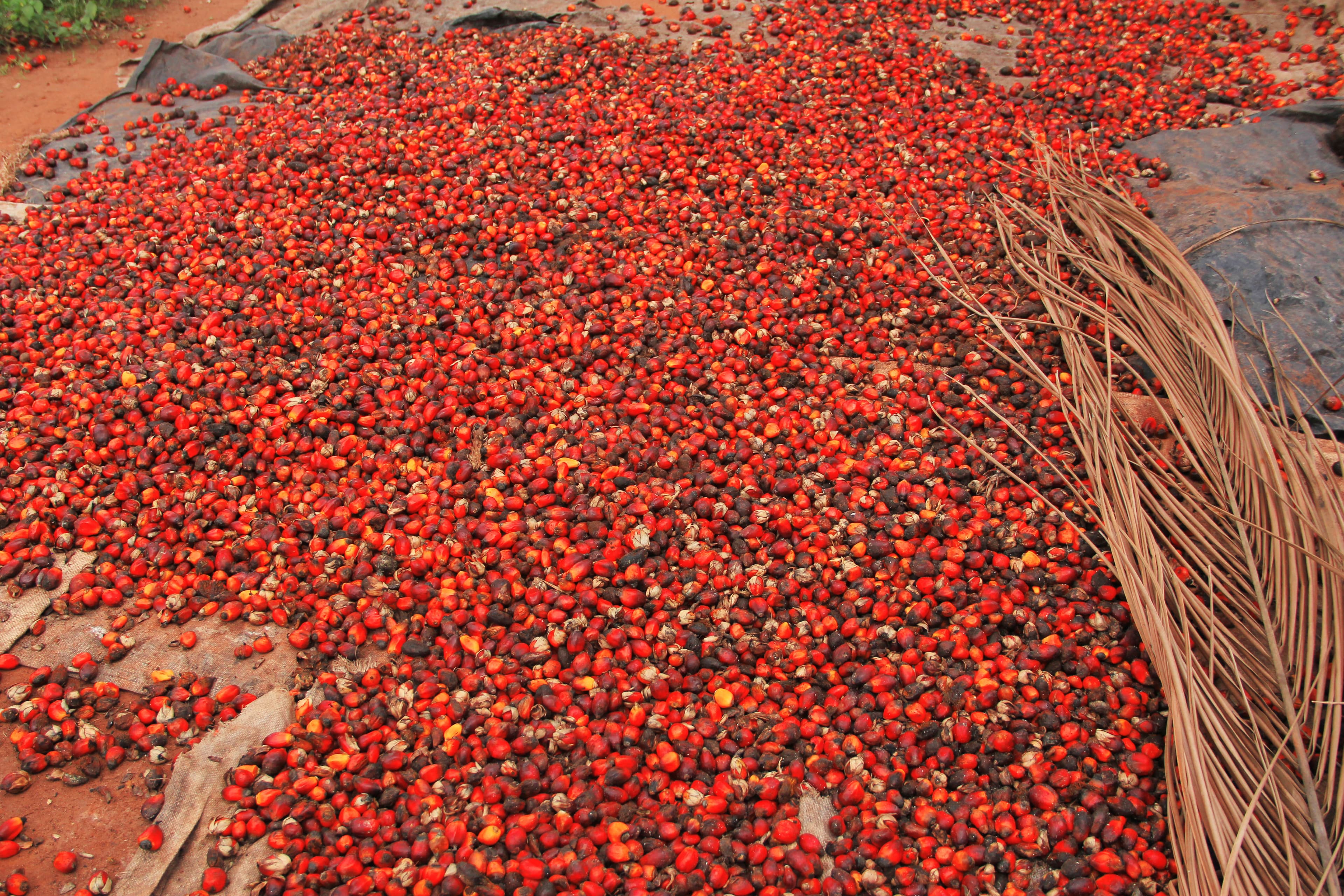
Traveling through Benin naturally means discovering major historical sites, exploring its cities and landscapes, learning about its traditions, and tasting a cuisine whose flavors gradually unfold throughout the journey. Yet there is another way to enter the heart of the country, a slower and sometimes surprisingly intimate one: beginning not in front of a monument, but in the middle of a farm, alongside the women and men who grow, process, and sell the products that will, a few hours later, make their way into a kitchen and eventually onto your plate. This is the very essence of a farm-to-table experience in Benin.
Behind this expression lies an approach to agritourism that goes far beyond simply taking visitors to a farm before serving them a local meal. Its true value lies in the continuity of the experience: understanding a territory, meeting a farmer, observing crops, discovering the challenges and expertise involved, following certain stages of food processing, stepping into the world of Beninese cuisine, and finally sitting down at a table knowing that some of what you are eating now has a face, a story, and a place of origin.
This way of traveling is particularly suited to people who no longer want merely to see a destination, but also want to understand it.
These elements give agritourism a special significance: behind the tourist experience lies a sector that remains deeply connected to livelihoods, food security, and the country’s economic dynamics.
Why Discover Benin Through Agritourism?
When travelers prepare for their first trip to Benin, their itinerary is often built around the country’s best-known destinations. They may want to discover Cotonou, explore Ouidah and its memorial sites, take a boat trip to Ganvié, visit Porto-Novo, explore the historical heritage of Abomey, relax in Grand-Popo, or continue toward the landscapes of Central and Northern Benin.
These experiences are essential to understanding the destination, but they do not tell the whole story of the country. Between these major tourist destinations lies another Benin, made up of agricultural areas, markets, processing workshops, kitchens, and small businesses that contribute every day to the food system.
Taking the time to discover this reality adds a dimension to the journey that even the most important heritage visits cannot always provide: the experience of everyday life.
The point is not to set cultural tourism against agritourism. Quite the opposite: the two approaches complement each other particularly well. A palace tells part of the political history of a territory, a museum helps visitors understand its memory, and a natural site reveals its environment.
What Is a Genuine “Farm-to-Table” Experience?
The expression farm-to-table is generally used to describe food sourced directly, or as locally as possible, from producers. In tourism, however, the concept becomes far more meaningful when it is transformed into a genuine narrative thread that allows visitors to follow part of a food product’s journey.
A coherent experience may begin with discovering a farm and its environment, continue with a conversation about crops and production methods, include a hands-on activity when conditions allow, introduce visitors to certain processing stages, and then gradually lead them toward cooking and tasting.
Of course, not all of these stages are possible for every product or in every season.
Far from diminishing the experience, this dependence on agricultural realities actually makes it more authentic: a real farm follows the rhythm of crops, seasons, weather, and daily work, not that of a fixed tourist schedule.
Becoming a Participant Without Turning the Farm into an Attraction
Visitors should not arrive at a farm expecting everything to have been prepared for their entertainment.
A farm continues to operate independently of tourism, and that reality should remain visible. The people there have work to do, some activities depend on the weather, crops follow their own cycles, and a planned operation may sometimes need to be changed.
A well-designed agritourism experience therefore creates a balance.
Travelers should receive enough guidance to understand what they are observing, but the organization should never turn the reality of the place into a performance.
When certain participatory activities are possible, they should remain simple, safe, and consistent with the normal operation of the farm. It is precisely within this framework that some of the most memorable moments of the journey can emerge.
Illustrative Scene: When a Farming Gesture Reveals Years of Expertise
Illustrative scene: Imagine a visitor watching a farmer perform a task he has completely mastered. The movement is quick, precise, and so natural that it seems almost impossible to get it wrong.
After explaining the technique, the farmer invites the visitor to try.
Confidently, the visitor takes the tool, imitates what they believe they have understood, and immediately discovers that their movement bears little resemblance to what they had observed only seconds earlier.
The farmer smiles, calmly repositions the visitor’s hands, and demonstrates the movement again, this time much more slowly.
The traveler tries a second time and achieves a slightly better result, prompting a few jokes. A third attempt follows, and gradually what began as a technical demonstration becomes a genuine interaction between two people.
This scene may seem insignificant when summarized, but it contains something essential.
For a few minutes, the farmer is no longer simply someone the tourist watches at work. He becomes the person who possesses a skill and is willing to share it.
The visitor, meanwhile, physically realizes that an apparently simple movement may represent years of practice.
That realization can sometimes create more respect than a long theoretical explanation.
Meeting Farmers Rather Than Simply Observing Their Crops
For the experience to retain its full human value, the farmer’s voice must remain central.
The guide obviously plays an important role in providing context, facilitating understanding and, when necessary, translating. But the guide should not systematically speak on behalf of the person welcoming the visitors.
Hearing someone explain how they started their activity, why they chose particular crops, what challenges they have faced, or what they hope to develop gives travelers access to a much more personal reality.
The visit then becomes more than a succession of agricultural facts. It becomes the story of a professional and human journey.
Some of the most interesting questions are actually extremely simple:
“How did you get started?”
“What has changed the most since you began?”
“What is the most difficult part of your work?”
Or even:
“What would you like visitors to better understand about what you do?”
These questions encourage people to tell their stories rather than recite prepared information. They can also reveal stories that were not necessarily anticipated in the original itinerary.
Beninese Agricultural Products as Narrative Threads Throughout the Experience
A Few Official Figures on Agricultural Production
Official statistics from Benin confirm the importance of crop production.
For 2020, the Government reported 2,203,105 tonnes of cereals, 7,370,731 tonnes of roots and tubers, 634,167 tonnes of market garden crops, 362,964 tonnes of pineapples, and 137,926 tonnes of cashew nuts.
Benin’s Directorate of Agricultural Statistics also provides national and agricultural-zone data series for 2021 to 2023, as well as the first results of the 2024 Agricultural Statistical Survey.
These figures provide a national perspective. The tourism experience, by contrast, reveals the faces, gestures, skills, and territories behind those volumes.
A farm-to-table experience in Benin becomes particularly meaningful when it selects a few products as narrative threads rather than attempting to present the country’s entire agricultural sector in a single day.
Each value chain has its own calendar, constraints, processing methods, stakeholders, and culinary uses.
This diversity makes it possible to design different experiences depending on the territory, season, and people encountered.
Maize: Understanding How an Everyday Product Can Tell the Story of an Entire Territory
Because maize is familiar to many visitors, it provides an excellent starting point for discovery.
Travelers may feel that they already know this cereal perfectly well before they even arrive. Yet observing its journey quickly reveals that an everyday product can conceal a much more complex story.
On a farm, the experience can begin with the growing conditions and the different stages required before harvesting. The conversation can then move toward storage, culinary uses, and processing.
Rather than simply showing visitors a field, the experience gradually reveals a chain connecting production, preservation, processing, trade, and consumption.
When travelers later encounter maize again in a culinary preparation, a connection emerges between what they observed a few hours earlier and what they are now eating.
It is precisely this continuity that distinguishes a genuine farm-to-table experience from a simple succession of unrelated activities.
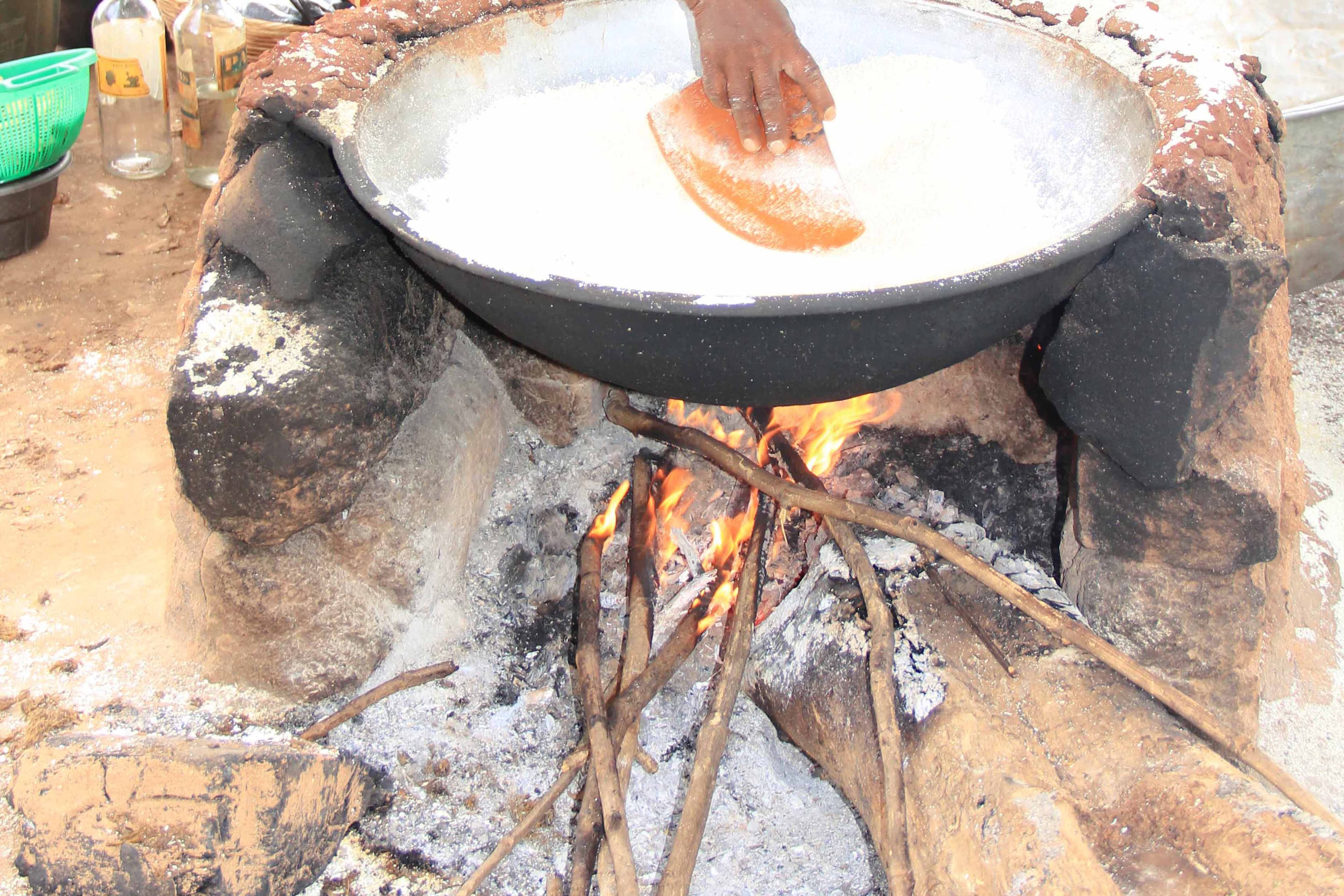
Cassava: When Processing Tells as Much of the Story as Production
Cassava allows the farm-to-table concept to be explored particularly deeply because it clearly demonstrates that harvesting does not necessarily mark the end of agricultural work.
For travelers who see only the root at harvest time, it may be difficult to imagine all the stages that can take place before it is consumed in its various forms.
Depending on the final product, different processing operations may be required. The raw material changes in texture, form, and sometimes use, while remaining connected to the same original crop.
Following this transformation allows visitors to understand the technical, economic, and knowledge-transfer dimensions at the same time.
They discover that the value of a product is not created solely in the field. Value can also be added through cleaning, preparation, processing, packaging, and marketing.
A single raw material can therefore reveal several occupations, multiple skills, and an entire local value chain.
Some operations may appear simple when performed by an experienced person. Yet they often rely on a detailed understanding of the raw material, timing, temperature, humidity, or texture.
It is therefore not always enough to mechanically follow a sequence of steps. Sometimes signs must be interpreted, a gesture adjusted, or the duration of an operation modified.
This dimension naturally introduces the question of local value addition.
Market Gardening: Discovering Freshness Before It Reaches the Plate
Market gardens offer a particularly accessible experience because many of the products are immediately recognizable.
Travelers who see a vegetable growing that they usually buy in a shop may initially experience a sense of familiarity.
But that familiarity quickly turns into curiosity when they begin asking questions about growing time, water requirements, plant diseases, harvesting, or potential losses.
The concept of freshness then takes on a very tangible meaning.
When visitors see a product in its growing environment and then encounter it again in a dish shortly afterward, the idea of a short food supply chain is no longer an abstract expression.
It becomes something they have personally experienced.
Illustrative Scene: The Fruit You Had Been Eating for Twenty Years Without Really Knowing It
Illustrative scene: Imagine a traveler noticing a fruit they have known since childhood and spontaneously declaring that they know it perfectly.
They know exactly how they like to eat it, recognize its taste, and regularly buy it back home.
The farmer then asks:
“How do you choose a good one?”
At first, the answer seems obvious.
But as the conversation continues, several factors begin to emerge: ripeness, variety, season, growing conditions, and storage.
What appeared to be an ordinary, familiar fruit suddenly becomes the starting point for a much deeper understanding of agriculture and food.
The traveler realizes that knowing the taste of a product is not necessarily the same as knowing its story.
Agricultural Seasons: Rediscovering the True Calendar of Food
A farm-to-table experience must necessarily address seasonality, because agriculture does not operate like a catalogue in which every activity remains available twelve months a year.
The same plot of land visited at different times of the year can offer completely different landscapes, farming activities, and opportunities for participation.
For visitors who are accustomed to finding many foods available almost all year round, a farm is a reminder that every product has its own cycle and that this cycle directly influences the work of the people who grow it.
Travelers therefore come to understand that they are not visiting a fixed attraction, but rather an economic and human environment whose appearance changes with the seasons.
Water, Soil, and Climate: Discovering What the Plate Never Reveals
When we look at a meal, we rarely see the water that was needed to produce its ingredients, the condition of the soil in which they grew, or the decisions that had to be made when the rain arrived later than expected.
Yet all of these elements are an integral part of the story behind our food.
A farm visit makes these realities visible.
Asking a farmer how water is managed can lead to a discussion about irrigation, investment, water availability, difficult periods, and crop choices.
Asking about changes in the seasons can also reveal observations accumulated over many years.
Travelers then realize that farmers are also attentive observers of their environment.
Their work requires them to monitor changes, anticipate as much as possible, and adapt certain decisions accordingly.
This environmental dimension considerably enriches the experience because it directly connects food to the natural resources on which it depends.
Tradition and Innovation: Avoiding the Portrayal of Rural Life as a Museum
One of the essential conditions for respectful agritourism is to avoid presenting rural areas as if they were frozen in the past.
International travelers may come in search of traditional practices and knowledge passed down from generation to generation, but this does not mean that farmers live outside contemporary change.
Farms evolve, new equipment may be introduced, certain techniques are modified, and young entrepreneurs develop new activities in production, processing, distribution, and agricultural services.
Digital tools themselves can play a role in marketing, communication, and management.
A well-designed experience should reveal this coexistence between heritage and innovation.
Some practices are preserved because they remain relevant, while others are adapted or replaced.
This dynamic offers a much more accurate and interesting picture of rural Benin: that of a territory with a memory that is also actively building its future.
It can be an experience during which travelers finally have the time to understand some of these realities in depth.
From Harvesting to Processing: Discovering the Hidden Value of Agricultural Products
When the farm visit ends, the story of food is still far from over.
For many products, harvesting marks only the beginning of a new stage before they reach the market or the kitchen.
A raw material may need to be sorted, cleaned, dried, stored, ground, pressed, fermented, processed, or packaged.
These operations require time, knowledge, equipment, and, above all, people whose work often remains invisible when we look only at the final product.
Processing involves human labor, time, equipment, energy, and sometimes several people working in different occupations.
Behind a food product sold at a market or served on a plate, there may therefore be an entire local economic system.
Understanding this process also changes the way travelers perceive price.
A product is no longer judged solely by how much it costs. Visitors begin to understand everything that was required for it to reach them in its final form.
Cereals: Understanding That Cooking Begins Long Before the Kitchen
The same principle can be observed with cereals.
Between harvesting and using a cereal in a dish, different stages may be involved depending on the preparation: drying, storage, sorting, milling, processing into flour, or preparation in another form.
For visitors, this progression reveals something essential:
Cooking often begins long before we enter the kitchen.
It begins with the choice of crops, continues through harvesting and storage conditions, and then through the different processing stages that ultimately make the product ready for use.
Once travelers understand this chain, the dish they taste later takes on an entirely different meaning.
Processing as Living Heritage
When a technique is passed down within a family or community, it also becomes a form of living heritage.
This heritage does not necessarily take the form of a monument, a museum, or an ancient object.
It can exist in a particular way of sorting, drying, mixing, processing, or preparing a product.
It can also reside in the ability to recognize a texture, smell, color, or precise moment without needing to measure every step.
A high-quality agritourism experience can showcase these practices without exaggerating them or artificially transforming them to satisfy the visitor’s expectations.
The expertise remains meaningful precisely because it continues to serve a genuine purpose.
Women in Food Value Chains: Encountering Individual Journeys Rather Than a Category
Two Published and Verifiable Voices from the Field
In February 2025, Bienvenu Assogba, a soybean farmer supported by FAO in Benin, explained that his production had increased from 1.5 tonnes on two hectares the previous year to 2.6 tonnes after gaining access to improved seeds and training.
His testimony is a reminder that a plot of land also tells a story about access to inputs, technical learning, yields, and income.
Source: FAO Benin, February 11, 2025.
In March 2025, Tamou Méri, a member of the Nonsina cooperative in Bôrô Gamakou, which specializes in soybean cheese production, explained that the new equipment would make their work easier, increase production, and help them better support their families’ needs.
Her testimony directly connects local processing, working conditions, and household economics.
Source: FAO Benin, March 20, 2025.
These statements come from institutional publications available online. They document realities on the ground in Benin; they are not presented as testimonials from Kiblistours customers or as evidence of a commercial partnership with the people mentioned.
In many areas, women play an important role in the processing, marketing, and preparation of food products.
This reality deserves to be presented with nuance.
Referring indiscriminately to “rural women” as though they formed a homogeneous group would overlook much of the human diversity that agritourism is specifically intended to reveal.
A female farmer, food processor, trader, restaurant owner, or agrifood entrepreneur may have very different backgrounds, ambitions, responsibilities, and challenges.
It is precisely this diversity that makes these encounters so meaningful.
Listening to an Individual Story Rather Than Telling a General Story
A successful experience should therefore not simply tell travelers that women play an important role in the food system.
Whenever circumstances allow, it should give them the opportunity to hear someone speak directly about her own activity.
How did she get started?
Why did she choose this activity?
Does she work alone or with other people?
Did she learn these skills within her family or somewhere else?
What are the main challenges she faces?
How does she market her products?
Does she want to expand her activity?
Questions as simple as these immediately give the visit another dimension.
The person being encountered is no longer presented merely as an illustration of an abstract category.
She becomes an individual with her own journey, choices, skills, and aspirations.
It is precisely this shift from generalization to the individual that humanizes the experience.
Illustrative Scene: When Knowledge Transmission Meets Change
Illustrative scene: Imagine a visit during which a traveler watches a woman carry out a processing technique she has practiced for many years.
Beside her, a girl or young woman is also taking part.
The visitor asks how long the technique has been practiced in the family.
The woman pauses for a few seconds before explaining that she herself learned it from an older person and has gradually adapted it over time.
The younger person then joins the conversation.
She already knows part of the technique, but explains that she would also like to develop a different way of selling or presenting the product.
Within just a few minutes, the traveler discovers something far richer than a simple demonstration.
They witness the transmission of knowledge, but also its evolution.
Knowledge does not simply pass unchanged from one generation to the next.
It can be reinterpreted, adapted, and combined with new ideas.
This scene perfectly illustrates why it would be artificial to systematically set tradition against innovation:
the two can coexist.
Young People and the Transformation of the Agricultural World
The image that some travelers still associate with African agriculture can be excessively rooted in the past.
Yet young people can actively contribute to the evolution of agricultural and agrifood activities, whether through production, processing, sales, marketing, logistics, or the use of digital tools.
An agritourism experience becomes particularly interesting when it also gives space to these emerging pathways.
Travelers then discover that the rural world is not simply about preserving traditional practices.
It can also be a space for entrepreneurship, innovation, and the pursuit of new opportunities.
Illustrative Scene: When a Young Entrepreneur Changes a Visitor’s Perspective
Illustrative scene: Imagine a traveler who expects to meet only farmers who have inherited a family activity.
Instead, they meet a young entrepreneur who deliberately chose to develop a processing or marketing business.
The conversation quickly takes a different direction.
Why did he choose this sector?
What difficulties has he encountered?
How does he find customers?
Does he use social media?
Is he trying to develop a brand?
How does he imagine his business five years from now?
Through these questions, agriculture stops appearing as a sector belonging exclusively to the past.
It also becomes a vision for the future.
This encounter can be particularly memorable for visitors who arrived with preconceived ideas about rural life.
Rather than simply being told that agriculture is changing, the experience allows them to meet someone who concretely embodies that transformation.
Containers may be used to store or display products.
These objects do not necessarily need to become a separate tourist attraction.
Sometimes, a simple question is enough to naturally open the door to another story.
Illustrative Scene: When a Simple Object Opens a Door to the Territory
Illustrative scene: A visitor notices a basket, tool, or container and simply asks:
“Who makes this?”
The answer may lead to an artisan, then to a particular material, a manufacturing technique, the origins of that technique, and the evolution of its uses.
Within a few minutes, the food experience expands into the world of craftsmanship.
This is precisely what makes agritourism so rich: when it is thoughtfully guided, every element of everyday life can become a new gateway to understanding the territory, without having to turn every discovery into a tourist attraction.
Beninese Markets: Where Agriculture Meets Everyday Life
After the farm and the processing stage, the market naturally becomes an important part of the journey.
For travelers, the change in atmosphere can be striking. The relative calm of a farm gives way to a denser, noisier, and faster-paced environment. Products appear on stalls, customers compare them, exchanges multiply, and aromas mingle.
But the market should not be approached merely as a picturesque place to photograph.
It represents an essential stage in the story of food.
This is where part of the agricultural production actually meets demand, where products circulate, where prices are negotiated, and where visitors can begin to recognize, in another form, what they previously observed in the production areas.
Recognizing on the Market Stall What You Discovered in the Field
One of the most interesting moments occurs when travelers recognize a product they observed only a few hours earlier.
On the farm, it was part of a production system.
At the market, it becomes a commodity intended to be purchased, processed, or consumed.
The perspective changes.
Visitors can now begin to wonder where the products come from, how they reach the market, who transports them, who sells them, how their quality is assessed, and what influences their price.
The market visit is no longer merely a sensory experience.
It also becomes an economic and social one.
Economics then becomes something travelers can observe and listen to rather than simply a series of abstract figures.
The Market as a Social and Cultural Space
A market is also a place of human relationships.
People negotiate, exchange information, meet regular customers, observe consumption habits, and discover how certain products occupy a particular place in everyday life.
For travelers, understanding this dimension requires attentiveness.
Immediately photographing everything that appears unusual can prevent visitors from truly understanding what is happening around them.
Taking a few minutes to observe interactions, listen to the guide’s explanations, and ask permission before photographing people generally creates a much richer and more respectful experience.
The aim is not to turn the market into an exotic backdrop, but to help travelers understand that they are entering a place of work, exchange, and everyday life.
From the Market to the Kitchen: Continuing the Same Narrative Thread
At this stage of the experience, travelers have already encountered certain products in several different contexts.
They have discovered them in their production environment, understood part of their processing, and encountered them again at a market.
The next step therefore becomes natural:
entering the kitchen.
This is where the product gradually ceases to be merely a raw material or a commodity.
It becomes culture.
Beninese Cuisine as Living Heritage
Cuisine is one of the most direct ways to understand a territory because it brings together, in the same space, agriculture, memory, transmission, personal preferences, and the pleasure of sharing.
A recipe is never merely a sequence of instructions.
It may contain a family memory, a local custom, an adaptation passed down through generations, a personal preference, or a particular gesture.
This is why taking part in food preparation can offer much more than a simple cooking workshop.
Learning Differently: When Knowledge Is Transmitted Through the Senses
In a family or community kitchen, every stage is not necessarily measured with the precision of a written recipe.
An experienced cook may estimate a quantity by sight, know when to intervene by observing a texture or detecting an aroma, and adjust a preparation without needing a timer.
For travelers accustomed to detailed recipes, this way of cooking can be particularly interesting.
It shows them that culinary knowledge can be profoundly sensory and based on experience accumulated over time.
Illustrative Scene: The “How Many Minutes?” Anecdote
Illustrative scene: Imagine a visitor taking part in a food preparation.
They want to do things properly and naturally look for precise instructions.
They ask:
“How many minutes should it cook?”
The person preparing the food looks at it before replying:
“Until it’s ready.”
The visitor smiles, initially thinking that the answer is not very precise.
The cook then shows them what she is actually looking for: consistency, color, aroma, and changes in texture.
She explains that cooking time may vary and that what really matters is learning to recognize the right moment.
The traveler then realizes that they had asked a question about a recipe but had received an answer about expertise.
This kind of moment gives an immersive culinary experience its full value.
The Kitchen as a Place of Knowledge Transmission
Preparing a meal also provides a natural opportunity to explore how knowledge is passed from one generation to another.
Who taught this recipe to the person preparing it?
Has it always been prepared this way?
Have some of the ingredients changed?
Do younger generations still prepare it?
Questions as simple as these can lead to much more personal conversations.
A recipe then becomes a form of family memory.
Travelers may also discover that the same dish is not necessarily prepared in exactly the same way everywhere.
One family may use more of a particular ingredient, another may prefer a different texture, while certain stages may vary from one household or territory to another.
These variations matter because they remind us that a living cuisine is never completely standardized.
Travelers are therefore not discovering “the one and only Beninese way” of preparing a dish.
They are discovering one way among many, rooted in a particular territory and embodied by a particular person.
This is why cuisine has such a distinctive power in tourism:
it does not merely feed the traveler; it can make the journey part of their memory.
The Shared Meal: When the Entire Experience Finally Comes Together
After several hours of discovery, the meal takes on a very different meaning from that of a simple tasting organized at the beginning of the day.
Travelers recognize certain ingredients, know part of their journey, have met some of the people involved in producing or processing them, and now better understand the work required before those ingredients reach their plate.
The dish is therefore no longer simply “local.”
It is connected to an entire day.
The Table as a Place of Intercultural Encounter
The meal is also a moment when roles can gradually become more balanced.
For much of the day, the traveler has been asking questions.
Around the table, the people welcoming them may in turn want to learn about their world.
What do people eat in their country?
Is there a comparable product?
How are certain foods prepared back home?
Which Beninese dish surprised them?
Which flavors feel familiar, and which are they discovering for the first time?
The conversation no longer flows in only one direction.
It becomes an exchange.
It is often at this moment that the experience stops being purely tourist-oriented and becomes genuinely human.
When the Meal Becomes a Summary of the Entire Day
The plate can then be seen as a summary of the journey that has just unfolded.
One ingredient recalls a plot of land.
Another evokes a processing stage.
A flavor brings back the memory of a market.
A texture recalls a gesture observed in the kitchen.
Behind certain products, travelers can now see faces and remember conversations.
They are no longer simply eating a meal.
They recognize part of its story.
And it is precisely at this moment that the expression “farm-to-table” takes on its full meaning:
the farm and the table are no longer two separate stages, but the two ends of the same story, shaped by territories, work, expertise, and human encounters.
Farm-to-Table as a Sustainable Tourism Experience
Rural tourism can support local economic activity, promote local expertise, and diversify sources of income, provided that farmers, food processors, traders, cooks, artisans, and guides remain active partners in the experience.
Visits must respect people’s daily work, minimize disruption, and ensure that compensation is fair, transparent, and agreed upon.
Preserving Authenticity Without Turning It into Folklore
Reality is not spectacular at every moment: a field may be quiet, a market less lively than expected, and a conversation may take time to unfold.
Preserving authenticity means remaining faithful to the place, the season, and the people, without artificially staging scenes for photographs or portraying rural life as something frozen in the past.
The Role of the Guide: Explaining, Connecting, and Knowing When to Step Back
The guide is a key element of a successful agritourism experience.
They must know the territory, understand the activities being presented well enough to explain them, be able to answer questions, and provide visitors with the information they need to interpret what they are observing.
But a guide’s effectiveness should not be measured by the number of minutes they spend talking.
When farmers tell their own stories, the guide can translate, clarify a point, or provide additional context.
When the conversation begins to flow naturally, the guide must also know when to become more discreet.
This ability to adjust their presence makes all the difference between a conventional guided tour and a genuine immersive experience.
Travelers should feel that they are meeting people, not simply listening to a prepared presentation in which local residents serve merely as illustrations.
Essential Cultural Mediation
The guide also acts as a mediator between people who may not share the same cultural references.
Behavior that seems perfectly normal to one person may be interpreted differently by another.
An activity may take place in a way that visitors do not immediately understand.
Certain permissions may be required.
A program may change according to realities on the ground.
In these situations, a few explanations can prevent many misunderstandings.
Why should visitors ask permission before taking photographs?
Why has a planned activity changed?
Why is it sometimes necessary to wait a few minutes?
Why are certain areas of a farm not accessible?
By providing these keys to understanding, the guide does more than simply share information: they facilitate the relationship between travelers and the people they meet.
Kiblistours’ Role as a Facilitator
Within this approach, Kiblistours can play an essential role in connecting travelers with local partners.
The agency does more than simply arrange transportation from one place to another.
It prepares the framework for the experience, selects partners, clarifies expectations, facilitates communication, ensures that people are treated with respect, and adapts the itinerary when realities on the ground require it.
This preparation is crucial because an experience that appears spontaneous often relies on a considerable amount of work carried out beforehand.
The objective is not to control every minute.
On the contrary, it is to create a framework solid enough to leave room for the unexpected, for conversation, and for genuine human encounters.
Respect, Photography, and Visitor Behavior
Traveling through an agricultural or community setting means temporarily entering someone else’s workplace and, sometimes, their everyday life.
A few simple principles can profoundly improve the quality of this encounter.
The first is to observe before acting.
The second is to ask when you are unsure.
The third is to remember that being allowed to enter a place does not automatically mean that everything can be photographed, touched, or used.
These principles do not restrict the traveler’s freedom.
On the contrary, they help create a more balanced relationship with the people welcoming them.
This seemingly simple approach profoundly changes the nature of photography.
An image is no longer simply something the traveler takes.
It becomes the memory of an encounter in which two people participated.
Illustrative Scene: When the Camera Is No Longer at the Center of the Journey
Illustrative scene: Imagine a traveler who is passionate about photography and begins the day by photographing almost every stage of the experience: the crops, tools, products, gestures, and landscapes.
Then a conversation begins.
The traveler listens.
One story leads to another.
Someone asks the traveler a question and, for the first time since the visit began, they start talking about something from their own country.
A few minutes later, the traveler realizes that the camera has remained beside them.
There is no photograph of that particular moment.
And yet, they already know they will remember it.
This kind of situation highlights an essential idea:
not every important travel memory needs to become a photograph.
Some memories simply need to be lived.