It is a little after six in the morning when the Beninese countryside slowly begins to stir, long before the heat truly sets in. In the courtyard of a house, a broom made of branches sweeps across the still-cool earth as a rooster lets out its first crow, soon joined by other sounds announcing the village’s gradual awakening. A pot is already heating over a fire, a few children are emerging from sleep, and in the distance, a man gathers his tools before heading toward the fields, as he has probably done hundreds of times before.
You open your eyes in an atmosphere very different from that of a conventional hotel. Here, there is no buffet laid out behind a large glass window, nor a reception desk where you can ask what time the next excursion begins. Instead, there is the smell of wood burning gently, the pleasant coolness of the early morning, a few goats quietly crossing the courtyard, and that peculiar feeling that the day began long before you woke up.
A woman passes a few meters away, greets you simply, gives you a smile, and then naturally goes back to what she was doing, without your presence suddenly turning the scene into a spectacle.
You are indeed in Benin, but perhaps, for the first time since your arrival, you have the feeling that you are no longer simply visiting the country, but are beginning to truly enter into its everyday life.
This is precisely where one of the most powerful experiences a journey to Benin can offer is found: immersion in rural life, far from overly fast-paced tours and from that way of traveling that sometimes consists of accumulating places without taking enough time to understand the women and men who live there.
Because the Benin you discover from the main roads, hotels, museums, and best-known tourist sites is only one part of the country. Beyond this first image lies another Benin, made up of villages, fields, periodic markets, workshops, dirt roads, shared meals, knowledge and skills passed down from one generation to another, and conversations that may seem ordinary when they begin but, several months after you return home, become some of the most precious memories of your journey.
Welcome to rural life in Benin, not the version staged to create a beautiful photograph, but the one that works, cultivates, transforms, creates businesses, passes on knowledge, tells stories, welcomes others, and simply continues to exist once visitors have gone on their way.
The Benin You Almost Never See from a Hotel Window
When travelers prepare for a trip to Benin, certain names naturally appear in their searches: Cotonou, Ouidah, Ganvié, Porto-Novo, Abomey, Grand-Popo, Natitingou, as well as the vast natural landscapes of the northern part of the country. All these destinations deserve a place on an itinerary because each one tells part of the history, culture, memory, and extraordinary diversity of Benin.
But one question is worth asking: what if an essential part of Benin were actually found between these destinations, in the places we pass through without always taking the time to stop?
Perhaps it is there, in that field glimpsed for a few seconds through the window of a vehicle, in that small market where your driver slowed down before continuing the journey, on that farm where several people were working under the sun, or in that courtyard where a family was processing a harvest.
It may also be found in a discreet workshop where a craftswoman precisely reproduces a technique learned within her family, or in an impromptu conversation with a farmer who, in just a few minutes, teaches you more about his territory than several pages of a travel guide ever could.
Conventional travel often teaches us to look for clearly identified points of interest on a map. Rural tourism in Benin teaches us to look at what happens between those points.
The territory then ceases to be merely a space to travel through and becomes a collection of places inhabited, cultivated, transformed, and narrated by the people who live there.
This reality also has considerable economic importance. Agriculture remains deeply connected to food, employment, and rural livelihoods in Benin. It continues to face challenges related to access to quality inputs, irrigation, processing, and markets, while remaining particularly vulnerable to climate-related hazards.
The Beninese countryside is therefore not merely a backdrop. It consists of living, productive territories that are constantly evolving.
Where a traveler in a hurry sees only a succession of fields, someone who takes the time to stop discovers families, economic choices, technical skills, seasons, challenges, innovations, and plans for the future.
The landscape is no longer merely beautiful or exotic: it becomes readable.
The 17 Secrets of a Genuine Immersion in Rural Life in Benin
The First Secret: Time Does Not Always Have the Same Value
Imagine arriving in a rural community with a perfectly organized schedule. You have planned one hour for the visit, another for an activity, lunch at noon, and a departure shortly afterward so that you can reach your next destination.
Everything seems to be going exactly according to plan until someone invites you to sit down for a few minutes.
A conversation begins. One question leads to another. Someone asks where you come from, you ask your host about the village, someone calls another person over because they know more about the story you are discussing, and a few minutes later, an elder comes and sits nearby. Someone brings water, a joke makes everyone laugh, and suddenly your schedule is several dozen minutes behind.
Yet you begin to understand something that tourist schedules cannot always anticipate: human encounters have their own rhythm.
This obviously does not mean that time has no importance in rural communities. Agricultural work, markets, ceremonies, and family responsibilities also follow specific schedules and rhythms. But visitors discover another way of valuing the present moment when it comes to greeting someone, listening to a story, or continuing a conversation that deserves a few extra minutes.
In much of contemporary travel, time has become a resource to optimize. We are expected to see more, cover more kilometers, and add yet another activity to the itinerary.
And yet, some of the most precious experiences are precisely those that were never included in the schedule.
Those minutes that seemed lost sometimes become the best-spent moments of the entire day.
The Second Secret: The Countryside Often Wakes Up Before the Traveler
In many rural areas, by the time travelers open their eyes, part of the day is already underway.
Dawn has a particular atmosphere: the air is still relatively cool, sounds carry farther, and the first activities of everyday life unfold with such natural ease that it almost feels as though you are watching a choreography whose movements no one ever wrote.
Some people get the children ready while others light the fire, organize household activities, head to the fields, or begin preparing products that will be sold later in the day. Little by little, the paths become busier, more motorcycles pass by, and the village settles into its daily rhythm.
Watching this awakening has nothing in common with a tourist attraction opening its doors. You are simply observing a community beginning its day, with its habits, responsibilities, unexpected events, and practices passed down and adapted over time.
What might seem ordinary becomes fascinating when you come from an environment where many everyday processes have become invisible.
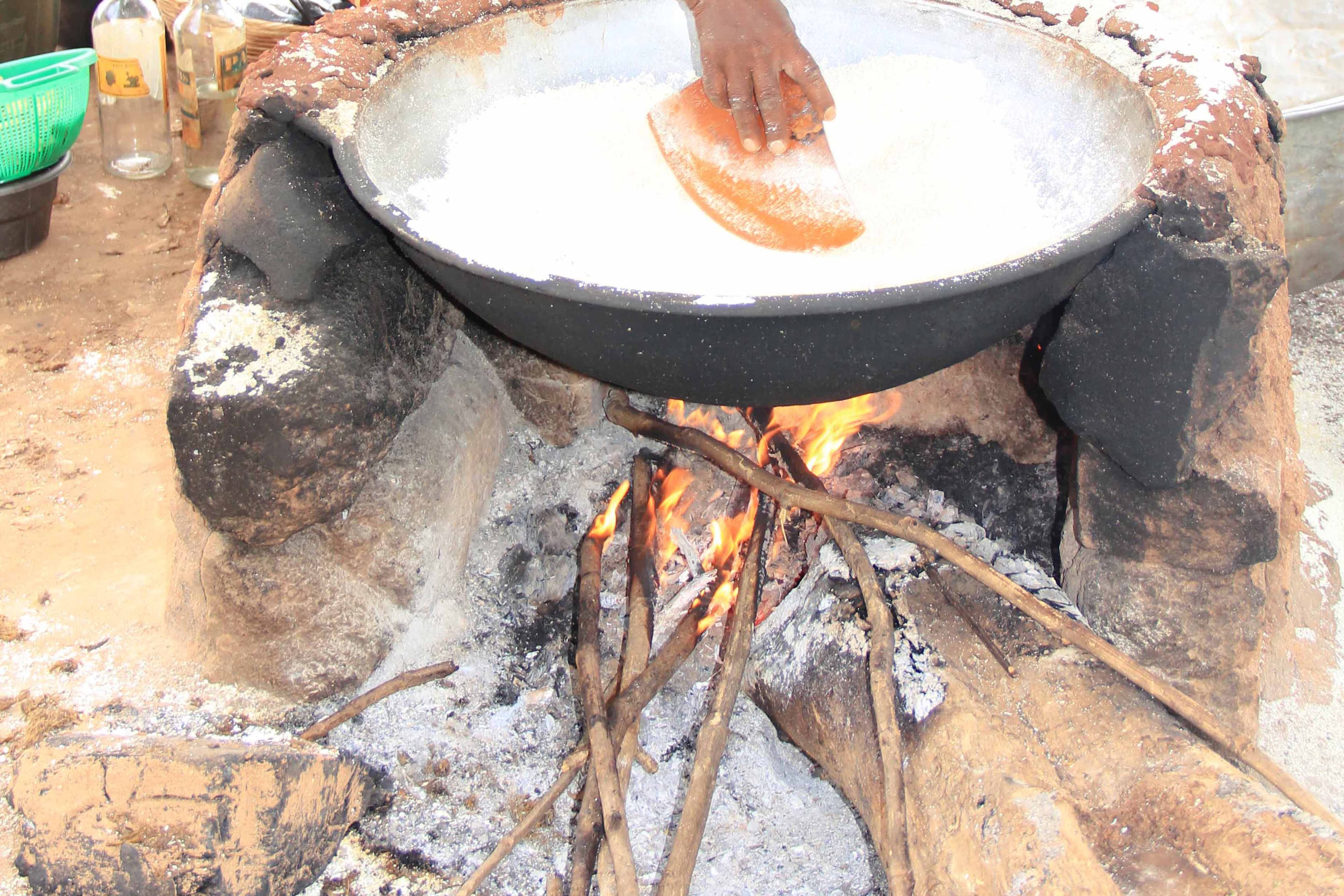
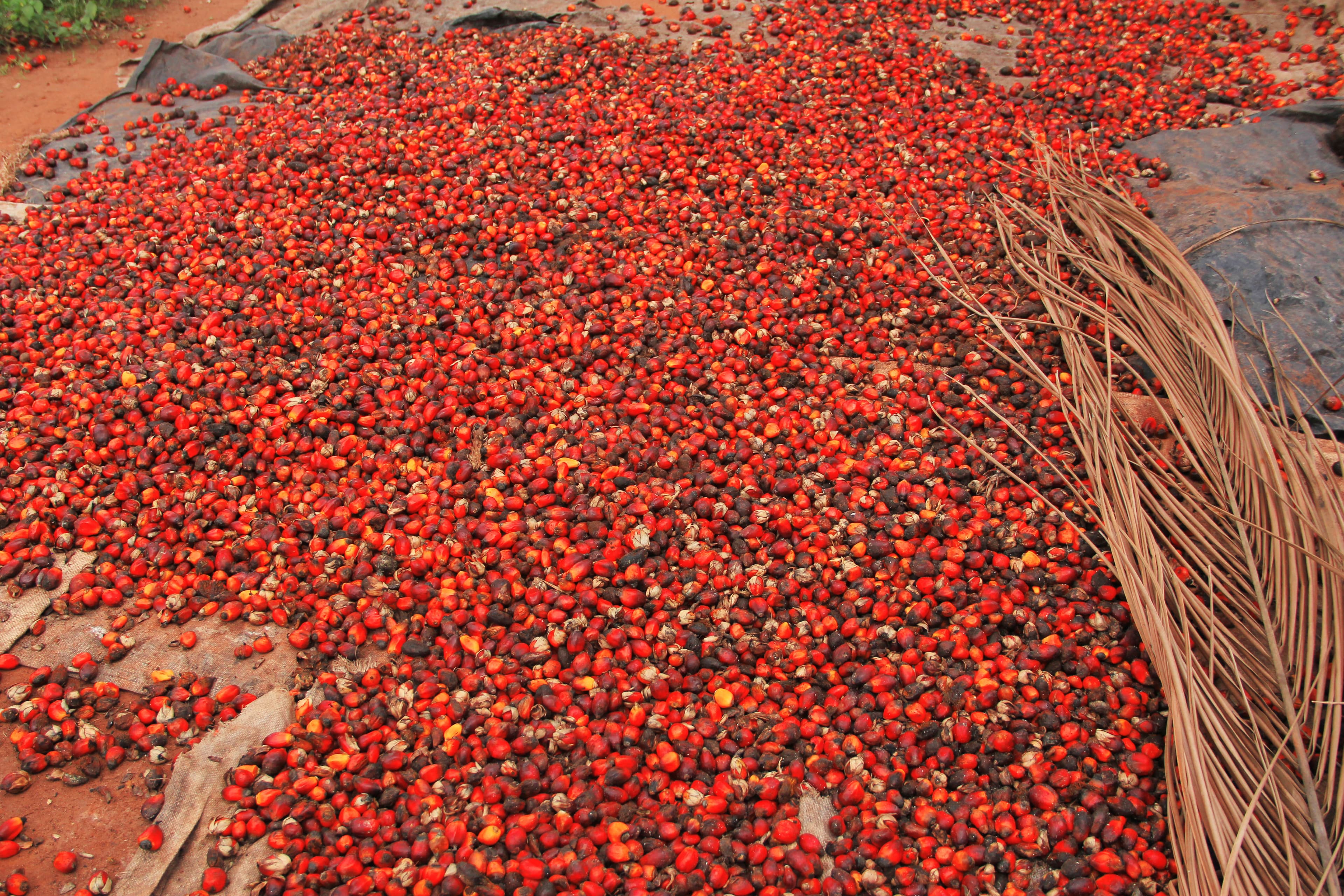
Here, some of those processes become visible again: behind a meal, someone cultivated the ingredients; behind flour, someone processed the grain; behind a basket, someone learned how to weave; behind a bottle of oil, a piece of fabric, or a handcrafted object lie time, technique, raw materials, and a human story.
Before they become products, many things are first and foremost stories of human labor.
The Third Secret: A Field Can Become an Open-Air Classroom
You are walking among the crops when your guide or host stops in front of a plant that you probably would have passed without giving it a second glance.
They explain how it is used, draw your attention to another variety, and then show you a difference in the soil or in the way the crops have been arranged.
Very quickly, you realize that what you had taken for a simple landscape is actually a place filled with knowledge.
Depending on the region, season, and farm, rural Benin offers a wide variety of crops: maize, cassava, yam, cowpea, groundnuts, soybeans, rice, pineapple, oil palm, vegetables, and numerous market-garden crops.
But a genuine agritourism experience in Benin is not about reciting a list of crops. It begins when visitors ask the questions that allow them to understand what they are seeing.
When is planting done? How are seeds or varieties selected? How do farmers know when a crop is ready to harvest? What happens when the rains arrive too late? What proportion of the harvest will be consumed and what proportion will be sold? How are prices negotiated? How have farming practices evolved?
As the answers come, the field becomes an open-air classroom.
What often strikes visitors is the amount of knowledge contained in gestures that initially seemed ordinary. Observing the condition of a leaf, assessing soil moisture, recognizing the right moment to intervene, or choosing a plot of land all rely on years of practice, observation, experimentation, and knowledge passed down over time.
Agriculture then appears not only as an economic activity, but also as technical knowledge, a daily relationship with the environment, and a continuous series of decisions in which nature, markets, and family needs are closely interconnected.
When the Traveler Becomes the Learner
One of the most interesting moments in a rural immersion occurs when visitors agree to step out of their role as observers and participate, even briefly, in an activity.
You have been watching a farmer handle a tool with remarkable ease for several minutes. The movement is precise and looks so natural that you eventually begin to think the task cannot be particularly difficult.
Then, with a smile, the farmer hands you the tool.
A few seconds are enough to realize your mistake.
The movement requires far more technique than you imagined, your posture is not quite right, and you expend a great deal of energy for a rather modest result. Around you, a few people begin to laugh. You laugh too, because you immediately understand what has just happened.
For a few minutes, the roles have been reversed.
You are no longer the visitor who observes and believes they understand. You become a beginner again, required to listen carefully to the person teaching you.
This reversal is valuable. Tourism can easily place the visitor in the position of the person who buys and the resident in the position of the person who provides a service. Learning a skill changes that relationship: the person you came to “discover” becomes the person who possesses knowledge that you do not have.
A genuine immersion truly begins when the traveler accepts no longer being the one who knows.
The Fourth Secret: Cooking Begins Long Before the Food Reaches Your Plate
In a restaurant, a dish usually arrives in front of you after most of the work has already been done. During a rural experience, however, the story of a meal may begin several hours earlier.
You may have seen some of the ingredients growing in the fields, encountered other products at a market or processing facility, and then watched them being prepared.
Take cassava, for example. For many visitors, it initially appears to be a fairly simple root. Yet immersion makes it possible to discover the different stages that may separate the raw product from some of the foods eaten every day, as well as the tools, time, and knowledge required to process it.
The same sense of discovery can arise with maize, yam, groundnuts, certain leafy vegetables, other vegetables, spices, or products derived from palm trees.
From that moment onward, eating no longer means simply tasting. The meal becomes the visible outcome of a chain of activities that you have begun to understand.
A recipe ceases to be merely a way of preparing food. It also becomes a family and collective story, a living heritage that continues to be passed down from one generation to the next.
The Fifth Secret: A Meal Can Bring People Closer Than a Long Visit
Then comes a moment when everyone sits down.
The meal is served. You ask what you are eating, someone explains how it was prepared, and another person encourages you to try something you have never tasted before. You may hesitate for a few seconds before trying it, while several people discreetly wait to see your reaction.
When you smile or ask for a second helping, the atmosphere around the table relaxes and the conversation takes on a different tone.
Officially, nothing spectacular has happened. You have not visited a monument or watched a major performance.
And yet, that lunch may become one of the most memorable moments of the journey because food has an almost universal ability to reduce the distance between people.
It is also around the table that conversations often become less formal. People talk about family, work, children, the city, or the visitor’s country of origin.
You are no longer simply the person asking local residents questions about their way of life. You also begin sharing something about your own world.
The encounter becomes reciprocal.
The Sixth Secret: Rural Markets Tell You Much More Than Prices
A rural market is never simply a place where people buy and sell. It is also a space where information, relationships, news, and an important part of social life circulate.
You only need to observe the baskets, agricultural products, fabrics, condiments, motorcycles, conversations, negotiations, and exchanged greetings to understand that the activity goes far beyond transactions.
A traveler in a hurry sees a market. Someone who takes the time to observe begins to recognize a genuine economic and social ecosystem.
Above all, they understand that agriculture never ends in the field: crops must be harvested, transported, sometimes stored or processed, then sold, and sufficiently profitable markets must be found.
The issue of market access is far from insignificant. In 2026, the FAO is supporting initiatives in Benin aimed, among other things, at strengthening commercial relationships and improving market access for small-scale producers, with particular attention to young people and women.
Behind every market stall, therefore, is a person with their calculations, challenges, customers, ambitions, and their own way of organizing their activity.
The Seventh Secret: Behind Many Products Lies the Sometimes Invisible Work of Women
In many communities, women play a major role in the rural economy, particularly in production, processing, trade, food preparation, and various income-generating activities.
But there is a trap to avoid: admiring their capacity for work so much that we overlook the constraints they may face.
A woman who combines several activities throughout the day may impress you with her energy and organizational skills. That does not mean that her workload is light or that the conditions in which she works are always favorable.
This is where responsible tourism can take on a very concrete meaning.
When visitors buy directly from a woman who processes local products, pay fairly for a workshop, or choose a locally made product, part of their tourism expenditure can benefit more directly the people who make the experience possible.
Travelers are obviously not there to “save” anyone. They can, however, consume more consciously and look beyond the product to see the person, the know-how, the business, and the ambitions behind it.
You then no longer see merely a seller, producer, or processor, but an entrepreneur, a professional, or a woman pursuing her own projects and playing a full role in the development of her territory.
The Eighth Secret: Children Are Never a Tourist Attraction
In villages, children may naturally become curious when they see visitors arriving. Some come closer, smile, observe the group, or walk alongside it for a few minutes.
A traveler’s first instinct may sometimes be to immediately take out their phone.
Yet a child is not part of the scenery, a family is not a backdrop, and a community is not a photography studio.
Before photographing someone, and especially a child, it is important to ask for the appropriate permission and respect any refusal.
An improvised game, a few exchanged words, or shared laughter can become extremely powerful memories without needing to be immediately turned into content for social media.
Sometimes, the most important memories are precisely those for which no photograph exists.
The Ninth Secret: Hospitality Is Not a Service You Buy
When arriving in a community, it is not unusual for someone to offer you a chair, bring you some water, or briefly interrupt what they are doing to talk with you.
However, it would be wrong to automatically assume that these gestures are part of a tourism service that has already been paid for.
Hospitality should be received as a human gesture.
It naturally involves a form of reciprocity: greeting people, listening before judging, asking before taking photographs, avoiding entering a space without being invited, respecting private or sacred places, and paying fairly for services that have actually been organized.
A community has no obligation to remain permanently available to tourists. A farmer may have work to do, a family may be dealing with an important event, someone may refuse to be photographed, and an elder may not wish to share certain stories.
Respecting these boundaries does not diminish the experience.
It is precisely what distinguishes genuine immersion from intrusion.
The Tenth Secret: Some Libraries Have No Books
You are sitting beneath a tree when an elderly person begins telling a story.
At first, you listen politely, but then the story becomes more detailed: a name appears, followed by a childhood memory, an old farming practice, a ceremony, a difficult period, or a change witnessed in the village over the years.
You realize that you are no longer simply having a conversation, but encountering a form of living memory.
In societies where oral transmission continues to play an important role, some forms of local knowledge cannot be found in travel guides or official documents. That does not mean they should automatically be regarded as indisputable historical truths.
They do, however, help us understand how a community remembers its past, interprets certain events, and passes on part of its identity.
Listening to an elder therefore means discovering not only what is being told, but also how events have been remembered and passed down.
The Eleventh Secret: Rural Young People Do Not All Dream of the Same Future
A conversation with a farmer may naturally lead to a discussion about their children and their future.
They may explain that their son wants to move to Cotonou, continue his studies, or pursue another activity. It would then be tempting to conclude that young people no longer want to live in rural areas.
The reality is far more nuanced.
Some want to leave, while others plan to study before returning, start a business, modernize the family farm, develop a processing activity, or find a different way to create value from the resources available in their territory.
Some young people do not necessarily want to abandon agriculture. They may instead want to make it more profitable, better equipped, and more closely connected to markets.
Others see opportunities in food processing, services, craftsmanship, trade, or tourism.
The rural world then ceases to appear as a place concerned only with preserving traditions. It also becomes a place of innovation, choice, and aspirations for the future.
The Twelfth Secret: The Village Is Not a Museum of the Past
Some travelers still arrive in rural African communities expecting to discover a world almost completely disconnected from modern life, as though authenticity necessarily required the absence of technology.
Then, in the middle of a conversation, their host takes out a smartphone.
A trader answers a phone call, a young person uses social media, a woman processing local products contacts a customer, and a family communicates with a relative living in the city or abroad.
Sometimes, this simple scene is enough to make an overly simplistic perception disappear.
Tradition and modernity are not necessarily opposites.
A young person can take part in activities on the family farm while using TikTok in the evening. A trader can sell a product derived from traditional know-how while organizing some of her orders by phone. A farmer can preserve knowledge passed down through the family while simultaneously adopting new techniques.
A village is alive and, because it is alive, it evolves.
True authenticity therefore does not consist of searching for a supposedly “untouched” countryside. It means accepting the territory as it exists today, with what it preserves, what it transforms, and what it creates.
The Thirteenth Secret: Craftsmanship Is Sometimes Memory Held Between Two Hands
When you watch a craftsperson at work, the first thing you notice is their hands. Then, as the minutes pass, you begin to perceive behind each movement the years of learning required to achieve such precision.
Depending on the community, an immersive experience may lead you to meet potters, basket weavers, textile weavers, sculptors, blacksmiths, processors, or other people who preserve and practice traditional skills and know-how.
The gesture looks easy when performed by someone who has mastered it over many years.
When you try it yourself, that apparent ease disappears.
The craftsperson takes the object back, shows you the movement, corrects your position, and lets you try again. Your final creation may be imperfect, perhaps even noticeably clumsy, but it suddenly has a very different value from a souvenir purchased without any interaction.
It reminds you of the moment when someone took the time to share a small part of their knowledge with you.
You no longer see only the finished object: you begin to see the work, knowledge, and time it contains.
The Fourteenth Secret: Rural Nights Have Their Own Music
As the sun disappears, the heat gradually begins to fade and the sounds of the day start to change.
Voices become more distant, insects become more audible, and the darkness may seem surprisingly deep to someone accustomed to the constant lighting of large cities.
There is then time to sit, listen, talk, or simply look at the sky.
At that moment, luxury takes on a different meaning. It no longer necessarily depends on sophisticated amenities or the speed of an internet connection, but on the opportunity to experience a moment with fewer distractions.
An immersion lasting a few hours already allows you to discover many things, but sharing an evening can completely transform the quality of the relationship.
The Fifteenth Secret: The Seasons Completely Change the Experience
An agricultural village does not live exactly the same way throughout the year.
The season influences the landscapes, the crops that can be seen, the work being carried out in the fields, the availability of certain products, processing activities, and sometimes even the organization of the day itself.
An immersion during a period of land preparation or planting will therefore be very different from a visit during harvest time.
This reality is all the more important because agriculture in Benin remains vulnerable to climatic conditions.
A serious agritourism experience should therefore never promise exactly the same activity twelve months a year.
The program must be able to adapt to the territory and its calendar.
This is not a weakness. It is precisely one of the strengths of this type of travel.
The Sixteenth Secret: Water Sometimes Tells as Much of a Story as the Land
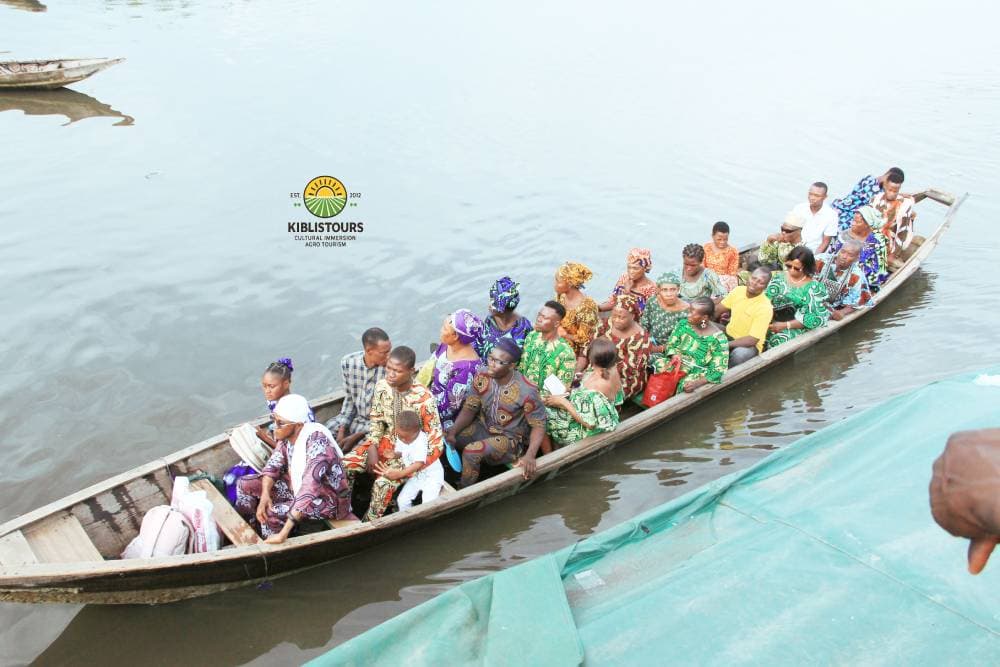
When we talk about rural life, we naturally tend to think of fields and agricultural activities. Yet in several parts of Benin, understanding everyday life also requires observing the relationship between local communities and water.
Rivers, lowlands, wetlands, ponds, lakes, and certain forests can play important economic, nutritional, environmental, or cultural roles.
Depending on the area, water may be connected to fishing, market gardening, transportation, certain occupations, domestic uses, or practices whose significance extends far beyond their economic dimension.
Once again, the landscape changes when a local person begins to tell its story.
What looked like a simple body of water becomes a place of work, memory, resources, constraints, and sometimes beliefs.
A landscape never has only one meaning.
Part 19 — The Seventeenth Secret: Every Village Has Its Own Invisible Rules
Travelers can easily imagine that all rural communities function in more or less the same way.
Yet every territory has its own history, authorities, practices, rhythms, sensitivities, and sometimes spaces where access or photography is subject to particular rules.
What is accepted in one community may not be accepted in another, particularly when it comes to entering certain spaces, photographing people or objects, attending a cultural or spiritual practice, touching something, or simply asking certain questions.
This is precisely why a good local guide plays a role that goes far beyond that of a simple translator.
They understand local codes and situations, know whom to approach, and can explain rules to visitors that are not written on any sign.
Genuine immersion does not mean that visitors must be allowed to see everything.
The ability to respect what does not belong to them is an integral part of the experience.
Rural Life in Benin Is Not a Postcard
To be credible, any portrayal of rural life in Benin must also address what is less photogenic.
The Beninese countryside is neither a paradise frozen in time nor a setting created to offer travelers a romantic return to some supposedly lost simplicity.
Depending on the territory and circumstances, local people may face challenges related to access to financing, infrastructure, markets, equipment, technology, or certain economic opportunities.
Agriculture also remains exposed to climate-related hazards and irregular rainfall. For a family, a poor agricultural season does not simply mean that the landscapes will be less green. It can have concrete consequences for income, harvests, the ability to invest, and certain family plans.
This is why some expressions used in tourism should be treated with caution.
Talking about a “simple life,” “happiness away from modernity,” or a “return to what really matters” may sound appealing in a brochure, but such expressions risk turning complex realities into an exotic backdrop designed for the visitor’s emotional comfort.
A genuinely human immersion accepts the need to look simultaneously at beauty and effort, hospitality and constraints, tradition and innovation, transmission and aspirations for change.
Why Do So Few Travelers Truly Experience This Kind of Immersion?
A genuine immersion in the daily life of a community generally requires more time, preparation, trust, and support than a conventional tourist excursion.
It is much easier to book a hotel room than to organize a genuine encounter, easier to locate a monument on a map than to know which farmer is willing to share part of their daily activity, and easier to photograph a market than to truly understand how it works.
Above all, a community-based tourism experience should never be improvised at the expense of local residents.
It is necessary to identify the people who genuinely wish to welcome visitors, obtain their agreement, determine what can be shared and what should remain private, take the agricultural calendar into account, provide fair compensation when an actual service is delivered, and prepare visitors to behave appropriately.
This is one of the paradoxes of authentic tourism: the more natural an encounter appears to the traveler, the more serious and discreet preparation it may have required beforehand.
What Travelers in a Hurry Never See
When you spend only a few minutes in a community, you mainly notice what is immediately visible: houses, roads, fields, clothing, animals, or objects that differ from what you are familiar with.
Stay longer, and your perspective begins to change.
Activities emerge behind the buildings, and relationships emerge behind the activities. You gradually begin to understand who works with whom, how certain products move from the field to the market, who is involved in processing them, how different generations live alongside one another, and how the village maintains permanent connections with cities and neighboring areas.
Time is, in a sense, the raw material of human encounters: without it, we mainly observe shapes and scenes; with it, we begin to perceive people, relationships, ways of life, and stories.
A Day of Rural Immersion in Benin: What Can It Really Look Like?
There is no universal program, because a meaningful immersion must depend on the territory, the season, the activities genuinely available, and above all, the people who agree to welcome visitors.
Morning: Gently Entering the Rhythm of the Village
A day can begin early, as the village awakens, allowing visitors to discover the first activities of the morning without the need for constant commentary.
After breakfast and a few conversations, visitors may reach a farm on foot, by motorcycle, or by vehicle, depending on the distances and local conditions.
Meeting a farmer makes it possible to go far beyond simply observing crops. The conversation may cover the seasons, yields, prices, labor, marketing, challenges encountered, and future plans.
When conditions allow and the activity is suitable, visitors may be invited to participate briefly in a practical activity and try a farming technique themselves.
At Midday: Understanding What Ends Up on Your Plate
Lunch takes on a special meaning when it is preceded by the preparation or processing of some of the products discovered earlier.
The meal then becomes the natural continuation of what was observed in the field, at the market, or in the processing area.
Afternoon: Discovering Other Faces of the Territory
The afternoon may be devoted to a craft workshop, a processing activity, a visit to a market, or a conversation with a woman producer, an elder, a young entrepreneur, or a community leader.
As the day comes to an end, visitors sometimes leave with fewer photographs than they had imagined, but with more human memories: names, voices, stories, smells, jokes, and a few questions that will stay with them long after they return home.
What If You Stayed for Two Days?
A second day can profoundly change the experience.
The absolute novelty of the first encounter begins to fade. Faces become familiar, the person you simply greeted the day before recognizes you, a market woman resumes an interrupted conversation, and you begin to understand certain habits that you had not noticed on the first day.
The community no longer constantly presents itself to you.
It simply begins to carry on with everyday life in your presence.
This does not necessarily mean spending a week in every community, but rather understanding that human relationships need a minimum amount of time to move beyond the stage of introductions.
The Golden Rules for Visiting Villages in Benin Respectfully
A successful immersion begins with a few simple principles: ask before taking photographs when the situation requires it, avoid turning economic hardship into a spectacle, respect private or sacred spaces, avoid constantly making condescending comparisons with your own country, and accept that you will not understand everything immediately.
Buying directly from a craftsperson, farmer, or woman who processes local products can allow a greater share of the tourism budget to circulate within the local economy, provided that the purchase remains voluntary and the price is fair.
It is also better to avoid spontaneous distributions of money or gifts, which can sometimes create expectations or imbalances. When travelers wish to contribute to a local initiative, it is preferable to ask what forms of support are genuinely appropriate rather than deciding on their own what other people need.
Respect also involves extremely simple behaviors: wearing clothing appropriate to the context, being patient, and accepting that an activity may have to be changed because of the weather, agricultural work, a family event, or another local reality.
A community is not a stage, and it does not have to function perfectly to meet visitors’ expectations.
Can Rural Tourism in Benin Really Benefit Communities?
Yes, but only when it is thoughtfully organized and local residents are not reduced to the role of extras in an experience designed entirely elsewhere.
Rural and community-based tourism can generate income for local guides, farmers, craftspeople, restaurant owners, drivers, accommodation providers, and associations. It can also help promote certain forms of know-how and create new economic opportunities.
This approach is consistent with the principles of UN Tourism’s rural tourism program, which views tourism as a potential driver of development and well-being in rural areas when it contributes, among other things, to enhancing landscapes, knowledge systems, cultural diversity, and local activities.
But tourism is never a magic solution to rural development.
When poorly organized, it can turn cultures into folklore, disrupt certain habits, concentrate income among a small number of intermediaries, or encourage a community to stage an artificial version of its everyday life because that version better matches visitors’ expectations.
The right question, therefore, is not simply how to send more tourists into villages.
Instead, we should ask what kind of tourism communities wish to welcome, under what conditions, at what pace, and with what benefits.
Tourism Can Also Give Greater Visibility to Local Know-How
Local know-how obviously does not need tourism to be legitimate or valuable.
But a well-designed tourism activity can help give it greater visibility.
When visitors fairly compensate someone for the time required to teach a craft technique, explain a processing method, or provide a demonstration, they acknowledge that this knowledge has value and deserves to be regarded as something more than a free curiosity.
Balance, however, remains essential.
Not everything is meant to become a tourism product. Certain forms of knowledge, rituals, spaces, and moments must be allowed to remain private if those who safeguard them wish them to remain so.
Respecting this boundary is an integral part of responsible tourism.
The Real Secret of Authenticity: It Cannot Be Bought
The word “authentic” has become so common in tourism vocabulary that it sometimes seems to have lost much of its meaning.
We are promised authentic cuisine, an authentic village, an authentic ceremony, or an authentic experience, as though authenticity were simply another product that could be added to a booking.
Yet authenticity does not consist of asking local people to reenact an idealized version of their everyday lives in order to satisfy travelers’ expectations.
A village does not need to become more “traditional” simply because a visitor arrives. A craftsperson has no reason to hide their phone, and a farmer should not be expected to use an old tool if they now work with equipment they consider more efficient.
Authenticity begins when the community remains in control of its own story, its space, its evolution, and the way it chooses to welcome visitors.
An experience can therefore be perfectly well organized, with a prepared meal, a scheduled workshop, a paid guide, and planned encounters, without becoming artificial.
The difference lies in one essential idea: the traveler temporarily enters a reality that has been opened to them, but that reality is never created solely for them.
What Rural Immersion Changes in the Traveler
At the beginning of a trip, we often take a great many photographs because every monument, every dish, every landscape, and every detail seems worth preserving.
Then, after spending a day with people rather than only in front of attractions, the way we look at things begins to change.
We start asking more questions about who produces the food we eat, who makes the objects we buy, where the money we spend goes, what work lies behind a product, and what stories are hidden behind certain gestures we might once have considered ordinary.
Eventually, a more personal question may arise:
Do I travel only to accumulate places, or also to understand the world a little better?
Of course, there is no need to choose between comfort and immersion.
You can appreciate a beautiful hotel room, a swimming pool, an elegant restaurant, a museum, or a beach while still wanting to meet the people who grow, process, make, and live within the territories you travel through.
Perhaps true luxury lies precisely in this ability to move from one world to another without believing that one cancels out the other.
Memories That Will Never Really Fit in Your Suitcase
You may forget the name of a road, but probably not the woman who burst out laughing when you tried for the first time a technique she performs every day with impressive ease.
You may forget the exact price of a meal, but the smell that escaped when someone lifted the lid of the cooking pot may return to your memory years later.
You may forget the number of kilometers you traveled, but not necessarily the silence that fell when an elder began telling a story that no one in your group had ever heard before.
You may forget some of the hundreds of photographs stored on your phone, but perhaps not the child you deliberately chose not to photograph and with whom you simply shared a few moments.
You will probably forget part of the itinerary printed before your departure, but a sentence spoken in the middle of a conversation may continue traveling with you for a long time, without the person who said it ever knowing how important it became in your memory.
This is one of the most beautiful paradoxes of travel: sometimes we journey very far in the hope of seeing extraordinary things, only to discover that seemingly ordinary moments ultimately become the most precious.
FAQ: Everything You Need to Know Before a Rural Tourism Experience in Benin
Is It Possible to Visit Villages in Benin?
Yes, but a genuine immersion must be organized with respect for local communities and should never be considered an automatic right of access to their daily lives. It is preferable to be accompanied by a person or organization familiar with the territory, local customs, and the people who genuinely wish to welcome visitors.
What Is the Difference Between Rural Tourism, Agritourism, and Community-Based Tourism?
Rural tourism broadly encompasses experiences that take place in rural areas. Agritourism is more directly connected to farms, crops, livestock, or processing activities. Community-based tourism places greater emphasis on the participation of local communities in organizing experiences and, ideally, in sharing the economic benefits they generate.
Can Visitors Take Part in Farm Work?
On some farms, yes, provided that the farmer agrees, the activity does not present any particular risk, and it is suitable for visitors.
Can You Stay Overnight in a Rural Community?
It depends on the destination and the infrastructure available. Some communities may offer suitable accommodation options, while others are better suited to a day trip.
What Is the Best Time to Discover Agriculture in Benin?
It all depends on what you would like to observe. Periods of land preparation, planting, crop maintenance, harvesting, and processing do not necessarily coincide.
Good planning makes it possible to adapt the experience to the activities genuinely available at the time of your visit.
Can You Travel with Children?
Yes. Many experiences can be suitable for families when the duration, transportation, heat, and activities are adapted to the children’s ages.
Should You Bring Gifts?
It is generally not required. If you would like to contribute or give something, it is preferable to ask your guide or the people concerned what approach would be appropriate and genuinely useful.
Can You Take Photographs Freely?
No. In some situations, permission must be requested, particularly when photographing people, children, private spaces, or certain cultural and spiritual sites.
If someone refuses to be photographed, their decision must be respected.
Do You Need to Speak a Local Language?
It is not essential when you are accompanied by a guide who can facilitate communication, although learning a few greetings or simple expressions can immediately create a warmer connection.
Does Rural Immersion Mean Giving Up Comfort?
Not necessarily. It is perfectly possible to spend a day on a farm or within a community, take part in several activities, and then return to your usual accommodation.
Immersion is not measured by the degree of discomfort, but by the quality of the encounter and your understanding of the territory.
How Much Time Should You Allow for a Genuine Immersion?
Half a day allows for an initial introduction, but a full day provides more time to meet several people, understand their activities, and share a meal without turning every stage into a race against the clock.
When two days are possible and local hosting conditions allow it, the relationship can become even deeper.
Should You Book Far in Advance?
It is preferable to plan the experience sufficiently early so that the people concerned can confirm their availability and the program can be adapted to the activities actually taking place at the time of your trip.
Is It Suitable for All Travelers?
Most visitors can participate when the program is adapted to their physical condition, age, and expectations. However, certain agricultural activities, walks, or weather conditions may require greater physical effort.
Rural Benin Is Not Meant Simply to Be Seen, but to Be Encountered
Perhaps you came to Benin to discover palaces, temples, museums, beaches, forests, lake villages, or spectacular landscapes.
All these places are part of the country’s extraordinary richness and fully deserve to be discovered.
But give yourself one different kind of day, a day when your main objective is not to see as many things as possible, but to understand a little better what lies before you.
Step into a field when you are invited. Sit in a courtyard. Watch someone work long enough to understand that their skill is far from effortless. Ask a question and give the person enough time to answer without already thinking about the next stop on your itinerary.
Share a meal, allow yourself to laugh at your own clumsiness when you try a technique for the first time, discover the work of a craftsperson, talk with a young person about their plans for the future, and listen to an elder describe their territory in their own words.
Then, for at least a few minutes, put your phone away and simply allow yourself to be present.
Because at the end of the journey, the most important photograph may never appear in your gallery.
It will remain in your memory.
Sources and References
World Bank, Transforming Agriculture in Benin: Overcoming Challenges and Unlocking Potential, January 16, 2026.
FAO, From Informal Trade to Formal Partnerships: FAO Promotes Contract Farming in Benin, May 22, 2026, on market access and support for small-scale producers, particularly young people and women.
UN Tourism, Tourism for Rural Development / Best Tourism Villages, on rural tourism, heritage, sustainability, resilience, and the well-being of communities.