A Different Side of Elmina: Discover a Town That Works, Trades and Lives to the Rhythm of the Atlantic
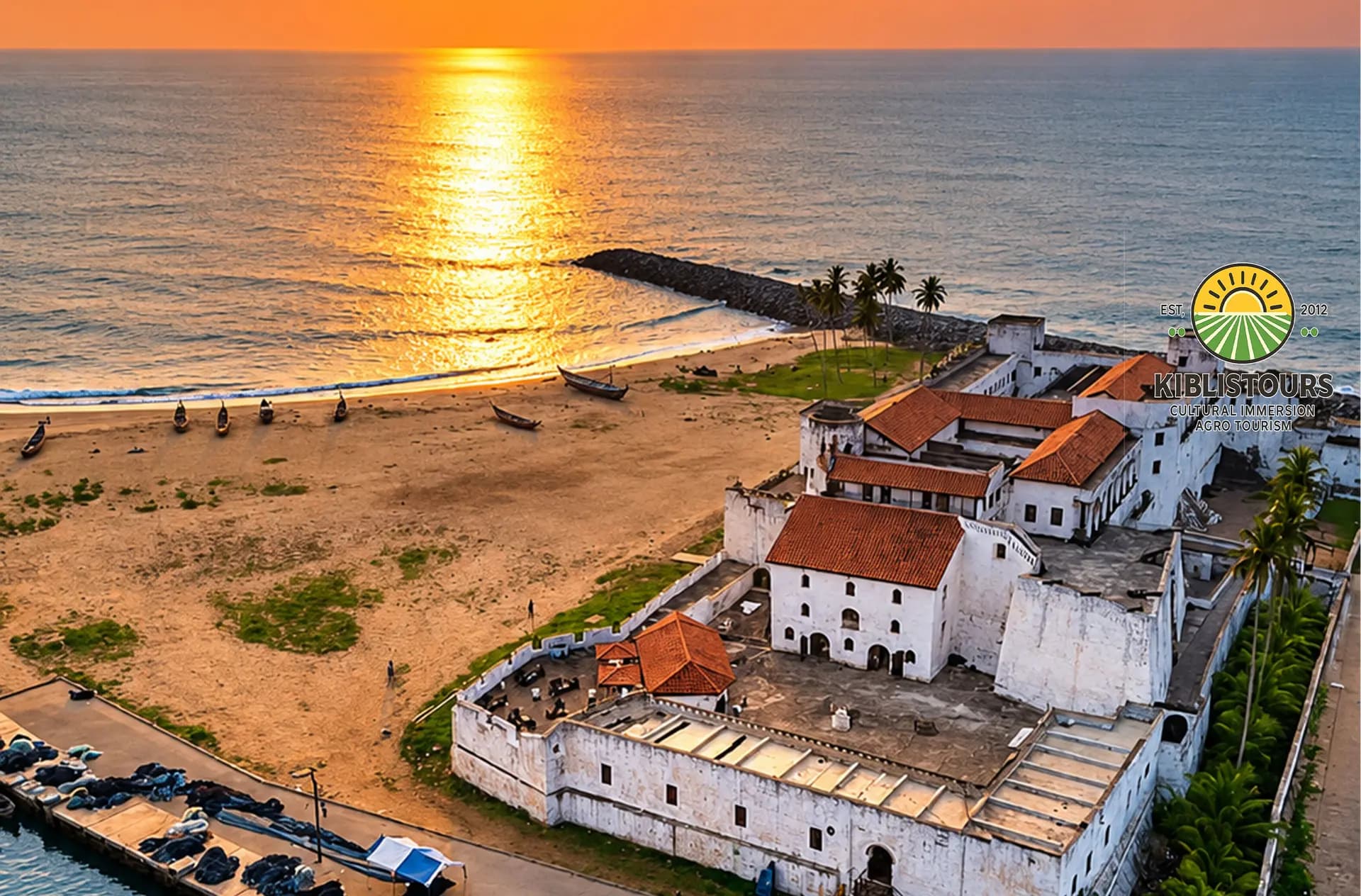
In Elmina, on Ghana's central coast, St George's Castle naturally draws visitors. Its white silhouette and history command respect. Yet just a few steps away, another story unfolds: families making their living from the sea, fishing canoes entering the Benya Lagoon, fish traders negotiating prices and craftspeople repairing nets. Spending a morning at Elmina Fishing Harbour and its fish market reveals a vibrant, down-to-earth and profoundly human side of Ghana, without reducing the town to a single monument.
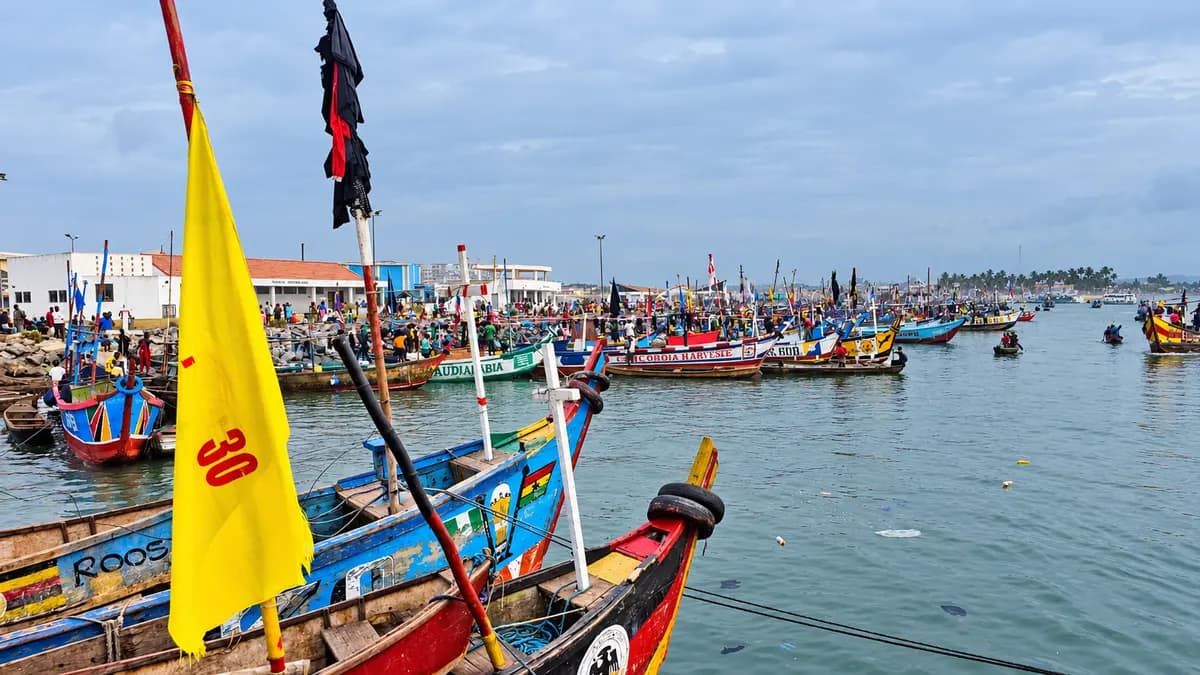
Picture the painted boats, the water lapping against their hulls and the basins moving from the quay to the sales areas. Following this movement reveals the connections between fishing, trade and food supply. Your guide helps you understand how it all works: where crews come ashore, how produce moves and which gestures mark the beginning of a transaction.
This guide will help you plan a morning at Elmina's fishing harbour and fish market: a suggested route, access from Cape Coast or Accra, seasons, budget and the right Kiblistours package. It also introduces the occupations you may encounter and the links between fishing and everyday life in the town.
1. Where Is Elmina and Why Should You Visit?
What can you see in Elmina in one day? The harbour, fish market and castle make an itinerary combining maritime culture with historical heritage. From Cape Coast, you can explore these places in a morning and follow up with a castle visit.
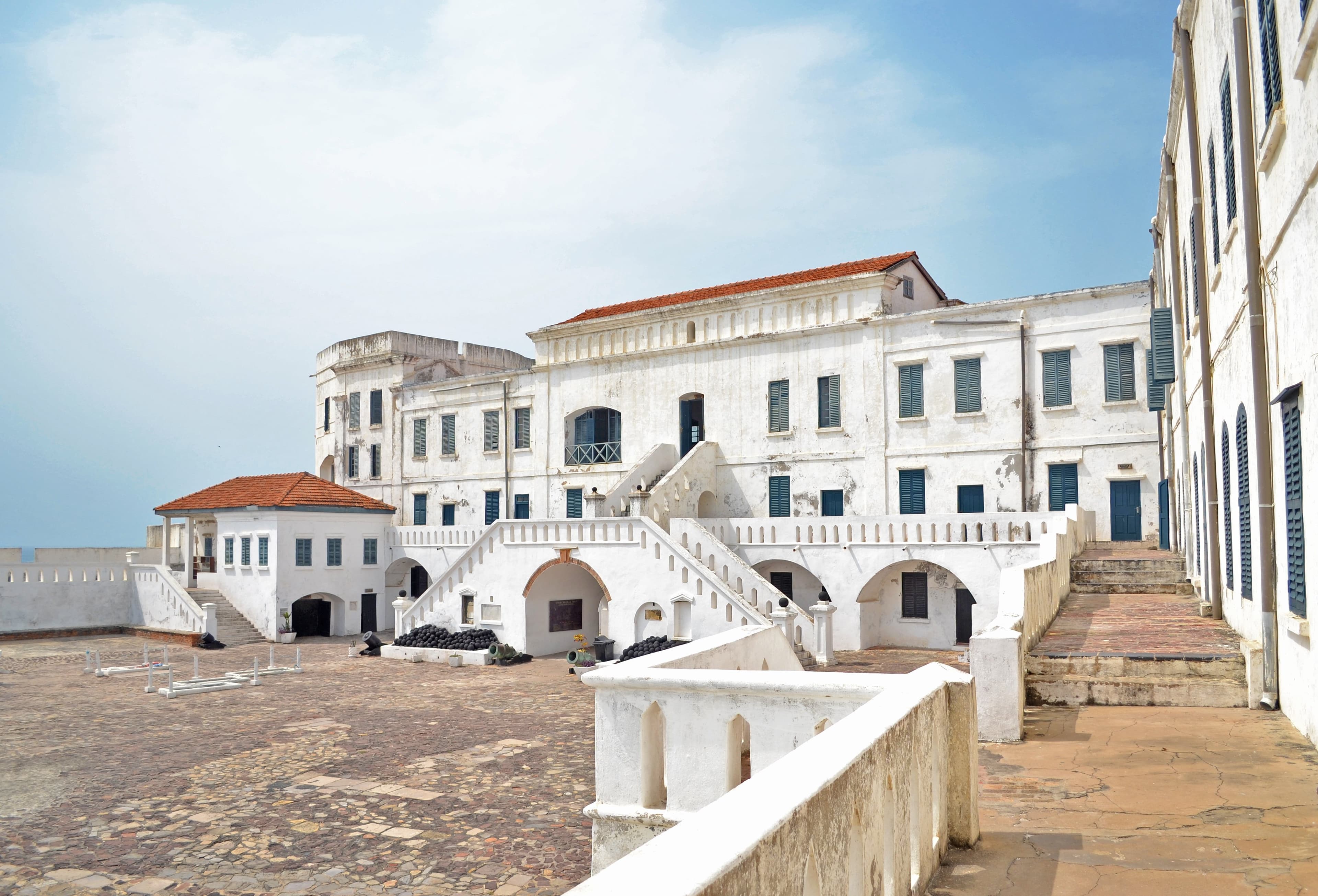
Elmina lies in Ghana's Central Region, on the Atlantic coast near Cape Coast. It is part of the Komenda–Edina–Eguafo–Abrem area. Its proximity to several heritage sites makes it a natural stop on a cultural tour of southern Ghana. History-minded travellers know the town mainly for St George's Castle, associated with centuries of European trade and the transatlantic slave trade. Yet the town centre, shoreline and lagoon form a far more varied landscape.
To understand Elmina, observe the relationships between the sea, the channel, the quays, the commercial streets and the residential neighbourhoods. The harbour is not a backdrop separate from the town: it generates income, employment and daily trade. Boats need fuel, maintenance, equipment and labour. Landed fish must be sorted, purchased, moved, preserved, smoked or distributed. Behind every photograph of a fishing canoe lies a network of economic activity.
A visit to Elmina may be short, but treating it simply as a stop between two monuments would miss much of its character. Taking time to walk near the permitted harbour areas and speak with a local guide gives a clearer sense of the different professions and how they complement each other. The experience appeals to travellers seeking authentic experiences in Ghana, documentary photographers, curious families and visitors keen to support the local economy.
2. Elmina Fishing Harbour: Living Heritage
Elmina Fishing Harbour holds a special place in Ghana's maritime landscape. For many years, the sight of fishing canoes gathered around Benya Lagoon has left a lasting impression on visitors. Often decorated with colours, names or symbolic markings, these vessels are more than attractive sights. They are valuable working assets maintained by crews and owners. Their shapes reflect choices suited to navigation conditions and fishing methods.
The phrase 'living heritage' fits this place because skills are passed on through practice: preparing gear, reading sea conditions, organising a crew, negotiating sales and preserving some of the catch. Yet it is important not to romanticise fishing as an unchanging activity. It evolves with engines, new equipment, harbour facilities, changing fish stocks and household needs. Traditions coexist with innovations and very contemporary challenges.
The major rehabilitation and expansion of the harbour was officially inaugurated on 26 May 2023. According to Ghanaian authorities, the project developed maritime and onshore infrastructure, including protective works, quays, repair areas and facilities for fish trading. This is an important milestone: visiting the harbour today also means seeing the interaction between a traditional fishing area and modernised facilities. An attentive visitor may wonder how these improvements affect safety, post-catch losses and the work of women fish traders.
3. Why Visit the Fish Market Early in the Morning?
Early morning is generally a good time to discover the activities surrounding fish landings, but there is no single hour when every boat returns. Arrival times depend on fishing trips, target species, sea conditions and crew decisions. Some destination guides mention activity from around 6 a.m.; this is a guideline, not a guaranteed schedule. A well-organised excursion remains flexible and checks local conditions before finalising the route.
An early visit offers several advantages. Temperatures are often more comfortable for walking, the light can bring out the colours of the hulls and, when catches are landed, visitors may follow the different stages taking fish from the boat to buyers. Some mornings, however, are quieter than others. Even then, the visit remains worthwhile thanks to workshops, discussions about fishing occupations and views of harbour facilities from authorised areas.
Above all, the market is a workplace. Traders have little spare time when fish arrives, and people carrying heavy loads may move quickly. Keep pathways clear, do not touch the basins and ask permission before taking photographs. The aim is not to capture a spectacular image at any cost, but to enjoy a respectful experience without slowing sales or turning traders into performers.
4. First Stop: Benya Lagoon and Its Fishing Canoes
Benya Lagoon is central to Elmina's visual identity. Its canoes and their movements create a scene that no museum visit can reproduce. From a safe public viewpoint, take time to observe the traffic: stationary boats, vessels manoeuvring, people preparing equipment and traders carrying goods. The scene changes throughout the day, and that very unpredictability makes it interesting.
Your guide can explain visible differences between vessels, how engines are used and the general division of labour along the fishing supply chain. The inscriptions on hulls may have religious, family or social meanings, although no guide should claim to interpret every message on behalf of its owner. When an opportunity arises and those involved are available, a conversation held with their consent can offer more than observation alone.
For visitors, this first stop helps make sense of the layout: where do boats land, how do people reach the selling areas and which routes must remain open? Ten to twenty minutes may be enough to get your bearings. Do not board a boat without an explicit invitation and appropriate safety precautions. An active harbour has taut ropes, slippery surfaces and manoeuvres requiring constant attention.
5. Second Stop: Watch the Fish Landings Without Interrupting Work
If a canoe returns during your visit, the landing reveals a sequence of coordinated actions. The crew must secure the vessel, stabilise its load and transfer the fish. Depending on local arrangements, the catch may be passed to intermediaries, sorted, measured or moved to selling areas. Procedures are not identical everywhere: describe what is actually happening rather than imposing a standard scenario.
This is understandably an absorbing moment for tourists, but it requires greater restraint than an ordinary stroll. Never stand in handling areas or cross the path of people carrying heavy containers. Children should stay close to adults, and groups should avoid creating crowds. A good guide chooses a position from which visitors can understand the process without obstructing movement.
There is an economic lesson here: every minute matters when fish is fresh and customers are waiting. Landing is where the uncertainty of a catch meets the need to sell quickly. Daily earnings may fluctuate, while fuel, equipment and labour costs continue to weigh on the business. Watching tactfully helps explain why fishers talk as much about sea conditions as about market prices.
6. Third Stop: Step Into the World of Elmina Fish Market
Elmina Fish Market is a lively commercial space connected to the harbour and its landings. Do not expect a tourist market with uniform stalls: its appearance, arrangement and trading rhythm reflect the needs of working professionals. Visitors may see different ways of displaying fish, basins being carried and interactions between buyers, women sellers and transporters. The species on offer change with the catches and seasons.
The best approach is to ask your guide to explain the main stages of transactions rather than questioning several traders in the middle of negotiations. Why do some buyers purchase large quantities? How are prices set? What happens to a batch that does not sell immediately? These questions add meaning to what you see and lead naturally to the central issue of preservation. Visitors also discover that fresh fish does not always end its journey in town: it may be sent to other markets or processing networks.
Making a small purchase, when appropriate, can deepen the experience. Ask the price, observe how the batch is assembled and find out how the fish is usually cooked. If you are staying in a hotel, check whether it can prepare or store fresh fish before buying any.
7. Women at the Heart of the Fish Trade
A morning in Elmina would be incomplete without paying special attention to women's work throughout the fisheries value chain. In many Ghanaian coastal communities, women play major roles in purchasing, financing, processing, transporting and selling fish. Their responsibilities vary between families, products and markets. It would therefore be misleading to describe them simply as sellers passively waiting for the boats to return.
A trader often has to anticipate demand, mobilise funds, assess product quality, negotiate and organise distribution. Some combine several functions, while others specialise. Fish availability, profit margins, transport costs and potential losses directly affect their income. This entrepreneurial dimension deserves a central place in any travel account of the market.
A prearranged meeting with a fish trader can shed light on how she chooses suppliers, finances purchases and allocates products between immediate sales and processing. When such a conversation is part of the itinerary, its length and compensation should be agreed in advance. The guide can then interpret without interrupting a negotiation.
8. From Fresh Fish to Smoked Fish: Understanding Processing
Fish smoking is important in Ghana's food traditions and commercial networks. It can extend the usable life of fish while producing a highly valued flavour. In and around fishing communities, techniques vary according to species, equipment, fuel and local practices. Salting and drying are also used in some supply chains. A visit to a particular smoking facility should never be promised without prior permission from its operator.
An educational explanation can follow fish after purchase: cleaning according to the processor's methods, preparation, heat control, monitoring the smoking process, cooling and sale. The issues go well beyond recipes. Food safety, smoke exposure, working conditions and post-catch losses all matter. Improved smoking technologies can support progress in some areas, but their actual availability must be confirmed locally.
For travellers interested in food, comparing fresh, salted, dried and smoked fish shows how preservation methods also create different flavours and culinary uses. The local operator Ghana Eco Tours discusses these methods on its Edina markets walk. Whether you can observe them depends on the day's activities, but they provide a fascinating starting point for discussing food-related skills.
9. Elmina Castle and Harbour: Two Complementary Stories
To explore the history before or after visiting the harbour, see our feature: Elmina Castle in Ghana: History, Visiting and Remembrance on the Atlantic Coast. Discovering the historic heritage complements the maritime experience without confusing the two.
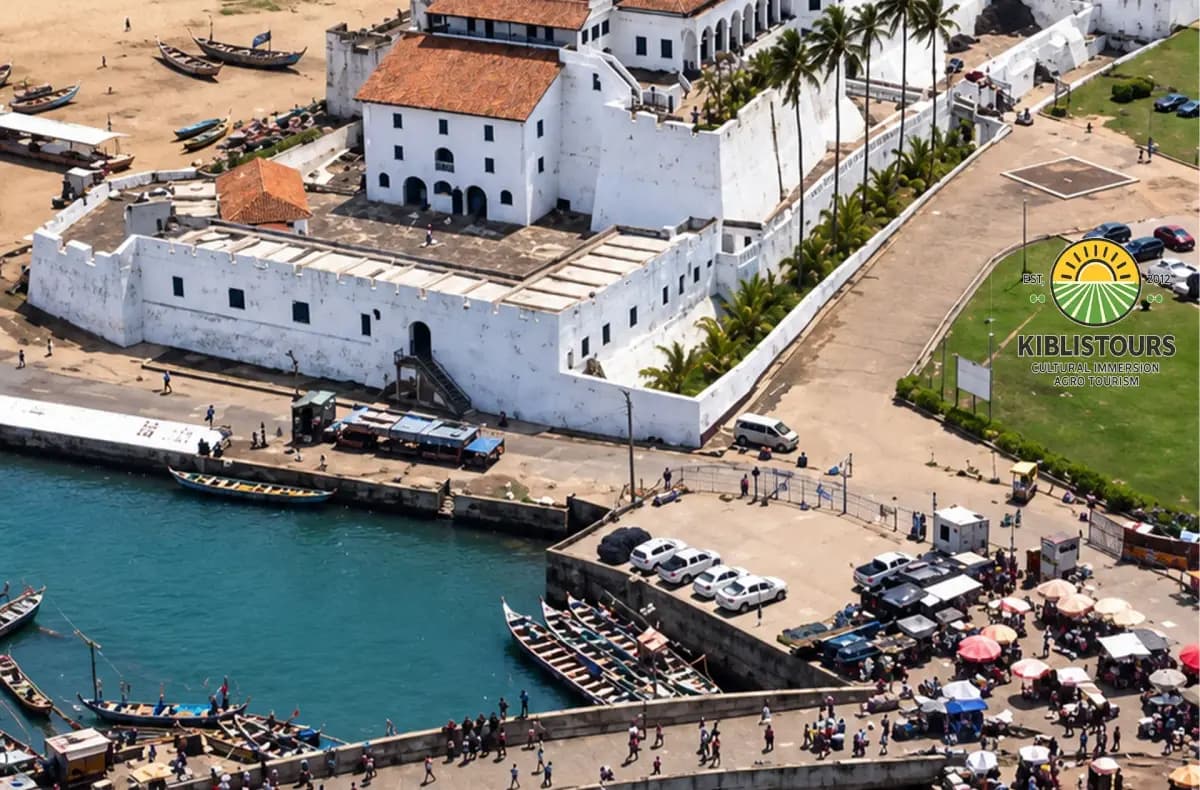
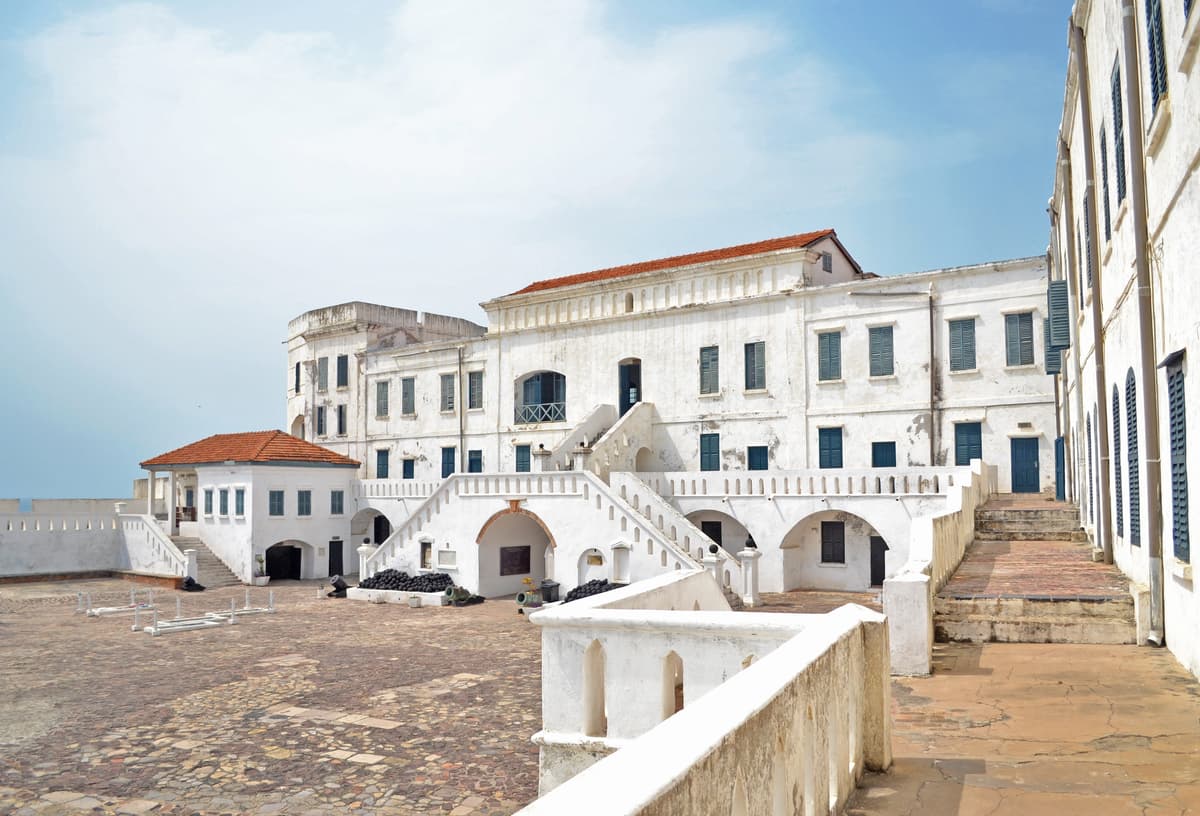
St George's Castle in Elmina, built by the Portuguese in 1482, forms part of the serial UNESCO World Heritage property 'Forts and Castles', inscribed in 1979. Its history calls for a rigorous approach and respect for the memory of the transatlantic slave trade. The castle bears witness to centuries of commercial and political relations, also marked by violence, captivity and forced deportation. It is not simply an attractive backdrop for holiday photographs.
The harbour and market reveal another dimension of the town: contemporary livelihoods and the vitality of a community that continues to evolve. The two places are not opposites. Together they illuminate continuity and change between a port town shaped by historic exchanges and a community now working within a complex economic environment.
An itinerary may therefore begin with the harbour's morning activities and continue with a guided castle tour. This sequence makes sense: visitors first meet the people who sustain everyday life, then approach a painful history in the more suitable context of a heritage visit. The reverse order is also possible, particularly when transport or access constraints dictate it. What matters is giving each experience the time, quiet and attention it deserves.
10. What Does a Morning at the Harbour Look Like? Suggested Itinerary
Sample morning at Elmina Fishing Harbour (illustrative, adjustable times; not guaranteed market operating hours).
Indicative time | Stop | Duration and precautions |
6:30–7:00 a.m. | Arrival and briefing | 30 min: authorised access, safety and respect for workers. |
7:00–7:40 a.m. | Benya Lagoon and canoes | 40 min: observe from a safe area without hindering manoeuvres. |
7:40–8:30 a.m. | Fish landing activities | 50 min: observation only if boats return and access is permitted. |
8:30–9:15 a.m. | Fish market | 45 min: possible conversations with consent and local mediation. |
9:15–9:45 a.m. | Processing and sales | 30 min: explanations about smoking or distribution; no unauthorised workshop visits. |
9:45–10:00 a.m. | Wrap-up and departure | 15 min: questions, break and optional continuation to the castle. |
Before your visit: fish landings depend on boats going to sea and on the weather. The route follows whichever areas are accessible that day; meetings and workshop visits must be arranged with professionals. Keep passages clear, request permission before portraits and follow your guide's instructions. If no boats return, the visit focuses on the market, neighbourhood and fishing occupations.
A sample itinerary starts at daybreak, depending on where guests are staying and local conditions. After a short welcome, the guide explains safety rules and how the harbour district functions. The first stop, at an authorised viewpoint, introduces Benya Lagoon and the movements of the boats. If fish landings take place, the group then watches the transfer of the catch from a reasonable distance without occupying work areas.
The second part of the morning focuses on the market and the trading chain. The guide explains the transactions, occupations and importance of women in selling and processing. Subject to permission, a short conversation with an available professional may be arranged in advance instead of an improvised encounter during a busy period. A break allows for questions, refreshments and a few notes on what you have seen. Finish with a stroll through nearby streets or continue towards the castle.
For a group, two to three hours may be enough for this part of the experience, excluding transfers and optional heritage visits. This is not an official schedule: the tour must adapt to crowds, weather, participants' pace and access conditions. Organisers should clearly distinguish confirmed arrangements from elements that depend on the day's activities. This way, even if landings are limited, visitors gain meaningful insight into the town and its economy.
11. Photographing Elmina Harbour Respectfully
Elmina's colourful canoes are among the scenes most sought after by photographers travelling in Ghana. You can frame rows of hulls, patterns of nets, light across the lagoon or the contrast between the harbour and historic architecture. Landscapes and close-ups of objects, taken from authorised spaces, already offer a wealth of photographic opportunities. Recognisable people do not always need to appear in the frame.
For portraits, clear permission is essential. Consent should cover taking the photograph and, where relevant, publishing it online. Someone may agree to be photographed without consenting to commercial use of their image. Avoid close-up images of children without appropriate consent from their guardians. Professional photographers, content creators and tourism brands should explain their intentions before shooting.
Technical discretion matters as much as politeness. Avoid equipment that blocks movement, flashes directed at workers and drones without the required regulatory and local authorisations. Never move working tools to improve a composition or ask a trader to reenact a scene. Good documentary photography portrays the activity in its proper context, with respect for people's rights and dignity. These precautions build trust between visitors and residents.
12. Responsible Tourism: Support the Community Without Turning the Harbour Into a Show
'Authentic' is a word that appears frequently in travel searches. In Elmina, it should not mean unlimited access to residents' private lives. The harbour is authentic precisely because it primarily serves fishers, traders, transporters and their families. Visitors are welcome insofar as their presence is accepted and does not disrupt operations. This distinction protects both the quality of the experience and local life.
Responsible tourism favours knowledgeable guides, local service providers, meaningful purchases and transparent arrangements. Prearranged encounters with fishing-industry professionals should take place with their consent and, when they are providing a service requested by visitors, be fairly compensated. Do not promise private conversations with traders or entry into restricted zones without permission. Safety and hygiene rules must never be bypassed to satisfy a tourist request.
Travellers can also reduce their impact by limiting waste, avoiding disposable packaging, respecting places of worship and remembrance, buying without aggressive bargaining and refraining from posting humiliating accounts of working conditions. The best evidence of a successful journey is not a collection of spectacular pictures. It is being able to describe accurately what you learned, acknowledge the contribution of those you met and leave the place to carry on with its daily life.
13. Artisanal Fishing and Sustainability Challenges in Ghana
Artisanal fishing supports livelihoods in many communities along Ghana's coast. Yet it faces ecological and economic challenges, including pressure on fish stocks, unpredictable catches, production costs and competition for maritime space. Visitors can learn about these issues through their guide without expecting fishers to provide an impromptu scientific assessment in the middle of a working day.
Regulations evolve. For 2026, Ghana's ministry responsible for fisheries announced a seasonal closure for industrial trawlers from 1 July to 31 August and for semi-industrial vessels from 1 to 31 July, while exempting artisanal canoe fishers from this nationwide closure. Canoe fishers remain subject to other rules and to traditional rest days observed in their communities. It would therefore be wrong to claim that no vessel can operate in Elmina throughout July, just as it would be misleading to guarantee fish landings every morning.
For future trips, these details should be checked again with the authorities and local operators. Conservation measures may change from year to year, and community practices also affect schedules. Discussions about sustainable fishing can touch on protecting resources, reducing post-catch losses and food security without pretending that a short walk can solve complex problems. A thoughtful excursion provides insight and encourages informed curiosity.
14. When to Visit Elmina: Seasons, Weather and Fishing Activity
For comfortable walking along the central coast, December to February is generally the driest period. March can also work well, although the heat becomes more pronounced and rainfall gradually returns. The climate remains tropical: setting out early makes walking more comfortable in every season.
From April to July, southern Ghana's main rainy season calls for greater flexibility. August often brings a relative lull, followed by another rainy period between September and November. These regional patterns, drawn from the Ghana Climate Atlas, do not predict the weather on any particular day.
The day of the week matters as much as the month. Ghana Eco Tours indicates that its Edina Fish Markets Walk is not available on Tuesdays. For an introduction to fishing activities, choose another day and check the local schedule with your guide. This information applies to that operator's tour and does not imply that the entire town or all its businesses close on Tuesdays.
The Bakatue Festival can add a rich cultural and maritime dimension to a trip. To attend a specific edition, check the official calendar for that year and book accommodation well ahead. The most pleasant season for walking does not necessarily coincide with the largest fish landings.
15. Getting to Elmina from Cape Coast and Accra
From Cape Coast, allow approximately 15 km and 20 to 40 minutes by road, depending on your departure point and traffic. A taxi or vehicle with a driver makes an early arrival easier; agree on the meeting point and fare before setting off. Shared transport requires more time to reach the harbour itself.
From Accra, the distance is roughly 160 to 180 km, depending on the route and collection point, with a journey of around 3 to 5 hours or sometimes longer. Traffic when leaving the capital and around Kasoa affects journey times. These deliberately rounded estimates are intended for planning and do not guarantee transfer times.
If you want to begin exploring Elmina around 7 a.m., the most comfortable solution is to arrive in Elmina or Cape Coast the previous day. You can enjoy the morning without relying on a long transfer before dawn. A same-day return trip from Accra with a later visit is possible, but less suitable for an itinerary focused on morning landings.
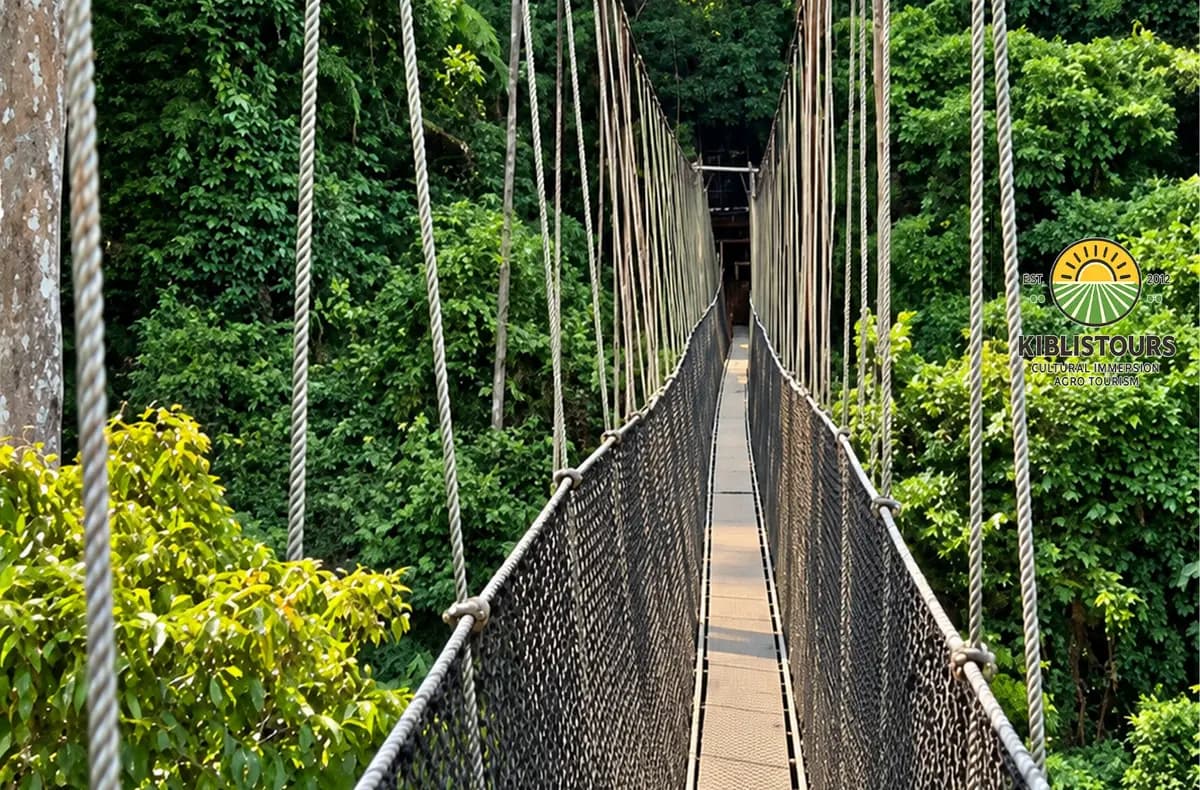
If you want to continue to Kakum, plan a separate transfer and allow time for arrival and the park visit. Avoid squeezing the harbour, two castles and Kakum's canopy walkway into an overly tight schedule. An extra overnight stay makes it possible to spread these discoveries across two days.
16. Combining Elmina with Cape Coast Castle and Kakum National Park
For more ideas, read: Visiting Cape Coast Castle in Ghana; and What to Do in Ghana: 15 Places and Experiences (including Kakum National Park and its canopy walkway). These articles help you compare attractions and design an Elmina excursion from Cape Coast.
For a longer itinerary, our Ghana in 14 Days: From the Atlantic to the Savannas proposal shows how the central coast can be linked to other parts of the country, subject to a confirmed programme and quotation.
A stay in Ghana's Central Region lends itself to several combinations. The most obvious brings together Elmina's fish market and harbour, St George's Castle and a visit to Cape Coast. Visitors can move between the present-day economy and the history of the transatlantic slave trade. It is important to allow an emotional transition between harbour activities and places of remembrance: they are not attractions of the same kind, and they call for different approaches.
Kakum National Park is another popular stop for travellers interested in tropical forests and Ghana's natural landscapes. It is not within Elmina's harbour area and requires a separate journey. An overloaded day may leave little time to appreciate anything properly. Couples and families may prefer the market in the morning, one heritage site in the afternoon and Kakum the following day, especially if they want to explore at a relaxed pace.
Culture enthusiasts may also enjoy guided walks through the historic centre, other coastal viewpoints or culinary experiences. The key is to follow a coherent itinerary and verify actual access to each activity. At Kiblistours, the different stops can be combined in a personalised quotation request. Harbour visits, professional encounters and ticketed monuments should be listed separately in the programme so that every guest knows exactly what is included.
17. How Much Should You Budget for a Visit to Elmina?
For an initial estimate, divide the costs into four categories: guiding, transport, meals and any heritage-site admission fees. Prices depend greatly on your starting point: a walking tour from Elmina and a private excursion from Accra require very different resources.
One publicly listed price offers a reference point for a guided walk: Ghana Eco Tours quotes USD 10 per person, or the equivalent in Ghanaian cedis, for its 75-minute walking tours, with a group discount and a 20% surcharge for tours outside scheduled hours. This rate, checked in November 2026, applies to that operator and short tour format. It is neither a Kiblistours rate nor the price of a full morning's visit.
For food, the travel guide published by Chris Mobility Africa suggests approximately GHS 80 to 150 per person for a meal during an excursion in the Cape Coast area. This is a broad indication that varies by restaurant, drinks and menu. Meals are not included in the guided-walk reference price above.
For private transport, request a price per vehicle and confirm passenger capacity, fuel, waiting time and return arrangements. Dividing the total by the number of travellers gives an approximate individual cost. From Accra, you may also need to budget for accommodation; from Cape Coast, a short transfer may be sufficient.
Castle admission fees, prearranged meetings and interpretation services should be itemised when charged. No general entrance fee for the harbour or market is claimed here: working areas and public walking spaces are not the same thing.
Kiblistours brings these elements together in a quotation tailored to your group. Compare the total price, guided duration, language and inclusions rather than looking only at the Standard, Premium or VIP label. Rates published by other operators help with budget planning but are not commitments by Kiblistours.
18. Explore Elmina with Kiblistours: Three Tour Concepts to Suit Your Style
Choose from three itinerary formats based on your available time and travel preferences. The durations below are planning guidelines. Your Kiblistours quotation will confirm the itinerary, language, transport, price and selected services. Professional encounters and paid admissions are clearly identified as optional extras.
Standard - Harbour and Market Essentials
For travellers looking for an accessible, guided introduction to Elmina's maritime activities.
Description: a walking tour of authorised public areas, views of fishing canoes and a guided introduction to market activities.
Proposed itinerary: approximately 2 hours on foot around the lagoon, harbour and market, with explanations of occupations and trading practices.
Not included by default: transport from another town, meals, drinks, personal expenses, tips and paid visits, unless explicitly included in the quotation.
Requirements: ability to walk short distances, closed-toe non-slip footwear, compliance with instructions and consent before close-up photography.
Highlight: a concise, informative and well-contextualised introduction.
Premium - Deeper Immersion and Heritage
For visitors who want more time to understand the fish supply chain and connect the harbour with Elmina's urban history.
Description: an in-depth introduction to the fish trade and a heritage walk through Elmina, connecting present-day harbour activities with the town's history.
Proposed itinerary: approximately 3 to 4 hours, combining the maritime route with a walk through the historic centre. A meeting with a local professional may be requested as an optional extra.
Not included by default: site admission fees, meals, intercity transfers, purchases and activities requiring approval from local operators.
Requirements: interest in cultural exchanges, flexibility with timing and respect for the work of fish traders and fishers.
Highlight: greater depth and more time for meaningful exchanges.
VIP - Tailor-Made Private Discovery
For couples, families and small groups seeking a personalised experience at their own pace.
Description: a private itinerary for your couple, family or group, built around the harbour and market, with possible extensions to the castle, Cape Coast or a food stop.
Proposed itinerary: a private half-day or full-day experience at a personalised pace, combining your chosen stops. A dedicated vehicle and castle visit can be included in the quotation.
Not included unless stated in the quotation: admission fees, food, accommodation, photography services, exclusive activities and personal expenses.
Requirements: advance enquiry specifying dates, number of participants, departure point and preferences; all special encounters or access require authorisation.
Highlight: group privacy and flexible planning, without exclusive use of the harbour or market.
Compare the Three Packages
Criterion | Standard | Premium | VIP |
Experience | Essential maritime discovery | Fish supply chain and urban history | Personalised private itinerary |
Indicative duration | 2 hours | 3 to 4 hours | Half-day or full-day |
Guiding | Guided harbour and market walk | In-depth guiding and historic walk | Private guiding at your pace |
Transport | Not included by default; optional quotation | Not included by default; optional quotation | Private vehicle possible only if quoted |
Other visits | Harbour, lagoon and market | Historic centre; optional professional meeting | Stops selected in your quotation |
Meals and expenses | Not included unless quoted | Not included unless quoted | Not included unless quoted |
Prices and departures | Price and availability on request | Price and availability on request | Price and availability on request |
Six Essential Details to Check in Your Quotation
Date, departure time, duration, number of travellers and selected package.
Guiding language, and the identity and role of everyone providing services.
Meeting point, transport arrangements and pick-up conditions.
Included and excluded services, and selected extras.
Total price, currency, payment terms and cancellation conditions.
Safety conditions and authorised access to working areas.
Request Your Elmina Quotation
To receive a proposal, complete the Kiblistours form and specify 'Ghana - Elmina: Fishing Harbour and Fish Market', your dates, number of travellers, departure town and preferred package. Add your preferred guiding language and any extras that interest you. Our team will send you a priced itinerary; submitting the form is a request for a quotation, not a confirmed booking.
Request Your Elmina Quotation - Kiblistours Form: Quotation Request Form
19. Practical Tips and Mistakes to Avoid Before You Go
Choose closed-toe non-slip shoes, comfortable clothing and sun protection. Bring drinking water, a little local currency for permitted expenses and a waterproof pouch for your phone and documents. The market may have strong smells, wet floors, noise and crowded walkways. If you are particularly sensitive to any of these, mention it before booking so the route can be adapted.
Common mistakes include arriving too late and expecting to see every boat, planning an itinerary with no spare time, photographing traders without permission and getting too close to unloading operations. Avoid categorical claims about fish prices, fishers' incomes or the origin of a catch without verifying the facts. A busy-looking market may still be going through difficult economic times; appearances are not enough to judge.
Finally, have a backup plan. If weather, local restrictions or a lack of landings prevent certain observations, the guide can focus on the landscape from an authorised viewpoint, provide an explanatory discussion or suggest another cultural site in Elmina. Such flexibility is not a weakness: it reflects an understanding that this is a living, working place. Realistic expectations make a rewarding experience far more likely.
Frequently Asked Questions: Visiting Elmina, Its Harbour and Fish Market
What can you do in Elmina besides visiting the castle?
Explore the fishing harbour, observe Benya Lagoon from accessible areas, walk through the fish market without disturbing trade, discover the town centre and consider Fort St Jago, depending on opening arrangements. A guided visit gives valuable insight into occupations and historical context.
What time should you visit Elmina Fish Market?
Early morning is generally recommended. Boats may return around daybreak, but no landing time is guaranteed. Your itinerary should be adapted to local conditions and the day's operations.
Is Elmina Fishing Harbour open to tourists?
Some viewpoints and walkways may be accessible, but the harbour remains a working facility with safety rules. Entry to quays, buildings and professional areas may be restricted. Follow the instructions of the authorities and your guide.
Can you photograph fishers and market traders?
Ask for consent before taking portraits and explain any public or commercial use. Even with permission, stop photographing if it interferes with work or if the person changes their mind.
How much time should you allow for the harbour and market?
Allow about 2 hours for the essential walk and 3 to 4 hours for a more in-depth morning with additional explanations and a historical walk. The detailed timetable illustrates the latter pace. Transfers and an interior castle tour require extra time.
Can you see Elmina's colourful fishing canoes?
Yes. The canoes are among the most distinctive features of the harbour landscape. Their positions and the available viewpoints vary according to activities and access restrictions.
Can you visit Elmina from Cape Coast?
Yes. Its proximity to Cape Coast makes a day excursion easy to arrange. Traffic, departure point and transport choice determine the exact journey time. Arriving early is preferable for harbour activities.
Can you visit Elmina from Accra in one day?
Yes, with organised transport, although the journey can be tiring. Spending a night in the Cape Coast area usually makes for a more comfortable morning at the harbour.
Should you book a French-speaking guide?
A French-speaking guide can provide valuable cultural, economic and practical interpretation. Check the confirmed language, tour inclusions and any permission required for meetings.
Is the fish market suitable for families?
Yes, provided the route is short, children are closely supervised and safety zones are strictly respected. Parents should take account of noise, smells, people carrying heavy loads and slippery surfaces.
Can you visit a fish-smoking workshop?
This depends on availability, the operator's consent, hygiene conditions and authorised access. Never assume a smoking demonstration is included in a standard market visit.
Is there a closed fishing season in Ghana?
Rules vary by year and vessel category. In 2026, the nationwide closure distinguished industrial and semi-industrial fleets, while artisanal canoe fishers were exempt, though they remained subject to community rules.
Can you combine the harbour with Elmina Castle?
Yes. They make a meaningful combination, provided enough time is reserved for the market and the castle is approached with the respect owed to the memory of the transatlantic slave trade.
What is the difference between Elmina and Cape Coast?
Elmina is known for its castle, lagoon, harbour and market. Cape Coast has its own castle and other visitor facilities. The two towns complement each other on an itinerary through Ghana's Central Region.
What should you bring on a cultural excursion to Elmina?
Suitable shoes, water, a hat, sunscreen, comfortable clothing and patience. Also confirm departure time, guide, transport, admission fees, photography rules and change conditions.
How do you request a quotation for an Elmina visit with Kiblistours?
To arrange an Elmina experience, complete the Kiblistours contact form and choose a customised tour enquiry where that option is available. Specify 'Ghana — Elmina: Fishing Harbour and Fish Market', your dates, number of participants, starting point (Cape Coast, Accra or elsewhere), preferred Standard, Premium or VIP package and desired services. Kiblistours will reply with a proposal, subject to feasibility, availability and confirmation of conditions. Submitting the form does not constitute a booking.
Conclusion: In Elmina, Look Beyond the Sea to Understand the Lives It Connects
Discovering Elmina beyond its castle enriches a heritage visit with a firsthand experience of everyday life. The harbour and fish market reveal the connections between maritime work, trade, food processing and urban life. They encourage us to see the canoes differently: not simply as colourful motifs, but as the essential tools of an activity that supports families and an entire region.
Memories of Elmina are built from details: a well-maintained hull, a mended net, the way a batch of fish is assessed, the journey from landing to sale. With thoughtful guidance, these gestures become keys to understanding a town whose maritime identity comes alive through its people.
Would you like to discover Elmina beyond the castle? Request a personalised quotation from Kiblistours. Tell us your dates, number of travellers, departure town and preferred package. You will receive a proposal detailing the itinerary, services and total price before confirming anything.