Some cities reveal themselves simply as you walk through them. Abomey, however, also asks you to look beyond what you see.
Behind a red-earth wall may lie the former enclosure of a power that ruled for generations. Behind an animal depicted on a bas-relief may be the emblem of a sovereign, a motto, a political episode, or the memory of a victory. Behind a courtyard that is silent today remain traces of ceremonies, audiences, decisions, rituals, and human lives that several centuries have not completely erased.
That is what makes Abomey so remarkable.
When you arrive in the city, the first things you notice are the red earth, lively streets, artisans’ workshops, markets, motorcycles, houses, and everyday life. Yet as soon as its history begins to unfold, the landscape takes on a different meaning. A courtyard is no longer simply a courtyard. A wall becomes a witness. A decorative motif can become a genuine language of political power.
Names then emerge.Names then appear. These are the names of the 12 kings of Abomey.
They belong to different periods, and their reigns cannot be confined to a single interpretation. Some consolidated the state. Others expanded its territory or strengthened its army. Several negotiated with neighboring states and foreign powers. The kingdom also participated in the Atlantic trade in enslaved people before confronting French colonial expansion at the end of the nineteenth century.
Alongside the sovereigns were other figures who are too often relegated to the background: dignitaries, artisans, farmers, merchants, priests and priestesses, messengers, soldiers, captives, women of the royal court, and female warriors.
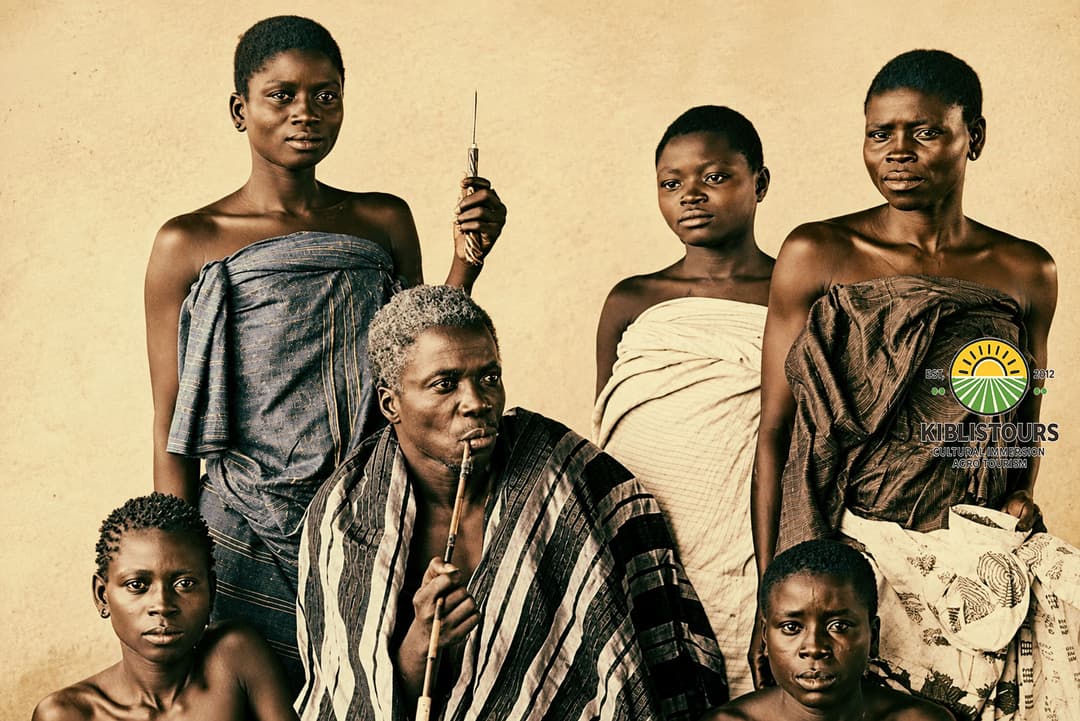
Among the latter were the famous women soldiers of Dahomey, nicknamed the “Amazons” by European observers and today often referred to as the Agojie or Mino
The history of Dahomey is fascinating precisely because it resists overly simplistic narratives.
Portraying it solely as a glorious epic of African power and resistance would be incomplete. Reducing several centuries of history to the Atlantic slave trade would be equally incomplete.
Dahomey was simultaneously a centralized monarchy, a military and commercial power, a center of artistic creation, a society deeply structured by religion and relationships with ancestors, a participant in regional wars, a major actor in the Atlantic slave trade, and ultimately a kingdom confronted by European colonial expansion.
At the heart of this memory stand the Royal Palaces of Abomey.
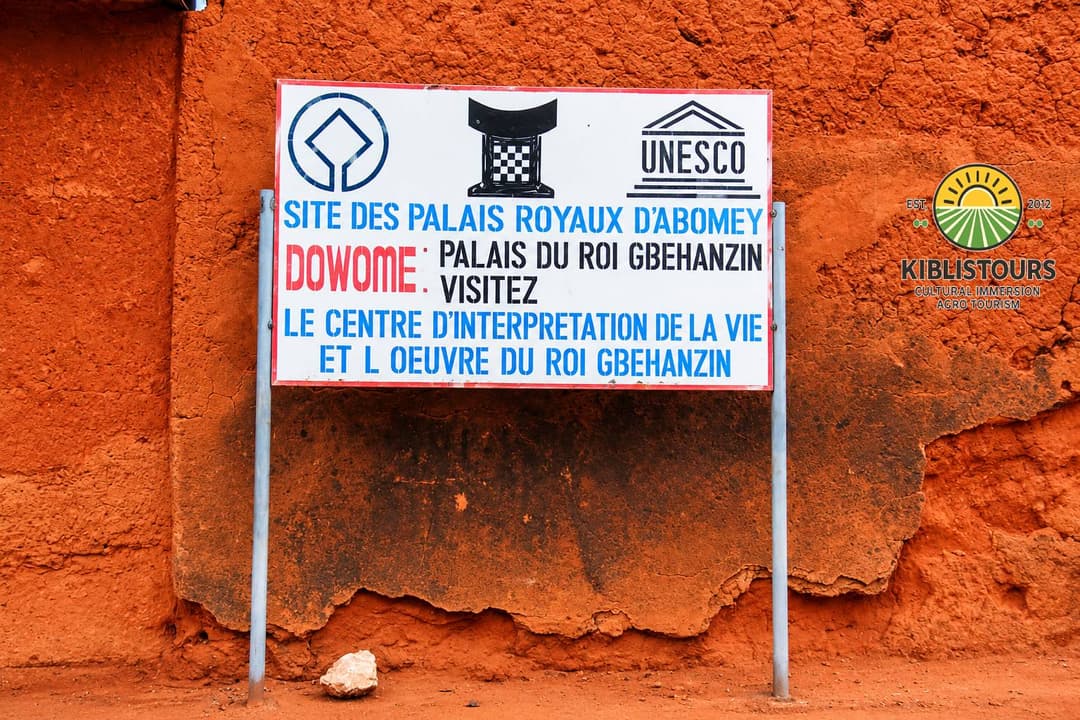
The UNESCO World Heritage Centre twelve kings succeeded one another between 1625 and 1900 at the head of the Kingdom of Abomey. With the exception of Akaba, who had a separate enclosure, the sovereigns built their palaces within the same complex, following certain shared principles regarding spatial organization and the use of materials.
The property has been inscribed on the World Heritage List since 1985, under criteria (iii) and (iv). UNESCO’s current technical information indicates an area of 47.6 hectares, complemented by a 181.4-hectare buffer zone.
Yet these figures alone cannot explain what it feels like to actually stand in Abomey.
To understand that, you have to imagine generations of sovereigns building or transforming their palaces, artisans working with earth and wood, delegations waiting for an audience, messengers arriving from distant territories, soldiers returning from military campaigns, and ceremonies filling courtyards that are silent today.
Then imagine those same spaces confronting wars, fires, colonial conquest, the passage of time, and contemporary conservation efforts.
Abomey’s heritage therefore represents more than what was built.
It also represents what has survived the centuries and what present generations continue to choose to preserve.
Ready to discover Abomey differently?
Imagine your journey, we create the experience.
Plan your trip with Kiblistours
The Origins of Dahomey: Where History Meets Oral Tradition
Kingdoms are rarely born in a single day.
Before a territory acquires a recognized sovereign, a capital, and institutions strong enough to endure, migrations have generally taken place, families have settled, alliances have been forged, rivalries have altered the balance of power, and new forms of political legitimacy have emerged.
The origins of Dahomey are part of this dynamic.
By the seventeenth century, the southern part of present-day Benin was already inhabited by several communities and political entities connected through networks of exchange. Dynastic traditions link the founders of Dahomey to the Aja cultural world and to lineages associated with Allada.
Movements of people, rivalries, and alliances gradually led some groups to settle on the Abomey Plateau, where a new political center began to consolidate.
However, one fundamental difficulty arises when attempting to recount this period: not all information comes from the same type of source.
A significant part of the kingdom’s memory was transmitted through spoken narratives, family histories, songs, proverbs, objects, emblems, and ceremonies.
Oral tradition does not function like an administrative record. Narratives can evolve, and a sovereign may be portrayed differently depending on the generations recounting his reign.
It is therefore essential to distinguish between what historical sources allow us to establish and what tradition has transmitted, without dismissing the latter as having no value.
The Story of Dan: Between the Origin of a Name and Oral Tradition
One of the best-known traditions associated with the origins of Dahomey tells of a local chief named Dan who is said to have controlled part of the land sought by the emerging dynasty.
After several requests for territory, he is said to have angrily asked whether those making the requests intended eventually to build all the way into his belly.
Dan was subsequently said to have been killed, and a structure was built on the site associated with his death. The term Danxomè is therefore traditionally associated with the idea of building “in Dan’s belly.”
This is a powerful story, but it must be presented for what it is: a foundational oral tradition, not a certain transcription of a seventeenth-century conversation.
That does not diminish its historical significance.
On the contrary, it helps us understand how a society chose to recount the origins of its power and how that story was transmitted from one generation to the next.
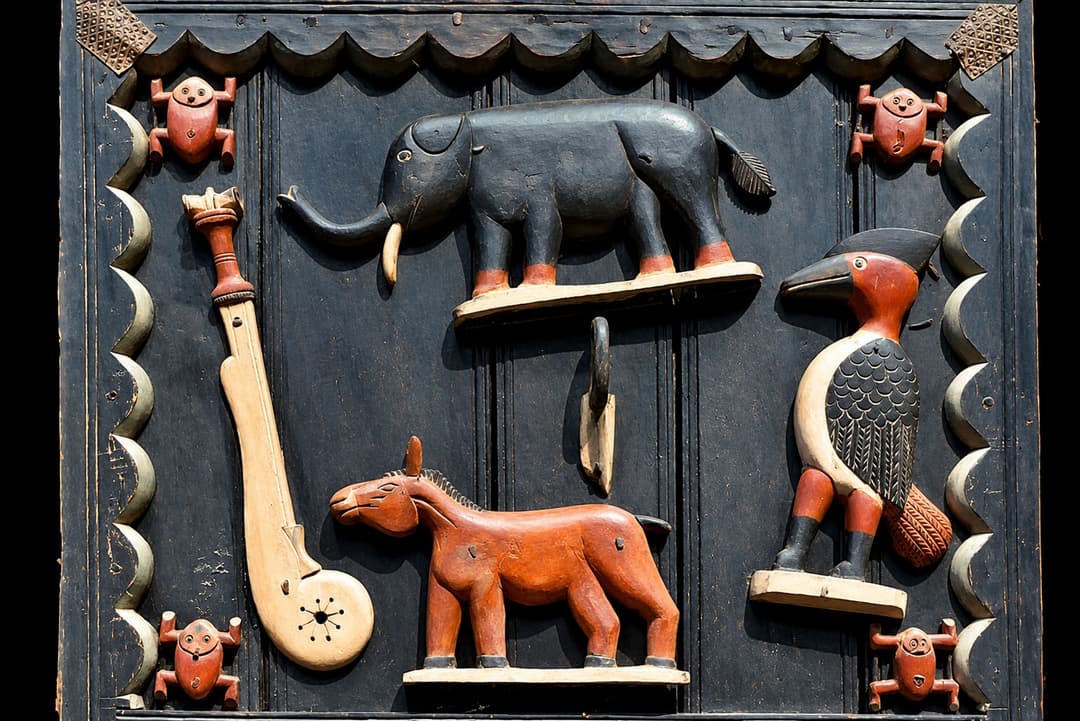
In the Kingdom of Dahomey, each king is represented by a symbol, and each symbol has its own meaning.Kiblistours guides provide you with detailed explanations of these symbols and the kings they are associated with.
The symbols of the Kings of Dahomey explained: A journey into the heart of Abomey with Kiblistours
From Ganyéhessou to Houegbadja: The Gradual Construction of the Kingdom
Dynastic traditions mention Ganyéhessou and Dakodonou among the figures associated with the kingdom’s earliest period.
Their exact roles vary across traditions and historical reconstructions, which is why imposing an excessively rigid chronology on this period would be misleading.
The essential point lies elsewhere.
A new political center gradually emerged on the Abomey Plateau. Authority had to be imposed or negotiated, alliances had to be forged, rivalries contained, and, above all, the power of a family had to evolve into an institution capable of surviving the death of an individual sovereign.
With Houegbadja, associated with the mid-seventeenth century, this organization took on a more enduring form.
Abomey became a genuine political center, court functions became increasingly structured, and palace space assumed growing importance.
UNESCO describes the Royal Palaces as the principal material testimony to the Kingdom of Dahomey and associates this period with the development of an enduring palace complex.
Building a Palace to Inscribe a Reign Within the Dynasty
One of the most remarkable architectural principles of Abomey lies in the succession of royal constructions.
UNESCO states that, with the exception of Akaba, who used a separate enclosure, the sovereigns built their palaces as a continuation of the same complex
Each new palace therefore affirmed the existence of an individual reign while simultaneously inscribing it within a much older history.
The sovereign was unique, but the dynasty extended beyond him.
Abomey was therefore not built all at once. The palace complex expanded gradually, with each reign adding its own layer to the kingdom’s political memory.
Kiblistours gives you the opportunity to understand why Abomey is considered a jewel of UNESCO World Heritage.
Agadja: When the Kingdom Turned Toward the Coast
The eighteenth century marked a major transformation.
Under Agadja, Dahomey expanded its influence southward, notably conquering Allada and then Ouidah. This expansion gave the kingdom much more direct access to the commercial networks of the Atlantic coast.
Research by historian Robin Law examines the relationship between this political consolidation, regional warfare, and Dahomey’s integration into Atlantic trading networks.
This change went far beyond geography.
At the time, Ouidah was one of the region’s major commercial centers. Goods circulated there between Africa, Europe, and the Americas, but these networks were also at the heart of a tragic chapter in human history: the transatlantic slave trade.
The Atlantic Slave Trade: Confronting This History Without Evasion
Dahomey actively participated in the trade in enslaved people.
Robin Law’s work notably documents the connections between warfare, the capture of prisoners, royal authority, merchants, and the supply of enslaved people to the Atlantic trade.
This reality must be acknowledged clearly.
Recognizing it does not mean reducing the kingdom’s entire history to slavery. Nor does it diminish the role of European powers, traders, and slave systems that fueled massive transatlantic demand and organized the forced deportation of millions of Africans.
A rigorous historical interpretation must avoid narratives that seek to assign all responsibility to a single actor.
African wars, the political interests of sovereigns, local commercial networks, and transatlantic demand became intertwined within a system whose human consequences were immense.
This is also why combining Abomey and Ouidah in a single journey makes particular historical sense.
Ouidah - Discovery & Spirituality Offer
Abomey provides insight into the kingdom’s political center. Ouidah opens onto Atlantic networks and the memory of forced deportation.
The two cities tell different dimensions of the same history.
7-day Bénin tour (that includes Abomey and Ouidah.)
From Tegbessou to Agonglo: Administration, Trade, and Governance
Following the major conquests of the early eighteenth century, the kingdom had to administer a much larger territory.
This dimension is less spectacular than a battle, but it largely explains the longevity of the Dahomean state.
Under Tegbessou and his successors, the government had to control roads, manage relations with the coast, collect resources, maintain the army, and integrate different populations.
At the top of this political apparatus stood the king, surrounded by dignitaries, military officials, administrators, and individuals entrusted with specific functions within the palace.
J. Cameron Monroe’s archaeological research shows how the evolution of royal architecture accompanied the consolidation of political authority and the development of a complex administrative hierarchy.
J. C. Sharman’s analysis also places Dahomey within a broader discussion of the relationships between the slave trade, coercion, and state formation.
Under Kpengla and Agonglo, trade and diplomacy remained essential dimensions of power. Despite its inland location, Abomey was fully integrated into the economic and political networks connecting the coast to the Atlantic world.
This reality helps correct a long-standing image of precolonial Africa as isolated from the rest of the world.
Dahomey negotiated, fought, traded, received foreign intermediaries, and adapted its policies to regional and international transformations.
Adandozan: When the Victors Also Write Memory
Adandozan ruled in the early 19th century before being overthrown in 1818 by Ghezo.
His case reminds us that a royal chronology alone is never enough to fully understand history.
Following his overthrow, some traditions associated with the new regime portrayed him in extremely negative terms. This phenomenon was not unique to Dahomey: a new regime often has an interest in explaining why its predecessor had to be removed.
It is therefore important to distinguish between events that can be documented and political narratives produced after a change of power.
For visitors, this caution changes the way history is heard.Choose Kiblistours to immerse yourself in the culture of Abomey.
Abomey: Royal Immersion in the Palaces of the Kingdom of Danxomè (UNESCO)
Whenever a sovereign is presented as entirely good or entirely bad, one question becomes particularly useful:
Who transmitted this version of his history?
Behind the succession of kings lies another battle: the battle over memory.
Guézo: A Long Reign in a Changing World
Guézo came to power in 1818 and ruled until 1858.
These four decades profoundly shaped the kingdom and coincided with a period of major political and commercial transformation.
The nineteenth century notably saw the rise of abolitionist policies and increasing British pressure against the Atlantic slave trade.
The palm oil trade gradually became more important, although this transition was neither immediate nor complete.
Historical research shows that changes in Atlantic commerce also transformed relationships between the monarchy, merchants, and emerging export sectors.[3][5]
This period therefore reveals a state attempting to adapt to a changing economic environment without immediately abandoning earlier practices.
The Language of Royal Symbols
Guézo is notably associated with animal representations such as the buffalo.
These images were not merely decorative. They functioned as emblems capable of communicating a quality, a motto, or a particular conception of authority.
For a contemporary traveler, they might cautiously be compared to a form of political visual identity: an image could identify a sovereign even before his name was spoken.
This symbolic culture found particularly powerful expression in bas-reliefs, récades, sculptures, and various court objects.
Contact Kiblistours to learn from our guides about the symbols of the kings of Abomey and their meanings.
The symbols of the Kings of Dahomey explained: A journey into the heart of Abomey with Kiblistours
The Agojie: Rediscovering the Women Behind the Legend
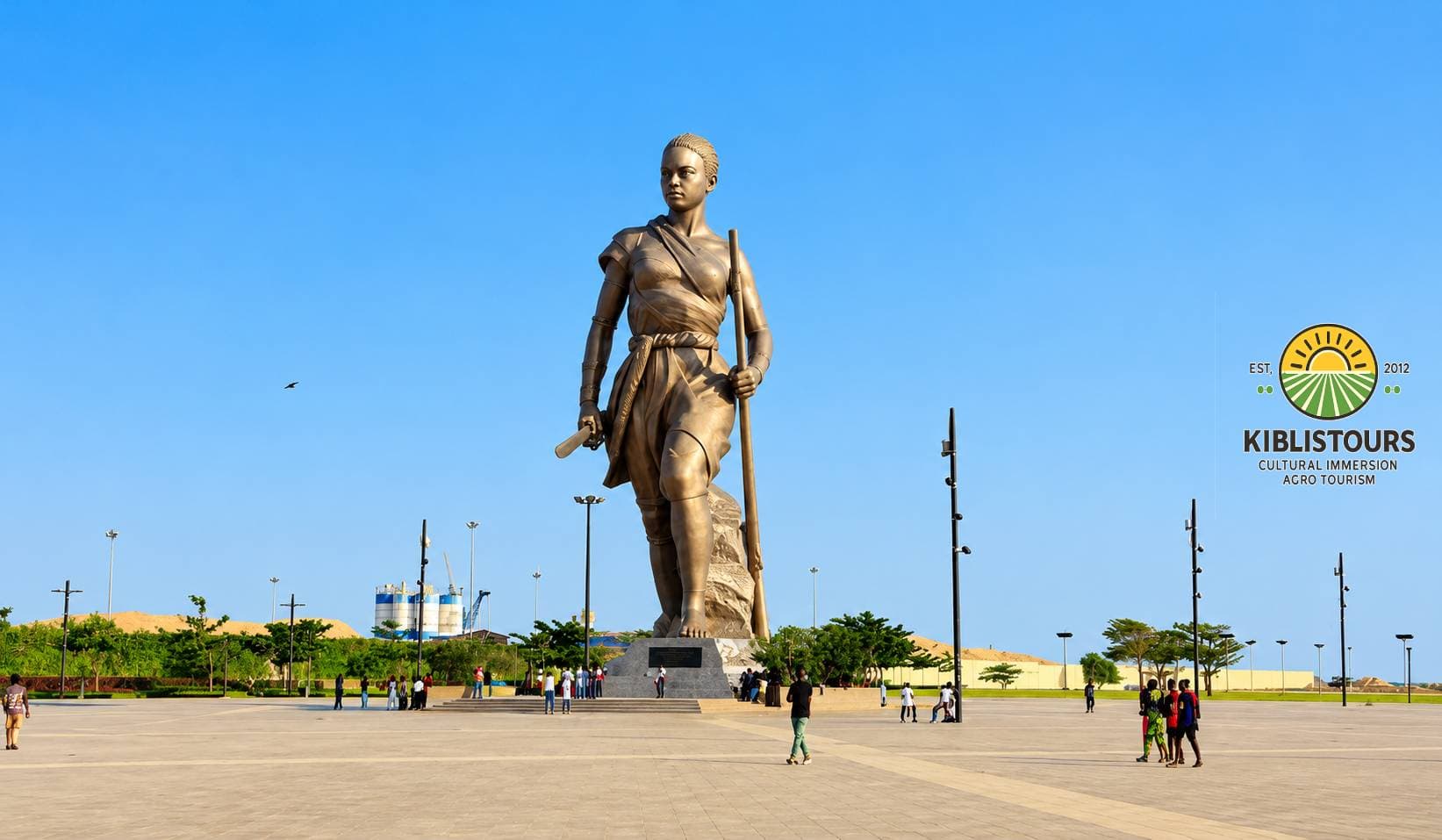
The women warriors of Dahomey are probably the kingdom’s best-known figures internationally today.
European observers nicknamed them the “Amazons of Dahomey” referring to the female warriors of Greek mythology.
Yet there was nothing mythological about them.
They were real members of the kingdom’s armed forces, received military training, and participated in campaigns.
Historian Stanley B. Alpern nevertheless highlights an important difficulty: the exact date and process through which these units emerged remain debated.
It is therefore more historically rigorous to avoid claiming that one particular king, acting alone and at a precisely established date, “created the Amazons.”
What the sources allow us to state with much greater certainty is that, by the nineteenth century, these women formed genuine military units and participated directly in combat.
Alpern notably dates their final battle against French forces to November 4, 1892, at the gates of Cana.
The distinction is essential:
the existence and military role of these women warriors are established; their precise origins remain more difficult to determine.
The Myth of the Severed Breast
A widespread legend claims that the women warriors cut off one breast in order to use their weapons more effectively.
There is no sufficiently strong historical evidence to present this claim as an established fact.
It is nevertheless worth mentioning because it illustrates how myths are constructed.
European observers were fascinated by the existence of female military units, and their accounts sometimes emphasized the extraordinary or exotic nature of what they witnessed.
Responsible historical interpretation can therefore simply explain:
“This story is famous, but it has not been historically proven.”
This takes nothing away from the history of the Agojie.
On the contrary, it restores their true humanity: women subjected to military discipline and confronted with fear, injury, violence, and the possibility of dying in battle.
The Dahomean Army: Beyond the Legend
Its military organization evolved alongside the strengthening of royal authority and the monarchy’s ability to mobilize men, women, resources, and weapons.
The kingdom's military strength did not rely solely on the Agojie.
Military campaigns could serve several purposes: defending the kingdom, imposing authority over certain territories, obtaining tribute, controlling trade routes, or capturing prisoners.
Firearms acquired through Atlantic trade gradually became more important, although they did not immediately replace other forms of weaponry.[2][3]
J. C. Sharman’s analysis is particularly useful for placing this military power within the broader dynamics of state formation and the relationships between economic resources, coercion, and the consolidation of political authority.
For details concerning the female units and their participation in military campaigns, Stanley B. Alpern’s specialized study remains more appropriate.
A victory could bring prestige and resources to the monarchy, while for the communities that were attacked it could mean death, capture, loss of property, or displacement.
This dual perspective is essential to understanding Dahomey’s military power without erasing those who suffered its consequences.
The Women of Dahomey Were More Than Warriors
The fame of the Agojie risks obscuring the many other roles played by women in Dahomean society.
Women participated in the economy, markets, family structures, religious practices, and palace life. Some also held important institutional or ceremonial positions.
Focusing solely on the women warriors would therefore create another form of oversimplification.
The female merchant, craftswoman, priestess, farmer, court woman, mother, and captive all belong to the history of the kingdom as well.
Everyday Life: History Beyond the Throne
Kings tend to leave more traces in historical archives than ordinary people.
Yet the overwhelming majority of the population obviously did not live in palaces.
Women and men cultivated the land, made objects, sold their products, raised their children, and participated in their communities’ ceremonies.
They also faced disease, poor harvests, wars, and obligations imposed by political authority.
Markets were not only economic spaces but social ones as well. Goods circulated alongside information, rumors, and news arriving from other regions.
This everyday life is essential to understanding the power of the kingdom.
An army had to be fed, palaces maintained, officials supported, and ceremonies organized.
Behind royal power, therefore, stood farmers, artisans, merchants, and production networks without which the monarchy could not have functioned.
The Artisans: Those Who Gave Power a Visible Form
Abomey owes much of its visual identity to its artisans.
Sculptors, blacksmiths, weavers, metalworkers, bas-relief artists, and makers of ritual objects helped transform political and religious ideas into visible objects.
Their names are often less well known than those of the sovereigns.
Yet when we admire a sculpture, a récade, or a bas-relief today, we are also looking at their work.
Meeting a contemporary artisan can deepen this understanding.
Rather than looking only at the finished object, ask who taught them their craft, how long it takes to create a piece, what a particular motif means, or how an ancient skill is being adapted to contemporary needs.
The object then ceases to be merely a souvenir.
It becomes the result of a process of transmission.
Royal Power: A Powerful King Surrounded by Institutions
Dahomey was a highly centralized monarchy, but no kingdom can be administered on a daily basis by one person alone.
The sovereign was surrounded by dignitaries, military officials, representatives, and court personnel.
This hierarchy was reflected even in the architecture of the palaces.
UNESCO notes that the palace complexes were organized around three courtyards - outer, inner, and private -, whose succession reflected a hierarchy of space.[1]
A wall, therefore, did more than provide protection.
It also separated different levels of access to power. A doorway indicated that not everyone could proceed any farther, while a courtyard determined where people waited before gaining access to another space.
Architecture became political.
Governing Before Modern Communications
To understand the kingdom’s administration, we need to set aside our contemporary means of communication for a moment.
An order had to be physically carried, a local official had to be able to verify the authenticity of the message, and information from a distant territory had to make its way back to the capital.
In this context, messengers, symbolic objects, and clearly defined official functions acquired considerable importance.
What may appear purely ceremonial today often served a very practical political purpose.
Récades: Carrying the King’s Word
Among the emblematic objects of Dahomean power were the récades.
Their significance went far beyond their aesthetic value: they were associated with the sovereign’s authority and could accompany the transmission of royal words or messages.
Imagine a representative arriving far from Abomey and claiming to speak on behalf of the king.
How could his authority be recognized?
Symbols and objects of power contributed precisely to this authentication.
The récade thus became a material embodiment of the royal word:
it could be held in one hand, yet represented an authority far greater than itself.
Ceremonies, Ancestors, and Vodun: Understanding the Kingdom’s Spiritual World
The power of Dahomey was expressed not only through administration or warfare.
Royal ceremonies brought together politics, religion, dynastic memory, and the representation of authority.
Deceased sovereigns continued to occupy a place in the dynasty’s memory. The new king therefore became part of a chain connecting his reign to those of his predecessors.
This dimension helps explain why the palaces should not be viewed solely as archaeological remains.
UNESCO continues to emphasize the presence of sacred spaces respected by royal families and local communities, as well as the continuity of certain practices and ceremonies.
This reality is closely connected to the religious world of Vodun, which outside Benin is too often reduced to stereotypes.
Vodun encompasses a far more complex universe of deities, spiritual forces, rituals, communities of practice, and relationships with ancestors.
For visitors, one simple rule should always apply: a sacred space is not automatically a tourist attraction, a ceremony does not exist for the purpose of being photographed, and a person participating in a ritual is not a performer.
Asking permission before taking photographs or filming is a basic sign of respect.
Glèlè and the Visual Language of Power
Glèlè succeeded Guézo and ruled from 1858 to 1889, during a period when European pressure along the coast was gradually intensifying.
His era also provides insight into the power of Dahomean visual communication.
Animals, weapons, human figures, and scenes depicted on bas-reliefs could refer to sovereigns, proverbs, or historical events.
Imagine a visitor standing before a bas-relief.
At first, they notice the animal and photograph the artwork. Then a guide explains the identity of the sovereign associated with it, the proverb connected to the image, and the event to which it refers.
The wall has not changed, but the visitor is no longer looking at the same thing.
This is one of the most fascinating experiences in Abomey:
heritage gradually reveals itself as we learn how to read it.
Béhanzin: The Man Behind the Symbol of Resistance
Béhanzin ascended the throne in the late 1880s, at a time when French ambitions along the coast were becoming increasingly incompatible with Dahomey’s sovereignty.
French military archives preserved by the Service historique de la Défense document several stages of the conquest, including the 1890 campaign, the major 1892 expedition, the advance toward Abomey, and the subsequent operations that brought organized resistance around the sovereign to an end.
To understand Béhanzin’s decisions, we must avoid viewing this period solely through the lens of what we know today.
We know how the war ended.
Béhanzin had to make decisions without knowing the future.
He inherited a political system built over several generations, a capital filled with historical memory, and a monarchy that represented far more than his own personal authority.
The confrontation with France was therefore about the very sovereignty of the kingdom.
The Franco-Dahomean Wars: A Conflict in Several Stages
The confrontations between Béhanzin’s Dahomey and France cannot be reduced to a single battle in 1892.
A first major campaign took place in 1890. Tensions nevertheless continued, and in 1892 a new French expedition under the command of Alfred-Amédée Dodds advanced toward the heart of the kingdom.
The fighting was extensive and violent.
The study by Stanley B. Alpern of the women warriors of Dahomey dates their final battle against the French to November 4, 1892, at the gates of Cana.
French superiority cannot simply be explained in terms of the courage or lack of courage displayed by either side.
It must be understood in the context of differences in weaponry, firepower, logistics, and military organization.
For the kingdom’s inhabitants, the French advance meant that the political and symbolic center built by generations of sovereigns was now directly threatened.
The Fall of Abomey: Losing a Capital, Losing a World
When French forces reached Abomey, the dynasty’s political center fell under their control.
The archives of the Service historique de la Défense also document the seizure of royal objects in the context of the conquest.
The fall of Abomey was therefore simultaneously military, political, and symbolic.
The place from which generations of sovereigns had governed was no longer protected by the power that had built it.
The palaces became vulnerable, objects could be transformed into spoils of war, and the dynasty lost control of its political center.
Béhanzin’s Exile: From Sovereignty to Displacement
After the loss of Abomey, Béhanzin continued his resistance before surrendering to the French authorities and being sent into exile.
The Bibliothèque nationale de France notably preserves a photograph by André Salles showing Béhanzin and one of his wives at Fort Tartenson in Martinique in December 1894.
A timeline can summarize this story in a few dates.
The human experience is more difficult to grasp.
Imagine a man who had grown up in the royal world of Abomey, surrounded by its landscapes, languages, rituals, and people close to him, being forced to cross the Atlantic and live far from the territory he had once governed.
The sovereign who once commanded an army now depended on a foreign power for his movements.
This image does not erase the political figure.
It simply restores his humanity.
Agoli-Agbo and the End of the Sovereign Kingdom
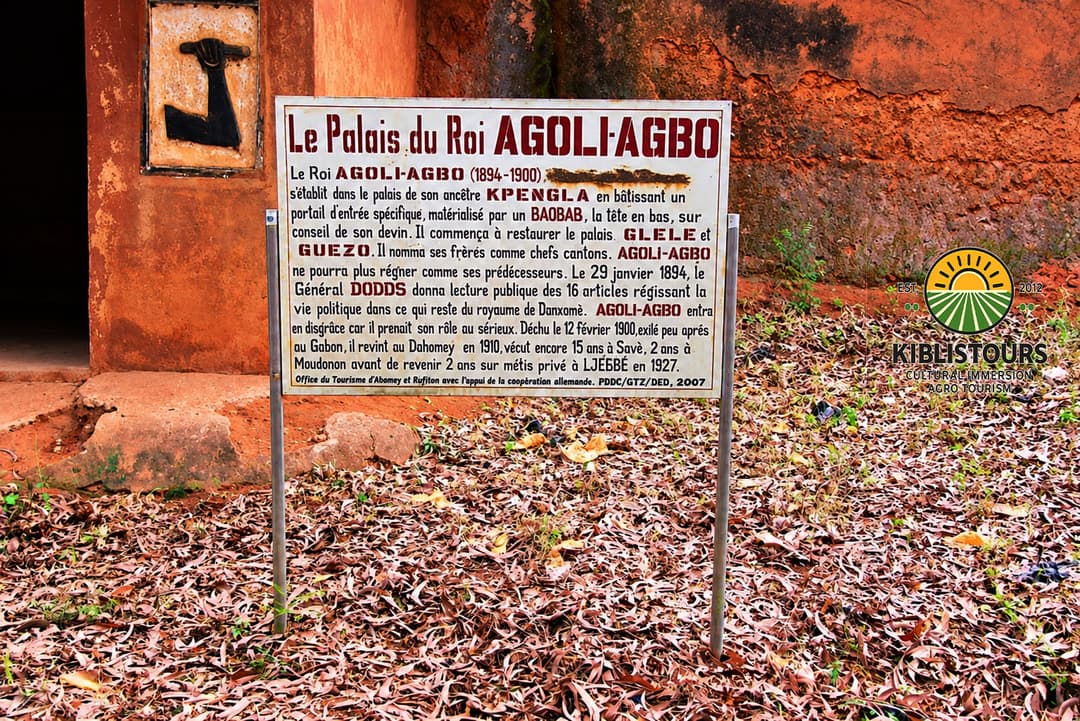
After Béhanzin, Agoli-Agbo exercised royal authority in a context profoundly transformed by French domination.
The French Archives nationales d’outre-mer notably preserve, under reference 40 COL 112, a treaty concluded in 1894 between Dodds and Ago-li-Agbo, together with an additional act - documents that directly testify to the new political balance of power.
The monarchy gradually lost the sovereignty that had characterized previous reigns.
Yet memory did not disappear with the state.
Royal families remained, traditions continued to be transmitted, certain rituals persisted, and the palaces retained the material traces of the dynasty.
History ceased to function as government and became heritage, memory, and identity.
The Royal Palaces of Abomey: A Living World Heritage Site
UNESCO’s current documentation states that the inscribed property covers 47.6 hectares, with an additional 181.4-hectare buffer zone.
The complex should not be imagined as a single monumental castle.
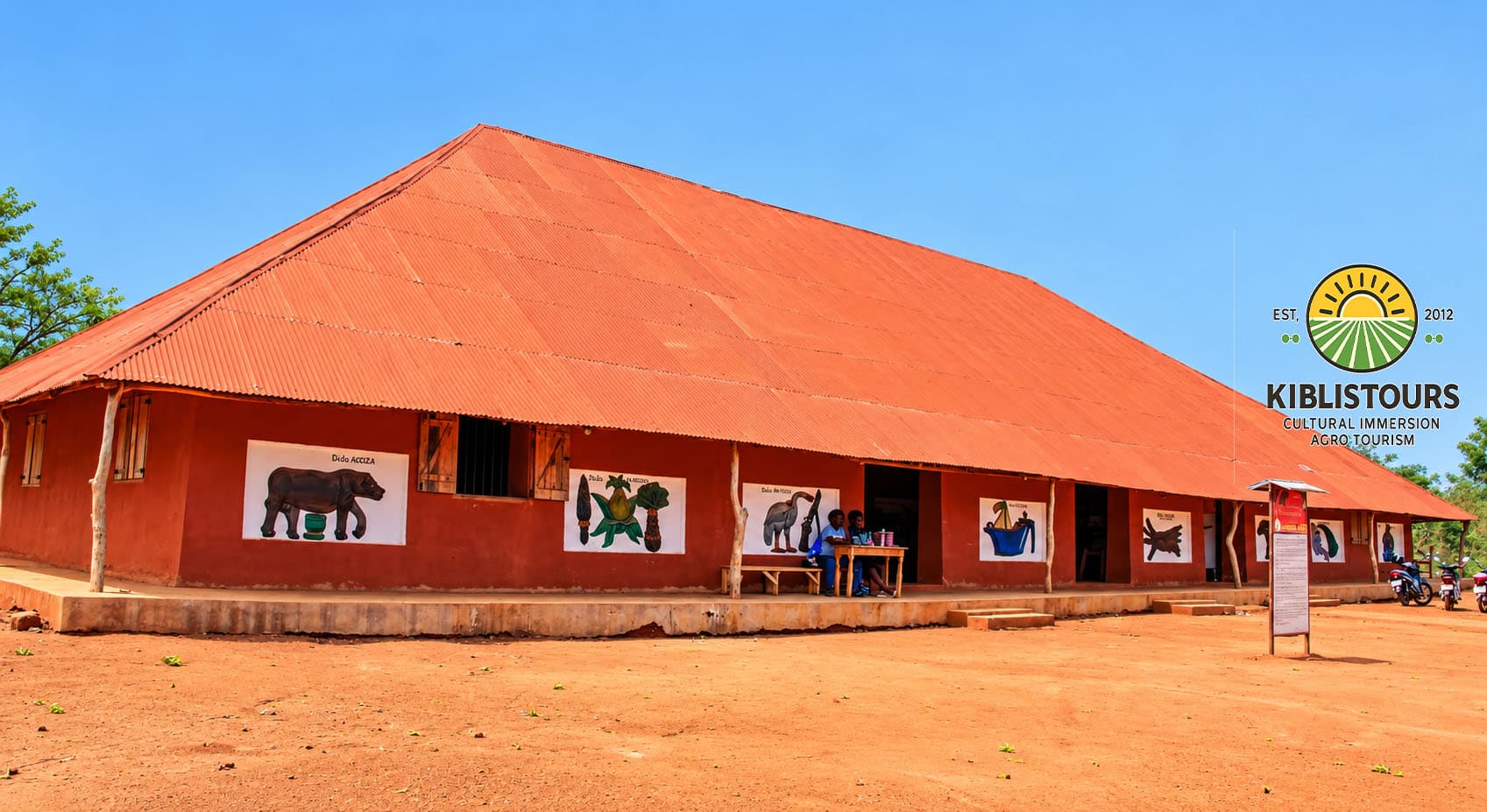
It consists of several palaces, enclosures, courtyards, and ceremonial spaces developed over successive reigns.
Abomey: Royal Immersion in the Palaces of the Kingdom of Danxomè (UNESCO)
UNESCO describes a complex of ten palaces and notes that, with the exception of Akaba, the sovereigns built their palaces as a continuation of the same palace complex.
This architecture explains why interpretation is so important.
Without explanation, a courtyard may appear empty and a wall merely old.
Once understood in terms of their original functions, those same spaces reveal the hierarchy of power, the practices of the royal court, and the continuity of the dynasty.
Why Does Earthen Architecture Deserve So Much Attention?
Building with earth does not mean building poorly.
Earthen architecture relies on techniques adapted to the climate and locally available materials, but it also requires regular maintenance.
Rain, erosion, and the passage of time can weaken the structures.
The preservation of the site therefore depends not only on available funding but also on the transmission of skills and expertise.
UNESCO notably documents international assistance approved in 1994, involving ICCROM/CRATerre and aimed at training professional teams as well as artisan-technicians in the restoration and maintenance of the palaces.
Preserving the buildings therefore also means preserving the human capacity to maintain them.
1985-2007: A World Heritage Site That Had to Be Saved
In 1985, the Royal Palaces of Abomey were inscribed on the World Heritage List.
That same year, their condition also led to their inclusion on the List of World Heritage in Danger.
They remained on that list until 2007, a period explicitly documented in UNESCO’s official records.
Removal from the list obviously does not mean that the heritage site no longer requires attention.
Monitoring documents show that its conservation remains an ongoing process involving management plans, monitoring missions, conservation work, and decisions by the World Heritage Committee.
This history reminds us that UNESCO World Heritage status is not a guarantee against disappearance.
Heritage survives only when people continue to maintain it, document it, and transmit the skills required for its conservation.
The 26 Royal Treasures: A Historic Return to Benin
One of the major cultural events in Benin’s recent history occurred in 2021.
On November 9, 2021, the French and Beninese governments signed an agreement in Paris for the transfer to Benin of 26 artworks from the royal treasures of Abomey.
The Government of Benin documents their return to Cotonou on November 10, 2021, and their integration into the country’s national cultural heritage.[10]
These objects notably include royal statues, thrones, doors, and various artifacts originating from the palace world.
The number twenty-six may seem limited compared with the vast amount of African heritage held outside the continent.
Yet the historical and symbolic significance of this return is considerable.
These objects are not merely old or aesthetically remarkable.
They are connected to sovereigns, functions, events, and a territory. Their removal in the context of colonial conquest has itself become part of their history.
Their return therefore adds a new chapter to their biography.
Choose our 14-day tour to enjoy this experience.
Why Interpretation Remains Essential in Abomey
The Royal Palaces do not immediately reveal all their meanings.
A courtyard, bas-relief, or récade takes on another dimension when a guide can connect it to a sovereign, a proverb, a political function, or an oral tradition.
Interpretation therefore does not artificially add a story to the heritage.
It helps visitors read what is already in front of them, while distinguishing between documented facts, tradition, and interpretation.
Abomey and the African Diaspora: Reconnecting With a Broader History
For some travelers from African diasporas in the Americas, the Caribbean, or Europe, Abomey can carry a particularly powerful emotional dimension.
A visit may raise difficult questions: Where did the people who were deported come from? Which societies did they belong to? What languages did they speak? What beliefs and memories did they carry with them?
However, historical rigor remains essential.
Without genealogical research or precise documentation, no one should promise a traveler that they have found their ancestral village or lineage.
What a journey can do, however, is help restore human depth to people whom the archives of slavery have too often reduced to numbers or commodities.
Before their deportation, they had families, occupations, languages, beliefs, territories, and histories.
This may be one of the most important dimensions of respectful memory tourism.
Abomey Today: A City, Not an Open-Air Museum
After spending several hours exploring kings and palaces, it would be easy to imagine that the entire city belongs to the past.
That would be a mistake.
Abomey is a contemporary city where families live, children study, artisans work, merchants develop their businesses, and young people build their futures.
Tradition and modernity are not opposites.
An artisan can pass on knowledge learned from their family while using a smartphone to find customers. Someone involved in a traditional institution can also be fully engaged with the twenty-first century.
Abomey’s heritage is particularly fascinating precisely because it has not developed within a frozen city.
Abomey and Ouidah: Two Cities for Understanding One History
Combining Abomey and Ouidah provides a deeper understanding of Dahomey.
Abomey and Ouidah: Two Cities for Understanding One History
Combining Abomey and Ouidah provides a deeper understanding of Dahomey.
Abomey tells the story of the kingdom’s political center, its palaces, sovereigns, administration, army, and the construction of the dynasty.
Ouidah opens more directly onto the coast, Atlantic trading networks, and the memory of the slave trade.
These two dimensions are historically interconnected.
Decisions made in Abomey influenced activities along the coast, while transformations in Atlantic trade had consequences for the kingdom’s political affairs.
A journey combining these two cities therefore allows travelers to move from the center of political power to the Atlantic world and understand how different pieces of the same history fit together.
10-day Bénin tour ( That includes Abomey and Ouidah.)
Abomey Is Not the Whole History of Benin
The importance of Dahomey should not lead us to reduce the entire history of Benin to this one kingdom.
Present-day Benin brings together many different historical legacies.
Porto-Novo has its own royal history. Nikki and Bariba traditions remind us of the importance of the northern kingdoms. The Otammari peoples possess a remarkable architectural and cultural heritage, while Yoruba, Aja, Dendi, and many other cultural legacies further enrich this diversity.
Visiting Abomey therefore does not mean discovering “the entire history of Benin.”
It means exploring in depth one of its major chapters.
From Colonial Dahomey to the Republic of Benin
Following the French conquest, the name Dahomey continued to be used for the colonial territory.
Upon independence in 1960, the country became the Republic of Dahomey.
In 1975, it adopted the name People’s Republic of Benin before eventually becoming the present-day Republic of Benin.
This change highlights a fundamental distinction:
modern Benin cannot be reduced to the former Kingdom of Dahomey.
Abomey is an essential part of the country’s national heritage, but it belongs to a nation whose history is far broader and more diverse.
FAQ: Everything You Need to Know About the Kingdom of Dahomey and the Royal Palaces of Abomey
1. Where was the Kingdom of Dahomey located?
The Kingdom of Dahomey developed in an area corresponding to part of what is now southern Benin. Abomey was its principal political center and historic capital.
2. Do Dahomey and Danxomè refer to the same kingdom?
Yes. Danxomè is a form derived from local languages and traditions, while “Dahomey” is the transcription that became widely used in many European and French-language sources.
3. Where does the name Danxomè come from?
A well-known oral tradition associates the name with a chief named Dan and the idea of a structure being built “in his belly.” This story is important to the kingdom’s collective memory, but it should be presented as a foundational tradition rather than as an event whose every detail has been historically proven.
4. Who founded the Kingdom of Dahomey?
The kingdom emerged gradually, and several figures appear in dynastic traditions. Houegbadja, however, occupies a central place in the political consolidation of the kingdom and the organization of the royal center of Abomey.
5. How many kings ruled in Abomey?
According to UNESCO, twelve kings succeeded one another between 1625 and 1900 at the head of the Kingdom of Abomey.
6. Who were the Agojie?
The Agojie, often referred to as the “Amazons of Dahomey” in European accounts, were women who genuinely belonged to the kingdom’s military forces. Their precise origins remain debated, but their military role during the nineteenth century is well documented.
7. Did the Agojie really cut off one breast?
There is no sufficiently strong historical evidence to regard this claim as an established fact. It belongs to the legends that developed around these women warriors.
8. Did the Kingdom of Dahomey participate in the Atlantic slave trade?
Yes. Its participation is historically documented. Robin Law’s research notably examines the relationships between warfare, royal authority, merchants, and the supply of enslaved people to the Atlantic trade.
9. Who was Béhanzin?
Béhanzin was the sovereign of Dahomey during the decisive confrontation with France at the end of the nineteenth century. French military archives document the campaigns that led to the conquest of the kingdom and Béhanzin’s subsequent exile.
10. What were the main wars between Dahomey and France?
A first major confrontation took place in 1890, followed by another campaign in 1892, during which French forces advanced toward Abomey. Resistance continued afterward until Béhanzin’s surrender.
11. Why are the Royal Palaces of Abomey listed by UNESCO?
They constitute exceptional material testimony to the political, architectural, and cultural organization of the Kingdom of Dahomey. They have been inscribed on the World Heritage List since 1985 under criteria (iii) and (iv).
12. How large are the Royal Palaces of Abomey?
UNESCO’s current technical documentation indicates an area of 47.6 hectares for the inscribed property and 181.4 hectares for its buffer zone.
13. Why was the site placed on the List of World Heritage in Danger?
The Royal Palaces were placed on the list in 1985 because of threats to their conservation. UNESCO indicates that they remained on the List of World Heritage in Danger until 2007.
14. What do the bas-reliefs of Abomey represent?
They form a visual language that connects animals, human figures, weapons, proverbs, and events to the memory of the sovereigns. They therefore contribute to the transmission of dynastic history.
15. What is a récade?
A récade is an object associated with royal authority. It could accompany representatives or messengers acting on behalf of the sovereign and symbolically embody the king’s word.
16. Why did France return 26 works to Benin?
These works from the royal treasures of Abomey had entered French collections in the context of colonial conquest. An agreement signed on November 9, 2021, organized their transfer to the Republic of Benin.
17. Can the Royal Palaces of Abomey be visited today?
The site can be visited, although the areas accessible to visitors may change depending on conservation work and local conditions. It is therefore advisable to check current visiting arrangements before traveling.
18. Should you visit Abomey with a guide?
It is highly recommended. Much of the site’s value lies in understanding its spaces, symbols, bas-reliefs, and traditions. Quality interpretation also helps distinguish documented historical facts from oral traditions.
Visiting Abomey with Kiblistours: From History Told to History Experienced
Reading about the history of Dahomey helps you understand the major stages in the development of a kingdom that profoundly shaped the history of Benin.
Traveling to Abomey takes you further: names become places, symbols become visible, and historical narratives take on a human dimension.
This is the spirit in which Kiblistours approaches the discovery of Abomey.
The goal is not to multiply stops simply to “see” more, but to give travelers the keys they need to understand what they are observing: why the palaces are organized in this way, how to interpret certain emblems, how to distinguish oral tradition from historically documented facts, and how to place the Agojie, Guézo, Glèlè, and Béhanzin within their proper historical context.
Depending on the package selected, access conditions, available time, and travelers’ expectations, the experience may combine royal heritage, historical interpretation, the discovery of local craftsmanship, and connections with Ouidah for those wishing to explore the Atlantic dimension of this history in greater depth.
Services, encounters, and access arrangements must naturally be confirmed before booking in order to respect local conditions and the people concerned.
The ambition is simple:
not merely to take you to Abomey, but to help you leave with the feeling that you have genuinely understood something about Dahomey and Benin.
Ready to discover Benin differently?
Imagine your journey, we create the experience.
Plan your trip with Kiblistours