What if the most beautiful memory from your trip was not a monument, but a human encounter ?
When preparing for a trip, people often imagine spectacular landscapes, iconic monuments or UNESCO World Heritage sites. They make lists of places to visit, book hotels and organize excursions. Yet, when the journey is over and memories return months later, monuments are not always the first things that come to mind.
More often, people remember a smile exchanged with a stranger, a meal shared under a tree, an unexpected conversation with a passionate artisan, or a child teaching them a few words in their native language. These simple, unplanned moments are what give travel its true meaning.
In Benin, such encounters are not exceptions. They are part of everyday life.
Imagine arriving in a village early in the morning. The sun gently lights up the earthen houses. Women return from the market, chatting in their local language, while children pause their games to greet you with curious smiles. Under a large mango tree, elders quietly discuss the events of the day. As you approach, one of them invites you to sit down. A calabash filled with fresh water is passed around naturally, and conversations begin without haste.
No one is playing a role.
No one is trying to impress the visitor.
Life simply goes on, and you are invited to share a small part of it.
A few hours later, you join a family in preparing a traditional meal. A mother explains why certain recipes are reserved for important celebrations, while a grandmother recounts how she learned these techniques from the previous generation. Every ingredient has a story. Every cooking method reflects a piece of the community's identity.
The following day, an artisan welcomes you into his workshop. Slowly, before your eyes, a simple piece of wood becomes a mask, a statue or a musical instrument. Beyond the craftsmanship itself, he shares the meaning behind his work, the symbolism of the shapes he carves and the role his art plays in preserving collective memory. You quickly realize that behind every object lie years of learning, carefully preserved traditions and a story that continues to be passed on.
These experiences rarely appear in travel brochures.
Yet they are often what travelers remember most vividly.
Landscapes amaze.
Monuments impress.
Museums preserve history.
But human encounters give a soul to travel.
This philosophy lies at the heart of community tourism.
Here, travel is no longer simply about visiting a destination. It becomes an opportunity to understand a place through the people who live there. Local communities are no longer mere spectators of tourism ; they become the true protagonists of the experience. They open the doors of their villages, share their traditions, tell their stories and invite travelers to discover their daily lives with respect and simplicity.
This way of traveling reflects a profound change in travelers' expectations. Today, many people seek more than a change of scenery. They want meaningful experiences, genuine connections and a deeper understanding of local realities. Travel becomes a way to learn, to share and, in some small way, to contribute to the development of the places visited.
Benin offers an exceptional setting for such experiences. Often recognized as the historical birthplace of Vodun and one of West Africa's major cultural crossroads, the country possesses a richness that extends far beyond its most famous landmarks. Behind the royal palaces, lake villages, historic towns and the iconic Tata Somba dwell communities that continue to preserve an extraordinary heritage. Traditional crafts, farming practices, music, ceremonies, languages and culinary traditions still shape everyday life across many regions.
Community tourism invites visitors to step through a door that conventional tours rarely open. It allows travelers to discover Benin from within, at the pace of those who call it home. Every encounter offers a new perspective on the country. Every exchange deepens understanding. Every experience reveals a different aspect of its identity.
This approach benefits both travelers and local communities. Visitors leave with deeply human memories, while residents gain opportunities to promote their heritage, create economic opportunities and pass on their traditions to future generations. Travel becomes a genuine exchange in which everyone learns from one another and every encounter leaves a lasting impression.
At a time when sustainable tourism is becoming increasingly important worldwide, community tourism stands out as one of the most promising alternatives. It proves that it is possible to travel differently by combining discovery, cultural respect, heritage preservation and local development.
Throughout this article, we will meet the women and men who bring this unique way of traveling to life. We will explore the principles of community tourism, the experiences it offers in Benin, the benefits it brings to local communities, the challenges it faces and the reasons why it represents one of the most inspiring forms of tourism in the country.
Before exploring villages, local initiatives and immersive experiences, let us first understand what truly distinguishes community tourism from other forms of travel.
What is community tourism ?
Community tourism is much more than simply another way of traveling. It is a philosophy that places local people at the heart of the experience and transforms the relationship between visitors and destinations. Here, travel is no longer about checking landmarks off a list or collecting photographs. It becomes an encounter-an opportunity to discover a place through the women and men who shape it every day.
In this model, local communities are not passive spectators of tourism development ; they are its main actors. They design the experiences offered to visitors, welcome travelers into their homes, tell their stories, share their traditions and decide how their heritage should be presented. Travelers do not discover a setting created specifically for them. Instead, they are respectfully invited into a world that exists independently of their presence.
This difference may seem subtle, but it profoundly changes the way a journey is experienced.
On a conventional tour, it is common to spend several days in a destination without truly connecting with the people who live there. Visits follow one another, schedules are tightly organized and interactions with local residents are often limited to greetings or commercial transactions. Travelers discover places, but rarely understand what gives them their identity.
Community tourism follows a completely different logic.
It values time over speed.
Human interaction over simple observation.
Sharing over consumption.
In Benin, this approach takes on a very special meaning. A community guide does much more than show visitors around a village. He explains why certain houses are built in a particular way, interprets the symbols carved into a doorway and shares the stories surrounding a sacred tree. An artisan does not merely demonstrate how she weaves cloth or shapes pottery. She explains where her skills come from, who taught her and why she is committed to passing them on to younger generations.
Little by little, travelers stop looking at objects and landscapes as simple attractions. They begin to understand the stories behind them.
A meal shared with a family becomes a lesson about local traditions and values.
A canoe trip with a fisherman reveals the close relationship between communities and their environment.
A walk through the fields highlights both the challenges farmers face and the knowledge they have developed over generations.
Every activity acquires a human dimension that traditional tourism rarely offers.
Community tourism also relies on a fundamental principle : the benefits generated by visitors should primarily support the communities that welcome them. Income from accommodation, guided tours, craft workshops and traditional meals contributes directly to supporting families, creating jobs, strengthening local economies and, in some cases, financing collective projects such as schools, community centers or cultural spaces.
This redistribution of economic benefits gives travel a deeper meaning. Visitors know that their stay is not simply a personal experience ; it also contributes, in its own way, to the preservation of cultural heritage and the development of local communities.
However, reducing community tourism to its economic impact would be a mistake.
Its ambition is, above all, human.
It creates opportunities for dialogue between people who might never otherwise have met. Everyone discovers another reality, shares experiences, confronts different perspectives and returns home with a more nuanced understanding of the world. These exchanges, often spontaneous, are just as valuable for local residents as they are for travelers.
In Benin, this philosophy finds particularly fertile ground. The country's cultural richness, the diversity of its communities and the importance that traditions still hold in everyday life make it possible to offer deeply authentic experiences. In many villages, traditional crafts, agricultural practices, music, ceremonies and ways of life continue to be naturally passed down from one generation to the next.
Travelers are not watching performances created for tourists.
They are discovering a living heritage that continues to exist because it remains an essential part of the identity of local communities.
That is perhaps the true strength of community tourism.
People do not return home only with beautiful photographs.
They return with faces.
With conversations.
With stories.
And often, with a new way of looking at the world.
A philosophy of travel based on sharing
For a long time, traveling mainly meant discovering new landscapes, visiting famous monuments or bringing home photographs of iconic places. These experiences remain fascinating and continue to inspire millions of people. Yet, a new way of traveling is gradually emerging.
For many travelers, seeing a country is no longer enough.
They want to understand it.
Understanding a place means going beyond its visible heritage. It means discovering the stories hidden behind a village square, a lively market or a family home. It means listening to the people who live there, sharing moments from their daily lives and seeing the destination through their eyes rather than through the pages of a guidebook.
This vision is what gives community tourism its true meaning.
At the heart of this approach lies a simple idea : the most memorable journeys are often those that are shared.
Sharing a meal prepared with a family.
Sharing the patient gestures of an artisan shaping wood, clay or fabric, just as previous generations did before him.
Sharing the silence of an early-morning boat ride with a fisherman who knows every movement of the lagoon.
Sharing the stories of an elder who remembers how his village has evolved through the years.
These moments do not appear in any carefully planned itinerary. They emerge naturally, through encounters, when people take the time to listen to one another.
In Benin, this philosophy is almost instinctive.
In many communities, welcoming a visitor means much more than showing them a place. It means opening a door, sharing a way of life and allowing someone, for a few hours or a few days, to become a guest rather than a spectator.
It is not unusual for a walk scheduled to last one hour to turn into a long conversation. A farmer stops to explain how he chooses the right time to sow his crops. An artisan spontaneously invites visitors to try her weaving techniques. Children, amused by this unfamiliar presence, teach a few words of their language between bursts of laughter.
Without realizing it, travelers gradually stop visiting a village.
They begin to live it.
This spontaneity makes every experience unique.
Two travelers passing through the same community will never return with exactly the same memories. One may remember an inspiring discussion about medicinal plants. Another may treasure an evening spent listening to traditional songs or preparing a meal in a family courtyard.
The itinerary may be the same.
The encounters never are.
This human dimension profoundly changes the way people perceive a destination.
Landscapes become more than scenery. They tell the story of the farmers who cultivate them, the fishermen who depend on them and the artisans who draw inspiration from them.
Traditions stop being simple cultural curiosities.
They acquire a face, a voice and a history.
A community guide from the Atacora region once summarized this reality perfectly :
"Visitors come to discover our houses. They leave talking about the people they met."
That sentence alone captures what distinguishes community tourism from many other forms of travel.
People may forget the exact date of a visit.
They may forget the price of an entrance ticket.
They may even forget the names of certain places.
But they rarely forget the person who told them the story of a village, the woman who taught them how to prepare a traditional dish or the artisan who patiently showed them how to transform a simple piece of wood into a meaningful work of art.
Those memories do not take up space in a suitcase.
They travel with you long after you return home.
This philosophy of sharing also has positive effects on host communities. Local residents are no longer seen simply as service providers. They become guardians and ambassadors of their heritage. Their stories, traditions and skills gain new recognition, encouraging younger generations to preserve and transmit them.
Travel then becomes a balanced exchange.
Visitors receive much more than they expected : knowledge, emotions, friendships and a deeper understanding of the country.
Communities, in turn, enhance their cultural heritage, create new economic opportunities and see their way of life appreciated for its true value.
Perhaps this is the greatest richness of community tourism.
It transforms not only the way we travel.
It also transforms the way we meet others.
And sometimes, the way we see the world.
The Fundamental Principles of Community Tourism
Community tourism can take many different forms from one country to another. A fishing community living on the shores of a lagoon will not offer the same experiences as a farming village, a mountainous region or an artisanal center. Yet, despite this diversity, the same guiding principles can be found everywhere, giving meaning to this unique way of traveling.
These principles are much more than simple operating rules. They form the foundations of a model in which tourism becomes a tool for preserving cultural heritage, creating economic opportunities and strengthening connections between different cultures. Thanks to these values, travelers enjoy authentic experiences while communities welcome visitors without sacrificing their identity.
Local communities are at the heart of decision-making
In community tourism, local people do far more than simply welcome visitors. They decide how their territory should be presented, which activities they want to share and at what pace tourism should develop.
This involvement changes everything.
When a community retains control over its own project, it can protect what makes it unique. Traditions continue to exist because they still hold meaning for the people who practice them. Ceremonies are not organized merely to entertain tourists. Traditional crafts are not altered to follow temporary trends. They remain faithful to their history.
In Benin, this local governance often takes the form of collective decision-making. Elders, community leaders, artisans, women and young people all contribute, according to their roles, to discussions about tourism development.
Together, they determine :
which experiences can be shared;
which places can be visited;
the best periods for welcoming travelers;
and the rules needed to preserve the balance of community life.
This approach ensures that tourism adapts to the community, rather than forcing the community to adapt to tourism.
The benefits directly support local populations
One of the greatest strengths of community tourism lies in the way economic benefits are distributed.
In conventional tourism models, a large proportion of travelers' spending quickly leaves the destination. Community tourism follows a different philosophy : ensuring that the wealth generated primarily benefits the people who welcome visitors.
In practical terms, when a traveler spends a night in a community-run guesthouse, participates in a craft workshop or enjoys a meal with a local family, they directly support families, artisans, farmers, guides and many other members of the community.
The benefits often go far beyond individual households.
In some communities, tourism revenue helps finance collective projects such as :
renovating schools;
improving access to drinking water;
supporting youth initiatives;
preserving cultural sites;
or developing community spaces.
Tourism thus becomes a driver of development that benefits the entire village.
For travelers, this reality adds a special meaning to their journey. Their trip is no longer just a personal experience ; it becomes a concrete contribution to the economic vitality of a community.
Respect for culture is a priority
The richness of community tourism is based on a simple idea : culture does not need to be transformed in order to be interesting.
On the contrary, what touches travelers most deeply is often what has remained authentic.
A song passed down through generations.
A weaving technique mastered by only a handful of artisans.
A traditional celebration that still brings an entire community together.
A recipe prepared exactly as it was decades ago.
In Benin, these traditions remain deeply rooted in everyday life. They are not performances created for visitors. They continue to exist because they are an integral part of the identity of local communities.
Travelers are therefore invited to discover them with humility.
Observe before taking photographs.
Listen before asking questions.
Understand before judging.
This attitude encourages more sincere exchanges and fosters trust between residents and visitors.
The environment is protected
In many regions of Benin, nature is an essential part of everyday life.
Agricultural land feeds families.
Rivers provide water to villages.
Lagoons sustain fishing communities.
Forests supply medicinal plants, building materials and, in some cases, sacred spaces.
Protecting these natural environments is therefore not only an ecological issue ; it is a necessity for the communities that depend on them every day.
Community tourism naturally encourages this approach. Groups are generally small, activities are organized with respect for ecosystems and visitors are made aware of actions that help reduce their environmental impact.
Simple gestures can make a difference :
collecting and disposing of waste responsibly;
staying on designated paths;
avoiding disturbance to wildlife;
using natural resources carefully.
Although these actions may seem minor, together they help preserve landscapes that future generations will also be able to discover.
This vision is what distinguishes community tourism from mass tourism.
Nature is not seen as a resource to be exploited.
It is viewed as a living heritage that everyone has a responsibility to protect.
Why does community tourism meet the expectations of today's travelers ?
Travel has changed profoundly in recent years.
In the past, many travelers primarily sought spectacular landscapes, comfortable hotels and famous landmarks. Today, these elements remain important, but they are not always enough to create unforgettable memories.
Travelers want to experience something meaningful.
They want to feel emotions.
They want to understand cultures.
They want to connect with local people.
They want to discover countries beyond the pages of guidebooks.
This evolution explains the growing success of community tourism around the world. More than simply a new way of traveling, it responds to a deep human aspiration : the desire to give greater meaning to every journey.
In Benin, this trend finds particularly fertile ground. Traditions remain vibrant, communities have preserved much of their authenticity and hospitality is naturally embedded in local culture.
Here, travel is not limited to what visitors see.
It is also shaped by the people they meet.
Experiencing authenticity
Authenticity has become one of the main criteria for many travelers when choosing a destination.
They no longer want simply to visit a traditional village.
They want to understand how people actually live there.
They do not merely want to buy a handicraft item.
They want to meet the person who created it, discover the techniques behind it and hear the story that accompanies it.
In Benin, authenticity can be found in the simplest moments :
spending a morning with a potter shaping clay just as his father once did;
walking through fields with a farmer who explains how the seasons guide his work;
listening to an elder share stories while children play in the family courtyard.
These moments are not organized to impress visitors.
They exist because they are part of everyday life.
And it is precisely this spontaneity that leaves a lasting impression.
Travelers do not leave feeling that they attended a tourist performance.
They leave with the memory of a genuine human encounter.
Giving greater meaning to travel
Today, many people want their holidays to have a positive impact. They want to discover a country while knowing that their presence genuinely contributes to its development.
Community tourism naturally responds to this aspiration.
When travelers choose accommodation managed by a local community, participate in a craft workshop or share a meal with a host family, their spending directly benefits the people who welcome them.
Behind a simple overnight stay in a village, there may be very real outcomes:
a family earning additional income;
an artisan passing on his skills to an apprentice;
a local association financing a community project;
young people finding opportunities in their own region.
Travel therefore takes on a new dimension.
It is no longer simply about discovering a place.
It becomes a way of contributing, however modestly, to the development of a community.
Prioritizing human connections
If travelers are asked what they remember years after returning home, their answers are often surprisingly similar.
Very few people first mention a hotel.
Even fewer talk about the price of an entrance ticket.
Instead, they remember a person.
The fisherman who taught them how to paddle a canoe.
The artisan who showed them how to dye fabric.
The guide who shared the legends of his village.
Or the family who invited them to share a meal without expecting anything in return.
These encounters are what give a soul to travel.
They remind us that behind every destination are women and men with their own stories, traditions, challenges and dreams.
In Benin, this closeness is part of the experience. Conversations often arise naturally in markets, workshops or village paths. They are neither forced nor staged.
That is precisely what makes them so valuable.
Discovering a destination differently
Visiting a country does not simply mean seeing its most famous monuments.
It also means exploring the places that receive less attention.
The villages where traditions continue to shape daily life.
The workshops where artisans still work by hand.
The markets where farmers, traders and families gather every week.
The paths that farmers walk every morning on their way to the fields.
Community tourism opens the doors to this quieter but deeply authentic Benin.
It invites travelers to slow down.
To take their time.
To observe.
To listen.
To understand.
Every encounter offers a new perspective on the country.
Every conversation reveals another part of its history.
Every day spent within a community helps visitors move beyond stereotypes and discover a much richer and more nuanced reality.
It is this combination of authenticity, sharing, learning and positive impact that explains why community tourism attracts an increasing number of travelers today.
It is not simply a trend.
It responds to a deeply human desire : the desire to travel while creating genuine connections.
Why is Benin an ideal destination for community tourism ?
Every country has its own culture. Many also possess remarkable historical heritage and beautiful landscapes. Yet few destinations combine as many favorable elements for community tourism as Benin.
The country's greatest strength does not lie solely in its monuments, lake villages or historic sites.
Its greatest wealth is human.
Behind every region are communities that continue to preserve traditions that have sometimes been passed down for centuries. Here, heritage does not sleep behind museum glass. It remains alive in the daily lives of the people-in the way they work, cook, celebrate, tell stories and welcome visitors.
Traveling to Benin therefore means discovering much more than a destination.
It means entering a country where culture is lived before it is explained.
From south to north, every stage of the journey reveals a different identity. Landscapes change, languages evolve, flavors vary and traditions take on new forms.
Yet one common thread connects all these regions : the desire to preserve a living heritage while sharing it with respect.
This diversity is precisely what makes Benin an exceptional destination for community tourism.
An extraordinary cultural mosaic
With dozens of sociocultural groups, Benin is often described as a true cultural mosaic.
Each community has its own history, traditions, craftsmanship, music, dances, cuisine and, in some cases, its own way of organizing social life.
In just a few days of travel, visitors can move from the lake villages of the Ouémé Valley to the royal palaces of Abomey, before reaching the mountains of Atacora, where the Tata Somba stand as witnesses to a unique way of life in West Africa.
Every region tells a different story.
Every encounter reveals another side of the country.
For travelers, this diversity is a constant invitation to explore.
No itinerary is ever exactly the same, because every community shares its heritage in its own unique way.
Traditions that continue to shape everyday life
In some tourist destinations, traditions are recreated to satisfy visitors' expectations.
In Benin, they continue to exist above all because they remain part of everyday life.
Artisans carve, weave and create objects not only for tourists but also for local communities.
Weekly markets remain essential gathering places where farmers, merchants and families come together.
Traditional festivals, when open to visitors, are first and foremost celebrations for the communities that have preserved them for generations.
This authenticity can be felt immediately.
Visitors do not feel that they are watching a performance designed for them.
Instead, they discover a culture that continues to evolve naturally without losing its roots.
And that is precisely what makes the experience so precious.
Communities proud to share their heritage
Hospitality is one of the qualities most frequently mentioned by travelers returning from Benin.
In many villages, welcoming a visitor is seen as an opportunity to showcase the local territory, history and way of life.
This generosity does not mean that everything is shared without limits.
On the contrary.
Communities themselves decide what they wish to share, when they want to share it and under what conditions. This freedom is essential because it guarantees tourism that respects local identities and values.
A village chief may recount the origins of his community.
An artisan may explain the meaning behind the patterns she has been weaving for years.
A fisherman may demonstrate techniques inherited from his father and grandfather.
Each time, travelers leave with far more than a simple demonstration.
They leave with a story.
Tourism as a driver of local development
Choosing community tourism in Benin also means choosing a form of travel that produces positive effects long after the trip itself has ended.
When visitors buy a sculpture directly from an artisan, spend the night in community-run accommodation or share a meal with a local family, their money immediately circulates within the local economy.
It contributes to a family's income.
It supports traditional craftsmanship.
It encourages young people to learn ancestral skills.
It helps preserve knowledge that might otherwise disappear.
In some communities, tourism revenues also finance collective projects such as:
improving local infrastructure;
supporting cultural initiatives;
preserving historical heritage;
creating new economic opportunities.
Tourism therefore ceases to be merely a leisure activity.
It becomes a genuine partner in local development.
A preserved destination for travelers seeking authenticity
One of Benin's greatest treasures is undoubtedly its ability to offer spontaneous and genuine encounters.
Unlike some international destinations, the country has not yet been overwhelmed by mass tourism.
Visitors can still spend time talking with an artisan without being interrupted by crowds.
They can share a meal with a family without feeling that they are participating in a staged attraction.
They can simply sit beneath a palaver tree and listen to elders recount the history of their village.
This authenticity has become increasingly rare.
And it is precisely what attracts travelers from around the world.
They are not looking only for spectacular landscapes.
They seek sincere emotions.
Meaningful conversations.
Memories that remain long after the holiday is over.
Benin possesses this unique ability to offer such experiences.
That is why it is gradually emerging as one of Africa's most promising destinations for travelers who wish to experience a different way of exploring the world.
Community tourism experiences to enjoy in Benin
Community tourism is not limited to visiting villages or observing traditions from a distance. It invites travelers to participate, with respect and curiosity, in the daily lives of local communities.
Each region of Benin has its own identity, traditions and ways of welcoming visitors. This diversity is what makes every stay unique.
Some experiences last only a few hours.
Others extend over several days.
All of them have one thing in common : they create encounters that leave lasting memories.
Whether you are passionate about history, interested in gastronomy, fascinated by nature or simply curious about new ways of traveling, Benin offers countless opportunities to go far beyond traditional sightseeing.
Sharing the daily life of a village
Understanding a place requires more than simply passing through it.
Sometimes, it means slowing down and embracing its rhythm.
In many Beninese villages, communities welcome visitors for a few hours or several days. The goal is not to stage performances or create artificial experiences.
Travelers simply discover everyday life as it truly is.
At sunrise, some accompany farmers to the fields.
Others observe the preparations for the local market or join conversations beneath a palaver tree as the village gradually comes to life.
A grandmother tells the story behind a family recipe.
A young man explains why he decided to continue his parents' agricultural activities.
Children, always curious, often invite visitors to learn a few words in their language.
At first glance, these moments may appear ordinary.
And yet, they are often the memories that remain the longest.
Discovering traditional craftsmanship
Benin is a country where craftsmanship tells stories.
Behind every sculpture, every piece of pottery, every handwoven fabric and every basket lie generations of knowledge and expertise.
In community workshops, artisans willingly open their doors to visitors.
They present their tools.
They explain how they select their materials.
They describe each step of the creative process.
Most importantly, they share the meaning behind their creations.
A mask is not simply a wooden object.
It may symbolize family history, traditions or important events within the community.
A piece of pottery is not merely a household item.
It often reflects techniques passed down from mother to daughter over generations.
By observing artisans at work, travelers discover that handmade objects possess a significance far greater than they might initially imagine.
Exploring the flavors of Benin
Food is one of the most beautiful ways to discover a culture.
In Benin, a meal is rarely just a succession of dishes.
It is a moment of sharing during which stories circulate as naturally as flavors.
In many communities, visitors can accompany local residents to the market to select seasonal ingredients before helping prepare traditional recipes.
They learn how to process maize, cook local sauces, use spices and discover vegetables that may be completely unfamiliar to them.
As the food slowly cooks, conversations naturally unfold.
People talk about harvests.
Family celebrations.
Childhood memories.
And culinary traditions that vary from one region to another.
When everyone finally gathers around the same table, the meal becomes much more than a gastronomic experience.
It becomes a moment of connection that many travelers consider one of the highlights of their journey.
Discovering the connection between communities and their environment
In Benin, nature is much more than a backdrop.
It shapes everyday life.
In agricultural areas, visitors discover local crops, traditional farming techniques and the knowledge that farmers have developed over generations.
In lakeside villages, fishermen explain how they adapt their practices to the changing water levels and available resources.
In some regions, community guides also introduce travelers to medicinal plants, sacred trees and species that play an important role in local beliefs and traditions.
These exchanges help visitors understand that the relationship between local people and their environment goes far beyond the simple use of natural resources.
It is an essential part of their identity.
A walk through a forest is not merely an opportunity to admire nature.
It is also a chance to learn why certain trees are considered sacred, how medicinal plants are used and why preserving biodiversity is vital for future generations.
Likewise, a boat trip through a lagoon becomes an opportunity to understand how communities have adapted to their environment over centuries.
Travelers soon realize that landscapes are not simply places to admire.
They are living spaces that sustain communities, shape traditions and preserve memories.
Experiencing festivals and traditions when they are open to visitors
Benin's cultural calendar is exceptionally rich.
Throughout the year, many communities organize ceremonies, festivals and traditional celebrations that honor their history, beliefs and important moments in collective life.
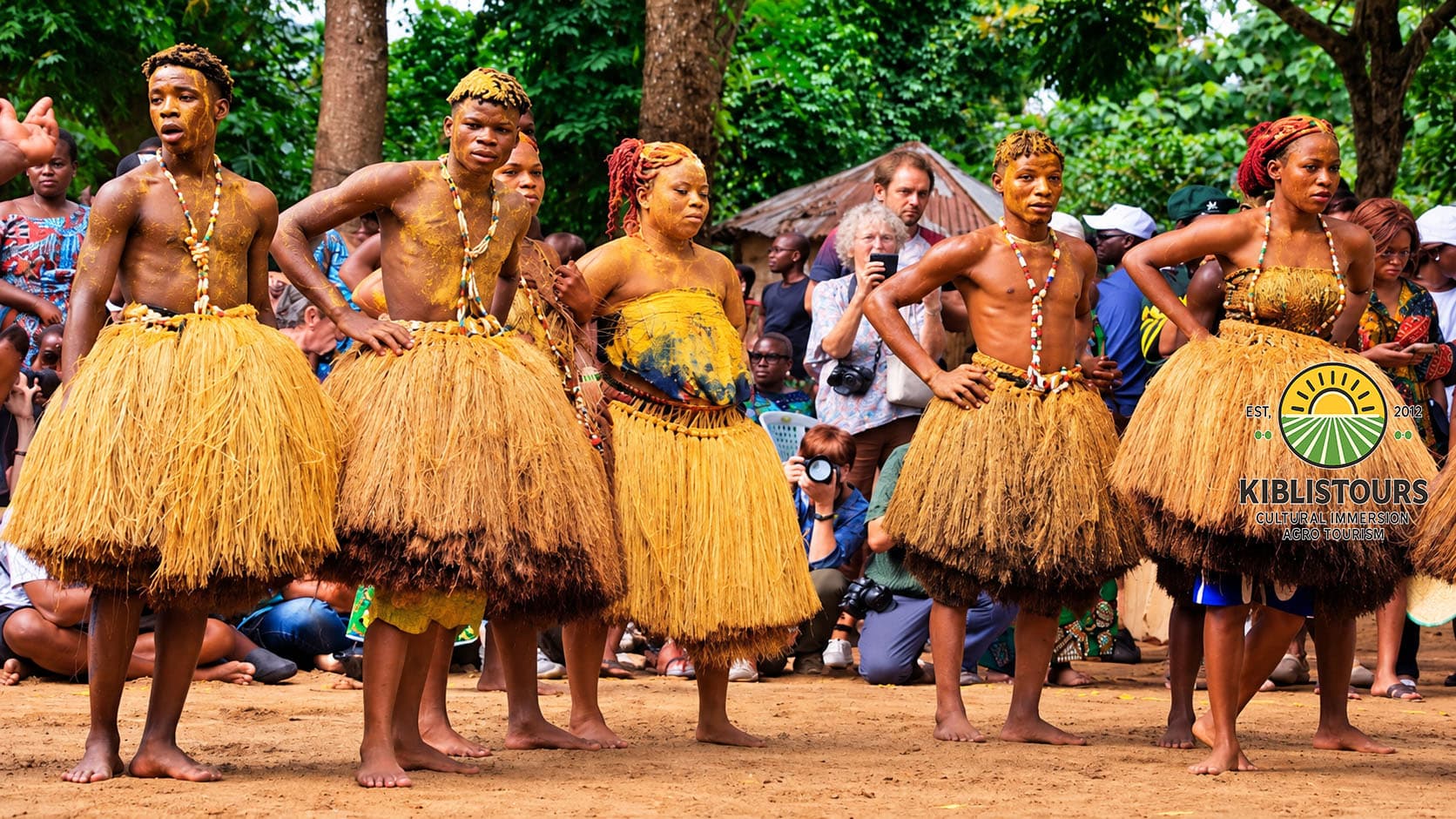
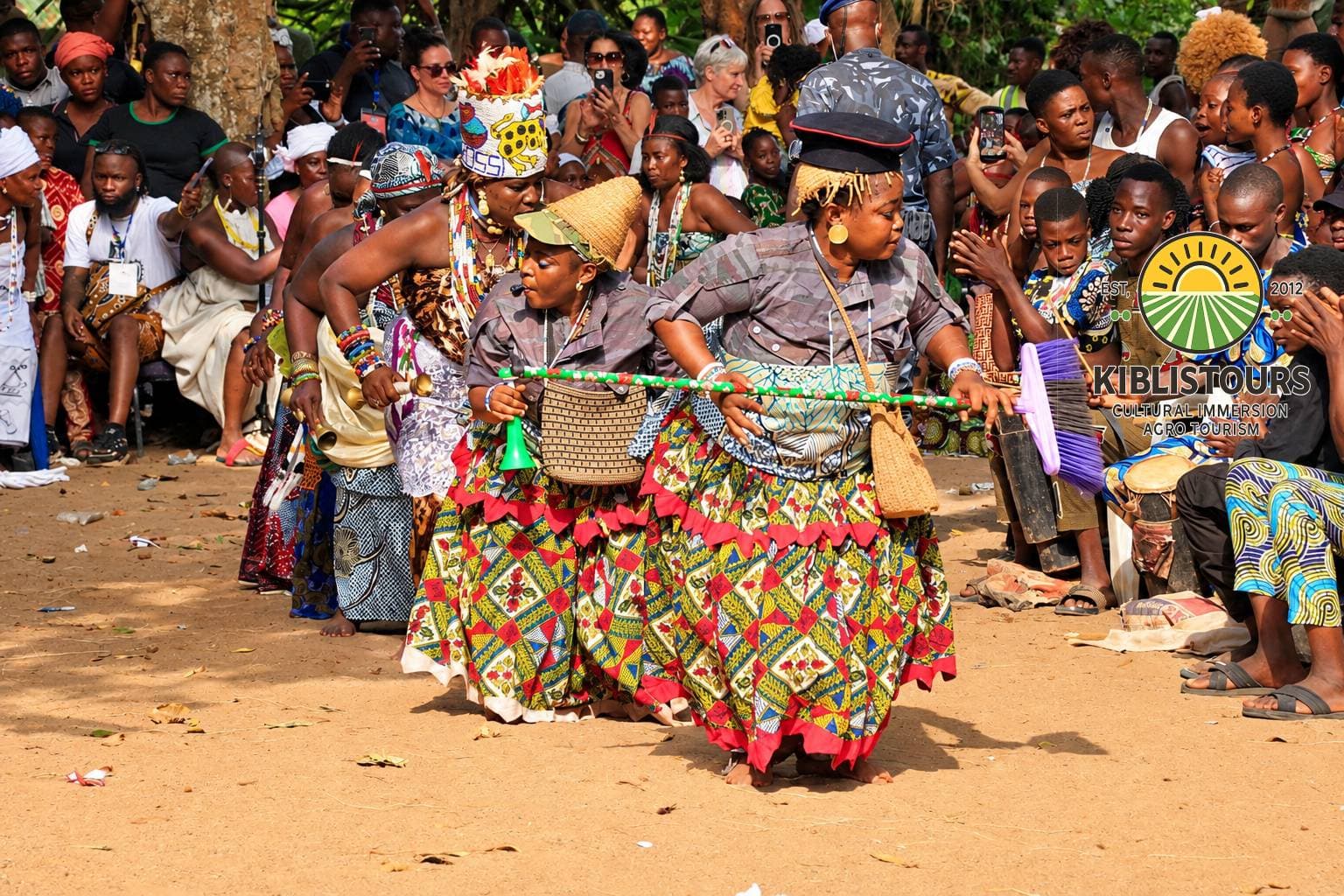
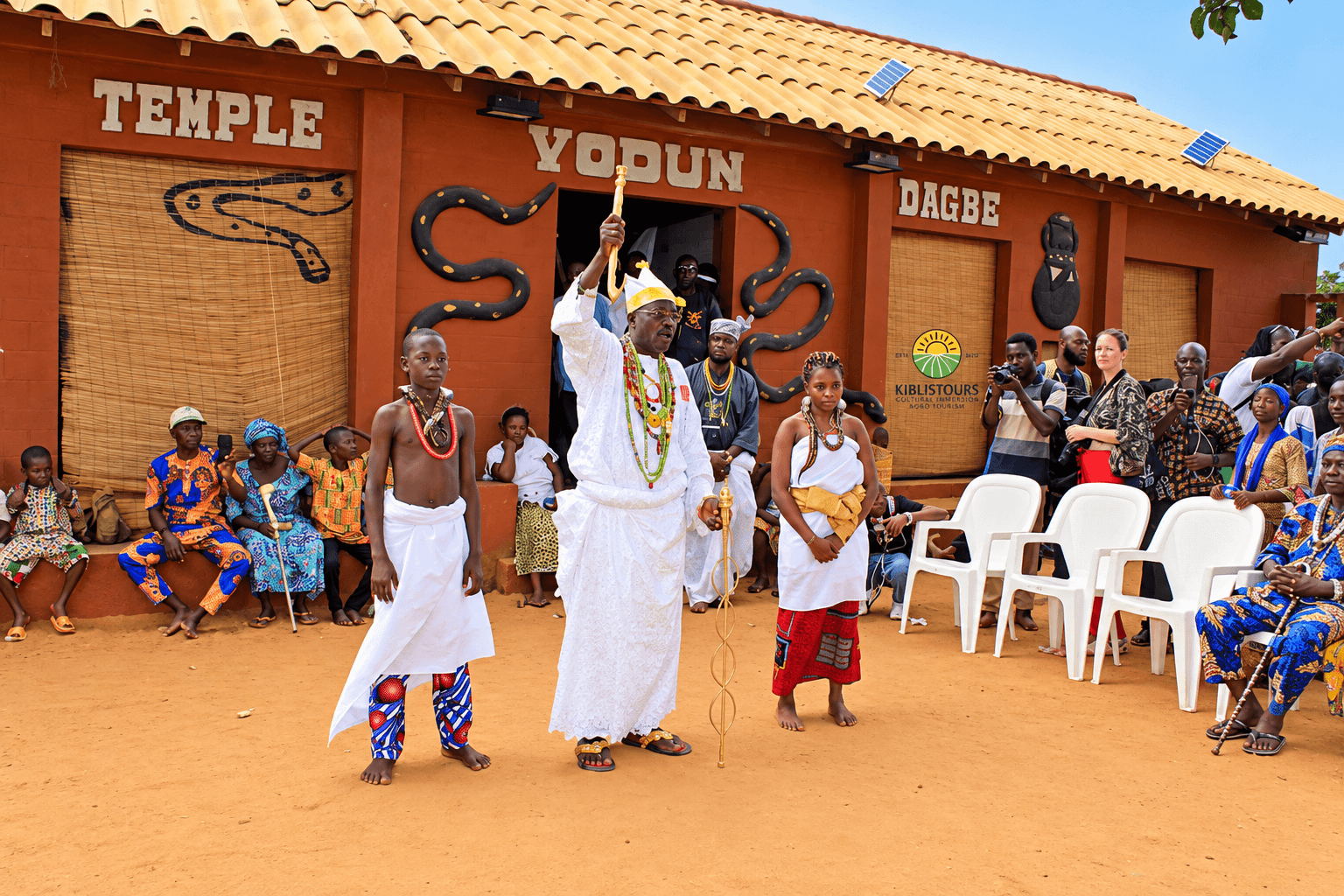
When these events are open to visitors, they provide a unique opportunity to discover dances, music, costumes and rituals that still play an important role in Beninese society.
Colorful processions move through village streets.
Drums set the rhythm of the celebrations.
Songs echo from one generation to another.
Traditional costumes reveal symbols and stories that are often centuries old.
Participating in such events, however, requires a particular attitude.
Observe before taking photographs.
Listen before interpreting.
Respect the instructions given by guides and community leaders.
Visitors are not attending a show.
They are guests invited to witness an important moment in the life of a community.
This distinction profoundly changes the experience.
Instead of remaining spectators, travelers become witnesses to a living heritage that continues to evolve while remaining deeply rooted in tradition.
Memories that never fade
When travelers talk about their journeys months or even years later, they rarely mention schedules or itineraries.
They remember a smile.
A conversation.
A shared meal.
A song heard in a village square.
The focused expression of an artisan at work.
Or the moment when, despite speaking different languages, they managed to understand each other through gestures and laughter.
This is precisely the strength of community tourism.
Landscapes remain in photo albums.
Human encounters remain in memory.
And it is often these encounters that give travel its true value.
In Benin, every community has a story to tell.
Every artisan has knowledge to share.
Every village offers a different way of discovering the country.
It is this diversity of profoundly human experiences that transforms a simple trip into an adventure that people continue to talk about long after they return home.
The benefits of community tourism in Benin
Community tourism does not only transform the travel experience.
It also creates positive momentum for the territories that welcome visitors.
When developed with respect for communities and their environment, it becomes a genuine driver of sustainable development.
Its benefits are numerous.
Some are immediately visible, such as the income generated for families and the new employment opportunities created.
Others are less obvious but equally important : the transmission of traditional knowledge, the preservation of cultural practices, the strengthening of social cohesion and the renewed pride that communities feel in their heritage.
It is precisely this balance between economic development, cultural promotion and environmental protection that makes community tourism unique.
A source of income that directly benefits communities
One of the first effects of community tourism is its positive impact on local economies.
Unlike certain tourism models, in which a large portion of tourism revenue quickly leaves the destination, community tourism prioritizes local economic circuits.
The money spent by travelers directly benefits the people involved in welcoming them.
A local guide is paid to share his knowledge of the region.
A family earns income by hosting visitors or preparing traditional meals.
An artisan sells handmade products without intermediaries.
A farmer introduces visitors to his activities and supplements his earnings.
Every experience, no matter how small, contributes to strengthening the local economy.
This fairer distribution of economic benefits allows families to diversify their sources of income while continuing their traditional activities.
Tourism therefore becomes a complement to local ways of life rather than a replacement for them.
Preserving a living heritage for future generations
Cultural heritage is not limited to monuments and historical sites.
It lives through gestures, languages, stories, songs, ceremonies, craftsmanship and traditions that shape the identity of a community.
When these treasures are recognized and promoted through community tourism, they often gain new visibility and renewed importance.
An artisan continues practicing his craft with greater confidence.
An elder becomes more eager to pass on his knowledge to younger generations.
A community realizes that its heritage is not only valuable to visitors but also to its own future.
This recognition encourages the transmission of traditions rather than their disappearance.
Tourism thus becomes an ally in cultural preservation.
In Benin, many crafts and customs have survived because families and communities have continued to protect them over time. Community tourism helps strengthen this commitment by demonstrating that these traditions possess both cultural and economic value.
As a result, heritage is no longer seen merely as a legacy from the past.
It becomes a resource for the future.
Encouraging young people to value their communities
In many rural areas, young people are often tempted to leave their villages in search of opportunities elsewhere.
Community tourism can help reverse this trend.
When young people realize that visitors from around the world are interested in their culture, traditions and knowledge, they begin to see their surroundings in a different light.
Some become tour guides.
Others create small craft businesses.
Some develop family guesthouses, cultural tours or agricultural experiences.
Others use social media and digital tools to promote their communities to international audiences.
These initiatives encourage entrepreneurship and demonstrate that it is possible to build a future without abandoning one's roots.
Tourism thus becomes both a driver of innovation and a means of preserving local identity.
Beyond the economic opportunities it creates, community tourism also helps strengthen young people's sense of pride.
It reminds them that their language, traditions and heritage are not relics of the past, but valuable assets that deserve to be preserved and shared.
Strengthening environmental protection
Communities that live in close contact with nature understand better than anyone that it is their greatest wealth.
A polluted river.
A degraded forest.
An overexploited lagoon.
All of these losses affect not only the environment but also the future of the people who depend on it.
Community tourism encourages a more responsible management of natural resources.
Because landscapes attract visitors, preserving them becomes a shared interest.
Many communities therefore develop local initiatives such as :
maintaining hiking trails;
raising environmental awareness among visitors;
improving waste management;
planting trees;
protecting sensitive ecosystems;
limiting activities that could damage natural habitats.
Travelers also become active participants in this process simply by adopting respectful behaviors during their stay.
Every responsible action contributes to protecting places that future generations will one day discover.
Encouraging dialogue between cultures
Every encounter is an opportunity to learn.
Travelers discover new traditions, different ways of life and realities that may be very different from their own.
At the same time, local communities interact with people from diverse backgrounds, share their stories and gain a fresh perspective on their own heritage.
These exchanges go far beyond tourism.
They create connections.
They challenge stereotypes.
They remind us that, despite differences in language and culture, values such as respect, solidarity and curiosity are universal.
Very often, it is these spontaneous conversations that become the most treasured memories of a journey.
A traveler may forget the exact route of a trip.
But they rarely forget the person who welcomed them into their home, shared a meal with them or told them the story of their village.
Community tourism creates these moments of connection.
And those moments continue to resonate long after the journey has ended.
A more sustainable model of development
Community tourism is fully aligned with a long-term vision of development.
Its objective is not to attract the largest possible number of visitors.
Its goal is to create an activity that benefits communities over time without compromising their cultural, social or environmental resources.
This approach seeks to balance three essential dimensions :
economic development, through income generated locally;
cultural preservation, by encouraging the transmission of traditions;
environmental protection, so that natural resources continue to sustain local communities.
This balance is the true strength of community tourism.
It demonstrates that it is possible to travel while making a positive contribution to the places we visit.
And this is undoubtedly one of the reasons why this form of tourism is attracting an increasing number of travelers seeking more responsible and meaningful experiences.
Testimonial
"We thought we were simply discovering a new country. In reality, we met people who welcomed us like friends. Knowing that our trip directly supported their community gave even greater meaning to our experience. We returned home with much more than photographs : we came back with stories, faces and a strong desire to return."
Sophie and Marc, French travelers
The challenges of community tourism in Benin
Community tourism is often presented as an ideal solution for combining economic development, cultural preservation and environmental protection.
This vision is largely justified, but it should not overshadow one essential reality : like any development model, community tourism faces several challenges if it is to fulfill its promises in the long term.
Recognizing these challenges does not diminish the value of community tourism.
On the contrary, it helps us understand why its success depends on the collective efforts of communities, public authorities, tourism professionals and travelers themselves.
In Benin, many initiatives already demonstrate that these challenges can be overcome through responsible, participatory and locally adapted approaches.
Preserving authenticity while tourism grows
One of the greatest challenges of community tourism is finding the right balance between opening communities to visitors and preserving their cultural identity.
As a destination becomes more popular, there may be a temptation to modify certain traditions to meet tourists' expectations. Ceremonies can lose some of their original meaning, customs may be simplified and handicrafts may gradually be produced primarily for commercial purposes.
Community tourism is based on a different philosophy.
Local communities remain the main decision-makers regarding what they want to share and what they prefer to keep private. They establish the conditions for welcoming visitors, identify the activities that can be opened to tourism and ensure that the most sensitive aspects of their heritage are protected.
This local governance is the best guarantee that tourism will promote culture without distorting it.
Preserving authenticity does not mean refusing change.
It means ensuring that change respects the values, traditions and identity of the people who live there.
Improving infrastructure without losing local identity
Many communities involved in community tourism are located in rural areas where infrastructure remains limited.
Road conditions, access to drinking water, internet connectivity and accommodation facilities can sometimes make travel more challenging.
However, these constraints should not be viewed solely as obstacles.
They are reminders that the development of community tourism must go hand in hand with gradual investments that respond to the needs of local populations while respecting their way of life.
The goal is not to transform villages into large tourist resorts.
Instead, it is to improve comfort and accessibility while preserving the authenticity that makes these places attractive in the first place.
A new road can facilitate access to a community without changing its identity.
A guesthouse can provide better accommodation while preserving local architectural styles.
Development and authenticity are not mutually exclusive ; they can complement one another when local communities remain at the center of decision-making.
Training local people in tourism-related skills
Welcoming visitors requires a wide range of skills.
It involves communicating with people from different cultures, organizing activities, ensuring safety, managing reservations, promoting destinations and delivering high-quality services.
Many communities already possess an extraordinary knowledge of their heritage.
Training enables them to transform this knowledge into even richer experiences for visitors.
Training programs may include :
foreign languages;
hospitality and customer service;
business management;
digital marketing;
heritage interpretation;
sustainable tourism practices.
Investing in training means investing in the quality of the visitor experience and in the future of local communities.
It also empowers young people to become active participants in tourism development.
Ensuring fair distribution of economic benefits
The success of a community tourism project also depends on how its benefits are shared.
If tourism revenues benefit only a small number of people, inequalities may emerge and weaken community cohesion.
On the other hand, when management is transparent and everyone understands how resources are used, tourism becomes a truly collective project.
Some communities establish :
management committees;
community development funds;
revenue-sharing mechanisms;
collective investment programs.
These systems help finance projects that benefit everyone, such as :
improving infrastructure;
supporting youth initiatives;
preserving cultural heritage;
protecting the environment.
Transparency strengthens trust and encourages the participation of all members of the community.
Raising travelers' awareness of responsible tourism
The success of community tourism does not depend solely on host communities.
Visitors also have an important role to play.
Responsible travel begins with simple actions :
respecting the instructions provided by local guides;
asking permission before taking photographs;
wearing appropriate clothing during ceremonies;
limiting environmental impact;
purchasing directly from local producers and artisans.
These gestures may seem simple, but they demonstrate genuine respect for local communities.
They foster trust and allow everyone to fully enjoy the experience.
Responsible tourism starts with a respectful attitude.
A promising future despite the challenges
Despite these challenges, the future of community tourism in Benin is particularly promising.
The growing interest in authentic experiences, the development of local initiatives and the commitment of associations, local authorities and tourism professionals create favorable conditions for its expansion.
Benin possesses exceptional assets :
an extraordinary cultural heritage;
traditions that remain deeply rooted in everyday life;
welcoming communities;
remarkable natural diversity.
By continuing to invest in training, heritage preservation, infrastructure and participatory governance, community tourism can become one of the main drivers of a more balanced and inclusive tourism industry.
The challenge is therefore not to choose between development and authenticity.
The real challenge is to allow tourism to grow without losing what gives it its soul.
A local guide's perspective
"Visitors sometimes come to see a village or participate in an activity. But what truly leaves an impression on them are the human connections they make. Our responsibility is to preserve this authenticity while providing a high-quality experience. This balance is what will encourage travelers to return and allow future generations to continue living from their heritage without transforming it."
Alain, community guide in southern Benin
How can you experience authentic community tourism with KIBLISTOURS ?
Discovering a community cannot be improvised.
Unlike traditional sightseeing, a genuine community immersion requires preparation, trust and, above all, close relationships with local people.
Not every experience can be booked online with a few clicks, because these journeys are built on human connections developed over time.
This is precisely where KIBLISTOURS comes in.
Our role is not limited to organizing itineraries.
We create the conditions that allow travelers to experience authentic encounters that are respectful of local communities and enriching for everyone involved.
Each itinerary is designed around one simple belief :
The most unforgettable memories are born from human connections.
Experiences designed together with local communities
At KIBLISTOURS, every immersion experience is developed in close collaboration with local communities.
Our itineraries are not built solely around the country's most famous attractions. They also take into account local realities, the rhythm of daily life, the most suitable periods for visits and the activities that communities genuinely wish to share with travelers.
This approach guarantees experiences that are both more authentic and more respectful.
Visitors do not simply observe a culture from the outside.
They are welcomed as guests.
And that difference profoundly transforms the quality of the journey.
By working hand in hand with local communities, KIBLISTOURS ensures that each experience benefits both travelers and the people who host them.
Tailor-made journeys for every traveler
Every traveler is unique.
Some people want to spend a few hours discovering a local community, while others dream of spending several days in a village, meeting artisans or combining cultural heritage, gastronomy and nature in a single journey.
For this reason, KIBLISTOURS offers fully customizable experiences.
Whether you are traveling alone, as a couple, with your family, with friends, as part of a school group, a university, an association or a professional organization, each itinerary can be adapted to your interests, your pace and your budget.
The objective is not to fit travelers into a standardized program.
Instead, the journey is designed around their expectations.
Every trip becomes a unique adventure shaped by personal interests and meaningful encounters.
Traveling with respect for local communities
A successful immersion experience is built on trust.
Before every visit, travelers receive simple recommendations designed to encourage respectful interactions with host communities.
These include :
respecting local customs and traditions;
asking permission before taking photographs;
wearing appropriate clothing when necessary;
valuing human interaction over simple observation;
approaching every encounter with curiosity and humility.
These gestures demonstrate respect and help create genuine relationships between visitors and local residents.
At KIBLISTOURS, we firmly believe that respect is the first step toward meaningful cultural discovery.
A different way to discover Benin
Benin is home to many famous landmarks, but it also contains countless lesser-known places where traditions continue to shape everyday life.
Thanks to its network of local partners, KIBLISTOURS offers access to villages, craft workshops, farms, lakeside communities and numerous local initiatives that are often absent from conventional tourist itineraries.
These experiences complement visits to major cultural sites and provide travelers with a deeper understanding of the country.
They allow visitors to discover Benin not only through its monuments and landscapes, but also through the women and men who bring its heritage to life every day.
Traveling through Benin means discovering stories, traditions and ways of life that cannot be found in guidebooks.
It means taking the time to understand a country from within.
Would you like to discover Benin in a different way ?
Imagine a journey where every day brings you closer to Beninese culture.
A journey where you exchange ideas with passionate artisans, share meals prepared by local families, explore authentic villages and discover traditions that remain alive today.
KIBLISTOURS creates tailor-made experiences that place human connections at the heart of every itinerary.
Whether you are traveling alone, as a couple, with your family, with friends, as part of a school or as a company, we design a journey that matches your interests, your pace and your budget.
Ready to experience an authentic immersion in the heart of Benin ? Contact KIBLISTOURS today and let us create the journey that truly reflects who you are.
FAQ : Everything you need to know about community tourism in Benin
What is community tourism ?
Community tourism is a form of travel that places local communities at the center of the experience. Local people actively participate in welcoming visitors, offering authentic activities and directly benefiting from the economic impact of tourism. Its objective is to create enriching exchanges while preserving cultural and natural heritage.
Why choose community tourism in Benin ?
Benin boasts an exceptional cultural heritage, vibrant traditions and communities renowned for their hospitality. Traveling in this way allows visitors to discover the country beyond its traditional tourist attractions, through genuine encounters and immersive experiences.
Is community tourism suitable for families ?
Yes, absolutely.
Many community tourism experiences are perfectly suited to families with children. Craft workshops, culinary experiences, village visits and interactions with local residents allow younger travelers to discover new cultures in an educational and enjoyable way.
Can visitors participate in village life ?
Yes, provided that the community welcomes such participation and that activities are organized with respect for local rhythms and customs.
Depending on the destination, visitors may share meals with local families, participate in agricultural activities, learn traditional crafts or accompany community guides in exploring the surrounding area.
What is the best time to experience community tourism in Benin ?
Benin can be visited throughout the year, but the dry season, which generally lasts from November to March, offers particularly pleasant conditions for travel and outdoor activities.
Some traditional festivals also take place during specific periods, adding a unique cultural dimension to the experience.
Does community tourism really contribute to local development ?
Yes, when it is properly organized.
A significant portion of the revenue generated by community tourism directly benefits local guides, artisans, host families, farmers and community organizations. It also helps preserve traditional skills and creates new economic opportunities in rural areas.
Beyond its economic impact, community tourism strengthens local pride and encourages communities to preserve and promote their cultural heritage.
How should visitors behave when visiting a community ?
Respect is essential.
Visitors are encouraged to :
ask permission before taking photographs of people;
respect local customs and traditions;
follow the recommendations of local guides;
adopt an open-minded and respectful attitude;
avoid disturbing ceremonies and daily activities.
These simple gestures encourage authentic exchanges and strengthen trust between visitors and local residents.
Is community tourism environmentally friendly ?
Yes. Environmental protection is one of the fundamental principles of community tourism.
Activities are generally organized in small groups, prioritize local resources and promote responsible practices aimed at preserving ecosystems and natural heritage.
Community tourism encourages visitors to travel more responsibly by minimizing their environmental footprint and supporting initiatives that protect local resources.
What kinds of experiences can travelers enjoy during a community stay ?
Community tourism offers a wide range of experiences, including :
meeting local artisans;
sharing meals with host families;
discovering traditional recipes;
participating in craft workshops;
exploring villages;
attending traditional festivals when they are open to visitors;
learning about farming practices and local knowledge;
discovering local music and dances;
exploring lakeside communities and natural landscapes.
Each experience provides a unique opportunity to better understand the culture and daily life of local communities.
Do travelers need to speak a local language ?
No. Local guides and facilitators help bridge the communication gap between visitors and communities.
Even when languages differ, encounters are often based on curiosity, gestures, smiles and shared experiences.
Many travelers discover that meaningful connections can be created even without speaking the same language.
Is community tourism only for experienced travelers ?
Not at all. Community tourism is suitable for everyone : first-time visitors to Africa, culture enthusiasts, families, students, researchers and groups looking for authentic and meaningful experiences.
The most important requirement is curiosity and a willingness to discover different ways of life with respect and openness.
How can travelers prepare for their stay ?
It is recommended to bring :
comfortable clothing suitable for the climate;
good walking shoes for certain visits;
a reusable water bottle;
sunscreen and insect repellent;
a camera to capture unforgettable memories.
It is also advisable to learn about local customs before the trip in order to approach every encounter with respect and understanding.
Why choose KIBLISTOURS for a community immersion experience ?
KIBLISTOURS works closely with local communities to create authentic, responsible and personalized experiences.
Every itinerary is designed to encourage genuine encounters, promote Beninese heritage and ensure a positive impact for both local communities and travelers.
By choosing KIBLISTOURS, visitors benefit from :
experiences designed with local communities;
authentic and responsible travel;
personalized itineraries adapted to their interests;
support before, during and after the trip;
unforgettable cultural immersion in the heart of Benin.
Ready to experience authentic Benin ?
Whether you dream of meeting passionate artisans, sharing everyday life with local communities, discovering the flavors of Beninese cuisine or exploring preserved places far from the usual tourist routes, KIBLISTOURS is here to help you create a fully personalized journey.
Our commitments :
Tours designed in partnership with local communities
Authentic and responsible experiences ;
Itineraries tailored to your interests and pace ;
Assistance before, during and after your stay ;
Unforgettable cultural immersion in the heart of Benin.
Contact KIBLISTOURS today and start imagining a journey that will leave you with much more than photographs : unforgettable encounters, powerful emotions and memories that will stay with you for a lifetime.