A journey sometimes begins long before the discovery of a monument, a landscape, or a historical site. It begins the moment an aroma catches your attention, an unfamiliar flavour surprises your taste buds, or a local resident spontaneously invites you to share a meal.
In Benin, this first encounter with the country very often takes place through its cuisine. Long before understanding the local languages, Vodun traditions, or the history of ancient kingdoms, travellers discover a different way of life through bustling markets, family kitchens, small neighbourhood restaurants, and the women who prepare dishes passed down from generation to generation.
Beninese cuisine does not seek to impress through sophisticated presentation. Its richness lies elsewhere. It reveals itself in the freshness of its ingredients, the patience with which sauces simmer for hours, the mastery of techniques often learned in childhood, and the generosity that inspires families to serve their guests before thinking of themselves.
Here, food is not simply a service provided for tourists; it is an integral part of everyday life and one of the most beautiful expressions of the country's cultural identity.
Many international visitors arrive in Benin with only a limited understanding of its cuisine. Some have vaguely heard of pounded yam or grilled fish. Others have never come across amiwo, akassa, gboman, or palm nut sauce.
Yet, within their first few days, they discover a diversity of flavours that far exceeds their expectations. They quickly realise that Beninese cuisine reflects the country itself: understated, authentic, deeply human, and surprisingly rich.
This is precisely the richness we want to introduce you to through this guide.
More than a simple list of dishes to try, you will find here a genuine immersion into Benin's culinary traditions. You will discover why certain meals hold a central place in family ceremonies, how markets supply towns and villages every day, why cooking techniques are still passed down from mothers to daughters, and how gastronomy sometimes tells the story of a nation's people more vividly than history books.
During her first trip to Benin, a Belgian tourist travelling with Kiblistours told us that she had carefully prepared a list of monuments she wanted to visit.
Yet, several months later, when she looked back on her journey, it was neither the royal palaces nor the beaches that first came to mind.
What she remembered most was a small family courtyard where a grandmother had taught her how to stir peanut sauce while the children laughed at her hesitation in front of the wood fire.
“I realised that day,” she told us, “that you can discover a country with your eyes, but you can only truly understand it by sharing a meal with the people who live there.”
In many travel destinations, meals have become little more than breaks between sightseeing activities. In Benin, however, they are an essential part of the journey. They tell the story of successive kingdoms, the trade networks that shaped the region, the peoples who arrived from different backgrounds, and the natural resources that have nourished communities for generations.
The ingredients found in Beninese dishes today bear witness to this history. Maize, cassava, yam, millet, and sorghum have played an essential role in local diets for generations. Fish comes from the Atlantic Ocean as well as the lakes, lagoons, and rivers that run through the country. Leafy vegetables, local spices, traditional oils, and tropical fruits complete an exceptionally diverse culinary heritage.
Every region has its own specialities. The south, strongly influenced by its proximity to the coast, favours seafood and maize-based preparations. Central Benin is renowned for its yams and several iconic sauces. In the north, cuisine reflects the local environment, with millet, sorghum, rice, and meat playing a more prominent role.
Travelling across Benin therefore means travelling from one culinary tradition to another, while never losing sight of the common thread that connects them all: sharing.
This diversity explains why two meals enjoyed a few hundred kilometres apart can be completely different while still belonging to the same national culinary identity. Recipes evolve, ingredients vary slightly, and spices change according to local preferences, but the underlying spirit remains the same: preparing generous meals that bring families and visitors together around the same table.
The First Evening Many Travellers Remember
There is a particular moment that many visitors recall when describing their first trip to Benin. It is not necessarily a museum visit or the discovery of a famous monument. More often, it is an ordinary evening on a lively street in Cotonou, Porto-Novo, or Ouidah.
As the sun disappears beyond the horizon, the temperature becomes more pleasant and the city seems to take on a different character. Glowing embers begin to appear outside small street restaurants. Women arrange their cooking pots, the first customers settle onto modest plastic benches, and conversations grow livelier in a surprisingly relaxed atmosphere.
The aromas of grilled fish, slowly simmered tomatoes, fresh ginger, and fried plantains mingle in the evening air, creating a distinctive fragrance that many travellers never forget.
You only need to stop for a few minutes to understand that these places are not simply somewhere to eat. They are also spaces where people come together.
Neighbours exchange news about their community, children stop to buy a few fritters on their way home from school, traders end their working day over a shared meal, and visitors are often welcomed with warm curiosity.
It is not unusual for a conversation to begin simply because a traveller asks the name of a dish or wonders how it should be eaten.
These simple moments reveal an important part of Benin's character.
Food becomes a universal language, bringing people together even when they do not speak the same language. A smile, a gesture showing how to combine a sauce with a traditional maize dough, or an invitation to taste a homemade preparation can be enough to create a lasting memory.
Speak directly with the Kiblistours team on WhatsApp: +229 01 90 72 17 61
Why Beninese Cuisine Is Winning Over Travellers from Around the World
Culinary tourism is experiencing remarkable growth. Travellers are increasingly moving away from standardised experiences and looking for opportunities to understand the countries they visit through everyday life.
They want to explore local markets, meet farmers and producers, learn traditional recipes, and share meals with residents rather than dining exclusively in international restaurants.
Benin is particularly well suited to this approach to travel.
Unlike some destinations where culinary traditions have been extensively reshaped by mass tourism, many Beninese recipes continue to be prepared using techniques handed down through generations. Sauces simmer slowly, spices are often crushed by hand, vegetables come from nearby farms, and many families still cook over wood fires when circumstances allow.
This authenticity is one of the country's greatest strengths.
Visitors do not simply encounter food staged for tourists. They discover the dishes Beninese people prepare for themselves, the meals shared during festivals, weddings, traditional ceremonies, and ordinary family gatherings.
This sincerity gives every meal a special character and helps explain why so many travellers now consider Beninese gastronomy one of the most memorable surprises of their journey through West Africa.
For some, the most lasting memory will be freshly grilled fish enjoyed beside the ocean. For others, it will be a sauce prepared in a family home or a morning spent exploring the colourful aisles of a market alongside a local cook.
Every experience is different, but they all share something important: they allow visitors to discover the country with a depth that conventional sightseeing alone could never provide.
Why Benin Is One of Africa's Most Overlooked Culinary Destinations
When people discuss Africa's great culinary destinations, the same countries are frequently mentioned.
Morocco is celebrated for its tagines and couscous, Senegal for its thieboudienne, Ethiopia for its injera, while Nigeria attracts food lovers with its bold spices and remarkable culinary diversity.
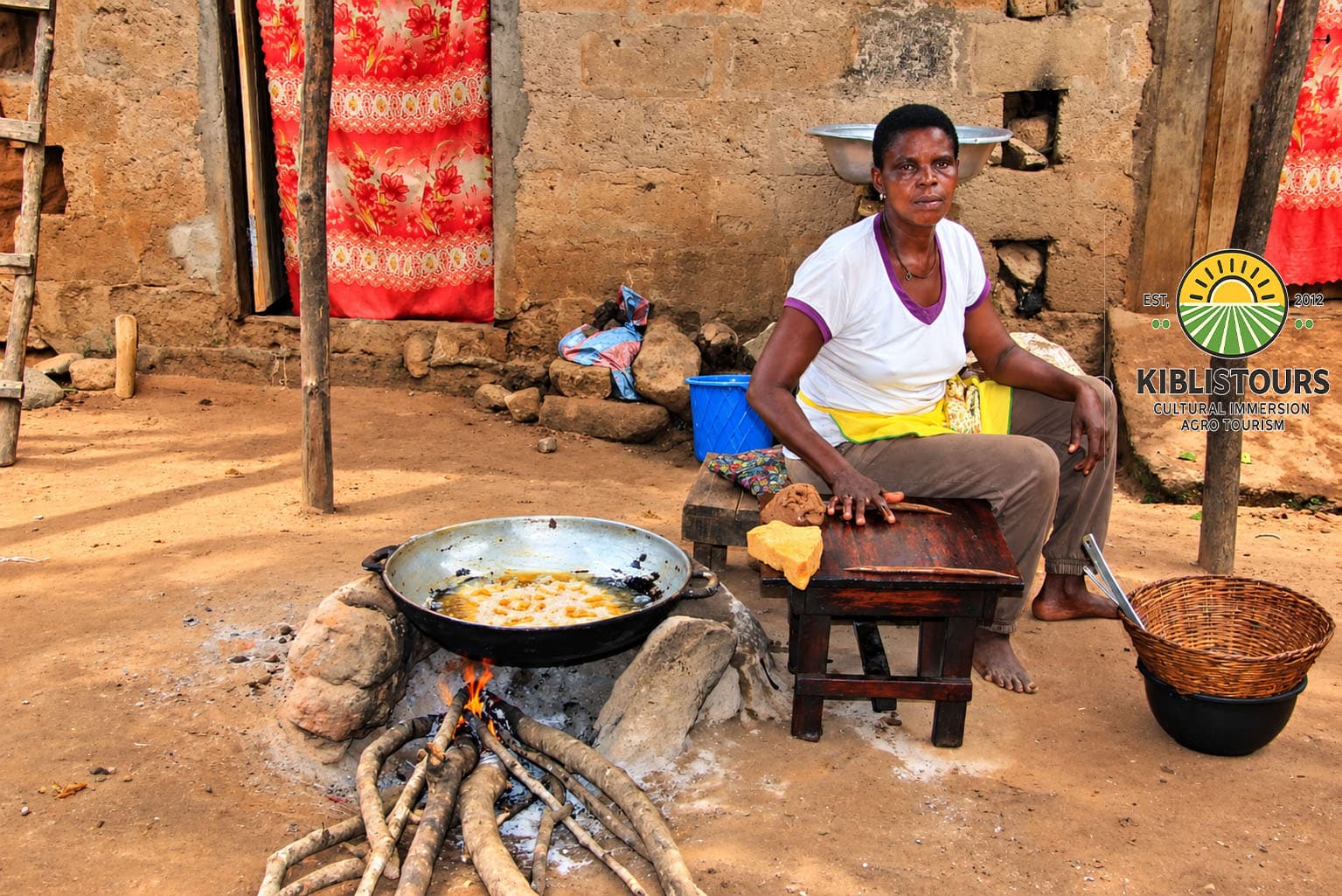
Benin, by contrast, rarely features prominently in these conversations.
Yet travellers who take the time to explore the country often leave with an unexpected conviction: they have discovered one of the continent's most authentic culinary traditions.
This paradox can largely be explained by Benin's relatively low profile on the international tourism scene.
For many years, the country has been better known for its history, Vodun traditions, and the Royal Palaces of Abomey than for its gastronomic heritage.
Its cuisine has remained a treasure shared within families, markets, and small neighbourhood restaurants, without the benefit of major international promotional campaigns.
Even today, many travellers arrive without knowing what awaits them behind the steaming cooking pots set up along roadsides or in family courtyards.
And that is precisely what makes the experience so special.
Here, dishes are not prepared simply to follow culinary trends or attract attention on social media. They are cooked because they are part of everyday life.
They accompany births, weddings, religious celebrations, traditional ceremonies, family reunions, and ordinary working days.
Visitors therefore encounter a sincere culinary tradition, deeply rooted in local customs, where every recipe has a history and a reason for existing.
This authenticity can be felt from the very first moments.
In the markets, vegetables may still carry traces of soil from the fields where they were grown. Fish arrives from pirogues returning from their fishing trips. Market vendors often know the producers who supply them personally. Spices are purchased in small quantities to preserve their freshness.
Everything serves as a reminder that food remains closely connected to the land and the seasons.
Beninese Generosity Is Also Expressed Through Food
In Benin, offering someone food is much more than a simple act of politeness. It is a way of expressing respect, consideration, and friendship.
Many travellers describe their surprise at how easily an ordinary conversation can turn into an invitation to share a meal.
Whether in a village or an urban neighbourhood, it is not unusual for a visitor to be invited to sit down at an improvised table simply because they have shown curiosity about a dish or complimented its aroma.
This hospitality is not artificial.
It belongs to a culture in which meals bring people together and the presence of a guest is often regarded as a blessing.
In some families, it would be unthinkable to begin eating without first offering food to everyone present. Even when resources are limited, sharing remains a deeply rooted value.
Travellers who experience these moments rarely speak only about the quality of the food.
What they remember most are the smiles, the spontaneous conversations, the laughter, and the feeling of being welcomed with remarkable simplicity.
Many explain that it was through these shared meals that they truly began to understand Benin, sometimes far more than through visits to famous tourist attractions.
A Cuisine That Follows the Rhythm of Nature
One of the most remarkable characteristics of Beninese gastronomy is its close relationship with the seasons.
Long before concepts such as locally sourced food and short supply chains became popular in many parts of the world, this approach was already part of everyday life in Beninese communities.
Markets change their appearance throughout the year.
Certain varieties of mango fill the stalls for only a few weeks before giving way to other seasonal fruits. Newly harvested yams are eagerly awaited in several regions, where their arrival is marked by traditional celebrations.
Fishermen adapt their activities to conditions at sea or in the lagoons, while vegetable growers work according to rainfall patterns and drier periods.
This seasonality naturally influences what people eat.
Experienced cooks know which leafy vegetables are most tender at particular times of the year, which fish offer the best flavour during certain months, and which spices bring out the qualities of available ingredients.
This knowledge, passed down through experience rather than books, represents an invaluable form of intangible cultural heritage.
For attentive travellers, every season therefore offers a different way to discover the country.
Two visits made several months apart will not necessarily provide the same culinary experiences. Certain flavours will appear, while others will temporarily disappear, reminding visitors that Beninese cuisine remains deeply connected to the natural world.
Markets: The Living Stages of Beninese Daily Life
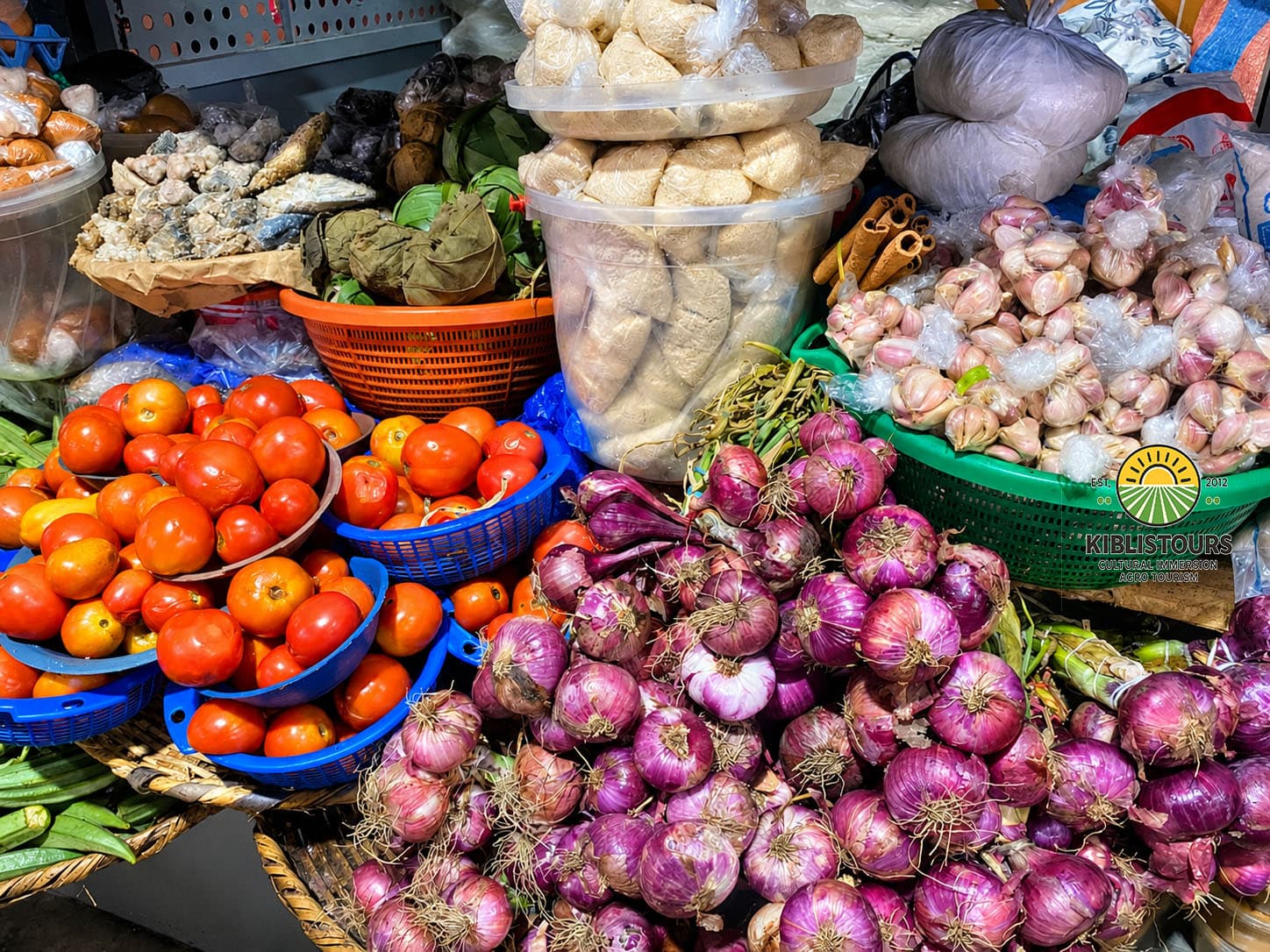
It is impossible to understand Beninese gastronomy without spending time in its markets.
They are not merely places where people buy food. They are the beating hearts of many towns and villages.
From the earliest hours of the morning, they come alive in a fascinating mixture of colours, aromas, and sounds.
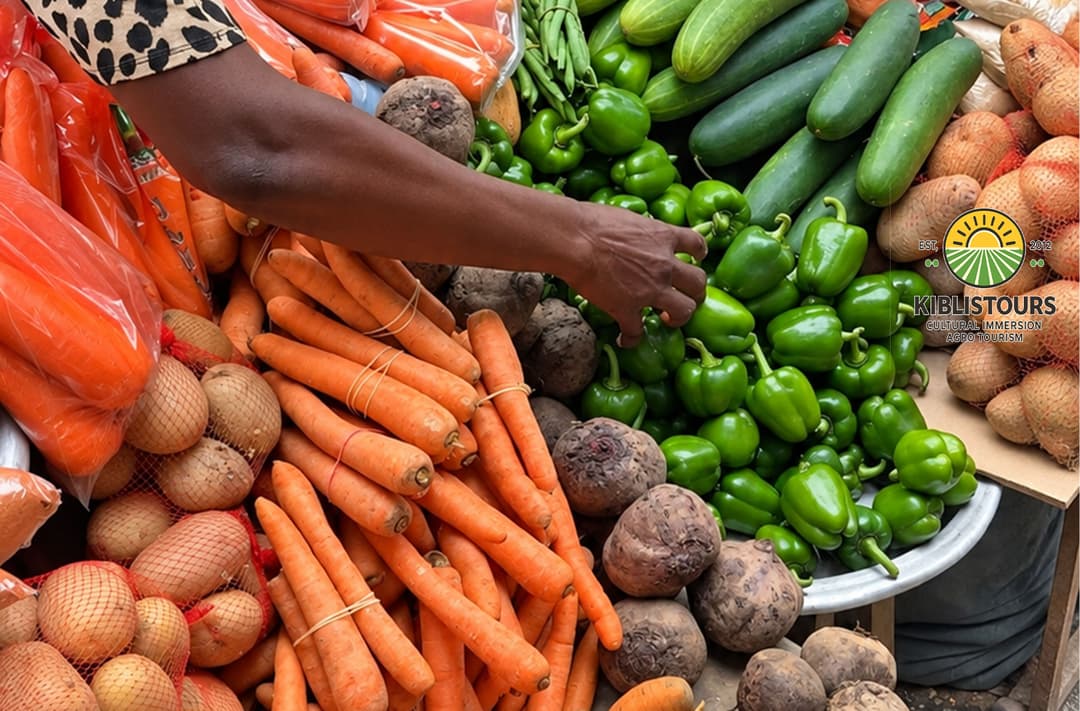
Baskets overflow with tomatoes, chillies, African eggplants, okra, fresh leafy vegetables, and carefully arranged tubers. Further along, spices create colourful mosaics of red, yellow, and brown.
Smoked fish releases its distinctive aroma, mingling with the fragrances of ripe fruit and freshly fried fritters.
Markets are also extraordinary places for observing everyday life.
Women vendors cheerfully call out to customers, negotiate prices in a lively atmosphere, exchange neighbourhood news, and serve their products with impressive speed.
Every stall tells the story of a family, a farming enterprise, or a traditional skill.
For many international visitors, this immersion becomes one of the most memorable experiences of their journey.
They discover an organisation that may initially appear chaotic but actually follows a system perfectly understood by those who work within it every day.
At Kiblistours, we always encourage our travellers to explore these markets with a local guide.
Beyond discovering unfamiliar products, this makes it possible to understand how they are used, where they come from, and why they matter in the country's culinary traditions.
A tomato is no longer simply a tomato; it becomes an essential ingredient in a sauce prepared for generations.
A green leaf is no longer an anonymous vegetable; it reveals a regional recipe, a particular season, or a traditional ceremony.
One morning at Dantokpa Market, a Canadian traveller stopped in front of a stall filled with leaves whose names he did not know.
Intrigued by his curiosity, the vendor handed him a small bunch and explained how the leaves were used in a traditional sauce.
A few minutes later, she even offered him a small portion of the cooked leaves so that he could taste them.
The traveller later explained that this simple gesture had taught him more about Beninese hospitality than all the brochures he had read before leaving home.
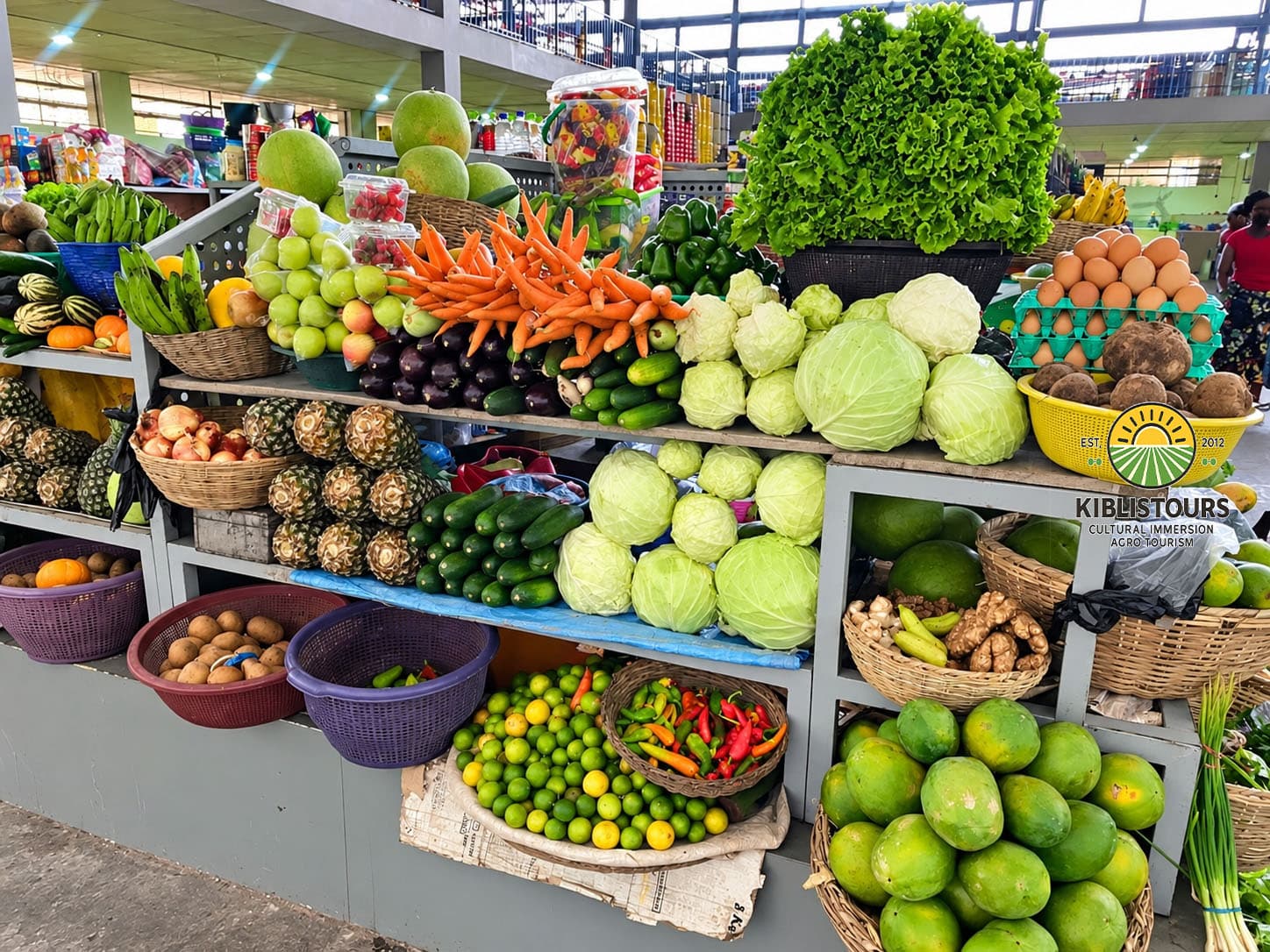
Behind Every Recipe Lies Knowledge Passed Down Through Generations
One of the greatest treasures of Beninese cuisine lies not only in the ingredients it uses, but also in the techniques through which those ingredients are transformed.
Many of these skills are learned in childhood simply by watching older family members cook.
In numerous households, children grow up surrounded by culinary preparations.
They learn how to recognise the best leafy vegetables, select a good yam, monitor a simmering sauce, and adjust spices without needing to measure every quantity precisely.
This knowledge, rarely written down, is passed on naturally over the years.
Watching an experienced cook prepare peanut sauce or traditional maize dough is enough to understand that cooking is a genuine craft.
The movements are precise, confident, and almost instinctive.
Every step appears simple when observed, yet achieving the same results often requires years of practice.
It is this quiet transmission of knowledge that allows Beninese gastronomy to preserve its distinctive character today.
Behind every plate lie hundreds of hours of learning, patience, and experience.
Travellers who take the time to speak with these women and men discover that cooking is far more than a collection of recipes.
It is a living memory, carried forward by the people who preserve it through their everyday work.
One of the most common mistakes travellers make when discovering Benin is assuming that Beninese cuisine is limited to grilled fish or a handful of specialities served in restaurants in major cities.

In reality, it is infinitely more diverse.
Every region, every community, and sometimes even every family has its own recipes, variations, and culinary traditions. Some dishes are reserved for major celebrations, while others are part of everyday life. Yet each one tells a story.
Beninese people themselves often say that you can learn a great deal about someone by observing what they cook and how they welcome their guests.
Behind a simmering cooking pot lie childhood memories, techniques learned from elders, ingredients cultivated with patience, and a genuine philosophy of sharing.
Discovering the country's traditional dishes is therefore not simply about satisfying your culinary curiosity. It is also a way of gaining a deeper understanding of its culture.
Let us begin this culinary journey with a dish that many consider the true king of the Beninese table.
1. Pounded Yam: Much More Than a Dish, a National Symbol
In several regions of central and northern Benin, there is a familiar sound that can regularly be heard around midday or in the late afternoon.
It is neither a musical instrument nor a farming tool.
It is the rhythmic sound of wooden pestles striking the bottom of a large mortar.
For generations, this powerful rhythm has accompanied the preparation of one of the country's most emblematic dishes: pounded yam.
For many international visitors, simply watching the preparation is an experience in itself.
Two people take turns with remarkable precision, lifting their heavy pestles almost in perfect synchronisation as they gradually pound the steaming pieces of boiled yam.
The movement looks simple, but it requires strength, endurance, and, above all, excellent coordination.
Families who have mastered this technique perform it with astonishing ease, while travellers invited to try often provoke bursts of laughter when they discover just how physically demanding the exercise can be.
Yet what impresses visitors most is not simply the technique.
It is the atmosphere surrounding the preparation.
While the yam is being pounded, sauces continue to simmer nearby. Children watch the adults while chatting, neighbours stop by to greet the family, and elders share anecdotes or memories.
The kitchen becomes a living space where everyone naturally finds their place.
During a cultural immersion organised by Kiblistours in a village in Benin's Collines region, one of our American travellers decided to try pounding yam himself.
Convinced that the exercise would be easy, he picked up the heavy pestle as the villagers encouraged him.
After only a few movements, he stopped, breathless, while the entire courtyard erupted in laughter.
A woman approached him kindly and showed him how to follow the rhythm rather than struggle against it.
A few minutes later, he finally managed to keep pace.
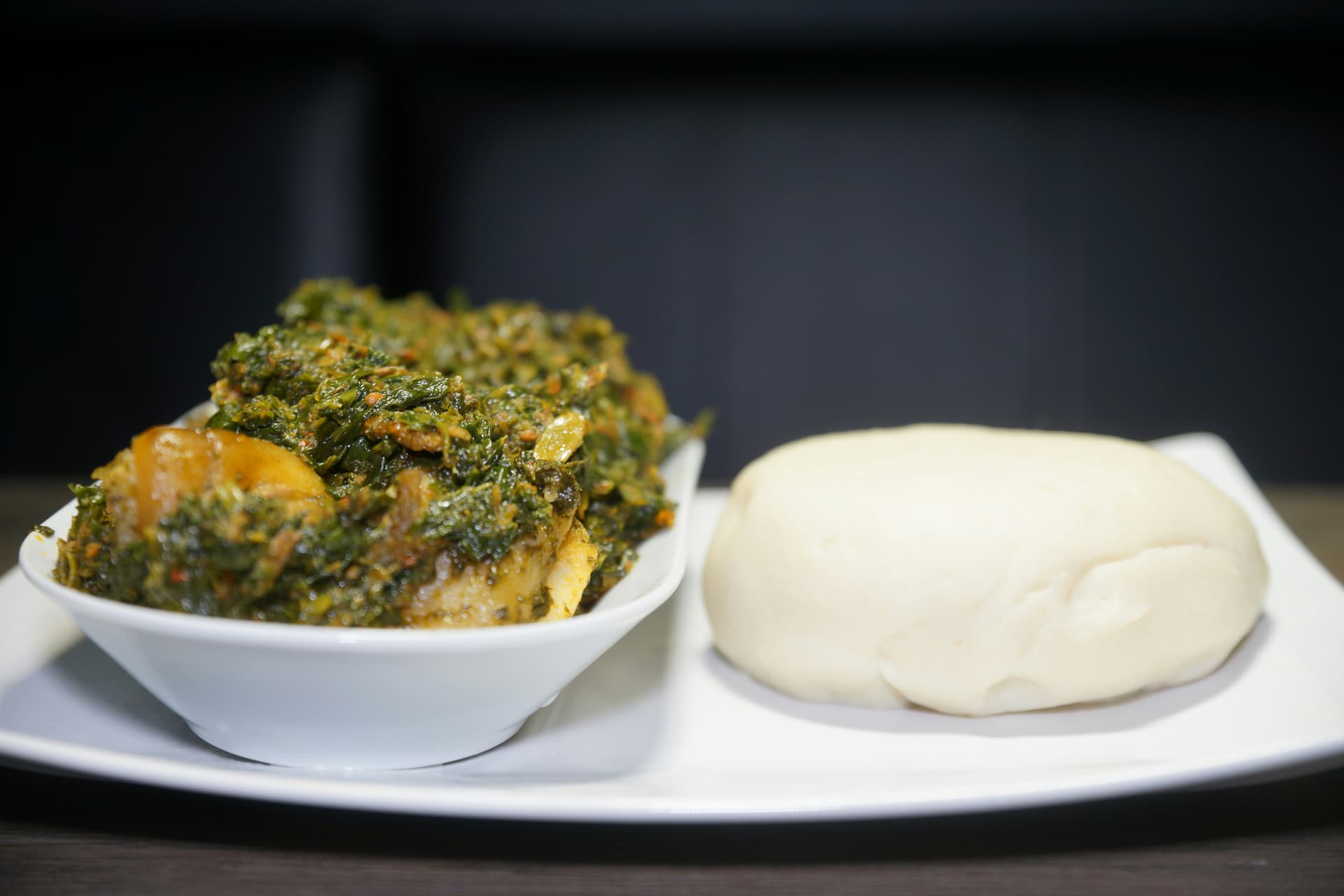
When everyone sat down to eat, he told us with a smile:
“I thought I was going to learn a recipe. Instead, I learned that some skills cannot simply be explained. They have to be experienced.”
The yam used for this dish is carefully selected.
Not every variety is suitable.
Experienced cooks know how to recognise the types that produce a soft, smooth, and slightly elastic consistency.
Once boiled, the yam is quickly pounded until it becomes perfectly smooth, without a single visible lump.
Depending on the quantity being prepared, this process can sometimes take more than half an hour.
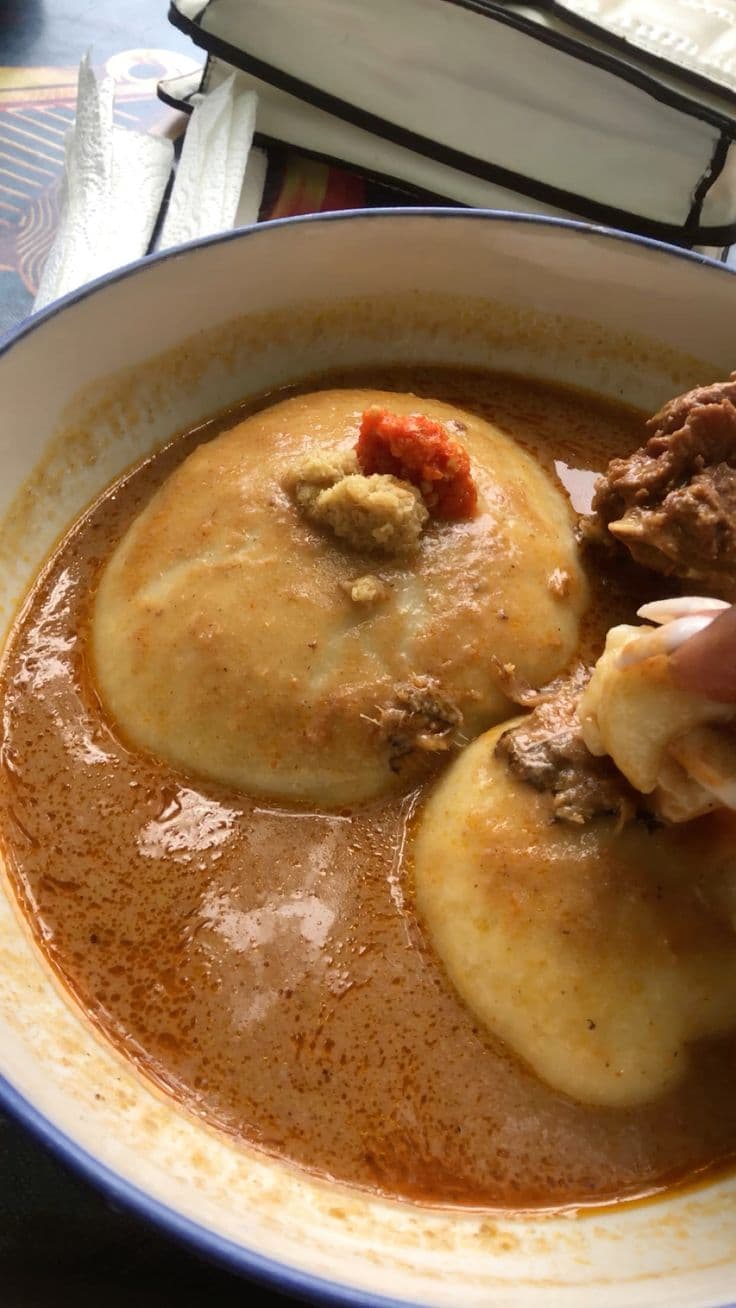
Pounded yam is then served with a variety of sauces.
Peanut sauce remains one of the most popular accompaniments, but many people prefer it with okra sauce, spicy tomato sauce, leafy vegetable sauce, or preparations made with meat or smoked fish.
Every region has its preferences, and every family often takes pride in its own cooking traditions.
For travellers, enjoying pounded yam in a family home is a very different experience from ordering it in a restaurant.
The meal unfolds at a leisurely pace.
Hosts explain where the ingredients come from, describe the occasions on which the dish is traditionally prepared, and sometimes invite visitors to take part in the pounding themselves.
Many travellers leave with amusing photographs, but above all, with memories of a genuine moment of sharing.
Did You Know?
In several parts of Benin, the arrival of the new yam harvest is celebrated through traditional festivals in which this important crop plays a central role.
Before the first yams are widely consumed, certain communities perform rituals or ceremonies to express gratitude for the abundance of the harvest.
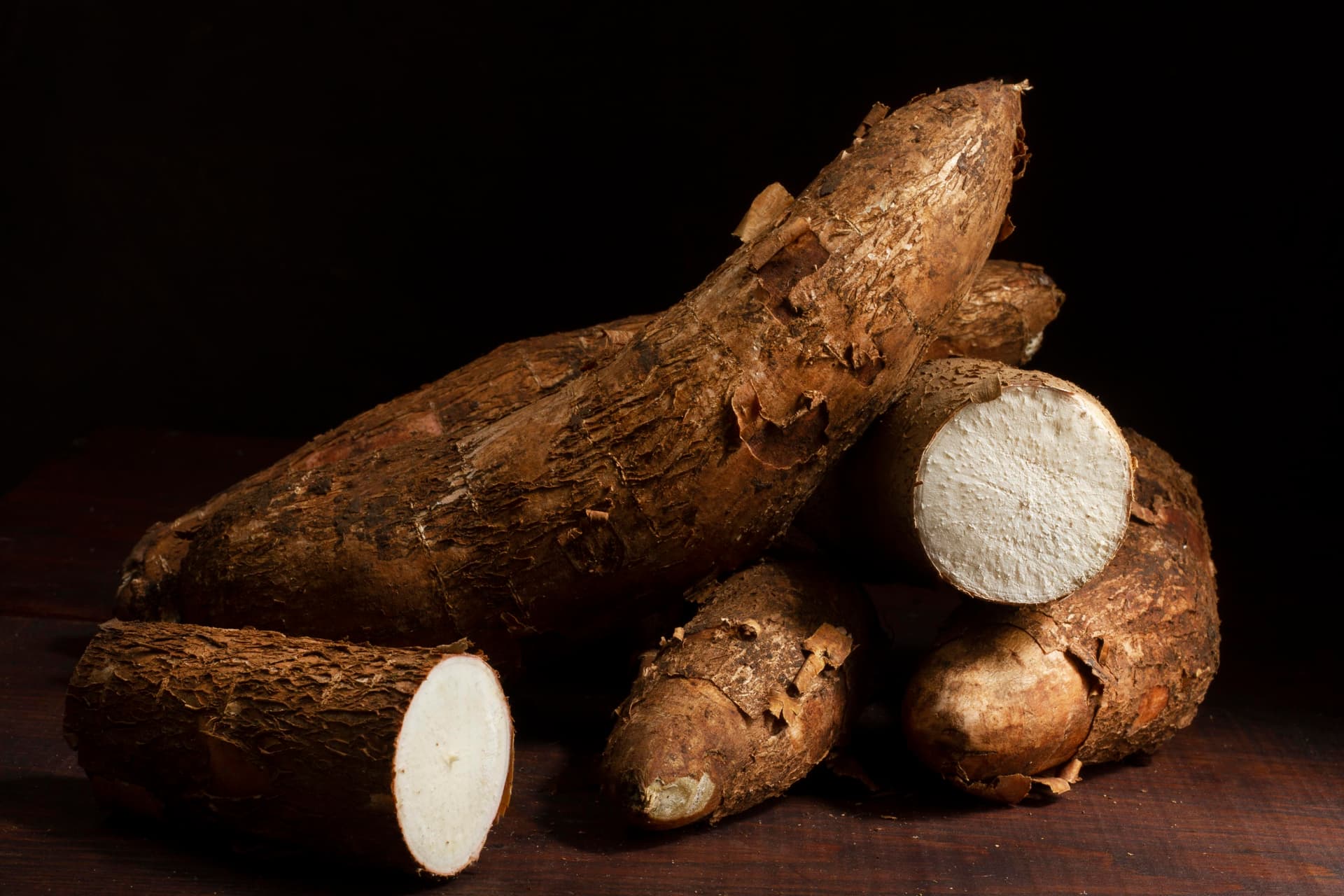
These traditions reflect the centuries-old relationship between rural communities and one of their most important food crops.
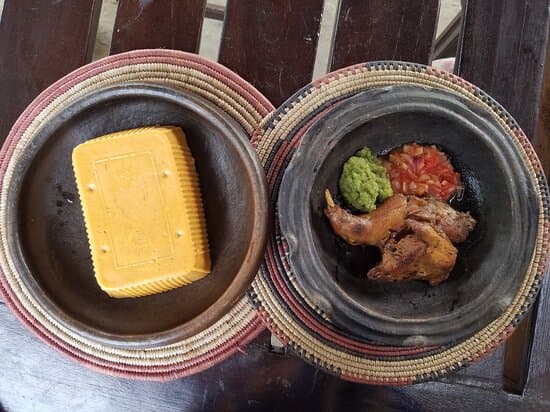
2. Amiwo: The Red Maize Dough That Brings Colour to Beninese Celebrations
It is impossible to talk about the cuisine of southern Benin without mentioning amiwo.
At first glance, its vibrant reddish-orange colour immediately catches the eye.
Many travellers initially assume that it is simply a tomato-based dish.
They soon discover, however, that its preparation is far more subtle.
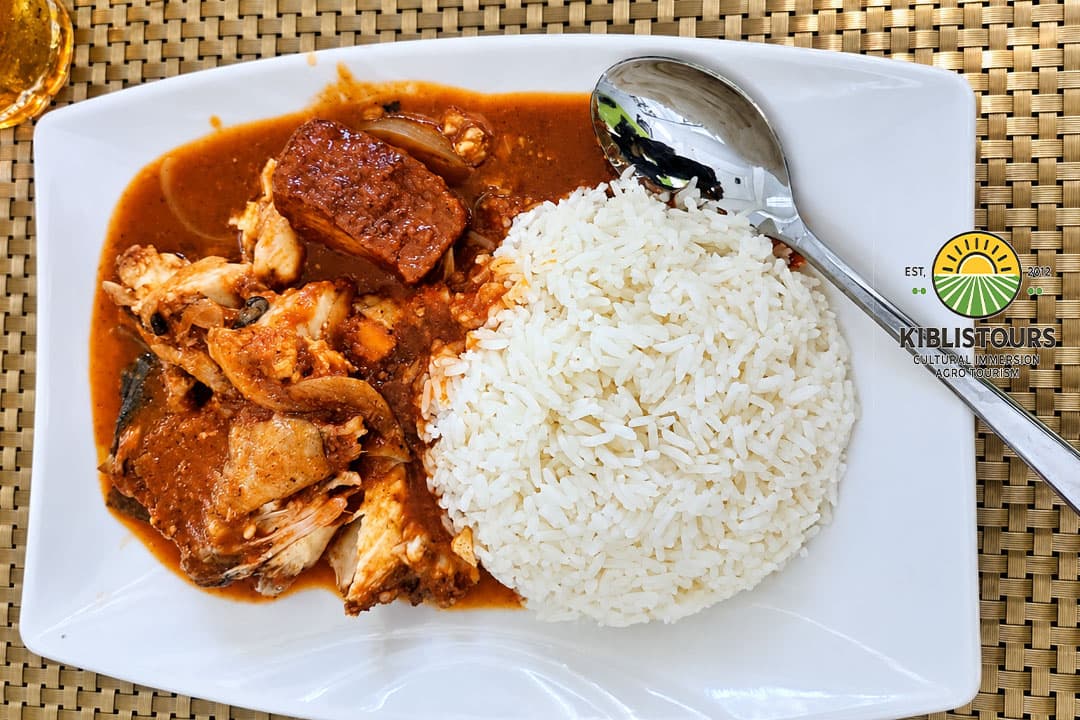
Amiwo is made from maize flour, carefully cooked with a sauce prepared using ingredients such as tomatoes, red palm oil, and local spices.
The cooking process requires constant attention.
The mixture must be stirred continuously to achieve a perfectly smooth and consistent texture.
Experienced cooks know exactly when to reduce the heat, when to add a little water, and how to adjust the seasoning to obtain the desired balance.
Its flavour is mild, aromatic, and slightly spicy.
This combination explains why amiwo pairs so well with fried fish, grilled chicken, eggs, and certain meat dishes.
Beyond its delicious taste, amiwo is closely associated with many family celebrations.
Weddings, naming ceremonies, family gatherings, and community festivities often provide opportunities to prepare it in large quantities.
In several neighbourhoods of Porto-Novo and Cotonou, residents can immediately recognise the distinctive aroma drifting from kitchens when a major celebration is being prepared.
A restaurant owner in Porto-Novo once explained that she could often guess the importance of a celebration simply by looking at the quantity of amiwo ordered by a family.
“When we prepare a lot of amiwo,” she said with a smile, “it means we are expecting a lot of people.”
For international visitors, this dish often provides an excellent introduction to Beninese cuisine.
Its flavour is approachable while offering a culinary identity quite different from what travellers may be accustomed to in European or American cooking.
3. Peanut Sauce: One of West Africa's Finest Culinary Traditions
If there were one sauce capable of convincing a food lover to return to Benin, many people would immediately mention peanut sauce.
Made from carefully processed groundnuts, it develops an exceptionally rich and distinctive flavour.
Contrary to what some visitors might imagine, it is not a sweet sauce.
Instead, the natural richness of peanuts combines beautifully with tomatoes, spices, meat, fish, or vegetables to create a generous, deeply flavoured, and wonderfully comforting preparation.
Every family, however, has its own recipe.
Some prefer a particularly thick and creamy texture, while others aim for a lighter consistency.
The quantities of tomatoes, chillies, and spices also vary according to local customs and personal preferences.
This diversity explains why peanut sauces tasted in different regions can have noticeably different characteristics without any single version being considered the only authentic one.
For many Beninese people living abroad, peanut sauce remains one of the dishes most strongly associated with childhood memories.
Its aroma alone can bring back images of family meals, holidays in the village, or large celebrations organised beneath the trees of a family courtyard.
Travellers who discover this sauce quickly understand why it holds such an important place in the country's culinary heritage.
It accompanies pounded yam, rice, traditional maize-based dishes, and various vegetables.
Its versatility makes it one of Benin's most appreciated culinary preparations.
4. Okra Sauce: A Texture That Surprises Before It Delights
For many travellers, their first encounter with okra sauce is marked by curiosity.
As soon as it is served, its texture attracts attention.
Some hesitate for a moment, surprised by its slightly slippery and stretchy consistency, while others wonder whether this unusual texture is intentional.
Yet a few mouthfuls are usually enough to understand why okra sauce is among the country's most popular dishes.
Okra is a vegetable cultivated throughout much of Benin.
Harvested while still young, it is finely chopped before being incorporated into a preparation combining tomatoes, onions, spices, and sometimes different sources of protein, depending on family traditions.
Cooking okra sauce requires genuine expertise.
If cooked for too long, the okra may lose some of its freshness. If the cooking time is too short, the flavours may not develop fully.
Experienced cooks understand this delicate balance and know exactly when the sauce has reached its ideal consistency.
Over generations, each region has developed its own way of preparing this speciality.
In some southern communities, smoked fish is frequently added, bringing a powerful aroma that enriches the entire dish.
Elsewhere, dried shrimp or crab provides a distinctive seafood flavour.
In central Benin, some families prefer to combine okra with meat or additional vegetables, creating recipes that reflect their own culinary traditions.
What often strikes visitors is the important place this sauce occupies in everyday life.
It is not reserved for special occasions.
Families prepare it for ordinary meals, Sunday lunches, and spontaneous gatherings with relatives and friends.
Its comforting character makes it a dish to which many Beninese people remain deeply attached, even when they live far from their home region.
A woman from Bohicon once explained that she had tried to recreate her mother's recipe after spending several years abroad.
Despite using what appeared to be identical ingredients, she felt that something was missing.
After speaking with her mother on the telephone, she finally understood that the difference lay not only in the recipe itself, but also in the quality of the local ingredients, the water used, the way the vegetables were cut, and even the type of cooking pot.
This anecdote perfectly illustrates the richness of Beninese cuisine.
Behind techniques that appear simple lie years of experience and a deep connection with the local environment.
For travellers, tasting okra sauce in a family home is often an excellent way to discover this more intimate dimension of Beninese gastronomy.
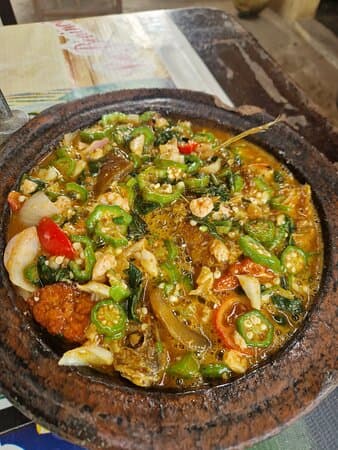
Hosts generally enjoy explaining the ingredients, describing where the products come from, and showing how to combine the sauce with pounded yam, maize dough, or rice.
5. Palm Nut Sauce: The Delicious Heritage of the Oil Palm
In Benin, the oil palm is much more than a tree.
For centuries, it has been part of everyday life, providing numerous products used in cooking, crafts, and economic activities.
Among the many culinary preparations derived from it, palm nut sauce, known locally as sauce graine, occupies a special place.
It illustrates the ingenuity of communities that have learned to make full use of the resources provided by this emblematic tree.
Preparing palm nut sauce requires time, patience, and a thorough understanding of each stage of the process.
The palm fruits are first carefully cooked before being processed to extract the pulp that gives the sauce its characteristic orange colour.
This base is then simmered slowly with spices, vegetables, and, depending on family recipes, fish, meat, or seafood.
In the past, preparing this sauce often involved several members of the same family.
While some worked on processing the palm fruits, others prepared the spices or monitored the cooking.
In many villages, these occasions also provided opportunities to exchange news, tell stories to children, and pass on techniques that were never recorded in cookbooks.
Even today, although some stages have been made easier by modern equipment, many families continue to preserve these practices with the same commitment to quality.
Palm nut sauce therefore retains a strong cultural and historical significance.
When served, its aroma immediately fills the room.
Its richness impresses visitors, who discover a combination of flavours that can be mellow, intense, and slightly smoky.
Served with traditional maize dough or rice, it creates a generous meal that beautifully reflects the culinary identity of southern Benin.
For travellers interested in understanding the entire value chain of the oil palm, tasting the sauce alone is not enough.
Watching the traditional processing of palm fruits reveals the considerable amount of work required before this preparation reaches the table.
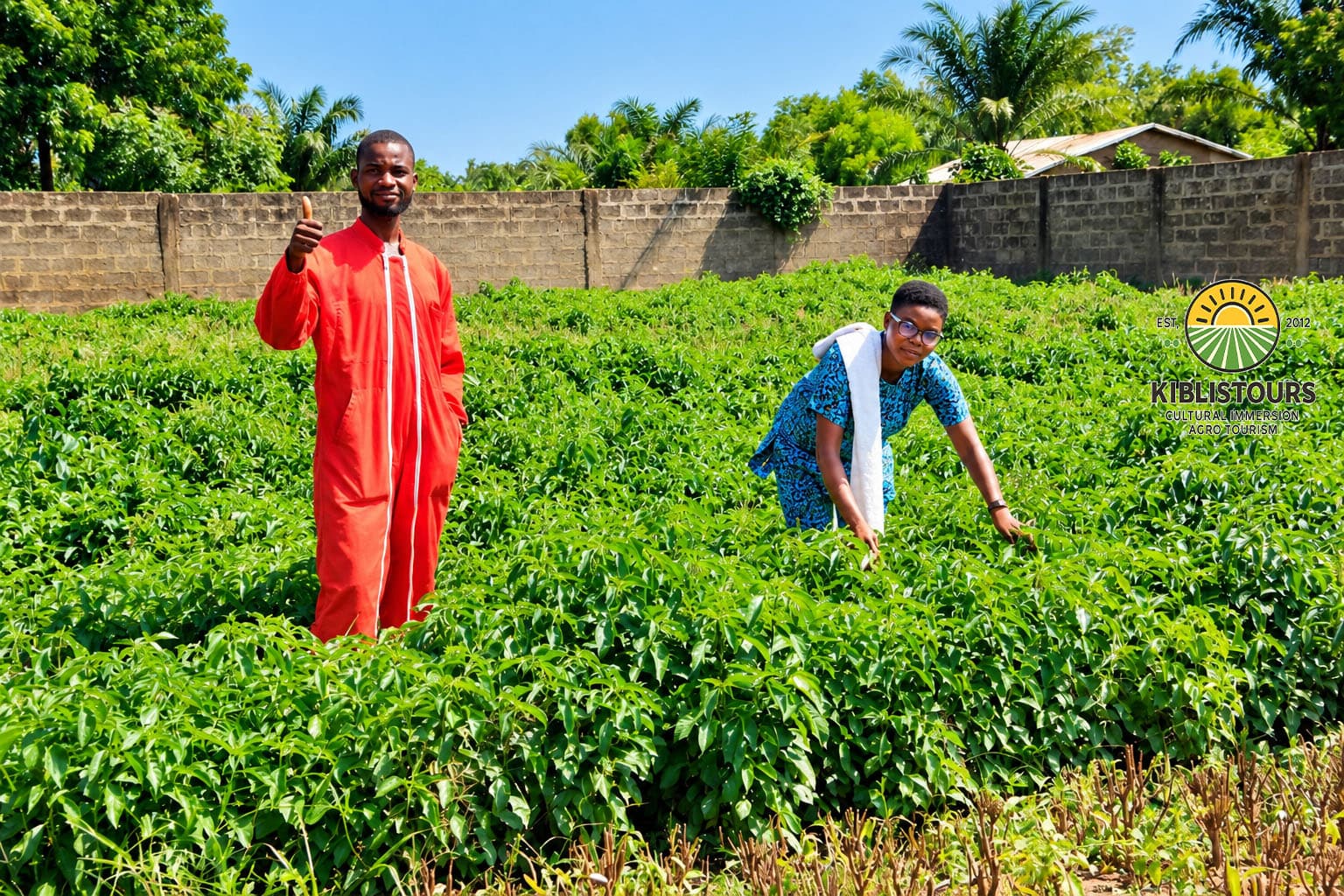
This is precisely why some experiences offered by Kiblistours include opportunities to meet local women producers.
Travellers discover not only a recipe, but also an entire economic, cultural, and social world built around the oil palm.
Did You Know?
In many parts of Benin, the oil palm is often described as “the tree of a thousand uses.”
Besides providing oil used in numerous recipes, it can also be used to produce traditional soap, palm wine, fibres for handicrafts, fuel, and various construction materials.
This remarkable versatility explains the essential role it has played in everyday life for centuries.
We continue our culinary journey through Benin with seven more traditional specialities. From festive rice dishes to charcoal-grilled fish, leafy vegetable sauces, fermented maize preparations, and beloved street snacks, each dish reveals another dimension of the country's remarkable gastronomic heritage.
6. Beninese Riz Gras: The Flavour of Great Celebrations
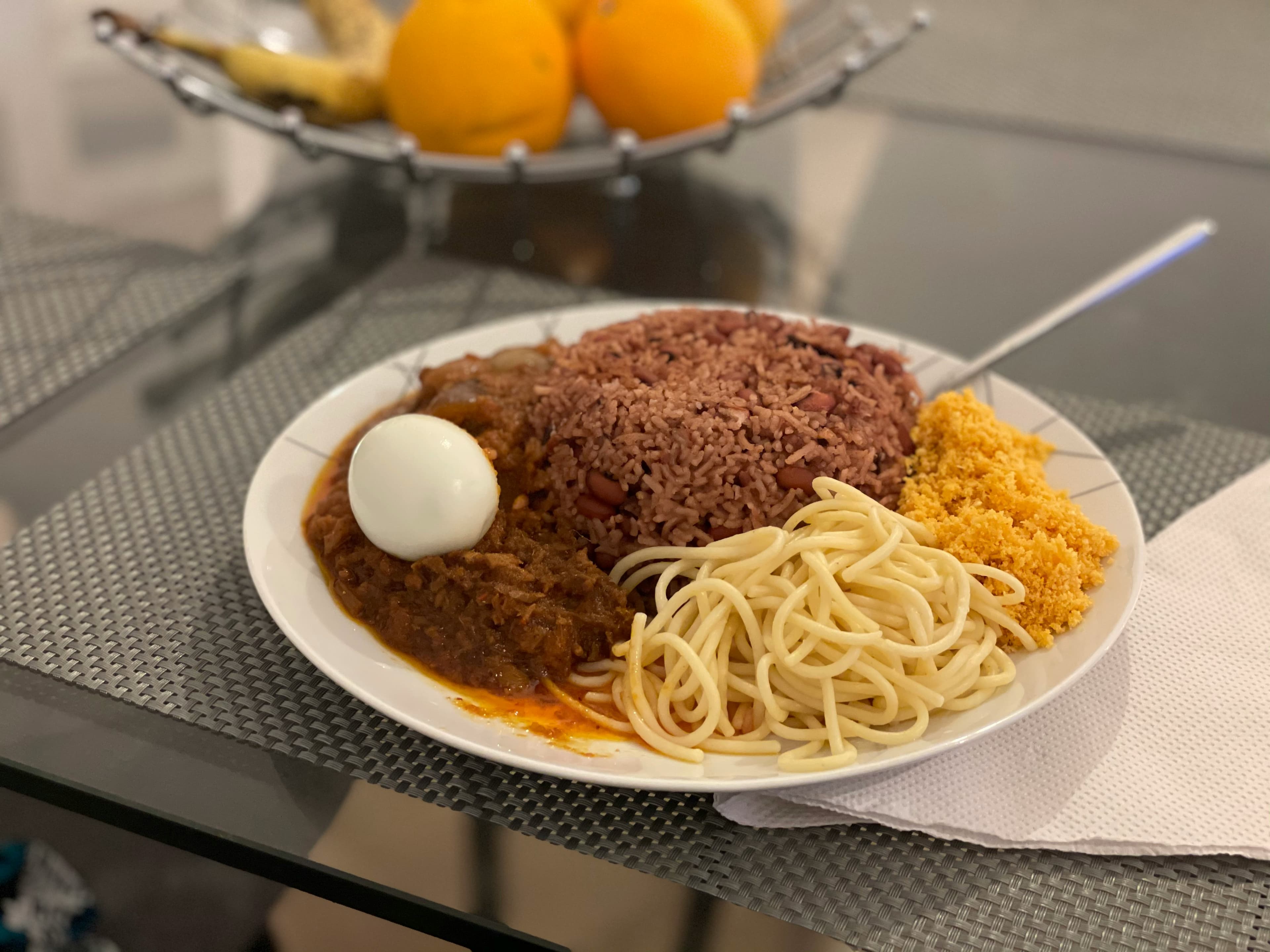
If there is one dish capable of bringing together dozens, or even hundreds, of people at a wedding or major celebration, it is undoubtedly riz gras, Benin's richly seasoned rice dish.
Found in almost every region of the country, it accompanies major family occasions with a regularity that reflects its importance in Beninese culture.
At first glance, some travellers assume they are looking at a simple tomato rice dish.
That impression quickly disappears after the first mouthful.
Beninese riz gras has a distinctive character, thanks to the subtle combination of vegetables, spices, and red palm oil that gives it its warm colour and characteristic aroma.
The success of this recipe depends above all on the cooking process.
The grains must remain separate while absorbing the flavours of the sauce.
Experienced cooks carefully monitor every stage to achieve that delicate balance in which the rice retains its texture while becoming infused with the aromas surrounding it.
Depending on the occasion, riz gras may be served with meat, fish, chicken, or eggs.
Some cooks also add extra vegetables to enrich the dish even further.
Every family often takes pride in its own recipe, passed down from generation to generation.
Beyond its delicious flavour, riz gras has a strong symbolic dimension.
During ceremonies, it represents abundance and generosity.
The cooking pots prepared for these occasions are sometimes impressive in size. They reflect the pleasure families take in welcoming large numbers of guests and ensuring that everyone has enough to eat.
Travellers fortunate enough to attend a Beninese wedding often retain particularly vivid memories of these shared meals.
They discover a warm and festive atmosphere in which music, dancing, and conversation naturally accompany the food.
Riz gras then becomes much more than a simple dish.
It becomes part of the celebration itself.
7. Charcoal-Grilled Fish: The Aroma That Announces Benin's Most Memorable Evenings
Few aromas evoke Benin as powerfully as that of fish slowly grilling over glowing charcoal.
In Cotonou, Ouidah, Grand-Popo, and Porto-Novo, late afternoons bring a familiar scene.
The first charcoal grills are lit, cooking racks are put in place, carefully marinated fish are arranged above the embers, and fragrant smoke begins to drift through the streets.
Passers-by instinctively slow down, drawn by an irresistible aroma that seems to announce the beginning of the evening.
The secret of this dish lies in its marinade.
Every restaurant owner has a personal combination of spices, garlic, onions, ginger, chillies, and aromatic herbs.
Some even refuse to reveal the exact proportions of their ingredients, considering the recipe a family treasure passed down through generations.
Cooking the fish also requires considerable attention.
It must grill slowly so that the flesh remains tender while the skin develops a slightly crispy texture.
This patience makes all the difference.
Served with aloko (fried ripe plantains), attiéké (fermented cassava couscous), fresh vegetables, and several spicy sauces, charcoal-grilled fish has become one of the favourite meals of residents and visitors alike.
Yet what makes it truly unforgettable is the setting in which it is enjoyed.
It is often shared outdoors, overlooking the ocean, in a relaxed atmosphere where conversations continue long after the meal has ended.
For many travellers, these evenings remain among their most treasured memories of Benin.
It is not only the quality of the fish that leaves a lasting impression, but also the atmosphere surrounding it: the sound of the waves, the laughter of families, musicians occasionally performing nearby, and the feeling of experiencing a genuinely authentic moment.
8. Gboman: When Leafy Vegetables Become a Culinary Treasure
For many visitors, discovering Beninese cuisine begins with the country's best-known dishes.
Yet spending a few days among local residents is often enough to realise that some of its greatest culinary treasures are hidden in less familiar recipes.
Gboman is one of those dishes that may not immediately attract attention but remains in the memory long after the meal.
Its name is familiar to Beninese people, yet it remains largely unknown to international travellers.
Nevertheless, it perfectly reflects one of the defining characteristics of local gastronomy: the remarkable ability to make full use of the resources provided by nature.
Prepared primarily from carefully selected green leaves, gboman illustrates a culinary tradition in which vegetables are not merely side dishes.
Instead, they form the central element of the meal.
At daybreak, in several markets in southern Benin, women vendors arrange these leaves, still covered with morning dew, into neat little piles.
They know where the leaves come from, when they were harvested, and how best to prepare them.
For travellers unfamiliar with such botanical diversity, the abundance is fascinating.
Every leaf has its own aroma, texture, and nutritional qualities.
Preparing gboman requires care.
The leaves are thoroughly washed, sorted, and chopped before being added to a fragrant sauce that often contains tomatoes, onions, spices, palm oil, and, depending on family recipes, smoked fish, dried shrimp, or small pieces of meat.
The result is a generous, deeply aromatic dish that surprises with its balance between fresh vegetable flavours and rich seasoning.
It also reveals something that many visitors may not realise: Beninese cuisine is far from being exclusively focused on animal protein.
Leafy vegetables have occupied an essential place in local diets for centuries, reflecting an impressive knowledge of natural resources.
Many families know exactly which varieties to choose according to the season, which leaves combine best, and which cooking methods help preserve their qualities.
For travellers interested in nutritious traditional food, gboman is often a pleasant surprise.
It demonstrates how a traditional meal can be generous, flavourful, and remarkably balanced.
9. Akassa: The Subtle Flavour of Fermentation
Among the flavours that surprise travellers most, akassa occupies a special place.
Its slightly sour taste often arouses curiosity during the first tasting, but this distinctive characteristic soon becomes one of the reasons many visitors want to enjoy it again before leaving Benin.
Akassa is made from fermented maize.
This ancestral technique, used in several parts of West Africa, not only develops distinctive flavours but can also improve food preservation and certain nutritional qualities.
In Benin, this preparation is deeply rooted in the eating habits of many communities.
Making good akassa requires patience and experience.
The fermentation process must be carefully controlled.
If it is too short, the desired aromas will not fully develop. If it continues for too long, the flavour may become excessively strong.
Women who regularly prepare this dish know almost instinctively when the mixture is ready for the next stage.
Usually served warm, akassa accompanies sauces made with fish, tomatoes, or vegetables.
Its soft texture and slightly tangy flavour create a particularly pleasant contrast with more heavily seasoned preparations.
When travellers taste akassa for the first time, they are sometimes surprised by its unfamiliar flavour.
Yet, as with many fermented foods around the world — whether certain European cheeses, Korean kimchi, or Japanese miso — curiosity often gives way to appreciation.
Many visitors even leave wanting to understand how such a seemingly simple preparation can offer such remarkable aromatic complexity.
10. Yovo Doko: The Little Fritters That Brighten Everyday Life in Benin
Certain aromas immediately awaken childhood memories, and the smell of yovo doko is undoubtedly one of them.
From the earliest hours of the morning, in many neighbourhoods, the air fills with the delicately sweet fragrance of these small golden fritters emerging from pots of hot oil.
Schoolchildren stop to buy some before entering their classrooms.
Workers pick up a few to accompany their breakfast.
Families enjoy them during gatherings and celebrations.
Their preparation may appear simple.
Yet producing yovo doko that are light, soft on the inside, and slightly crispy on the outside requires genuine skill.
The dough must rise sufficiently, the proportions of the ingredients must be carefully balanced, and the cooking temperature must remain consistent.
The result is a delicately flavoured fritter that pairs beautifully with coffee, tea, or a traditional drink.
Some prefer them plain, while others appreciate their gentle sweetness, which brings back memories of childhood snacks.
For travellers, buying a few freshly prepared yovo doko directly from a street vendor is often one of the simplest and most authentic experiences of their stay.
Conversations begin easily, smiles come naturally, and visitors quickly understand that these little fritters occupy a much more important place in everyday Beninese life than their modest appearance might suggest.
Further reading: Miam Miam Bénin – Un beignet qui baigne : le yovo-dokô, a useful resource exploring the origin of the name, its place in Beninese food culture, and its preparation.
11. Kuli-Kuli: The Crunchy Snack Found Throughout Beninese Markets
As you walk through the aisles of Beninese markets, it is difficult not to notice small, carefully arranged piles of golden-brown snacks displayed on the stalls.
These are kuli-kuli, traditional crunchy snacks made from groundnut paste after much of its oil has been extracted.
The remaining paste is seasoned and fried, producing a snack with a particularly crisp texture and an intense, nutty flavour.
Popular with both children and adults, kuli-kuli is easy to carry and frequently accompanies long working days, journeys, and visits to local markets.
Beyond its delicious taste, kuli-kuli perfectly illustrates the ability of Beninese communities to make the most of available resources.
Nothing goes to waste.
After the oil has been extracted, the remaining groundnut material finds a new purpose and becomes a widely appreciated food product.
Travellers thus discover another dimension of local gastronomy: a culinary tradition in which ingenuity, resourcefulness, and respect for ingredients have long been part of everyday life.
12. Ablo: A Soft, Steamed Delight That Complements Benin's Finest Flavours
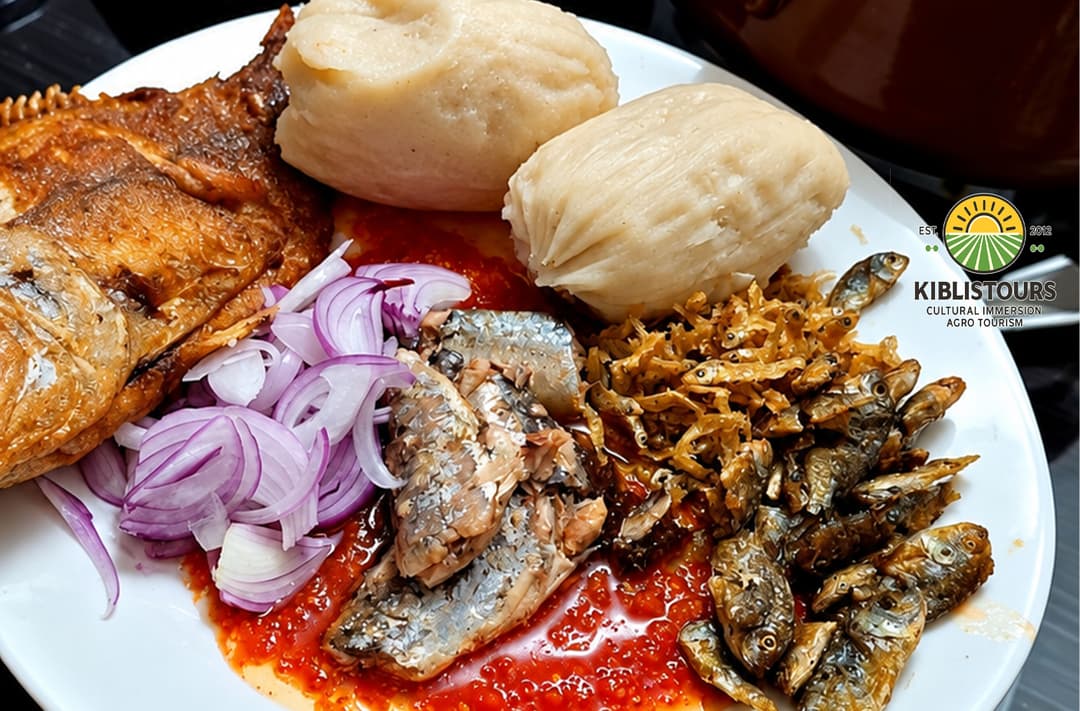
At first glance, ablo resembles a small white bread roll, gently puffed up during steaming.
Its light texture immediately surprises those tasting it for the first time.
Made from a slightly fermented maize-based mixture, it has a natural sweetness that beautifully balances richly seasoned sauces.
This ability to complement a wide variety of preparations explains its popularity in southern Benin.
Ablo is often served with grilled fish, vegetable-based sauces, or more strongly spiced dishes.
Its airy texture gently absorbs the sauces, allowing diners to appreciate the full range of flavours in the meal.
When properly prepared, it almost melts in the mouth.
Travellers are often surprised by its delicate consistency, which contrasts with the types of bread they may be accustomed to eating.
In some families, preparing ablo is also an opportunity to pass precise culinary techniques on to younger generations.
Fermentation, ingredient proportions, and steaming all require experience.
Like many Beninese recipes, ablo reflects a culinary skill that is gradually perfected over the years.
A Cuisine That Never Ceases to Surprise
After spending a few days in Benin, many visitors realise that they had greatly underestimated the country's gastronomic diversity.
They arrived hoping to discover a handful of famous specialities.
They leave having tasted an extraordinary variety of dishes whose very existence they had never imagined.
This richness reflects the diversity of the peoples, landscapes, and traditions that make up Benin.
Every region contributes something distinctive, every community enriches the national culinary heritage, and every family carefully preserves recipes handed down through generations.
It is precisely this diversity that makes every journey unique.
Even after several visits, there is always another speciality to discover, another market to explore, or another cook willing to share a treasured preparation technique.
Speak directly with the Kiblistours team on WhatsApp: +229 01 90 72 17 61
Our culinary journey through Benin continues with three more specialities that reveal the creativity, diversity, and deeply rooted traditions of Beninese gastronomy. From ancestral fermentation techniques to dishes that have crossed West African borders, each preparation tells a story of cultural exchange, agricultural knowledge, and everyday life.
13. Tchigan: A Little-Known Speciality That Reflects the Ingenuity of Past Generations
Some recipes survive through generations without ever becoming widely known beyond the villages where they originated.
They do not always appear on restaurant menus and are often absent from tourist guidebooks.
Yet these are precisely the preparations that reveal the depth and richness of Beninese cuisine.
Tchigan belongs to this category of dishes that travellers rarely discover by chance, but which leave a lasting impression when they have the opportunity to taste them.
Prepared from fermented maize, tchigan is the result of an ancient culinary tradition that demonstrates the remarkable ability of Beninese communities to make the most of their agricultural resources.
At a time when food preservation depended largely on natural techniques, fermentation represented a genuine innovation.
It not only helped preserve harvests for longer periods but also developed new flavours and improved the digestibility of certain foods.
In several villages, elders still recall how tchigan once accompanied long days of agricultural work.
Nourishing, economical, and relatively easy to transport, it provided a valuable source of energy during harvesting periods.
Even today, some families continue to prepare it using methods inherited from their parents and grandparents, preserving a culinary heritage that might otherwise have disappeared as eating habits modernised.
For visitors, discovering tchigan is also a reminder that Beninese gastronomy extends far beyond its most popular dishes.
Behind every lesser-known recipe lies a fascinating story, often closely connected to the economic, social, and agricultural realities of a particular region.
14. Attiéké: An Ivorian Speciality Embraced by Beninese Food Culture
Originally from Côte d'Ivoire, attiéké has gradually found its place in Beninese eating habits, becoming one of the most popular accompaniments in many towns and cities.
Made from fermented cassava that is carefully processed into fine granules, it has a light texture resembling very fine couscous.
Its freshness provides a pleasant contrast to grilled foods and spicy sauces.
Along Benin's coastline, attiéké is almost naturally associated with charcoal-grilled fish.
This combination has become so popular that many visitors mistakenly assume it is part of the country's historical culinary traditions.
In reality, it illustrates the numerous cultural and commercial exchanges that have always existed among the peoples of West Africa.
The history of attiéké reminds us that political borders have never prevented recipes from travelling.
Ingredients move from one country to another, cooking techniques are shared, and culinary traditions have enriched one another for centuries.
This openness partly explains the extraordinary gastronomic diversity found throughout the West African region.
15. Millet Porridge: The Breakfast That Welcomes the Rising Sun
As the first rays of daylight appear over Beninese towns and villages, the markets are already beginning to come alive.
Traders arrange their goods, motorcycles weave through the streets, and the comforting aroma of warm cereals rises from small cooking pots set up along the pavements.
It is time for millet porridge.
For many Beninese people, this preparation marks the true beginning of the day.
Nourishing, comforting, and easy to digest, it provides the energy needed for the long working hours ahead.
Women vendors serve it steaming hot in large bowls, sometimes enriched with milk, sugar, or a few spices according to individual preferences.
Regular customers exchange a few words before heading off to their daily activities, while visitors discover a morning ritual deeply rooted in everyday life.
Enjoying millet porridge in a local market is a very different experience from having breakfast in a hotel.
You watch the city awaken, listen to conversations, and observe the habits of local residents.
The meal becomes a privileged introduction to everyday Beninese life.
More Than Food: A Living Memory
As travellers discover these specialities, one truth gradually becomes clear.
Beninese cuisine is not simply a collection of recipes.
It is a living memory in which agriculture, history, beliefs, family traditions, and hospitality are closely intertwined.
Every dish bears the imprint of those who have prepared it over generations.
Every sauce tells the story of a region.
Every cooking technique reflects patient expertise developed long before the appearance of modern cookbooks.
For travellers willing to go beyond simply tasting the food, these meals become genuine cultural encounters.
They offer a different way of understanding the country through everyday gestures, conversations around cooking pots, and smiles exchanged while sharing a meal.
And this gastronomic journey is far from over.
After discovering Benin's emblematic dishes, it is time to explore another equally fascinating world: its markets, traditional drinks, and street food, where the true culinary heart of the country beats.
Speak directly with the Kiblistours team on WhatsApp: +229 01 90 72 17 61
Part 13 — Beninese Markets: Where the Culinary Journey Truly Begins
There is a saying that local guides often share with visitors:
“If you want to understand a country, start by visiting its market.”
Nowhere does this advice make more sense than in Benin.
Far more than simple places of commerce, markets are vibrant centres of daily life where farmers, traders, restaurant owners, artisans, and families come together to purchase ingredients for their meals.
From the earliest hours of the morning, before the sun has completely chased away the coolness of the night, the first market stalls begin to take shape.
Small trucks arrive loaded with vegetables harvested only a few hours earlier.
Pirogues unload fish caught during the night.
Market gardeners carefully arrange their produce, while women vendors display spices in large, brightly coloured bowls.
For visitors discovering this lively atmosphere, the experience is almost entirely sensory.
The colours immediately attract attention.
The deep reds of ripe tomatoes stand beside the intense greens of leafy vegetables, the bright yellows of seasonal mangoes, and the warm browns of dried spices.
The aromas change with every aisle.
Here, freshly cut ginger releases its distinctive fragrance.
A little further away, smoked fish fills the air with its characteristic aroma.
Then come ripe pineapples, plantains, and chillies with their slightly pungent scent.
Yet what impresses visitors most is not simply the variety of products.
It is the atmosphere.
Conversations overlap in several languages, bargaining takes place in a surprisingly cheerful spirit, laughter frequently breaks out, and everyone seems to know several of the people they meet.
The market is not merely somewhere to buy ingredients for cooking.
It is a genuine meeting place where social relationships are formed and maintained.
For photography enthusiasts, these markets offer scenes of extraordinary richness.
An elderly woman carefully sorting her tomatoes, a young fisherman proudly displaying his morning catch, a restaurant owner selecting vegetables with remarkable precision, or a child helping his mother carry a basket overflowing with fruit all create vivid images of everyday life.
These scenes often tell the story of Benin more effectively than lengthy explanations ever could.
Dantokpa Market: A World of Its Own
It would be impossible to talk about Beninese markets without mentioning Dantokpa.
Located in the heart of Cotonou, it is often described as one of the largest open-air markets in West Africa.
Yet no statistic can truly capture the feeling of entering it for the first time.
The aisles seem to stretch endlessly.
Every turn reveals an entirely new world.
Here, carefully arranged piles of spices release their powerful aromas.
A few metres further on, dozens of varieties of smoked fish appear.
Then come fruits, vegetables, cereals, traditional oils, condiments, kitchen utensils, and countless products that visitors may be seeing for the first time.
An experienced guide will often explain that it would take several full days to explore Dantokpa properly.
Many tourists would quickly lose their way without assistance, given the market's size and constant activity.
Another remarkable feature is the extraordinary expertise of the women traders.
Many remember their customers' preferences, know the best seasons for particular products, and can immediately direct a cook towards the ingredients most suitable for a specific recipe.
Their knowledge is impressive.
During a visit to Dantokpa Market, a Swiss traveller stopped in front of a stall displaying several varieties of chilli peppers.
Unable to decide which one to buy, she asked the vendor which was the mildest.
The woman laughed and replied:
“The one that will make you come back tomorrow!”
Before the traveller could respond, several customers standing nearby joined the conversation.
Each had her own advice, recipe, and anecdote.
A few minutes later, the visitor left with a small basket filled with spices and several invitations to return and taste dishes prepared with those ingredients.
She later told us that what she had enjoyed most was not the market itself, but the people she had met there.
When a restaurant owner comes to buy ingredients for a major celebration, she moves through the aisles methodically.
She stops at stalls run by women she has known for years, exchanges a few jokes, and carefully selects her products.
Visitors then begin to understand that behind every recipe lies an entire network of farmers, traders, and processors who may have been working together for decades.
For anyone wishing to explore Beninese cuisine in depth, a guided visit to Dantokpa is often one of the most rewarding experiences of the journey.
Travellers learn to recognise different varieties of chilli peppers, distinguish the leaves used in traditional sauces, understand the uses of local oils, and observe how a market of such scale contributes to feeding a large part of Cotonou's population.
Neighbourhood Markets: Another Side of Beninese Gastronomy
While Dantokpa impresses visitors with its immense size, smaller neighbourhood markets charm them with their intimacy.
Found in practically every town and village, these markets offer a more personal atmosphere where everyone seems to know one another.
Women vendors willingly take the time to explain how an unfamiliar vegetable is used or recommend the best way to prepare a particular sauce.
Conversations are spontaneous and warm.
It is not unusual for visitors to leave with a handful of chillies offered as a gift or for a trader to invite them to taste a fruit they have never seen before.
These markets remind us that Beninese gastronomy is built, above all, on human relationships.
Farmers know their customers.
Restaurant owners know exactly which market gardeners supply the best vegetables.
Fishermen sometimes reserve their finest catches for regular buyers.
This mutual trust contributes significantly to the quality of the ingredients that eventually appear on people's plates.
Part 14 — Beninese Street Food: A Cuisine That Moves to the Rhythm of the Streets
As the hours pass, the streets of Beninese towns gradually transform into enormous open-air kitchens.
Contrary to what some visitors might imagine, street food is not a second-rate alternative to traditional restaurants.
It is an essential part of everyday life.
From early morning, millet porridge vendors welcome the first workers heading to their jobs.
A little later, sellers of fritters, roasted maize, and fresh fruit begin to appear.
At lunchtime, small restaurants operating beneath simple metal-roofed shelters serve generous portions to loyal customers.
Then, as evening approaches, grilled foods gradually take over the pavements.
Charcoal embers glow red, fish begins to cook slowly, and delicious aromas drift through the neighbourhoods.
For international visitors, this constant transformation provides a unique opportunity to observe the rhythm of local life.
Every moment of the day has its own specialities, customs, and atmosphere.
What also distinguishes Beninese street food is its extraordinary diversity.
Within just a few hundred metres, it is possible to taste freshly prepared yovo doko, pieces of delicately caramelised aloko, roasted maize, fragrant meat skewers, ablo served with fried fish, or freshly made ginger juice.
Contrary to common assumptions, many local residents choose these establishments not simply because they are affordable, but because they genuinely appreciate the food.
Some vendors even develop reputations that extend far beyond their neighbourhoods.
Customers sometimes travel several kilometres just to enjoy a particular sauce whose quality they know or a charcoal-grilled fish prepared according to a special recipe.
It is precisely this authenticity that is attracting increasing numbers of international tourists.
They discover a living, spontaneous culinary tradition, deeply rooted in the daily lives of local people and far removed from the standardised experiences found in many tourist destinations.
A Culinary Immersion That Goes Far Beyond the Plate
As the days pass, one thing gradually becomes clear to visitors: in Benin, eating is never simply about satisfying hunger.
Every meal becomes an opportunity to exchange ideas, learn something new, observe daily life, and develop a deeper understanding of the society welcoming them.
Behind a single plate lie the fields where vegetables were grown, the fishermen who set out before dawn, the women traders in the markets, the passionate restaurant owners, and the families who continue to preserve recipes that may be centuries old.
It is this human chain that gives Beninese gastronomy its extraordinary richness.
It transforms tasting food into a genuine cultural experience.
And it explains why so many travellers return home feeling that they have discovered far more than a cuisine.
They have discovered a way of life.
Discovering Beninese gastronomy does not end with food. The experience naturally continues through the beverages that accompany meals, welcome visitors, and play a role in traditional ceremonies.
Some are enjoyed every day, while others are reserved for special occasions. Yet each one reveals a different aspect of the country's history and traditions.
Travellers often say that taking the time to discover these drinks is an excellent way to deepen their cultural immersion.
Each has its own personality, preparation methods, and sometimes even a particular symbolic meaning.
Behind a simple glass often lies knowledge passed down through several generations.
16. Pineapple Juice: The Fragrance of an Exceptional Terroir
When discussing the agricultural products that are a source of pride for Benin, pineapple undoubtedly holds a special place.
Varieties grown in the southern part of the country are renowned far beyond its borders for their exceptionally sweet flesh, intense aroma, and relatively low acidity.
Visiting a pineapple plantation during harvest season is enough to understand why these fruits are so highly appreciated.
Rows of pineapple plants stretch towards the horizon beneath the generous tropical sunshine.
Farmers move carefully between the plants, selecting only fruits that have reached the ideal stage of ripeness.
Here, pineapples are not necessarily harvested because they must withstand several weeks of transportation.
They are picked because they are ready to be enjoyed.
Only a few hours later, these same fruits may be transformed into fresh juice.
Without preservatives, artificial flavourings, and often without added sugar, the resulting drink offers an explosion of flavours that surprises visitors accustomed to industrially produced beverages.
Many even say that they feel as though they are discovering the true taste of pineapple for the first time.
During an agricultural immersion organised by Kiblistours, a Canadian tourist jokingly admitted that he had drunk more pineapple juice in three days than during the previous three years.
He explained simply:
“Back home, I thought I liked pineapple. Here, I realised that I had never really known what pineapple could taste like.”
This kind of reaction is frequently heard among visitors.
17. Ginger Juice: A Drink Full of Character
Among the country's most popular beverages, ginger juice occupies a special place.
From the very first sip, its intensity comes as a surprise.
Its flavour is refreshing, slightly spicy, and wonderfully aromatic.
Preparing it requires genuine expertise.
Fresh ginger is carefully washed, grated, or pounded before being infused with various spices and sometimes citrus fruits, depending on family recipes.
Every person who prepares ginger juice has their own version.
Some prefer a particularly strong and spicy drink, while others aim for a gentler flavour.
In markets, at ceremonies, and during family gatherings, it is common to see large bottles of ginger juice prepared earlier that same morning.
Highly appreciated during hot weather, it is also frequently offered to guests as a gesture of hospitality.
Beyond its flavour, this drink highlights the importance of fresh ingredients in Beninese cuisine.
There is no single standard recipe.
Every preparation reflects the personality and preferences of the person who makes it.
18. Bissap: A Refreshing Tradition Passed Down Through Generations
Its deep red colour immediately catches the eye.
Its delicately tangy flavour wins over visitors almost instantly.
Made from dried hibiscus calyces, bissap is one of the most popular beverages in West Africa today.
In Benin, it accompanies everyday meals as well as major celebrations.
Its preparation may seem simple, but it also requires a certain level of skill.
The hibiscus must be infused long enough to develop its aroma without becoming excessively bitter.
Some families add a few mint leaves, while others prefer to include a little ginger or a few drops of lemon juice to enhance its refreshing character.
Served chilled, bissap is an excellent companion on the hottest days.
Its popularity extends across generations: children, adults, and older people enjoy it with equal pleasure.
Further reading: Bissap — Its Origins, Preparation and Uses in West Africa. This provides useful context for understanding bissap's place in West African food traditions.
19. Sodabi: A Cultural Heritage as Much as a Traditional Spirit
It would be impossible to discuss Beninese beverages without mentioning sodabi.
Yet reducing this traditional spirit to merely an alcoholic drink would overlook much of its cultural significance.
Produced by distilling palm wine, sodabi has long occupied an important place in several of the country's traditions.
Even before being consumed, it is used in certain customary ceremonies where it carries particular symbolic meaning.
In some communities, it is customary to pour a few drops of sodabi onto the ground before drinking.
This gesture, which many visitors observe with curiosity, can be a way of honouring ancestors or showing respect for local traditions.
Of course, these practices vary according to region, family, and belief system, but they clearly illustrate the close relationship between food, spirituality, and culture.
During the cultural immersion experiences offered by Kiblistours, guides take the time to explain these customs so that visitors can understand their meaning rather than reducing them to mere folklore.
20. Tchoukoutou: The Traditional Taste of Northern Benin
As travellers journey northwards, they gradually discover another dimension of Beninese gastronomy.
The landscapes change, agricultural practices evolve, and certain traditional beverages become more prominent.
Among them is tchoukoutou, an artisanal beer prepared mainly from locally grown cereals such as sorghum.
For generations, this beverage has accompanied community gatherings, celebrations, and important moments in social life.
Its production requires genuine expertise.
The various stages of fermentation and cooking take several days and demand a thorough understanding of traditional techniques.
Every producer has her own experience and methods, which explains the subtle differences in flavour that can be observed from one village to another.
For curious travellers, discovering tchoukoutou also provides an opportunity to understand Benin's extraordinary cultural diversity.
From one end of the country to the other, food and drinking traditions evolve according to local environments, communities, and available resources.
Further reading: FAO AGRIS — Research on Tchoukoutou in Benin. This institutional research database provides a useful starting point for finding scientific studies on this traditional Beninese beverage.
Part 16 — A Delicious Day in Benin: Experience the Country with All Your Senses
Now imagine that you are no longer simply reading this guide.
Imagine that you arrived in Benin the previous day.
Your alarm rings gently at around seven in the morning.
As you open your bedroom window, you see a city slowly coming to life.
Motorcycles begin to fill the streets, the first traders arrange their stalls, and the pleasant aroma of warm cereals is already drifting through the air.
After breakfast, your Kiblistours guide meets you for a day entirely dedicated to discovering Beninese gastronomy.
Your first stop takes you to a traditional market.
From the moment you arrive, your senses are stimulated from every direction.
The vibrant colours of vegetables contrast with towering piles of spices.
Exotic fruits overflow from woven baskets, and women traders welcome you with warm smiles.
You learn to recognise the leafy vegetables used in local sauces, distinguish between different varieties of chilli peppers, and select a good-quality yam.
A vendor offers you a freshly cut piece of pineapple.
Its incredibly sweet flavour immediately surprises you.
A few minutes later, a local restaurant owner invites you into her kitchen.
The cooking pots are already beginning to heat up.
You take part in preparing peanut sauce, discover the secrets of seasoning, and attempt, not without difficulty, to pound a few pieces of yam under the family's amused guidance.
At midday, the meal is finally served.
It bears little resemblance to a conventional tourist lunch.
You share the same table as your hosts.
Conversations begin naturally.
They explain the origins of the recipes, describe family traditions, and share childhood memories associated with particular dishes.
You no longer feel like a spectator.
You have become part of the meal.
As you leave the house, you realise that it is not only the flavours you will carry away with you.
Above all, you will remember the faces, the stories, and the generosity of the people who welcomed you into their home.
And this is only the beginning of the day.
A Delicious Day in Benin: Experiencing the Country with All Your Senses
After this shared lunch, the day is far from over.
On the contrary, it is often at this moment that visitors begin to understand that Beninese gastronomy extends far beyond what is served on a plate.
It is a way of life, a means of connecting with others, and a way of telling stories without necessarily speaking a single word.
In the early afternoon, your guide takes you to meet a local producer.
Depending on the region you are visiting, this might be a pineapple farmer, a palm oil processor, a vegetable grower, or a fisherman working beside a lagoon.
Here, products are no longer displayed behind supermarket windows.
They grow in fields, ripen under the sun, are harvested by hand, and are transformed using techniques passed down through generations.
Beneath the shade of a mango tree, the producer takes time to talk about their work.
They explain how to recognise the ideal moment to harvest a fruit, why certain varieties are more aromatic than others, and how seasonal changes influence the quality of agricultural production.
Visitors ask questions, taste products directly, and discover a reality that may be very different from what they know in their home countries.
This is not a demonstration staged exclusively for tourists.
You are simply witnessing the everyday activities of men and women who are passionate about their work and happy to share knowledge sometimes inherited from their parents and grandparents.
A little later, the journey takes you to a small artisanal workshop.
Here, a woman still produces palm oil using traditional methods.
Her movements are precise and perfectly controlled.
She works with an impressive sense of calm.
Every step appears to have been repeated thousands of times.
Visitors then realise that, long before this oil is used to season a sauce, its production may already have required several days of effort.
These encounters profoundly change the way travellers perceive food.
The charcoal-grilled fish enjoyed in the evening is no longer simply grilled fish.
Sauces are no longer merely recipes.
Every ingredient now has a face, a story, and a place of origin.
Part 17 — When the Sun Sets, Beninese Cuisine Reveals Another Side of Itself
As the heat gradually fades, the atmosphere in the towns and cities begins to change.
The streets slowly fill with people.
Families come outside to enjoy the evening air, children continue playing for a few moments before nightfall, and the first clouds of smoke rise from street restaurants.
If the morning belongs to the markets, the evening undoubtedly belongs to the grills.
Your guide takes you to a place that few visitors would discover on their own.
It is not a luxurious restaurant.
The tables are simple, sometimes made of wood, sometimes of plastic.
A few hanging light bulbs softly illuminate the surroundings.
At the back, several charcoal fires are already glowing.
The restaurant owner welcomes you with a warm smile.
In front of you, freshly cleaned fish are waiting to be seasoned.
He takes the time to show you his marinade.
Garlic, ginger, onions, chilli peppers, and a few spices whose exact combination he carefully keeps secret.
The mixture is gently spread over each fish before it is placed on the grill.
The cooking begins slowly.
Nobody seems to be in a hurry.
The restaurant owner regularly turns the fish with almost affectionate attention.
From time to time, he adds
little more marinade.
The flames gently touch the skin, which gradually takes on a beautiful golden colour.
Meanwhile, conversations begin naturally.
The restaurant owner regularly turns the fish with almost affectionate care. From time to time, he adds a little more marinade. The flames gently lick the skin, which gradually takes on a beautiful golden colour.
Meanwhile, conversations begin naturally.
Customers chat with one another, joke with the cook, comment on a football match being broadcast on the radio, or exchange neighbourhood news.
You quickly notice that many people know one another. Some have been coming here for years. They choose this place not only for the quality of its fish but also for its welcoming atmosphere.
A few moments later, your plate finally arrives.
The fish is accompanied by steaming aloko, attiéké, fresh vegetables, and several spicy sauces prepared on-site.
The very first mouthful is enough to understand why this dish has become a true institution in Benin.
What Travellers Truly Remember About Beninese Cuisine
When visitors talk about their trip several months after returning home, they rarely speak only about the dishes.
They remember the elderly woman who taught them how to turn the yam in the mortar.
The fisherman who explained why he preferred setting out to sea before sunrise.
The market vendor who invited them to taste an unfamiliar fruit without asking for anything in return.
The restaurant owner who came to sit at their table for a few minutes to explain how his father had passed down his recipe for charcoal-grilled fish.
These memories reveal something essential: what makes Beninese gastronomy exceptional is not simply the recipes. It is the human connection that accompanies them.
In Benin, a meal is rarely rushed. People take their time. Conversations are just as important as the food itself.
Guests are encouraged to taste new dishes, ask questions, and help themselves to another serving.
Politely refusing a second or third helping can sometimes require as much diplomacy as appetite.
This generosity is an integral part of the country's identity.
It explains why so many visitors return home feeling that they were welcomed as friends rather than simply treated as tourists.
Why Culinary Immersion Can Completely Transform a Journey
Many visitors discover Benin in just a few days.
They visit Ganvié, Ouidah, Abomey, or Porto-Novo, take magnificent photographs, and return home with a wonderful collection of memories.
But those who take the time to share a meal with a family, cook alongside a local restaurant owner, explore a market with a guide, or visit a farm experience something entirely different.
They come to understand that food is one of the best ways to gain a deeper understanding of a culture.
This is precisely the philosophy behind the culinary experiences developed by Kiblistours.
The aim is not simply to offer a conventional cooking class, but to create genuine encounters between visitors and the people who keep this gastronomic heritage alive every day.
Chat directly with the Kiblistours team on WhatsApp
Entering a Family Kitchen Means Entering a Story
There is always a brief moment of hesitation when a visitor enters a Beninese home for the first time.
That initial reserve usually disappears within minutes.
While some family members finish preparing the meal, others naturally take the time to start a conversation.
Children quietly observe the visitors before coming over to say hello.
Older family members share a few memories.
Very quickly, the atmosphere becomes surprisingly relaxed and natural.
The kitchen then becomes a genuine place of exchange.
You discover why a particular sauce is prepared only for major family celebrations.
Why a grandmother stubbornly refuses to replace her old mortar with an electric appliance.
Why certain recipes are never written down but are passed on exclusively through observation and practice.
These conversations are often just as valuable as the meal itself.
They reveal that gastronomy is not simply a matter of taste. It is also a form of family memory.
A cook from the Abomey region recently explained that she still prepares peanut sauce exactly as her mother taught her when she was about ten years old.
She admitted that she had tried several times to change the recipe but always returned to the same familiar movements.
“When I cook the way she taught me,” she said with a smile, “I feel as though she is still there with me in the kitchen.”
These simple yet deeply human confidences give travel an entirely different dimension.
A French tourist explained that, before her visit, an African market had mainly impressed her because of its bustling atmosphere.
After spending two hours with a local guide, she felt that she could finally “read” what she was seeing around her.
The products were no longer anonymous.
They now told stories about the country's agriculture, seasons, and eating habits.
Visitors realise that behind every dish are men and women who may have been working since dawn.
They also discover an agricultural system that is still largely family-based, where knowledge continues to be passed down from one generation to the next.
Several visitors have told us that these encounters completely changed their approach to consumption after returning home.
Understanding the work behind a product naturally changes the way we perceive it.
Be willing to discover new flavours.
Certain textures, such as those of okra or akassa, may initially seem unusual. Yet they are often among the discoveries that international visitors remember most fondly.
Respect the local pace of life, too.
Here, a meal is rarely something to be hurried through in just a few minutes.
It is accompanied by conversations, smiles, and moments spent together.
By taking the time to enjoy these experiences, you will discover much more than Beninese cuisine: you will discover a particular way of understanding human relationships.
Finally, allow yourself to be guided.
Behind dishes that may appear simple lie remarkable stories that only local people can truly tell.
Understanding these stories adds an entirely new dimension to the food you taste.
Some journeys continue to live on long after travellers return home, simply because an aroma, a flavour, or a recipe is enough to bring them back to life.
Benin is often one of those destinations.
Months later, some tourists still write to us asking how to prepare peanut sauce, where to find good plantains, or how to recreate the marinade of a charcoal-grilled fish they enjoyed overlooking the ocean.
FAQ: Everything You Need to Know About Beninese Cuisine Before Your Trip
1. What is Benin's most famous dish?
If they had to choose just one, many Beninese people would answer without hesitation: pounded yam.
Enjoyed in many regions, it symbolises sharing, conviviality, and the transmission of family traditions.
Prepared in a large wooden mortar and served with various sauces, it is one of the most representative dishes of Benin's culinary heritage.
However, limiting the country's cuisine to this single speciality would overlook its remarkable regional diversity.
2. Is Beninese cuisine very spicy?
Contrary to popular belief, Beninese cuisine is not always extremely hot.
Spices are primarily used to enhance the flavour of dishes rather than overpower their natural taste.
Chilli is often served separately, allowing everyone to adjust the level of heat according to their preferences.
Travellers who are not accustomed to spicy food can therefore enjoy local gastronomy without difficulty.
3. Which dishes should you definitely try on your first visit?
If you are discovering Benin for the first time, we recommend trying at least the following specialities:
Pounded yam
Amiwo
Peanut sauce
Okra sauce
Palm nut sauce
Charcoal-grilled fish
Aloko
Ablo
Akassa
Yovo doko
These dishes offer an excellent introduction to the country's rich gastronomic diversity.
4. Is it easy to enjoy street food in Benin?
Yes, and it is often one of the best ways to discover local cuisine.
As in any country, however, it is advisable to choose vendors who are popular with local residents, prepare food in front of customers, and serve their dishes piping hot.
A busy food stall can be a useful indicator of freshness and popularity, although basic food hygiene should always be considered.
5. Are vegetarian dishes available in Benin?
Absolutely.
Leafy vegetables, maize, cassava, yams, beans, groundnuts, and numerous cereals play an important role in Beninese cuisine.
Several sauces can be prepared without meat or fish, allowing vegetarians to enjoy many local specialities.
6. Where can you enjoy the best food in Benin?
There is no single answer.
Restaurants offer excellent dining experiences, but many travellers remember meals shared with families, small neighbourhood restaurants, popular local eateries, and villages where recipes are prepared according to longstanding traditions even more vividly.
Each setting offers a different experience.
7. Which city is best for discovering Beninese gastronomy?
Every destination has its own specialities.
Cotonou stands out for the diversity of its restaurants, markets, and street food.
Porto-Novo offers opportunities to discover particularly interesting Afro-Brazilian culinary influences.
Ouidah is renowned for its fresh fish and coastal cuisine.
Grand-Popo offers wonderful experiences centred around seafood.
Abomey, Bohicon, and several towns in central Benin provide opportunities to discover traditional yam-based dishes.
The ideal approach is to travel through several regions to appreciate the full richness of the country's culinary heritage.
8. How much does a meal cost in Benin?
Benin remains a relatively affordable destination.
Small local restaurants offer generous meals at accessible prices, while more upmarket establishments serve refined cuisine in comfortable surroundings.
This variety allows travellers to find options suited to their budgets.
9. Are the ingredients fresh?
Yes. Fresh ingredients are one of the great strengths of Beninese gastronomy.
Vegetables frequently come from nearby farms, fish is caught regularly, and many fruits are harvested when ripe.
This close relationship between producers and consumers contributes significantly to the quality of local flavours.
10. Why do travellers enjoy Beninese markets so much?
Because they offer much more than an opportunity to buy food.
Markets reveal local eating habits, agricultural products, relationships between traders, and the extraordinary diversity of ingredients used in Beninese cooking.
They provide a complete cultural immersion.
11. Is Benin a good destination for culinary tourism?
Without a doubt.
The country has a deeply rooted culinary heritage that remains relatively untouched by mass tourism.
Visitors discover family recipes, lively markets, passionate producers, and a tradition of hospitality that often transforms an ordinary meal into a genuine human encounter.
12. Can visitors learn to cook Beninese dishes?
Yes.
Several experiences now allow travellers to cook alongside families or local restaurant owners.
These workshops provide opportunities to discover ingredients, traditional techniques, and the stories behind each recipe.
13. What culinary souvenirs can you bring home from Benin?
Travellers particularly appreciate:
Local spices
Artisanal sauces
Pineapple-based products
Traditional condiments
Books about Beninese cuisine
Handcrafted utensils used in traditional cooking
These souvenirs allow you to extend the experience long after returning home.
14. What is the best time of year to discover Beninese gastronomy?
Beninese cuisine can be enjoyed throughout the year.
However, the seasons influence the availability of certain fruits, vegetables, and fish.
Travelling at different times of the year therefore offers opportunities to enjoy varied culinary experiences.
15. Why do so many international visitors still talk about their meals months after returning home?
Because in Benin, a meal is rarely just an opportunity to eat.
It is often associated with an encounter, a conversation, a smile, a story, or an unexpected invitation.
These emotions remain in people's memories long after the journey has ended.
A few days before his departure, an Australian tourist travelling with Kiblistours told us that he had filled his phone with hundreds of photographs of royal palaces, beaches, stilt villages, and landscapes encountered during his stay.
Yet when asked which memory he would truly take home, he did not mention a single monument.
He simply replied:
“I will always remember that family who invited me to share their meal even though we had only just met. I don't simply remember what I ate. What I remember most is how welcome they made me feel.”
Perhaps no answer better captures the essence of Beninese gastronomy: far more than food, it is an invitation to share a moment of life.
Discover Benin Differently with Kiblistours
Visiting a country allows you to admire its landscapes.
Discovering its history helps you understand its identity.
But sharing a meal with its people opens a far more intimate door.
Beninese gastronomy is built around simple ingredients, techniques passed down through generations, bustling markets, passionate producers, and families who continue to cook as their parents did before them.
At Kiblistours, we believe that the most memorable journeys are those that bring people together.
That is why our culinary experiences go far beyond simply tasting local specialities.
They allow visitors to meet the people who prepare them, understand their origins, observe the skills that make them unique, and share moments that cannot be found in any conventional travel guide.
Perhaps you will forget the names of certain streets.
Perhaps you will struggle to remember the exact dates of your journey.
But there is every chance that, several years later, the aroma of fish grilling over glowing charcoal, the sweetness of freshly pressed pineapple juice, or the fragrance of peanut sauce will instantly transport you back to that precise moment when, sitting around a table in Benin, you realised that the most beautiful journeys are often those experienced through all the senses.
Because ultimately, discovering Benin is about much more than simply visiting a country.
It is about returning home with far more than photographs: deeply human memories that will continue travelling with you for years to come.
Kiblistours - Experience Authentic Africa!