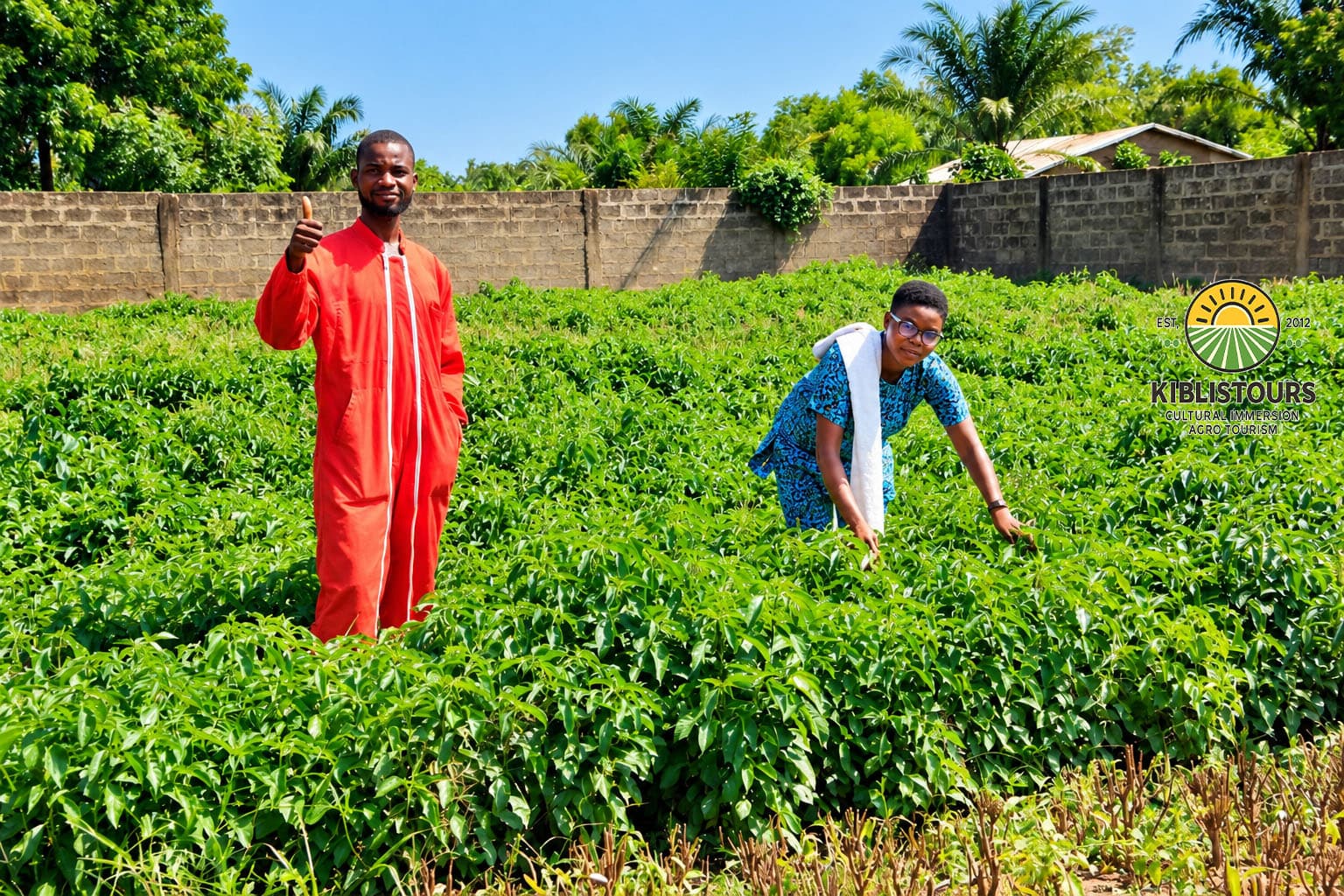
There are journeys whose memories fade just a few weeks after returning home. The photos remain in a digital gallery, the stories blend with previous ones, and everyday life quickly takes over again.
And then there are those journeys that continue to live on long after the trip has ended.
They are the ones that allow you to meet inspiring people, discover different ways of life, question certain habits, or simply see the world from a new perspective. They are not merely a succession of visits or monuments. They become a genuine human experience.
Today, many travelers are beginning to feel a certain weariness with traditional tourism.
Large hotel complexes eventually start to look alike.
The itineraries offered are often identical from one country to another.
Visits sometimes follow one another at such a fast pace that it becomes difficult to build a genuine connection with the places you pass through.
Of course, these journeys allow you to discover new landscapes. But they sometimes leave a feeling of incompleteness, as though something essential were missing.
What is most often missing is not the beauty of the destinations.
It is the authenticity of the experience.
Around the world, a new generation of travelers is now looking for something different. They want to slow down, understand the places they visit, interact with local people, discover ancestral know-how, and experience moments that cannot be reproduced anywhere else.
Travel is no longer simply a way to change scenery.
It has become a way to learn, share, feel, and give greater meaning to a journey.
It is precisely within this evolution that sustainable tourism and agritourism in Benin find their rightful place.
And among the destinations that best respond to these new expectations, Benin holds a particularly interesting position.
Still relatively untouched by mass tourism, this West African country offers exceptional cultural, historical, and human richness. Here, traditions continue to shape everyday life, encounters happen naturally, and experiences remain deeply authentic.
Agritourism perfectly illustrates this new way of traveling.
It is no longer simply about observing a farm or visiting an agricultural operation.
It is about sharing the daily lives of those who cultivate the land, understanding their work, talking with them over a meal, discovering local products directly at their source, and experiencing, for a few hours or several days, a genuine immersion in rural Beninese life.
It is not simply an excursion.
It is an experience that touches both the mind and the emotions.
An experience that often transforms the way we perceive travel… and sometimes even the way we see the world.
A New Global Trend: Authentic Tourism in Africa
International tourism has been undergoing a profound transformation for several years.
In the past, the success of a journey was often measured by the number of sites visited or countries explored.
Today, expectations are very different.
Travelers want to return home with meaningful memories, encounters they will never forget, and stories they will want to tell long after their return.
Travelers are no longer simply looking for a destination.
They are looking for an emotion.
They want to experience things that no standardized brochure can reproduce.
They want to share a meal with a local family rather than eat in an impersonal restaurant.
They prefer listening to a story told by a resident rather than reading a few lines on a tourist information board.
They want to understand traditions, discover knowledge and skills passed down through generations, and observe everyday life as it truly is.
This search for authenticity also explains the growing success of sustainable tourism in Africa and immersive experiences.
Traveling responsibly is no longer simply about reducing one's environmental impact.
It also means contributing positively to the places visited, supporting local communities, encouraging initiatives that promote heritage, and choosing experiences in which everyone—travelers and residents alike—can genuinely benefit.
This new vision of travel particularly benefits several African destinations.
But few countries bring together as many advantages as Benin.
Benin: A Destination That Remains Authentic and Unspoiled
Benin is one of those rare destinations where travel still retains all its spontaneity.
Here, traditions are not staged to entertain visitors.
They simply continue to live at the rhythm of local communities.
Traditional ceremonies are not organized to meet tourists' expectations.
Markets remain, above all, places of everyday exchange.
Artisans create their works because their craftsmanship is an integral part of their history.
Farmers cultivate their land using techniques that are sometimes passed down through several generations.
Travelers therefore do not feel as though they are watching a performance.
They are discovering a reality.
This authenticity is undoubtedly one of Benin's greatest treasures.
Every village has its own identity.
Every region tells a different story.
Every encounter offers a deeper understanding of the country's cultural diversity.
Whether exploring the Royal Palaces of Abomey, the living traditions of Ouidah, the lake villages of Ganvié, or the many rural communities spread throughout the country, visitors discover a place where heritage, culture, agriculture, and everyday life are intimately connected.
Travel then becomes much more than a succession of visits.
It becomes a genuine immersion.
Time slows down.
Conversations naturally take their place.
Residents share their stories with simplicity.
Farmers proudly explain their work.
Artisans generously share their techniques.
And it is precisely this closeness that profoundly transforms the traveler's experience.
In Benin, you do not simply discover a country.
You meet the women and men who give the journey its true meaning.
Agritourism in Benin: Experiencing Local Reality
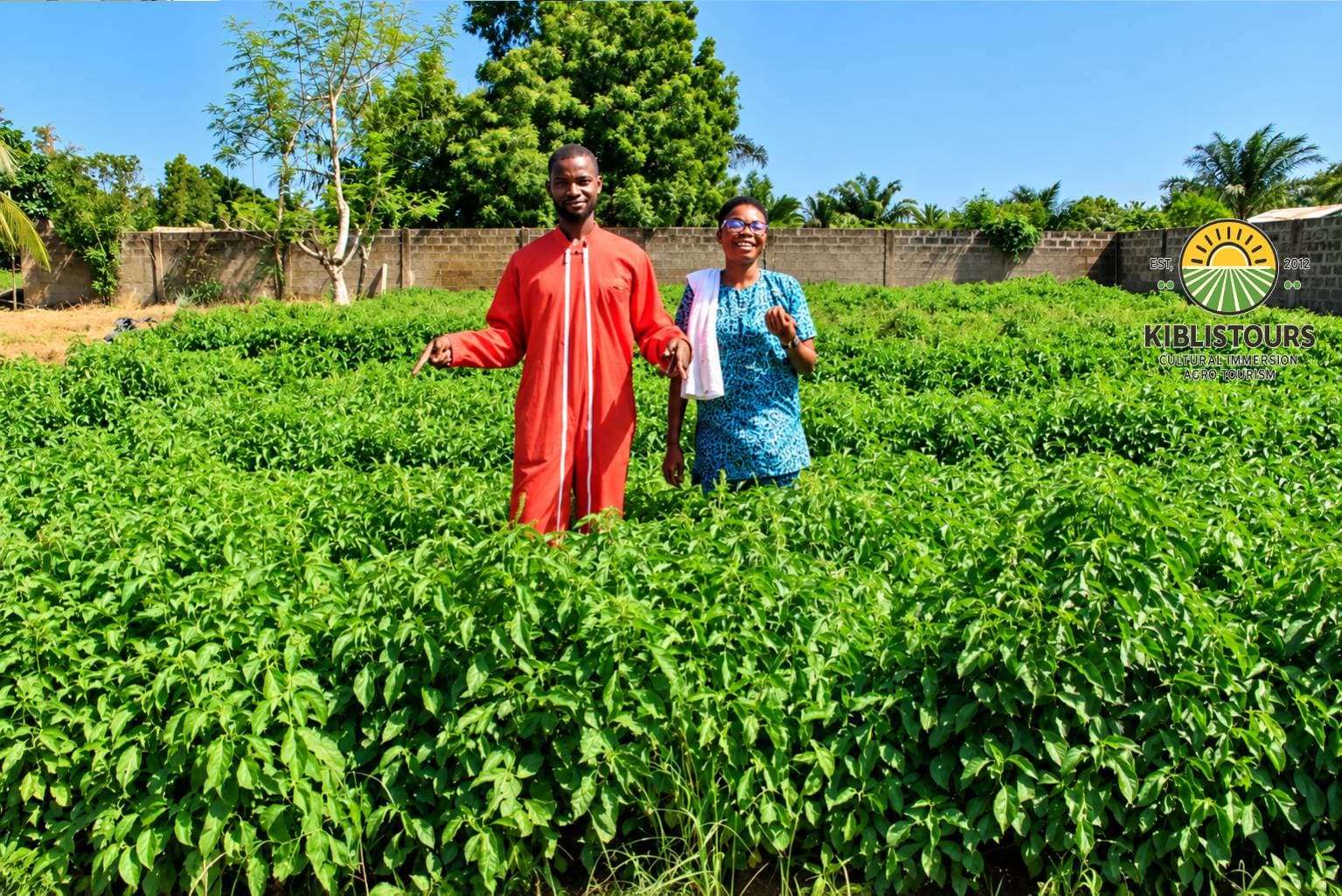
Agritourism in Benin is much more than an activity offered during a trip. It is a different way of discovering a country, understanding its identity, and meeting the people who bring it to life every day.
While traditional tourism often invites visitors to observe a destination, agritourism invites them to become part of it, even if only for a few hours.
In Benin, this approach takes on a particularly meaningful dimension.
Agriculture plays an essential role in the country's economic, social, and cultural life. In many regions, it shapes the seasons and landscapes and brings families together around knowledge and skills passed down from generation to generation.
Choosing an agritourism experience therefore means discovering Benin through one of its most precious foundations: the relationship between women, men, and their land.
Unlike a simple farm visit where travelers remain spectators, agritourism immersion encourages participation, interaction, and understanding.
Every day becomes an opportunity to learn.
Every encounter broadens your perspective.
Every activity tells a story.
Depending on the region visited and the time of year, experiences can vary greatly.
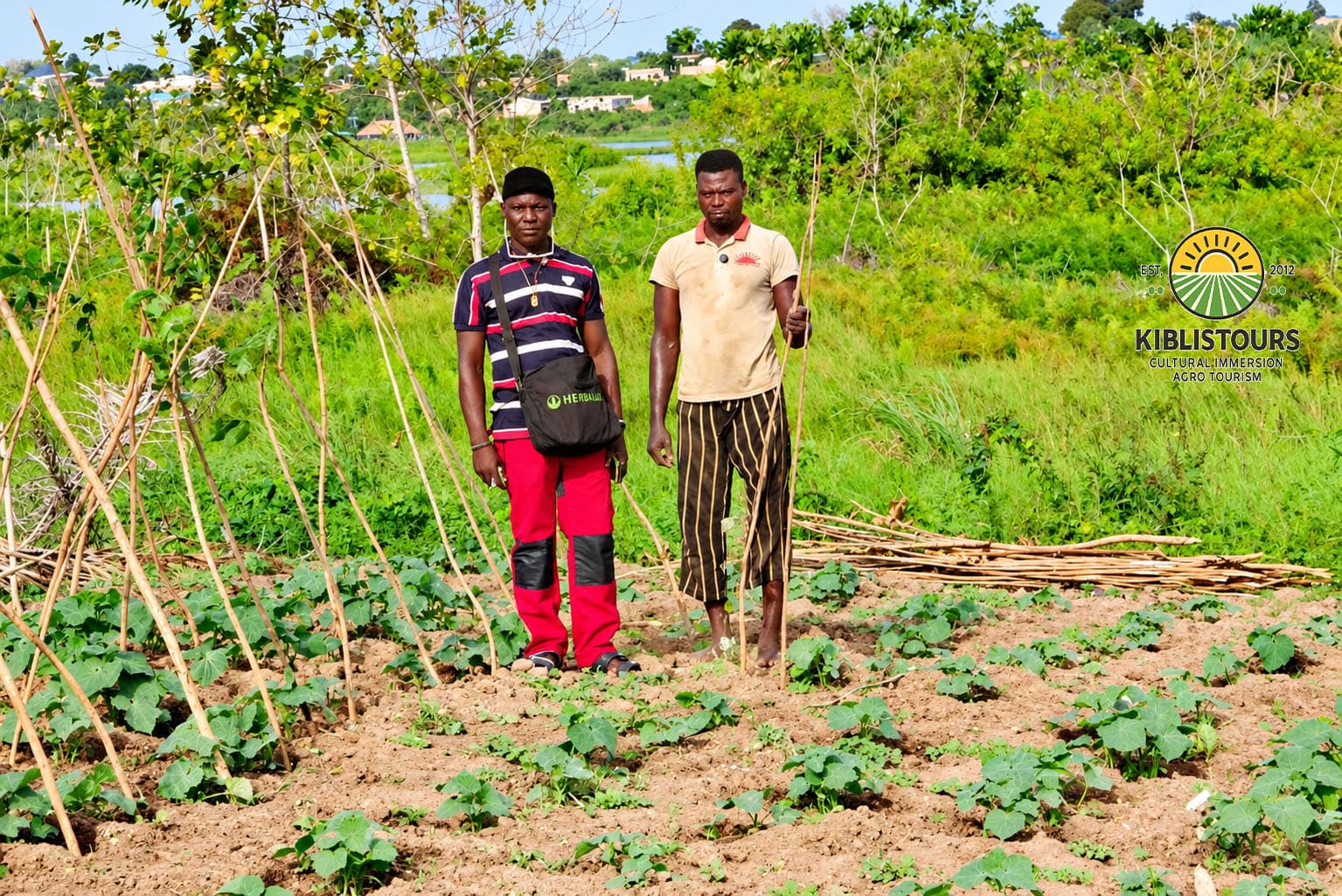
Travelers may accompany farmers into their fields, observe different stages of cultivation, understand local production techniques, or discover processing methods that have been used for generations.
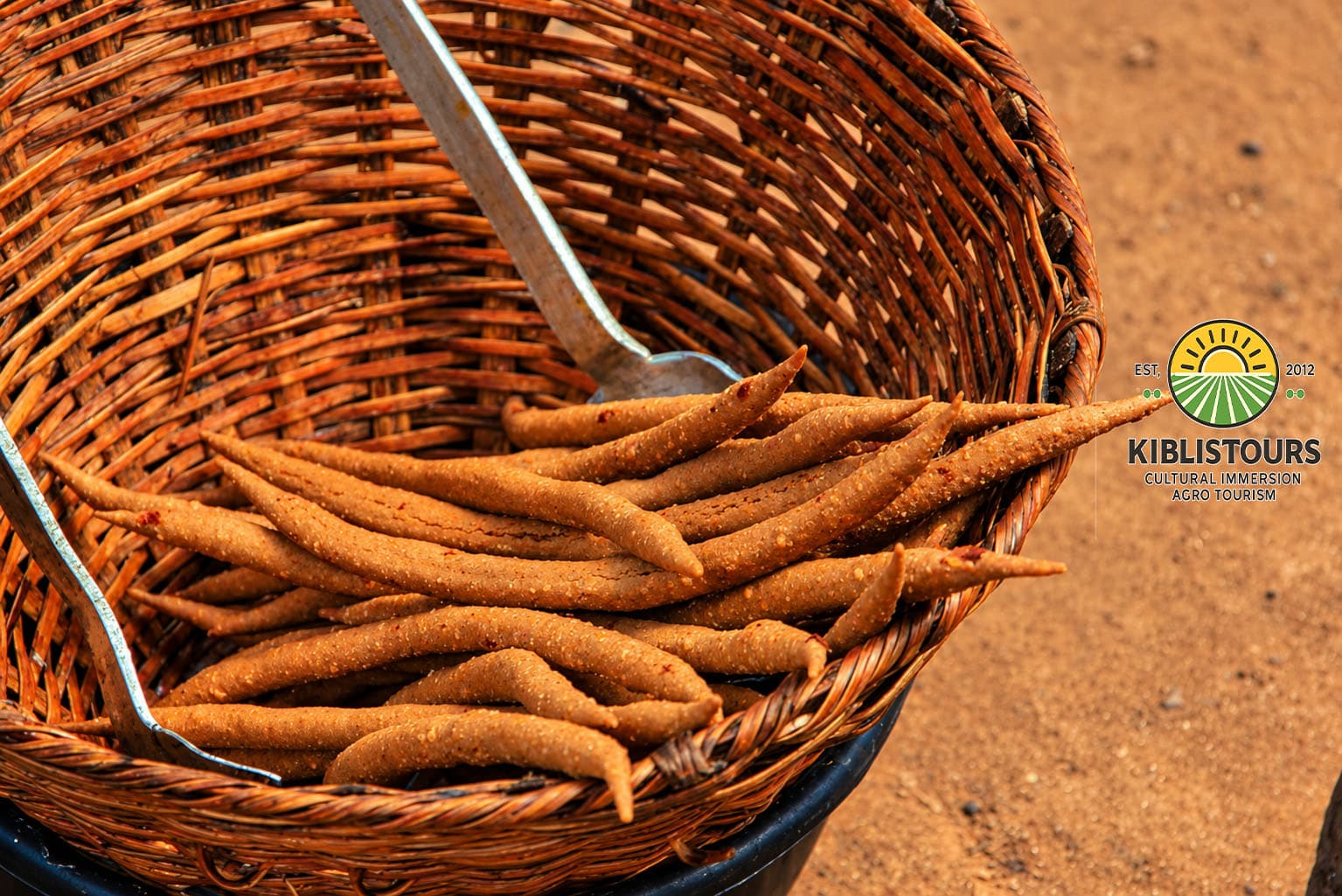
Some farms also open their doors to showcase emblematic products of Benin, such as pineapple, cassava, maize, citrus fruits, oil palm, honey, and market-garden crops.
To explore these possibilities in practical terms, browse the agritourism destinations offered by Kiblistours.
But what leaves the strongest impression on visitors is not only the discovery of agricultural crops.
It is the quality of human interaction.
Farmers speak passionately about their work.
They talk about the challenges they face, changes in their profession, traditions they want to preserve, and their hopes for future generations.
These spontaneous conversations provide a depth that few tourist experiences can offer.
Very quickly, barriers disappear.
The traveler no longer feels like a simple visitor.
They become a guest.
They discover simple gestures that sometimes require years of experience.
They understand why certain agricultural practices are still favored today.
They also realize the importance of preserving natural resources while supporting the development of rural communities.
Agritourism also provides a better understanding of the close connections between agriculture, food, craftsmanship, culture, and the environment.
A harvest is never just a harvest.
It tells the story of a season, a climate, traditions, family organization, and a particular way of living in harmony with nature.
This immersion profoundly changes many travelers' perceptions of African agriculture.
Far from stereotypes, they discover innovative, passionate farmers who are deeply attached to their land.
They understand that behind every local product lies knowledge, daily effort, and a genuine human story.
It is precisely this authenticity that makes agritourism one of the most rewarding experiences you can enjoy in Benin.
An Immersive Day: At the Heart of the Experience
No two agritourism days are exactly alike.
Activities evolve with the seasons, harvests, and daily life on the farms.
It is precisely this spontaneity that makes every experience unique.
From the early morning hours, visitors discover an atmosphere very different from that of conventional tourist circuits.
The sun gradually rises over the fields.
The air is still fresh.
Birdsong accompanies the awakening of the villages.
Nature seems to slowly reclaim the landscape.
Breakfast is often prepared with local products.
Freshly picked fruit, natural juices, Beninese specialties, and foods sourced directly from local farms provide the perfect way to begin the day while discovering the flavors of the region.
This is the philosophy behind a farm-to-table experience in Benin.
Soon, it is time to meet the farmers.
Before any activity begins, everyone takes the time to introduce themselves.
A few smiles are often enough to create a warm atmosphere.
Even when languages differ, gestures, expressions, and mutual curiosity naturally facilitate communication.
It is not unusual for the ice to be broken within just a few minutes. During an immersion organized by Kiblistours, a traveler from Belgium explained that she had been worried about the language barrier before arriving. Yet after exchanging a few smiles and gestures, with help from the guide, she found herself harvesting vegetables alongside a female farmer as though they had known each other for years. By the end of the day, they were taking photos together and promising to stay in touch. “We didn't speak the same language, but we understood each other perfectly,” she said emotionally.
Depending on the time of year, visitors can observe or participate in different stages of agricultural work.
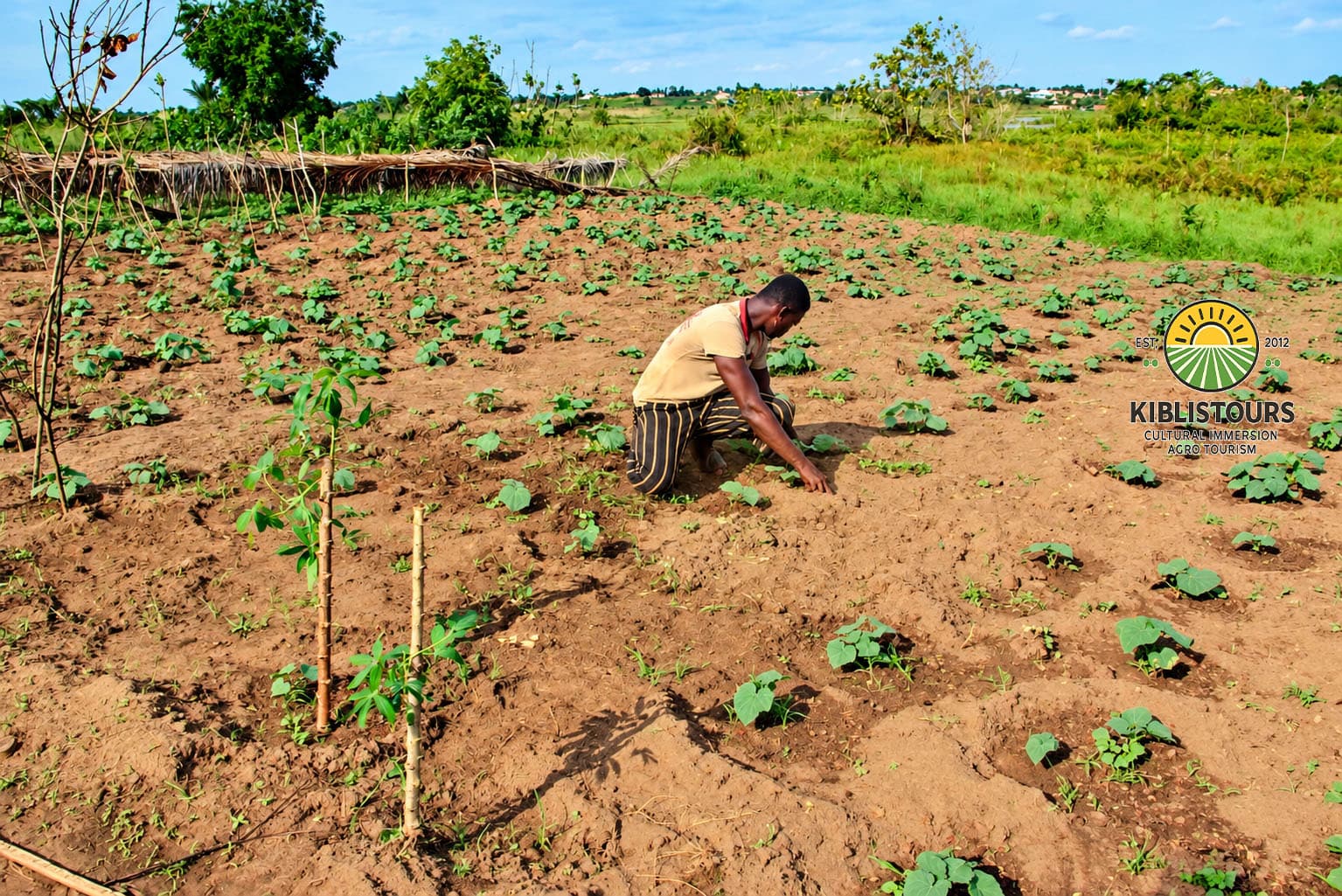
They discover how plots are prepared.
They observe sowing.
They sometimes take part in harvesting.
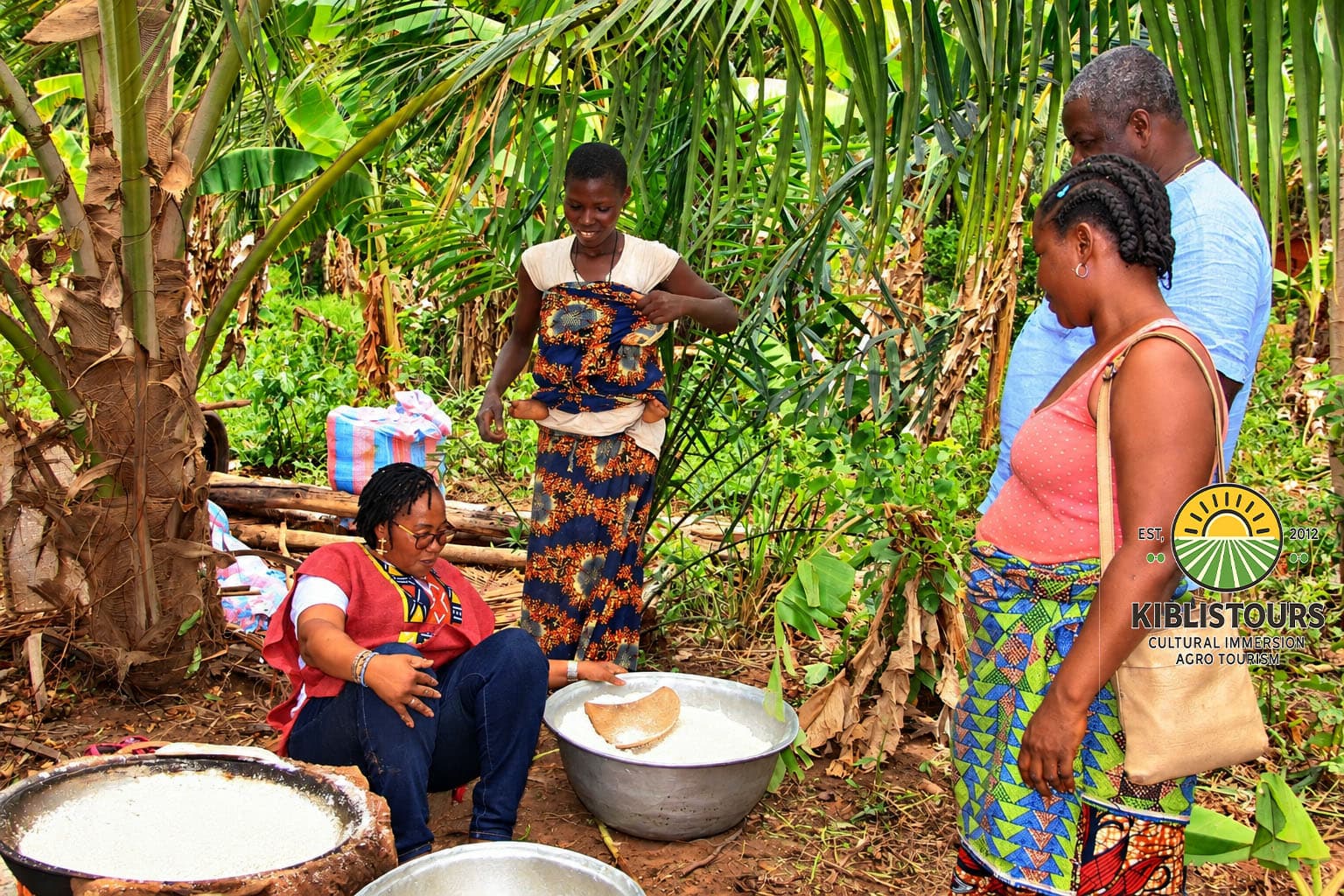
They also follow certain stages involved in processing agricultural products before they are sold or consumed.
The guide plays an essential role throughout this immersion.
The guide does not simply translate conversations.
They also explain agricultural practices, local traditions, environmental issues, and the cultural characteristics of each region.
Thanks to this guidance, every activity takes on a new dimension.
Travelers understand not only what they are doing, but also why these practices matter to local communities.
As the hours pass, conversations become increasingly natural.
Farmers share their experiences.
Visitors ask questions.
Laughter becomes more frequent.
Cultural differences become a source of richness rather than distance.
Lunch is often one of the most appreciated moments of the day.
Around the same table, residents and travelers share a meal prepared with locally produced ingredients.
A Swiss traveler explained that he had already visited more than thirty countries. Yet he said that one of his most beautiful travel memories was neither a monument nor a spectacular landscape, but a lunch shared beneath a mango tree with a Beninese farming family. Amid laughter, recipes explained with passion, and stories shared over the meal, he said he felt as though he had been welcomed as a member of the family rather than as a simple visitor.
Every dish tells a story.
Every recipe reflects the culinary traditions of the region.
Beyond the tasting itself, it is above all the moment of togetherness that leaves a lasting impression.
Conversations continue.
Stories flow.
Connections grow stronger.
The afternoon generally provides an opportunity to extend the immersion through other experiences.
Depending on the program, travelers may visit a craft workshop, discover agricultural product processing, meet local cooperatives, explore a nearby village, or participate in a cultural activity organized by the community.
These different experiences demonstrate that agriculture cannot be separated from everyday life.
It influences the local economy.
It feeds families.
It inspires craftsmanship.
It shapes culinary traditions.
It contributes to preserving landscapes.
At the end of the day, visitors leave with far more than a few photographs.
They take with them memories of sincere conversations, skills learned from farmers, flavors discovered over shared meals, and emotions experienced with the people who welcomed them.
It is this accumulation of small, authentic moments that gradually transforms a simple stay into a deeply human experience.
And it is precisely this richness that makes agritourism one of the pillars of sustainable tourism in Benin today.
An Experience That Profoundly Transforms You
There are journeys we remember for the beauty of their landscapes.
And then there are those we remember for how they made us feel.
Agritourism belongs to the second category.
Travelers who choose to experience an immersion in the heart of Benin's rural communities rarely return home with the same expectations they had when they left. Many explain that they discovered not only a different way of traveling, but also a different way of looking at the world.
As encounters unfold, priorities change.
The pace slows down.
Conversations take up more space.
Simple moments regain their full value.
Watching a farmer work the land under the rising sun, sharing a meal prepared with freshly harvested ingredients, or listening to an elder tell the story of their village are experiences that leave a lasting impression.
These moments remind us that travel is not simply about the places we visit.
It is built above all through the emotions we feel and the people we meet.
Many visitors describe it as a genuine return to what truly matters.
In a daily life often dominated by screens, busy schedules, and constant demands, spending a day in contact with nature offers a sense of freedom that is difficult to describe.
Time seems to return to its natural rhythm.
Conversations are no longer interrupted by notifications.
Meals are no longer rushed.
Every moment is fully experienced.
This experience also provides a new perspective on agriculture.
Behind every harvest are months of work, patience, and observation.
Every season brings its own challenges.
Every crop requires precise knowledge.
Visitors then become aware of the value of the products they consume every day, often without imagining the amount of work required to produce them.
Agritourism also encourages broader reflection on the way we travel.
How can we support local communities?
How can we travel while having a positive impact on the places we visit?
How can we preserve natural resources while discovering a country?
These are all questions that naturally arise during this immersion.
Travel then becomes an exchange.
Visitors learn as much as they share.
Local communities pass on their knowledge.
Travelers bring their curiosity, interest, and outside perspective.
Everyone leaves enriched by the encounter.
It is precisely this reciprocity that gives sustainable tourism its strength.
The experience does not benefit travelers alone.
It also helps promote local know-how, support producers, and encourage a more responsible economy.
To explore this dimension further, learn how agritourism in Benin can support employment and income for rural communities.
After returning home, many visitors say that the human encounters are ultimately what they talk about most with their loved ones.
They talk about a smile exchanged in a village.
An impromptu conversation over a meal.
A gesture learned from a farmer.
Or that rare feeling of having been welcomed not as ordinary tourists, but as guests.
This is what distinguishes an immersive experience from a conventional journey.
You do not return home with memories alone.
You return with a new way of understanding the place you have just discovered.
Kiblistours: An Experience Designed for Immersion
Organizing an immersive journey requires careful preparation. Contact us on WhatsApp for more information.
A genuine agritourism experience depends on a delicate balance between authenticity, safety, quality guidance, and respect for host communities.
This is precisely the philosophy that has guided Kiblistours since its creation.
The objective is not to offer a simple tourist circuit.
Every itinerary is designed to allow travelers to experience a deeply human journey, where every stage has genuine meaning.
At Kiblistours, meaningful encounters are prioritized over rushed visits.
Interaction is encouraged.
Groups are intentionally kept small to preserve the quality of interactions and respect the natural rhythm of local communities.
One of the major strengths of this approach lies in the dual-guidance system.
Alongside the professional Kiblistours guide, a local guide or community member who knows the area intimately also takes part.
This complementary approach provides genuine added value.
The professional guide ensures the organization of the trip, smooth transportation, and general explanations about Benin's heritage.
The local guide, meanwhile, shares personal experiences, traditions, stories, and intimate knowledge of the region.
By combining these two perspectives, visitors gain a much richer understanding of the places they discover.
The experiences offered are carefully selected.
Each partner is chosen for their professionalism, hospitality, and willingness to share their knowledge while respecting their everyday activities.
The goal is never to disrupt local life.
On the contrary, immersions are organized in a way that encourages balanced, respectful, and mutually beneficial exchanges.
Kiblistours also pays particular attention to traveler comfort.
Even when an experience takes place in the heart of a farm or rural village, organization remains rigorous.
Transportation is carefully planned.
Schedules are adapted.
Visits are balanced to provide enough time to fully enjoy encounters without feeling rushed.
This quality of organization allows visitors to focus on what matters most: fully experiencing the journey.
The company also strives to integrate several dimensions of Benin's heritage into a single journey.
Agritourism naturally combines with visits to historical sites, craft workshops, cultural traditions, lake villages, and iconic places that tell the story of the country.
Each tour therefore becomes a complete immersion where agriculture, heritage, culture, gastronomy, and human encounters complement one another harmoniously.
You can browse the Kiblistours tours to discover itineraries combining several of these dimensions.
This approach perfectly matches the expectations of international travelers who are increasingly looking for more personalized, responsible, and authentic experiences.
Beyond a simple stay, Kiblistours offers a genuine discovery of Benin through the people who bring the country to life every day.
It is this vision that transforms a journey into a memorable, meaningful experience deeply rooted in the reality of the destination.
Must-Have Experiences in Benin
Benin has the rare ability to surprise travelers, whatever their interests. History enthusiasts, nature lovers, people curious about traditions, food lovers, and travelers seeking meaningful human experiences will find a destination that often exceeds their expectations.
Contrary to common assumptions, Benin is not discovered through its monuments alone. Its richness lies in the diversity of experiences available, sometimes only a few kilometers apart.
Every region has its own personality.
Every stop tells a different story.
And each one contributes to making the journey deeply authentic.
Historical Heritage: Traveling Through Centuries of History
It is impossible to talk about tourism in Benin without mentioning its exceptional historical heritage.
The majestic Royal Palaces of Abomey, listed as a UNESCO World Heritage Site, offer a deeper understanding of the history of the powerful Kingdom of Dahomey. Throughout the visit, stories of former rulers, royal symbols, and displayed collections provide a fascinating journey through several centuries of African history.
In Ouidah, the emotion is different but equally intense.
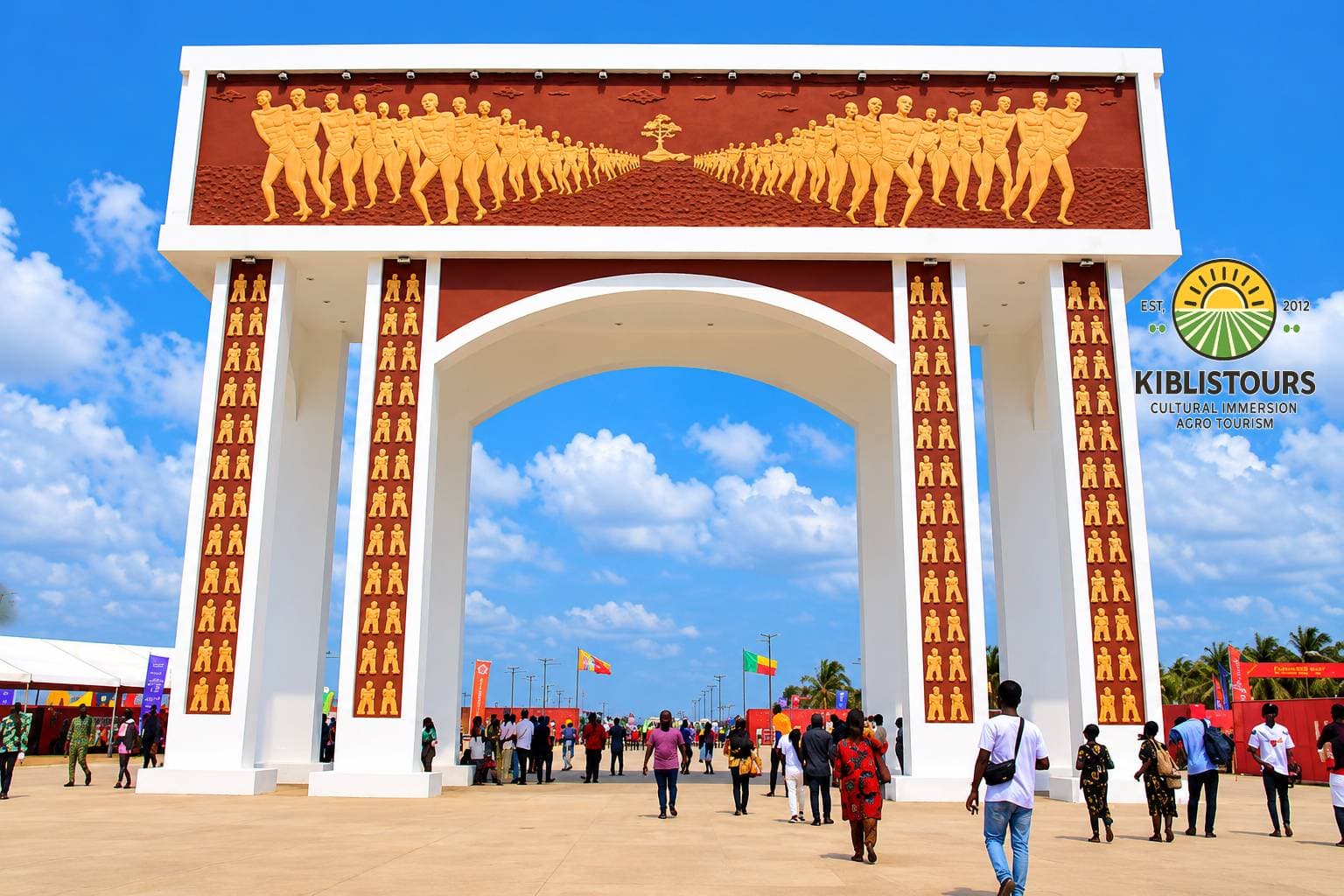
The famous Slave Route gradually leads visitors toward the Door of No Return, a universal place of remembrance recalling one of the most painful chapters in human history. Each stage of this journey invites reflection and helps visitors better understand the consequences of the slave trade across several continents.
To combine memory, heritage, and a lake city within the same experience, explore the Kiblistours Ouidah–Ganvié tour.
These places are not simply tourist attractions.
They are places of memory where history continues to pass its lessons on to present generations.
Agritourism: Meeting the Women and Men Who Feed the Land
Agritourism is now one of the most original experiences travelers can enjoy in Benin.
By visiting a farm, travelers discover much more than crops or plantations. They meet passionate farmers who generously and naturally share their everyday lives.
Depending on the season, visitors can observe the cultivation of pineapple, cassava, maize, citrus fruits, or oil palm.
Some farms also offer opportunities to discover the different stages involved in processing agricultural products, from harvesting to preparation.
These moments of interaction provide a better understanding of rural realities while highlighting local expertise.
They also remind us that behind every product we consume are women and men whose work deserves recognition.
The Venice of Africa (Ganvié): A Unique Village Built on Water
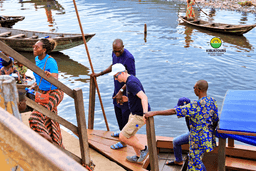
Among the country's most iconic sites, Ganvié holds a special place.
Often nicknamed the “Venice of Africa,” this lake city is remarkable both for its history and its way of life.
Here, houses stand on stilts.
People travel by canoe.
Floating markets bring the lake to life.
Children travel to school by boat.
Many travelers remain silent for a few moments when they first witness this scene. During an early morning visit, a Canadian family watched children calmly paddling to school while their parents were already preparing for the day's activities. The father later said: “We thought we were visiting a tourist attraction. We discovered a community that truly lives on the water. This is probably the image we will remember for the longest time.”
Fishermen leave at dawn to retrieve their nets.
For visitors, discovering Ganvié is not simply about admiring an exceptional landscape.
It is also about understanding how an entire community has adapted to its environment for centuries.
To better appreciate the remarkable way people have lived on the water for generations, book your visit here.
Cultural Heritage: Traditions That Are Still Very Much Alive

Benin is recognized around the world for the richness of its cultural heritage.
Here, traditions are not preserved only in books or presented solely during performances.
They continue to shape everyday life.
Traditional ceremonies, dances, songs, community celebrations, and artisanal know-how all reflect a deeply living culture.
Vodun, often misunderstood internationally, occupies an important place in this cultural identity. Far beyond common misconceptions, it represents a set of beliefs, values, rituals, and practices that contribute to the cohesion of many communities.
Accompanied by an experienced guide, travelers discover this cultural dimension with respect, educational guidance, and an open mind.
This approach provides a better understanding of the country's spiritual richness while moving beyond the many stereotypes that still surround this tradition.
To explore this further, read Authentic Travel in Benin: Culture, Vodun, Nature and Encounters with Kiblistours.
Why Benin Perfectly Meets the New Expectations of International Travelers
The world of travel is changing rapidly. Today, more and more travelers want to enjoy experiences that go far beyond simply discovering new landscapes. They seek sincere encounters, enriching exchanges, and journeys that give genuine meaning to their travels.
This evolution explains the growing interest in sustainable tourism in Africa, immersive travel, agritourism, and authentic experiences.
Benin naturally meets these new expectations.
Here, the aim is not to create an artificial image to attract visitors. The country is appealing precisely because it has remained true to itself.
Traditions continue to live.
Villages retain their authenticity.
Farmers work according to the rhythm of the seasons.
Artisans continue to practice skills passed down through generations.
Cultural ceremonies remain, above all, important moments for local communities.
Travelers therefore do not discover a reconstructed culture.
They discover a living culture.
It is this authenticity that makes all the difference today.
To go further, find out why 95% of travelers miss the real Benin.
Benin, a Destination Where History, Culture, Agriculture and Everyday Life Become One
What makes Benin truly unique is the harmony between all the dimensions of its heritage.
In many countries, historical sites, natural spaces, and rural activities are presented separately.
In Benin, everything is closely connected.
When you discover the Royal Palaces of Abomey, you immerse yourself in centuries of history while understanding the country's cultural foundations.
When you follow the Slave Route in Ouidah, you are not simply visiting a monument.
You enter a place of remembrance that encourages reflection and dialogue.
When you spend a few hours with a farmer on an agricultural holding, you discover far more than a farming technique.
You understand how agriculture structures family life, supports the local economy, and shapes landscapes.
Traditional markets also illustrate this interconnectedness.
Agricultural products stand alongside handcrafted objects.
Local spices sit beside colorful fabrics.
Commercial exchanges also become moments of cultural encounter.
This richness makes Benin a particularly complete destination.
Travelers never simply move from one separate world to another.
They gradually discover a place where history, culture, nature, agriculture, and traditions are constantly interconnected.
This coherence gives the journey a depth that few destinations can offer. Click here to read our visitors' testimonials.
Why Agritourism Represents the Future of Sustainable Tourism
For several years, travel habits have been changing profoundly.
Travelers no longer simply want to visit monuments or accumulate photographs.
They want to understand the places they discover.
They want to support local communities.
They seek experiences that respect the environment while contributing to community development.
Agritourism responds directly to these new expectations.
It helps promote the work of farmers.
It encourages short supply chains.
It promotes a fairer distribution of tourism's economic benefits.
It also helps preserve agricultural knowledge while creating new opportunities for rural communities.
For visitors, this approach offers an experience far richer than a simple excursion.
They discover the realities of the agricultural world.
They understand issues related to food security, climate change, and the preservation of natural resources.
They become aware of the essential role farmers play in maintaining the balance of local territories.
In Benin, this dynamic is particularly promising.
The country has great agricultural diversity.
Family farms are numerous.
Production is varied.
Communities want to share their knowledge while developing complementary activities through tourism.
When organized with respect for local populations, agritourism becomes a genuine driver of sustainable development.
It creates jobs.
It encourages the transmission of knowledge.
It promotes local products.
It strengthens community pride.
And it offers travelers a deeply human experience.
Also explore 7 Agritourism Experiences to Enjoy in Benin.
What Does a Successful Agritourism Immersion Look Like?
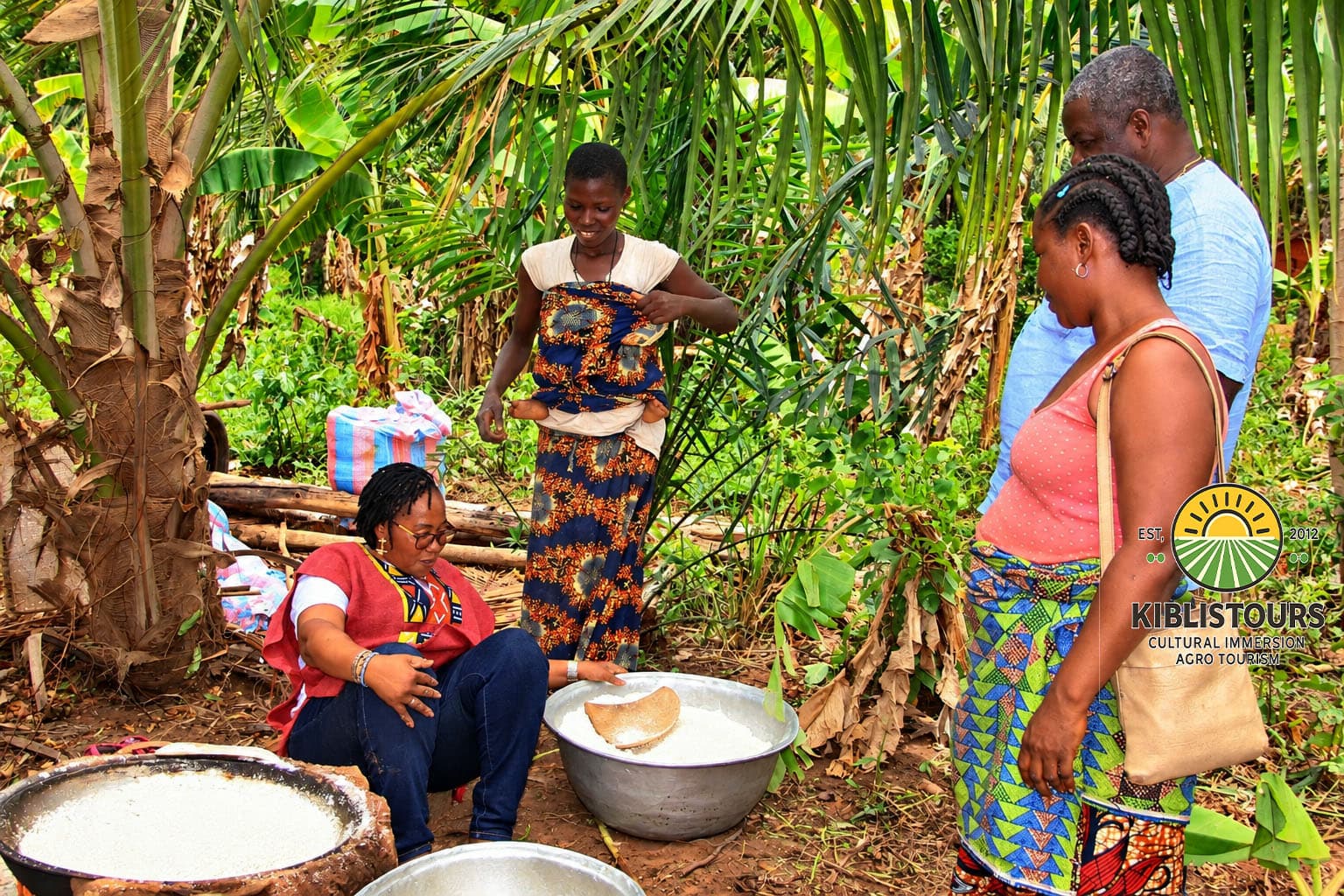
Before continuing, explore the Kiblistours agritourism experiences.
A genuine immersion cannot be improvised.
It depends on rigorous organization, careful preparation, and a relationship of trust between travelers, guides, and host communities.
Everything begins with an introduction to the place and the people.
Visitors discover the history of the farm, the crops grown, the characteristics of the area, and the activities planned for the day.
Interactions quickly become much more natural.
Farmers explain their work.
They answer questions.
They share their experiences with simplicity.
Depending on the season, visitors can observe different stages of production or participate in suitable activities.
They discover cultivation techniques.
They follow different processing stages.
They learn how products are marketed or consumed locally.
The guide accompanies every stage.
They facilitate communication.
They provide additional explanations.
They place every activity within its historical, cultural, and environmental context.
The shared meal is often one of the most memorable moments.
Over specialties prepared with local products, conversations become more personal.
People talk about food.
Traditions.
Family.
Plans for the future.
These exchanges create a closeness that few other forms of tourism can provide.
The afternoon generally extends this immersion through visits to craft workshops, villages, agricultural cooperatives, or nearby cultural sites.
Each activity naturally complements the previous one.
Travelers gradually understand that everything is connected.
Agriculture feeds families.
Craftsmanship adds value to local resources.
Culture transmits traditions.
Tourism contributes to community development when practiced responsibly.
It is this coherence that transforms a simple day trip into an unforgettable experience.
Kiblistours: Discover an Africa That Is Lived, Not Simply Observed
At Kiblistours, we believe that a successful journey is not measured only by the number of kilometers traveled or sites visited.
It is measured above all by the quality of the emotions experienced, the richness of the encounters, and the memories that continue to accompany travelers long after they return home.
That is why each of our experiences is designed to encourage authentic immersion in the heart of Benin.
We favor small groups to preserve the quality of interactions.
We work with professional guides and local stakeholders who know their region intimately.
We carefully select our partners to ensure experiences that respect both communities and the environment.
Our approach also relies on personalized support.
Every traveler has different expectations.
Some want to explore cultural aspects in greater depth.
Others seek more encounters with farmers or artisans.
Others prioritize comfort or exclusive experiences.
Our different packages make it possible to meet these expectations while maintaining the same high standards of quality.
Our ambition is simple.
To reveal the true face of Benin.
A welcoming country.
A country rich in history.
A country where traditions continue to live.
A country where every encounter can become one of the most beautiful memories of your journey.
Because beyond landscapes and monuments, it is above all the women and men who give a destination its true value.
And it is precisely this authentic Africa that Kiblistours invites you to experience.
Explore Kiblistours agritourism experiences.
Strategic Comparison: Why Choose Benin Rather Than Another African Destination?
Africa is a continent of exceptional richness, where every country offers unique experiences.
Kenya inspires dreams with its safaris.
Tanzania captivates visitors with its vast plains, Mount Kilimanjaro, and Serengeti National Park.
South Africa attracts travelers with its modern infrastructure, vineyards, nature reserves, and diverse landscapes.
Morocco is renowned for its medinas, mountains, and architectural heritage.
All these destinations deserve their reputation.
But Benin offers a different experience.
Here, travel is not based solely on discovering spectacular landscapes or major tourist attractions.
It is based above all on the quality of human encounters.
Visitors do not simply pass through the country.
They take the time to understand it.
They discover traditions that remain deeply rooted in everyday life.
They interact with farmers, artisans, guides, and residents who share their stories naturally.
Benin also offers an advantage that has become rare in international tourism: authenticity.
Communities continue to live according to their customs.
Traditional ceremonies are not organized solely for visitors.
Markets remain places of everyday life.
Farms continue their daily activities.
Travelers are welcomed into a reality that exists independently of their presence.
For those seeking cultural immersion, responsible tourism, and deeply human experiences, Benin represents a particularly compelling destination.
The Emotional and Personal Benefits of Immersive Travel
Some experiences continue to accompany us long after we return home.
They are not necessarily those featuring the most luxurious hotels or the most spectacular landscapes.
They are often those that allow us to meet inspiring people, discover different ways of life, and put our own daily lives into perspective.
Agritourism often has this effect.
By sharing the daily lives of rural communities, travelers rediscover the pleasure of simple things.
They take time to observe.
To listen.
To talk.
They learn to appreciate a meal prepared with freshly harvested ingredients.
They understand the patience required to cultivate the land.
They discover the value of knowledge passed down from generation to generation.
Many explain that they leave with a new vision of travel.
A French traveler wrote a few days after returning home: “I had booked this trip to discover Benin. In the end, what I discovered above all was another way of traveling. The monuments were magnificent, but it was the farmers, artisans, guides, and all the people I met who gave this journey its true soul.” This type of testimony frequently comes from travelers who have chosen immersion rather than a conventional tour.
They realize that a successful journey does not depend solely on the number of sites visited.
It depends above all on the emotions experienced.
The conversations shared.
The smiles exchanged.
The stories heard.
In a world where everything seems to move faster and faster, reconnecting with nature, traditions, and human relationships often brings a genuine sense of peace.
Travel then becomes a pause that nourishes both mind and heart.
An Experience Suitable for Different Types of Travelers
One of the great strengths of agritourism in Benin is its ability to appeal to travelers with very different expectations.
Couples appreciate moments of sharing, cultural discoveries, and exclusive experiences that make their stay particularly memorable.
Families find an ideal environment for introducing children to new cultures, raising environmental awareness, and sharing educational activities in nature.
Solo travelers benefit from reassuring guidance that facilitates encounters and encourages authentic interaction with local communities.
Groups of friends share an original adventure far from conventional destinations.
History enthusiasts explore the country's major heritage sites.
Food lovers discover traditional recipes prepared with local products.
Photographers find an incredible diversity of landscapes, everyday scenes, and colors.
Members of the African diaspora often see the journey as an opportunity to reconnect with part of their cultural heritage.
Business travelers sometimes choose to extend their stay to discover another side of Benin.
This diversity demonstrates that agritourism is not reserved for one category of traveler.
It is intended for anyone who wants to enjoy an authentic, enriching, and deeply human experience.
Why Book Now?
Before booking, also find out why 95% of travelers miss the real Benin… and will you?
The most authentic experiences cannot accommodate an unlimited number of visitors.
Partner farms continue, above all, to carry out their everyday activities.
Local communities prioritize the quality of interactions rather than mass tourism.
Groups are intentionally kept small to preserve the authenticity of encounters and participants' comfort.
This approach guarantees a much more personalized experience.
But it also means availability is limited.
Certain periods of the year, particularly agricultural seasons that are especially suitable for immersion or international holiday periods, may experience higher demand.
Booking your stay sufficiently in advance allows you to benefit from:
a wider choice of dates;
better availability with our partners;
personalized assistance in preparing your trip;
smooth organization from the moment you arrive in Benin;
exclusive experiences that may only be available by reservation.
At Kiblistours, every stay is carefully prepared to meet each traveler's expectations.
Our team remains available before, during, and after your trip to assist you every step of the way.
Explore the Kiblistours tours.
Explore agritourism experiences.
FAQ – Everything You Need to Know About Agritourism in Benin
Is Benin a Safe Destination for Travelers?
Security conditions can vary depending on the area and may change over time. Before traveling, consult the official travel advice applicable to your nationality and itinerary. Traveling with a professional organization such as Kiblistours also provides local assistance and organization adapted to your journey.
What Is Agritourism?
Agritourism is a form of tourism that allows visitors to discover a destination through its agricultural activities. Visitors meet farmers, participate in certain activities, discover local know-how, and share aspects of everyday life with rural communities.
Explore the Kiblistours agritourism experiences.
Why Choose Benin for an Agritourism Experience?
Benin offers a rare combination of cultural heritage, living traditions, family farms, hospitality, and authenticity. The experiences offered provide genuine immersion far from mass tourism.
To explore further, read From Farm to Table in Benin: An Authentic Agritourism Experience.
What Is the Best Time to Visit Benin?
Benin can be explored at different times of the year. For an agritourism experience, the best period also depends on the crops, the agricultural activities you wish to experience, the region, and weather conditions.
Are the Experiences Suitable for Families?
Yes. Many activities can be suitable for families with children. They allow younger visitors to discover agriculture, nature, local traditions, and respect for the environment in an educational and enjoyable way.
Do I Need Agricultural Experience to Participate?
Not at all. The activities are accessible to visitors with no previous agricultural experience. Farmers and guides explain each stage so that everyone can enjoy the experience according to their abilities and interests.
Why Choose Kiblistours?
Kiblistours prioritizes immersive experiences, small groups, professional guidance, experienced guides, and partnerships with local communities. Our goal is to help you discover Benin through authentic encounters and meaningful experiences.
At the end of one tour, as the group prepared to leave Benin, the guide simply asked everyone to share the memory that had touched them most. The answers were surprising. No one mentioned a hotel or monument. Travelers spoke about a smile exchanged on a plantation, an impromptu conversation over a meal, an artisan proudly explaining their craft, or a female farmer delighted to see visitors taking an interest in her work. One traveler perfectly summed up the experience by saying: “I came to visit a country, but I'm leaving with friends and a different way of looking at the world.”
Experience agritourism in Benin with Kiblistours.
Explore all Kiblistours tours in Benin.
Explore Benin: tours and destinations.
Discover Ganvié on Benin Tourism.
Kiblistours - Agritourism in Benin: presentation of the agritourism experiences offered by Kiblistours and opportunities for immersion in Benin's rural areas. Discover agritourism with Kiblistours.
Kiblistours - Tours and Experiences: selection of tours combining heritage, culture, gastronomy, agriculture, and local encounters in Benin. Explore Kiblistours tours.
Kiblistours - Destination Benin: presentation of destinations and experiences offered by Kiblistours throughout Benin. Explore Benin with Kiblistours.
Ready to Live the Experience?
Explore the Kiblistours agritourism experiences.
Explore all Kiblistours tours in Benin.
Write directly to Kiblistours on WhatsApp.
Go Further with Kiblistours
Explore All Agritourism Experiences in Benin
From Farm to Table in Benin: An Authentic Agritourism Experience
7 Agritourism Experiences in Benin to Discover the Country Beyond Ordinary Tours
Agritourism in Benin: A Driver of Employment and Income for Rural Youth