Traveling through Benin may begin with the places we already know from guidebooks, photographs, and travel stories, but the deepest memories are sometimes created far from the usual itineraries-at the edge of a field, on a family farm, around a cooking fire where a meal is simmering, or during a conversation with a farmer who talks about their work without needing to turn it into a spectacle.
It is precisely in these moments, when travelers stop being mere spectators and begin to understand a territory through the people who cultivate it, that agritourism reveals its full richness.
In Benin, this way of traveling finds particularly fertile ground, because agriculture is far more than a succession of crops observed from the roadside. It shapes landscapes, sets the rhythm of life in many communities, supplies markets, influences local cuisine, and preserves a wealth of knowledge and skills passed down from generation to generation. From the lush South to the northern regions, agricultural realities change with the soil, seasons, crops, and local practices, offering curious travelers a diversity of experiences that conventional tourist circuits do not always provide.
Imagine, for example, beginning your day on a pineapple plantation, continuing your immersion alongside women processing cassava, having lunch with ingredients whose origins you have just discovered, and ending the afternoon talking with a farming family as the light fades over the fields. On this kind of journey, you no longer simply collect places visited: you gradually understand how a territory lives, produces, cooks, exchanges, and passes on its knowledge.
This is the different way of discovering the country that we invite you to explore through seven agritourism experiences in Benin, designed not as artificial attractions but as gateways into a rural Benin that is vibrant, contemporary, and deeply human.
Why Does Agritourism Allow You to Discover a Benin That Many Travelers Never Experience?
Conventional tourism often answers a simple question: “What should I see?” Agritourism adds another: “Who should I meet to understand what I am seeing?” An agricultural landscape then takes on a new depth because its crops, practices, and technical choices are explained by the people who experience them every day.
A cassava field may seem ordinary when viewed quickly from a car, but it becomes fascinating when a farmer explains the choice of planting material, soil constraints, production cycles, the culinary uses of the root, and the work required to process it. Similarly, a pineapple bought at the market takes on another dimension once you have walked between rows of plants, observed how the fruit grows, and understood how much time passes between planting and harvesting.
Agritourism restores a connection that modern life often makes invisible: the connection between the land, the producer, and what eventually reaches our plates. It also encourages respect for a different relationship with time. Seasons, weather, and the actual work taking place on farms determine what can be seen or done. A high-quality immersion therefore adapts to the agricultural calendar instead of manufacturing an activity simply to satisfy an itinerary.
This approach leads to a more accurate definition of authenticity: not an Africa frozen in time to match visitors’ expectations, but a contemporary Benin where traditions, smartphones, new agricultural practices, cooperatives, entrepreneurship, and the aspirations of young people naturally coexist.
1. Walk Through a Pineapple Plantation and Rediscover a Fruit You Thought You Knew
Pineapple is one of those products whose familiarity can hide its complexity. It can be found in markets, juices, desserts, and stores in many countries, so travelers might assume there is little left to learn about it. Yet stepping into a Beninese pineapple plantation and observing directly how the fruit grows is often enough to completely change that perception.
In the pineapple-producing areas of southern Benin, particularly in the Atlantique Department, an agricultural immersion allows visitors to walk between rows of plants while talking with a farmer about the different stages leading from land preparation to harvest. The choice of planting material, crop maintenance, growth monitoring, cultivated varieties, and signs of maturity create a tangible story far removed from the image of pineapple already sliced and served on a plate.
This reality is particularly visible in Tori-Bossito, a municipality described by the Government of Benin as an area with strong agricultural and ecotourism potential, notably characterized by extensive pineapple plantations. PACOFIDE also supports productivity and market access within this value chain.
The value of the visit, however, does not lie solely in technical explanations. It lies above all in conversations with the people who grow the fruit, because questions naturally arise as you walk: How long does it take before harvesting? How can you tell when a pineapple is ripe? What challenges do producers face? How are pineapples marketed? And what happens to a harvest when conditions are unfavorable?
When the season and the organization of the farm allow it, the experience may be complemented by a demonstration, supervised participation in an activity suitable for visitors, or an on-site tasting. The fruit enjoyed at the end of the visit then seems to have a special flavor-not because it has miraculously changed, but because you now understand some of the human work behind it.
From Plantation to Glass: Extending the Experience Through Processing
The experience becomes even more interesting when it goes beyond primary production and explores processing. Juice, dried fruit, and other derived products demonstrate how agricultural production can generate greater value when processed locally, while opening conversations about rural entrepreneurship, preservation, marketing, and the economic opportunities that can develop around a value chain.
You leave not only with memories of a pineapple field, but with a fuller understanding of the journey from the soil to the final product.
2. Discover Cassava Processing and Finally Understand How Gari Is Made
Some foods are so deeply embedded in everyday life in Benin that it would be difficult to fully understand local eating habits without exploring their origins, and gari undoubtedly belongs to this category.
Behind these small grains, which can be consumed in many different ways, lies a processing method far more elaborate than an unfamiliar visitor might imagine.
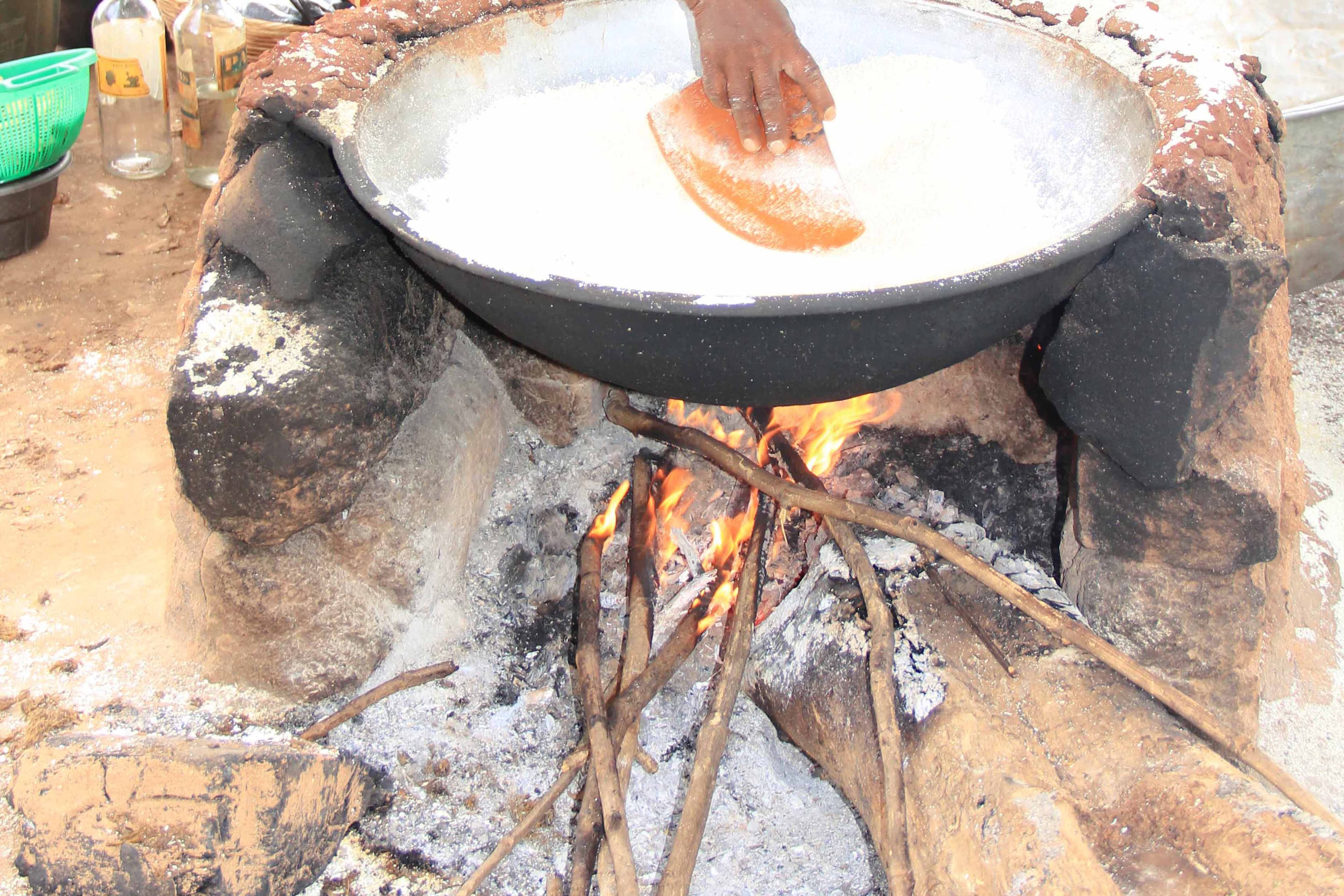
A cassava-focused immersion begins with the root itself and, depending on the facilities and activities actually available, may allow visitors to follow several stages of processing. Peeling, washing, grating, pressing, sieving, and roasting involve precise techniques, organization, and expertise that are far easier to understand alongside the people who have mastered them than by reading a simple information sheet.
The encounter becomes particularly engaging when travelers are invited, under the supervision of those who know the process, to try one of the steps compatible with the hosting and safety conditions. First attempts are rarely as fast or precise as those of experienced women processors, often leading to smiles, advice, and moments of connection that are far more memorable than watching a demonstration from a distance.
This experience also has a strong social dimension. Agricultural processing can support income-generating activities, particularly within women-led groups and rural businesses. Through gari, broader issues emerge: work organization, market access, local value creation, quality improvement, and the role of women in rural economies.
The product you later consume is no longer anonymous; it is now connected to faces, skills, and a story encountered firsthand.
This reality is tangible in Benin: in Glazoué, infrastructure and equipment have notably been provided to cooperatives of women cassava processors, with particular attention given to gari, tapioca, product quality, and market access.
3. Go From Garden to Plate Through an Immersion With Market Gardeners
Entering a market garden and following food from the field to the meal provides a very tangible understanding of agricultural work.
At dawn or in the late afternoon, when temperatures become milder, cultivated beds, watering cans, nurseries, and the repeated movements of farmers reveal a carefully organized system shaped by everyday constraints. Visitors no longer simply observe vegetables; they discover a productive environment in which every decision-from water availability to crop selection-can influence the harvest.
Depending on the region, season, and farm visited, travelers may observe different crops and become familiar with methods used to prepare beds, manage water, maintain plants, fertilize the soil, or protect crops.
Conversations with market gardeners reveal above all the constant trade-offs involved in their work: crop choices, adaptation to the seasons, water availability, potential losses, and market opportunities.
The experience takes on another dimension when some of the produce can be harvested and then used to prepare a meal. A cycle that usually remains invisible in everyday life unfolds before your eyes: food leaves the soil, passes through the hands of the person preparing it, and appears on the plate a few hours later.
Such a lunch is therefore valuable not only for its taste. It becomes a natural continuation of the visit because you now know where some of the ingredients came from, who grew them, and how much work their production required.
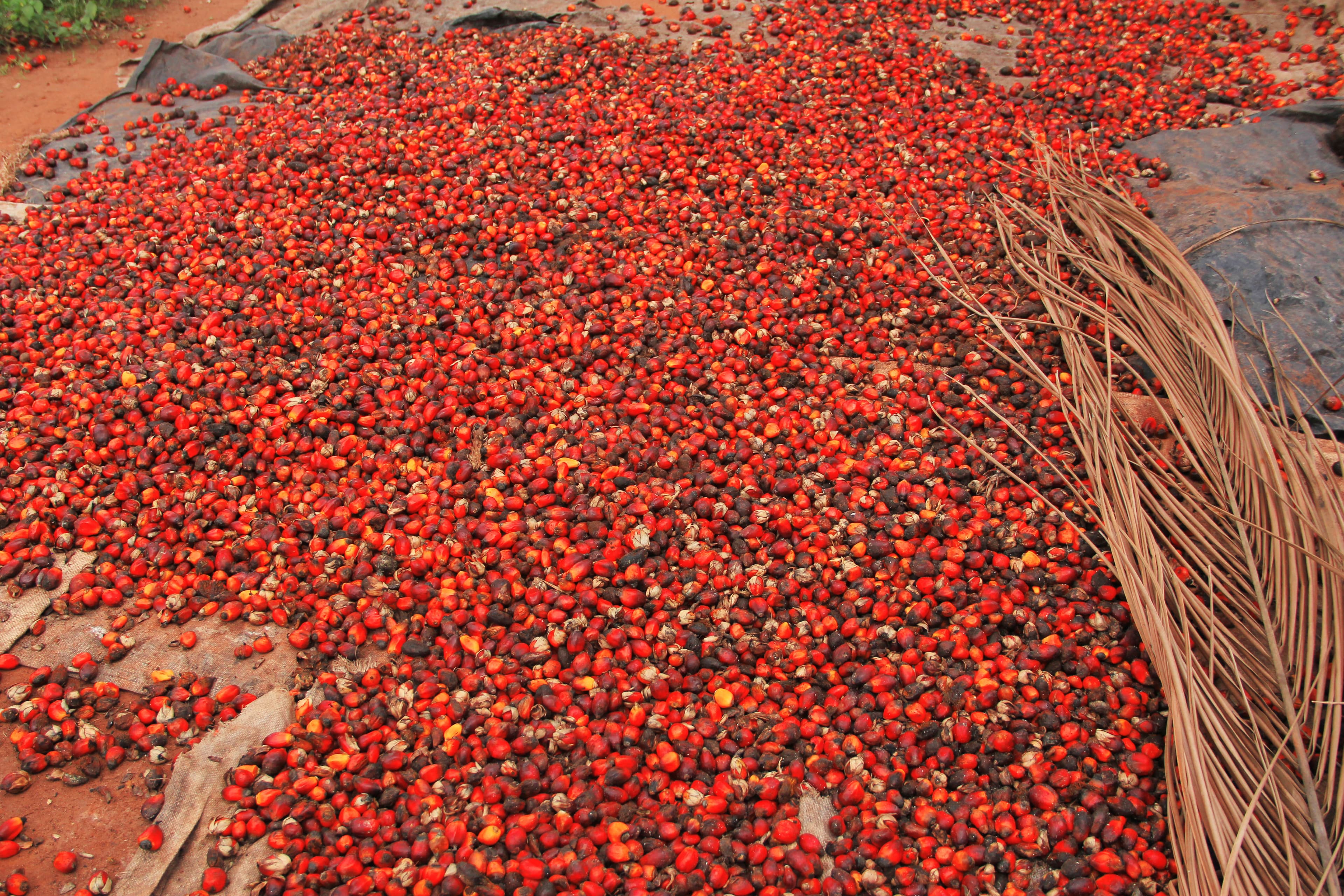
4. Follow the Oil Palm Route and Discover a Plant Deeply Connected to the History of Southern Benin
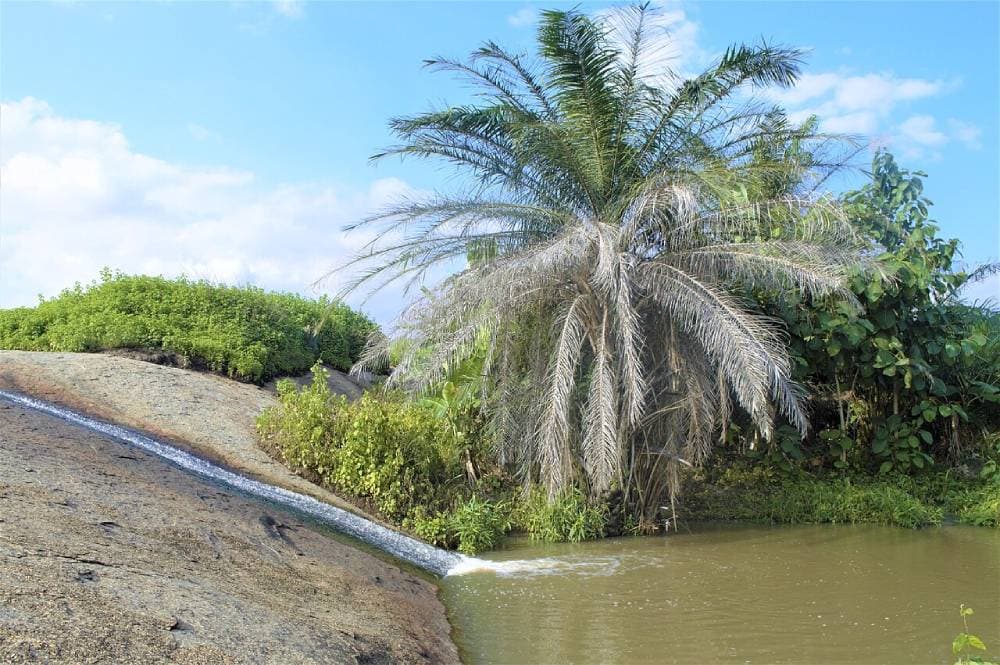
In some parts of southern Benin, oil palms are so common that visitors may look at them without realizing how much they have to tell.
An immersion centered on this plant connects palm groves with culinary uses, processing techniques, and the long economic history of southern Benin-not through abstract explanations, but through materials, practices, and people.
Observing the fruit bunches, understanding harvesting, following accessible processing stages, and talking with those who know the value chain through hands-on experience give the landscape an entirely new depth.
The visit may begin among the palm trees, in an environment where sunlight filters through the large fronds and the fruit bunches immediately remind visitors that they are in a productive landscape, not a frozen backdrop.
The farmer may explain how the plant develops, how it is harvested, its different uses, and, when conditions allow, some stages of processing. The sounds of the tools, the heat generated by certain operations, and the intense colors of the resulting products make the experience far more tangible than a purely theoretical explanation.
Another valuable aspect of this experience is the opportunity to compare inherited practices with contemporary developments.
Beninese agriculture is not frozen in time. Farmers continuously adapt their methods to economic realities, available equipment, market requirements, and changes in their environment.
Discussing these changes with them helps avoid a folkloric view of rural life and highlights the fact that a farm is also a business facing decisions, investments, risks, and opportunities.
5. Meet Women Shea Processors and Discover the Expertise Behind Shea Butter
As you travel north through Benin, the landscapes gradually change, along with agricultural production and the knowledge associated with it.
Among the experiences that reveal this diversity, encountering the world of shea is particularly powerful because it uncovers the human story behind a product now known throughout much of the world.
Many travelers use shea butter in cosmetic products without ever having seen the fruit, observed the nuts, or imagined the many stages required to produce the butter they know.
Meeting women involved in shea processing makes it possible to follow the entire chain and gradually understand how a product from a tree becomes an economic resource.
Depending on the season and the activities taking place, the women may explain harvesting, nut preparation, and the main stages of processing, revealing how the quality of shea butter depends on a succession of techniques perfected through experience.
But the value of the encounter goes far beyond a technical demonstration. Conversations can explore how women organize themselves, the markets they access, how knowledge is passed on, the income generated by the activity, and the challenges they face in developing production.
Shea thus becomes a gateway into an economy, professional journeys, and expertise that give the product a human dimension often invisible when it reaches consumers already packaged.
Buying a product directly after such an encounter no longer has quite the same meaning. It is no longer simply about purchasing a souvenir; you leave with a product whose origin you know and, above all, with the memory of the person who helped make it.
6. Share the Daily Life of a Farming Family and Discover Benin Through Hospitality
A few hours of exploration can teach visitors a great deal, but sometimes leaves them at the threshold of family life.
When a stay with a farming family is organized respectfully, with their consent and appropriate compensation, spending more time together makes it possible to experience more of the household rhythms, conversations, and forms of hospitality that shape everyday life.
Here, the main purpose is not to learn an agricultural profession, but to discover how a family organizes its day, meals, neighborhood relationships, responsibilities, and plans.
Preparing a dish, walking through the surrounding area, or having a conversation in the shade can open discussions about family, school, harvests, young people’s aspirations, eating habits, or changes taking place in the village.
As time passes, interactions become less formal, and hospitality itself becomes a way of understanding the territory.
When hosting conditions allow an overnight stay, the perception of the place changes even further, as visitors gain access to moments that conventional excursions usually leave unseen: the slowing pace of the evening, dinner preparation, conversations that continue into the night, followed by the household waking and the first activities of the morning.
This shared time gives the stay a particular depth. It becomes possible to listen to a story until its end, continue a conversation without constantly checking the time, and better understand the daily rhythm of the host family.
This immersion must nevertheless maintain a clear boundary between tourism and private life.
A family welcoming travelers does not become a permanent spectacle, and respect for their spaces, schedules, beliefs, and right to refuse a photograph must remain at the heart of the experience.
7. Follow a Farmer’s Working Day and Understand the Profession Behind the Landscape
This seventh experience deliberately shifts the focus: rather than entering family life, the aim is to understand farming as a professional activity, with its technical choices, costs, constraints, risks, and prospects.
Spending several hours alongside a farmer obviously does not turn visitors into farmers. It does, however, allow them to observe with humility how the decisions shaping a farm are made and, when appropriate, participate in a few accessible tasks without disrupting the work.
The day may begin early, while temperatures are still pleasant and the first tasks are being organized.
The farmer introduces the crops, tools, layout of the plot, and the work required at that particular time of year. They may also explain why certain operations are priorities, what they cost, and what results they expect from them.
Depending on the context, visitors may be invited to try a simple task, assist with harvesting, observe crop maintenance, discover a composting system, or participate in an activity chosen by the host.
As the hours pass, conversations take on a more economic and strategic dimension: the arrival of the rains, selling prices, input costs, labor availability, crop choices, potential losses, market access, and the ability to invest.
The landscape then ceases to be merely agricultural; it becomes the result of constant trade-offs. Behind every plot is a person making decisions, investing, taking risks, and trying to build the future of their farm in a constantly changing climatic and economic environment.
Agritourism in Benin Must Never Become a Spectacle of Poverty
The search for authenticity comes with a trap that must absolutely be avoided: believing that an experience is somehow more “African” because it portrays a community as poor, rudimentary, or frozen in the past.
Such a view does justice neither to rural communities nor to the reality of contemporary Benin.
A farming family is not authentic because its home happens to match the visual expectations of a foreign tourist.
A farmer is no less authentic because they own a motorcycle, use WhatsApp to communicate with customers, adopt modern techniques, or aspire to improve their standard of living.
A women’s cooperative does not lose its local identity because it seeks to sell its products internationally.
Responsible agritourism should therefore be judged less by its setting than by the quality of the relationship: consent, clear compensation for services provided, respect for private spaces, and a refusal to turn traditions into artificial performances.
Travelers do not need a manufactured version of “typical” rural life. They need a fair and respectful framework in which to encounter the territory as it truly exists.
How Can Agritourism Create Income and Jobs in Rural Areas?
The value of agritourism extends far beyond tourism itself, because a properly structured experience can distribute travelers’ spending among several stakeholders within the same area.
A farmer can be paid for hosting visitors or leading a workshop, a family can prepare a meal, a local guide can provide cultural interpretation, an artisan can showcase their work, a driver can provide transportation, and a cooperative can sell its products directly.
This diversification can be particularly promising for rural youth, whose aspirations are not necessarily limited to becoming farmers in the traditional sense.
Agriculture can support the development of activities related to guiding, processing, catering, accommodation, communication, photography, marketing, or cultural activities, creating bridges between production, services, and tourism.
This perspective is consistent with current approaches to developing agricultural value chains in Benin, which explicitly emphasize local processing as well as job creation for young people and women.
Agriculture can therefore become the starting point for a small ecosystem of complementary services and professions.
The essential condition, however, is that the farmers, families, guides, artisans, and cooperatives involved receive a genuine share of the value created by the visit.
From Farm to Table: Why Gastronomy Should Be Part of the Experience
Discovering Beninese agriculture without exploring its cuisine would be like stopping the story just before its conclusion.
Agricultural products take on much of their meaning when they enter the kitchen and encounter the techniques, recipes, family traditions, and flavors of the region.
A well-designed agritourism immersion can therefore naturally include a meal, tasting, or cooking workshop whenever conditions allow.
Cuisine is no longer an activity simply added to the itinerary. Instead, it becomes a continuation of what has just been observed in the fields: ingredients have an origin, techniques have a history, and recipes tell the story of a particular way of living within a territory.
Around the table, conversations often become more spontaneous. People compare eating habits, ask about the name or use of an ingredient, and enter the culture through one of its most everyday practices.
How Can You Create a Truly Successful Agritourism Immersion?
A successful agritourism immersion is not measured by the number of activities listed on an itinerary.
Above all, it depends on the coherence between the place, season, time of day, and the amount of time genuinely available for interaction.
For a first experience, half a day may be enough when it combines a farm visit, an in-depth conversation, and a tasting. A full day is more appropriate when travelers want to follow several stages of production, try an accessible task, have lunch on site, and preserve enough time for genuine interaction.
An overnight stay becomes particularly meaningful when the hosts have voluntarily chosen to welcome visitors, the experience has been carefully prepared, and the accommodation is comfortable enough to remain enjoyable for both visitors and hosts.
The time of day should also be carefully considered.
In many situations, starting early makes it possible to observe the real beginning of the day’s activities while avoiding the hottest hours. Late afternoon, on the other hand, may offer a calmer pace and more time for conversation.
However, there should be no rigid rule, because the schedule must first and foremost follow the farm’s actual work.
Far from being a constraint, this flexibility is precisely what distinguishes an authentic immersion from a standardized tourist activity.
Finally, the type of immersion should match the profile of the participants.
Families with children will often appreciate accessible, visual, and participatory formats with sufficient rest periods, while food lovers may prefer experiences that connect production, processing, and meals.
Photographers should understand from the outset that certain people or moments are not meant to be photographed.
Travelers from the diaspora, as well as those wishing to deepen their understanding of the country, may prefer formats that leave more room for conversations about family memory, transformations in rural life, and individual journeys.
The best program, therefore, is not the one that promises the greatest number of activities, but the one that thoughtfully organizes what can genuinely be shared.
When Is the Best Time to Enjoy an Agritourism Experience in Benin?
The best period depends above all on what travelers want to discover, because agriculture follows a calendar that tourism cannot dictate.
A harvest should never be staged out of season simply to satisfy a commercial itinerary, and any advertised activity should correspond as closely as possible to what is actually happening on the farm at the time of the visit.
This seasonality is, in fact, one of agritourism’s greatest strengths.
Two people traveling through the same region a few months apart will not necessarily have the same experience. One may witness a preparation stage, while the other may discover harvesting or a processing phase.
In both cases, the experience becomes more meaningful because it follows the farm’s real calendar.
Before departure, it is therefore best to check what will genuinely be accessible on your planned travel dates and build the itinerary accordingly.
What Should You Bring for a Day of Immersion?
To make the most of a day in a rural setting, bring a few simple essentials:
- Closed-toe or sufficiently sturdy shoes;
- Lightweight clothing suited to the setting;
- Sun protection and water;
- Insect repellent when conditions require it;
- A small, easy-to-carry bag;
- A change of clothes if the activity involves soil, water, harvesting, or processing.
These simple precautions prevent discomfort from distracting you from what truly matters: observing, interacting, and fully enjoying the time spent with your hosts.
It is equally important to arrive with realistic expectations.
A farm remains a place of production, subject to weather conditions, economic requirements, and sometimes unexpected events. An activity may therefore be rescheduled, adapted, or replaced if the conditions on the day do not allow it to be carried out properly.
This flexibility is part of the experience: it is a reminder that travelers are entering a living environment whose operations cannot be entirely subordinated to a tourist itinerary.
How Should You Behave During an Immersion in a Rural Community?
Responsible travel begins even before you take out your camera.
On a farm or within a community, visitors are entering a space that is simultaneously a workplace and, in some cases, a home.
Asking permission before taking photographs or filming, respecting private areas, following the hosts’ instructions, and understanding that paying for an experience never gives unlimited rights over people or places are therefore essential forms of courtesy.
What matters most is the attitude you bring: listen before trying to explain, ask rather than assume, accept when someone does not want to be photographed, and come not to find at all costs the images you already associate with rural Africa, but to encounter a reality capable of adding nuance to them—or even challenging them.
Verified Facts: Benin’s Agricultural Reality Behind the Experience
The immersive experiences presented in this article are grounded in documented agricultural realities: Tori-Bossito is one of the areas in the Atlantique Department strongly associated with pineapple production; local processing of cassava into gari and other derivatives has benefited from public investment; and the shea value chain notably relies on women’s groups in Atacora and Donga.
These reference points do not replace direct encounters with producers, but they help anchor the journey in the realities of Benin’s agricultural sector.
With Kiblistours, the Experience Begins with Human Connection
At Kiblistours, our vision of travel is based on a simple idea: discovering West Africa should not consist solely of traveling through places, but also of listening to and understanding the people who bring them to life.
This approach leads us to prioritize experiences where heritage, gastronomy, agriculture, communities, and local expertise can come together in a respectful environment.
To explore this approach further, read our article Explore Authentic Benin: Culture, Vodoun, Nature and Encounters.
Creating a genuine agritourism immersion, however, means prioritizing relevance and authenticity over rigidity.
Activities are adapted to producers’ availability, community realities, and local conditions at the time of the visit so that each encounter retains its meaning and spontaneity.
Our ambition is to build bridges between travelers and local stakeholders while seeking a balance between the quality of the experience, respect for communities, and local economic benefits.
Visitors should return home with beautiful memories, while the people who welcomed them should also gain tangible benefits from the encounter.
It is within this philosophy that our signature, “Experience Authentic Africa,” takes on its full meaning.
Ready to Discover Benin Differently? Request Your Personalized Immersion Itinerary
If you want agritourism to be a genuine part of your stay rather than simply another visit added to your itinerary, the Kiblistours team can design your immersion around your travel dates, preferred pace, interests, and the agricultural activities that are actually available during your stay.
Depending on the circumstances, your experience may take the form of a half-day discovery, a full day with producers, a processing workshop, a farm-to-table meal, a rural stop integrated into a cultural tour, or, when suitable accommodation is available, a longer stay.
The goal is not to accumulate activities, but to create a coherent itinerary in which each experience reveals a new dimension of the territory.
To get started, simply provide the Kiblistours team with your travel dates or preferred travel period, the number of travelers, and the number of days available.
You can also specify the destinations that interest you, your interests, your preferred level of comfort-Standard, Premium, or VIP-as well as any particular expectations for your stay.
Based on this information, the team can check hosting possibilities, adapt the pace of the itinerary, and propose an experience that is realistic, respectful of your hosts, and compatible with the agricultural season.
Plan your immersion and request your personalized itinerary: www.kiblistours.com
Chat directly with the Kiblistours team on WhatsApp: +229 01 90 72 17 61
Each immersion is confirmed after checking the season, host availability, and the activities genuinely accessible during your travel dates.
This preparation makes it possible to offer a realistic program that respects local life and remains enjoyable for travelers, without promising experiences that cannot actually be provided on the ground at the time of the visit.
Kiblistours - Experience Authentic Africa.
FAQ - Everything You Need to Know Before Enjoying an Agritourism Experience in Benin
What Is Agritourism in Benin?
Agritourism is a form of travel that provides direct access to agriculture and rural areas through producers, families, or local organizations that choose to welcome visitors.
It can take the form of a farm visit, demonstration, participatory workshop, tasting, meal, discovery of food-processing techniques, or, when suitable conditions are in place, a longer immersive experience.
What Agritourism Experiences Can You Enjoy in Benin?
The possibilities vary depending on the region and season: pineapple, cassava and gari processing, market gardening, oil palm, shea, and other local agricultural products.
The best approach is therefore not to select an activity from a fixed list, but to start with your travel dates and interests to identify what producers can genuinely share during your stay.
Can Visitors Participate in Farm Work?
Yes, when the activities taking place that day are suitable.
Some farms may invite visitors to try a simple task-helping with a harvest, discovering a preparation stage, or participating in an accessible activity-under the host’s supervision.
The purpose is not to “play farmer,” but to gain a better understanding of the work involved without disrupting the farm’s routine or compromising participants’ safety.
Can You Stay Overnight With a Farming Family in Benin?
This may be possible when families or rural establishments have voluntarily chosen to welcome travelers and appropriate arrangements have been put in place.
The level of comfort may differ from that of a conventional hotel, but the main value of the experience lies in the quality of the encounter and the opportunity to discover the daily rhythm of the host environment.
Is Agritourism Suitable for Children?
Many experiences can be suitable for families, particularly visits to cultivated areas, tastings, encounters with producers, and certain adapted workshops.
However, the program should take into account the children’s ages, the heat, walking distances, and any potential risks associated with the agricultural environment.
Do You Need to Be in Excellent Physical Condition?
No, because not every experience requires significant physical effort.
Some visits are accessible to people with an ordinary level of fitness, while others may involve more walking or prolonged exposure to heat.
It is therefore advisable to mention any mobility difficulties in advance so that the program can be adapted accordingly.
Can You Freely Photograph Local Residents and Producers?
No. The fact that a visit has been organized never means that every person, space, or moment can be photographed.
The best practice is to ask permission before taking any photograph involving an identifiable person and to accept a refusal without insisting.
This consideration protects the hosts’ privacy and also helps create a more respectful relationship in which human interaction comes before the search for images.
How Can You Find Out Which Experience Is Available During Your Trip?
The most reliable approach is to start with your travel dates rather than a list of activities assumed to be available throughout the year.
The agricultural season, weather, ongoing farm work, and producers’ availability can all affect what can genuinely be observed or experienced.
Planning ahead therefore makes it possible to identify the most relevant experience for the time of your stay and, when necessary, arrange a suitable alternative rather than staging an out-of-season activity.
Can You Buy Products Directly From Producers?
When producers, cooperatives, or women processors offer their products for sale, buying directly from them is an excellent way to extend the experience while supporting local economic activity.
Travelers also leave with a product whose origin they know and with an understanding of the people involved in making it.
Does Agritourism Really Contribute to the Local Economy?
Yes, provided that the value created is genuinely shared.
A well-organized experience can directly or indirectly provide income to several local stakeholders: producers, guides, host families, restaurant operators, drivers, artisans, and processors.
The impact therefore depends not only on the number of visitors, but also on how services are designed, purchased, and paid for locally.
Can Agritourism, Culture, and Heritage Be Combined During the Same Trip?
Yes, and this combination often provides a deeper understanding of Benin.
Agricultural activities can be integrated into an itinerary that also includes historical, cultural, culinary, artisanal, or community-based experiences, creating a more balanced journey and avoiding the reduction of the country to a single dimension.
Why Choose an Organized Experience Rather Than Visit a Rural Community on Your Own?
A community or village is first and foremost a place where people live, not a tourist attraction that anyone can enter without mediation.
An experience prepared with local stakeholders makes it possible to identify the people who genuinely wish to welcome visitors, agree on the activities that can be shared, and clearly establish the boundaries that must be respected.
It also makes it possible to organize fair compensation for the services provided and ensure that hosting visitors creates tangible benefits for the people involved.
Institutional Sources
These institutional references document the main factual points used throughout the article.
Government of Benin — Tori-Bossito, Agro-Cultural Potential and Pineapple Plantations
PACOFIDE — Productivity and Market Access for Agri-Food Value Chains, Including Pineapple
Government of Benin — Local Processing of Cassava into Flour, Tapioca and Gari
Government of Benin — Cassava Processing Cooperatives and the Glazoué Gari Processing Facility
Government of Benin — Women Shea Processors in Atacora and Donga
Government of Benin — Root and Tuber Value Chains, Processing and Rural Employment