Some destinations instantly captivate visitors with their landscapes. Others impress with their monuments or modernity. Abomey, however, touches travelers in a different way. Here, every street, every palace, and every story tells the tale of several centuries of an extraordinary human adventure.
Once the capital of the powerful Kingdom of Dahomey, Abomey is far more than just another tourist stop in Benin. Behind the red-earth walls of the Royal Palaces, listed as a UNESCO World Heritage Site, lies the legacy of a civilization that profoundly shaped the history of West Africa. For nearly three centuries, visionary rulers, legendary female warriors, and talented artisans helped forge the identity of this unique royal city.
But Abomey’s true richness is not confined to its past. It can also be experienced in the vibrant atmosphere of its markets, in the songs accompanying traditional ceremonies, in workshops where artisans preserve ancestral skills, and in the stories of residents who continue to pass on the memory of the Kingdom of Dahomey to new generations.
Visiting Abomey means walking through the corridors of centuries-old palaces, listening to the fascinating story of the Dahomey Amazons, admiring symbolic bas-reliefs, and sharing simple yet meaningful moments with women and men who remain deeply connected to their heritage.
It also means understanding that travel is not simply about the places we visit, but about the emotions we feel and the people we meet along the way.
In this comprehensive guide, discover the Royal Palaces of Abomey, the great kings of Dahomey, traditions that remain alive today, must-have experiences, and practical advice for planning an unforgettable stay in the heart of one of Africa’s most fascinating cultural destinations.
Get ready to discover a city that is not simply visited: Abomey is experienced, told through stories, and remains deeply engraved in the memories of those fortunate enough to discover it.
Table of Contents
Introduction
1. Abomey at a Glance
Three centuries of royal history
Thirteen major rulers
UNESCO World Heritage status
Essential practical information
2. Why Abomey Fascinates Travelers
A city unlike other destinations
A living heritage
A deeply human experience
The Origins of the Kingdom of Dahomey
1. The Birth of a Great Kingdom
The founding migrations
Houégbadja, father of the kingdom
The rise of a regional power
2. The Rulers Who Shaped Abomey
Chronology of the kings
The great builders
Guézo and the Golden Age
Béhanzin and the resistance
The Royal Palaces: UNESCO Treasures
1. The Royal Palaces of Abomey
Unique architecture
Political and spiritual functions
The bas-reliefs and their symbolism
Why UNESCO listed Abomey
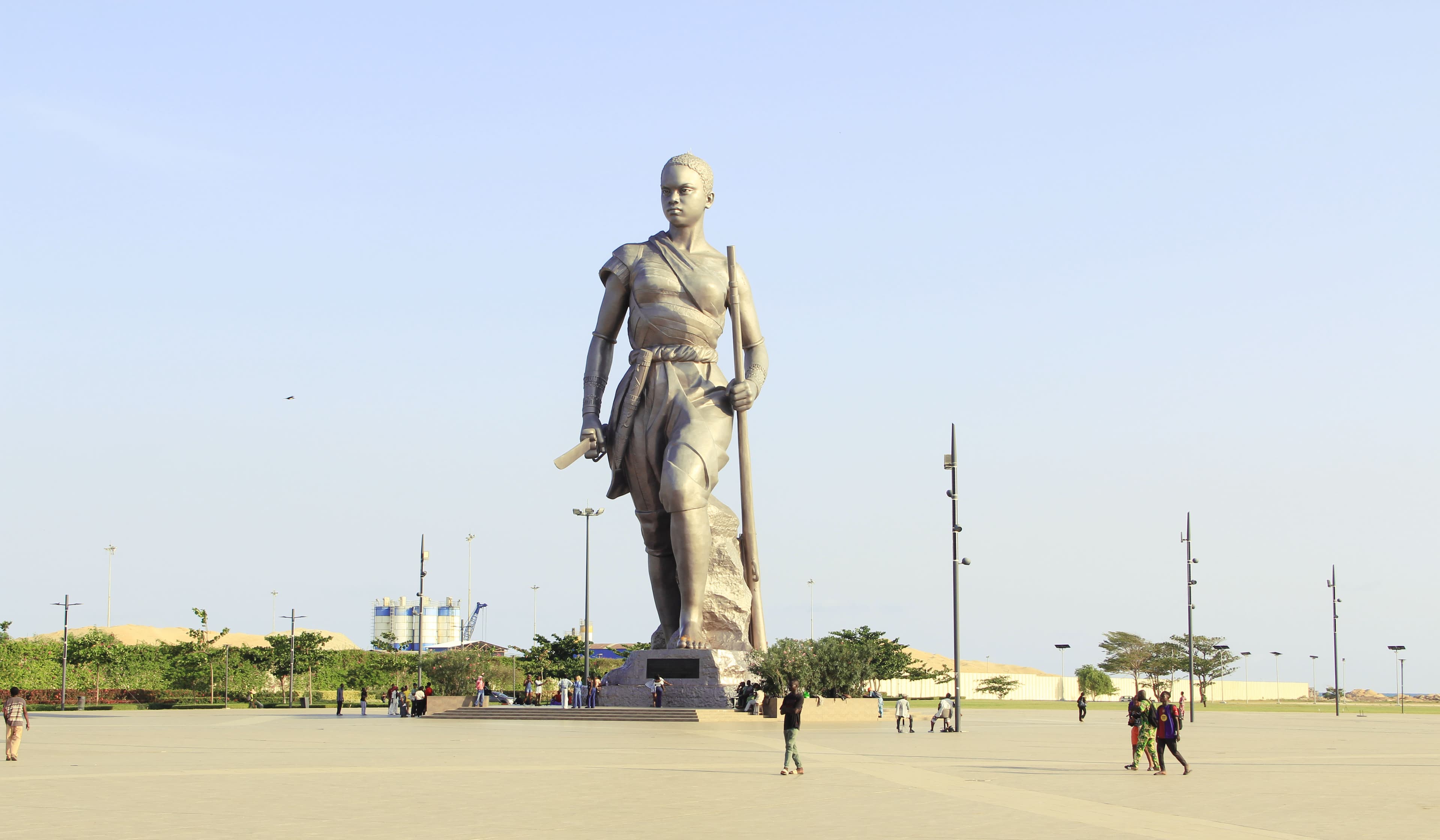
The Dahomey Amazons
1. The Legendary Female Warriors
Who were the Mino?
Their training
Their military role
Their legacy today
Abomey, a City That Is Still Alive
1. Between Tradition and Modernity
Artisans and traditional craftsmanship
Cultural transmission
A younger generation looking toward the future
Preserved authenticity
Must-Have Experiences
1. What to Do in Abomey
Explore the Royal Palaces
Meet local artisans
Discover the markets
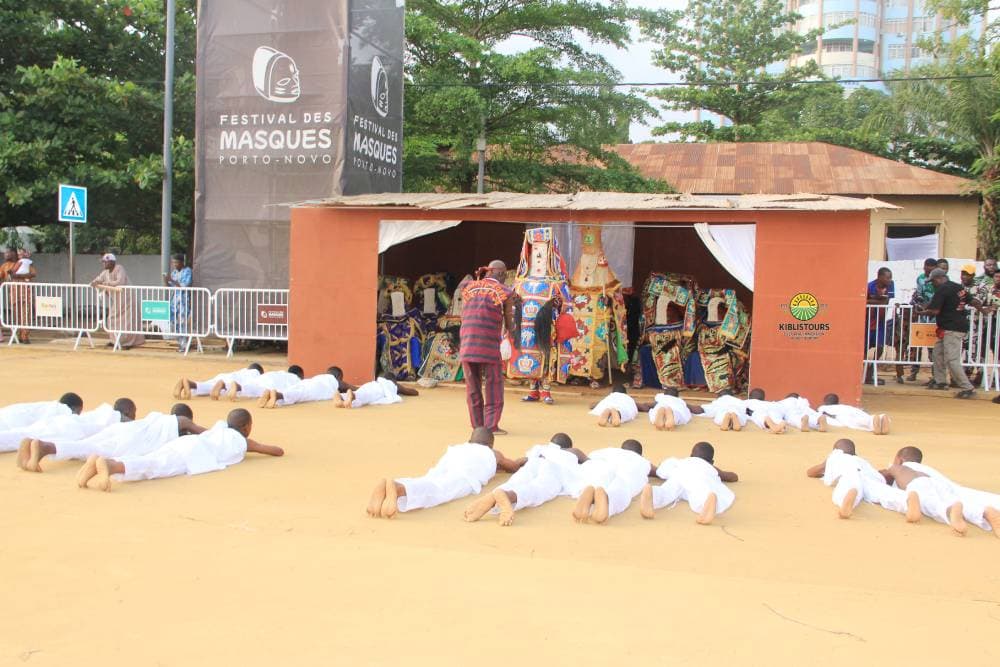
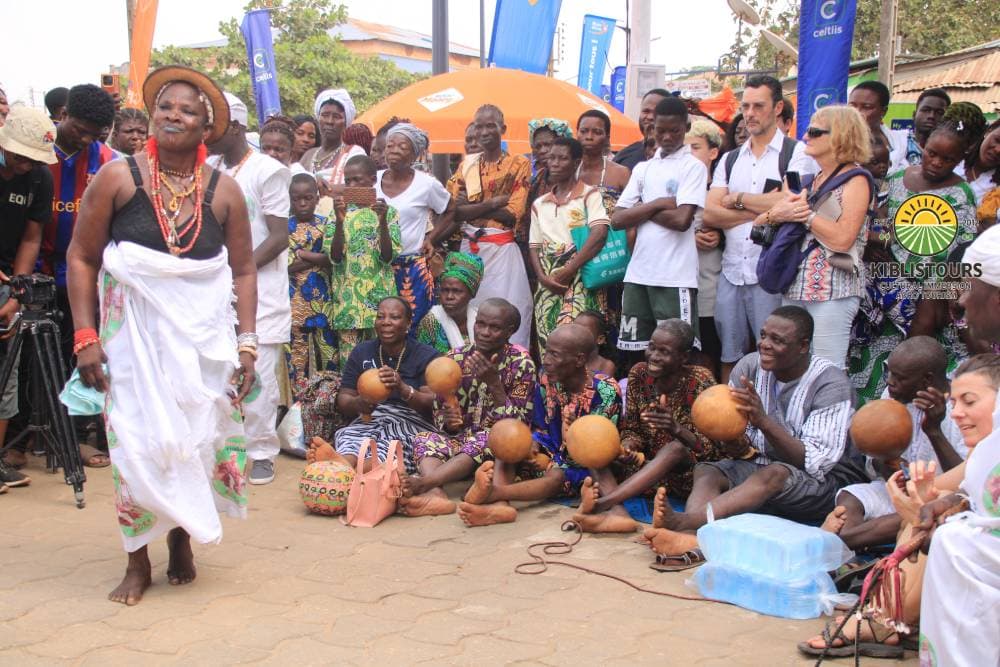
Attend traditional ceremonies
Taste local specialties
Admire the sunset
Planning Your Trip
1. Practical Information
Best time to visit
How to get to Abomey
How long to stay
Where to stay
Practical tips
2. Suggested Two-Day Itinerary
Day 1: Royal immersion
Day 2: Living traditions
3. Places to Discover Around Abomey
Bohicon
Artisan villages
The landscapes of Zou
The Kiblistours Experience
1. Why Discover Abomey with Kiblistours?
Cultural immersion
Authentic encounters
Personalized tours
3. Souvenirs to Bring Home
Royal sculptures
Traditional fabrics
Local handicrafts
4. Traveler Testimonials
Conclusion
Frequently Asked Questions (FAQ)
Abomey at a Glance
3 centuries of royal history
13 major rulers
UNESCO World Heritage inscription: 1985
130 km from Cotonou
2 to 3 hours of travel time
Best period: November to March
Main languages: French and Fon
Recommended stay: 2 to 3 days
Living cultural heritage and traditions that remain deeply rooted today
There Are Cities That Change the Way We See the World
Some destinations captivate visitors with their fine sandy beaches. Others impress with their skyscrapers, mountains, or spectacular monuments. And then there are places that leave their mark in a different way, without trying too hard to impress.
Abomey is one of those cities.
From the moment you arrive, something catches your attention. The red earth lining the roads, motorcycles weaving through the neighborhoods, women selling goods from their stalls, and the silhouettes of ancient palaces gradually coming into view immediately remind you that this city has a remarkable history.
Here, the past is not confined to books or locked behind museum display cases. It continues to live through conversations, traditional songs, artisans’ workshops, and stories passed down by elders to younger generations.
When you step through the gates of the Royal Palaces, a strange feeling takes hold. The silence itself seems to tell a story. Vast sunlit courtyards, earthen walls, and centuries-old trees create the impression that time has slowed down.
For nearly three centuries, Abomey was the political, military, and spiritual heart of the Kingdom of Dahomey, one of the most powerful states in West Africa. It was here that rulers made their decisions, royal ceremonies brought people together, and the identity of a nation gradually took shape—an identity whose legacy continues to influence Benin today.
But what strikes visitors most is not simply the grandeur of the palaces.
It is the atmosphere.
Around the corner of a courtyard, a guide tells the story of a king. Farther away, an artisan repeats gestures learned from his father. Beneath a tree, residents talk while children play just a few meters from the royal remains.
Abomey does not feel like a city frozen in its past. Instead, it feels like an ongoing dialogue between centuries.
Noah Benza, a Congolese traveler, described his experience after his visit:
“I thought I was going to discover a simple historical site. In the end, I felt as though I had stepped into a story that was still alive. The palaces are impressive, but what stayed with me most were the people and their stories.”
It is precisely this encounter between history and everyday life that explains why the Royal Palaces of Abomey were inscribed on the UNESCO World Heritage List in 1985.
Yet those who discover the city rarely leave feeling that they have simply visited a monument.
They leave with memories.
The sound of drums in the distance.
The scent of carved wood in the workshops.
The stories told by guides.
Spontaneous conversations in the markets.
And above all, the feeling of having come closer to the very soul of the Kingdom of Dahomey.
Why Visit Abomey?
Benin offers an incredible diversity of landscapes and cultures.
Ganvié surprises visitors with its houses built over the water. Ouidah moves travelers with its history linked to the transatlantic slave trade. Porto-Novo charms with its Afro-Brazilian architecture and peaceful atmosphere.
But when it comes to understanding the historical roots of the country, one destination naturally stands out: Abomey.
For nearly three hundred years, this city was the center of the Kingdom of Dahomey. Twelve rulers succeeded one another here, leaving behind palaces, symbols, and traditions that continue to shape Beninese identity today.
Yet Abomey is about far more than its monuments.
The city’s true richness can be found in its streets.
As you walk through a neighborhood, you may hear an elder telling grandchildren stories about the kings. In a workshop, a blacksmith shapes metal using techniques practiced by ancestors generations ago. At the market, the aromas of spices mingle with lively voices, creating a warm and authentic atmosphere.
One evening, as the sun began to disappear behind the palaces, an artisan explained to a traveler how his grandfather had taught him to carve royal symbols. Their conversation lasted nearly an hour. At the end, the visitor said:
“I thought I had come to discover a heritage site. In the end, I discovered women and men who continue to keep that heritage alive every day.”
It is this profoundly human dimension that makes Abomey different.
Here, heritage is not limited to stones or objects displayed in a museum. It lives through traditions, community celebrations, songs, markets, and collective memory.
Visiting Abomey is therefore much more than a simple cultural excursion.
It means taking the time to listen, understand, and connect with people.
It means discovering how a civilization shaped the history of a country.
And above all, it means experiencing something that stays with you long after you return home.
Want to Discover Abomey Differently?
With Kiblistours, set out to discover the Royal Palaces, local artisans, guardians of tradition, and the people who continue to keep the history of the Kingdom of Dahomey alive.
Because Abomey is not simply a place you visit: it is a place you feel, understand, and experience.
Abomey, the Beating Heart of the History of the Kingdom of Dahomey
Long before becoming one of Benin’s leading cultural destinations, Abomey was already the political, military, spiritual, and artistic center of a kingdom that profoundly shaped the history of West Africa.
For nearly three centuries, this city was far more than the residence of its rulers. It was the true heart of Dahomey. Here, kings governed, administered justice, received foreign ambassadors, and made decisions that influenced territories extending far beyond the borders of present-day Benin.
Each day began to the rhythm of royal drums. At dawn, the palace courtyards gradually came alive. Messengers crossed the grounds carrying the ruler’s orders. Artisans worked with wood, metal, and earth. Dignitaries gathered to discuss the affairs of the kingdom while priests prepared religious ceremonies.
At the time, Abomey was a city in constant motion.
In workshops, sculptors carved royal symbols designed to tell the kingdom’s story to future generations. In the markets, merchants traded products brought from distant regions. Around the palaces, residents lived according to the rhythm of decisions made by the royal court.
But Abomey’s power did not rest solely on its political organization.
The city was also a major cultural center.
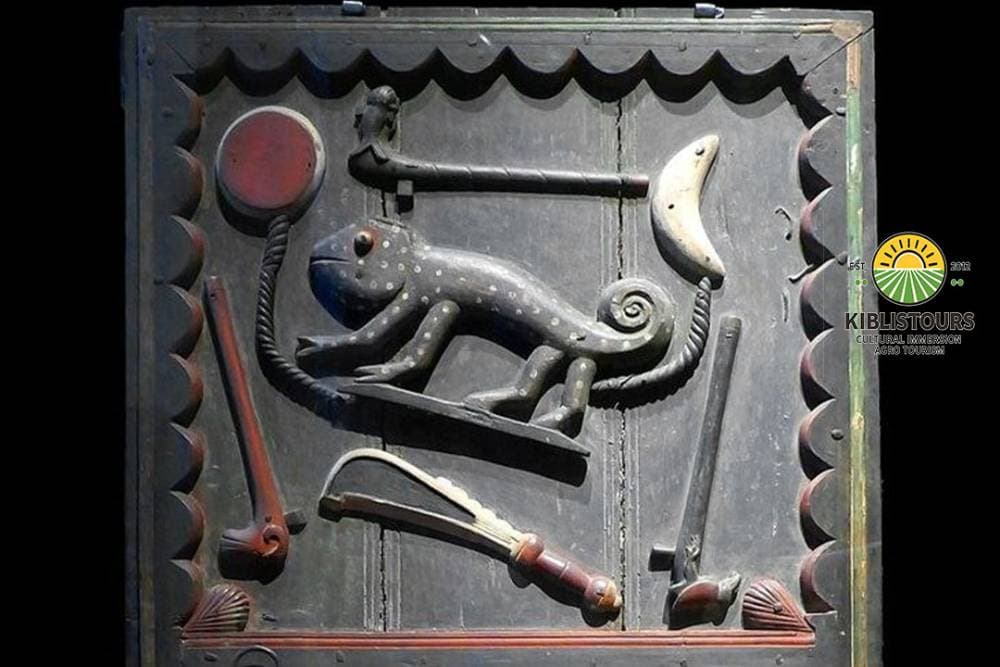
Artists, blacksmiths, storytellers, and musicians played an essential role in transmitting collective memory. The famous bas-reliefs that still adorn the palaces today depicted military victories, political alliances, religious beliefs, and major events in the kingdom’s history.
For the people of that time, these sculptures were far more than decorations.
They were genuine history books.
A Capital Where Every Place Had a Purpose
In Abomey, nothing was left to chance.
Large public squares hosted official ceremonies. Royal courtyards were used for public audiences. Certain areas were reserved for royal families, while others were dedicated to priests, artisans, or warriors.
The palace represented far more than a residence.
It was the center of power, the place where the future of the kingdom and its major political directions were decided.
Even today, visitors can observe this remarkable organization as they explore the ancient palaces.
Looking up at the red-earth walls, it is easy to imagine rulers surrounded by their advisers, ceremonies bringing together hundreds of people, and discussions that helped shape the history of Dahomey.
A History That Continues to Live
What distinguishes Abomey from many other historical sites is that its heritage has never completely faded away.
In some neighborhoods, families still tell stories about the achievements of former kings. Artisans continue to practice techniques passed down through several generations. Traditional ceremonies still bring communities together around a shared memory.
One afternoon, in a workshop not far from the Royal Palaces, an elderly sculptor was showing his grandson how to reproduce the kingdom’s symbols on a piece of wood.
Without interrupting his work, he explained:
“My father taught me. His father had taught him before that, and one day it will be his turn to pass this knowledge on.”
This simple scene perfectly captures the spirit of Abomey.
Here, history is not confined to museums.
It continues to live through everyday gestures.
The Amazons, the Kings, and the Guardians of Memory
The famous Dahomey Amazons once walked through the same courtyards that visitors explore today.
Rulers made their decisions under the watchful eyes of dignitaries. Priests conducted spiritual ceremonies. Artists immortalized important events through their works.
Several centuries later, that memory remains alive.
Guides recount the achievements of King Guézo. Elders speak of the courage of King Béhanzin. Artisans continue centuries-old traditions.
Every street in Abomey seems to carry traces of a past that refuses to disappear.
An Experience That Changes the Way You See the Past
Luca Moretti, an Italian traveler who discovered Abomey with Kiblistours, described his experience after his stay:
“I thought I was going to visit an ancient African capital. Instead, I discovered a city where history is still part of everyday life. The palaces were magnificent, but it was the stories told by the people that truly changed the way I see the past.”
It is precisely this encounter between history, culture, and everyday life that makes Abomey such an exceptional destination.
Visiting the city is not simply about discovering monuments.
It is about understanding how a civilization built its identity, developed its arts, organized its power, and passed down its heritage through the centuries.
And it is this deeply human experience that so often transforms a simple visit into an unforgettable memory.
The Origins of the Kingdom of Dahomey
To understand the greatness of Abomey, we need to go back several centuries, to a time when the city was still little more than a vast plateau surrounded by forests and fertile land.
Long before the Royal Palaces, grand ceremonies, and military achievements that made Dahomey famous, families belonging to the Adja people gradually left the region of Tado, located in present-day Togo. Over the course of these migrations, some communities settled in central Benin, unaware that they were laying the foundations of what would become one of the most powerful kingdoms in West Africa.
At the time, nothing suggested the extraordinary destiny that awaited Abomey.
The territory consisted of villages, cultivated fields, and communities whose livelihoods depended mainly on agriculture, hunting, and local trade. Yet, over the generations, an ambitious political organization gradually began to emerge.
Houégbadja, the Man Who Transformed Abomey
In the stories passed down by elders, one name appears again and again: Houégbadja.
Considered the true founder of the Kingdom of Dahomey, he did more than simply govern a territory. He envisioned a state capable of enduring through the centuries.
Houégbadja understood early on that a kingdom could not rely solely on military strength. It also needed strong institutions, an organized system of succession, common rules, and a shared identity capable of uniting its people.
During his reign, the first palaces were built and the great royal ceremonies began to take shape.
Little by little, Abomey became much more than just a city.
It became a capital.
A capital where political power, religious beliefs, and popular traditions were deeply intertwined.
The Gradual Rise of a Great Power
Over successive reigns, the Kingdom of Dahomey developed rapidly.
Each ruler brought his own vision and ambitions.
Some strengthened the administration. Others developed trade or consolidated the army. Still others encouraged the arts and traditions.
But they all pursued the same objective: to pass on a kingdom stronger than the one they had inherited.
This ambition explains why each king built his own palace, chose his own emblems, and left behind symbols designed to tell his story to future generations.
Even today, traces of this legacy can be seen on the walls of Abomey.
Each bas-relief tells the story of a victory, an alliance, a belief, or an event that shaped the destiny of the kingdom.
A Civilization That Went Far Beyond Military Power
When people think of Dahomey, many immediately picture its conquests and the famous Amazons.
Yet the greatness of the kingdom was not based solely on military strength.
Dahomey had a structured administration, elaborate political institutions, sophisticated diplomatic practices, and an exceptionally rich cultural life.
Artisans played an essential role in society. Blacksmiths made weapons and tools needed for everyday life. Sculptors told the kingdom’s history through their works. Storytellers passed down ancestral narratives, while priests ensured the continuity of spiritual traditions.
In the markets, products from different regions were already being traded, reflecting Abomey’s economic importance in regional commerce.
The kingdom was far more than a political power.
It was a true civilization.
A Memory Passed Down Through Generations
One morning, in a neighborhood of Abomey, a grandfather sat beneath a mango tree telling his grandchildren the story of Houégbadja.
The children listened quietly as life continued around them: motorcycles passed along the street, shopkeepers opened their stores, and neighbors exchanged a few words.
This ordinary scene perfectly illustrates what makes Abomey unique.
Here, history is not passed down only through schools or books.
It lives within families.
It travels by word of mouth.
It accompanies ceremonies, celebrations, and traditions.
Sarah Williams, an Australian traveler who discovered the city with Kiblistours, said after her visit:
“I thought I was going to discover a few historical monuments. In the end, I realized that each palace represented one part of a much larger story, built generation after generation by extraordinary women and men.”
Visiting Abomey therefore means traveling back to the origins of a kingdom that profoundly shaped the history of Benin.
It means understanding how, from a simple plateau, a civilization emerged, developed, and continues to influence the culture and identity of an entire people today.
The Royal Palaces of Abomey: A UNESCO World Heritage Masterpiece
Few places in Africa create such a powerful feeling of traveling through time as the Royal Palaces of Abomey.
As soon as you pass through their gates, the bustle of the city seems to gradually fade away. The sounds become distant, the pace slows, and a distinctive atmosphere takes over.
Red earth covers the vast courtyards. Earthen walls still bear traces of the past. Centuries-old trees cast their shadows over buildings that have witnessed generations of rulers come and go.
For nearly three centuries, these palaces were the political, military, and spiritual heart of the Kingdom of Dahomey.
It was here that kings governed, administered justice, received foreign ambassadors, and organized the great royal ceremonies.
Even today, every stone seems to tell a story.
Chronology of the Kings of Abomey
Circa 1620–1625: Gangnihessou
A precursor of the Dahomey royal dynasty, Gangnihessou is considered one of the earliest rulers to have laid the foundations of the future kingdom.
Circa 1625–1645: Dakodonou
Dakodonou consolidated royal authority and strengthened the political organization of the territory.
Circa 1645–1685: Houégbadja
Recognized as the true founder of the Kingdom of Abomey, Houégbadja structured its institutions and commissioned the construction of the first Royal Palaces.
1685–1708: Akaba
Akaba continued the kingdom’s territorial expansion and strengthened its regional influence.
1708–1740: Agadja
During his reign, Dahomey conquered Allada and Ouidah, two major commercial centers.
1740–1774: Tegbessou
Tegbessou expanded trade and consolidated the kingdom’s political organization.
1774–1789: Kpengla
Kpengla strengthened Dahomey’s military power.
1789–1797: Agonglo
Agonglo introduced several administrative reforms.
1797–1818: Adandozan
His reign marked a period of transition in the kingdom’s history.
1818–1858: Guézo
Considered one of Dahomey’s greatest rulers, Guézo presided over what is often described as the kingdom’s Golden Age.
1858–1889: Glèlè
Glèlè continued the process of political and cultural consolidation.
1889–1894: Béhanzin
An emblematic figure of African resistance, Béhanzin opposed French colonization.
1894–1900: Agoli-Agbo
The last king of independent Dahomey, Agoli-Agbo’s reign marked the end of a historic era.
https://www.kiblistours.com/blog/les-symboles-des-rois-du-dahomey-
expliques-voyage-au-cur-dabomey-avec-kiblistours
Twelve Kings, Twelve Palaces, More Than Three Centuries of History
Contrary to what many visitors imagine before arriving, the Royal Palaces of Abomey are not a single monumental building constructed all at once. They form an immense architectural complex that developed progressively between the 17th and 19th centuries.
Each ruler of Dahomey had his own palace built next to that of his predecessor. Over the generations, this tradition gave rise to an exceptional complex that, on its own, tells nearly three centuries of history.
As visitors explore the different areas, they discover not only the evolution of royal architecture, but also the development of the kingdom’s ideas, beliefs, and political organization.
Each palace has its own identity.
Some bear witness to periods of military conquest. Others reflect eras marked by the growth of trade or major administrative reforms. The emblems, decorations, and royal courtyards reveal the personality of each ruler.
Few places in the world allow visitors to observe the evolution of a dynasty over such a long period with such remarkable detail.
Architecture Designed for Governing
At first glance, the palaces impress with their simplicity.
Built mainly from earth, they seem to blend perfectly into the surrounding landscape. Yet behind this apparent simplicity lies an extremely sophisticated organization.
Each space had a very specific purpose.
Some courtyards were reserved for official ceremonies. Others hosted royal audiences or meetings of dignitaries. Certain buildings were intended for members of the royal families, while others were used by priests, guards, or artisans working for the court.
The palace was not merely the king’s residence.
It was the nerve center of the kingdom.
It was where political decisions were made, conflicts were settled, and the great ceremonies that shaped life in Dahomey were organized.
Even today, as you walk through the different courtyards, it is easy to imagine rulers surrounded by their advisers, messengers rushing from one building to another, and residents gathering to attend royal ceremonies.
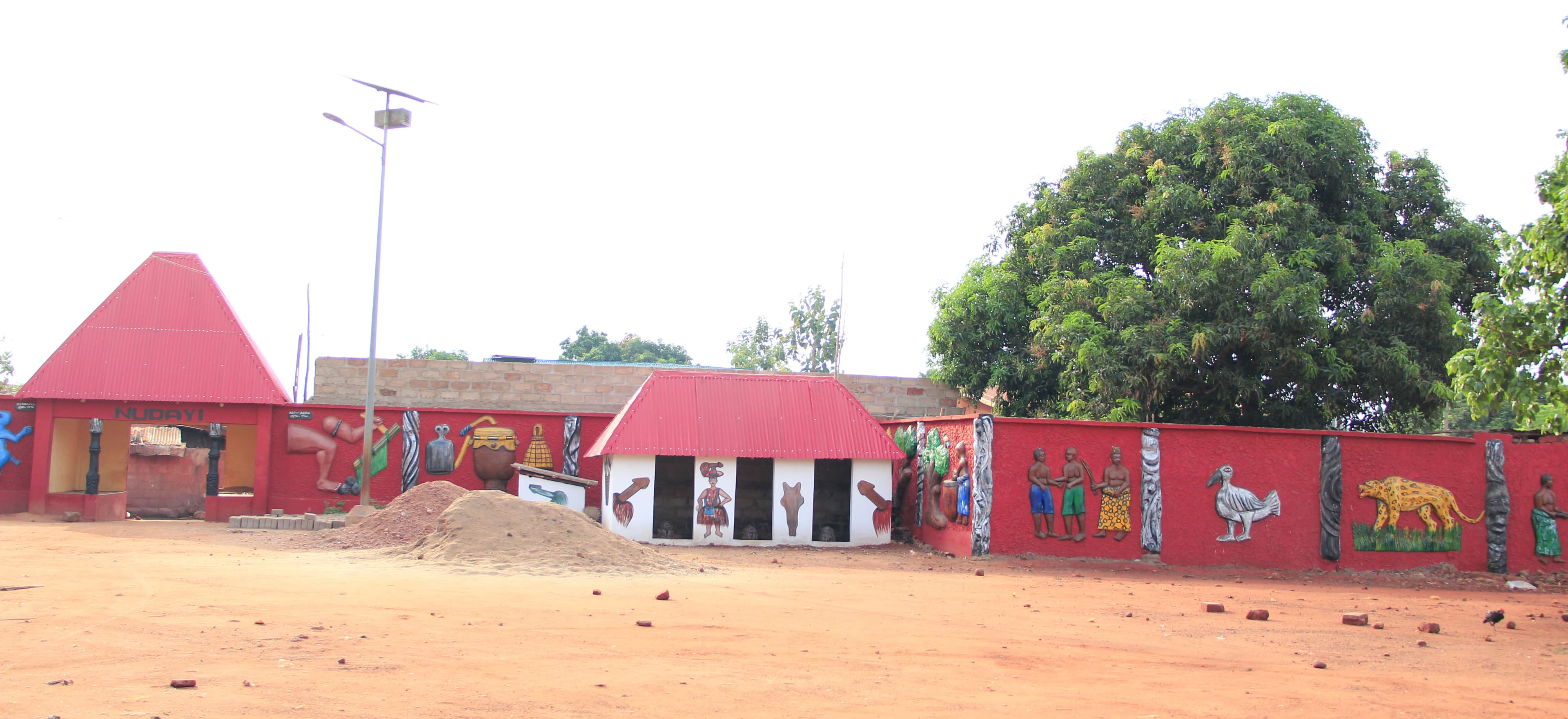
The Bas-Reliefs: History Books Sculpted in Earth
Among the most fascinating treasures of the Royal Palaces are the famous bas-reliefs.
From the very first moments, the eye is drawn to these sculptures depicting animals, warriors, weapons, plants, and scenes from everyday life.
But behind their beauty lies a true language.
At a time when oral tradition played an essential role, the kingdom’s artists developed a unique way of passing history on to future generations.
Each symbol has a particular meaning.
The lion evokes royal power.
The shark symbolizes domination.
A bird may represent wisdom or vigilance.
Some scenes depict victorious battles, while others recall alliances or significant events in the kingdom’s history.
Observing these bas-reliefs is like reading an immense history book carved into the earth.
For historians, they are a valuable source of information. For travelers, they transform a visit into an immersion in the memory of Dahomey.
An Unexpected Encounter in the Heart of the Palaces
A local guide often tells the story of a day when, while accompanying a group of visitors, an elderly woman stopped in front of a bas-relief depicting a shark.
She smiled before explaining to the travelers:
“My grandfather used to bring me here when I was a child. He would tell me the stories of the kings and ask me to remember every symbol so that I could pass them on in turn.”
For a few minutes, the tourists forgot about their cameras and simply listened to her story.
It was no longer just a sightseeing visit.
It was an act of transmission.
In Abomey, moments like these are common.
History often emerges where you least expect it: in the words of an elder, in a family’s memories, or in the passionate explanations of a guide.
Why UNESCO Listed the Royal Palaces of Abomey
In 1985, the Royal Palaces of Abomey were inscribed on the UNESCO World Heritage List.
This recognition honors more than their architecture.
Above all, it highlights their outstanding universal value.
The palaces represent one of the most important testimonies to the political, social, and artistic history of West Africa. They reveal how a civilization built its identity, developed its organization, and transmitted its knowledge over several centuries.
Today, researchers, historians, and travelers from around the world explore these places to gain a deeper understanding of the history of the Kingdom of Dahomey.
But for the people of Abomey, these palaces are far more than a tourist attraction.
They are part of their collective memory.
They recall the achievements of the kings, traditions passed down from generation to generation, and the deep connection that still links the city to its past today.
A Journey Through Time That Leaves a Lasting Impression
David Rodriguez, a Spanish traveler, still remembers his first visit:
“I thought I was going to visit a historical monument. Instead, I felt as though I had entered a world where every wall, every tree, and every symbol told a story. When I left the palaces, I knew I had experienced something far deeper than a simple sightseeing visit.”
That is precisely what makes the Royal Palaces of Abomey unique.
They do not simply display the past.
They allow you to feel it.
And for those who take the time to discover them, they leave memories that remain long after the visit is over.
The Twelve Kings of Abomey: The Rulers Who Shaped the Kingdom of Dahomey
When visitors enter the Royal Palaces, one question often arises:
Who were the men who ruled this kingdom for nearly three centuries?
The answer cannot be reduced to a simple list of names and dates.
The history of Abomey is above all the story of twelve rulers who, generation after generation, built a powerful state, developed a remarkable administration, and shaped a cultural identity that continues to influence modern-day Benin.
Each king left his mark.
Each reign transformed the kingdom.
Each palace tells a different story.
And it is this succession of men, decisions, and events that gives Abomey its exceptional richness today.
Houégbadja, the Builder of the Kingdom
Among the twelve rulers who shaped the history of Dahomey, Houégbadja holds a special place. Although he was not the first leader of the dynasty, he is considered the true founder of the kingdom as we know it today.
At the time, Abomey was still a territory in the process of development. Houégbadja quickly understood that a powerful kingdom could not rely solely on military strength. It also needed strong institutions, common rules, and an identity capable of bringing its people together.
During his reign, the first major political structures were established. Royal ceremonies began to take on considerable importance, and the first palaces were built.
Even today, the people of Abomey speak his name with respect, as many consider him to have laid the foundations for everything that followed.
Akaba and Agadja, the Conquering Kings
After Houégbadja, his son Akaba continued the work begun by his father. He consolidated the kingdom’s borders and strengthened royal authority.
But it was Agadja, above all, who would profoundly transform the destiny of Dahomey.
During his reign, the kingdom underwent spectacular expansion. The cities of Allada and Ouidah were incorporated into its territory, giving Dahomey privileged access to the major trading networks along the Atlantic coast.
This period was marked by profound economic and political changes.
Trade expanded, the kingdom’s influence grew, and Abomey gradually established itself as one of the most powerful capitals in the region.
Even today, traces of this era can be seen in the organization of the palaces and in the stories passed down by local guides.
Tegbessou, the Diplomatic King and Patron of the Arts
Not all of Dahomey’s rulers were solely military leaders.
King Tegbessou, who reigned during the 18th century, placed particular importance on the organization of the kingdom, diplomacy, and the arts.
Under his authority, artisans received considerable support. Sculptors, blacksmiths, and weavers refined their skills, giving rise to some of the most remarkable works in Dahomey’s cultural heritage.
The bas-reliefs that decorate the Royal Palaces today still bear witness to this period of intense creativity.
For many historians, Tegbessou understood earlier than many others that the power of a kingdom depends not only on its army, but also on its ability to transmit its culture and identity.
Guézo, the Architect of Dahomey’s Golden Age
If there is one king whose name constantly appears in the stories told by guides, it is Guézo.
When he ascended the throne in the 19th century, the kingdom was undergoing a period of profound change. Guézo set out to modernize the state and strengthen its administration.
Agriculture was encouraged.
Trade expanded.
The army was reorganized.
Institutions became more efficient.
But his name remains most closely associated with the famous Dahomey Amazons.
During his reign, this female military unit reached its peak. Their discipline, courage, and organization impressed even foreign observers who visited the kingdom.
For many historians, Guézo’s reign represents the Golden Age of Dahomey.
Béhanzin, the King of Resistance
Among all the rulers of Abomey, Béhanzin holds a special place in Benin’s collective memory.
At the end of the 19th century, as European powers accelerated their conquest of Africa, Dahomey became one of the targets of French colonial expansion.
Faced with this threat, Béhanzin refused to surrender the independence of his kingdom.
He organized the resistance, mobilized his troops, and led several military campaigns to defend his people.
Despite his courage and determination, French military superiority ultimately prevailed.
Forced into exile, Béhanzin nevertheless remains one of the greatest symbols of resistance in Benin’s history.
Even today, his name inspires admiration and respect throughout the country.
Standing in front of his former palace, many visitors feel a particular emotion as they imagine the final days of a king who chose to defend his freedom to the very end.
https://www.kiblistours.com/blog/les-symboles-des-rois-du-dahomey-
expliques-voyage-au-cur-dabomey-avec-kiblistours
A Story Told by the People of Abomey
In some of the city’s neighborhoods, elders like to tell how, at sunset, their grandparents would take them to the palaces and tell them stories about the kings.
One resident still remembers:
“My grandfather always used to tell me: ‘Look carefully at these walls. They have witnessed entire generations come and go. The kings are gone, but their story continues to live through us.’”
These words perfectly capture what makes Abomey unique.
The rulers of Dahomey are not merely figures in history books.
They continue to live through traditions, family stories, and the pride of local communities.
A Legacy That Is Still Alive
The twelve kings of Abomey did more than govern a territory.
They built a civilization.
They developed institutions, encouraged the arts, shaped traditions, and left behind a heritage that continues to inspire present-day generations.
When visiting the Royal Palaces today, you are not simply discovering ancient buildings.
You are discovering the traces of women and men who profoundly influenced the history of West Africa.
And it is precisely this continuity between past and present that makes Abomey such a fascinating destination.
Infographic: The Dahomey Amazons
Who Were the Amazons?
Local name: Mino (“Our Mothers”)
Main role: protecting the king and defending the kingdom
Place of origin: Abomey, Benin
Period of activity: 17th–19th centuries
Specialties:
Defending the Royal Palace;
Military strategy;
Protecting the rulers;
Participating in battles.
Values:
Courage;
Discipline;
Loyalty;
Spirit of sacrifice.
Legacy today:
Symbol of resistance;
Source of inspiration for African women;
Major part of Benin’s historical heritage.
The Dahomey Amazons: The Women Warriors Who Defied Their Time
When people speak of the Kingdom of Dahomey, one image immediately comes to mind: the Amazons, women warriors whose reputation spread far beyond Africa and fascinated the entire world.
Their story continues to intrigue visitors, historians, and enthusiasts of African culture.
But behind the legend were extraordinary women who shaped the history of the kingdom and challenged conventional ideas about the role of women in ancient societies.
For several centuries, their courage, discipline, and loyalty made them one of the most respected military forces in West Africa.
Even today, the palaces of Abomey seem to preserve the echo of their footsteps.
A Female Army Unique in History
At a time when armies were almost exclusively composed of men, the Kingdom of Dahomey made a choice that astonished the world: it placed women at the very heart of its military forces.
Known as the Mino, meaning “our mothers” in the Fon language, the Amazons formed an elite unit responsible for protecting the ruler and defending the kingdom.
Their very presence impressed foreign travelers.
Thousands of armed and highly organized women marched through the royal courtyards with remarkable discipline. They participated in official ceremonies, ensured the security of the palace, and sometimes accompanied the army onto the battlefield.
For the people of Dahomey, they represented far more than a military force.
They symbolized courage, loyalty, and a spirit of sacrifice.
Even today, their story continues to inspire generations of Beninese people.
Exceptionally Rigorous Training
Becoming an Amazon was no matter of chance.
Young recruits underwent extremely demanding physical and mental preparation. Each day was structured around exercises designed to develop their endurance, speed, and mastery of weapons.
They learned how to fight, follow orders, and act collectively in the most difficult situations.
Discipline was an integral part of their daily lives.
Stories passed down by elders tell how the Amazons were expected to demonstrate exceptional courage and place the defense of the kingdom above all other considerations.
Beyond their physical strength, it was their determination that most impressed those who encountered them.
A 19th-century European traveler wrote after witnessing a military parade:
“I had never seen such a disciplined army. Their gaze, organization, and confidence commanded respect.”
Guézo and the Golden Age of the Amazons
Although the Amazons already existed before his reign, it was under King Guézo that their influence reached its peak.
Aware of their strategic importance, the ruler strengthened their organization and gave them a central role in the defense of the kingdom.
Their presence at royal ceremonies fascinated foreign visitors.
Their courage on the battlefield fueled stories that circulated far beyond the borders of Dahomey.
At the time, Abomey had become a city where the Amazons played an essential role in political and military life.
Within the Royal Palaces, their history became intertwined with that of the rulers, priests, artisans, and dignitaries.
Their name commanded respect.
https://www.kiblistours.com/circuit/1
Between History and Legend
Over time, many stories have grown around the Dahomey Amazons.
Some are well documented by historians. Others have been embellished through popular accounts passed down from generation to generation.
But it is precisely this blend of reality and legend that continues to fascinate travelers.
As you walk through the Royal Palaces, it is not difficult to imagine these women warriors crossing the vast courtyards, taking part in ceremonies, or preparing to defend their kingdom.
A guide in Abomey often tells the story of a visitor who once asked him:
“Is it true that the Amazons were as formidable as people say?”
The guide smiled before replying:
“Look at the history of Dahomey. If their reputation has crossed centuries and oceans, there must have been some truth behind it.”
That simple sentence is often enough to spark visitors’ curiosity.
A Memory That Is Still Alive in Abomey
Although the Amazons now belong to the past, their legacy remains deeply rooted in Benin’s collective memory.
Their story continues to inspire artists, writers, researchers, and many young people who see them as symbols of determination and courage.
In some families in Abomey, elders still tell children stories of their exploits.
During traditional ceremonies, songs and stories regularly recall their role in the history of the kingdom.
Their memory is not confined to books or museums.
It continues to live through conversations, traditions, and the pride of local communities.
An Encounter That Leaves a Lasting Impression on Travelers
Marie Lefèvre, a Belgian traveler who discovered Abomey with Kiblistours, still remembers how deeply moved she was:
“Before my trip, I knew about the Amazons from documentaries. But hearing their story in the very heart of the palaces where they lived completely changed my perception. I realized that they were not simply warriors, but women who had profoundly shaped the history of their country.”
For many visitors, this discovery becomes one of the most memorable moments of their stay.
Because visiting Abomey is not simply about discovering palaces and monuments.
It is also about encountering extraordinary women who challenged the norms of their time and left an indelible mark on African history.
Abomey Today: Between Living Traditions and Modernity
For many travelers, Abomey first brings to mind the kings of Dahomey, the Royal Palaces, and the famous Amazons.
Yet reducing the city to its historical past would be a mistake.
Abomey is not a museum frozen in time.
It is a living city, brought to life every day by thousands of residents who preserve ancestral traditions while building their future.
Here, history is not limited to monuments.
It can be found in the markets, family ceremonies, artisans’ workshops, and everyday conversations.
As visitors walk through the streets of Abomey, they discover a unique atmosphere where past and present naturally coexist.
In the morning, the markets begin to come alive. Women arrange stalls filled with fruit, spices, and colorful fabrics. Motorcycles travel along the avenues while children make their way to school.
Just a few streets away from the Royal Palaces, artisans continue to practice crafts inherited from their ancestors.
In some workshops, sculptors patiently work with wood. Farther away, blacksmiths shape metal using techniques passed down through several generations.
In Abomey, craftsmanship is not merely an economic activity.
It is a living memory connecting the present to the past.
A Culture That Continues to Be Passed Down
One of Abomey’s greatest strengths lies in its ability to preserve its traditions while adapting to the changes of the modern world.
Throughout the year, the city moves to the rhythm of ceremonies, family celebrations, and cultural events that bring several generations together around a shared heritage. Traditional songs can still be heard in some neighborhoods, elders continue to tell stories to children, and traditional crafts still occupy an important place in everyday life.
In many families, evenings remain an opportunity to listen to stories of the kings, accounts of Dahomey’s battles, or legends that have survived through the centuries.
One resident of Abomey once explained:
“When I was a child, my grandfather gathered us in front of the house every evening. He told us the stories of the rulers, the Amazons, and the traditions of our people. Today, I do the same with my children.”
This oral transmission is one of the city’s most remarkable strengths.
In Abomey, heritage does not belong only in museums.
It lives within families.
A Younger Generation Looking Toward the Future
Although Abomey remains deeply attached to its roots, the city is also looking toward the future.
Schools, universities, cultural associations, and young entrepreneurs contribute every day to the development of the region. Many want to preserve the kingdom’s heritage while creating new opportunities in tourism, art, technology, and entrepreneurship.
On social media, young creators produce videos to introduce Abomey’s history to the rest of the world. Others organize exhibitions, conferences, or projects designed to promote local traditions.
This new generation plays an essential role in preserving the city’s heritage.
They understand that the history of Dahomey should not only be preserved, but also shared.
Thomas Meyer, a German traveler who discovered Abomey with Kiblistours, said after his stay:
“I thought I was visiting an ancient historical capital. Instead, I discovered a city full of energy, where young people are proud of their heritage and are working to make it known far beyond the borders of Benin.”
Preserved Authenticity
Unlike some heavily visited tourist destinations, Abomey has preserved a rare sense of authenticity.
Travelers do not simply discover monuments or historical sites here. They encounter a city where everyday life continues at its own pace, far from the major routes of mass tourism.
While walking down a street, you may stop to talk with an artisan, watch a blacksmith at work, or exchange a few words with residents sitting in front of their homes.
One afternoon near the market, a traveler asked a fruit seller for directions. Their conversation eventually lasted nearly thirty minutes. Between bursts of laughter, the woman told her about her childhood, the traditional celebrations she attended, and the memories she had of the stories her grandmother used to tell her.
As she left the city, the traveler said:
“I thought I was coming to visit a historical site. What I am taking home most of all are memories of the people I met.”
It is precisely this human dimension that makes Abomey such a distinctive destination.
A City That Continues to Write Its Story
Abomey is often presented as the City of Kings.
Yet its history did not end with the fall of the Kingdom of Dahomey.
Every morning, its residents write a new page in this collective story. Children grow up between tradition and modernity. Artisans preserve ancient skills while also innovating. Young people imagine the future without forgetting the stories of the past.
The city continues to evolve, but it has never lost its soul.
It is this constant encounter between heritage and modernity that makes Abomey one of the most fascinating cultural destinations in West Africa.
Visiting Abomey today is not simply about discovering the history of a kingdom that no longer exists.
It is about meeting a community that, generation after generation, continues to keep the memory of Dahomey alive.
Must-Have Experiences in Abomey
Visiting Abomey is not simply about admiring Royal Palaces or listening to guides tell stories.
The true richness of this former capital lies in the human experiences it offers travelers who take the time to discover it.
Every street, every market, every workshop, and every encounter reveals a different side of the soul of the Kingdom of Dahomey.
Beyond its historical monuments, Abomey invites you to slow down, observe, and experience moments that remain etched in your memory long after you return home.
Explore the Royal Palaces and Travel Through the Centuries
No visit to Abomey would be complete without spending several hours exploring the Royal Palaces, listed as a UNESCO World Heritage Site. From the very first steps into the vast red-earth courtyards, travelers feel as though they have stepped back in time.
The walls tell the stories of the rulers’ victories. The bas-reliefs reveal the symbols of the kingdom. The former ceremonial halls bear witness to the grandeur of a civilization that profoundly shaped the history of West Africa.
But the visit takes on an entirely different dimension when accompanied by a local guide.
Behind every sculpture lies a story. Behind every emblem are beliefs, traditions, and narratives passed down through generations.
A French visitor said after his trip:
“I thought I was going to visit a historical monument. Instead, I felt as though I had stepped into a vast open-air history book.”
For a few hours, travelers cease to be mere observers and become privileged witnesses to a past that continues to live on.
Meet Artisans and Discover Ancestral Skills
Abomey is about far more than its palaces. The city is also home to many artisans who continue to practice techniques inherited from their ancestors.
In some neighborhoods, blacksmiths still work metal as their grandparents did. Sculptors bring wooden statues depicting royal symbols to life, while weavers produce fabrics in vibrant colors.
Stepping into a workshop is an experience in itself.
The sound of the hammer echoes through the air. The scent of freshly carved wood fills the room. The artisan’s hands move with precision, repeating gestures learned since childhood.
One day, a traveler asked a sculptor how long it took him to complete a piece.
The artisan smiled before replying:
“I can finish the sculpture in a few days, but it took me a lifetime to learn how to make it.”
That sentence perfectly captures the richness of Abomey’s artisanal heritage.
Stroll Through the Markets and Discover Everyday Life
To truly understand a city, sometimes you need to leave its monuments behind and lose yourself in its streets.
In Abomey, the markets are the beating heart of everyday life.
From the early hours of the morning, traders begin setting up their stalls. Women carefully arrange fruit, vegetables, spices, and colorful fabrics. Conversations mingle with the sounds of motorcycles and children’s laughter.
Walking through a market in Abomey means discovering another side of the city.
It offers a glimpse into local habits, culinary traditions, and the energy that brings the community to life.
It is also an opportunity to talk with local people, taste regional specialties, and understand how heritage continues to influence everyday life.
Attend a Traditional Ceremony
Depending on the time of year, visitors may have the opportunity to attend traditional ceremonies or celebrations.
Drums begin to echo in the distance. Songs gradually rise into the air. Dancers appear dressed in colorful costumes as residents gather to celebrate an important event.
These ceremonies are not simply performances created for tourists.
They are moments of transmission, spirituality, and connection between generations.
Taking part in one of them offers the opportunity to discover part of Abomey’s living heritage, far beyond its palaces and museums.
For many travelers, these moments become some of the most memorable experiences of their stay.
Share a Meal and Discover Local Flavors
Discovering Abomey also means discovering its cuisine.
In family-run restaurants, small local eateries, or residents’ homes, visitors can taste dishes prepared according to recipes passed down through several generations.
Yams, maize, local sauces, and spices play an essential role in the region’s cuisine.
But beyond the flavors, it is often the atmosphere that leaves the strongest impression.
A shared meal quickly becomes an opportunity to exchange stories, talk about traditions, and discover the everyday lives of local people.
Emily Johnson, an American traveler, still remembers her dinner with a family in Abomey:
“I thought I was going to discover Beninese cuisine. In the end, I discovered much more than that: a family, stories, and incredible generosity.”
Admire the Sunset Over the Royal City
At the end of the day, Abomey reveals another side of its personality.
The heat gradually subsides. The streets become quieter. Residents sit outside their homes to talk while children play in the narrow streets.
The setting sun bathes the palaces and houses in golden light, completely transforming the landscape.
It is the perfect moment to slow down, observe the city, and appreciate the full historical richness of the place.
Standing before the ancient palaces, it becomes easy to imagine the generations who lived here long before us.
At that moment, Abomey ceases to be just another tourist destination.
It becomes a profoundly human experience.
Experience Abomey Rather Than Simply Visit It
https://www.kiblistours.com/circuit/24
Beyond its monuments, museums, and photographs, Abomey offers above all an encounter.
An encounter with history.
An encounter with a culture.
An encounter with women and men who continue to keep the traditions of the Kingdom of Dahomey alive.
Every conversation, every smile, and every discovery adds a new dimension to the journey.
It is precisely this authenticity that makes Abomey far more than a tourist destination.
For those who take the time to immerse themselves in the city, Abomey leaves memories that go far beyond the photographs brought home in their luggage.
Practical Information for Planning Your Trip to Abomey
Discovering Abomey means immersing yourself in several centuries of history while enjoying a deeply human experience. Good preparation will help you make the most of your stay and discover the former capital of Dahomey under the best possible conditions.
What Is the Best Time to Visit Abomey?
Abomey can be visited throughout the year, but certain periods offer particularly pleasant conditions for exploring the city and its surroundings.
The dry season, which generally runs from November to March, is often considered the ideal time to visit. Temperatures remain high, but rainfall is limited, making it easier to explore the Royal Palaces, markets, and nearby villages.
The rainy season, on the other hand, transforms the landscapes. The vegetation becomes greener and the atmosphere more peaceful. Travelers looking for a more authentic and less crowded experience particularly appreciate this period.
Before your departure, it may also be worthwhile to find out about cultural festivals and traditional ceremonies taking place in the region. Attending one of these events often allows visitors to discover Abomey from an entirely different perspective.
How to Get to Abomey from Cotonou or Porto-Novo
Located approximately 130 kilometers from Cotonou and around 110 kilometers from Porto-Novo, Abomey is easily accessible from Benin’s main cities.
Several options are available:
Private vehicle with a driver;
Intercity taxi;
Rental car;
Public transportation;
Organized excursion with a local guide.
The journey from Cotonou generally takes between two and three hours, depending on traffic and road conditions.
For travelers who want to gain a deeper understanding of the history of the Kingdom of Dahomey, being accompanied by a guide can be a real advantage. The journey itself then becomes an opportunity to learn more about local traditions, landscapes, and the different regions along the way.
How Much Time Should You Allow to Visit Abomey?
It is possible to discover Abomey’s main attractions in a single day, but a stay of two or three days allows for a much more complete experience.
One day is generally enough to visit the Royal Palaces and the historical museum.
Two days provide more time to explore the markets, meet artisans, and discover nearby villages.
Three days or more allow you to take part in cultural activities, attend certain traditional ceremonies, and spend time interacting with local residents.
In Abomey, the true journey is not simply about seeing monuments.
Above all, it is about taking the time to understand the history and the women and men who keep it alive today.
Where to Stay in Abomey
The city offers several types of accommodation to suit different budgets.
Travelers can choose from:
Comfortable hotels;
Family-run guesthouses;
Local inns;
Authentic accommodation located near the Royal Palaces.
For those seeking a deeper immersion, some establishments offer the opportunity to experience everyday local life more closely and discover regional cuisine.
Your choice of accommodation will mainly depend on the type of experience you are looking for: comfort, cultural discovery, or a more immersive stay.
https://www.kiblistours.com/destination/55
A Few Tips to Make the Most of Your Stay
To enjoy an unforgettable experience in Abomey, a few recommendations may be helpful:
Wear lightweight clothing suited to the tropical climate;
Bring comfortable shoes for sightseeing;
Carry water and sun protection;
Always ask for permission before photographing people;
Take the time to talk with local residents;
Use a local guide to gain a deeper understanding of the history of the places you visit.
Most importantly, however, approach your journey with curiosity and respect.
Abomey is not discovered only through the eyes.
It is also discovered through the stories told by its people, traditions passed down through generations, and the emotions experienced through encounters along the way.
Why Discover Abomey with Kiblistours?
Visiting Abomey on your own allows you to discover exceptional monuments.
But exploring the city alongside people who are passionate about its history completely transforms the experience.
At Kiblistours, we believe that travel should not be reduced to a succession of tourist attractions. It should be an immersion, an encounter, and a human adventure.
Our tours have been designed to help travelers understand the soul of Abomey, go beyond the Royal Palaces, and discover the traditions that continue to bring the former capital of the Kingdom of Dahomey to life.
Our experiences include:
Guided tours of the Royal Palaces;
Encounters with local artisans;
Culinary discoveries;
Exchanges with local communities;
Personalized cultural immersions;
Tours adapted to families, groups, and individual travelers.
Traveling with Kiblistours means choosing to experience Abomey differently.
It means taking the time to listen to the stories of elders, understand the symbols of the kingdom, and discover a living heritage that continues to shape Benin’s identity.
Abomey, Much More Than a Destination
Some cities impress with their skyscrapers.
Others captivate visitors with their beaches or landscapes.
Abomey follows a different path.
It touches travelers through the depth of its history and the authenticity of its people.
Visiting the former capital of the Kingdom of Dahomey means traveling through several centuries of history, discovering traditions that are still alive, and meeting women and men who remain deeply attached to their heritage.
The Royal Palaces, the stories of the Amazons, the bustling markets, and the artisans’ workshops represent only part of the experience.
Abomey’s true richness lies in the emotions it inspires and the encounters it makes possible.
Travelers often arrive in Abomey to discover a UNESCO World Heritage Site.
They leave with memories, stories, and a new way of seeing the world.
And perhaps that is the greatest strength of this royal city of Benin.
Frequently Asked Questions About Abomey
Why Is Abomey Listed as a UNESCO World Heritage Site?
The Royal Palaces of Abomey were inscribed on the UNESCO World Heritage List because of their exceptional historical, cultural, and architectural value. They bear witness to more than three centuries of history of the Kingdom of Dahomey and constitute one of the most important royal complexes in West Africa.
How Many Royal Palaces Can You Visit in Abomey?
The royal complex includes several palaces built successively by the different rulers of Dahomey. Visitors can discover the royal courtyards, bas-reliefs, ceremonial spaces, and the historical museum that traces the history of the kingdom.
Can You Visit Abomey in a Single Day?
A one-day excursion allows you to discover the main attractions, but a stay of two or three days is recommended to explore the city in greater depth, meet local artisans, and enjoy authentic cultural experiences.
How Far Is Abomey from Cotonou?
Abomey is located approximately 130 kilometers from Cotonou. The journey generally takes between two and three hours by car, depending on traffic conditions.
Are the Royal Palaces Suitable for Families with Children?
Yes. The Royal Palaces are an excellent destination for families. Children particularly enjoy stories about the kings of Dahomey, the Amazons, and the many legends surrounding the history of Abomey.
Can You Meet Local Artisans During Your Stay?
Yes. Abomey is renowned for its artisans, particularly sculptors, blacksmiths, and weavers. Many workshops welcome visitors who want to discover skills passed down through several generations.
What Local Food Specialties Should You Try in Abomey?
Travelers can enjoy a variety of Beninese specialties prepared with yams, maize, local vegetables, and traditional sauces. Markets and family-run restaurants provide an excellent opportunity to discover the region’s rich culinary heritage.
What Is the Best Time to Visit Abomey?
The dry season, between November and March, generally offers the most favorable conditions for sightseeing. However, Abomey can be visited throughout the year.
Want to Discover Abomey Differently?
Imagine yourself walking through the royal courtyards while listening to stories of the ancient rulers. Imagine meeting an artisan who carves wood just as his ancestors did several centuries ago. Imagine watching the sunset over the former capital of Dahomey after a day filled with discoveries.
Abomey is not simply a place you visit.
It is a place you experience.
At Kiblistours, we create tailor-made cultural experiences that allow you to discover the history, traditions, and people who make this exceptional city so remarkable.
Our experiences include:
Guided tours of the Royal Palaces;
Encounters with artisans;
Cultural immersion experiences;
Culinary discoveries;
Private tours tailored to your preferences;
Excursions from Cotonou and Porto-Novo.
Ready to enjoy a unique experience in the heart of the Kingdom of Dahomey? Contact Kiblistours and let us create your journey through Benin together.
https://www.kiblistours.com/destination/55
Suggested Itinerary: How to Spend Two Days in Abomey
To make the most of your stay, it is recommended to devote at least two days to discovering Abomey. This gives you enough time not only to visit the main historical sites, but also to meet local people and understand the soul of the former capital of Dahomey.
Day 1: Immerse Yourself in Royal History
Your first day can begin in the morning with a visit to the Royal Palaces of Abomey.
Accompanied by a guide, you will discover the royal courtyards, bas-reliefs, symbols of the rulers, and stories that shaped the history of the kingdom for more than three centuries.
After visiting the historical museum, take some time to wander through the nearby streets and observe the everyday life that brings the city to life.
At lunchtime, local restaurants provide an opportunity to sample regional specialties in a friendly atmosphere.
The afternoon can be devoted to discovering artisans’ workshops. Blacksmiths, sculptors, and weavers continue to preserve ancestral skills passed down from generation to generation.
The day is best brought to a close with a sunset walk, when Abomey’s palaces and houses are bathed in golden light.
Day 2: Encounters and Living Traditions
The second day offers an opportunity to go beyond the historical sites.
Begin your morning at one of the city’s markets, where residents shop for fruit, vegetables, spices, and colorful fabrics.
Then continue your discovery through Abomey’s traditional neighborhoods.
Depending on the time of your visit, you may have the opportunity to attend local ceremonies, meet storytellers, or take part in craft workshops.
The afternoon is often the perfect time to talk with residents and discover their perspective on the history of the Kingdom of Dahomey.
These simple moments often become the most precious memories of the journey.
Places to Discover Around Abomey
Although Abomey alone deserves several days of exploration, the surrounding region also offers many interesting places to discover.
Bohicon, the Gateway to Central Benin
Located just a few kilometers from Abomey, Bohicon is one of the country’s main commercial hubs.
Its bustling market, restaurants, and lively atmosphere offer an interesting contrast to the historic calm of Abomey.
Artisan Villages
Around Abomey, several villages continue to preserve ancient craft traditions.
Visitors can discover:
Wood carving;
Traditional weaving;
Blacksmithing;
Pottery;
The making of ritual objects.
These encounters provide a deeper understanding of the importance of craftsmanship in the history and culture of the Kingdom of Dahomey.
The Rural Landscapes of Zou
Beyond the palaces, the Zou region reveals another side of Benin.
Fields, plantations, small villages, and tree-lined tracks provide an ideal setting for discovering rural life in Benin.
Traveling through this region offers an opportunity to understand how agricultural traditions, beliefs, and ways of life have shaped the local cultural identity.
What Travelers Remember About Abomey
Visitors rarely leave Abomey remembering only one monument.
Instead, they speak of a multitude of emotions and encounters.
Some remember the silence of the Royal Palaces.
Others recall the captivating stories told by local guides.
Many speak of artisans they met while walking through the streets or spontaneous conversations in the markets.
Sophie, a Swiss traveler, sums up her experience in a few words:
“I came to discover the history of the kings of Dahomey. I am leaving with memories of the people who told me that history with such passion.”
That is undoubtedly where Abomey’s true richness lies.
The city does not simply display its past.
It shares it.
And every visitor, in turn, becomes the keeper of a small part of that memory.
Souvenirs to Bring Home from Abomey
A journey to Abomey does not end when you leave the Royal Palaces or begin the journey back to Cotonou. Many visitors want to extend the experience by taking home an object filled with history and meaning.
Unlike the mass-produced souvenirs found in some tourist destinations, Abomey’s handcrafted objects often tell a story and reflect skills passed down through several generations.
Sculptures Inspired by the Kingdom of Dahomey
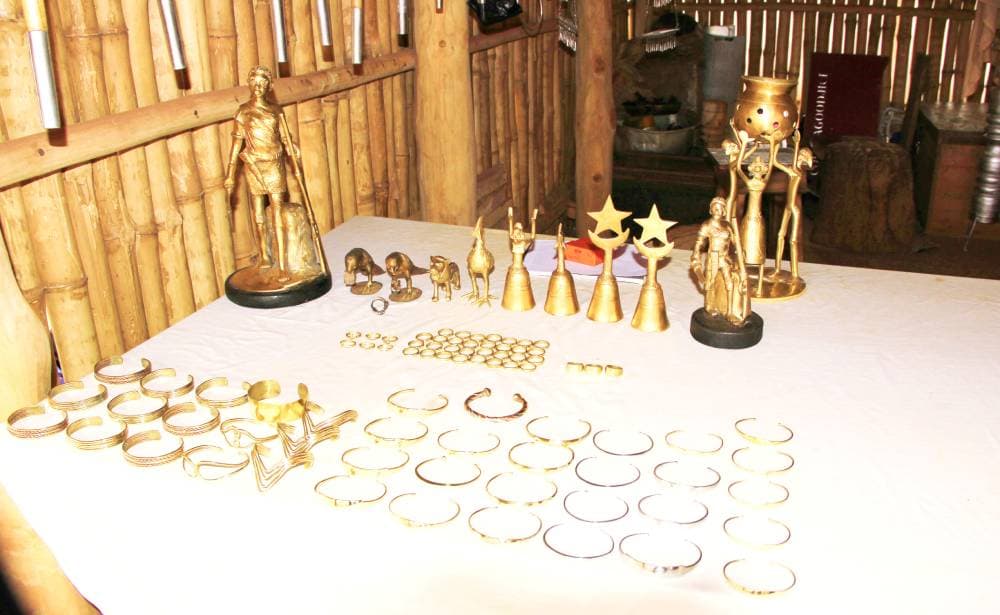
Abomey’s workshops are renowned for their wooden sculptures depicting royal symbols, warriors, Amazons, and animals associated with the different rulers.
Each piece is unique.
Some require several days of work, while larger pieces may take several weeks to complete.
By talking with artisans, travelers often discover that each symbol has a particular meaning. Behind a seemingly simple sculpture, there may be stories dating back several centuries.
Traditional Fabrics and Textile Art
Textiles occupy an important place in the culture of the region.
Abomey’s markets offer a wide variety of colorful fabrics, traditional clothing, and locally made accessories.
Beyond their beauty, these fabrics bear witness to a living heritage that continues to evolve from one generation to the next.
Some travelers even choose to have a custom-made outfit created so they can return home with a souvenir deeply connected to their stay.
Everyday Handcrafted Objects
Pottery, jewelry, musical instruments, decorative objects, and woven baskets: Abomey’s markets are filled with handcrafted creations.
Buying directly from artisans not only allows travelers to take home an authentic souvenir, but also helps support the local economy and the families who continue to preserve these traditional skills.
For many visitors, these objects become far more than simple souvenirs.
They become reminders of an encounter and a human experience.
Abomey, an Ideal Destination for Different Types of Travelers
One of Abomey’s greatest strengths lies in its ability to appeal to travelers with very different expectations.
For History Enthusiasts
History lovers will find Abomey an exceptional place to explore.
The Royal Palaces, stories of the rulers, the history of the Amazons, and the traditions of the Kingdom of Dahomey offer a unique immersion into several centuries of African history.
For Families
Families particularly enjoy the legends, anecdotes, and many stories surrounding the city.
Children are often fascinated by stories of kings and women warriors, while parents enjoy an enriching cultural experience.
For Photographers
The red-earth palaces, colorful markets, artisans’ workshops, and traditional ceremonies provide fascinating subjects for photography enthusiasts.
Every street offers a new setting.
Every light tells a new story.
For Travelers Seeking Authenticity
Those who want to discover an authentic side of Benin, far from conventional tourist routes, will find Abomey a profoundly human destination.
Here, encounters are just as important as monuments.
A conversation with an artisan or a meal shared with a local family can sometimes leave a stronger impression than a guided tour.
What Abomey Teaches You About Benin
Discovering Abomey means understanding an essential part of Beninese identity.
The city tells the story of a people who built a powerful kingdom, preserved their traditions, and passed down their heritage despite the upheavals of history.
It is also a reminder that Benin is about far more than its beaches and landscapes.
The country possesses exceptional cultural richness, shaped by centuries of history, exchange, and tradition.
As the journey unfolds, visitors come to understand that the Royal Palaces are only the visible part of a much broader heritage.
This heritage lives on in songs, markets, the stories told by elders, and the pride of local people.
And when the time comes to leave Abomey, many travelers depart feeling that they have discovered far more than a tourist destination.
They leave with a story to tell.
Why Trust Kiblistours to Discover Abomey?
Discovering Abomey is not simply about visiting palaces or photographing historical monuments. Understanding the soul of the former capital of the Kingdom of Dahomey requires time, encounters, and explanations capable of bringing several centuries of history to life.
At Kiblistours, every tour is designed to go beyond traditional sightseeing. Our itineraries are developed in collaboration with local guides, artisans, history enthusiasts, and residents who continue to preserve the traditions of the region.
Our approach is based on a simple belief: a successful journey is not measured by the number of places visited, but by the quality of the experiences lived.
Over the years, we have accompanied travelers from Africa, Europe, North America, and the Middle East, all driven by the same desire: to discover Benin differently.
Our experiences focus on:
Human encounters;
Small groups;
Exchanges with local communities;
Discovering traditional skills;
Authentic cultural immersion;
Respect for heritage and local customs.
Through every visit, our ambition is to help travelers understand not only the history of Abomey, but also how this heritage continues to influence the everyday lives of its people.
A Day in Abomey, Told by a Traveler
“It was a little after eight in the morning when we walked through the gates of the Royal Palaces. The red earth was still damp from the previous day’s rain, and the first rays of sunlight illuminated the ancient royal courtyards.
Our guide stopped in front of a bas-relief depicting a lion. For several minutes, he told us the story of the ruler to whom this symbol belonged. All around us, silence reigned.
Later that day, we left the palaces and made our way to a sculptor’s workshop. Sitting beneath a mango tree, he patiently worked on a piece of wood while explaining how his father and grandfather had passed their skills down to him.
In the afternoon, we walked through Abomey’s market. The women vendors laughed together, the scent of spices filled the narrow streets, and children ran between the stalls.
But the most memorable moment came at sunset. Sitting in front of the ancient palaces, we watched the light slowly disappear behind the trees. At that moment, Abomey was no longer simply a tourist destination. It was history brought to life.”
Your Story in Abomey Could Begin Today
Imagine yourself walking in the footsteps of the kings of Dahomey.
Imagine listening to an artisan explain how his grandfather taught him his craft.
Imagine sharing a traditional meal with a local family or attending a ceremony that has existed for generations.
Abomey is about far more than monuments.
It is a city to be discovered with the heart.
At Kiblistours, we create personalized experiences for travelers who want to experience Benin differently.
Our tours include:
Private tours of the Royal Palaces;
Encounters with artisans;
Cultural immersion experiences;
Culinary discoveries;
Excursions from Cotonou and Porto-Novo;
Experiences tailored to families, couples, and groups.
Every traveler leaves Abomey with a different story. Yours may be only a few days away from beginning.
Contact Kiblistours today, and let us create your immersion in the heart of the Kingdom of Dahomey together.
https://www.kiblistours.com/destination/55
Behind the Palaces, the People of Abomey Tell the Story of Their City
Travelers often leave Abomey with photographs of the Royal Palaces, markets, and historical monuments. Yet several weeks after returning home, these are not always the images that remain most vivid in their memories.
Instead, they remember a smile exchanged in a narrow street, a spontaneous conversation outside a workshop, or a story told by an elder beneath the shade of a tree.
In Abomey, every resident seems to carry a part of the city’s collective memory.
A blacksmith talks about traditions passed down by his father. A market vendor recalls the celebrations she attended as a child. A guide passionately shares stories of the kings of Dahomey and the exploits of the Amazons.
For travelers, these encounters completely transform their perception of the destination.
Abomey then ceases to be merely a historical site and becomes a profoundly human city, where the past continues to live in the present.
What You Really Feel When Visiting Abomey
There are places you admire.
And there are places you feel.
Abomey belongs to the second category.
First, there is the silence that fills certain royal courtyards, interrupted only by the guide’s explanations and the songs of birds.
Then there is the warmth of the red earth beneath your feet, the scents of spices drifting from the markets, and the laughter of residents talking outside their homes.
And then comes that strange feeling described by so many travelers: the impression of walking through a place where every wall, every tree, and every stone has a story to tell.
“I have visited many historical sites around the world, but Abomey is different,” says David, an Australian traveler. “Here, you don’t simply discover ancient buildings. You discover the memory of a people.”
It is this emotion that makes the city so unique.
Abomey, an Experience That Changes the Way You See Africa
Many visitors arrive in Benin with preconceived images of Africa.
They imagine landscapes, beaches, or safaris.
Abomey reveals another reality.
A complex history.
An organized civilization.
An exceptional heritage.
Traditions that are still alive.
By discovering the Royal Palaces, travelers come to understand that African history cannot be reduced to the colonial periods. They discover a powerful kingdom, a refined culture, and women and men who shaped the history of an entire region.
For many visitors, this realization becomes one of the most memorable experiences of the journey.
“Before coming here, I knew very little about the history of Dahomey,” explains Laura, a British traveler. “I am leaving with immense admiration for these people and a desire to learn more about African history.”
More Than a Journey, an Encounter with Living Memory
The most beautiful travel memories are not always the ones we photograph.
Sometimes, they are the stories heard while walking down a street.
Sometimes, they are the looks, conversations, and emotions shared with others.
Abomey offers precisely that.
It reminds us that travel is not simply about discovering new landscapes, but also about encountering other cultures, understanding different histories, and seeing the world from a new perspective.
Centuries after the first kings of Dahomey, the city continues to welcome visitors from every corner of the world.
And each person leaves with something different.
An emotion.
A memory.
A reflection.
Or simply the feeling of having discovered a place unlike any other.
Because Abomey is not simply a place you visit. It is a place you experience, a place you feel, and a place that remains in the memory of those fortunate enough to discover it.
https://www.kiblistours.com/circuit/24
Abomey, a Destination That Stays with You Long After You Return Home
The journey officially ends when you leave Abomey. Yet for many visitors, the experience continues long after they return home.
A few days later, certain images come back to mind: the silhouette of the Royal Palaces at sunset, the vibrant colors of the markets, the sound of hammers in artisans’ workshops, or the passionate stories told by local guides.
But what leaves the strongest impression on travelers is not always the monuments.
It is the encounters.
The smile of a market vendor explaining the origins of a family recipe.
The pride of an artisan showing you his work.
The words of an elder telling the story of the kingdom as though he had lived through it himself.
In Abomey, every exchange is a reminder that heritage is not limited to buildings. It lives through the women and men who pass it on every day.
Why Travelers Return to Abomey
Many destinations are discovered only once.
Abomey often makes you want to return.
Some travelers want to deepen their knowledge of the history of Dahomey. Others return to attend a traditional ceremony they did not have the opportunity to experience during their first stay.
Others simply want to rediscover the city’s unique atmosphere.
Because Abomey changes with the seasons.
The markets evolve.
Celebrations come and go.
The stories told by local residents grow richer over time.
Each journey therefore offers a different experience.
“I returned to Abomey three years after my first visit,” says Marc, a French traveler. “I thought I would find the same city, but I discovered new stories, new faces, and an emotion even stronger than the first time.”
What the People of Abomey Would Like Visitors to Remember
If you ask local residents what they would like travelers to take away from their visit, their answers are often very similar.
They want visitors to understand that the Royal Palaces are not simply remnants of the past.
They want travelers to discover the richness of their culture, the strength of their traditions, and the importance of passing this heritage from one generation to the next.
They also hope visitors will leave with a more complete image of Benin: that of a country rich in history, creativity, and humanity.
A history teacher from Abomey summed it up in one sentence:
“We don’t just want to show our palaces. We want to share our memory.”
That sentence perfectly captures the spirit of the city.
The True Treasure of Abomey
For a long time, travelers considered the Royal Palaces to be Abomey’s greatest treasure.
Yet after spending a few days in the city, many realize that its true richness lies elsewhere.
It lies in the stories told while walking down a street.
In the songs heard during a ceremony.
In the hands of artisans who preserve ancient skills.
In the pride of local people when they speak about their heritage.
And above all, in Abomey’s unique ability to create connections between the past and the present.
Because the palaces tell the story of the kings.
But it is the people who continue to keep that story alive.
An Invitation to Travel
Whether you are passionate about history, fascinated by heritage, drawn to human encounters, or simply curious to discover another side of Africa, Abomey offers an extraordinary experience.
Here, travel is not simply a succession of sightseeing visits.
It becomes an immersion in a living culture, a dialogue with the past, and a human adventure that transforms the way you see the world.
Perhaps you will come to discover the Royal Palaces.
Perhaps you will be fascinated by the story of the Amazons.
Perhaps you will leave with the memory of a conversation, a smile, or a sunset.
But one thing is certain: Abomey leaves no one indifferent.
And long after your departure, a part of this royal city will continue to travel with you.
Verified Information About Abomey
To ensure the reliability of the information presented in this guide, the historical and practical content has been developed using recognized sources and local knowledge shared by guides, historians, and stakeholders involved in preserving Benin’s heritage.
Historical and Institutional Sources Consulted
Historical archives of the Kingdom of Dahomey;
Research by scholars specializing in Beninese history;
Official information relating to the Royal Palaces of Abomey;
Data published by UNESCO;
Resources from Benin’s Ministry of Tourism, Culture and the Arts;
Testimonies from local guides and cultural stakeholders.
Good to Know
The Royal Palaces of Abomey have been listed as a UNESCO World Heritage Site since 1985.
The Kingdom of Dahomey existed for nearly three centuries, from the 17th to the 19th century.
Today, Abomey remains one of Benin’s main historical and cultural centers.
Royal traditions, craftsmanship, and certain ceremonies continue to be passed down from generation to generation.
Kiblistours, a Specialist in Cultural Experiences in Benin
Kiblistours is a Beninese agency specializing in cultural, heritage, and community-based tourism.
Our mission is to enable travelers to discover Benin through its history, traditions, and the women and men who keep this heritage alive every day.
Our experiences are designed around three essential principles:
Authenticity;
Human connection;
Supporting and promoting local communities.
We organize, among other experiences:
Cultural tours in Abomey, Porto-Novo, Ouidah, and Ganvié;
Immersive experiences with artisans and local communities;
Culinary experiences;
Heritage tours;
Private and personalized tours;
Tailor-made stays for families, groups, and individual travelers.
Our ambition is simple: to transform every journey into a human experience, far from standardized tourist circuits.
At Kiblistours, we believe that a successful journey is measured not only by the number of places visited, but also by the emotions felt and the encounters experienced along the way.
Quick Guide: Everything You Need to Know Before Visiting Abomey
Information
Details
Location: Zou Department, Benin
Distance from Cotonou: Approximately 130 km
Travel time: Between 2 and 3 hours
Best time to visit: November to March
Ideal length of stay: 2 to 3 days
Currency: CFA Franc (XOF)
Official language: French
Local languages: Fon and other local languages
Type of travel: Culture, history, heritage
Accommodation: Hotels, guesthouses, inns
Transportation: Car, taxi, organized excursion
Family-friendly: Yes
Guide recommended: Yes
Difficulty level: Easy
Why Visit Abomey?
Discover one of the greatest kingdoms in West Africa.
Explore the Royal Palaces listed as a UNESCO World Heritage Site.
Understand the history of the Dahomey Amazons.
Meet passionate artisans and local residents.
Take part in authentic cultural experiences.
Explore a city where traditions are still alive.
Experience a profoundly human journey.
Abomey is not simply a historical destination. It is an encounter with a living memory, an exceptional culture, and a history that continues to shape Benin today.
“The palaces tell the story of the kings, but it is the people of Abomey who continue to keep that story alive every day.”
So, are you ready to write your own story in the heart of the Kingdom of Dahomey?
Sources and References:
UNESCO;
Abomey Historical Museum;
National Archives of Benin;
Works by Edna Bay;
Works by Robin Law;