Porto-Novo: Between Living Heritage, Afro-Brazilian Legacy, and Authentic Experiences in the Heart of Benin's Cultural Capital
There are cities that impress from the very first moments.
Their skyscrapers dominate the skyline. Their traffic never stops. Their constant activity creates the feeling that everything moves fast.
And then there is Porto-Novo.
A city that follows an entirely different rhythm.
Here, no one is trying to dazzle you. Benin's official capital prefers to reveal itself gradually, through its streets, its encounters, and the stories that people take the time to share. Perhaps this is what surprises travelers the most. Porto-Novo never seeks attention, yet it leaves a lasting impression on everyone who discovers it.
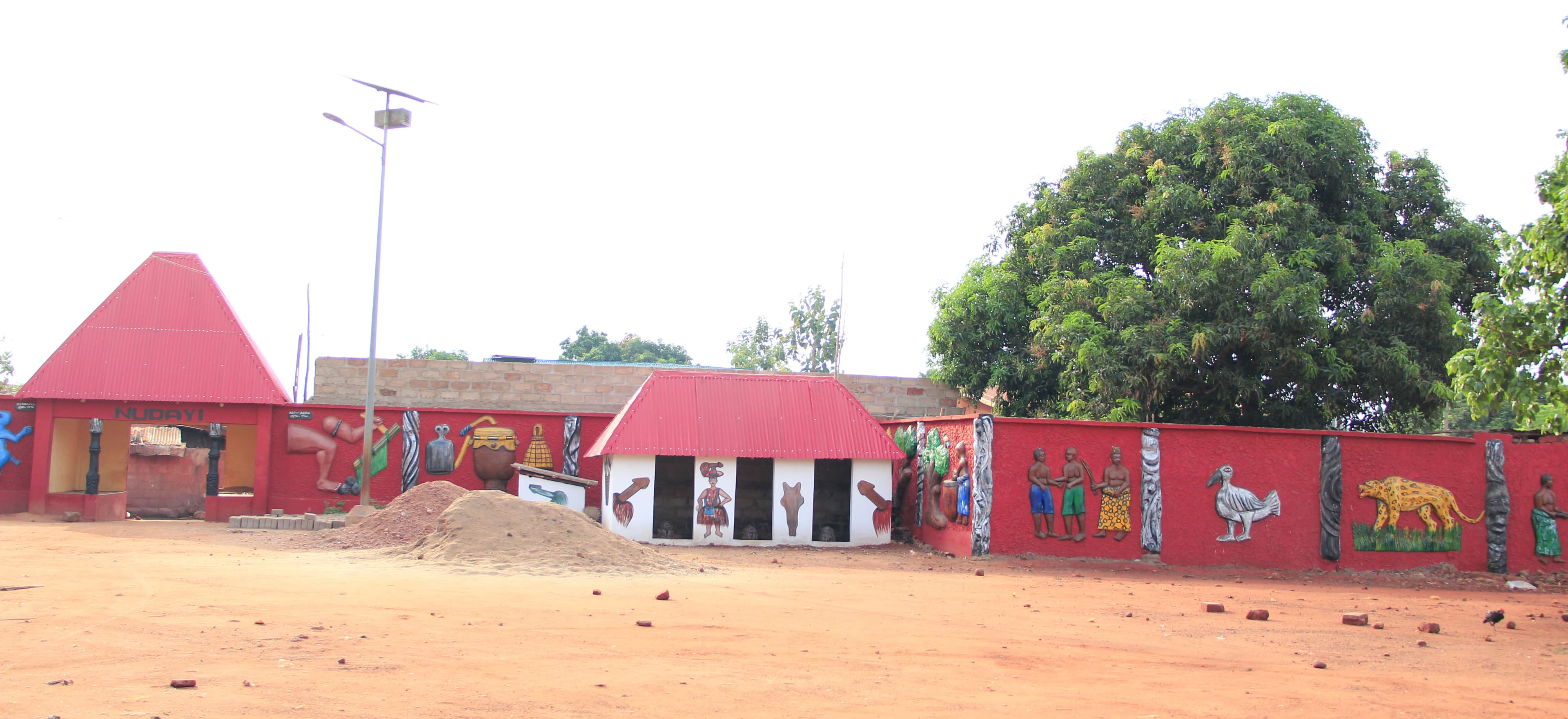
From the very first steps, a special feeling emerges. The tree-lined avenues invite visitors to slow down. The Afro-Brazilian façades recall a unique past. The royal palaces bear witness to a history that is still alive today. The markets overflow with colors, aromas, and lively conversations. Each neighborhood seems to possess its own personality.
Very quickly, visitors realize that exploring Porto-Novo is not simply about checking monuments off a list.
People come here to understand.
To understand how several civilizations shaped the same city.
To understand why traditions still play an essential role in everyday life.
To understand how heritage, spirituality, architecture, gastronomy, and human encounters combine to create a unique identity in West Africa.
Today, this authenticity is Porto-Novo's greatest treasure.
While many destinations are transforming themselves to meet the demands of mass tourism, Benin's capital has maintained a sincere connection with its history. Traditional ceremonies continue to be celebrated. Artisans preserve skills passed down through generations. Families maintain a heritage that remains part of their daily lives. Here, culture is not displayed behind glass—it is lived.
This is precisely what attracts travelers seeking meaningful experiences.
In a single day, it is possible to meet a sculptor who carves wood just as his father and grandfather did before him, visit an ancient royal palace where guides bring former kings to life through their stories, taste a Beninese specialty prepared according to a family recipe, and watch the sunset in a city where centuries of history can still be felt.
Every moment adds another piece to the puzzle.
Little by little, Porto-Novo ceases to be merely a destination.
It becomes an experience.
It is also a city full of surprises. Many visitors arrive with preconceived ideas. They imagine a capital similar to other large African cities. They leave having discovered a peaceful, elegant, deeply cultural, and remarkably welcoming place. Many tell us that Porto-Novo became their greatest discovery in Benin, even though they had originally planned to spend only one day there.
This reaction is common.
And it is no coincidence.
Porto-Novo possesses the rare ability to create an immediate connection with those who take the time to discover it.
Its heritage tells the story not only of African kingdoms but also of the Afro-Brazilians who returned to settle on this land after the abolition of slavery. Its museums offer a deeper understanding of the country's beliefs, traditions, and evolution. Its historic neighborhoods reveal an architectural style found nowhere else in Benin. As for its inhabitants, they welcome visitors with simplicity, curiosity, and generosity.
People do not visit Porto-Novo simply to see.
They visit it to feel.
To listen.
To taste.
To connect.
To learn.
And often, to leave with a different perspective on Benin.
Why This Guide Is Different
The internet is full of lists entitled "The 10 Things to Do in Porto-Novo" or "The Must-See Attractions of Benin's Capital." These articles sometimes provide useful information, but they often stop at a simple succession of places to visit.
This guide follows a different approach.
Our goal is not merely to tell you where to go.
We want to help you understand why these places matter, what stories they tell, and how to experience them in the best possible way.
Here, you will find practical advice, itinerary recommendations, accessible historical insights, ideas for authentic experiences, culinary specialties to discover, meaningful encounters to seek out, and numerous tips drawn from our field experience.
As a Beninese company specializing in cultural, heritage, community, and sustainable tourism, Kiblistours has spent several years helping travelers discover Benin from a different perspective.
We live these destinations.
We work with local guides, artisans, communities, accommodation providers, and cultural stakeholders who know their region inside and out. This close connection allows us to offer experiences that go far beyond a simple guided tour.
Because discovering Porto-Novo also means understanding its history, sharing in the daily lives of its inhabitants, and taking the time to appreciate everything that makes this city so rich.
In this guide, we will take you on a journey through its royal palaces, its Afro-Brazilian heritage, its museums, its markets, its flavors, its traditions, and its sometimes little-known treasures.
Whether you are preparing for your first trip to Benin or you have already fallen in love with the country, Porto-Novo deserves a special place on your itinerary.
Because some destinations are simply visited.
Others are truly experienced.
And Porto-Novo unquestionably belongs to the latter category.
Porto-Novo at a Glance
Before setting out to discover its royal palaces, museums, and historic neighborhoods, it is worth taking a moment to get to know Porto-Novo.
Benin's administrative capital is unlike any other city in the country. More discreet than Cotonou and less crowded than some of West Africa's major tourist destinations, it is nevertheless attracting more and more travelers in search of an authentic experience.
What strikes visitors first is not the size of the city.
It is its atmosphere.
Life moves at a slower pace here. The streets are quieter, conversations are more spontaneous, and time seems to flow differently. It is not unusual for a shopkeeper to start a conversation, for a guide to spend a few extra minutes sharing an anecdote, or for a resident to point out the way with a smile before warmly welcoming visitors.
This simplicity immediately sets the tone.
Porto-Novo is a city that welcomes before it captivates.
As you explore, you discover a capital where African, Yoruba, Afro-Brazilian, and colonial influences blend naturally. This diversity can be seen everywhere: in the architecture of the houses, in local traditions, in places of worship, in the cuisine, and even in some of the expressions used in everyday life.
The city is also an excellent starting point for exploring southern Benin. Its proximity to Cotonou, Ouidah, Ganvié, and the Ouémé Valley makes it easy to create an itinerary that combines history, culture, nature, and meaningful encounters.
Porto-Novo in Brief
Information and Details
Status
Administrative and political capital of Benin
Location
Southeastern Benin
Distance from Cotonou
Approximately 35 km
Travel time
45 to 60 minutes, depending on traffic
Ideal length of stay
2 to 3 days
Difficulty level
Very easy
Type of destination
Culture, heritage, history, gastronomy, and human encounters
Recommended for
Couples, families, solo travelers, groups, researchers, photographers, and heritage enthusiasts
Although some travelers choose to spend only one day there, Porto-Novo deserves much more.
Two or three days allow visitors to discover the city at a relaxed pace, take time to talk with artisans, enjoy local cuisine, and immerse themselves in the peaceful atmosphere that gives Porto-Novo its unique charm.
https://www.kiblistours.com/destination/47
Where Is Porto-Novo Located?
Porto-Novo is located in southeastern Benin, just a few kilometers from the Nigerian border.
Its geographical position enabled the city to play an important role in the commercial, political, and cultural exchanges of the region for several centuries. Even today, this openness to neighboring countries contributes to Porto-Novo's cultural richness.
The journey from Cotonou is simple and pleasant.
Leaving Benin's economic capital behind, the road gradually passes through lively neighborhoods before giving way to greener landscapes and small towns that offer a first glimpse into everyday Beninese life. Kilometer after kilometer, the urban bustle slowly fades, revealing a city with a calmer and more serene character.
For many travelers, this transition already marks the beginning of the adventure.
There is a feeling of leaving a bustling metropolis and entering a world where heritage and traditions still occupy a central place.
How to Reach Porto-Novo
Getting to Porto-Novo is easy, whatever your preferred means of transportation.
From Cotonou International Airport
Most international visitors arrive at Cardinal Bernardin Gantin International Airport in Cotonou.
From there, several options are available to reach Porto-Novo.
The journey generally takes between forty-five minutes and one hour.
For travelers seeking comfort, a private transfer remains the most convenient solution. You are welcomed as soon as you arrive, your luggage is taken care of, and your journey begins under the best possible conditions, without having to search for a taxi or negotiate fares.
By Car
The roads connecting Cotonou and Porto-Novo are in good condition and allow for relatively quick travel.
This option offers great flexibility, especially if you would like to stop along the way to discover villages or enjoy the scenery.
By Taxi
Taxis operate daily between the two cities.
They are an affordable option, although comfort levels may vary depending on the vehicle and traffic conditions.
With an Organized Tour
Many travelers choose to discover Porto-Novo as part of an organized tour.
This option allows visitors to enjoy the experience without worrying about logistics. Transportation, guided visits, reservations, and assistance are all arranged in advance, leaving more time to appreciate every stage of the journey.
At Kiblistours, we favor small-group experiences designed to encourage interaction with local communities and provide a deeper understanding of the destination. Our guides know every neighborhood, every monument, and, above all, the stories that bring these places to life. Their goal is not simply to show you Porto-Novo, but to help you understand it.
Why Porto-Novo Deserves More Than a Day Trip
Many visitors make the same mistake.
They plan a short stop between Cotonou and Ouidah, visit two or three monuments, and then continue on their way.
They leave with a few beautiful photographs.
But they often miss what truly matters.
Porto-Novo is a city that reveals itself slowly.
You need to take the time to sit on the terrace of a café, observe daily life around a market, listen to an artisan talk about his craft, or follow a guide through historic streets without constantly checking your watch.
It is in these simple moments that the city reveals its true character.
As a French traveler told us at the end of her stay:
"I came to visit a capital city. I left feeling that I had met an entire people. More than the monuments, it was the conversations with the locals that will remain forever in my memory."
This sentence perfectly captures the spirit of Porto-Novo.
The city is home to remarkable sites.
But it is the human encounters that transform a visit into a lasting memory.
The Fascinating History of Porto-Novo: A City Born from Several Worlds
There are cities whose history can be summed up in just a few dates.
And then there are those that carry within them centuries of encounters, migrations, resistance, and cultural blending.
Porto-Novo undoubtedly belongs to the second category.
To understand its identity, one must abandon the idea of a city built around a single people or a single kingdom. Since its foundation, Porto-Novo has developed at the crossroads of different influences that continue to shape its character to this day.
It is this diversity that gives the city such a unique personality.
Over the centuries, merchants, kings, artisans, sailors, missionaries, and families returning from South America have all left their mark here. Each of them has contributed a chapter to its story.
Even today, a short walk is enough to find a royal palace, a mosque inspired by Brazilian architecture, a nineteenth-century Afro-Brazilian house, a Vodun temple, and a church standing side by side.
Few cities offer such a journey through cultures.
A City Born on the Banks of the Ouémé River
Long before the arrival of Europeans, the banks of the Ouémé River were already inhabited by communities whose livelihoods depended mainly on agriculture, fishing, and river trade.
The river played a vital role.
It made travel possible, facilitated trade, and connected different regions of the territory. Markets gradually developed, attracting merchants who sometimes came from very distant places.
This strategic geographical position would profoundly influence the destiny of Porto-Novo.
As trade intensified, several communities decided to settle there permanently. Traditions met, languages mixed, and a unique identity slowly began to emerge.
The city was not yet the capital we know today.
But the foundations of its development had already been laid.
The Kingdom of Hogbonou
Before becoming known as Porto-Novo, the city was called Hogbonou.
Many residents still use this name today.
At that time, the kingdom maintained commercial relations with several neighboring regions. The rulers played a central role in political organization, justice, and economic exchanges.
Contrary to the static image that people sometimes associate with ancient African kingdoms, the Kingdom of Hogbonou was deeply oriented toward trade and exchange.
Markets flourished.
Artisans refined their skills.
Traditions were passed down from generation to generation.
This period left a legacy that is still visible today, particularly through the Royal Palace, certain traditional ceremonies, and the respect accorded to customary authorities.
When a guide recounts the stories of the former kings, visitors quickly realize that these rulers are not merely figures of the past.
They remain deeply rooted in the collective memory.
Why the Name "Porto-Novo"?
Many visitors are surprised to discover a Portuguese-sounding name in the heart of Benin.
The explanation dates back to the eighteenth century.
Portuguese navigators who frequented the region named the place Porto Novo, which can be translated as "new port."
At that time, the city occupied a strategic position on the trade routes linking the interior of the continent to the Gulf of Guinea.
The name remained.
Yet behind this European designation, Porto-Novo has preserved a profoundly African identity.
Even today, many residents naturally use the name Hogbonou, reminding us that the city's history did not begin with the arrival of Europeans.
The Legacy of the Afro-Brazilians
If there is one element that immediately distinguishes Porto-Novo from many other cities in West Africa, it is undoubtedly its Afro-Brazilian heritage.
In the nineteenth century, following the abolition of slavery, several families originally from this region returned to Benin after having lived in Brazil.
They brought back far more than memories.
Their way of building.
Their cuisine.
Their craftsmanship.
Their music.
Their beliefs.
Their customs.
Little by little, these influences blended with local traditions.
This fusion gave rise to elegant houses with wrought-iron balconies, colorful façades, inner courtyards, and architectural details that still define Porto-Novo's distinctive appearance today.
As visitors stroll through the Afro-Brazilian district, they quickly notice that these buildings resemble neither royal palaces nor classical colonial structures.
They tell another story.
A story of departure, exile, return, and rebirth.
A Capital where traditions are still alive
In many historic cities, heritage belongs mainly to the past.
In Porto-Novo, it remains part of the present.
Royal ceremonies are still organized.
Vodun traditions continue to be practiced.
Artisans preserve ancestral techniques.
Community celebrations shape the rhythm of everyday life.
This continuity often leaves visitors deeply impressed.
What they discover is not an open-air museum.
They discover a city where history is still being written.
This is probably what makes Porto-Novo so captivating.
Here, monuments are never completely silent.
They remain connected to the women and men who continue to give them meaning.
A History Best Discovered with a Guide
Some buildings may appear modest.
Some streets may seem ordinary.
Yet behind a simple façade may lie a former seat of power, a historic residence, or the memory of an event that shaped an entire community.
Without explanations, many visitors walk past without realizing what stands before them.
With a local guide, everything changes.
A sculpture takes on meaning.
A symbol carved into a door tells the story of an ancient alliance.
A public square becomes the setting for a forgotten episode.
A house reveals the story of a family that returned from Brazil after several generations.
Every detail enriches the experience.
And it is often at that moment that Porto-Novo ceases to be a simple tourist destination and becomes a true lesson in living history.
Did You Know?
Many travelers arrive in Porto-Novo believing that Cotonou is the capital of Benin.
In reality, Cotonou is the country's economic capital, while Porto-Novo is its official and political capital. This unique situation reflects Benin's history and the complementary roles played by the two cities.
Discovering both cities together offers a deeper understanding of the many facets of the country.
Porto-Novo's Must-See Landmarks: Where History Comes to Life
There are cities where people visit monuments.
In Porto-Novo, they encounter stories.
Each site has its own personality. Some evoke the power of ancient kingdoms. Others tell the story of Afro-Brazilians returning home after generations of exile. Still others bear witness to the harmonious coexistence of religious, cultural, and architectural traditions that may seem very different but have learned to flourish together.
The most remarkable aspect of this journey is that no two visits are ever the same.
Within just a few hundred meters, you can move from an ancient royal palace to a mosque inspired by Brazilian Baroque churches before ending your walk in a neighborhood where the houses tell another chapter of Benin's history.
This contrast gives Porto-Novo its unique identity.
Take your time.
Do not try to see everything too quickly.
This city reveals itself like a book to be enjoyed chapter by chapter.
The Honmè Museum and the Royal Palace: At the Heart of the Kingdom's Memory
It is impossible to understand Porto-Novo without stepping inside the Royal Palace.
Behind its walls lies an essential part of the city's history.
From the moment you enter, the atmosphere changes.
The noise of traffic gradually fades away. Large trees provide welcome shade, while the old buildings immediately remind visitors that this place served as the center of power for generations.
You quickly realize that you are not simply visiting a historical monument.
You are entering a place that still holds deep symbolic importance for the local people.
The Honmè Museum, housed within the former palace, traces the history of the Kingdom of Porto-Novo through royal artifacts, old photographs, symbols of authority, ceremonial instruments, and countless stories shared by local guides.
Yet what leaves the strongest impression on visitors is not always what they see.
It is what they hear.
The guides do not simply recite historical facts.
They tell stories of human lives.
They explain how kings governed, how important decisions were made, and why many traditions continue to be respected today.
Visitors soon discover that the traditional monarchy belongs not only to the past.
It still plays a role in Porto-Novo's cultural identity.
This living dimension completely transforms the experience.
As the stories unfold, the objects on display cease to be simple museum pieces.
They become silent witnesses to a history that continues to shape the city.
Kiblistours Tip
Allow yourself plenty of time.
Many visitors expect to spend only an hour at the palace but end up staying much longer because the conversations with the guides are so captivating.
A Memory That Lasts
During a tour organized by Kiblistours, a Canadian traveler stood silently for several minutes in front of an ancient royal throne.
He carefully examined every detail without saying a word.
The guide approached him and explained the meaning of the symbols carved into the wood.
At the end of the explanation, the traveler simply replied:
"I thought I was visiting a palace. In reality, I have just discovered another way of telling the story of a people."
This sentence perfectly captures what many visitors feel.
The International Vodun Museum: Understanding Beyond Stereotypes
The word Vodun fascinates people.
Sometimes, it even worries them.
For many foreign visitors, it evokes images shaped by movies or beliefs that are far removed from reality.
The International Vodun Museum exists precisely to move beyond these stereotypes.
From the very first rooms, perspectives begin to change.
Visitors discover a spiritual tradition deeply connected to nature, ancestors, community values, and the balance between human beings and their environment.
The collections include statues, ritual objects, musical instruments, masks, ceremonial clothing, and numerous documents tracing centuries of history.
Yet the most valuable part of the visit is often the conversation with the guide.
Visitors ask many questions.
Why do certain symbols appear so frequently?
What are the differences between the various deities?
How have these traditions survived for centuries?
The answers provide a deeper understanding of a religion that is often misunderstood abroad.
By the end of the visit, many people admit that they arrived with preconceived ideas.
They leave with a far more nuanced perspective.
And, above all, with immense curiosity.
https://www.kiblistours.com/destination/48
A Visit That Changes Perspectives
After her visit, a Belgian traveler told us:
"Before coming here, I thought I understood Vodun because of what I had seen in documentaries. In reality, I knew almost nothing about it. This visit taught me to listen before judging."
This kind of reaction is very common.
And it is undoubtedly the museum's greatest achievement.
The Great Mosque of Porto-Novo: The Monument That Surprises Everyone
If there is one monument capable of leaving visitors speechless, it is the Great Mosque of Porto-Novo.
Most people stop for several seconds.
They stare.
Then, almost everyone asks the same question:
"Are you sure this is a mosque?"
The surprise is understandable.
With its façade inspired by Brazilian Baroque architecture, its elegant lines, and its light colors, the building looks much more like an old colonial church than a traditional mosque.
And yet, it is indeed a Muslim place of worship.
This architecture alone tells an important part of Porto-Novo's history.
It reflects the meeting of different cultures, influences, and traditions that have shaped the city's identity over time.
Visitors do not come simply to admire a beautiful building.
They discover a symbol of cultural coexistence.
And that is precisely what makes this place so fascinating.
An unexpected emotion
A young French traveler once told us with a smile:
"I have seen magnificent mosques in several countries, but this is the first time I have stood in front of a façade for so long simply because it told a story unlike anything I had seen before."
Why These Visits Leave Such a Deep Impression
It is not only because these places are beautiful.
It is because they help visitors understand Porto-Novo.
Each monument answers a question.
Why does the city have such a unique identity?
Why do so many traditions coexist so harmoniously?
Why are local people so proud of their heritage?
As these answers emerge, the journey takes on a new dimension.
You no longer look only at the buildings.
You begin to understand what they represent.
And it is often at that very moment that travelers truly fall in love with Porto-Novo.
The Afro-Brazilian Quarter: A Walk Between Two Continents
Some streets have the power to transport you without ever leaving the city.
Porto-Novo's Afro-Brazilian quarter is one of the finest examples.
At first glance, it is the façades that capture your attention. The colors are soft. The wrought-iron balconies seem to tell stories from another era. The tall windows, elegant columns, and inner courtyards immediately evoke certain cities in Brazil.
Then, a question naturally arises.
How did such an architectural heritage find its place in the heart of Benin?
The answer dates back to the nineteenth century.
After the abolition of slavery, many Afro-descendant families left Brazil and returned to the land of their ancestors. They brought back with them their construction techniques, their craftsmanship, their culinary traditions, and a part of their culture.
Over the decades, these influences blended with local traditions.
The result is unique.
Nowhere else in Benin can such harmony between African architecture and Brazilian heritage be found.
Yet the true charm of the neighborhood lies not only in its buildings.
It reveals itself through walking.
Without a specific itinerary.
By taking the time to look up.
To stop in front of an old door.
To listen to the stories told by a guide.
Or simply to greet a resident sitting in front of their house.
Every street holds a surprise.
A beautifully restored façade.
An old family residence.
A carved detail above a window.
A century-old tree that seems to have watched generations come and go.
The neighborhood invites visitors to slow down.
Here, no one rushes the traveler.
And it is precisely this tranquility that allows people to appreciate the richness of the place.
A Walk That Changes Pace
During one visit, a couple from Germany told us that they had planned to cross the neighborhood in about thirty minutes.
Two hours later, they were still there.
They had stopped countless times to photograph the houses, chat with local residents, and listen to their guide's stories.
As they left, they smiled and said:
"We thought we were visiting a historic neighborhood. In reality, we encountered stories of families, journeys, and homecomings. That is what makes this place so special."
Ouando Market: The Beating Heart of Porto-Novo
If you truly want to understand Porto-Novo as it is today, do not limit yourself to its monuments.
Spend a few hours at Ouando Market.
From the moment you enter, all your senses come alive.
The vibrant colors of the fabrics immediately catch the eye.
The aroma of smoked fish blends with that of freshly ground spices.
Vendors call out cheerfully to their customers, while motorcycles, wheelbarrows, and pedestrians create a perfectly choreographed scene.
For visitors, the spectacle is fascinating.
For local residents, it is simply an ordinary day.
It is precisely this authenticity that makes the experience so valuable.
The market was not created for tourists.
It exists above all for the people who live here.
You will find freshly harvested fruits, vegetables, grains, fish, spices, handmade crafts, traditional fabrics, everyday utensils, and countless products from different regions of the country.
But beyond the goods themselves, it is the atmosphere that leaves the deepest impression.
Conversations overlap.
Children accompany their parents.
Merchants joke with one another.
Every alley tells a story about everyday life in Benin.
For many travelers, this visit becomes one of the most vivid memories of their stay.
Because here, nothing is staged.
Life simply unfolds as it always has.
Kiblistours Tip
The market is best explored in the morning.
That is when activity reaches its peak and the stalls display an incredible variety of local products.
With a guide, you will also learn the meaning and uses of many foods, spices, and objects that you would probably overlook on your own.
The Garden of Plants and Nature: A Breath of Fresh Air
After the excitement of the markets and the richness of the historic neighborhoods, Porto-Novo reveals another side of itself.
Calmer.
Greener.
The Garden of Plants and Nature offers this welcome pause.
As soon as you step inside, the sounds of the city seem to fade away.
The shaded pathways invite visitors to walk slowly.
Birdsong gradually replaces the noise of engines.
The air feels fresher.
It quickly becomes clear why local residents appreciate this place so much.
The garden brings together numerous plant species representative of Benin's ecosystems.
Some have been used for generations in local cuisine.
Others play an important role in traditional medicine or craftsmanship.
The guides take the time to explain their uses, their properties, and their place in local culture.
The visit appeals equally to botany enthusiasts and families simply looking for a peaceful moment.
Many travelers find the perfect balance between scientific discovery and relaxation.
Songhaï Center: When Innovation Draws Inspiration from Nature
At first glance, the Songhaï Center looks like a farm.
In reality, it is much more than that.
For decades, this site has become an international reference in sustainable agriculture, rural entrepreneurship, and professional training.
Every year, it welcomes students, researchers, entrepreneurs, and visitors from around the world.
What impresses people most is the coherence of its model.
Here, nothing is wasted.
Every activity is designed to support the others.
Crop production feeds livestock.
Waste is recycled and transformed.
Resources are managed with care.
Everything is organized to create a sustainable system.
The tour allows visitors to discover greenhouses, livestock facilities, food-processing workshops, training spaces, and numerous innovative projects developed over the years.
Even people who are not particularly interested in agriculture often leave amazed.
Because the Songhaï Center is not only about farming.
It is about the future.
It demonstrates that it is possible to produce differently while creating jobs, protecting natural resources, and strengthening the autonomy of local communities.
A visit that inspires
At the end of one visit, a young entrepreneur from Senegal shared the following thought:
"I thought I was coming to discover a farm. I am leaving with ideas for my own project. This place proves that economic development and environmental protection can move forward together."
This is precisely what has given the Songhaï Center its international reputation.
Why These Places Reveal the True Face of Porto-Novo
Taken individually, each of these sites deserves a visit.
Together, they tell a much larger story.
The Afro-Brazilian quarter recalls the ties between Africa and Brazil.
Ouando Market reflects the energy of everyday life.
The Garden of Plants and Nature highlights the richness of Benin's natural heritage.
The Songhaï Center opens a window onto the Benin of tomorrow.
Together, they illustrate the many dimensions of a city that refuses to be confined to a single definition.
Porto-Novo is both historical and forward-looking.
Traditional and innovative.
Peaceful, yet deeply alive.
And it is precisely this diversity that makes it so captivating.
Cultural experiences that make Porto-Novo unforgettable
It is easy to visit a city.
It is far rarer to feel that you truly understand it.
In Porto-Novo, that difference does not come only from its museums or monuments. It is born above all from the encounters, the conversations, and those small moments that never appear in any official itinerary.
An improvised conversation.
A smile exchanged in a market.
An artisan willing to talk about his craft.
A family inviting you to taste a local specialty.
These are the moments that transform a simple visit into a genuine experience.
In Porto-Novo, you never remain a mere spectator for long.
Little by little, the city invites you into its daily life.
Meeting the Artisans: guardians of a living heritage
In many destinations, souvenir shops sell mass-produced objects.
In Porto-Novo, things are very different.
Behind every sculpture, woven basket, piece of fabric, or traditional mask, there is often a person who has devoted their life to preserving a skill passed down through generations.
Stepping into an artisan's workshop is already an experience in itself.
The scent of freshly carved wood fills the air.
The rhythmic sound of tools accompanies the conversations.
Every movement is precise.
Slow.
Mastered.
You quickly realize that nothing is left to chance.
Every creation requires time.
Sometimes several days.
Sometimes several weeks.
Artisans are often eager to explain the origin of the materials they use, the meaning of the patterns, and the symbols represented in their work.
Visitors soon discover that what appears to be a simple decorative object may actually tell the story of a family, an ancient belief, or an important chapter in Beninese culture.
This transmission of knowledge is precious.
It gives a completely different value to the souvenirs brought home from Porto-Novo.
You are no longer simply buying an object.
You are taking home a part of its story.
An Encounter Worth More Than Any Souvenir
During a tour organized by Kiblistours, a sculptor handed a small piece of wood to a Swiss traveler.
He invited her to try carving a few shapes herself.
After a few minutes, she stopped and laughed.
"I thought it looked easy. Now I understand why some pieces require several weeks of work. I will never look at craftsmanship in the same way again."
Several years later, that sculpture still sits in her living room.
Not because of its monetary value.
But because it reminds her of that encounter.
Attending a Traditional Ceremony: Discovering a Living Culture
If your stay coincides with a local celebration, do not miss the opportunity.
Some experiences cannot be described.
They must be lived.
In Porto-Novo, traditional ceremonies still play an important role in community life.
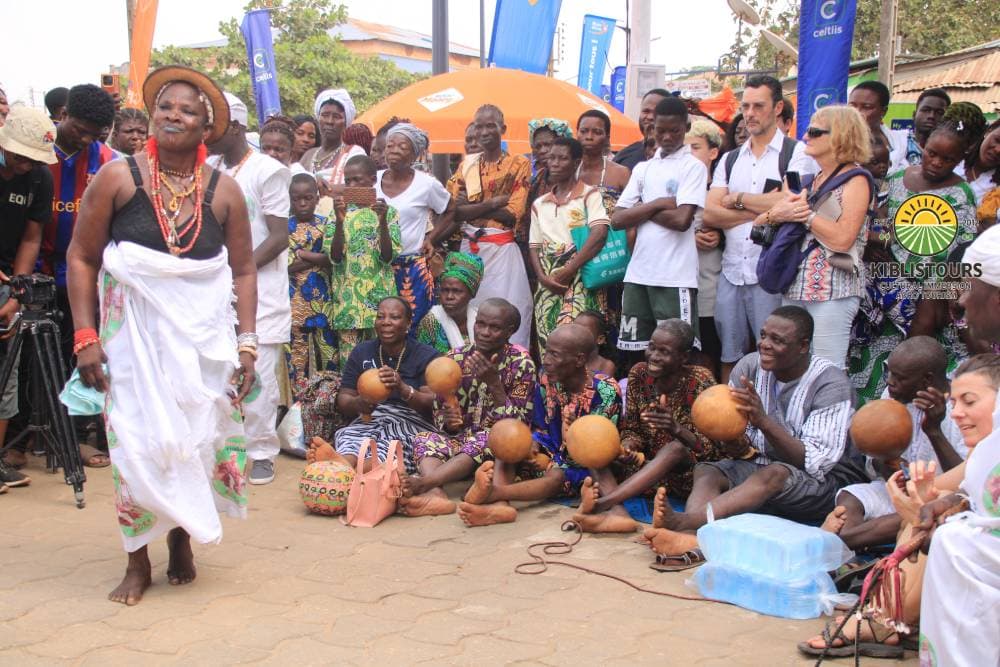
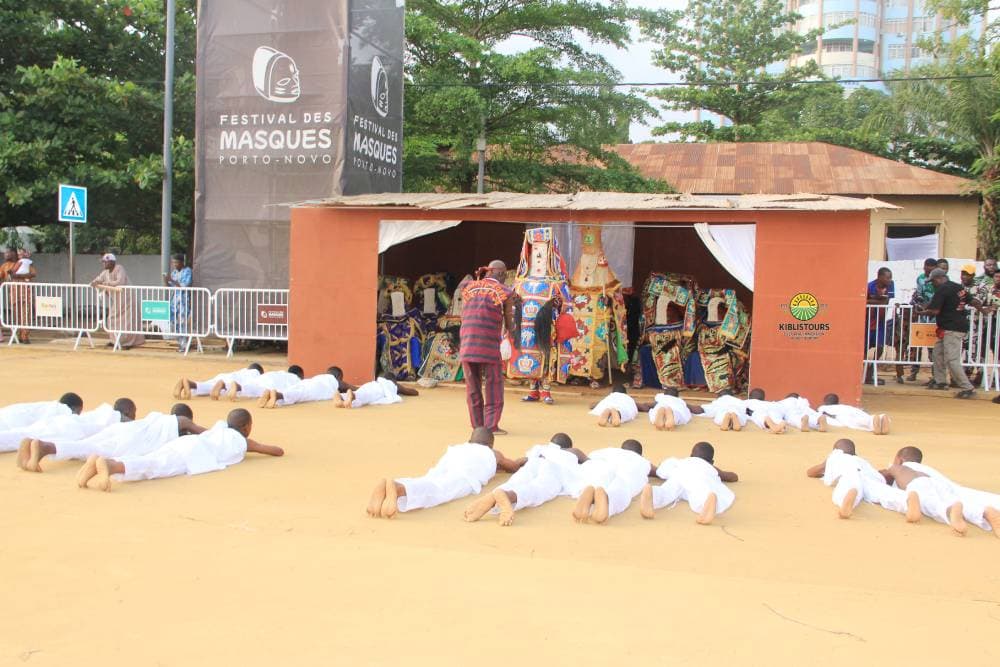
Depending on the season, visitors may attend dances, community festivals, royal celebrations, or ceremonies linked to Vodun traditions.
The atmosphere is difficult to describe.
The first drums begin to echo.
The dancers gradually appear.
Their movements follow a rhythm perfected over generations.
Songs rise into the air.
The audience joins the musicians.
For a few moments, time seems to stand still.
Even travelers who do not understand the words immediately feel the energy that radiates from these gatherings.
This is not a performance created for tourists.
It is a tradition that continues to be practiced with sincerity.
And it is precisely this authenticity that moves so many visitors.
Respect Above All
Taking part in a ceremony also involves a few rules.
Some moments cannot be photographed.
Others require appropriate clothing or discreet behavior.
Your guide will always explain the customs that should be respected so that your presence is perceived as a sign of interest rather than an intrusion.
This approach creates an atmosphere of trust that benefits both travelers and the communities that welcome them.
Discovering Porto-Novo Through Its Cuisine
You can learn a great deal about a country around a dining table.
In Benin, meals are often synonymous with sharing.
In Porto-Novo, this tradition takes on its full meaning.
It is not uncommon for lunch to last longer than expected because conversations become just as important as the food itself.
Restaurant owners take the time to explain their recipes.
Guests chat with one another.
The flavors naturally spark discussion.
Very quickly, the meal becomes a cultural experience.
Tasting amiwo prepared according to a family recipe, enjoying grilled fish served with freshly cooked alloco, or discovering akassa with a local sauce offers visitors another way to understand the country.
Every dish tells a story.
The story of locally grown products.
Of eating habits.
Of family celebrations.
Of traditions passed down from generation to generation.
The Memory of an Unexpected Lunch
During an excursion, our group stopped at a small restaurant recommended by a local resident.
The establishment was modest.
A few tables.
An open kitchen.
A warm, family atmosphere.
When the owner saw the visitors arrive, she stepped out of the kitchen to welcome them before returning to prepare the meal.
A few minutes later, the first plates arrived.
Nobody spoke.
Everyone was tasting.
Then the compliments began to flow.
At the end of the meal, an American traveler stood up to thank the cook.
He simply said:
"I think I have just eaten the best meal of my entire trip."
She smiled and replied:
"Here, we cook as if we were cooking for our own family."
That sentence perfectly captures the spirit of Beninese hospitality.
Let yourself be guided... and learn to see differently
Visiting Porto-Novo without a guide already allows you to discover a beautiful city.
Visiting it with a passionate guide transforms the experience completely.
A guide does not simply point out monuments.
They draw your attention to details that you would probably never have noticed on your own.
A symbol carved into a door.
An ancient building technique.
The meaning of a pattern on a piece of fabric.
The story of a century-old tree.
The customs of a neighborhood.
Little by little, your perspective changes.
You no longer see only buildings.
You begin to understand their place in the city's history.
That understanding transforms the visit.
And it is often at that moment that Porto-Novo ceases to be just another destination and becomes a lasting memory.
The Best Memories Are Not Always the Ones You Photograph
Before leaving Porto-Novo, many travelers fill their phones with hundreds of pictures.
Palaces.
Markets.
Colorful streets.
Monuments.
And yet, when we ask them several months later what left the deepest impression on them, their answers are rarely linked to a photograph.
They talk about an artisan.
A shared laugh with children.
An unexpected conversation.
A meal.
A guide.
A resident they met almost by chance.
Because, in the end, what makes Porto-Novo unforgettable is not only what you see there.
It is, above all, what you experience there.
Porto-Novo's Gastronomy: A Journey That Also Begins on the Plate
There is a simple way to discover the soul of a city:
Sit at the table of its people.
In Porto-Novo, every meal tells a story—the story of families who preserve recipes passed down through generations, of markets where ingredients are selected every morning, and of farmers, fishermen, and cooks who bring to life a cuisine that is generous, authentic, and deeply rooted in Beninese traditions.
Here, people do not eat simply to satisfy their hunger.
They share.
They talk.
They take their time.
Meals often become moments of conviviality, where conversations matter just as much as the dishes themselves.
For many visitors, this culinary discovery is one of the most memorable surprises of their stay.
Amiwo: The Dish That Tells the Story of Porto-Novo
If you asked the people of Porto-Novo to name the city's most iconic dish, many would immediately mention amiwo.
Its vibrant red color instantly catches the eye.
Prepared from corn flour seasoned with tomato sauce and red palm oil, it is usually served with chicken, fish, or grilled meat.
Yet what impresses visitors most is not its appearance.
It is its balance of flavors.
Every family has its own recipe.
Some add more spices.
Others prefer a softer texture.
Still others faithfully preserve a preparation inherited from their grandparents.
Tasting amiwo in a family-run restaurant often reveals another side of Porto-Novo.
The dish itself becomes a conversation starter.
Locals enjoy explaining how it is prepared, on which occasions it is served, and why it occupies such a special place in local cuisine.
A Memory That Begins with a Plate
During lunch in a small inn in Porto-Novo, a Spanish traveler stared at her plate with curiosity.
She hesitated.
The owner patiently explained how to enjoy amiwo and which side dishes best enhanced its flavors.
A few bites later, the visitor burst out laughing.
"Now I understand why everyone told me to try this dish. My only regret is not having discovered it sooner."
Grilled Fish: The Freshness of Benin's Waters
The proximity of lagoons and rivers naturally shapes Porto-Novo's cuisine.
Fish occupies a central place in everyday meals.
Every morning, fishermen supply the city's markets.
Tilapia.
Nile perch.
Catfish.
The species vary according to the season and the day's catch, but one thing remains constant: freshness.
Grilled over charcoal, lightly seasoned, and served with spicy sauce and alloco or yam, grilled fish delights both locals and travelers.
The aroma rising from the embers often whets the appetite long before the dish reaches the table.
In some restaurants, the cook even presents the fish before grilling it, allowing customers to choose exactly which one they would like to eat.
This attention to detail reinforces the feeling of enjoying a truly local product.
Akassa: Simplicity Elevated
Do not be deceived by its modest appearance.
Akassa is one of Benin's most beloved foods.
Made from fermented corn, this light dough accompanies a wide variety of sauces, especially those prepared with tomatoes, fish, or meat.
Its slightly tangy flavor sometimes surprises visitors during their first tasting.
But it quickly becomes familiar.
Locals often describe akassa as an everyday dish.
Yet behind this simplicity lies genuine expertise.
The fermentation process, the quality of the corn, and the cooking technique all influence its taste and texture.
Atassi: When Rice Meets Beans
Atassi is another essential element of Beninese cuisine.
Made from rice and beans cooked together, it offers a complete and nourishing meal that is especially popular at lunchtime.
Served with spicy tomato sauce, fried fish, or grilled meat, it appeals to visitors thanks to its simplicity and balance.
Travelers looking for a hearty yet comforting dish often find exactly what they are searching for.
Street Grills: An Experience Not to Be Missed
As night falls, some streets of Porto-Novo take on a completely different atmosphere.
Fragrant smoke begins to rise.
The charcoal glows red.
The first customers arrive.
Vendors prepare meat skewers, grilled fish, local sausages, and various specialties served with alloco or fried yam.
The atmosphere is warm and lively.
Conversations overlap.
Families gather for dinner.
Friends meet after work.
For travelers, these small eateries often provide an excellent opportunity to share a moment with local residents.
With the help of a local guide, it is easy to identify the establishments known for both the quality of their cuisine and their respect for hygiene standards.
Sweet Flavors Worth Discovering
The culinary journey does not end with the main courses.
As you explore markets and restaurants, you will also have the opportunity to taste exceptionally fresh tropical fruits.
Juicy mangoes.
Fragrant pineapples.
Papayas.
Local oranges.
Sweet bananas.
Depending on the season, market stalls overflow with colors and aromas.
Fresh fruit juices are equally popular among visitors.
Bissap.
Ginger.
Baobab.
Tamarind.
Each drink has its own character and offers the perfect refreshment on hot days.
Where to Eat in Porto-Novo?
The city offers a wide variety of dining options.
Traditional restaurants.
Small family-run inns.
Friendly terraces.
More contemporary establishments.
The choice depends mainly on the kind of experience you are looking for.
Some travelers want to discover the most authentic recipes.
Others prefer a more modern setting while still enjoying revisited local cuisine.
In both cases, Porto-Novo has many pleasant surprises in store.
In fact, the best restaurants are not always the most visible.
Sometimes, a tiny restaurant with no signboard serves food that is far more memorable than that of a famous establishment.
That is why it is often worth following the advice of local residents or a local team that knows the city's hidden culinary gems.
More Than a Meal: An Encounter
In Porto-Novo, gastronomy is never limited to what is served on the plate.
It tells a story.
The story of a generous land.
Of a living culinary heritage.
Of recipes proudly passed down from generation to generation.
And above all, of a people who see every meal as a moment of sharing.
Many travelers leave with hundreds of photographs.
But they also carry with them the memory of a flavor, an aroma, or a conversation around a table.
Because, in the end, the most beautiful journeys are often the ones that remain in our memories—and on our taste buds.
The Best Restaurants in Porto-Novo: Where to Enjoy the Finest Beninese Cuisine
Choosing a restaurant while traveling is never insignificant.
An excellent meal can become one of the most cherished memories of a trip.
On the other hand, a disappointing experience can leave a feeling of incompleteness.
In Porto-Novo, the good news is that luxury is not required to eat well.
The best surprises are often hidden behind an unassuming façade, in a shaded courtyard, or at the end of a small street.
Today, the city offers a diverse culinary scene that combines traditional Beninese cuisine, Afro-Brazilian influences, and more contemporary establishments. Several restaurants are regularly recommended by travelers for the quality of both their food and their hospitality. (TripAdvisor, 2026).
Here are a few places that deserve your attention.
L'Escale Zevougnon: A Must-Visit Address
If there is one restaurant that frequently appears in travelers' recommendations, it is L'Escale Zevougnon.
From the moment you arrive, the atmosphere invites relaxation.
The decoration combines simplicity and elegance.
The garden provides a pleasant sense of freshness.
The staff welcome guests with smiles and without haste.
Here, people take their time.
The menu highlights local products while also offering a few international inspirations.
The dishes are carefully presented.
The portions are generous.
Whether you choose a Beninese specialty or a more classic dish, the emphasis is always placed on the quality of the ingredients.
It is an excellent choice for a family lunch, a romantic dinner, or a meal after a day spent exploring Porto-Novo.
Travelers particularly appreciate the consistency of the service and the peaceful setting. (TripAdvisor, 2026).
AfricanFoodseum: More Than Just a Restaurant
Some places nourish the body.
Others nourish curiosity as well.
AfricanFoodseum clearly belongs to the second category.
The experience begins the moment you walk through the door.
The establishment celebrates the richness of African cuisines through recipes inspired by culinary traditions from across the continent.
Every plate tells a story.
Local ingredients occupy a central place.
The flavors are bold.
The presentations remain simple yet refined.
This restaurant is especially appreciated by travelers who wish to discover Beninese gastronomy in a warm atmosphere while exchanging with a team passionate about African culinary heritage.
It regularly ranks among Porto-Novo's highest-rated establishments. (TripAdvisor, 2026).
Art Residence Restaurant: Lunch in a Peaceful Setting
After several hours of sightseeing, it is sometimes pleasant to take a break in a quiet environment.
Art Residence Restaurant perfectly fulfills that desire.
The atmosphere is relaxed.
The setting encourages visitors to linger over their meal.
The menu combines African cuisine, pizzas, and a selection of international dishes to satisfy travelers with different tastes. (TripAdvisor, 2026).
It is an excellent option for families or groups who want everyone to find something they enjoy.
Family-Owned Restaurants: Porto-Novo's Hidden Gems
The most memorable restaurants are not always the ones you find on the Internet.
In Porto-Novo, some of the best culinary experiences take place in small family-run establishments.
A few tables.
An open kitchen.
A short menu.
Sometimes, there is not even a printed menu at all.
The cooks simply prepare whatever is fresh.
These are often the places where you can taste amiwo prepared according to a family recipe, grilled fish fresh from the charcoal, or a sauce that has been passed down through generations.
The service is usually more spontaneous.
Conversations with the owners come naturally.
They explain the dishes.
They recommend side dishes.
Sometimes, they even share an anecdote or a recipe.
It is this closeness that makes these meals so enjoyable.
Kiblistours Tip
When organizing tours in Porto-Novo, we give priority, whenever possible, to independent restaurants that work with local producers.
This choice not only allows travelers to discover a more authentic cuisine, but also helps support the local economy directly.
For our guests, it is a simple way to give even greater meaning to their journey.
Where to Eat According to Your Preferences
Every traveler has different expectations.
Here are a few suggestions to help you choose the place that best suits your needs.
To Discover Traditional Beninese Cuisine
Choose family-run restaurants and establishments specializing in local recipes.
You will discover the most authentic flavors and dishes prepared just as they are at home.
For a Romantic Dinner
Opt for a restaurant with a terrace or a garden.
The atmosphere is generally calmer and ideal for extending the evening.
For a Quick Lunch Between Visits
Small, well-known local eateries and cafeterias offer simple, generous, and delicious meals without taking too much time out of your day.
For Families
Restaurants with outdoor spaces and varied menus are usually better suited to groups traveling with children.
A Few Tips Before Sitting Down to Eat
As everywhere, a few local habits can help you enjoy the experience even more.
Lunchtime is often the best time to taste specialties prepared on the same day.
Do not hesitate to ask about the ingredients in a dish; restaurant owners are usually happy to explain their recipes.
If you enjoy spicy food, simply mention your preference. Many spicy sauces are served separately.
Take the time to chat with the staff. These conversations often lead to valuable recommendations for the rest of your trip.
More Than a Restaurant, a Memory
Months after returning home, very few travelers remember the exact price of a meal.
What they do remember is a lively terrace at sunset.
A grilled fish shared among friends.
A laugh with a waiter.
A recipe explained by a cook.
Or a dessert discovered almost by chance.
In Porto-Novo, restaurants do more than serve good food.
They extend Beninese hospitality.
They invite visitors to slow down.
To savor.
To talk.
And ultimately, to travel differently.
The Best Itineraries for Discovering Porto-Novo
Travelers often ask the same question:
How much time do you need to discover Porto-Novo?
The answer naturally depends on your interests.
If you simply want to see the main monuments, one day may be enough.
However, if you enjoy taking your time, meeting local people, discovering traditional cuisine, and immersing yourself in the city's atmosphere, two or three days will offer a much richer experience. Travel guides also recommend spending at least a full day—or even more—to fully enjoy Porto-Novo's major heritage sites. (Bénin 360).
Here are several itinerary suggestions that you can easily adapt to your own pace.
Porto-Novo in Half a Day: The Essentials
Do you only have a few hours?
Even in a short time, it is possible to discover the soul of Benin's capital.
Morning
Start your visit at the Honmè Museum.
Take the time to explore the former royal residences and listen to the stories told by the guides.
You will immediately understand why Porto-Novo occupies such an important place in the country's history.
Then continue to the Great Mosque.
A few minutes are enough to admire its unique architecture.
Take the opportunity to photograph its elegant façade, especially beautiful in the morning light.
Finish this first part of your tour with a walk through the Afro-Brazilian quarter.
Even without a precise itinerary, every street holds a pleasant surprise.
Late Morning
Before leaving, make a detour to Ouando Market.
The atmosphere is particularly lively in the morning.
You can buy a few handmade products or simply observe the daily life of local residents.
This itinerary is ideal for travelers coming on a day trip from Cotonou.
Porto-Novo in One Day: The Ideal Experience
A full day already allows visitors to discover the city in excellent conditions.
8:30 a.m.
Visit the Royal Palace and the Honmè Museum.
10:30 a.m.
Discover the Great Mosque.
11:00 a.m.
Take a walk through the Afro-Brazilian quarter.
Take the time to photograph the façades and talk with your guide.
1:00 p.m.
Lunch in a traditional restaurant.
This is the perfect opportunity to taste amiwo or grilled fish.
Take a real break.
In Porto-Novo, lunch is part of the journey.
2:30 p.m.
Visit the International Vodun Museum or the Da Silva Museum.
These two sites perfectly complement the historical discovery of the city. (TripAdvisor).
4:00 p.m.
Head to the Garden of Plants and Nature.
After several cultural visits, this walk offers a welcome feeling of tranquility.
5:30 p.m.
Sit by the lagoon or in a café.
As the sun begins to set, the light becomes particularly soft.
It is one of the best moments to enjoy Porto-Novo's peaceful atmosphere.
Porto-Novo in Two Days: Taking Time to Live the City
Two days allow you to slow down.
And Porto-Novo deserves exactly that.
Day One
Dedicate the first day to the city's historical heritage:
Royal Palace
Honmè Museum
Great Mosque
Afro-Brazilian quarter
International Vodun Museum
Traditional dinner
The goal is to understand the history of the city.
Day Two
Now comes the time for immersion.
Visit Ouando Market early in the morning.
Meet local artisans.
Discover the Songhaï Center.
Then enjoy a walk through the less touristy neighborhoods.
Have a coffee.
Talk with residents.
Buy souvenirs directly from artisans.
In the evening, choose a restaurant with a terrace and enjoy one last dinner in a relaxed atmosphere.
Very often, it is this second day that leaves the most lasting memories.
Porto-Novo in Three Days: The Complete Immersion
If your schedule allows, three days are probably the ideal length of stay.
They give you the opportunity to move beyond the classic itineraries.
You can participate in a craft workshop.
Discover local cuisine during a cooking class.
Explore neighboring villages.
Take a boat trip on the lagoon.
Or even attend, depending on the season, a traditional ceremony or cultural event.
This option is particularly suitable for travelers who wish to understand Beninese culture beyond its main monuments.
What to See Around Porto-Novo
Porto-Novo is also an excellent starting point for exploring southeastern Benin.
Within less than an hour's drive, several excursions are possible.
Cotonou
Discover the energy of Benin's economic capital, its markets, beaches, and cultural life.
Ouidah
Immerse yourself in the history of the Slave Route, Vodun heritage, and the museums that have made the city famous.
Ganvié
Board a canoe and explore the famous lake village built on stilts.
The Ouémé Valley
Discover river landscapes, lakeside villages, and traditions linked to the river.
These destinations can easily be combined with Porto-Novo to create a multi-day itinerary through southern Benin. (Discover Africa).
https://www.kiblistours.com/circuit/17
Which Itinerary Should You Choose?
There is no universal answer.
It all depends on the way you like to travel.
Short on time? A well-organized day will already allow you to discover Porto-Novo’s main treasures.
Are you interested in photography, history, and architecture? Two days will be more suitable.
Are you looking for a genuine cultural immersion? Three days will give you enough time to experience the city at its own pace, meet its residents, and venture beyond the usual tourist routes.
Whatever you choose, one thing is almost certain.
You will leave Porto-Novo feeling that you have not simply visited a capital city.
You will have discovered a place where every street, every monument, and every encounter tells a story.
When to Visit Porto-Novo: A Complete Seasonal Guide
A destination is never experienced in exactly the same way throughout the year.
In Porto-Novo, the light, vegetation, temperatures, festivals, and even the atmosphere of the markets change with the passing months.
The city has a special charm in every season.
However, certain periods are better suited to photography enthusiasts, while others appeal more to travelers looking for cultural events or particularly lush vegetation.
Before booking your trip, it is therefore useful to understand the characteristics of each period.
Porto-Novo’s Climate in a Few Words
Located in southeastern Benin, Porto-Novo has a tropical climate.
Temperatures remain pleasant throughout the year.
During the day, they generally range between 27 and 33°C, with humidity levels varying according to the season.
The climate is shaped by two dry seasons and two rainy seasons.
This alternation contributes to the richness of the landscapes and the diversity of experiences available to travelers.
Contrary to common belief, the rainy season does not prevent visitors from discovering Porto-Novo.
It simply transforms the city.
The gardens become greener.
The vegetation is especially lush.
Rain showers are often heavy but relatively brief.
From November to February: The Best Time to Discover Porto-Novo
For many travelers, this is the ideal season.
The sky is generally clear.
Temperatures remain pleasant.
Humidity decreases.
Walking around the city becomes more comfortable.
It is also an excellent time to explore the historic districts, visit museums, or enjoy walks through the gardens.
Photographers particularly appreciate the light during this season.
The colors of the buildings stand out more vividly.
Sunsets often offer magnificent contrasts.
This period also corresponds to a higher level of tourist activity.
It is therefore advisable to book your accommodation and activities well in advance.
Why Choose This Period?
It is particularly suitable for travelers who wish to:
discover the main sites under the best possible conditions;
take beautiful photographs;
enjoy long walks through the historic districts;
combine Porto-Novo with Ouidah, Ganvié, or Cotonou.
From March to June: The City Becomes Greener
From March onward, the heat gradually becomes more noticeable.
The first rains begin to fall.
They refresh the atmosphere and bring the green spaces back to life.
The Garden of Plants and Nature is particularly enjoyable during this period.
The trees regain their full vitality.
Flowers become more abundant.
The landscapes take on more intense colors.
Rain showers usually occur toward the end of the day.
They rarely disrupt an entire day of sightseeing.
For many travelers, this season offers an excellent balance between tranquility and beautiful scenery.
From July to September: A More Peaceful Atmosphere
This period corresponds to the short dry season.
Temperatures become more moderate.
Tourist numbers decrease.
Visitors often enjoy a quieter atmosphere in museums, restaurants, and the main cultural sites.
For those seeking a more authentic and less crowded experience, these months are an excellent choice.
It is also a period appreciated by travelers who enjoy taking their time and avoiding large crowds.
October: The Return of Color
October gradually marks the end of the second rainy season.
The vegetation remains very green.
Temperatures become especially pleasant again.
The light creates excellent conditions for photography.
The markets return to a high level of activity after the heavy rains.
Artisans fully resume their activities.
This period also marks the beginning of the many cultural events that enliven the end of the year.
Porto-Novo During Festival Season
Discovering Porto-Novo during a festival offers a completely different experience.
The city is transformed.
Public squares come alive.
Musicians take over the streets.
Colorful traditional clothing brightens the neighborhoods.
Depending on the period of your stay, you may attend cultural celebrations, artistic events, or activities showcasing Beninese heritage.
These occasions offer a unique opportunity to observe traditions in a lively setting, surrounded by local residents.
To make the most of these events, it is advisable to check the cultural calendar before your departure.
https://www.kiblistours.com/destination/98
Every Season Has Its Own Charm
Ultimately, there is no bad time to visit Porto-Novo.
Each season simply highlights a different side of the city.
Do you enjoy walking, monuments, and photography?
Choose the dry season.
Are you looking for a quieter city and exceptionally green landscapes?
The rainy seasons may offer you some wonderful surprises.
Would you like to enjoy powerful cultural experiences?
Plan your trip around the major events in Benin’s cultural calendar.
Kiblistours Tip
At Kiblistours, we adapt every itinerary to the time of year.
During the dry season, we prioritize long walks through the historic districts, outdoor excursions, and photography tours.
During wetter periods, we rebalance the days by combining cultural visits, museums, gastronomy, and artisan experiences so that every journey remains enjoyable, whatever the weather conditions.
This tailor-made approach allows our travelers to fully enjoy Porto-Novo throughout the year.
The Best Time Is Often When You Decide to Go
Travelers often ask:
“Which month is perfect for visiting Porto-Novo?”
The real answer is more nuanced.
The best time depends above all on what you are looking for.
Some travelers prefer the mild conditions of the dry season.
Others want to attend a traditional celebration.
Some dream of photographing lush vegetation.
Others simply wish to wander through a quieter city.
Porto-Novo has a rare quality: it cannot be reduced to a single season.
It changes throughout the year, while always preserving what defines its identity.
A welcoming city.
Authentic.
Human.
And deeply captivating.
Practical Tips for Planning Your Trip to Porto-Novo
A successful journey begins long before departure.
A few simple pieces of information can make all the difference once you arrive.
How should you get around?
Which currency should you use?
Should you carry cash?
What should you wear when visiting cultural sites?
Is it easy to access the Internet?
These are all questions worth answering before your trip.
Here are the main practical tips to help you make the most of your stay in Porto-Novo.
What Currency Is Used in Porto-Novo?
As in the rest of Benin, the official currency is the West African CFA franc (XOF).
Cash payments remain very common, particularly in markets, small shops, artisan workshops, and some traditional restaurants.
Hotels and more modern establishments generally accept international bank cards.
However, it is always advisable to keep some cash for everyday expenses.
ATMs are available in several parts of the city.
Before leaving your country, remember to inform your bank that you will be traveling abroad to avoid any unexpected card restrictions.
What Language Is Spoken?
The official language is French.
French-speaking travelers can therefore communicate easily with local residents.
Several national languages are also spoken in everyday life.
Yoruba, Goun, Fon, and other local languages can be heard in markets, homes, and neighborhoods throughout the city.
Even if you do not understand them, you will quickly notice their presence.
They are an important part of Porto-Novo’s cultural identity.
A few polite words in French, a smile, and a respectful attitude are generally enough to create a warm exchange.
How Can You Get Around the City?
Porto-Novo is a city where distances remain relatively short.
Visitors have several transportation options.
On Foot
The historic center is easy to explore on foot.
In fact, walking is the best way to observe architectural details, meet local residents, and discover places that are sometimes absent from traditional guidebooks.
Simply remember to wear comfortable shoes and carry a bottle of water.
By Taxi
Taxis are widely available.
Before getting in, it is best to agree on the fare with the driver.
This is a common practice and helps avoid misunderstandings.
By Car with a Driver
For a more comfortable experience, especially if you plan to visit several sites in one day, hiring a car with a driver is often the best option.
You save time.
You can focus more fully on your guide’s explanations.
And you avoid the stress of organizing transportation.
This is the option preferred by most Kiblistours travelers.
Is Porto-Novo safe to visit?
Porto-Novo is generally considered a calm and welcoming city.
As in any destination, a few common-sense precautions will help you travel with peace of mind.
Avoid displaying valuable items.
Keep your personal belongings close in crowded places.
Use official taxis or transportation recommended by your accommodation.
In the evening, choose busy and well-lit streets.
These are the same precautions travelers would take in most major cities around the world.
The vast majority of visitors explore Porto-Novo without experiencing any particular difficulty.
What Should You Wear?
Porto-Novo’s climate naturally calls for lightweight clothing.
Cotton and linen are especially comfortable in tropical temperatures.
Do not forget:
a hat or cap;
sunglasses;
sunscreen;
comfortable walking shoes.
When visiting a palace, a place of worship, or attending a traditional ceremony, choose clothing that respects local customs.
There is no need to dress very formally.
However, modest and understated clothing is always appreciated.
Can You Take Photographs Everywhere?
Porto-Novo is a wonderful destination for photography enthusiasts.
Its colorful façades, lively markets, historic monuments, and everyday street scenes provide countless subjects.
However, a few rules should be respected.
Always ask permission before photographing someone.
This simple gesture is greatly appreciated.
Photography may be restricted or prohibited in certain places of worship, museums, or traditional ceremonies.
Your guide will explain the rules that apply at each site.
Following these instructions helps preserve trust between visitors and local communities.
Internet and Mobile Phone Access
The main mobile network operators provide good coverage in Porto-Novo.
Hotels, cafés, and many restaurants offer Wi-Fi access.
For a stay of several days, purchasing a local SIM card can be a practical and affordable solution.
It will give you a more stable connection for using navigation apps, sharing photographs, or staying in touch with family and friends.
Health: A Few Useful Precautions
Before your departure, it is advisable to consult the current health recommendations for travel to Benin.
Pack a small travel medical kit containing any medication you normally use.
Drink water regularly, especially on the hottest days.
Choose sealed bottled water.
These simple habits are generally enough to help you enjoy your stay with peace of mind.
Respecting Local Customs
One of Porto-Novo’s greatest treasures is its cultural heritage.
As a visitor, a few simple gestures demonstrate respect.
Greet people before starting a conversation.
Ask permission before taking a photograph.
Listen carefully to your guide when visiting sacred sites.
Respect spaces where religious or traditional practices remain active.
These gestures are always noticed.
They encourage more authentic exchanges with local residents.
What Budget Should You Plan?
The cost of a stay in Porto-Novo naturally depends on your travel style.
The city offers options for almost every budget.
You will find welcoming guesthouses as well as more comfortable hotels.
Restaurants cover a wide range of prices.
Transportation is generally affordable.
Cultural activities also offer excellent value for money.
This accessibility allows many travelers to enjoy a rich experience without necessarily having a large budget.
Essential Items to Pack
Before your departure, remember to bring:
your passport and all required travel documents;
lightweight clothing made from natural fibers;
a pair of comfortable shoes;
a hat or cap;
a reusable water bottle;
a portable charger for your phone;
a camera or smartphone with enough storage space;
a small first-aid kit;
mosquito repellent;
a notebook, especially if you enjoy recording your travel impressions.
These few items will help make your stay more comfortable.
Travel with Curiosity and Return with Memories
Even the best practical advice can never replace what matters most.
Arrive with a genuine desire to discover.
Take the time to observe.
Ask questions.
Talk with local residents.
Taste unfamiliar dishes.
Be willing to step outside your usual habits.
It is often this curiosity that transforms a simple journey into a deeply enriching experience.
In Porto-Novo, the monuments tell the story of the city.
Its people give it a soul.
And it is this combination that makes all the difference.
Porto-Novo for Every Travel Style: Couples, Families, Friends, and Solo Travelers
Every journey tells a different story.
Some travelers are looking for peaceful moments to share as a couple.
Others want to experience an adventure with their family.
Some value meaningful human encounters.
Others simply dream of taking the time to walk, observe, and take photographs.
The good news is that Porto-Novo can adapt to all these expectations.
Its human scale, cultural heritage, peaceful atmosphere, and the warm welcome of its residents make it a destination where everyone can create a journey that reflects their own personality.
Porto-Novo for Couples: A Charming Escape
Porto-Novo may not be the first romantic destination that comes to mind.
And yet...
It has a subtle charm that appeals to many couples.
Here, romance is not found in large hotels or crowded beaches.
It is born from simple moments.
A hand-in-hand walk through the Afro-Brazilian quarter.
Lunch beneath the trees in an inner courtyard.
A sunset stroll along the lagoon.
An evening on a terrace, enjoying grilled fish while watching the city gradually slow down.
These are the small moments that create the most beautiful memories.
Couples who love culture also appreciate the richness of the museums and palaces, while photography enthusiasts find the colorful streets an ideal setting for capturing their stay.
A City That Invites You to Slow Down
In Porto-Novo, no one pushes you to rush from one monument to another.
The city encourages a different rhythm.
The rhythm of conversations.
Of discoveries.
Of spontaneous pauses.
And it is often this gentle pace that transforms a simple weekend into a journey remembered for years.
Porto-Novo for Families: Learning While Having Fun
Traveling with children often requires finding the right balance between discovery and relaxation.
Porto-Novo meets this need perfectly.
The museums offer accessible visits.
The gardens provide large spaces for walking and relaxation.
The markets stimulate curiosity with their colors and lively atmosphere.
The Songhaï Center often impresses younger visitors, who discover how agriculture, livestock farming, and environmental protection can work together.
Children also enjoy canoe trips on the lagoon and craft demonstrations, where they can watch a basket, sculpture, or traditional fabric being made.
These experiences make learning much more tangible.
Instead of reading about these skills in a book, children discover the artisans’ expertise and the daily lives of local residents firsthand.
A Few Tips for Families
To make the most of your visit:
plan regular breaks;
always carry water;
schedule visits in the morning, when temperatures are cooler;
alternate cultural activities with moments of relaxation.
This organization helps children remain interested and curious throughout the day.
Porto-Novo with Friends: Sharing Authentic Experiences
Traveling with friends offers a great deal of freedom.
In Porto-Novo, the possibilities are numerous.
Explore the markets.
Taste local specialties.
Take part in a craft workshop.
Photograph the Afro-Brazilian houses.
Discover the museums.
Or simply spend an evening in a traditional restaurant, talking with local residents.
Groups particularly appreciate guided tours, which provide a better understanding of the city’s history while leaving enough time for conversations and personal discoveries.
Photography enthusiasts will also find countless subjects.
Architecture.
Street scenes.
Portraits.
Markets.
Lagoon landscapes.
Every day offers new opportunities to create memories together.
Porto-Novo for Solo Travelers: An Ideal Destination to Explore at Your Own Pace
More and more travelers are choosing to travel alone.
Porto-Novo is an excellent destination for this type of experience.
The city is welcoming.
Local residents are often happy to talk with visitors.
Distances remain manageable.
The main cultural sites are easy to reach.
Traveling alone often creates more opportunities for meaningful encounters.
It is not unusual for a conversation to begin in a market, continue over coffee, and lead to a recommendation for discovering a little-known neighborhood or local address.
Many solo travelers especially appreciate this spontaneity.
They can adapt their plans according to their mood and interests, without restrictions.
A Destination Appreciated by Photographers
For photography enthusiasts, Porto-Novo offers an exceptional creative environment.
The light changes constantly.
The colors of the façades evolve throughout the day.
Everyday scenes are plentiful without feeling overwhelming.
The markets, palaces, gardens, Afro-Brazilian houses, and lagoon shores allow photographers to explore a variety of styles throughout their stay.
The best advice, however, remains the same.
Take your time.
The most beautiful images often appear when you stop searching for them.
Porto-Novo for History Enthusiasts
If you enjoy understanding the places you visit, Porto-Novo is an especially enriching destination.
Every neighborhood tells the story of a different era.
Every monument reveals a chapter of Benin’s history.
The Royal Palace, the Honmè Museum, the former Afro-Brazilian residences, places of worship, and traditions that remain alive today help visitors understand the links between precolonial kingdoms, commercial exchanges, European influences, and the return of Afro-Brazilian communities.
Few cities in West Africa offer such historical diversity within such an accessible area.
Porto-Novo for Culture Lovers
Do you enjoy attending performances, visiting workshops, discovering traditions, or meeting artists?
Porto-Novo is made for you.
Throughout the year, the city hosts cultural events, exhibitions, festivals, and celebrations that reflect its vibrant creative energy.
Artisans often open the doors of their workshops.
Musicians bring certain public squares to life.
Guides share local traditions with passion.
Every day can become a new discovery.
What Kind of Traveler Are You?
Ultimately, there are as many ways to discover Porto-Novo as there are travelers.
Do you love history?
The city will fascinate you.
Are you looking for meaningful human encounters?
You will not be disappointed.
Do you enjoy gastronomy?
The local flavors will surprise you.
Are you traveling with your children?
They will learn while having fun.
Are you traveling alone?
You will easily find your own rhythm.
Do you simply dream of slowing down for a few days?
Porto-Novo will offer you exactly that.
And perhaps that is its greatest strength.
It does not seek to impress.
It simply invites everyone to experience their own journey.
A Destination That Leaves a Lasting Impression
You may forget the name of a hotel.
Or the price of an entrance ticket.
But you will remember for a long time a conversation with an artisan, a sunset over the lagoon, a meal shared with local residents, or a smile exchanged in a street of the Afro-Brazilian quarter.
Porto-Novo does not try to break records.
It prefers to offer sincere experiences.
And it is precisely these experiences that make people want to return.
Why Discover Porto-Novo with Kiblistours?
Planning a trip has never been easier.
A few clicks are enough to book a hotel, buy a plane ticket, or download a city map.
Yet one question remains:
How can you transform a stay into a genuine experience?
That is precisely where the difference lies.
At Kiblistours, we do not see travel as a succession of visits.
We see it as an encounter.
An encounter with a territory.
With its history.
With its people.
With its traditions.
And above all, with everything that does not appear in traditional guidebooks.
A Team Deeply Rooted in Benin
Discovering a country with a local team completely changes the way you travel.
We know the itineraries.
But above all, we know the people who bring them to life.
The artisans who open the doors of their workshops.
The restaurant owners who cook according to family recipes.
The passionate guides who enthusiastically tell the city's history.
The communities that share their heritage with respect.
This closeness allows us to offer experiences that are more authentic, more human, and often richer than traditional tours.
Travel at Your Own Pace
Every traveler is different.
Some enjoy visiting several sites in a single day.
Others prefer to spend an extra hour in a museum or talking with an artisan.
At Kiblistours, we adapt the itinerary to your way of traveling.
Do you love photography?
We take the time to stop when the light is perfect.
Are you passionate about history?
We provide deeper explanations.
Are you traveling with your family?
We alternate cultural visits with moments of relaxation.
This flexibility makes every stay more enjoyable.
Much More Than Guided Tours
Our goal is not simply to show you Porto-Novo.
We want to help you understand it.
Why does this house have such a unique architecture?
What is the meaning of the symbol carved into this door?
Why is this ceremony still important today?
How did African and Afro-Brazilian influences meet?
Every answer changes the way you look at the city.
The monuments come alive.
The neighborhoods tell their stories.
The encounters become more meaningful.
Experiences You Will Not Always Find in Guidebooks
The most beautiful memories are often born from unexpected moments.
An artisan inviting you to try their craft.
A conversation with a vendor at the market.
An impromptu tasting of a local specialty.
A stroll down a quiet street where the architecture reveals all its charm.
Thanks to our knowledge of the region, we love incorporating these moments into our tours.
They do not always appear in official programs.
Yet they are often the memories travelers mention first when they return home.
Travel Through the Eyes of Our Guests
Over the years, many visitors have shared the same impression.
They came to discover monuments.
They left with memories of people.
A traveler from Quebec told us after her stay:
"The palaces and museums were magnificent. Yet what I will talk about most to my loved ones are the conversations with artisans, the shared meals, and all the little gestures that made us feel welcome."
This testimony perfectly reflects our vision of tourism.
Places matter.
Human encounters matter even more.
Tourism That Also Benefits Local Communities
Travel can be a powerful driver of development when approached responsibly.
That is why we prioritize local guides, artisans, independent accommodations, family-run restaurants, and regional producers whenever possible.
Each trip helps support the women and men who preserve Porto-Novo's cultural heritage.
For travelers, this approach gives greater meaning to their stay.
For communities, it encourages sustainable economic activity.
We firmly believe that tourism creates its greatest value when it benefits everyone.
Support Before, During, and After Your Journey
The experience begins long before your arrival.
We help you prepare your itinerary, answer your questions, and choose the activities that best match your interests.
During your stay, our team remains available to adjust the program if necessary or suggest new discoveries.
Even after you return home, we are always happy to stay in touch, gather your impressions, and help you prepare your next adventure in Benin or elsewhere in Africa.
Because a successful trip does not end on the day of departure.
It lives on in memories.
Our Promise
We cannot promise that the weather will always be perfect.
We cannot promise that every day will go exactly as planned.
But we can promise you one thing:
We will do everything possible to ensure that your discovery of Porto-Novo is sincere, enriching, and faithful to the identity of this extraordinary city.
We want you to return home with beautiful photographs.
But above all, with a deeper understanding of Benin.
And with the desire to come back.
Porto-Novo Deserves to Be Experienced, Not Just Visited
Porto-Novo is not a destination that tries to impress through grandeur.
It captivates in another way.
Through its authenticity.
Through its history.
Through its gentle pace of life.
Through the generosity of its people.
Discovering it with a local team gives you the opportunity to go beyond the must-see attractions and understand what truly defines its identity.
That is the experience Kiblistours wishes to share with every traveler.
FAQ: Everything You Need to Know Before Visiting Porto-Novo
1. Where is Porto-Novo located?
Porto-Novo is located in southeastern Benin, near the Nigerian border, about 35 kilometers from Cotonou.
2. Is Porto-Novo really the capital of Benin?
Yes. Porto-Novo is the country's official and political capital, while Cotonou is the economic center.
3. How many days should I plan for my visit?
One day is enough for the main attractions, but two or three days are recommended.
4. What is the best time to visit?
November to February is generally considered the most pleasant period.
5. Is Porto-Novo safe?
Yes. It is generally calm and welcoming, although normal precautions are recommended.
6. Can I visit Porto-Novo without a guide?
Yes, but a local guide provides valuable historical and cultural context.
7. What are the must-see attractions?
Honmè Museum
Royal Palace
International Vodun Museum
Great Mosque
Afro-Brazilian quarter
Ouando Market
Garden of Plants and Nature
Songhaï Center
8. Is Porto-Novo suitable for families?
Absolutely. Gardens, markets, workshops, and interactive visits make it ideal for children.
9. What should I absolutely try to eat?
Amiwo
Akassa
Atassi
Grilled fish
Alloco
Wagashi
Bissap, ginger, and baobab drinks
10. Is Porto-Novo suitable for solo travelers?
Yes. Its human scale and peaceful atmosphere make it an excellent destination for solo travel.
11. Which languages are spoken?
French is the official language, alongside Goun, Yoruba, and Fon.
12. What currency is used?
The West African CFA franc (XOF).
13. How can I get around?
On foot, by taxi, or with a private driver.
14. Is Porto-Novo a good destination for photographers?
Without a doubt. Its architecture, markets, gardens, and lagoon landscapes provide endless inspiration.
15. Can Porto-Novo be visited during a stay in Cotonou?
Yes, although spending at least one night there is highly recommended.
16. Should visits be booked in advance?
Guided tours and personalized experiences should ideally be booked ahead of time.
17. What souvenirs should I bring home?
Wood carvings, fabrics, bronze objects, pottery, baskets, and local handicrafts.
18. Is Porto-Novo expensive?
No. It remains an affordable destination compared with many other capitals.
19. Can Porto-Novo be visited during the rainy season?
Yes. Rain showers are often short, and the landscapes are particularly green.
20. Why is Porto-Novo worth discovering?
Because it offers a different kind of travel experience, built around encounters, stories, flavors, and authenticity.
21. Is Porto-Novo a good destination for a first trip to Benin?
Yes. It is welcoming, accessible, and offers an excellent introduction to the country's history and culture.
22. Is Porto-Novo suitable for senior travelers?
Absolutely. The city can easily be explored at a relaxed pace.
23. Is Porto-Novo suitable for history lovers?
Definitely. Its palaces, museums, and living traditions make it one of Benin's richest historical destinations.
24. Can Porto-Novo be visited with young children?
Yes, as long as the itinerary is adapted to their pace.
25. What clothes should I pack?
Light, comfortable clothing and good walking shoes.
26. Are local residents welcoming?
Yes. Hospitality is one of the qualities travelers mention most often.
27. Is Porto-Novo suitable for photographers?
Absolutely. Every neighborhood offers its own atmosphere and unique subjects.
28. Can authentic souvenirs easily be found?
Yes. Local workshops and markets offer a wide range of handmade creations.
29. Are bank cards accepted?
In major hotels and some restaurants, yes. Cash remains essential for markets and taxis.
30. Should prices be negotiated in markets?
Negotiation is common and generally takes place in a friendly atmosphere.
31. Is Porto-Novo lively at night?
The city is relatively calm and is appreciated more for its relaxed lifestyle than for its nightlife.
32. Do local residents speak English?
French remains the dominant language, although English is spoken in some tourist establishments.
33. Which cultural events should not be missed?
Festivals, exhibitions, artistic events, and traditional celebrations take place throughout the year.
34. Is Porto-Novo suitable for responsible tourism?
Yes. The city promotes local heritage, artisans, guides, and community initiatives.
35. Why does Porto-Novo leave such a strong impression on visitors?
Because it surprises people.
Many arrive with modest expectations and leave deeply moved by its history, architecture, cultural diversity, and, above all, the quality of the human encounters they experience.
Short Answers to the Most Frequently Asked Questions
To make reading easier, here are some quick answers to the most common questions.
Question and Answer
Is Porto-Novo the capital of Benin?
Yes.
How many days should I plan?
Ideally, two to three days.
Can Porto-Novo be visited without a guide?
Yes, but a guide greatly enriches the experience.
Is the city safe?
Yes, with the usual precautions.
What currency should I use?
The West African CFA franc (XOF).
Can I pay by card?
Yes, in some establishments.
Which language is spoken?
Mainly French, along with several national languages.
What is the best time to visit?
From November to February.
Is Porto-Novo suitable for families?
Yes.
What are the must-see attractions?
The Royal Palace, the Honmè Museum, the Great Mosque, the Afro-Brazilian quarter, Ouando Market, the International Vodun Museum, the Garden of Plants and Nature, and the Songhaï Center.
https://www.kiblistours.com/destination/49
Porto-Novo, a City to Discover with the Heart
Some destinations impress you from the very first moments.
Their monuments are immense.
Their avenues are spectacular.
Their reputation precedes them.
Porto-Novo follows a different path.
It does not seek to charm through grandeur.
Instead, it prefers to reveal itself gradually.
Through a walk along a peaceful street.
Through the smile of an artisan sharing the story of his craft.
Over a lunch built around a dish prepared from a family recipe.
By listening to a guide recount the history of an ancient kingdom.
Or simply by taking the time to watch everyday life unfold gently at the rhythm of the city.
It is this authenticity that gives Porto-Novo all its strength.
Porto-Novo is not only the official capital of Benin.
It is also one of the country's most precious memories.
Every palace tells a chapter of history.
Every neighborhood reveals a cultural heritage.
Every market reflects the energy of its people.
Every encounter reminds us that travel is, above all, a human adventure.
Throughout this guide, you have discovered its heritage, architecture, museums, traditions, gastronomy, artisans, gardens, markets, and the many experiences that make this city a unique destination in West Africa.
Yet, no matter how comprehensive it may be, no article can ever replace the feeling of actually walking through its streets.
No text can reproduce the aroma of spices in the Ouando market.
The silence that reigns in the courtyard of an ancient palace.
The golden light illuminating the Afro-Brazilian façades at the end of the afternoon.
The warmth of a spontaneous welcome.
Or the emotion that accompanies certain traditional ceremonies.
These memories cannot be written.
They must be lived.
And that is precisely what makes Porto-Novo so captivating.
In a world where many destinations are becoming increasingly uniform, Porto-Novo has preserved a strong identity.
It has not abandoned its history.
It continues to keep its traditions alive.
It values its heritage.
It welcomes visitors with simplicity, without trying to transform its authenticity.
It is a city that invites you to slow down.
To listen.
To observe.
To understand.
To meet people.
And perhaps even to see travel in a different way.
Because traveling is not simply about covering distances or collecting photographs.
Traveling means allowing yourself to be surprised.
It means discovering different ways of living, passing on traditions, celebrating, and sharing.
Porto-Novo offers exactly that opportunity.
It reminds us that the most beautiful memories are not always created in front of the most famous monuments.
They are often born from an unexpected conversation.
A shared meal.
A laugh.
A story told with passion.
Or a moment of silence before a landscape that you will never forget.
If you are looking for a destination where history engages with the present, where traditions are still alive, where culture is expressed naturally, and where every encounter has genuine value, then Porto-Novo deserves a place on your next itinerary.
Take the time to discover it.
Walk through its streets.
Step inside its museums.
Talk with its residents.
Taste its cuisine.
Let yourself be surprised by its contrasts.
And above all, do not simply try to visit Porto-Novo.
Try to understand it.
You will undoubtedly return home with beautiful photographs.
But it is very likely that your most precious memories will not fit inside a camera.
They will remain engraved in your memory.
Because some cities are visited.
Others are experienced.
Porto-Novo unquestionably belongs to the latter.
Ready to discover Porto-Novo in a different way ?
Whether you are traveling as a couple, with family, with friends, alone, or as part of a cultural journey, Kiblistours accompanies you in transforming your visit into an authentic, enriching, and respectful experience that honors local communities.
Our tours are designed to help you discover much more than the city's iconic landmarks. They open the doors to a living heritage, sincere encounters, and experiences that give travel its true meaning.
Porto-Novo is waiting for you.
And perhaps your most beautiful memory of Benin will begin here.
Contact us now.
WhatsApp : https://wa.me/0190721761
Email : [email protected]
Site web : www.kiblistours.com