Cotonou is Not Just a Destination… It’s an Experience That Transforms and Inspires Every Traveler
Some trips slowly fade from memory just a few weeks after you return home.
Then there are those that leave a lasting impression.
The kind of journeys that change the way you see the world, other people, and sometimes even yourself.
Cotonou is one of those rare destinations.
From the very first moments, something captures your attention. A unique energy. A city that never stops moving. A vibrant atmosphere where every street tells a different story. Motorbikes weave through the avenues, markets overflow with life, laughter echoes through the neighborhoods, and the locals welcome you with a warmth and simplicity that often surprises international visitors here, everything feels alive.
What leaves the strongest impression is not only what you see it is what you feel.
"I still remember my very first walk through the streets of Cotonou. I didn't know a single person, yet I felt as though I was expected. That feeling is incredibly rare when you travel."
Didier KOUASSI, an Ivorian tourist
Cotonou is not a destination designed and polished simply to please visitors.
It is an authentic city that proudly embraces its identity and its remarkable beauty, especially after sunset.
A city that can be intense, sometimes surprising, but always deeply human.
While many destinations around the world are gradually becoming more uniform, Cotonou has preserved a personality unlike any other.
That is precisely what is attracting more and more travelers seeking genuine experiences.
With Kiblistours, you do far more than visit the country's main attractions. You step into the history of Benin through its most remarkable sites. You connect with our land, our traditions, our people, and our breathtaking cuisine. You experience Benin from the inside, not simply as a visitor, but as someone who truly understands its soul.
And that is often what transforms a simple holiday into an unforgettable memory.
The journey usually begins long before your first excursion. It starts as your aircraft begins its descent over Benin's coastline. Through the window, the Atlantic Ocean comes into view, followed by the neighborhoods of Cotonou gradually taking shape. Just a few minutes later, the tropical warmth, welcoming smiles, and vibrant energy of the city greet every traveler. For many visitors, this is the exact moment when the true discovery of Benin begins.
Why Is Cotonou Becoming One of the World's Must-Visit Tourist Destinations?
International tourism is evolving rapidly, thanks to the emergence of extraordinary destinations that continue to captivate travelers around the world.
Travelers' expectations are no longer what they were just a few years ago.
Today, people are looking for much more than a succession of famous landmarks or iconic monuments.
They want experiences that genuinely move them.
They want meaningful connections with local communities.
They want to understand cultures rather than simply observe them.
Today's travelers are no longer satisfied with merely visiting a destination. They want to understand a place, feel its atmosphere, and build genuine human connections. In Cotonou, every encounter, every lively market, and every conversation with an artisan or a fisherman tells an authentic story. Here, you don't simply observe the local culture—you live it, share it, and leave with memories filled with emotion and humanity.
Unlike several African destinations that have already undergone extensive tourism development, Benin has preserved something incredibly valuable: its authenticity.
Here, culture is not staged as a performance for visitors. It is part of everyday life. Traditions remain alive within local communities, and ancestral ceremonies continue to be practiced naturally.
Markets exist first and foremost to serve local residents before attracting visitors.
Artisans continue to preserve skills that have been passed down from one generation to the next.
Today, this authenticity has become one of Benin's greatest strengths.
In Cotonou, culture is not confined to museums or historical landmarks—it is woven into everyday life. Traditions continue to shape daily routines, markets have retained their authenticity, and interactions with local people happen naturally in a warm and welcoming atmosphere. Whether you are watching artisans at work, tasting local specialties, or simply chatting with a shopkeeper, every moment becomes an opportunity to better understand the Beninese way of life.
This immersive experience, built on genuine encounters and authentic moments, allows travelers to discover a side of Benin that extends far beyond traditional tourist routes. It is precisely this rich human and cultural heritage that attracts visitors each year from France, Canada, the United States, Belgium, the United Kingdom, Germany, and many other countries, all eager to enjoy a journey filled with lasting memories rather than simply collecting photographs.
More and more travelers are searching for destinations where emotion takes precedence over conventional sightseeing.
Cotonou fulfills that expectation perfectly.
The History of Cotonou: How a Small Fishing Village Became Benin's Economic Capital
When visitors discover Cotonou today, with its bustling economy, wide avenues, lively markets, and dynamic port, many find it difficult to imagine that the city was once nothing more than a modest fishing village.
Yet the history of Cotonou is one of remarkable transformation.
Long before becoming Benin's main economic center, this coastal area was inhabited by communities whose livelihoods depended primarily on fishing and local trade. Thanks to its strategic location between the Atlantic Ocean and Lake Nokoué, the region quickly developed into an important center for commercial exchange.
Over the centuries, trade continued to flourish. Commercial relationships between communities from the country's interior and merchants arriving from different parts of West Africa gradually contributed to the city's growth. Cotonou became an increasingly important crossroads where cultures, traditions, and economic activities met.
Today, this remarkable history remains visible throughout the city. Behind its modern skyline and vibrant atmosphere lies a destination that has successfully combined economic development with the preservation of its cultural identity.
Dantokpa Market - The Economic and Cultural Heart of Cotonou
Dantokpa Market: A True Treasure of Entertainment and Street Food
If there is one place capable of capturing the very soul of Cotonou in just a few minutes, it is undoubtedly Dantokpa Market.
But describing it simply as a market would be a mistake.
Dantokpa is a world of its own-a true city within a city.
It is an immense center of daily life where traders, artisans, transporters, producers, and visitors from across Benin-and even neighboring countries-come together.
From your very first steps inside Dantokpa Market, you immediately realize that you have entered a place unlike any other.
Everywhere you look, vibrant colors capture your attention. Wax-print fabrics with striking patterns stretch from one stall to another, creating an extraordinary visual spectacle. The air is filled with the aromas of spices, smoked fish, fresh fruit, and meals prepared on the spot. Every scent tells part of Benin's rich culinary story.
Around you, the market follows its own rhythm. Traders chat with customers, vendors carefully arrange their goods, bursts of laughter echo through the aisles, and visitors weave their way through the lively crowds. Everything moves. Everything blends together. Yet somehow, nothing feels chaotic.
I still remember my very first visit to Dantokpa.
I had the feeling it would be impossible to see everything because every alley revealed something new. I had barely finished talking with one artisan when a vendor introduced me to a spice I had never heard of before. Just a few steps later, another merchant proudly explained where his products came from.
That is what makes Dantokpa so special.
People do not come here simply to shop or to observe.
They come to discover stories.
Traditional craftsmanship.
Ways of life.
And above all, people.
Behind every stall is a face, a personal journey, and a life experience that helps visitors better understand the true spirit of Cotonou.
After spending a few hours here, time almost seems to disappear. You simply allow yourself to be carried away by the atmosphere, the encounters, and the endless discoveries.
And when you finally leave the market, you often take away much more than a few souvenirs or purchases - you leave with a far deeper understanding of Benin and its people.
For first-time visitors, Dantokpa can feel overwhelming.
Yet beneath its apparent hustle and bustle lies a remarkably organized system that supports the livelihoods of thousands of families every single day.
A visit to Dantokpa Market offers a genuine immersion into everyday life in Cotonou. As you wander through its countless aisles, you will discover an astonishing variety of products that reflect Benin's rich cultural and economic heritage. Colorful wax prints, bazin fabrics, and traditional textiles immediately catch the eye, while local artisans display wooden sculptures, handcrafted jewelry, masks, and decorative pieces showcasing exceptional craftsmanship. The aromas of spices, medicinal plants, and traditional herbal remedies blend with the scents of smoked fish, cooking oils, chili peppers, tropical fruits, and many other local products. You will also discover cultural and spiritual objects that continue to play an important role in Beninese traditions today.
But beyond the products themselves, it is the atmosphere that leaves the strongest impression. Conversations between traders, lively bargaining, smiles, greetings, and the vibrant energy that fills every aisle offer visitors an authentic glimpse into daily life in Cotonou.
Here, every turn reveals another discovery, and every encounter provides a deeper understanding of Beninese identity, values, and culture.
"At Dantokpa, you don't simply visit a market—you discover the beating heart of Cotonou."
— Noah ROY, Canadian touristThis is precisely why visiting Dantokpa with an experienced guide makes all the difference. At first glance, the market may seem vast, bustling, and even overwhelming. Without proper context, it is easy to be captivated by its sheer scale without truly understanding what lies behind it. But alongside an experienced Kiblistours guide, Dantokpa gradually reveals its true richness. Every product has a story, every alley serves a purpose, and every stall reflects a skill, a tradition, or an activity that is essential to local life. Your guide helps you understand where the products come from, how people shop, the art of negotiation, and the vital economic role Dantokpa plays throughout the region.
What initially appears to be nothing more than an endless maze of shops soon becomes an extraordinary immersion into Beninese culture - a fascinating lesson in history, economics, and everyday life. You leave not only with souvenirs and purchases but with a much deeper understanding of the spirit of Cotonou and the people who bring it to life every single day.
At Dantokpa Market, it is impossible to think only about shopping. After spending several hours wandering through its countless alleys, bargaining with merchants, and discovering the endless variety of goods that have made the market famous, hunger inevitably sets in. That is often when the irresistible aromas drifting from the small restaurants and street food vendors begin to tempt visitors.
A plate of steaming rice served with fish cooked in red palm oil, grilled turkey tails, or other traditional Beninese specialties is often all it takes to restore your energy before continuing your exploration.
I still remember those spontaneous breaks when we would simply sit on a bench in the middle of the market's lively atmosphere, enjoying a meal freshly prepared right before our eyes.
These are often the moments that remain etched in your memory.
At Dantokpa, eating is not simply about satisfying your appetite.
It is a genuine immersion into the daily lives of local people and an opportunity to discover authentic Beninese flavors.
Amid lively conversations, bursts of laughter, and delicious aromas filling the air, every meal becomes an experience in its own right.
Dantokpa: When the Market Awakens
It is just after seven o'clock in the morning when the first traders finish arranging their stalls.
The wax fabrics, neatly folded only moments earlier, now cover the tables with their vibrant colors.
A woman carefully arranges fresh tomatoes while a spice merchant opens his sacks, releasing the fragrant aromas of ginger, cloves, and chili peppers into the morning air.
The first customers begin to arrive.
They exchange greetings.
They smile.
They negotiate.
Within minutes, the calm of early morning gives way to an extraordinary burst of activity.
At Dantokpa, every new day begins like a performance, with the local people as its leading actors.
Book your private excursion with Kiblistours today.
The Best Cultural Experiences You Absolutely Must Have in Cotonou
Discovering Cotonou is about much more than visiting monuments or taking photographs of famous landmarks.
The city's greatest treasure lies in the cultural experiences you encounter every day.
Here, culture is not confined to museums.
It lives in the streets.
In the markets.
In artisan workshops.
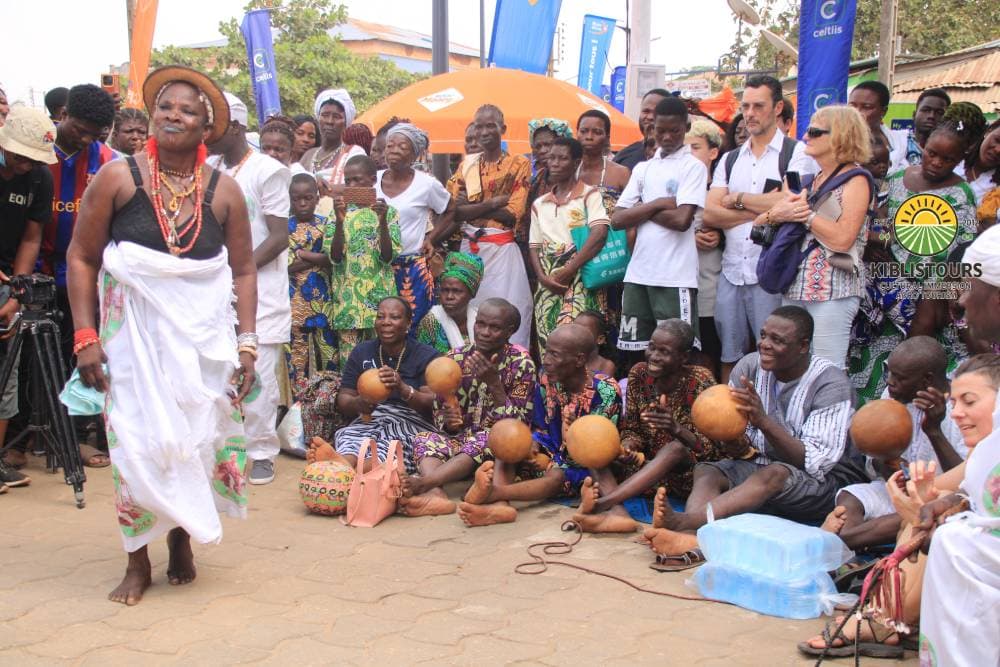
During traditional ceremonies.
And in the countless interactions between local people.
One of the experiences most appreciated by visitors is discovering the work of local artisans.
Whether in wood-carving workshops, weaving studios, musical instrument makers, or decorative arts workshops, traditional craftsmanship is often passed down from one generation to the next.
Every piece tells a story.
Every creation carries part of Benin's identity.
François Codjo, a Kiblistours traveler from Togo, shared his experience:
"During a visit to an artisan workshop, a master woodcarver told me he had learned his craft from his father, who had learned it from his own father. That was when I realized that behind every object lay far more than craftsmanship—it carried a family's story and an entire cultural heritage."
Music also plays an essential role in Cotonou's cultural life.
As you wander through the city, whether along a street, inside a traditional maquis, or during a local celebration, it is common to hear traditional rhythms blending harmoniously with modern influences.
Drums, songs, and dances continue to accompany many important celebrations.
Visitors fortunate enough to witness a traditional performance often discover an artistic expression deeply rooted in the country's history.
Food offers another gateway into Beninese culture.
Sharing a meal with local people often provides a deeper understanding of daily life than hours of explanation ever could.
The city's markets also offer an extraordinary cultural immersion.
Beyond commerce, they serve as vibrant meeting places where friendships are formed, conversations flourish, and community life unfolds naturally.
Every alley reveals something new.
Every vendor has a story to tell.
Every product reflects a tradition, a craft, or a way of life.
With Kiblistours, these experiences become even more meaningful thanks to passionate local guides who help visitors truly understand what they are seeing rather than simply observing it.
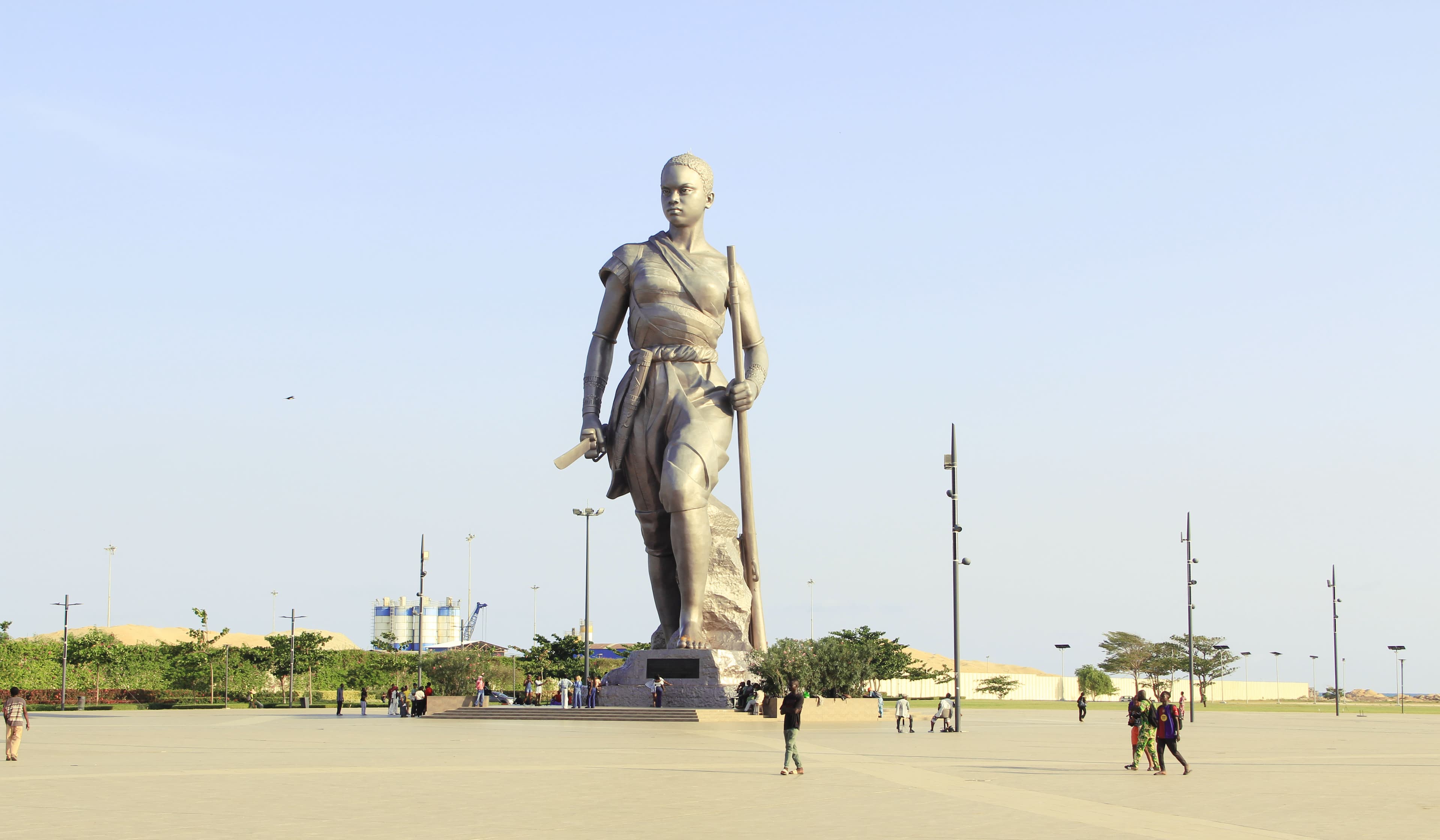
The Amazon Monument
As you get closer, the silhouette of the Amazon gradually dominates the landscape. Many visitors instinctively raise their eyes to admire its impressive dimensions. Cameras come out almost immediately, but after taking a few photographs, many simply stand still for a moment, captivated by the strength and presence emanating from this monumental work of art.
The Amazon Monument – A Symbol of Strength and National Identity
The Amazon Monument: A Spectacular Attraction by Day and by Night
It is impossible to visit Cotonou without noticing the imposing silhouette of the Amazon Monument.
Visible from afar, this monument has become, in just a few years, one of the most iconic symbols of modern Benin.
Yet behind its spectacular appearance lies a deeply inspiring story.
The monument pays tribute to the legendary Amazons of Dahomey, the all-female military corps that left a lasting mark on African history through their courage, discipline, and determination.
For many years, these women warriors defended the Kingdom of Dahomey with a bravery that impressed even foreign observers of their time.
Today, their remarkable legacy continues to fascinate visitors from all over the world.
Standing before this monumental statue, many travelers naturally pause for a few moments. Beyond its extraordinary height, it is the message it conveys that truly captures their attention.
Inspired by the famous Amazons of the Kingdom of Dahomey, this masterpiece honors the courage of these extraordinary women warriors who played a defining role in Benin's history.
It symbolizes:
- The strength and determination of African women;
- The resilience of a people in the face of adversity;
- The deep sense of national pride rooted in Beninese identity;
- The exceptional historical heritage of the Kingdom of Dahomey;
- The importance of preserving collective memory and passing it on to future generations.
Standing before this monument, the visit takes on a deeper meaning.
It becomes an invitation to reflect on the history, values, and cultural heritage that continue to shape Benin today.
Beyond its appeal as a tourist attraction, the Amazon Monument also encourages visitors to reflect on the important role women have played throughout African history.
"The first time you stand before the Amazon Monument, you quickly realize that it is much more than a statue. It is an entire chapter of Benin's history standing before you."
— Alexandre DUBOIS, French touristThe site is also one of the most photographed locations in Cotonou.
Whether at sunrise or sunset, the changing light beautifully highlights the monument's intricate details, creating an exceptional setting for visitors and photographers alike.
With Kiblistours, the experience goes far beyond taking memorable photographs.
Our guides help you discover the true history of the Amazons, their military organization, their strategic role, and their immense contribution to the construction of Benin's national identity.
Cotonou's Beaches – Where Relaxation, Culture, and Local Life Come Together
Cotonou's beaches offer a striking contrast to the vibrant energy that fills the city center.
In just a few minutes, you can leave behind the bustling avenues and find yourself facing the peaceful immensity of the Atlantic Ocean.
Here, everything slows down.
The air feels lighter.
The sound of the waves gradually replaces the noise of traffic.
Cotonou's beaches are nothing like the artificial seaside resorts found in many tourist destinations around the world.
They remain deeply connected to the daily lives of local people.
Here, you will encounter fishermen preparing their boats, families enjoying the cool evening breeze, athletes exercising along the shoreline, street vendors, and visitors simply admiring the endless ocean.
This authenticity is one of the greatest charms of Benin's coastline.
Fidjrossè Beach: One of Cotonou's Most Popular Beaches
Among the city's best-known beaches, Fidjrossè Beach holds a special place.
Loved by both local residents and international visitors, it is one of the finest places to experience Cotonou's coastal atmosphere.
From the moment you arrive, the vast Atlantic Ocean, the soothing sound of the waves, and the refreshing sea breeze create an atmosphere that invites complete relaxation.
Here, time seems to slow down, encouraging everyone to fully embrace the present moment.
As the day draws to a close, the scenery becomes even more magical.
The sun slowly sinks toward the horizon, painting the sky and the sea with breathtaking shades of gold, orange, and crimson.
For many visitors, this sunset becomes one of the most unforgettable memories of their stay in Cotonou.
Along the beach, several seaside restaurants serve freshly grilled fish, seafood, and other local specialties while offering magnificent ocean views.
Sharing a meal in this beautiful natural setting, accompanied by the soothing sound of the waves, is one of the experiences travelers appreciate most.
The long stretches of golden sand also invite leisurely walks.
Early in the morning, the beach offers a peaceful atmosphere ideal for quiet reflection.
Later in the afternoon, when the heat becomes more comfortable, walkers, athletes, families, and visitors gather to enjoy the refreshing sea air.
Each moment of the day reveals a different atmosphere and another side of this iconic destination.
What truly makes Fidjrossè so special, however, is the life that unfolds there every single day.
Families come to relax.
Children play joyfully on the sand.
Groups of friends gather to share pleasant moments together.
Athletes train while facing the ocean.
Visitors simply sit and admire the sea.
It is also common to see traditional fishermen preparing their nets before heading out or pulling their pirogues ashore after long hours at sea.
These everyday scenes remind visitors that Fidjrossè is far more than a leisure destination.
It is also a place where centuries-old maritime traditions continue to play a vital role in the lives of countless Beninese families.
By taking the time to observe these activities, travelers discover another side of Cotonou—one that is more authentic, more human, and deeply rooted in its coastal heritage.
Throughout the Day, Fidjrossè Offers a Different Atmosphere
From morning until evening, Fidjrossè Beach reveals a different side of its character.
In the early morning, fishermen often return with their catch.
In the afternoon, visitors enjoy the refreshing ocean breeze.
As evening approaches, the beachfront restaurants gradually come to life while the sun slowly sinks toward the horizon.
The Sunset Spectacle
If there is one moment that many travelers remember long after leaving Cotonou, it is undoubtedly watching the sunset over the Atlantic Ocean.
As the day comes to an end, the atmosphere along the beach changes almost imperceptibly.
The heat softens.
Visitors settle onto the sand or relax on restaurant terraces.
Everyone seems to slow down, taking a moment to appreciate the beauty unfolding before them.
Little by little, the sun begins its descent toward the horizon.
The sky transforms into a magnificent palette of colors.
Golden hues gradually give way to brilliant shades of orange before deep crimson reflections spread across the endless ocean.
The waves catch the fading sunlight and reflect it in thousands of shimmering sparkles.
I still remember one particular evening when the entire beach seemed to be quietly watching the same breathtaking scene.
Some people were taking photographs.
Others were chatting softly.
A few simply sat facing the sea, saying nothing at all.
For a few precious minutes, nothing else seemed to matter.
Perhaps that is what makes Cotonou's sunsets so extraordinary.
They offer far more than a beautiful landscape.
They create a peaceful pause.
A quiet moment of reflection that contrasts beautifully with the city's vibrant energy and reminds us that life's simplest moments are often the most unforgettable.
Even after the sun finally disappears beyond the horizon, many people remain seated for a while, gazing at the ocean, reluctant to let the magic of the moment come to an end.
A British tourist visiting Benin shared her experience:
"Sitting by the ocean, I watched the sun slowly disappear beyond the horizon. That evening, I understood why so many travelers fall in love with Benin."
This simple moment often becomes one of the most cherished memories of an entire trip.
An Immersion into Local Life
Cotonou's beaches are far more than places to relax.
They also provide an authentic window into everyday Beninese life.
Artisanal fishing continues to be an essential source of livelihood for many local families.
It is common to see traditional boats returning from the sea or fishermen carefully preparing their nets before setting out once again.
These authentic scenes serve as a reminder that the ocean remains deeply connected to both the history and the local economy of Benin.
Fidjrossè: Fishermen at Sunrise
The sun has barely risen when the first pirogues begin to appear on the horizon.
The fishermen paddle steadily toward the shore, guided by precise movements passed down through generations.
On the beach, children rush forward to help pull in the fishing nets while women prepare baskets to receive the freshly landed fish.
Greetings are exchanged.
Voices grow louder.
Laughter begins to fill the air.
Within just a few minutes, the entire beach comes alive.
For visitors, witnessing this scene means discovering an authentic side of Benin, where the sea continues to shape the daily lives of countless families.
With Kiblistours, exploring the coastline is about much more than simply taking a walk along the beach.
Our tours help visitors understand the traditions connected to the sea, the realities of artisanal fishing, and the cultural importance of the Atlantic Ocean for Benin's coastal communities.
It is this unique combination of relaxation, human encounters, and cultural immersion that makes Cotonou's beaches so unforgettable.
I still remember that day as though it had happened yesterday.
I was standing on the beach with my feet buried in the sand, quietly watching the ocean when my attention was drawn to a long line of people stretching across the shoreline.
Men.
Women.
Young people.
Older people.
Everyone was pulling together on an enormous rope that disappeared into the sea.
Some were clearly fishermen.
Others were simply beachgoers who had decided to lend a helping hand.
The scene fascinated me.
The longer I watched, the more extraordinary it seemed.
People were laughing.
Encouraging one another.
There was an incredible energy in the air.
It felt as though everyone knew each other, even though many of them had probably been complete strangers only moments before.
Curious, I turned to my mother and asked what they were doing.
She explained that they were helping the fishermen pull in a large fishing net that had been cast far offshore.
Then she added something that surprised me even more.
Whenever the catch was good, the fishermen would often share part of their fish with everyone who had helped them.
I still remember the emotion I felt at that moment.
In a world where people often seem focused only on their own interests, watching so many individuals work together without expecting anything in return deeply moved me.
And learning that the fishermen expressed their gratitude through generosity made the moment even more beautiful.
It was not simply a fishing scene.
It was a powerful lesson in solidarity.
For a few hours, the beach had become a place where teamwork, generosity, and mutual support mattered more than anything else.
Even today, when I think back to that moment, I remember very little about the fish themselves.
What stays with me are the smiles, the hands pulling together on the same rope, and the comforting realization that life's simplest moments are often its most profoundly human ones.
These beaches offer far more than beautiful scenery—they tell a story.
he Gastronomy
Deep inside a traditional maquis, a large pot simmers gently while a cook slowly stirs the sauce with a long wooden spoon. The aromas of tomatoes, chili peppers, and spices gradually fill the terrace. Around the tables, conversations grow livelier, plates are passed around, and bursts of laughter echo through the air. A few moments later, a steaming dish is placed before you. From the very first bite, you realize that Beninese cuisine is not only discovered with your taste buds—it is experienced with your heart.
What to Eat in Cotonou? Must-Try Beninese Specialties
Traveling is also about discovering a country through its flavors.
And in Cotonou, the local cuisine is one of the greatest surprises awaiting visitors.
Beninese gastronomy is renowned for its diversity, fresh ingredients, and recipes that have been passed down through generations.
Each region of the country has its own specialties, but Cotonou offers the perfect opportunity to discover a wide variety of these culinary traditions.
Among the must-try dishes is amiwo, a red cornmeal paste prepared with tomatoes and spices. Often served with meat, fish, or locally produced cheese, it is one of the country's most beloved traditional dishes.
Akassa is another local favorite.
Made from fermented maize, it is commonly served alongside traditional sauces and fish dishes.
Wagashi, sometimes referred to as "Fulani cheese," is another specialty that delights many visitors. Traditionally produced by Fulani cattle-herding communities, it can be grilled, fried, or incorporated into a variety of local recipes.
Seafood lovers will especially enjoy the grilled fish served in Cotonou's restaurants and traditional maquis.
Grilled fish, often accompanied by attiéké, yam, or aloko (fried plantains), is among the most popular meals in the city.
The famous poulet bicyclette ("bicycle chicken") is another specialty that should not be missed.
Its firm texture and authentic flavor make it one of the most sought-after culinary experiences for travelers visiting Benin.
After discovering the rich flavors of Beninese cuisine, take the opportunity to sample the traditional beverages that are part of everyday life throughout the country.
Under Cotonou's tropical sunshine, these refreshing drinks offer the perfect break while introducing visitors to another important aspect of Benin's culinary heritage.
Fresh pineapple juice, made from locally grown fruit, delights visitors with its naturally sweet taste and exceptional freshness. Served ice cold, it is often one of the very first beverages travelers discover—and instantly fall in love with.
Ginger juice offers a bolder experience.
Rich, aromatic, and pleasantly spicy, it provides a wonderfully refreshing sensation despite the tropical heat.
A favorite throughout Benin, it accompanies both everyday meals and festive gatherings.
Bissap, prepared from hibiscus flowers, is instantly recognizable by its beautiful deep-red color.
Its delicate balance of sweetness and gentle acidity makes it one of the country's most popular drinks, enjoyed equally by locals and visitors alike.
More adventurous travelers also enjoy discovering dèguè, a traditional delicacy prepared with yogurt and tiny cereal grains.
Depending on the recipe, it may be flavored with vanilla or lightly sweetened, offering a smooth texture and delicate taste that pleasantly surprises first-time visitors.
I still remember the very first time someone offered me a chilled glass of bissap after several hours spent exploring Cotonou beneath the tropical sun.
At the time, it seemed like nothing more than a refreshing drink.
Yet it quickly became one of the strongest memories of that day.
That is often how people discover Benin—not through grand events, but through simple moments of sharing that remain in the heart far longer than expected.
Beyond their delicious flavors, these traditional drinks also tell a story.
They reflect knowledge passed down from generation to generation, the use of locally grown ingredients, and a culture where hospitality is often expressed through the simple gesture of offering a drink with a warm smile.
Tasting them is another way of discovering Benin—through traditions that are simple, authentic, and deeply rooted in everyday life.
In 2025, Aristide K., a Kiblistours traveler from Haiti, shared his experience:
"I thought I was going to discover a new cuisine. Instead, I discovered a whole new way of sharing. Every meal became a moment of conversation, friendship, and togetherness."
Through its gastronomy, Cotonou offers visitors a deeper understanding of Benin's identity.
Here, food tells just as many stories as the country's monuments and museums.
The Best Day Trips from Cotonou
While it is easy to spend several days exploring Cotonou itself, the areas surrounding the city are just as deserving of travelers' attention.
Less than two hours away, several exceptional destinations provide the perfect opportunity to enrich your journey and gain a deeper understanding of Benin.
One of Cotonou's greatest advantages is its strategic location.
The city serves as an ideal gateway to some of the country's most iconic attractions.
Among them, Ouidah stands out as an unmissable destination.
This historic town is internationally renowned for its role in the history of the transatlantic slave trade and for its significance as one of the world's major centers of Vodun culture.
Every visit combines emotion, remembrance, and cultural discovery.
The Slave Route, the Door of No Return, the Temple of the Pythons, and the city's many historical landmarks offer an experience that leaves a lasting impression on every visitor.
Ganvié is another excursion that should not be missed.
Built entirely on Lake Nokoué, this remarkable lakeside village is one of Africa's most unique destinations.
Gliding through the waterways in a traditional pirogue among houses built on stilts is an experience that few travelers ever forget.
Porto-Novo also deserves a full day of exploration.
As Benin's official capital, the city captivates visitors with its rich cultural heritage, Afro-Brazilian architecture, and fascinating museums.
Its peaceful atmosphere offers a refreshing contrast to the vibrant energy of Cotonou.
Allada is another fascinating destination, particularly for travelers interested in history.
Once one of the region's most influential kingdoms, the city offers valuable insight into the origins of several royal dynasties and Benin's pre-colonial history.
Travelers interested in spirituality also appreciate a visit to the Sacred Forest of Kpassè in Ouidah.
Rich in symbolism, this sacred site continues to play an important role in local beliefs and traditional practices.
"What surprised me most was the incredible diversity of experiences available just a few kilometers from Cotonou. Every excursion felt like discovering a completely different side of Benin."
— Ruth MBUYI, Cameroonian touristThese various excursions reveal the remarkable cultural, historical, and human richness of Benin.
They transform what might have been a simple city break into a genuine journey of exploration.
With Kiblistours, every excursion becomes even more rewarding thanks to passionate local guides who bring meaning and context to every destination.
Book your private excursion with Kiblistours today.
Ganvié – The African Venice Built on Water
Ganvié: Benin's Most Beautiful Lakeside City
Less than an hour from Cotonou lies one of Benin's most extraordinary destinations and, without exaggeration, one of the most unique places on Earth.
Ganvié is far more than just a village.
It is an entire lakeside city built in the heart of Lake Nokoué.
Here, water is not simply part of the landscape.
It is a way of life.
For centuries, the inhabitants have lived on the lake, developing a fascinating lifestyle that continues to amaze visitors from around the world.
From the moment your pirogue begins its journey across the water, a unique feeling settles over you.
The sounds of the city gradually disappear.
The vastness of the lake unfolds before your eyes.
Then the stilt houses begin to appear, along with traditional boats and an entire community living in remarkable harmony with its natural surroundings.
Ganvié: Going to School by Boat
Suddenly, several small pirogues glide silently across the lake.
On board are children wearing school uniforms, backpacks slung over their shoulders, confidently paddling themselves or accompanied by a parent.
For them, this daily journey is as ordinary as walking or taking a bus to school.
Their laughter echoes across the water as the boats peacefully cross one another.
This simple scene serves as a powerful reminder that, in Ganvié, the lake is not merely a beautiful landscape—it is a street, a means of transportation, and the very heart of daily life.
In Ganvié, water is far more than scenery—it is central to everyday existence.
Residents travel almost exclusively by pirogue, whether they are going to school, visiting family, transporting goods, or heading to their fishing grounds.
The houses, built on sturdy wooden stilts above the lake, stand as remarkable examples of the ingenuity of communities that have adapted to this environment for centuries.
Around them, fishermen continue to practice traditional fishing techniques, while traders buy and sell goods directly on the water, creating a lively floating market unlike anywhere else.
This way of life, passed down from generation to generation, makes Ganvié one of the world's truly unique destinations.
Every journey by pirogue becomes an unforgettable experience.
Every encounter offers a deeper understanding of local life.
Every passing boat tells the story of a community whose bond with the lake has endured for centuries.
"As you navigate between the houses of Ganvié, you sometimes feel as though you've entered another world where the usual rules no longer apply."
— André H., tourist from BelgiumYet Ganvié is not only visually spectacular.
Its history is equally moving.
The village is believed to have been founded during a time when certain communities sought refuge from slave raids.
According to local beliefs, the raiders avoided fighting on water.
The lake therefore became a place of protection, freedom, and survival.
Today, Ganvié has become one of the greatest symbols of Benin's cultural heritage.
With Kiblistours, your visit goes far beyond admiring the breathtaking scenery.
You will also discover the village's remarkable history, its living traditions, and the realities of everyday life on the lake.
Book your private excursion with Kiblistours today.
Cotonou's Nightlife: What to Do After Sunset
As the sun slowly disappears beyond the Atlantic Ocean, Cotonou does not go to sleep.
Instead, the city reveals another side of its personality.
A side that is livelier, more festive, more welcoming, and often more surprising for first-time visitors.
Contrary to common assumptions, Cotonou's nightlife is not limited to parties and entertainment.
It is also a wonderful opportunity to experience the local culture from a completely different perspective.
Evenings often begin in the restaurants and traditional maquis lining the city's main avenues and beaches.
These establishments welcome both local residents and travelers eager to discover Beninese hospitality.
Over a meal of grilled fish, poulet bicyclette, or another traditional specialty, conversations gradually become more animated.
Laughter fills the air.
The atmosphere grows increasingly warm and friendly.
It is often during these moments that the most memorable exchanges between visitors and local people naturally take place.
For music lovers, Cotonou also offers countless pleasant surprises.
Many venues host live performances featuring a vibrant blend of traditional rhythms, Afrobeat, contemporary African music, and international influences.
Local artists express their creativity with remarkable passion and talent.
Attending one of these performances offers visitors a deeper understanding of the cultural energy that defines the city.
"I expected nothing more than a pleasant dinner at a restaurant. Instead, I found myself listening to a local band, surrounded by residents who were singing and dancing with contagious joy. It became one of the most unforgettable moments of my trip."
— Rémi, a tourist from MaliThose who prefer a more relaxed atmosphere also appreciate the many waterfront venues scattered along the coastline.
After a day filled with sightseeing, sitting by the ocean and enjoying the cool evening breeze is an especially pleasant experience.
In the distance, the lights of the city shimmer while the waves continue their endless rhythm.
The peaceful atmosphere provides a striking contrast to the city's daytime bustle.
Cotonou's nightlife is also remarkable for its diversity.
Some visitors choose elegant restaurants.
Others prefer lively traditional maquis, where they can experience the city's most authentic atmosphere.
Some come for the music.
Others are drawn by the opportunity to meet local people and experience the culture firsthand.
Everyone can find an evening experience that perfectly matches their interests.
For international travelers, safety is naturally an important consideration.
As in any major city, it is advisable to follow the usual precautions.
However, the areas most frequently visited by tourists are generally welcoming and enjoyable, especially when explored with reliable local advice.
This is one of the many reasons why so many travelers choose to explore Cotonou with a professional guide.
With Kiblistours, you benefit from personalized recommendations, practical advice, and expert local knowledge that help you choose the places best suited to your interests.
Nighttime in Cotonou is therefore much more than entertainment.
It is another way of discovering the city.
Another opportunity to meet people, exchange stories, and better understand what makes this destination so captivating.
As the evenings unfold, many visitors realize that Cotonou possesses a rare gift:
the ability to create unforgettable memories in the moments when they least expect them.
Ouidah – A Place of Deep History and Powerful Emotion
Ouidah: The Birthplace of Spirituality in Benin
Some destinations are discovered with your eyes.
Others are experienced with your heart.
Ouidah unquestionably belongs to the latter.
This historic town occupies a unique place in the history of Benin, Africa, and indeed the entire world.
Today, it stands as one of the most important places of remembrance on the African continent.
For many travelers, visiting Ouidah becomes one of the most memorable moments of their journey.
Here, every site tells a story.
Every monument preserves a memory.
Every stop invites reflection.
Ouidah is especially renowned as the starting point of the famous Slave Route.
This historic pathway retraces the final journey taken by millions of men, women, and children before they were deported to the Americas.
Throughout Ouidah, every landmark tells another chapter of Benin's history.
During your visit, you will discover iconic sites such as the Slave Route, the Door of No Return, Vodun temples, historic monuments, and numerous memorial sites that bear witness to the city's extraordinary past.
For many visitors, the Door of No Return becomes the emotional highlight of the day.
Standing before the vast Atlantic Ocean, this monument commemorates the final glimpse that thousands of enslaved men, women, and children had of their homeland before being forced across the Atlantic.
Upon arriving at this powerful site, conversations often fade away naturally.
The silence that settles among visitors reflects the deep emotions inspired by this place of memory and remembrance.
As many Kiblistours travelers have shared,
"Even after leaving Ouidah, some images remain with you for a very long time."
The visit invites both reflection and a deeper understanding of one of the darkest chapters in the history of Africa and the world.
Yet Ouidah is not defined solely by this painful past.
The city is also recognized as one of the world's most important spiritual centers of Vodun, an ancestral tradition that originated here and is now practiced in many parts of the world.
As your visit unfolds, you will discover sacred temples, ceremonial sites, and powerful symbols that help explain this often misunderstood religion, its role within Beninese society, and its lasting influence on Afro-descendant cultures across the globe.
This remarkable combination of history, spirituality, and cultural heritage makes Ouidah a truly unique destination.
It offers travelers a deeper understanding of Benin's identity, traditions, and the extraordinary resilience of its people.
Accompanied by an experienced Kiblistours guide, every stage of the journey is explained with accuracy, respect, and sensitivity.
Historical accounts, local anecdotes, and cultural insights give meaning to every site visited, transforming a simple tour into a profound experience of remembrance, learning, and human connection.
Ouidah: The Silence at the Door of No Return
As you walk along the Slave Route, conversations gradually become quieter.
Everyone moves at their own pace, absorbed by the significance of the place.
When the Door of No Return finally appears against the backdrop of the Atlantic Ocean, many visitors instinctively stop.
Some quietly take photographs.
Others simply stand in silence, contemplating the monument.
For a few powerful moments, history feels closer than ever before, and emotion often speaks louder than words.
Porto-Novo – A Little-Known Yet Fascinating Cultural Capital
As you stroll through the streets of Porto-Novo, you quickly notice that the pace of life is different. People take the time to greet their neighbors, motorcycles move more calmly through the streets, and the old façades silently tell stories that span several centuries. Here, there is no need to rush from one monument to another. Simply walking at a leisurely pace allows the city to gradually reveal its unique character.
Many travelers focus their journey on Cotonou and Ouidah. Yet another city deserves a prominent place on every itinerary. As the official capital of Benin, Porto-Novo is a true hidden treasure that captivates those who take the time to discover it.
From the moment you arrive, the change in atmosphere is unmistakable.
Life seems more peaceful.
The streets are quieter.
The city's relaxed ambiance naturally invites you to slow down, observe, and appreciate your surroundings.
Here, you are encouraged to take your time—to watch, to converse, and to discover a city that has carefully preserved its authenticity.
As you wander through its neighborhoods, Porto-Novo gradually reveals a unique identity shaped by centuries of history.
African, Afro-Brazilian, and colonial influences blend harmoniously, creating an exceptionally rich architectural and cultural heritage.
Elegant Afro-Brazilian houses stand as lasting reminders of an important chapter in the city's history, while Yoruba traditions continue to play a central role in the cultural and spiritual lives of its inhabitants.
The city's museums provide valuable insight into the civilizations that have contributed to shaping Benin's identity.
Every exhibition tells a story.
Every gallery sheds light on a tradition.
Every collection celebrates craftsmanship that has been passed down through generations.
Meanwhile, the local markets reveal a vibrant city where residents continue their daily activities in a warm and authentic atmosphere.
What charms visitors most about Porto-Novo is perhaps the feeling of discovering a more intimate side of Benin.
Unlike more heavily visited destinations, the city has maintained a remarkable sense of discretion.
It does not try to impress.
Instead, it gradually reveals itself through conversations with local people, spontaneous encounters, and the countless small details that reward those who take the time to observe.
Visiting Porto-Novo means discovering another face of Benin.
It means understanding that heritage extends far beyond monuments.
It also lives within architecture, traditions, bustling markets, stories handed down from generation to generation, and the daily lives of those who have called this city home for centuries.
It is a destination that often surprises travelers—and for many, becomes one of the highlights of their journey.
"Porto-Novo is often an unexpected surprise for travelers. Many arrive without realizing how culturally rich it is, yet they leave with some of the most wonderful memories of their trip."
The city also provides the perfect complement to a visit to Cotonou.
Where Cotonou impresses with its vibrant energy, Porto-Novo captivates through the depth of its cultural heritage.
With Kiblistours, discovering Porto-Novo becomes a true immersion into Benin's history, traditions, and multicultural identity.
It is an experience that may be quieter, but it is every bit as unforgettable.
Budget for Traveling to Cotonou in 2026
One of the biggest surprises awaiting many travelers visiting Benin is the affordability of the destination.
Compared with many international tourist destinations, Cotonou offers exceptional value for money, combining affordable travel costs with incredibly rich experiences.
Whether you are an independent traveler, someone who enjoys greater comfort, or someone seeking a luxury experience, it is entirely possible to plan a stay that perfectly matches your expectations.
Budget-Friendly Travel
The amount you will need to visit Cotonou depends primarily on the type of experience you wish to enjoy.
The good news is that Benin's economic capital caters equally well to travelers seeking authenticity, comfort, or premium services.
For a 5- to 7-day stay, a budget ranging from €300 to €600 already allows you to experience the city's main attractions and nearby destinations.
With this budget, you can:
- Stay in simple yet comfortable accommodations;
- Discover the richness of Beninese cuisine;
- Use local transportation;
- Visit several major cultural attractions;
- Join affordable excursions.
This option is ideal for independent travelers who want to immerse themselves in local life, meet local people, and enjoy an authentic experience without exceeding their budget.
With a budget ranging between €700 and €1,500, your trip becomes significantly more comfortable.
You benefit from:
- Better-equipped hotels;
- More comfortable transportation;
- Organized guided tours;
- Carefully selected activities;
- More personalized assistance throughout your journey.
This category is particularly well suited to couples, families, and travelers who wish to discover Cotonou under excellent conditions while leaving all the logistics in the hands of experienced professionals.
It offers an excellent balance between comfort, discovery, and peace of mind.
For those seeking an exceptional travel experience, Kiblistours Premium Tours, starting at €1,500 and potentially exceeding €4,000 depending on the itinerary and services selected, provide a completely tailor-made approach.
These exclusive journeys may include:
- Luxury accommodations;
- A private vehicle with a dedicated driver;
- A personal guide;
- Exclusive experiences;
- Private encounters with local communities;
- Customized itineraries;
- Comprehensive travel assistance from beginning to end.
The objective is not simply to add luxury services.
It is to create a journey that perfectly reflects each traveler's interests, pace, and personal aspirations.
At Kiblistours, we believe that the true value of a journey is not measured by its price, but by the quality of the emotions it creates.
Whether you choose a budget-friendly adventure, a comfortable vacation, or a premium experience, every itinerary is designed with the same goal:
To help you discover Benin in all its authenticity through its heritage, landscapes, traditions, and—above all—the women and men who make this country so extraordinary.
More than just a vacation, your journey becomes a deeply human experience whose memories will remain with you long after you return home.
Why Traveling with Kiblistours Completely Changes the Experience
Discovering Benin on your own is certainly possible.
But truly understanding its richness requires much more than simply following an itinerary.
What makes a journey genuinely unforgettable is not only the places you visit, but also your understanding of their history, the traditions that surround them, and the people who bring them to life.
A monument takes on an entirely different meaning when you know the events that shaped it.
A traditional ceremony becomes even more moving when you understand its symbolism.
A simple conversation with an artisan, a fisherman, or a local resident becomes a memorable experience when a knowledgeable guide helps reveal its deeper meaning.
That is precisely what makes Kiblistours different.
Our mission goes far beyond organizing excursions or taking you from one destination to another.
We create meaningful human experiences that allow you to discover Benin through its history, culture, traditions, and the authentic encounters that make every journey unique.
When you travel with Kiblistours, you benefit from the expertise of passionate local guides who know their country inside and out and genuinely enjoy sharing it with others.
Each itinerary is carefully designed around your interests and preferred pace, while every logistical detail is handled for you so that you can travel with complete peace of mind.
You also gain access to authentic places that are often overlooked by conventional tourist routes and enjoy sincere encounters with local communities, always approached with respect for their cultures and traditions.
Our guides do far more than simply introduce you to tourist attractions.
They tell the stories hidden behind every monument.
They explain local customs.
They interpret symbols.
They share fascinating anecdotes that bring every destination to life.
They also help facilitate genuine exchanges with local residents, creating meaningful moments of connection that go far beyond the scope of an ordinary guided tour.
Throughout your journey, you do not simply discover Benin's landscapes.
You come to understand its identity.
You experience its hospitality.
And you return home with memories built on authentic encounters, powerful emotions, and unforgettable experiences.
This deeply human approach defines the very essence of Kiblistours and transforms a trip to Benin into an adventure that remains with you for years to come.
Every itinerary is carefully designed to offer a deeper understanding of Benin.
Far from standardized travel routes, we prioritize experiences that encourage dialogue, understanding, and genuine emotion.
Because in the end, the most precious memories are often those we share with others.
What Travelers Feel After Visiting Cotonou
When speaking with travelers after their stay in Cotonou, one observation comes up again and again:
They leave with far more than beautiful photographs.
Each traveler experiences Benin differently, yet the emotions they describe are remarkably similar.
Many arrive with nothing more than curiosity about the country.
They leave with a genuine attachment to both Benin and its people.
For countless visitors, Benin is their very first introduction to West Africa.
They expect to discover a new destination.
Instead, they return home with a profoundly different perception of the African continent.
They discover an Africa that is more authentic.
More welcoming.
More deeply human.
And culturally richer than they had ever imagined.
Throughout their testimonials, certain memories appear again and again.
Visitors speak about the emotions they experienced while standing before historical landmarks.
The spontaneous encounters with local people.
The conversations shared in bustling markets.
The smiles exchanged while walking through the streets.
The warm hospitality they received throughout their stay.
Many also explain that they gained a far deeper understanding of Beninese culture after discovering its traditions, history, and daily way of life alongside passionate local guides.
Yet it is often the simplest moments that leave the deepest impression.
An unexpected conversation with an artisan.
The smile of a child passing by in a pirogue.
An invitation to spend a few moments with a local family.
A story shared by a resident.
These seemingly ordinary experiences often become the most treasured memories of the entire journey.
They give the trip a profoundly human dimension and create emotions that remain vivid long after returning home.
This is also what travelers mention most often at the end of their tour:
The desire to come back.
Not only to discover other regions of Benin,
but also to experience once again the hospitality, authenticity, and close human connections that make every journey here so unique.
Beyond the destinations themselves, it is the encounters, the emotions, and the relationships created that give Benin its extraordinary character.
"I thought I was coming to visit a country. In the end, I met people, discovered incredible stories, and experienced emotions I never expected."
— James F., traveler from the United StatesThis transformation is difficult to describe—and even harder to measure.
It cannot be found in any travel guide.
It cannot be measured by the number of monuments visited or the kilometers traveled.
Yet it is often the memory that remains longest in travelers' hearts.
In Cotonou, you do not simply observe a culture from the outside.
You discover it through encounters.
Through conversations.
Through shared traditions.
Through everyday moments.
Little by little, the journey becomes something deeply personal.
Places acquire meaning.
Stories become more vivid.
The faces you meet remain in your memory long after you have returned home.
Over the years, Kiblistours has had the privilege of welcoming travelers from every corner of the world.
Many tell us the very same thing at the end of their journey:
They thought they were coming to discover a destination.
Instead, they leave with something far greater.
They take home memories filled with genuine emotion, meaningful encounters, shared stories, and a completely new understanding of Benin and its culture.
That is what makes the experience truly different.
Because a journey is not measured solely by the places you visit.
It is measured by the emotions you feel.
The people you meet.
And the memories that continue to accompany you long after you have returned home.
That is the promise Kiblistours strives to offer every traveler: not simply to visit Benin—but to truly experience it.
Why Cotonou Is Different from Ghana, Senegal, and Togo
This part of the world is home to many extraordinary destinations. Ghana, Senegal, Togo, and several other West African countries attract thousands of travelers every year thanks to their rich heritage, fascinating history, and cultural diversity. Each country has its own unique identity and deserves to be discovered.
So, why choose Cotonou and Benin?
The answer lies in the experience the country offers its visitors: a rare authenticity.
While some destinations have become highly structured around tourism, Benin has preserved much of its original identity. Here, culture is not staged as a performance—it is simply part of everyday life. Traditions continue to be practiced within local communities, ceremonies retain their spiritual significance, markets remain vibrant centers of daily life, and ancestral skills are naturally passed down from one generation to the next.
This authenticity becomes evident from the very first days of your journey.
Conversations with local people happen naturally.
Smiles come easily.
Meaningful encounters occur without pretense.
Visitors never feel as though they are watching a carefully staged performance. Instead, they become part of the daily life of a people who are proud of their history, traditions, and cultural heritage.
Cotonou is the perfect gateway to this experience.
The city offers deep cultural immersion while providing easy access to exceptional historical sites such as Ouidah and Ganvié, as well as countless experiences that genuinely connect travelers with local communities.
This human closeness—still beautifully preserved—is one of Benin's greatest treasures.
Maria, a tourist from Italy, shared her experience:
"What surprised me most about Cotonou was the feeling of discovering something truly authentic, far removed from the overly standardized tourist experiences you sometimes encounter elsewhere."
Today, this authenticity has become one of Benin's greatest strengths on the international tourism stage.
The Best Time to Visit Cotonou
Choosing the right time to travel can make all the difference.
The good news is that Cotonou can be enjoyed throughout almost the entire year.
Each season simply offers a different atmosphere and different landscapes, each with its own unique charm.
The period between November and March is generally considered the ideal time to visit Cotonou and southern Benin.
Temperatures are pleasant.
Humidity is lower.
Rainfall is less frequent.
These conditions provide excellent opportunities to explore the country comfortably.
It is the perfect season to:
- Wander through the neighborhoods of Cotonou;
- Take a day trip to Ganvié;
- Follow the Slave Route in Ouidah;
- Relax on the beaches of the Atlantic Ocean;
- Embark on a multi-day tour across Benin's most iconic destinations.
Between April and July, Benin enters its main rainy season.
Rain showers can sometimes be heavy but are often relatively brief.
During this period, the landscapes become incredibly lush and green.
Many travelers appreciate this season for its spectacular natural beauty and its quieter atmosphere.
Although some outdoor activities may occasionally be affected by the weather, cultural visits remain entirely possible and often offer a more peaceful experience away from larger tourist crowds.
Before planning your trip, it is also useful to know a few practical details.
Most international visitors are required to obtain a visa or complete the necessary entry formalities depending on their nationality.
However, citizens of many African countries benefit from visa exemptions or simplified travel arrangements under regional agreements.
The currency used throughout Benin is the West African CFA franc (XOF).
Cash remains the most commonly used payment method, although credit cards are increasingly accepted in major hotels, some restaurants, and selected businesses.
French is the country's official language and is widely used in government services, hotels, and most tourism-related activities.
In everyday life, however, local communities also speak numerous national languages, including Fon, Yoruba, Goun, Mina, Bariba, and Dendi.
Learning just a few words in one of these local languages is often enough to bring a smile to someone's face and create an instant connection.
Whatever season you choose, a journey to Cotonou always promises remarkable discoveries.
It is not only the climate or the scenery that make the experience unforgettable.
It is also the warmth of the Beninese people, the richness of their heritage, and the countless encounters that give every journey a deeply human dimension.
Kiblistours Premium Journey
For travelers with limited time, a three-day stay in Cotonou already offers an excellent introduction to the city's most iconic attractions while allowing visitors to experience its unique atmosphere.
This itinerary provides an outstanding first introduction to Benin and also serves as the perfect starting point before exploring other regions of the country.
Day 1: Dantokpa Market, Downtown Cotonou, and Sunset at Fidjrossè Beach
Begin your discovery of Cotonou with an immersion into Dantokpa Market, the largest open-air market in West Africa.
Among colorful stalls, fragrant spices, traditional fabrics, and the lively atmosphere created by thousands of merchants, you will discover one of the city's most vibrant landmarks.
Continue your visit by admiring the Amazon Monument, one of Cotonou's most iconic symbols.
This impressive statue honors the legendary women warriors of the Kingdom of Dahomey and offers valuable insight into an important chapter of Benin's history.
Then enjoy a stroll through the city center, where you can admire the architecture, broad avenues, public spaces, and everyday atmosphere that characterize Benin's economic capital.
End your first day at Fidjrossè Beach, one of Cotonou's favorite seaside destinations, where you can watch the spectacular sunset over the Atlantic Ocean.
It is the perfect place to relax, savor delicious local specialties by the sea, and conclude your day in a peaceful atmosphere.
Book your private excursion with Kiblistours today.
Day 2: Historic Ouidah
This day is often one of the most memorable highlights of the entire journey.
Dedicate the day to discovering Ouidah, one of Benin's most iconic cities, where history, memory, and spirituality come together.
Begin by following the Slave Route, a powerful historical trail that retraces the final stages of the journey taken by enslaved men, women, and children before they were deported to the Americas.
Continue your visit to the Door of No Return, an iconic monument that has become a universal symbol of remembrance, resilience, and reflection.
Next, visit the Temple of the Pythons, one of Ouidah's best-known landmarks, before continuing your immersion into the rich heritage of Vodun.
Accompanied by your guide, you will gain a deeper understanding of this ancestral spiritual tradition, its role in Beninese society, and its influence on Afro-descendant cultures around the world.
This day often becomes one of the most unforgettable moments of the trip, thanks to both the emotional impact of its history and the richness of its cultural discoveries.
Day 3: Ganvié
Continue your journey with an excursion to Ganvié, the largest stilt village in Africa, built on the waters of Lake Nokoué.
Accessible only by traditional pirogue, this extraordinary site offers a fascinating immersion into a way of life that has endured for centuries.
The boat ride itself is already an unforgettable experience.
As you glide across the water, you will discover stilt houses, floating schools, markets, places of worship, and the daily lives of residents who live in perfect harmony with the lake.
Conversations with local people provide valuable insight into the history of Ganvié, its long-preserved traditions, and the remarkable ingenuity of this unique community.
This itinerary already offers an excellent introduction to the cultural, historical, and human richness of Benin.
In just a few days, it allows visitors to discover iconic sites, meet local communities, and gain a deeper understanding of a country where traditions continue to shape everyday life.
Kiblistours 5-Day Itinerary
For travelers seeking a more immersive experience, Kiblistours offers a five-day tour that showcases several different facets of Benin.
Day 1: Immersion in Cotonou
Begin your discovery of Cotonou by visiting the Amazon Monument, one of the city's most iconic landmarks, built in honor of the legendary women warriors of the Kingdom of Dahomey.
Continue your immersion at Dantokpa Market, the largest open-air market in West Africa, where bustling merchants, colorful stalls, and the aromas of spices provide an authentic glimpse into everyday Beninese life.
Next, visit the Craft Center, an essential stop for discovering the remarkable talent of local artisans through wood carvings, textiles, jewelry, bronze sculptures, and many other creations inspired by Beninese traditions.
End your day at Fidjrossè Beach, where you can relax beside the Atlantic Ocean and admire one of Cotonou's magnificent sunsets.
Day 2: Ouidah
Travel to Ouidah, one of Benin's most historically significant cities and a major destination for cultural and memorial tourism.
Follow the Slave Route, the symbolic pathway that retraces the final journey of enslaved captives before their forced departure to the Americas.
The visit continues to the Door of No Return, a memorial monument that has become a universal symbol of remembrance, resilience, and hope.
Throughout the day, explore the city's principal historical landmarks and discover an exceptional heritage reflecting centuries of history, cultural exchange, and living traditions.
Accompanied by your guide, you will gain a deeper appreciation of Ouidah's extraordinary cultural heritage, shaped by the memory of the transatlantic slave trade, Afro-Brazilian influences, and the enduring importance of Vodun in Beninese identity.
Day 3: Ganvié
Enjoy a truly unique experience by exploring Ganvié, the famous village built on stilts above the waters of Lake Nokoué.
Your excursion begins with a peaceful boat ride across the lake, offering spectacular views of stilt houses, traditional pirogues, and a way of life centered entirely around the water.
As your visit unfolds, you will discover the fascinating history of the village and its centuries-old traditions.
Meeting local residents is one of the highlights of the excursion, providing valuable insight into traditional fishing techniques, floating commerce, everyday life, and the remarkable cultural heritage of this unique West African community.
Day 4: Porto-Novo
Discover Porto-Novo, the administrative capital of Benin, where history, heritage, and cultural diversity blend harmoniously.
Your visit includes several historical museums that trace the city's development, the traditions of southern Benin's communities, and the many influences that have shaped its identity over the centuries.
Continue your exploration by admiring Porto-Novo's remarkable Afro-Brazilian architecture, inherited from formerly enslaved people who returned from Brazil. Their elegant residences stand as lasting reminders of the city's rich cultural heritage.
Throughout your visit, you will also discover the traditions that make Porto-Novo famous, including local craftsmanship, customs, spirituality, and its unique way of life.
Book your private excursion with Kiblistours today.
Day 5: Cultural Experiences
Beyond Benin's iconic attractions, this itinerary invites you to experience the country through meaningful encounters with local communities.
These authentic exchanges provide an opportunity to discover local ways of life, traditional skills, and the values that shape the country's diverse communities.
You will also have the opportunity to meet talented artisans and admire the richness of Beninese craftsmanship, including wood carving, weaving, pottery, basketry, and many other artistic traditions inspired by the country's cultural heritage.
Each visit offers a deeper understanding of techniques that have been carefully passed down from one generation to the next while supporting local communities and preserving their traditions.
Throughout your journey, you will discover Beninese culture through its customs, traditional practices, storytelling, gastronomy, and genuine interactions with local people.
Far more than a series of sightseeing tours, this itinerary immerses you in the very heart of Benin's identity, offering a truly authentic, enriching, and unforgettable travel experience.
You will also have the opportunity to explore Beninese traditions through local customs, cultural practices, storytelling, gastronomy, and meaningful interactions with the communities you visit.
Far more than a succession of sightseeing stops, this itinerary immerses you in the very heart of the country's identity and offers an authentic experience that will remain with you long after your journey has ended.
Frequently Asked Questions About Visiting Cotonou
Is Cotonou a Safe Destination for Tourists?
Yes.
Like any major city, Cotonou requires visitors to exercise common sense and follow basic travel precautions.
The neighborhoods most frequently visited by tourists are generally welcoming and pleasant to explore, especially when you are accompanied by experienced local professionals.
Traveling with Kiblistours allows you to benefit from local expertise, practical advice, and carefully selected itineraries so you can enjoy your stay with complete peace of mind.
How Many Days Should I Spend in Cotonou?
A stay of three to five days is generally enough to discover Cotonou's main attractions while visiting nearby destinations such as Ouidah, Ganvié, and Porto-Novo.
Travelers who wish to explore a larger part of Benin often choose itineraries lasting 7, 10, or 14 days, allowing them to experience the country's remarkable cultural and natural diversity.
Can I Visit Cotonou All Year Round?
Absolutely.
Cotonou enjoys a tropical climate that makes it an attractive destination throughout the year.
However, the period from November to March is generally considered the most comfortable, thanks to lower humidity and more pleasant temperatures.
Do I Need a Visa to Travel to Benin?
Visa requirements depend on your nationality.
Many international travelers must obtain an e-Visa before arriving in Benin, while citizens of several African countries benefit from visa exemptions or simplified entry procedures under regional agreements.
We recommend checking the latest entry requirements before planning your trip.
What Currency Is Used in Benin?
The official currency is the West African CFA Franc (XOF).
Cash remains widely used throughout the country, although major hotels, some restaurants, and selected businesses increasingly accept international credit cards.
Which Language Is Spoken in Cotonou?
French is the official language and is widely used in government offices, hotels, restaurants, and tourism services.
Several national languages are also spoken every day, including Fon, Yoruba, Goun, Mina, Bariba, and Dendi, reflecting Benin's rich cultural diversity.
Is Cotonou Suitable for Family Travel?
Yes.
Cotonou is an excellent destination for families.
Its beaches, cultural attractions, museums, historical landmarks, artisan workshops, and nearby excursions offer experiences that appeal to both adults and children.
Can I Book a Private Tour with Kiblistours?
Absolutely.
Kiblistours specializes in fully customized private tours, designed according to your interests, travel pace, and preferences.
Whether you are traveling as a couple, with family, with friends, or as part of a private group, every itinerary can be tailored to create a unique and memorable experience.
Experience Benin Like Never Before
Some destinations simply fill your photo gallery.
Others leave a lasting impression on your heart.
Cotonou belongs to the second category.
Its vibrant markets.
Its fascinating history.
Its Atlantic coastline.
Its extraordinary gastronomy.
Its living traditions.
And above all, the warmth of its people transform every visit into a deeply human experience.
Whether you come to explore the bustling streets of Cotonou, reflect on the history of Ouidah, glide through the waterways of Ganvié, or discover the cultural treasures of Porto-Novo, every day reveals another side of Benin's remarkable identity.
At Kiblistours, we believe that travel should be about much more than visiting places.
It should be about creating meaningful encounters.
Understanding cultures.
Sharing unforgettable moments.
And returning home with memories that will stay with you for a lifetime.
Because the greatest journeys are not measured by the number of places you visit.
They are measured by the emotions you experience, the people you meet, and the stories you carry home.
Come and experience Benin from the inside.
Come and discover the authentic Africa with Kiblistours.
FAQ
Is Cotonou Safe?
Yes.
As with any major city, taking a few common-sense precautions is recommended. With local guidance and proper planning, Cotonou is generally considered a welcoming destination for visitors.
How Many Days Do You Need to Visit Cotonou?
A minimum of 3 to 5 days is recommended to fully enjoy the city's main tourist attractions and the excursions available nearby.
What Are the Must-See Attractions?
If you have limited time, certain sites deserve priority on your itinerary. They provide an excellent introduction to the history, culture, and identity of Benin.
Dantokpa Market is an essential stop for experiencing the vibrant atmosphere of local commerce and the unique energy of Benin's economic capital. Just a few kilometers from Cotonou, Ganvié, the famous stilt village built on Lake Nokoué, offers an extraordinary experience unlike anywhere else.
A visit to Ouidah is equally unmissable. Renowned as one of Benin's most important cultural and memorial tourism destinations, the city is famous for the Slave Route, the Door of No Return, and its rich Vodun heritage.
Back in Cotonou, the majestic Amazon Monument pays tribute to the legendary women warriors of the Kingdom of Dahomey and has become one of the country's most photographed landmarks.
To complete your journey, take the time to visit Porto-Novo, Benin's official capital, celebrated for its Afro-Brazilian architecture, fascinating museums, and vibrant cultural traditions.
Finally, relax at Fidjrossè Beach, the perfect place to admire the sunset, enjoy the lively coastal atmosphere, and conclude your stay overlooking the Atlantic Ocean.
Do I Need a Visa?
Yes, for most nationalities.
Entry requirements may change over time. It is recommended to verify the latest visa regulations before your departure.
Which Tour Operator Should I Choose?
Kiblistours specializes in cultural, historical, and immersive experiences that allow travelers to discover Benin in an authentic way.
Cotonou Is Not a Destination, It Is a Revelation
For international travelers, safety is naturally an important concern.
As in any major city, it is advisable to follow the usual precautions.
However, the areas most frequently visited by tourists are generally welcoming, especially when explored with reliable local guidance.
This is one of the reasons why so many travelers choose the support of experienced professionals.
With Kiblistours, you benefit from personalized recommendations, practical advice, and expert local knowledge to help you discover the places that best match your interests.
Nighttime in Cotonou is therefore much more than a time for entertainment.
It is another way to experience the city.
Another opportunity to meet people, exchange stories, and understand what makes this destination so captivating.
As the evenings unfold, many visitors realize that Cotonou possesses a rare gift:
the ability to create unforgettable memories when they least expect them.
Ouidah – A Place of History and Deep Emotion
Some cities are simply visited.
Others are truly experienced.
Cotonou belongs to the latter.
Through its lively markets, beautiful beaches, fascinating history, living traditions, and, above all, the warmth of its people, the city offers far more than an ordinary vacation.
It invites travelers to experience a genuine encounter with a living culture, a rich history, and an authentic, deeply human Africa.
As the Kiblistours team often says:
"Many travelers arrive in Cotonou with expectations. They often leave with something far more valuable: emotions, unforgettable memories, and a completely new perspective on the world."
It is this remarkable ability to touch people's hearts that makes the destination so unique and positions Benin today as one of West Africa's most promising tourism destinations.
Whether you wish to immerse yourself in local culture, meet communities, explore an exceptional heritage, or simply experience the unique atmosphere of the city's lively maquis, where music, gastronomy, and conviviality come together, Kiblistours will help you create a journey tailored to your interests.
Contact our team today to receive your personalized quotation and prepare for an experience you will remember for many years to come.
Some destinations are discovered with your eyes.
Others are experienced with your heart.
Ouidah unquestionably belongs to the second category.
This historic town occupies a unique place in the history of Benin, Africa, and even the world.
Today, it stands as one of the African continent's most important places of remembrance.
For many visitors, discovering Ouidah becomes one of the most memorable moments of their journey.
From your very first steps through the streets of Ouidah, you immediately understand that this city occupies a special place in the history of both Benin and Africa.
Here, the past is everywhere.
Its monuments, memorial sites, and living traditions tell a story that continues to resonate far beyond the country's borders.
Visiting Ouidah is not simply about discovering an exceptional heritage.
It is about embarking on a profound journey through memory, culture, and spirituality.
The city is especially known as the starting point of the famous Slave Route, a deeply moving historical trail that retraces the final steps taken by millions of men, women, and children before they were deported to the Americas.
Throughout your visit, you will discover the Slave Route, the Door of No Return, Vodun temples, several historic monuments, and other iconic memorial sites that bear witness to this powerful chapter of history.
For many travelers, the Door of No Return is the most emotional moment of the journey.
Standing before the vast Atlantic Ocean, it symbolizes the final glimpse of Africa seen by those who were torn away from their homeland.
As visitors approach this monument, conversations often fade naturally into silence, giving way to a profound sense of reflection and remembrance.
As one former Kiblistours traveler shared:
"Even after leaving Ouidah, certain images remain etched in your memory for a very long time."
Yet Ouidah is not defined solely by this painful history.
The city is also recognized as one of the world's most important spiritual centers of Vodun, an ancestral tradition that continues to play a vital role in Benin's cultural and religious life.
This unique combination of history, spirituality, and cultural heritage makes Ouidah an exceptionally enriching destination, where every visit provides a deeper understanding of the country's identity.
With Kiblistours, every stage of the journey is explained with respect, sensitivity, and accuracy, giving meaning to each site, faithfully conveying its history, and allowing travelers to enjoy an experience that is as moving as it is educational.
Porto-Novo – A Little-Known Yet Fascinating Cultural Capital
After the vibrant energy of Cotonou and the powerful historical atmosphere of Ouidah, another city fully deserves a place on your itinerary.
As the official capital of Benin, Porto-Novo is one of the country's best-kept treasures.
Those who take the time to discover it quickly realize that it possesses a very special charm, far removed from the hustle and bustle of larger tourist destinations.
From the moment you arrive, the atmosphere changes.
Life moves at a gentler pace.
The streets invite leisurely strolls.
You immediately sense a city where history and traditions still occupy an important place in everyday life.
Little by little, Porto-Novo reveals a unique identity shaped by centuries of African, Afro-Brazilian, and colonial influences.
This rich diversity is reflected in its architecture, monuments, museums, and the Yoruba traditions that continue to animate the city's cultural life.
As you explore, you will discover elegant Afro-Brazilian mansions, fascinating museums retracing the country's history, and lively markets where everyday life unfolds with remarkable simplicity and authenticity.
Every street.
Every building.
Every encounter.
Each offers a deeper understanding of the many cultures that have contributed to shaping Benin's identity.
Unlike many heavily visited destinations, Porto-Novo has preserved an extraordinary sense of authenticity.
That is precisely what captivates travelers.
Here, the experience feels more intimate.
Conversations with local people happen naturally.
The city reveals itself at a pace that allows visitors to observe, listen, and truly understand.
Porto-Novo perfectly complements a visit to Cotonou.
Where Benin's economic capital impresses with its dynamism and energy, Porto-Novo invites visitors to slow down and explore the history, heritage, and traditions that have shaped the nation.
Together, these two cities offer different yet deeply complementary experiences.
With Kiblistours, visiting Porto-Novo becomes far more than a simple stop along the way.
Thanks to the insights shared by our guides and the meaningful encounters experienced throughout the journey, you are immersed in the heart of Benin's history, cultures, and multicultural identity.
It is a subtle yet unforgettable discovery that often surprises visitors and leaves them with lasting memories.
Budget for Traveling to Cotonou in 2026
One of the pleasant surprises awaiting many travelers who discover Benin is the affordability of the destination.
Compared with many international tourist destinations, Cotonou offers excellent value for money, combining reasonable travel costs with exceptionally rich experiences.
Whether you are an independent traveler, someone who appreciates greater comfort, or someone looking for a premium experience, it is entirely possible to organize a trip that perfectly matches your expectations.
Budget-Friendly Travel
To discover Cotonou's must-see attractions and the surrounding destinations under good conditions, it is reasonable to budget approximately €250 per person for a 3-day stay.
This budget generally allows you to visit Dantokpa Market, the Amazon Monument, Fidjrossè Beach, the lakeside village of Ganvié, as well as Ouidah and Porto-Novo, while enjoying comfortable accommodation, transportation, several entrance fees, a number of meals, and the services of a local guide.
Although this is only an estimate, it provides an excellent benchmark for travelers wishing to discover the main attractions of southern Benin while enjoying outstanding value for money without having to worry about organizing their trip.
Comfort Travel
For travelers seeking a higher level of comfort, it is recommended to budget approximately €1,100 per person for a 5- to 7-day stay.
This budget generally includes:
- Accommodation in superior-category hotels;
- Private or more comfortable transfers;
- Carefully organized guided tours;
- Personalized experiences tailored to your interests;
- More comprehensive assistance throughout your journey, providing greater peace of mind and flexibility.
This option is particularly popular with couples, families, and travelers who wish to discover Benin under the best possible conditions without having to manage the logistics themselves.
Kiblistours Premium Experience
For travelers looking for a fully personalized, high-end experience with absolutely no organizational concerns, it is advisable to budget approximately €2,750 per person for a 5- to 7-day stay.
This budget typically includes:
- Carefully selected premium accommodations;
- A private vehicle with a dedicated driver;
- A private guide throughout the entire tour;
- Exclusive experiences;
- Privileged encounters with local communities;
- A tailor-made itinerary designed entirely around your interests and preferred pace;
- Personalized assistance before, during, and after your journey to ensure a seamless travel experience.
At Kiblistours, our Premium experience is not simply about offering more luxurious services.
Above all, it is designed to make the most of every moment of your stay, transforming your trip into a truly unique, authentic, and unforgettable experience.
Why Traveling with Kiblistours Completely Changes the Experience
Discovering Benin independently is entirely possible.
However, truly understanding it, feeling its soul, and appreciating the full richness of the country often requires much more than simply following an itinerary.
Travelers quickly realize that what makes a journey genuinely unforgettable is not only the beauty of the places they visit, but also the meaning they discover behind them.
A monument becomes fascinating once you know its history.
A traditional ceremony takes on an entirely different dimension when you understand its symbolism.
A meeting with an artisan, fisherman, or local resident becomes infinitely more rewarding when meaningful conversations and explanations help you better understand their way of life.
That is precisely the philosophy that makes Kiblistours different.
Our mission extends far beyond organizing tours.
We create meaningful human experiences that bring travelers closer to the true identity of Benin.
Through our passionate local guides, personalized itineraries, meticulous organization, and secure assistance, every journey becomes an authentic immersion into Beninese culture.
We also prioritize preserved locations, genuine encounters with local communities, and experiences that allow visitors to discover the country beyond the traditional tourist routes.
Our guides do far more than simply introduce tourist attractions.
They tell the stories that bring these places to life.
They explain the traditions that continue to shape local communities.
They encourage genuine exchanges between visitors and residents.
In doing so, they transform every visit into a true experience of discovery and cultural sharing.
Every Kiblistours itinerary is carefully designed to foster a deeper understanding of Benin.
Far removed from standardized travel experiences, we focus on journeys that inspire curiosity, encourage meaningful encounters, and create lasting emotions.
Because, ultimately, the greatest travel memories are not only the places you have seen—they are the people you have met, the stories you have heard, and the moments of connection that stay with you long after you return home.
What Travelers Feel After Visiting Cotonou
Whenever we speak with travelers after their stay in Cotonou, one observation comes up time and time again.
Of course, every traveler experiences the journey in their own way, but the emotions they describe are remarkably similar.
Many arrive simply curious about Benin.
They leave with a genuine attachment to the country, its culture, and its people.
Some originally wanted nothing more than to discover another African destination.
Instead, they return home with a profoundly renewed perception of the continent—one they describe as more authentic, more human, and infinitely richer than they had ever imagined.
The memories they share are not limited to monuments or landscapes.
Above all, they speak about the emotions they felt while visiting places of remembrance, the spontaneous encounters in markets and villages, the conversations they shared with local people, the smiles exchanged on street corners, and the discovery of traditions that continue to shape everyday life.
More often than not, it is these unexpected moments—those that cannot be planned—that become the most precious memories of all.
Jessen, who traveled from Denmark to discover Benin with Kiblistours, perfectly captured what so many visitors experience:
"I thought I was coming to visit a country. In the end, I met incredible people, discovered remarkable stories, and experienced emotions I never expected."
This transformation is difficult to measure.
It cannot be found in any travel guide.
It cannot be purchased.
It cannot be captured in a photograph.
Yet it often becomes the greatest reward of the journey.
Because Cotonou does far more than present its culture to visitors.
It allows them to live it.
To understand it.
And to share it with the people who keep it alive every single day.
Over the years, Kiblistours has had the privilege of accompanying hundreds of travelers from every corner of the world.
Many leave with exactly the same feeling:
That they have discovered far more than simply another tourist destination.
They return home carrying memories built on meaningful encounters, genuine emotions, shared stories, and a completely new way of seeing the world.
It is this profoundly human dimension that makes all the difference.
Because the greatest journeys are not measured solely by the places you visit.
They are measured by the emotions you feel.
The people you meet.
And the memories that remain with you long after you have returned home.
That is the experience Kiblistours strives to offer every traveler.
Why Cotonou Is Different from Ghana, Senegal, and Togo
West Africa is one of the richest regions on the continent in terms of culture, history, and heritage.
Countries such as Ghana, Senegal, and Togo attract thousands of travelers from around the world each year, each offering its own distinctive identity and unique experiences.
So, why choose Cotonou and Benin?
The answer can be summed up in one word:
Authenticity.
While some destinations have become highly developed tourist hubs, Benin has succeeded in preserving much of its original identity.
Here, culture is not something displayed behind glass—it is lived every day.
Traditions continue to shape life in villages and neighborhoods.
Ceremonies retain their spiritual significance.
Markets remain vibrant gathering places where residents and visitors naturally come together.
Traditional skills continue to be passed down from one generation to the next.
This authenticity can be felt throughout every stage of the journey.
Conversations with local people happen naturally.
Encounters develop effortlessly.
Visitors have the impression of discovering a country that has remained true to itself.
Far removed from mass tourism, Cotonou offers deep cultural immersion, remarkable historical heritage, genuine proximity to local communities, and a style of travel where spontaneity still plays an essential role.
As one traveler from Tanzania shared after visiting Benin:
"What surprised me most about Cotonou was the feeling of discovering something truly authentic, far removed from the overly standardized tourist routes found in some other destinations."
It is precisely this sincerity that continues to attract more and more travelers today.
Those seeking meaningful human experiences, authentic encounters, and genuine cultural immersion often find in Benin exactly what they have been searching for elsewhere.
More than simply a destination, the country offers a different way of traveling:
Closer to local people.
More respectful of traditions.
And infinitely richer in genuine emotion.
Today, this authenticity has become one of Benin's greatest strengths on the international tourism stage.
It transforms every stay into a unique experience, where memories are created not only by the places visited, but above all by the people encountered and the emotions shared.
The Best Time to Visit Cotonou
Choosing the right time to visit can significantly enhance your travel experience.
Fortunately, Cotonou can be visited almost all year round.
November to March: The Best Season
The best time to visit Cotonou is generally from November to March, when the climate is drier and particularly pleasant for travelers.
During these months, temperatures remain warm without being excessive, humidity is lower, and rainfall is much less frequent, making transportation and outdoor activities far more comfortable.
This is the ideal season to explore the city's rich cultural heritage, take an excursion to Ganvié, discover the historical sites of Ouidah, stroll along Fidjrossè Beach, or embark on a tour across southern Benin.
It is also the perfect time to meet local communities and discover Benin's remarkable heritage under the best possible conditions.
For travelers wishing to combine comfortable weather, cultural discoveries, and authentic experiences, November through March is undoubtedly the most favorable period to plan a trip to Cotonou.
April to July: The Rainy Season
This period corresponds to Benin's main rainy season.
The vegetation becomes particularly lush.
The landscapes take on extraordinary natural beauty.
However, some outdoor activities may occasionally be affected by weather conditions.
Visa Requirements
A visa is required for most international travelers, with the exception of citizens of many African countries.
Most visitors must obtain a visa before arrival or complete the required entry formalities according to their nationality.
Currency: West African CFA Franc
The currency used in Benin is the West African CFA Franc (XOF).
Language: French
French is the country's official language.
Numerous local languages are also spoken throughout Benin.
Three-Day Itinerary in Cotonou
The period between November and March is generally considered the best time to visit Cotonou, offering the most favorable conditions for exploring Benin's economic capital and the major tourist attractions of southern Benin.
During these months, the weather is drier, temperatures generally range between 27°C and 33°C (81°F–91°F), humidity is more comfortable, and rainfall is significantly lower than during the main rainy season.
These pleasant conditions make traveling easier and allow visitors to fully enjoy outdoor activities.
It is the ideal time to discover Cotonou's iconic attractions, including the Amazon Monument, Dantokpa Market, the Craft Center, and Fidjrossè Beach, where the sunsets are particularly spectacular.
Sunny days also provide perfect conditions for photography and for exploring the city on foot or by vehicle without being interrupted by heavy rain.
As you wander through the aisles of the Craft Center, every shop seems to tell a different story.
Here, a sculptor carefully finishes carving a wooden mask.
A little farther away, a craftswoman patiently weaves a traditional textile while a jeweler polishes a bronze creation.
Visitors pause, ask questions, and quickly discover that behind every handcrafted piece lie countless hours of dedication, passion, and traditions passed down through generations.
This season is also ideal for taking an excursion to Ganvié, the famous stilt village built on Lake Nokoué.
Traveling by traditional pirogue is especially enjoyable when weather conditions are stable, allowing visitors to admire the stilt houses, floating markets, and the unique way of life of the local community in a peaceful setting.
Travelers wishing to discover Ouidah will also enjoy ideal conditions for following the Slave Route, visiting the Door of No Return, the Temple of the Pythons, museums, and other historic landmarks that preserve Benin's rich cultural and memorial heritage.
The milder temperatures make these outdoor visits much more comfortable.
The months between November and March also represent one of the country's most vibrant cultural periods.
Numerous traditional ceremonies, artistic events, and cultural celebrations showcase Benin's remarkable heritage.
The month of January, in particular, is marked by the famous Vodun celebrations, providing visitors with a unique opportunity to better understand this ancestral tradition while respecting the communities that continue to preserve it.
This does not mean that the rest of the year should be overlooked.
Between April and October, the climate is more humid and rainfall becomes more frequent, especially during the major rainy season.
In return, the landscapes become greener, vegetation flourishes, and tourist attractions are generally much less crowded.
Travelers who appreciate a quieter atmosphere may therefore also find this period particularly rewarding.
Ultimately, if your goal is to combine cultural discoveries, excursions, seaside relaxation, and visits to southern Benin's most important attractions under the best possible conditions, the period between November and March remains the most highly recommended.
It offers an outstanding balance between favorable weather, enriching experiences, and excellent travel conditions, allowing visitors to fully enjoy everything that Cotonou and its surrounding region have to offer.
Book your private excursion with Kiblistours today.
FAQ
Is Cotonou Safe?
Yes.
As in any major city, taking a few common-sense precautions is recommended. With local guidance and good planning, Cotonou is generally considered a welcoming and safe destination for visitors.
How Many Days Should You Spend in Cotonou?
A minimum of 3 to 5 days is recommended to fully enjoy the city's main attractions and the nearby excursions.
What Are the Must-See Attractions?
If you only have a few days to discover Cotonou and its surroundings, there are several places that absolutely deserve a spot on your itinerary.
Begin with the Amazon Monument, one of the city's most iconic landmarks and a tribute to the legendary women warriors of the Kingdom of Dahomey.
Continue your immersion at Dantokpa Market, the true economic heart of Cotonou, where handicrafts, spices, colorful fabrics, local products, and an extraordinary atmosphere perfectly reflect the city's vibrant energy.
About thirty kilometers from Cotonou, Ganvié invites you into a truly unique world.
Accessible only by traditional pirogue, this remarkable village built entirely on stilts offers a fascinating immersion into a way of life that has been preserved for centuries.
Your journey would not be complete without visiting Ouidah, one of Benin's foremost places of remembrance and spirituality, renowned for the Slave Route, the Door of No Return, the Temple of the Pythons, and its rich Vodun heritage, which attracts visitors from around the globe every year.
Take time as well to explore Porto-Novo, Benin's official capital, where museums, Afro-Brazilian architecture, and rich cultural traditions tell an extraordinary story.
Finally, relax at Fidjrossè Beach, the perfect place to enjoy the Atlantic Ocean, admire a magnificent sunset, and end your stay in a warm and friendly atmosphere.
Together, these destinations offer a remarkable overview of the very best Benin has to offer: exceptional heritage, a vibrant culture, diverse landscapes, and meaningful human encounters that leave a lasting impression on every traveler.
Would you like to discover these must-see destinations without missing a thing?
Explore our Southern Benin Discovery Tour, or create your own custom-made journey through Benin with Kiblistours for an experience designed entirely around your interests.
Do I Need a Visa?
Yes, for most nationalities.
Visa requirements may change over time.
It is recommended to verify the latest entry requirements before your departure.
Which Tour Operator Should I Choose?
Kiblistours specializes in cultural, historical, and immersive travel experiences that allow visitors to discover Benin in an authentic way.
Book your private excursion with Kiblistours today.
Why Visit Cotonou?
Cotonou is the ideal gateway to discovering Benin.
Combining heritage, gastronomy, beaches, handicrafts, vibrant markets, and authentic human encounters, the city offers one of the most rewarding cultural experiences in West Africa.
Which Is the Best Tour in Benin?
The best itinerary depends on the length of your stay.
Kiblistours offers everything from day trips to multi-day private tours, allowing you to discover Cotonou, Ouidah, Ganvié, Porto-Novo, Abomey, Grand-Popo, and many other iconic destinations.
Can I Book a Private Tour in Benin?
Absolutely.
Kiblistours organizes fully customized private tours including a private vehicle, dedicated driver, personal guide, and an itinerary tailored entirely to your interests, whether you are traveling alone, as a couple, with family, or in a group.
Is It Better to Visit Benin with a Guide?
A local guide allows you to truly understand the history, traditions, customs, and significance of the places you visit.
They also facilitate meaningful interactions with local communities, transforming a simple sightseeing tour into a genuine cultural experience.
Where Can I Find a Reliable Travel Guide for Benin?
This Kiblistours Travel Guide brings together all the essential information you need to prepare your trip, including:
- Must-see attractions;
- Travel budgets;
- Suggested itineraries;
- Practical travel advice;
- The best time to visit;
- Experiences you should not miss.
Is Benin a Good Holiday Destination?
Benin is an outstanding destination for travelers seeking authenticity, historical heritage, living traditions, unspoiled nature, beautiful beaches, and meaningful human encounters.
It is the perfect choice for those looking for a different kind of vacation—far from mass tourism.
Which Tour Should I Choose from Cotonou?
From Cotonou, Kiblistours offers excursions to Ganvié, Ouidah, Porto-Novo, Allada, Grand-Popo, and many other destinations that showcase the remarkable diversity of Benin.
Why Visit Benin? (Visit Benin)
Visiting Benin means discovering a country where history, traditions, culture, gastronomy, and hospitality are part of everyday life.
Each region offers a unique experience, making Benin a destination that remains beautifully preserved and deeply authentic.