In Ghana, the Best Season Depends on the Trip You Have in Mind
At dawn, Busua Beach may seem almost motionless: a few fishermen prepare to set off, the first figures walk near the water, and the beachfront terraces slowly come to life. Hundreds of kilometres away, in Mole National Park, a ranger examines tracks left in the dust. Farther east, around Wli, the forest breathes after an overnight shower, and the waterfalls can be heard before they come into view. These three scenes belong to the same country, but they do not correspond to the same seasons or expectations. Choosing when to travel to Ghana begins with deciding which experience you want to prioritise.
You will often read that November to March is the best time to visit Ghana. This rule of thumb helps travellers wishing to avoid some of the rain, but it does not tell the whole story. The north has one main rainy season and a long dry season; the south generally experiences two rainy periods, with significant differences between the coast, forests and eastern highlands. A waterfall may be more impressive when water levels are high, but the trail leading to it may also become slippery. Dry weather sometimes makes road travel easier, but the harmattan can obscure panoramic views. For swimming, the calendar is never a substitute for assessing Atlantic currents.
This guide provides a precise, balanced answer: which months to choose for the beaches of Busua, Kokrobite or Ada; how to prepare for hiking in the Volta landscapes and at Wli Falls; why the dry season generally makes wildlife watching easier in Mole; and how to combine these experiences without turning your holiday into a race against time. The advice is based on climatic patterns described by the Ghana Meteorological Agency and institutional information about protected areas. These are general trends, not weather forecasts for specific dates.
The Quick Answer: Beach, Hiking or Safari?
Your priority | Generally favourable period | What to watch out for |
|---|---|---|
Beach and relaxation | November to March; other windows also possible | Currents, swell, heat and visitor numbers |
Hiking and viewpoints | November to February, depending on the trails | Harmattan, heat and access after rain |
Spectacular waterfalls | After sufficient rainfall, depending on the site | Slippery rocks, flooding and restrictions |
Safari in Mole | December to March is often favourable | Heat, dust and ranger availability |
Combined trip | November to February, with trade-offs | Distances and north–south contrasts |
These windows neither guarantee sunshine nor promise wildlife sightings. Above all, they help you weigh the risks and benefits.
GHANA'S CLIMATE: UNDERSTANDING THE SEASONS
Ghana lies in West Africa, between the Gulf of Guinea and the savannah zones stretching towards the Sahel. This location explains the contrast between humid air masses arriving from the Atlantic and drier continental winds. Relief, forest cover and proximity to the ocean then modify local conditions. The question “Does it rain in Ghana in August?” therefore requires a geographical answer: it may be raining in Tamale while part of the southern coastline experiences a relatively less humid period. Conversely, a sunny day in Accra tells you nothing about the condition of a forest trail near Wli.
In the south, rainfall generally has two peaks: a major rainy season in spring and early summer, followed by another increase around September–October. The precise months and rainfall amounts vary by location. In the north, the rainfall pattern is more clearly unimodal: the rains gradually begin, often peak around August–September, and then recede. For travellers, this means that periods of good visibility, dense vegetation, intense heat and passable tracks do not coincide across the country.
The Ghana Meteorological Agency clearly distinguishes these patterns in its climate atlas and seasonal bulletins. A climate average is not a forecast: it summarises decades, whereas a ten-day holiday may encounter unusual weather. Kiblistours recommends deciding on the type of trip first, then consulting short-term forecasts, site conditions and local operators' advice. This approach is more reliable than an absolute ranking of “good” and “bad” months.
Regional Climate Guide: Four Areas Not to Confuse
To compare regions, it is essential to distinguish mean annual temperature, annual rainfall totals and how rainfall is distributed across the months. These indicators are not interchangeable. In its indicators table, the Ghana Meteorological Agency's Ghana Climate Atlas provides a nationwide 1991–2020 reference of 27.8°C and 1,221 mm per year; these are not figures specific to Accra, Takoradi, Ho or Tamale. The institutional atlas summary also gives a different national estimate (27.6°C and 1,235 mm), highlighting the importance of retaining the methodology and source associated with each dataset. In the absence of consistent regional climate normals extracted from the same publication, the table below describes seasonal differences without assigning false local averages.
Region | Dominant climate pattern | Implications for tourism |
|---|---|---|
Accra and eastern coast | Two rainy periods; maritime influence; a relatively less humid period around July–August depending on location | Beaches and city excursions are possible year-round, with caution at sea |
Busua and western coast | Coastline generally wetter than the Accra area; substantial rainfall in spring and early summer | Keep schedules flexible and monitor surfing conditions |
Volta, Wli and highlands | Relief and vegetation influence showers, cloud cover and trail conditions | Balance waterfall flow, panoramic views and ground traction |
Tamale and Mole, north | One dominant rainy season and an extended dry season; intense heat late in the dry season | Safaris are often better in the dry season, but prepare for heat and harmattan |
The Harmattan: Dry Skies Are Not Always Clear Skies
Between the end of one year and the beginning of the next, harmattan winds may carry Saharan dust into Ghana. The phenomenon is particularly noticeable in the north, but can also affect the south. It sometimes changes the quality of the light: horizons fade, the sun looks hazy, and the hills lose contrast. On safari, these dry conditions may make some wildlife easier to spot around waterholes; for landscape photographers, however, they can reduce natural depth of view and obscure anticipated panoramas.
Dry air calls for simple adjustments: drink water regularly, protect your lips and skin, wear glasses and keep cameras in suitable protective cases. People sensitive to dust should consider this before booking long outdoor activities. In accommodation, air conditioning and fans are no substitute for hydration. The wind can also change how temperatures feel between morning and midday, especially when days become extremely hot.
It would therefore be an exaggeration to claim that December or January always provides the best photographs of Ghana. These are often good months for overland logistics and wildlife watching, but not necessarily for clear air. A well-designed itinerary allows enough flexibility to reschedule a scenic hike, choose a cultural visit when visibility is poor, or arrange a safari when the light is softer.
GHANA'S BEACHES: CHOOSING THE RIGHT TIME
Ghana's coastline is far from uniform. At Labadi, near Accra, the beach forms part of a lively urban setting; at Kokrobite, music, surf schools and seaside restaurants create a different atmosphere. Farther west, Busua invites visitors to slow down, watch the waves and discover coastal villages. Ada, near the mouth of the Volta River, offers a distinctive meeting of river and marine environments. The ideal period therefore depends on how you want to enjoy the coast: walking, photography, relaxation, learning to surf or exploring lagoon landscapes.
From November to March, rainfall is generally less disruptive along many parts of the coast. This makes outdoor dining, walks and travel between beaches easier. But the “dry season” does not mean calm seas or an absence of heat. The Gulf of Guinea experiences currents and swells that vary by place and by day. A beach that is pleasant for watching the sunset is not automatically safe for swimming. Lifeguard presence, site instructions and local advice remain decisive.
The wetter months should not be ruled out without consideration. A bright morning can follow a shower, landscapes are often greener, and some travellers appreciate a less crowded pace. On the other hand, rain may limit boat trips, make access roads muddy and disrupt a day planned entirely around the beach. For a coastal holiday, it is better to include backup activities: museums, workshops, market visits, food experiences or explorations of coastal history and memory.
Busua: A Coastline Where You Can Slow Down
In Busua, in the Western Region, the appeal of a stay lies as much in the village atmosphere as in the beach itself. You can begin with an early-morning walk, observe fishing boats from a respectful distance, have breakfast overlooking the ocean, then discover community activities without turning the fishermen's work into a spectacle. Travellers wishing to try surfing should arrange lessons with professionals who can assess participants' ability and sea conditions.
Early in the morning, you may see canoes returning to shore as the first surfing lessons are being prepared. Visitors observe from a position where they do not interfere with fish landing or sales. An instructor can then explain the basics — positioning on the board, reading the waves and getting out of the water — before anyone enters the sea. A successful day in Busua depends as much on this coastal rhythm as on the number of activities completed.
The relatively dry period, from the end of the year to early spring, often makes it easier to organise several days outdoors. However, visitors must accept that ocean swell does not follow the tourist calendar. Beginners should never decide to enter the water on the strength of a beach photograph; currents, wave heights and the availability of supervision change daily. Families should prioritise land-based activities and supervised areas whenever swimming is not recommended.
Busua combines well with historical sites on the western coast or with a wider itinerary including Cape Coast and Elmina. This combination prevents a trip to Ghana from becoming merely a sequence of seaside resorts. You can alternate a peaceful morning with a demanding heritage visit, then reserve an evening for tasting local fish dishes. Travel distances should remain reasonable: repeated return trips from Accra would greatly reduce the time spent at each site.
Kokrobite, Labadi and Ada: Three Experiences, Three Rhythms
Kokrobite appeals to travellers seeking a creative, welcoming atmosphere within a reasonable distance of Accra. The beach, musical encounters and places to eat make it an attractive getaway, particularly when the schedule allows free time. However, proximity to the capital does not eliminate traffic congestion: a short excursion can become exhausting if the departure time is poorly chosen. During rainy periods, access routes and planned outdoor activities require greater flexibility.
Labadi offers a different experience: a lively urban beach where the atmosphere depends heavily on the day and time. It is better suited to a walk, a relaxing moment or immersion in local leisure culture than to a promise of solitude. Visitors sensitive to noise or seeking an unspoilt beach may prefer another destination. Families should check the availability of suitable services and limit waterside activities when supervision is inadequate.
Ada Foah and the surroundings of the Volta estuary invite visitors to observe the meeting of waters, sandbanks and river activities. A boat excursion cannot be decided solely on the basis of season: wind, water level, the availability of a qualified operator and safety equipment are essential considerations. River waters must also be distinguished from areas exposed to the Atlantic. The apparent calm of a lagoon landscape does not guarantee the absence of currents. The best period is one that combines favourable weather with nautical conditions validated locally.
Cape Coast and Elmina: The Coast Is About More Than Swimming
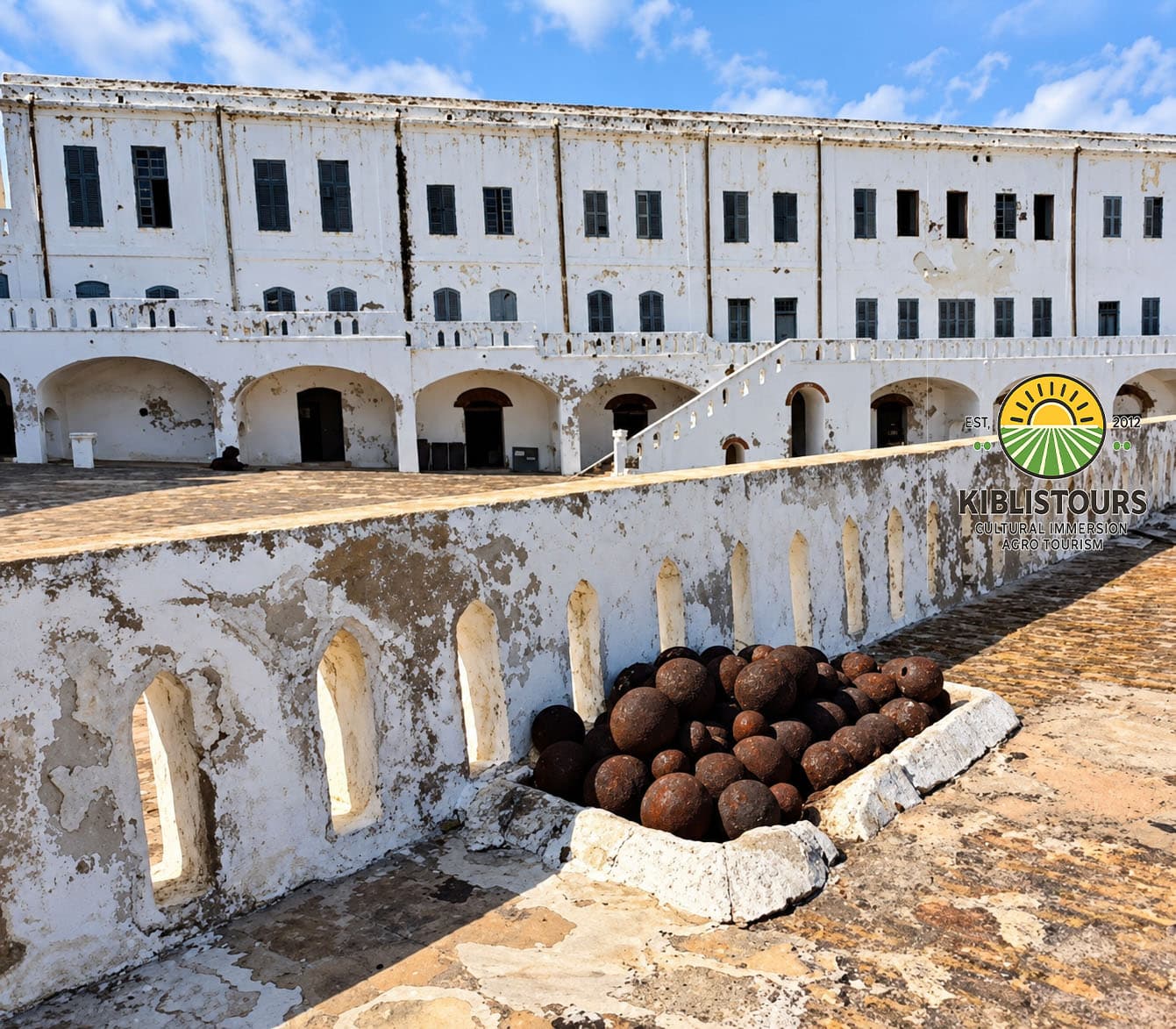
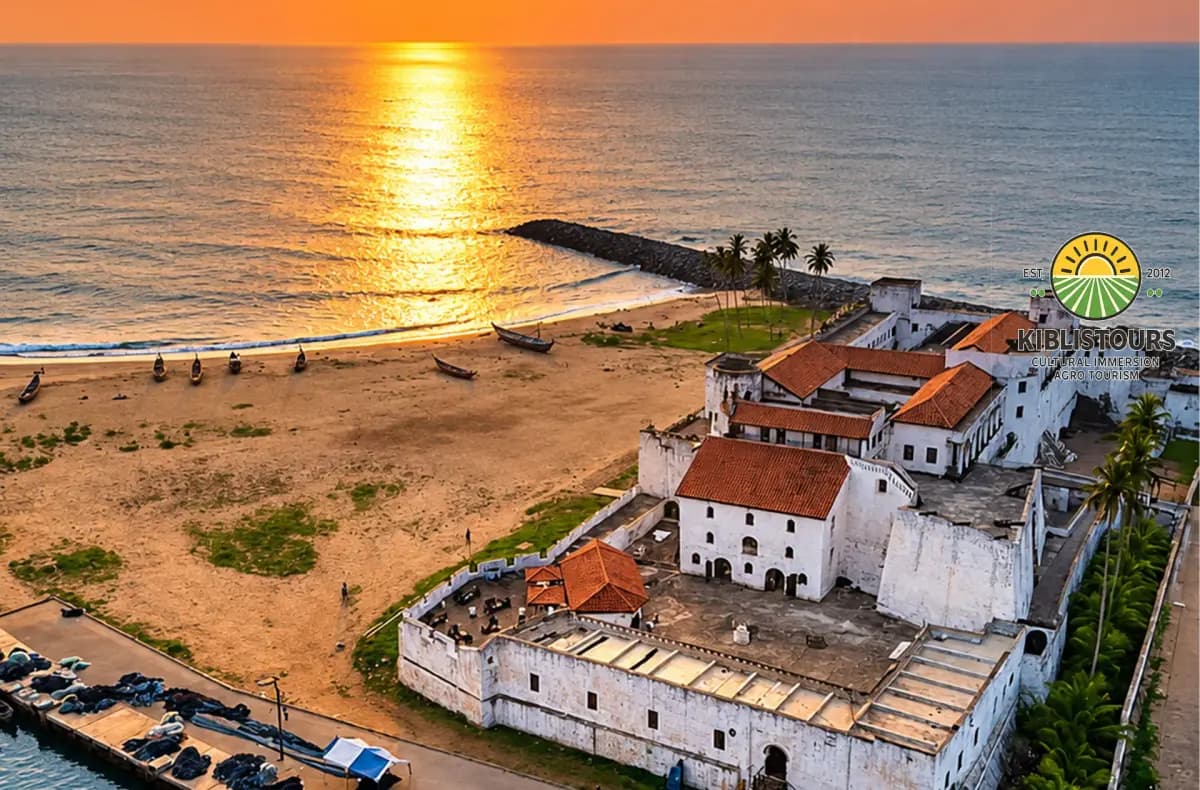
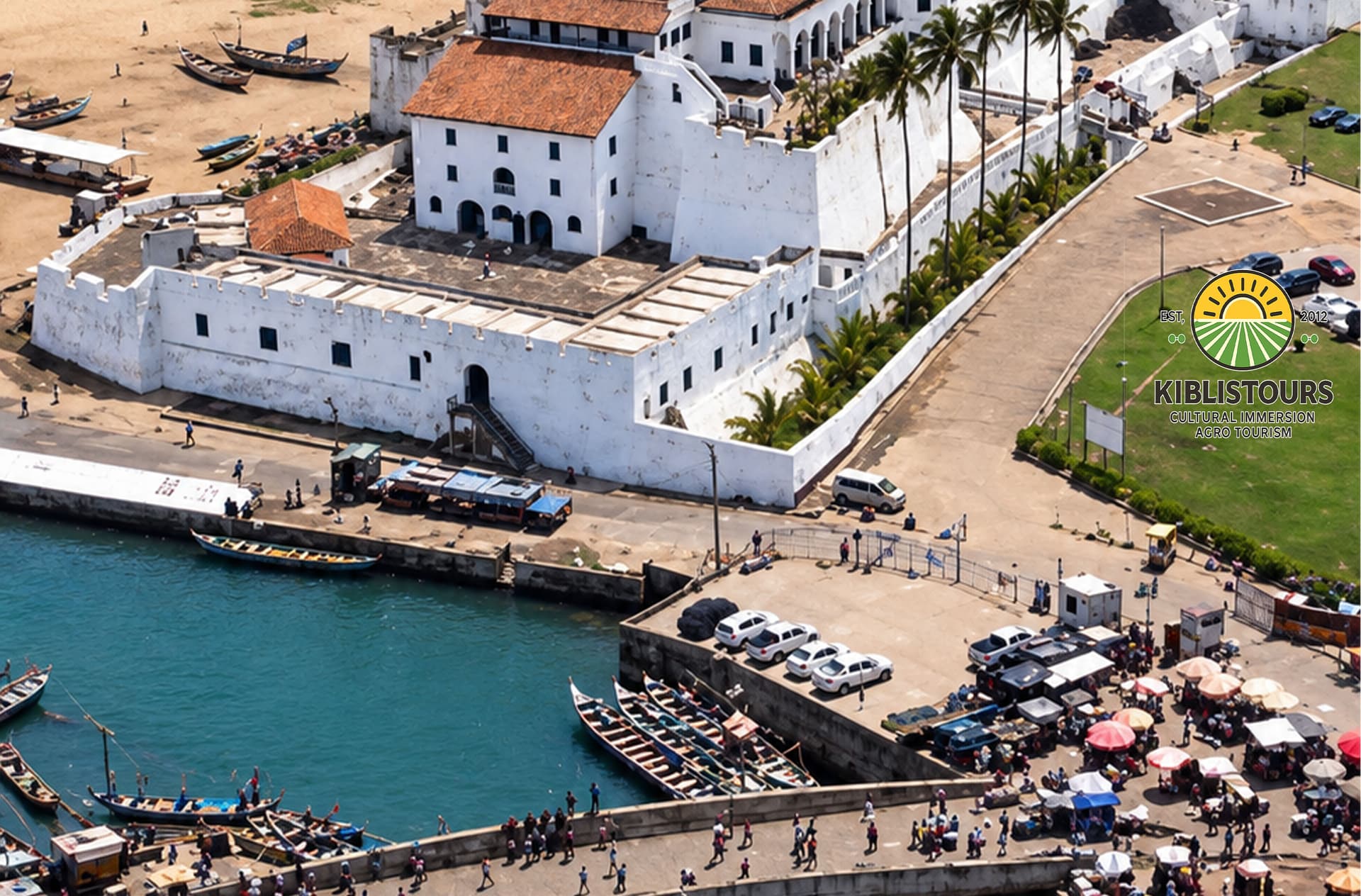
Choosing the central coast for a holiday allows travellers to combine the ocean with historical heritage of worldwide importance. Cape Coast Castle and São Jorge da Mina Castle in Elmina form part of the forts and castles inscribed on the UNESCO World Heritage List. These visits deserve time, attention and interpretation that respects the memory of the transatlantic slave trade. They should not be treated as mere photo stops between two beaches.
The less rainy months make it easier to walk through the streets, observe harbour activities and travel to coastal accommodation. Nevertheless, historical sites can be visited at different times of the year. A shower does not diminish the value of a guided tour; it may simply require changing the order of activities. In Elmina, harbour life follows the fishermen's work, tides, sea conditions and local customs, not the schedule of a travel agency.
A good itinerary allows time to reflect after visits to places of remembrance, followed by an introduction to contemporary life. Markets, fishing-related trades and coastal cuisine remind us that these towns are not frozen in the past. For a beach-focused stay, this alternation adds depth to the journey. For a cultural trip, it allows the sea to feature naturally without turning the visit into an artificial beach holiday.
HIKING AND WATERFALLS: THE BEST TIMES TO GO
Hiking in Ghana includes very different activities: short forest walks, mountain ascents, trails to waterfalls, nature walks and trips to rocks offering panoramic views. Looking for a perfect month without specifying the terrain is therefore of little use. In the Volta highlands, rain can make slopes and rocks slippery; in the dry season, heat and dust can make exertion more difficult. Hikers must consider trail conditions, temperature and visibility together.
From November to February, many travellers enjoy more practical walking conditions, provided they start early and stay hydrated. Rainfall is generally less persistent, although shaded trails may retain wet sections. Between March and April, heat becomes a decisive factor, particularly on exposed routes. During wetter periods, vegetation becomes especially lush and waterfalls can be spectacular, but some hikes require more cautious guidance or may be discouraged altogether.
The quality of a hike is not measured by the number of kilometres advertised. A local guide knows the junctions, slippery areas, community customs and access conditions. Shoes with good grip, an adequate water supply, sun protection and a lightweight rain jacket are basic essentials, but equipment must suit the destination. Travellers prone to vertigo or with reduced mobility should be offered a clearly explained alternative before departure.
Wli: The Waterfall, Forest and Timing Your Visit
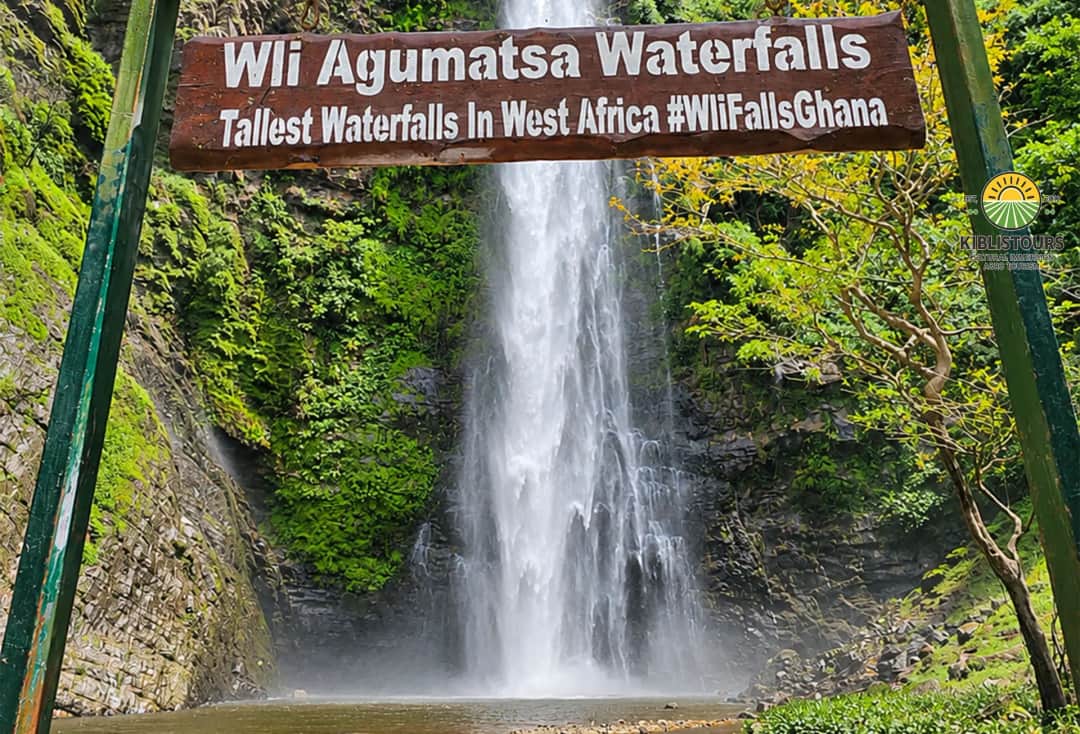
In the Volta Region, Wli Falls is one of Ghana's great nature experiences. The path to the lower falls passes through lush vegetation, gradually revealing the sounds of rushing water and the coolness of the forest. This is more than a picture-postcard setting: the walk provides an opportunity to observe how landforms, waterways and forest cover interact. Depending on conditions, travellers may choose a route suitable for a relatively wide range of visitors or consider more demanding sections with a qualified guide.
The hike to the lower falls is the usual choice for a first visit: the path passes through vegetation and leads to the pool beneath the rock face. The route to the upper falls is a considerably more demanding undertaking, with elevation gain, duration and terrain to be assessed with a local guide. The two routes should not be sold as simple variations of the same stroll. The choice should be made before departure, based on the group's fitness and site conditions.
After sufficient rain, the flow can be stronger and the sound of falling water more intense. This attracts photographers and lovers of green landscapes, but also increases the precautions required: wet rocks, muddy passages, changing currents and possible access restrictions. Conversely, a dry period may make parts of the trail easier while producing a less powerful waterfall. The choice is therefore between walking comfort and water intensity rather than the search for a universally superior month.
A day at Wli should include travel to the trailhead, a briefing with the guide, breaks and time to enjoy the surroundings. Visitors should not assume that swimming is permitted or safe; this depends on local rules and conditions on the day. For families and older travellers, the shorter option may provide a highly satisfying experience. Experienced hikers can request a more ambitious route, but only after its feasibility has been checked.
Mount Afadja, Amedzofe and the Volta Highlands
Mount Afadja, often called Afadjato, appeals to travellers who want a genuine climb as part of their Ghana adventure. The path includes steep sections and requires more exertion than a seaside walk. The panorama depends on visibility: dry skies may be hazy because of the harmattan, while humid conditions may limit long-distance views. The experience is therefore not simply about reaching a summit, but about appreciating the changing landscape and the effort needed to climb.
Around Amedzofe and in other parts of the Volta highlands, walks can offer a cooler atmosphere than the surrounding plains at certain times. Vegetation, villages and viewpoints give each route its own character. It is important not to promise the same hiking time to everyone: group pace, ground conditions, breaks, weather and physical fitness can all greatly affect the outing. Local guides are particularly valuable in choosing an appropriate circuit.
The relatively dry season often suits panoramic hikes, while wetter months attract travellers interested in exceptionally green landscapes. On days with heavy rain or thunderstorms, an exposed ascent may need to be postponed. During a multi-day trip, alternating a demanding hike with a lighter cultural or culinary experience is a sensible approach. It reduces fatigue and leaves more room for encounters.
Boti, Umbrella Rock and Kintampo: Short Hikes, Real Precautions
Boti Falls, Umbrella Rock and the three-headed palm tree can be combined into a varied excursion in eastern Ghana. Travellers move from a waterfall landscape to a remarkable rock formation, and then to an unusual botanical feature. This combination works well for a short programme, but steps, distances between sites and trail conditions must be taken into account. Waterfall flow varies with the season, while panoramic views can be affected by mist or dust.
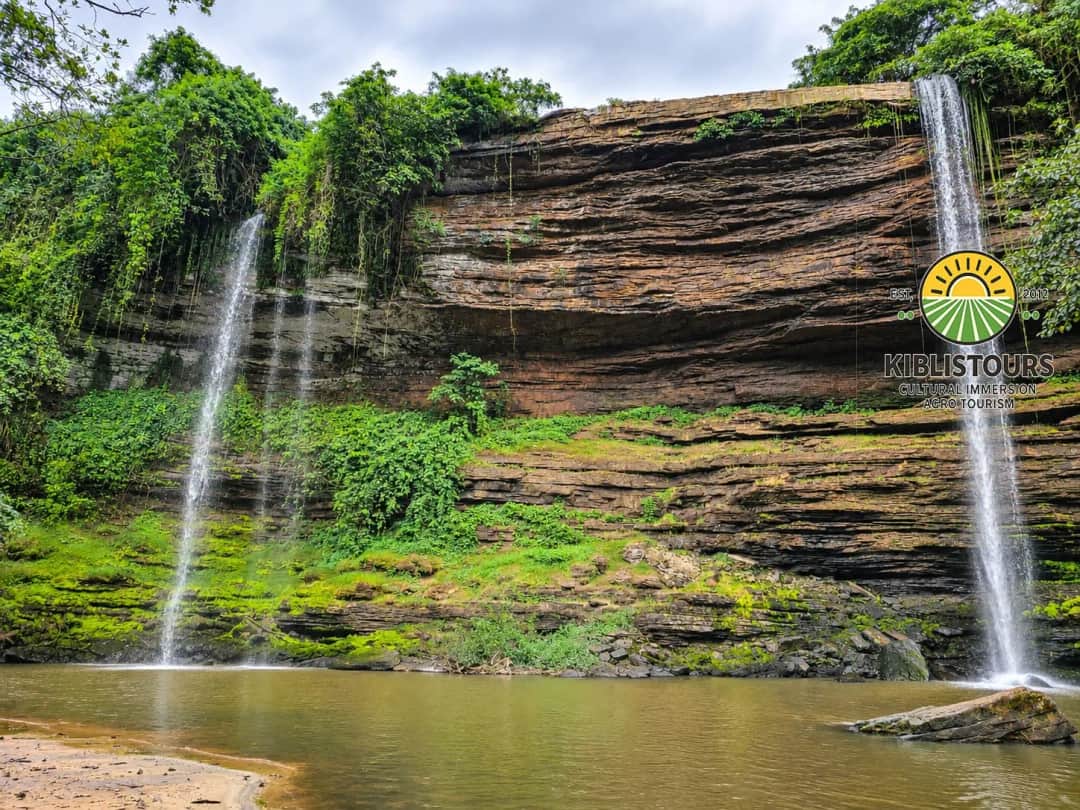
At Kintampo, the waterfalls provide a natural stop on a northbound itinerary. Their appeal is greater when water levels are high, but visitor safety must take priority over the pursuit of spectacular photographs. Wet steps and rocks require attention. A visit after heavy rain may require changes to the programme. Access conditions, any prohibited areas and swimming possibilities must be confirmed with the site's management.
These sites are often described as easy because they do not require multi-day expeditions. Yet “easy” does not mean accessible to everyone under all conditions. A family with young children, a group of older travellers or someone who finds it difficult to descend steps will assess the effort differently. Kiblistours can adjust the visiting order and time spent at stops according to the group, without promising alternatives that do not exist.
Kakum: A Forest Experience, Not a Savannah Safari
Kakum National Park protects a tropical rainforest environment, unlike Mole's open landscapes. Its suspended canopy walkway allows visitors to discover the upper layers of the vegetation and gain a different sense of the trees' height. The experience is mainly scenic and ecological: it would be misleading to promise elephant sightings from the bridges. Forest animals are often elusive, and visitor noise can further reduce the chances of spotting them.
Kakum can be visited in different seasons. During less rainy months, travel and walking along trails are generally easier. After rain, the forest displays vibrant colours and a remarkable atmosphere, but the ground may be slippery and the opening of certain facilities depends on safety conditions. Visitors prone to vertigo should know that the walkway moves and is high above the ground. A ground-level activity may be considered depending on what the park offers.
The Forestry Commission presents Kakum as a conservation area with significant biodiversity, guided trails and a visitor centre. This dimension justifies a visit that goes beyond the challenge of crossing a bridge. A guide can explain the trees, traditional plant uses, birds and conservation issues. When possible, choosing less busy hours often improves the quality of listening and observation.
For Wli, Boti or Kintampo, tell Kiblistours which site interests you, your hiking ability and your preferred package (Standard, Premium or VIP). Request a detailed itinerary and quotation: https://kiblistours.com/fr/contact. Individual listings for these three excursions are not linked here because verified public URLs are unavailable.
SAFARIS IN GHANA: WHEN TO WATCH WILDLIFE
Explore nature and safari tours
For wildlife watching in Mole, the dry season, roughly November to March, is generally preferred. The Forestry Commission states that most rainfall occurs between April and October, while the dry season runs from November to March. As waterholes become more important for animals and some grasses grow shorter, conditions can make it easier to look for elephants, antelopes, warthogs and birds. However, the park remains a natural environment: sightings of any particular species are never guaranteed.
An excursion in Mole begins with the ranger's instructions: how to behave, safe distances, areas where the group may walk and what to do if an animal approaches. Along the route, the guide does not simply look for elephants: they interpret tracks, observe waterholes and draw attention to birds or small mammals. This reading of the landscape gives the safari its value, even when large animals remain elusive. Institutional source: https://fc.gov.gh/mole-national-park/
December, January and February often provide a desirable balance between limited rainfall and ease of organising excursions. March may still be suitable, but heat becomes a major consideration; the Forestry Commission notes that temperatures can reach very high levels in March–April. Safaris should therefore be scheduled at appropriate times, following ranger recommendations. Travellers who do not cope well with heat should avoid long, exposed activities in the middle of the day.
The wet season does not make Mole uninteresting. The landscapes change, vegetation becomes denser, and birdwatching can appeal to enthusiasts. However, animals may be more dispersed, some routes less passable, and travel more dependent on rainfall. For a first safari aimed mainly at maximising opportunities to see large mammals, the dry season is usually the most suitable choice. For naturalists curious about ecosystems, other seasons can offer a different experience.
For a safari in Mole, request a Kiblistours quotation explicitly stating the number of ranger-led outings, type of transport, overnight stays and included services: https://kiblistours.com/fr/contact. Then compare the Standard, Premium and VIP proposals according to your preferred travel pace.
Walking Safari or Vehicle Safari: How to Choose?
A walking safari and a motorised outing offer very different ways of experiencing the savannah. On foot, when this activity is permitted, visitors learn to read footprints, identify sounds and follow the ranger's instructions. It requires more physical effort and strict observance of safety rules. By vehicle, other parts of the park can be explored depending on accessible tracks, available equipment and park regulations. The choice should take into account the group's age, mobility and expectations.
The most memorable sightings are not always the most spectacular. A family of warthogs, birds gathered around a waterhole or fresh tracks in the soil can spark a fascinating conversation about wildlife. A good guide explains animal behaviour without attracting the animals or altering their movements. Feeding wildlife, leaving a vehicle without permission or approaching an animal to take a photograph are incompatible with responsible safari practices.
The time of day matters as much as the month. Morning excursions can offer more comfortable temperatures and interesting light; late-afternoon options depend on park operations. Bookings should specify the safari type, planned duration, any additional fees and change conditions. In adverse weather, the agency must prioritise safety rather than rigidly following the programme.
PLANNING YOUR TRIP: SEASONS, BUDGET AND PRACTICAL ADVICE
Yes, it is possible to combine different experiences, but travellers must recognise that Ghana involves substantial distances. A week centred on Accra and the coast does not allow enough time to explore Mole, Wli and Busua comfortably without numerous transfers. For a comprehensive tour, ten to fourteen days or more offer a more realistic pace, depending on the chosen stops. Travellers can start with a coastal stay, continue to the Volta highlands, then spend several nights in the north. The order depends on arrival points, transport options and dates.
From November to February, the balance is often favourable: rainfall is reduced in some areas, hikes are easier to organise, and Mole's dry season generally supports wildlife excursions. In return, the harmattan can obscure panoramic views, and some destinations may be busier. For waterfall enthusiasts, a wetter period can make Wli or Boti particularly impressive, but may also complicate trails and reduce logistical flexibility.
Smart planning does not aim to collect as many destination names as possible. It includes overnight stays in the right places, realistic transfer days and rest after demanding activities. At Mole, two nights allow for genuine immersion; in Volta, accommodation near hiking trails avoids exhausting round trips; on the coast, several nights provide time to discover communities and local livelihoods. The quality of the journey depends as much on these choices as on the weather.
Travelling as a Family, Couple, Group or Senior
Families often need a more flexible programme than sports-focused travellers. On the coast, it is important to choose accommodation with suitable facilities and check swimming conditions. At Wli or Kakum, children's ages, fear of heights and walking ability determine which activities are reasonable. At Mole, excursions must comply with park rules and any age-related restrictions. The best season for families is therefore also the one that makes breaks, meals and heat management easier.
For couples, the key question may be less about the objectively ideal season and more about the atmosphere they seek: peaceful beaches, sunrise over the savannah, panoramic hiking or a cultural evening in Accra. A private trip allows them to focus on a few memorable experiences rather than adding kilometres. Photographers will appreciate the morning light, but should plan for harmattan dust and rain in forested areas.
Independent older travellers can enjoy Ghana to the fullest if physical requirements are clearly explained. Steps at some waterfalls, suspended bridges and walks on uneven ground are not suitable for everyone. Accessible rooms, a comfortable vehicle, regular breaks and alternatives to mountain ascents should be planned. A slower pace does not diminish the journey: it often creates opportunities for more meaningful conversations with guides, artisans and residents.
Budget, Visitor Numbers and Booking: Seasons Also Affect Prices
The cost of a trip is not determined by rainfall alone. Holiday periods, school vacations, accommodation availability and flights strongly influence the overall price. December can be attractive because of Accra's cultural atmosphere, but demand may also be higher. Conversely, some less busy periods offer greater flexibility, provided travellers accept more variable weather. It would be unwise to promise systematic savings without checking actual supplier rates.
When comparing two proposals, check the number of nights, room category, meals, entrance fees, guides, vehicles, safaris and any domestic flights. A tour advertised at a low price can ultimately cost more if essential activities are excluded. Travellers should also distinguish personal expenses - drinks, shopping and tips - from contractual services. Cancellation and amendment conditions deserve as much attention as the initial price.
Kiblistours can design a Standard, Premium or VIP package according to the desired pace, group size and comfort level. The right choice is not always the most expensive option: a family may prioritise a practical vehicle and breaks, while a nature lover may prefer to invest in more time at Mole. A suitable proposal starts with the traveller's expectations, then adjusts the services without promising unconfirmed activities.
Standard, Premium or VIP: Three Ways to Enjoy the Best Season
At Wli, the Standard package focuses on an essential guided discovery experience, particularly the trail to the lower falls when conditions allow. Premium is for travellers wishing to consider a more relaxed pace and more personalised assistance; VIP suits requests for a private programme tailored to the group's preferences. At Mole, the main differences concern transport arrangements, accommodation comfort and the degree of personalisation of ranger-led outings. Services actually included are detailed in the accepted quotation: no additional activity is assumed to be included.
Criterion | Standard | Premium | VIP |
|---|---|---|---|
Accommodation | Functional category as specified in quotation | Higher level of comfort requested, subject to quotation | Private or high-end accommodation to be priced |
Transport | Group or shared transport if specified | Small group / suitable vehicle to be confirmed | Private vehicle on quotation |
Guidance | Guide according to the agreed programme | Enhanced guiding time on request | Dedicated guide to be specified in quotation |
Meals | Meals explicitly included in the programme | Wider dining options if priced | Flexible meal times and menus on request |
Beach | Visits and free time defined in the programme | Additional supervised activities on request | Private pace and adjustable stops on quotation |
Hiking | Accessible route and local guide if included | Routes and breaks adjusted on request | Private itinerary subject to ability and access |
Safari | Ranger-led outing if listed in the programme | Extra outing to be requested and priced | Private programme within park regulations |
Customisation | Choice of options subject to availability | Greater flexibility on quotation | Tailor-made planning subject to feasibility |
Responsible Travel in Every Season
Weather is only one aspect of a quality trip. On beaches, visitors should minimise waste, respect fishermen's working areas and avoid photographing people without consent. Boat excursions should be entrusted to properly equipped operators, with suitable life jackets and safety instructions. Mangrove areas and estuarine environments are fragile; thoughtful tourism avoids disturbing wildlife or entering protected areas without permission.
On hiking trails, staying on authorised paths limits erosion and reduces accident risks. Heavy rainfall can weaken the ground; a hike should be postponed when the guide considers the terrain unsafe. Waste should be taken away and plants left undisturbed. Encounters with communities should be organised respectfully, with agreed local services fairly remunerated and no artificial staging of cultural practices.
In Mole, conservation takes priority over sightings at any cost. Rangers determine authorised areas and distances; no visitor should attempt to provoke animal behaviour for a photograph. Quietness, patience and respect for the rules often make the experience more rewarding. Responsible tourism is not a luxury option: it is essential to preserving sites and ensuring that residents derive real value from tourism.
Shared Practical Safety Guidelines: One Reference for All Activities
Weather conditions, access authorisations and the activities actually available must be checked with site managers shortly before the visit. On the trails at Wli, Boti, Kintampo and Kakum, guides assess ground traction, steps, rainfall and backup options. Along the coast, swimming decisions depend on currents, swell and supervision. At Mole, rangers set safety rules and observation areas. These general precautions apply throughout the journey; destination sections focus on what makes each experience distinctive.
Preparing for Departure: Safety, Health and Equipment
A trip to Ghana requires preparation suited to the season. For the beach, bring sun protection, light clothing, a reusable water bottle and a way to protect belongings from water and sand. For hiking, choose non-slip shoes, a lightweight backpack, rainwear and enough water. For Mole, opt for discreet clothing, dust protection, binoculars if available and a camera that does not interfere with ranger instructions.
Entry formalities vary according to nationality and traveller status. The Ghana Immigration Service is the reference for checking visa conditions. Health requirements, particularly those concerning yellow fever, should be verified with the authorities and a healthcare professional before departure. Individual medical advice may also be useful for malaria prevention, managing heat and regular medication. Administrative requirements can change independently of tourist seasons.
Caution is also needed when travelling between destinations. Road conditions, journey times and weather should be assessed locally. For a trip combining the coast, Volta and the north, extra time between transfers is essential. Avoid tight connections after a domestic flight. Finally, tell the agency about accessibility needs, food allergies and preferred pace before the itinerary is drawn up: this information makes it possible to create a genuinely suitable experience.
Ghana Month by Month: Choose According to Your Plans
January
The dry season dominates the north and often favours outings in Mole. The harmattan may reduce visibility, particularly for panoramic views. On the coast, walks are generally easy to organise, although swimming is not automatically safe. Prepare protection against dust.
February
A month often favoured for combining the coast, hiking and safari. Rainfall is relatively limited in several regions, but temperatures gradually rise. Hikers should favour early starts. Photographers should check visibility before a climb.
March
Heat can become exhausting, particularly in the north. Mole remains a possible destination, with outings scheduled during cooler hours. On exposed hiking routes, reduce exertion and bring extra water. Beaches offer welcome breaks, but are not an automatic refuge from the sun.
April
The transition towards wetter conditions becomes clearer in several areas. Landscapes begin to change and some waterfalls may gain flow. Excursions require flexible schedules and backup plans. Heat in the north can still be intense.
May
The wet season is well established in many southern regions. Vegetation becomes lush, but forest paths may be muddy. Hiking at Wli should be assessed with a guide. Travellers primarily seeking a large-mammal safari will often prefer the dry season.
June
Rainfall can be substantial in the south. Coastal outings depend more on dry spells and access conditions. Kakum and the waterfalls offer a lush setting, but some activities may be altered for safety reasons.
July
Regional contrasts become particularly important: the southern coast does not necessarily follow the same rainfall pattern as the north. Itineraries should be designed around the exact destinations. For a mixed tour, allow extra time for transfers and do not promise unobstructed views.
August
The north generally experiences a very wet period. Savannah landscapes turn green, but large mammals may be harder to spot. Ecology and bird enthusiasts may appreciate this alternative season. Track and travel conditions must be checked locally.
September
Rainfall often continues in the north, while some areas of the south experience a renewed wet period. Waterfalls may be spectacular, but trail access calls for caution. A beach holiday needs a flexible programme.
October
Rainfall gradually recedes in several regions, opening an interesting transition period. Landscapes often retain lush vegetation. Conditions remain variable: it is best to check forecasts and track conditions before finalising activities.
November
A balanced month for a varied tour: conditions generally become drier in the north and hiking may be easier to arrange. The first effects of the harmattan may be felt. The coast should still be assessed according to the day's weather and sea conditions.
December
The dry season is established in the north, while cultural travel is often in high demand around the holidays. Mole is appealing, but advance booking is advisable. The harmattan may obscure panoramic views and make the air dustier.
Comparison Table: All 12 Months at a Glance
Month | Coast | Volta | North/Mole | Beach / Hiking / Safari | Main constraint |
|---|---|---|---|---|---|
Jan. | Relatively dry | Trails often more passable | Dry north | ++ / ++ / ++ | Dust, visibility |
Feb. | Relatively dry, hot | Morning hikes | Dry, increasing heat | ++ / ++ / ++ | Rising temperatures |
Mar. | Hot, increasing rainfall | Heat on exposed trails | Very hot, still dry | ++ / + / ++ | Intense northern heat |
Apr. | Increasing rainfall | Renewed vegetation | Beginning of rains | + / + / + | Showers and heat |
May | Rainy in the south | Wet trails | Increasing rainfall | + / ± / ± | Southern rainfall |
Jun. | Often heavy rainfall | Well-fed waterfalls | Wet season | ± / ± / ± | Heavy southern rain |
Jul. | Accra sometimes less humid | Varies with relief | Rainy | + / ± / ± | Northern rains |
Aug. | Variable coastal conditions | Green landscapes | Very wet | + / ± / − | Northern rain, tracks |
Sep. | Possible renewed rainfall | Waterfall flow | Wet | ± / ± / − | Northern/Volta rain |
Oct. | Variable transition | Vegetation still green | Rainfall receding | + / + / ± | Transitional showers |
Nov. | Drier season | Often better conditions | Start of dry season | ++ / ++ / + | Possible harmattan |
Dec. | Relatively dry | Morning hikes | Dry | ++ / ++ / ++ | Harmattan, crowds |
How to read the table: ++ = generally favourable; + = possible with adjustments; ± = variable or requiring compromises; − = less suitable for that priority. Each rating gives the assessment in the following order: beach / hiking / safari. This is a tourism-oriented assessment based on climate patterns, not a statistical measurement or weather forecast. Rainy days, heat, trail conditions and visibility must be checked before departure.
Three Sample Trips According to the Season
Beach and Culture Holiday - 6 to 8 Days
Focus on Accra, Kokrobite or Ada, followed by Cape Coast and Elmina. This option allows time to enjoy the coastline, meet local people and discover sites of remembrance. Less rainy months make logistics easier, but sea conditions must be assessed each day.
Hiking and Waterfalls - 5 to 7 Days
Prioritise the Volta Region with Wli and nearby highlands, or a selection of Boti and its rock formations. A balanced itinerary alternates hiking days and rest periods. For waterfalls, a strong flow may enhance the spectacle, but never justifies taking risks on a flooded trail.
Grand Nature and Heritage Tour - 12 to 15 Days
Combine the central coast, Kumasi, transitional landscapes and Mole. The dry season often offers the easiest balance for safaris and transfers. Plan several nights near the park and arrange your return without a tight international connection. An extension to Volta requires extra time or a stricter selection of stops.
FAQ: Most Frequently Asked Questions
What Is the Best Month to Visit Ghana?
There is no ideal month for every type of trip. January and February often provide a favourable balance for combining the coast, hiking and Mole, subject to harmattan conditions and local circumstances.
Can You Go to the Beach During the Rainy Season?
Yes, but activities must remain flexible. Showers, access conditions and sea conditions may alter the itinerary. Swimming depends on currents and supervision, not just rainfall.
When Is It Easiest to See Elephants in Mole?
The dry season is generally favourable for observing large mammals, but elephant sightings are never guaranteed. Rangers select routes according to park conditions.
Should You Avoid Wli During the Rains?
Not necessarily: the water flow can be impressive. However, trails may become slippery and some sections dangerous. The decision rests with local guides and site managers.
Is Kakum's Canopy Walkway Open Year-Round?
According to the Forestry Commission, the park welcomes visitors throughout the year, but actual access to facilities depends on the conditions and regulations in force on the day. Check before travelling.
Is December a Good Month for Photography?
It can offer beautiful light, but the harmattan may obscure the horizon. For panoramic views, it is best to keep the schedule flexible.
What Type of Trip Is Suitable for Seniors?
A cultural and coastal tour with reasonable transfers, accessible rooms and adapted activities. Hiking and safaris should be selected according to individual abilities.
How Can I Get a Kiblistours Quotation?
Send your travel dates, number of travellers, priorities — beach, hiking or safari — and desired comfort level. The agency can propose a Standard, Premium or VIP package.
Book Your Ideal Season with Kiblistours
Are you dreaming of a week relaxing on the coast, immersion in the landscapes around Wli or a safari in Mole's savannah? Kiblistours helps turn your seasonal preference into a practical itinerary: selecting destinations, pace, accommodation, guiding and activities suited to your group. A good proposal begins with three pieces of information: your intended travel period, number of travellers and the experience you absolutely want to enjoy. The rest is planned coherently, without cramming in destinations at the expense of travel enjoyment.
Conclusion - The Best Time Is the Time That Suits Your Trip
For beaches, November to March is often a practical choice along many stretches of coastline, but swimming safety depends on sea conditions on the day. For hiking, relatively dry months frequently make trails and panoramic outings easier, while wetter periods give waterfalls a particular power. For safaris in Mole, December to March generally remains an attractive window for looking for large mammals, with heat and dust as the trade-offs. None of these choices amounts to a promise of good weather: a successful stay depends on the combination of season, location and pace.
With Kiblistours, start by choosing what appeals to you most: the sound of the Atlantic at Busua, the forest path to Wli or the first tracks discovered at dawn in Mole's savannah. Then share your dates, group size and desired level of comfort. The team will propose a Standard, Premium or VIP tour that gives each experience the time it deserves.