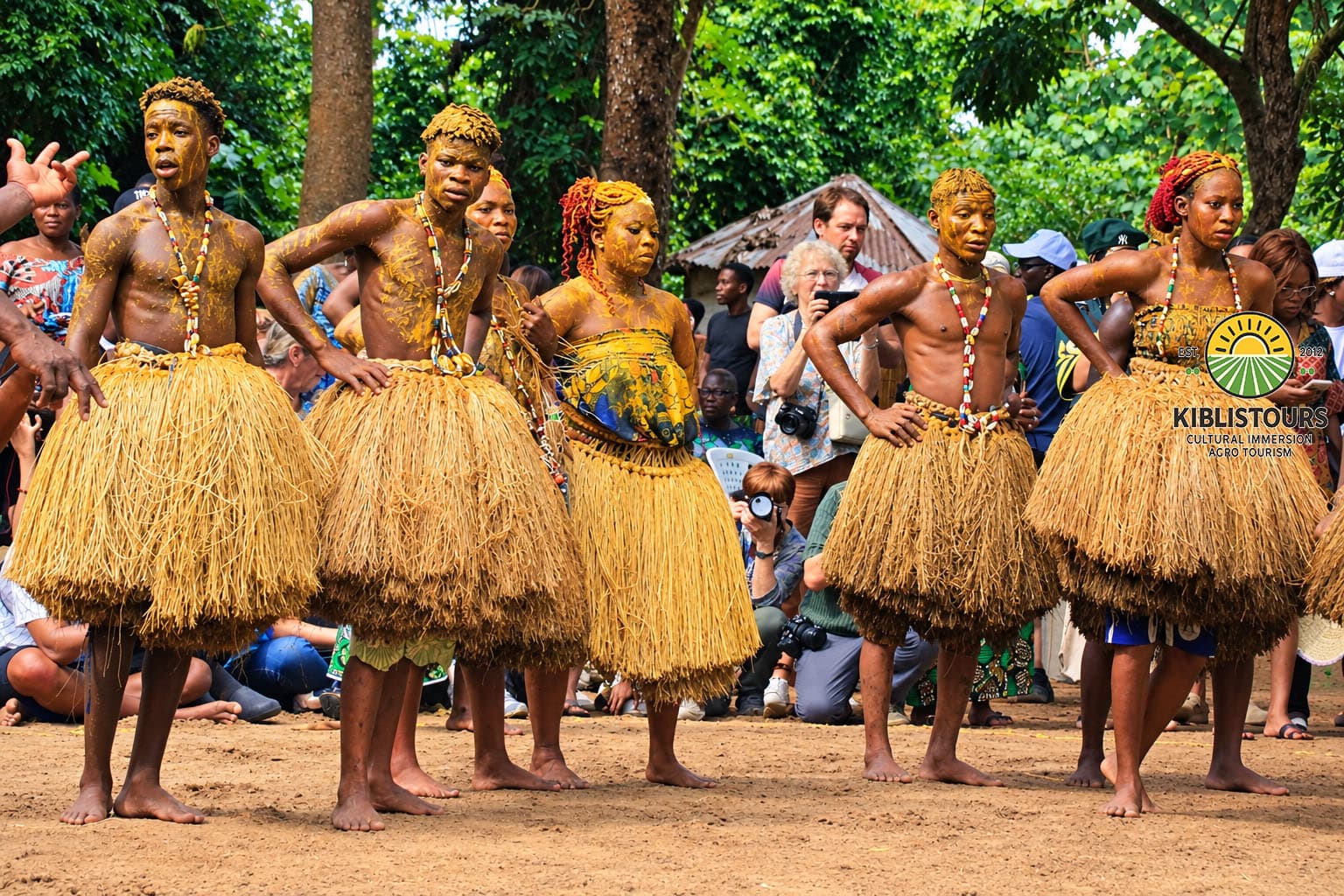
In Ouidah, the Temple of Pythons and the Basilica of the Immaculate Conception stand opposite each other. A few streets away, old façades tell other stories. Towards the coast, the Route of the Captives leads to the Door of No Return. Beneath the trees of Kpassè, a story passed down about a king and an iroko tree opens the way to another discovery. You are in a city whose landmarks invite you to look, listen and understand.
During Vodun Days, this discovery meets the energy of an event dedicated to Vodun arts, culture and spirituality. The announced dates for the 2027 edition are 2–9 January in Ouidah. The detailed programme will specify the activities and their admission arrangements. vodundays.bj
A Vodun Days 2027 stay becomes especially rewarding when the festivities and the city enrich one another. You watch a performance, explore a sanctuary, take part in a scheduled workshop or share your impressions over a meal. History and traditions become more accessible through the people you meet and the explanations you receive.
Kiblistours invites you to shape this experience around your interests: an initial immersion, several days devoted to Ouidah or a private stay with greater comfort. You choose a duration and level of support that allow you to enjoy your discoveries. Your journey then begins with something pleasant to look forward to: coming for Vodun Days and also getting to know the city that hosts them.
Ouidah: several histories within one city
Ouidah also reveals itself at street level. You look up at a balcony, notice the layout of a courtyard and recognise a building you saw the day before. A guided walk connects these observations. Architecture becomes a way of getting to know the city beyond the spaces dedicated to the festivities.
The city preserves traces of different periods and influences. Xweda heritage, Afro-Brazilian houses and colonial-era buildings contribute to its urban diversity. Balconies, ironwork and rendered walls offer tangible insights into Ouidah’s connections with Brazil. These features provide a concrete starting point for a guided walk. benintourisme.bj
It is enjoyable to explore this architecture without trying to remember everything. You can choose one detail and ask what it reveals: the layout of a courtyard, the shape of an opening or a decorative feature on a façade. The answers connect the building to the way it has been used. You gain a clearer understanding of how a city takes shape through its residents, their activities and their movements.
During a Vodun Days stay, this urban exploration brings another perspective to the destination. The event draws your attention to cultural expressions; the streets reveal the setting in which the people who sustain them live. The two complement each other. You enjoy the festivities while discovering a city with a full life of its own beyond the event.
Vodun Days: different ways into the same event
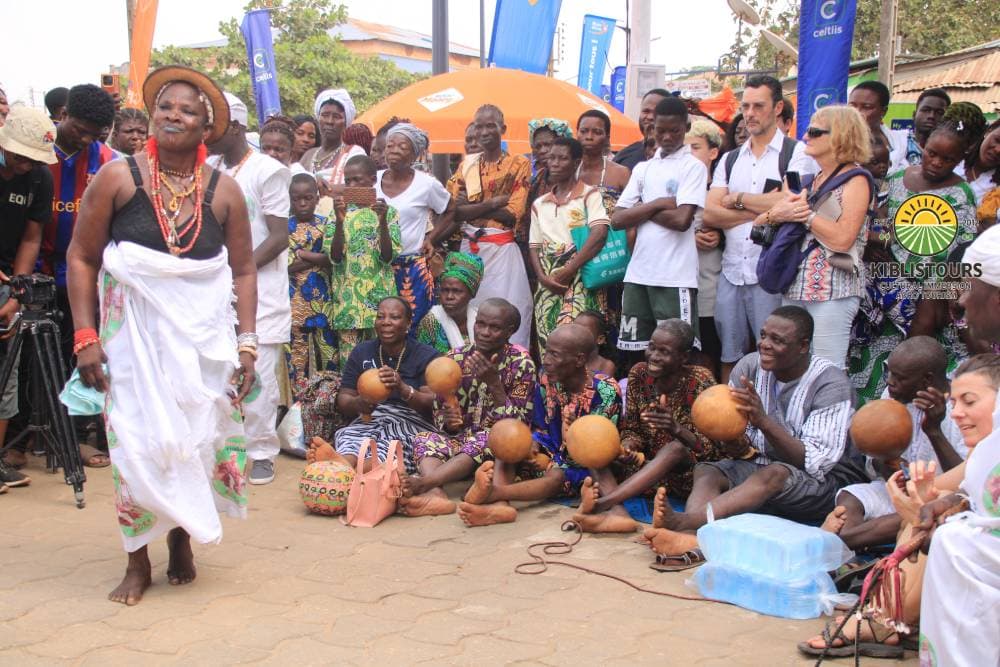
Vodun Days brings together forms of expression that call for different ways of looking. An artistic performance draws attention to movement, music and composition. A presentation connected to a tradition also calls for explanations of its context. A concert offers a different kind of energy. Your stay benefits from making room for this variety.
The official 2025 programme gives an idea of this richness. It announced, among other things, Egungun presentations at Place Maro, Zangbetɔ at the French Fort esplanade, presentations at the Temple of Pythons and Kpassè, and musical events along the coast. These examples belong to that past edition; they are not a guaranteed programme for 2027. www.gouv.bj
Nevertheless, they help you imagine a range of experiences. You might begin by listening to your guide’s explanations, then watch a sequence without immediately looking for another activity. Your attention becomes sharper: you notice a movement, hear a change in sound and better understand why the audience’s focus shifts.
Discovery does not happen only in front of a stage. You may also notice how participants meet, talk and move around. Your guide helps you find an appropriate place to stand, understand the customs of the setting and recognise moments when it is better to remain in the background.
Understanding Vodun beyond the stereotypes
The word “Vodun” is often familiar before the traditions it refers to are understood. Films and sensational stories have created persistent assumptions. Travel offers an opportunity to reconsider them through local perspectives and real situations, with a curiosity that welcomes nuance.
A useful first step is to listen to what a person wishes to explain about their practice or their setting. The person you meet is not necessarily there to introduce you to an entire spiritual world. They are sharing knowledge in a particular context. Recognising this allows you to listen without asking them to represent the whole of Benin.
Traditions, customs and accounts can vary between communities and families. A word may need explaining; a gesture may have a particular meaning. Your guide helps you place these elements in context and distinguish what is open to visitors from what belongs to another setting.
A discovery open to everyone
You can visit with different religious beliefs or without any spiritual intention. Visiting a site, attending a public presentation and asking questions can all form part of a cultural discovery. You remain free to express what you feel comfortable with. This freedom allows you to approach the experiences with peace of mind.
The Temple of Pythons: a visit that changes your perspective
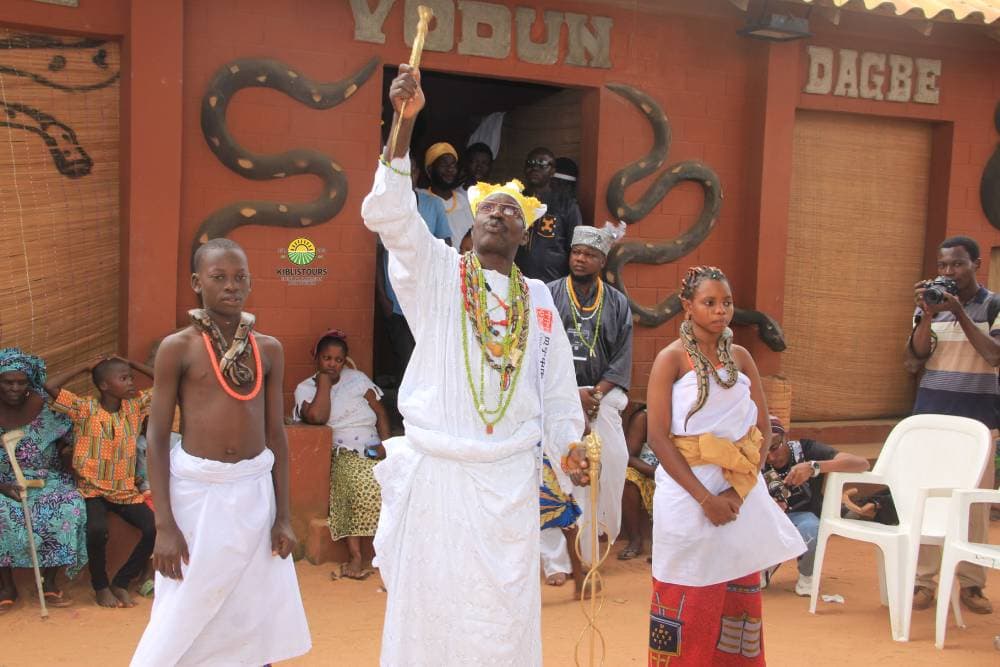
Before entering the Temple of Pythons, you probably already know what intrigues you. You are coming to see a sanctuary known for its snakes, and you wonder what the encounter will involve. The first explanations gradually shift that curiosity towards the meaning of the place.
The temple remains an active place of worship. The royal python is associated with Dangbé in local traditions. Your guide and the people welcoming visitors help you understand this symbolic presence and explore the areas open to the public. You enter a story in which the animal provides a visible point of reference.
Your attention then turns to the whole setting: the buildings, the courtyard and the features introduced during the visit. A place that initially seemed remarkable mainly because of its name becomes easier to understand. You can ask what a symbol represents or how the relationship with the python is explained today.
Immediately nearby, the Basilica of the Immaculate Conception faces the sanctuary. The two buildings offer a tangible image of neighbouring religious presences. Their position invites a question about the city, rather than a sweeping conclusion about an entire society. benintourisme.bj
If snakes make you uneasy, you can explore the temple without seeking physical contact. Your comfort leaves plenty of room for listening and observation. You can leave satisfied with the visit without having taken the photograph you may have seen elsewhere.
Your memory of the experience becomes more complete. You retain an image of the place, but also an explanation and a voice. When you describe your visit, you can speak about what you understood, what surprised you and how your first impression changed.
The Sacred Forest of Kpassè: a story beneath the trees
At Kpassè, discovery unfolds in a different atmosphere. Trees, paths and sculptural features invite another kind of observation. You move between the site’s landmarks, accompanied by explanations that connect the landscape with stories and meanings. The forest brings both a natural and a cultural dimension to your stay.
Oral tradition associates King Kpassè with an iroko tree into which he is said to have transformed. This account belongs to the symbolic memory of the place. It can be understood as such, with the importance it holds for those who pass it on. Your guide helps you distinguish this traditional account from a historical narrative based on documents.
The sculptures also provide a starting point for exploration. You can stop before a figure, ask its name and try to understand its features. A shape, posture or attribute catches your attention. The explanation builds on this visible detail, making it easier to remember. benintourisme.bj
Kpassè also reminds you that vegetation can play a role in cultural transmission. A tree is no longer seen only for its size or shade. It is connected with memory and practices. This discovery enriches your perception of the place without asking you to adopt the beliefs associated with it.
As you leave, your impression may differ from what you felt at the Temple of Pythons. The two visits explore complementary dimensions of Ouidah. One may hold your attention because of its unfamiliar character; the other because of the relationship between story and landscape. Your stay benefits from embracing these differences, which keep the destination from being reduced to a single image.
The Slave Route: approaching history with care and precision
Exploring Ouidah includes an essential dimension of remembrance. The route known as the Slave Route, also presented as the Route of the Captives, leads towards places associated with the Atlantic slave trade and its commemoration. This visit calls for guidance that is attentive to facts, accounts and travellers’ emotions.
UNESCO launched its Slave Route project in Ouidah in 1994. Among its aims, the initiative seeks to improve understanding of this history, its consequences and the legacies it has left. It provides a useful framework for understanding why the city hosts a work of remembrance that extends beyond Benin’s borders. www.unesco.org
Distinguishing history from its representation
On the ground, the visible features may date from different periods. Your guide should be able to explain what relates to historical events, transmitted accounts and commemorative choices. These distinctions make the visit more accurate. They help you understand a monument’s present role without automatically assuming that it dates from the events it recalls.
Careful use of language matters just as much. Behind broad historical concepts are people, families and individual lives. Precise explanations give this human dimension its place without seeking dramatic effects. You can ask questions and explore the points you wish to understand more fully.
Allowing everyone to experience the route in their own way
Some travellers approach this memory as part of a personal or family journey. Others primarily want to develop their historical understanding. Reactions can therefore differ. A suitable programme leaves room for conversation, reflection or silence.
Scheduling this visit when the group has enough energy improves its quality. It deserves your full attention. A calm transition at the end of the route then helps you continue the day without rushing. You will feel that you have encountered a history with enough time to give it a place in your journey.
The Door of No Return: a moment that belongs to you
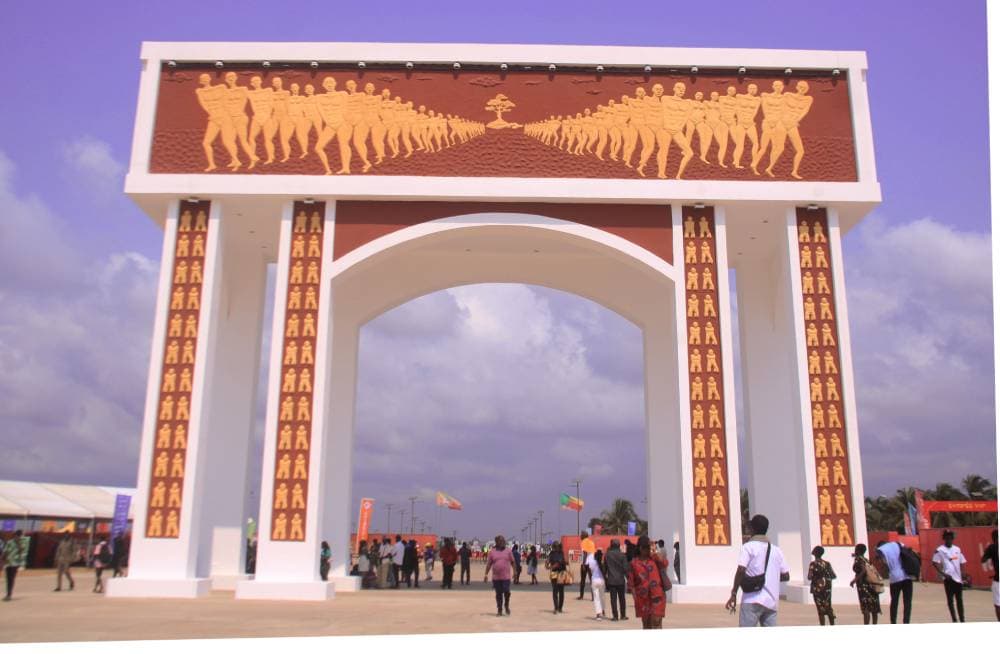
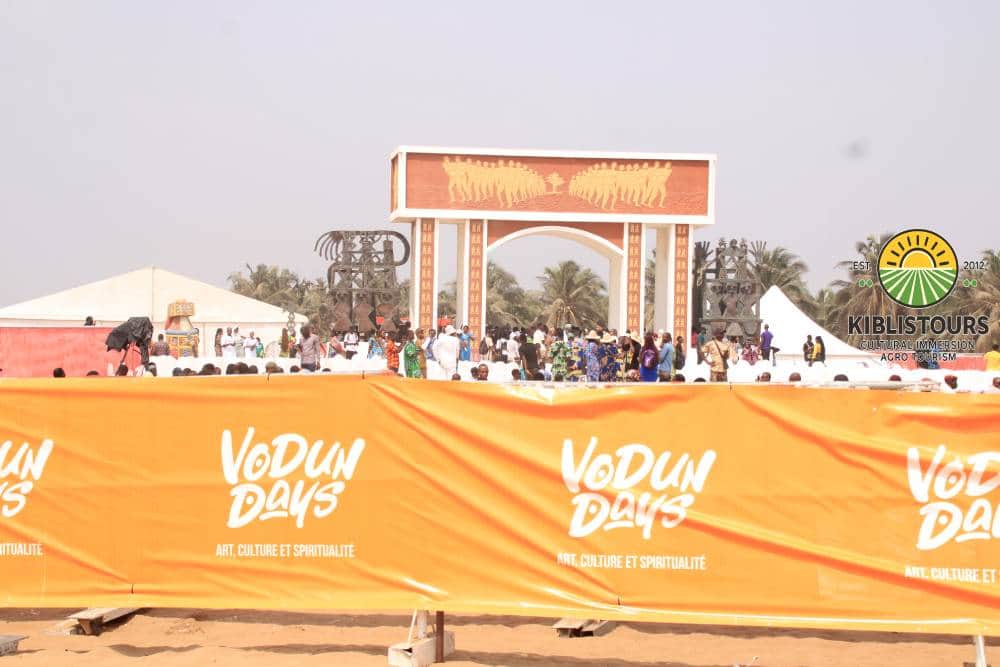
In front of the Door of No Return, the explanations you have heard along the route take on a different presence. A monument stands before you, with the Atlantic Ocean in the landscape. This combination may prompt reflection, emotion or one final question. The visit does not call for any particular response: everyone arrives with their own history.
Some visitors want to learn more about the monument’s context. Others look towards the horizon. One person may feel deeply moved while their companion is still trying to connect the information. This difference is natural. It deserves sensitivity, especially when the journey brings together people with different perspectives.
You may choose to spend a few minutes without your phone. This allows you to remain present without immediately trying to create an image. Later, a photograph taken where permitted can preserve a record of your visit. It will not carry everything you experienced on its own.
Silence can be part of the visit without becoming an obligation. A conversation with your guide can be just as important. You may need to clarify a fact, understand a symbol or revisit an account heard earlier. The guidance should allow these exchanges to happen naturally.
At the end of the visit, you can rejoin your companions somewhere quiet. Some will return to a piece of information; others will prefer to let the conversation resume later. Planning this transition avoids moving immediately from a place of remembrance to an intense activity. You retain the time to give the route its place within the day.
Ouidah and the diasporas: a discovery that crosses the Atlantic
Some travellers arrive in Ouidah with a personal question. A family account, an interest in Afro-descendant cultures or a search for understanding brings them to the city. Others discover these connections during their stay. In both cases, the Atlantic becomes more than a horizon: it opens reflection on movements, ruptures and legacies.
Afro-Brazilian houses give visible form to some of these relationships. You can look at a façade while wondering about the people and histories connected with it. The urban walk and the route of remembrance then begin to illuminate each other, each in its own way.
Previous editions of Vodun Days have also presented artistic encounters between these regions. In 2025, the official programme announced the participation of the Balé Folclórico da Bahia alongside the Beninese ballet company. This example reveals another dimension of travel: legacies can be explored through the arts as well as through monuments. www.gouv.bj
A personal journey should never be forced. You may feel a connection with this history or simply want to understand it better. Your guide supports your discovery without assigning an origin, emotion or identity to you. This freedom is particularly important in a stay that touches on remembrance.
If this dimension motivates your trip, mention it during the planning stage. Visits can be arranged to allow more space for conversation and reflection. You will have time to connect your discoveries with your questions and perhaps continue your research after returning home. The journey provides starting points; the meaning you give them remains personal.
Encounters and craftsmanship: approaching culture through people
When you look at a finished object, you rarely see all the work behind it. Meeting an artisan can reveal what you had missed: the choice of a material, a repeated gesture and the care devoted to a finishing touch. Afterwards, you look differently at what is being shown because someone has demonstrated how they work.
The most interesting exchanges often begin with a practical question. How is that movement performed? How many stages are involved? Which detail requires the most attention? You enter the conversation through what you can see. The person you meet can answer from experience and help you appreciate the value of their work.
Ouidah offers opportunities to explore its indigo textile tradition, which is presented on Benin’s official tourism portal. This dimension broadens your view of the city: heritage also includes techniques, materials and the people who keep skills alive. Any meeting or demonstration that interests you must be arranged and confirmed separately. benintourisme.bj
Respecting the agreed setting improves the exchange. Someone may agree to present their work while limiting photography or the length of the visit. These conditions do not diminish the discovery. They allow everyone to participate with clear expectations.
A souvenir chosen after such an exchange carries a particular story. You can show it while describing a gesture and a conversation. Take time to check its size, material and how you will transport it. Buying remains your decision; the encounter retains its value even if you leave only with what you have learned.
Percussion: the pleasure of trying, then listening differently
When an instructor shows you the first movement, everything seems simple. You try. The sound does not yet quite resemble what you have just heard. You adjust your hand position, try again and work towards consistency. An introduction to percussion can begin with this small surprise: listening was easy, but the movement requires attention.
Learning remains accessible when the session is designed for beginners. You work from a short pattern, with guidance suited to your level. There is no need to read music. The pleasure comes from making progress and being able to participate, even with some hesitation.
Among friends or family, those first attempts often bring a new energy to the group. Everyone learns in their own way. Rhythms cross, fall out of step and then come together. You have created something together, even if the sequence remains modest. Taking part leaves a different memory from simply watching an activity.
The instructor also brings their experience. The way they play and explain helps you hear nuances you had barely noticed. You can ask how they learned or what they enjoy passing on. The workshop becomes an artistic encounter beyond the exercise itself.
In a Kiblistours programme that includes this activity, a session reserved for your group allows the experience to focus on your participation. Its duration and arrangements appear in your proposal, so you know how the workshop fits into the day.
After the workshop, you listen differently. You recognise the difficulty of a movement and better appreciate the musicians’ precision. This shift in perception is one of the pleasures of cultural travel: a brief introduction gives greater depth to the experiences that follow.
At the table: amiwô, akassa and the curiosity to taste
At mealtimes, the journey takes another form. You open a menu or listen to a dish being introduced. An unfamiliar name catches your attention. You ask what it means, then the plate provides an answer that words alone could not give.
Amiwô is a seasoned maize-based preparation. Akassa offers another texture and different combinations with accompaniments. Ablo and atassi, the latter combining rice and beans, also provide starting points for exploring Beninese cuisine. Recipes and accompaniments vary: these examples invite curiosity without promising a uniform menu throughout the stay. discoverbenin.tourism.bj
The pleasure lies in this gradual exploration. You may immediately enjoy one preparation, hesitate over a flavour and then appreciate it more on another occasion. A question about an ingredient sometimes leads to a family’s habits or the way a sauce is prepared. Food becomes a tangible subject of conversation.
Around the table, impressions of the day also circulate. Your companion noticed a detail you missed. You return to an answer from the guide and begin connecting the visits. A meal gives continuity to your discoveries while everyone regains their energy.
Your preferences matter. You can explain how comfortable you are with spicy flavours and mention any dietary requirements. This preparation allows the available options to be considered before the journey.
With organised meals and clearly identified free time, you retain room for discovery. You can choose according to your appetite and interests. Some memories of Benin will remain connected with a plate, a conversation and the simple pleasure of having tasted something new.
Two, three, five, seven or ten days: choosing a duration that makes sense
The length of your stay mainly influences how you experience the activities. A short trip requires clear priorities; a longer trip lets you spread them out and explore certain subjects more deeply. The best choice depends on your availability, energy and what truly interests you.
Two or three days for a first immersion
Two days suit a focused discovery, particularly if you are already in Benin. The programme must take your starting point and travel arrangements into account. A few carefully chosen experiences will give you more enjoyment than a promise to see everything.
Three days provide useful flexibility for balancing visits and time at the event. You can accommodate your arrival more comfortably, retain a break and enjoy an evening outing where planned. The detailed calendar remains essential for choosing dates that match your interests.
Five or seven days to explore Ouidah more deeply
Five days offer a balance between festivities, heritage and rest. You can vary your days and make room for a confirmed encounter or workshop. The stay leaves more time for conversations.
Seven days allow a more sustained discovery. Questions that arise at the beginning of the journey can be revisited later. You begin to recognise the city and connect its different dimensions while retaining personal time.
Ten days for a more leisurely stay
Ten days extend beyond the announced Vodun Days period. The additional days must therefore have their own purpose: arrival, visits, confirmed experiences or rest. If you wish to remain in Ouidah, this duration can support a more relaxed exploration of the destination.
Whatever the duration, the programme should remain coherent. You are choosing time to experience the journey, rather than simply a number of days to fill.
Standard, Premium or VIP: what kind of experience would you like?
Choosing your package begins with a personal question: what do you need to enjoy your stay fully? You may prioritise cultural discovery, seek greater comfort or want an experience reserved for your group. Kiblistours offers three categories to guide this planning.
Standard: an organised first immersion
You want to experience the festivities, visit the places included in the programme and benefit from guidance while keeping your budget under control. Standard suits this focus on the essentials. You retain room for personal choices, with arrangements in place for the scheduled stages.
Premium: a deeper discovery with greater comfort
You enjoy days that combine a visit, a hands-on experience and an organised meal. You also value your rest. Premium allows you to consider an enriched programme and a higher accommodation category, depending on the proposal selected. Your stay becomes more comprehensive, with fewer everyday decisions to make.
VIP: giving your group special attention
You are looking for a suite, a vehicle reserved for your group and more personalised support. You may want a private workshop, a cultural encounter arranged with the participants’ consent or a session with a professional photographer. These services provide concrete starting points for preparing a VIP stay around your preferences.
The booking proposal details the services actually selected, their duration and their conditions. Any special access to event areas is identified separately from the services provided during the stay.
To compare packages, picture an actual day. Would you like an organised lunch, an additional visit or free time? Do you need continuous guidance? How much importance do you place on your room? These answers will help you choose useful services and understand the differences between the packages.
Staying overnight in Ouidah and enjoying being there already
After a day of visits, returning to your accommodation can be a pleasure in itself. You put down your belongings, change clothes and allow your impressions to settle. The next morning, you continue exploring without feeling that you have to begin the journey all over again.
Staying in Ouidah provides this continuity. Depending on the property’s location, you can reduce back-and-forth journeys and organise your days more comfortably. An evening outing becomes more enjoyable when your return is arranged and time for rest has been considered.
Your room should suit your habits. Do you like having space, are you sensitive to noise, or are you travelling with children? These preferences guide the choice of comfort. An accommodation category becomes valuable when it meets a real need that you notice each day.
Transport contributes to the same balance. A vehicle suited to your group and luggage, a clear meeting point and a familiar contact person simplify the arrangements. Kiblistours includes compliance with the State’s requirements for tourist transport in Benin in this planning.
Guidance then connects the stages. The accompanying guide supports the stay within the agreed arrangements, while local site guides lead specific visits. You know whom to ask questions and how the programme continues.
In the morning, you know where to meet your guide. After a visit, the next journey is already arranged. This simplicity reduces repeated decisions about routes, schedules and meeting points. You can devote more time to the places you visit, then return to rest with a clear idea of what awaits you the following day.
Photographing Ouidah: choosing images that tell your travel story
You may return with many photographs and show only a few. Often, these are the images you connect with a story: an encounter, an explanation or a shared moment. During your stay, seeking that connection can be more interesting than trying to record everything.
An image of a façade gains depth when you know the building’s context. A portrait taken with permission preserves the memory of a conversation. A photograph after a workshop recalls your participation. Your camera becomes a way of connecting memories with what you experienced.
Attentiveness matters. Before taking a photograph, look at the light and what is happening around you. Listen to your guide’s advice. They can help you recognise accessible places and situations in which permission is needed.
Asking should remain straightforward. A person agrees or declines, and you accept their answer. Some spaces also have their own rules. Respecting them allows discovery to continue comfortably without making photography the purpose of every encounter.
If you would like photographs of your couple, family or group, a professional session can be considered when planning your stay. You enjoy time devoted to photography, with the service described in your proposal.
Keep some experiences free from screens, too. You may want to listen to a presentation until the end or remain fully present at a place of remembrance. These memories will be no less lasting. They will return in your words when you describe the journey and how it changed your way of seeing Ouidah.
A stay that respects your way of travelling
A couple, a family, a group of friends and a solo traveller do not always expect the same things from a stay. Planning should reflect this reality. You can share a destination while having different needs regarding schedules, breaks and the intensity of activities.
As a couple, quiet moments can matter as much as the visits. A meal, a walk or a free late afternoon gives your relationship space within the journey. You share discoveries without needing to be constantly occupied.
For families, children’s ages and how comfortable they feel in busy places influence the programme. Suitable explanations and a hands-on activity can hold their attention. A lighter day after an intense period also helps preserve everyone’s enjoyment.
Among friends, discussing expectations before departure is useful. Some want to extend the evenings; others prefer an early start. A shared programme can accommodate these differences, with free time where the arrangements allow. You retain the joy of travelling together without assuming that everyone likes exactly the same things.
Travelling alone offers a particular freedom of attention. You can explore the subjects that interest you and retain your personal moments. Guidance provides a framework and helps with the planned stages. In every case, describe your way of travelling to Kiblistours. This information helps shape a stay around your actual habits. Personalisation often begins with these simple details, which make a difference to the daily experience.
Before departure: turning your interest into a concrete plan
The journey sometimes begins long before arrival. You choose a period, explore the options and discuss your interests with the people travelling with you. This preparation becomes enjoyable when it gives shape to the stay without requiring you to decide everything alone.
To begin with Kiblistours, provide your proposed dates, the number of travellers and your preferred duration. Add two or three priorities: festivities, heritage, encounters or photography. This gives the proposal a clear direction.
Also specify the language in which you would like to be guided. For a group bringing together several nationalities, this information helps ensure that explanations are accessible to everyone. You will get more from the visits when each person can understand the accounts and participate fully in the exchanges.
Consider your way of travelling, too. Do you prefer active days or a gentler pace? Are you looking for a comfortable room, a suite or more private services? This information is more useful than choosing a category without connecting it to your habits.
An early enquiry allows time to consider accommodation options and the availability of the people involved. It also makes coordination easier when several travellers need to align their departure dates and expectations.
If you are arriving from abroad, coordinate your travel schedule with the start of the local programme. Allowing some time on arrival can help you settle in comfortably. The formalities applicable to your circumstances should be checked through current official sources.
Finally, pack simply for the visits: comfortable, modest clothing, shoes you have already worn and a small, practical bag. Mention any particular needs before booking. You can then let preparation serve its purpose: reducing uncertainty and giving you the pleasure of imagining the discoveries ahead. As the plan becomes clearer, Ouidah stops being merely a possible destination. It becomes your next journey.
Your budget: choosing what really matters during the stay
Your budget can support very different choices. An additional night gives you more time on site. A room better suited to your needs improves your rest. A private workshop reserves an experience for your group. Before comparing prices, identify the services you will actually want during the stay.
If your main interest is cultural, pay attention to visits and guidance. If you know that noise or fatigue strongly affect your enjoyment, accommodation and pace become essential. If you are travelling for a special occasion, a personalised service may play an important role.
The Kiblistours proposal allows you to consider these elements together. You can see the duration, overnight stays, transport and included activities. Meals, any photography sessions and private experiences are listed when selected. You compare the contents of the stay beyond an advertised price.
Leave some room for personal choices. A handmade object, a meal during free time or an available additional activity can enrich the stay. This flexibility allows you to decide while there without disrupting your entire budget.
Expenses outside the programme should still be included in your planning: international travel, formalities, personal insurance and services not listed. Booking and cancellation conditions complete the picture.
You can ask for clarification before confirming: what transport covers, which meals are planned and how any special admission arrangements are handled. You can then compare stays whose contents are clear. Choosing becomes easier when every price difference corresponds to a service you understand.
Why prepare your stay with Kiblistours?
Your Vodun Days stay brings together several elements: a period, visits, journeys, people and your own interests. Kiblistours proposes connecting them within a programme you can understand and appreciate before departure.
The value of local organisation becomes clear throughout the day. You meet your guide, reach a visit and receive useful explanations. A prepared workshop or encounter brings another experience. You benefit from a framework that leaves your attention available for the destination.
This support also provides cultural continuity. A question arising during one visit can be revisited afterwards. You connect a place of remembrance with an urban walk, or a musical introduction with what you heard during the event. The stages begin to form a personal whole.
The stay takes your group into account. You can prepare a first immersion, a couple’s trip, a family holiday or a private experience with greater comfort. The duration and services support that intention, with a proposal based on confirmed possibilities.
You therefore have a concrete plan to review: dates, pace, accommodation and selected services. You can specify a preference before booking and understand what has been arranged for you.
To begin, explore the destinations and tours on the Kiblistours website, then send your enquiry. Explain what you would like to experience in Ouidah. You will receive a programme to review, together with the proposed services and conditions. You can clarify a preference, then prepare your departure knowing how the main stages will unfold.
FAQ: your Vodun Days 2027 stay
What are the announced dates for Vodun Days 2027?
The 2027 edition is announced for 2–9 January in Ouidah. Your stay can cover part of this period or include it within a longer journey. Specific activities should be selected according to the organisers’ detailed programme. For a short stay, the calendar will be particularly important in prioritising the days that match your interests.
Can you enjoy the stay without prior knowledge of Vodun?
Yes. Visits and explanations can gradually provide the understanding you need. You arrive with your curiosity and questions, without having to master the subject before departure. A first discovery offers a cultural introduction that allows for nuance. It may also encourage you to continue reading and reflecting after you return.
Does the discovery involve religious participation?
Discovery can take place through visits, observation and conversation. The nature of the activities should be explained, and you can express your preferences. If a situation seems unclear, your guide can help you understand it. Your stay should remain compatible with your personal beliefs and the boundaries you wish to maintain.
What duration should you choose for a first stay?
Two or three days suit a focused immersion. Five days allow visits and breaks to be spread out more comfortably. Seven or ten days offer more room for deeper exploration, with suitable content. The right choice depends on your availability and energy. The programme should remain coherent rather than multiply activities simply to fill the time.
Can you stay exclusively in Ouidah?
Yes. A stay centred on Ouidah allows you to explore the festivities and the city’s heritage with greater continuity. You can keep the same accommodation and reduce changes of location. For a longer stay, the days should vary between visits, confirmed encounters and rest. Any extension to another destination can be considered separately.
What is the difference between an accompanying guide and a local site guide?
The accompanying guide supports your stay according to the agreed conditions and helps connect its different stages. A local site guide leads a particular visit or introduces a specific site. Both roles may be included in the same package. Their presence, the duration of their involvement and the language of the guidance should be clear so that you understand the support offered.
Does a VIP package include all admission to the event?
The VIP category of the stay refers to the services offered by Kiblistours. It should not be assumed to provide access to every Vodun Days area. Any tickets, reservations and special access must be identified separately when included. This allows you to distinguish the comfort of the stay from the event activities’ own admission conditions.
Are meals and a photographer included?
This depends on the confirmed package and programme. Included meals should be identified, along with the drinks provided. A professional photography session should be distinguished from souvenir photographs taken during visits. Ask for the information that matters to you: session duration, the moments covered and delivery arrangements. You will then know exactly which service you are booking.
Can families with children take part?
A family stay can be considered by adapting the pace to the children’s ages and needs. Journeys, visits, schedules and busy spaces should all be taken into account. A hands-on activity and breaks can make discovery easier. Provide your children’s ages and your family’s habits to help prepare a realistic programme.
How do you request a personalised quotation from Kiblistours?
Send your proposed dates, the number of travellers, your preferred duration and your desired comfort level. Add your main interests and any particular needs to consider. You can then review the proposal, its inclusions, exclusions and conditions. This process helps prepare a stay around your preferences and allows you to book with a clear understanding of the journey.
Make your Vodun Days 2027 stay an encounter with Benin
You can come to Ouidah for an event and leave with memories that go beyond what you imagined: an explanation that changed your perspective, a workshop experienced together, a façade you now understand or a conversation whose voice you still remember.
The stay gives these discoveries time to unfold. You connect the festivities with places, stories and people. Your experience gains personal depth because you have been able to choose a pace and guidance suited to your expectations.
To prepare this journey, begin with what truly attracts you. Would you like a first immersion, greater comfort or a deeper cultural discovery? Share this intention with Kiblistours. It will give direction to the proposal and make room for the experiences that matter to you.
Plan your Vodun Days 2027 stay with Kiblistours. Explore our destinations and tours at www.kiblistours.com, then contact us with your dates, the number of travellers and your preferred package. Receive a tailored proposal and bring a human dimension to your next discovery of Benin.
Kiblistours - Experience Authentic Africa.