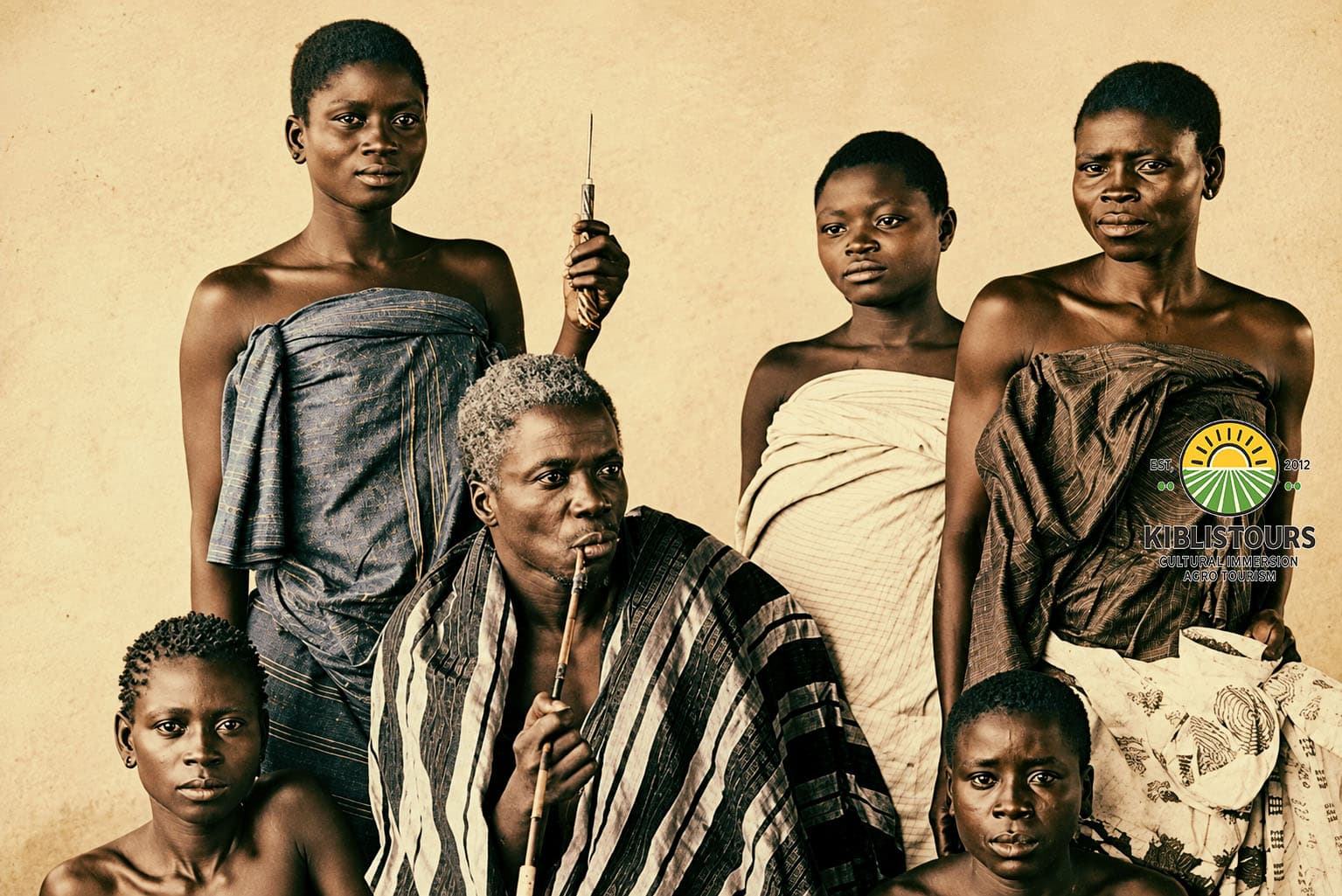
Visiting Abomey from Cotonou is not simply a matter of travelling a little over one hundred kilometres across southern Benin. It is a gradual change of atmosphere a journey away from the almost constant energy of the country’s economic capital and into a city where the history of the Kingdom of Dahomey can still be read through its palaces, symbols, traditions, family stories and collective memory.
In the morning, you may still be in Cotonou, surrounded by motorbikes, lively markets, restaurants, offices, shops and the characteristic bustle of major African cities. A few hours later, you find yourself standing before the remains of a royal power that profoundly shaped the political, military, cultural and spiritual history of West Africa.
Between these two places lies the road. And that road matters.
It passes through towns, neighbourhoods, agricultural landscapes, roadside markets and countless scenes from everyday life in Benin. When you travel with someone who knows the country, the journey stops being a simple transfer : it becomes your first introduction to inland Benin.
Then Abomey appears.
You do not discover it as a city frozen in its past. Children go to school, craftspeople work, motorbikes move through the streets, traders arrange their goods and families continue with their daily lives. Yet behind this contemporary activity lies an extraordinary memory.
Kings ruled here, major political decisions were made, armies departed from this city, traditions were established, and palaces were built, transformed, destroyed or reconstructed. Glorious, painful and sometimes contradictory episodes followed one another.
It is precisely this complexity that gives Abomey such power.
With Kiblistours, our ambition is therefore not simply to drive you from Cotonou to Abomey, let you visit a few monuments and then take you back to your hotel. We want to help you enter the history, give you the essential background needed to understand what you are seeing, create opportunities for genuine encounters, allow you to ask the questions that tourist brochures do not always address and, above all, give you enough time to truly experience the city.
Because there is an enormous difference between seeing Abomey and experiencing Abomey.
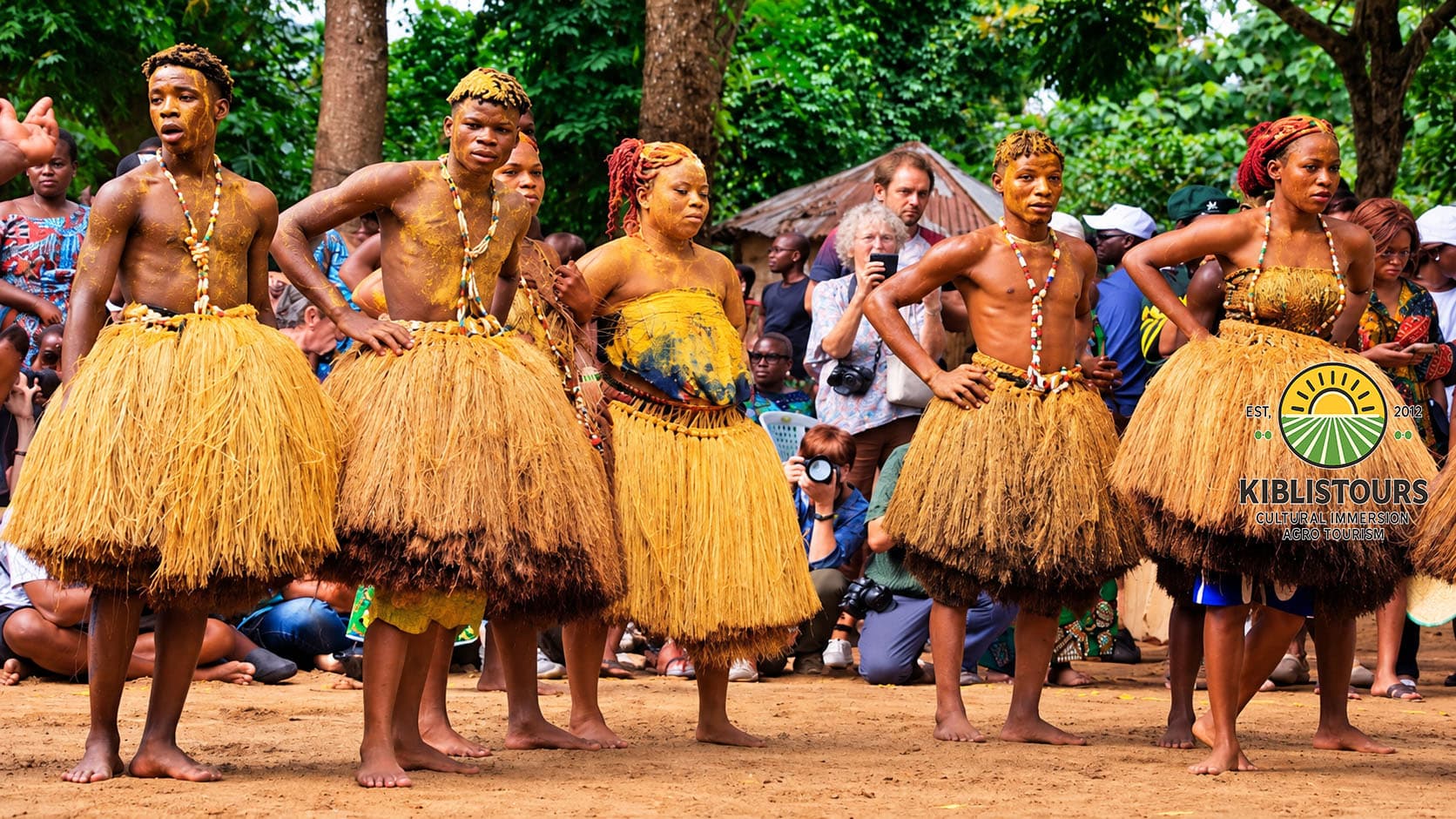
You can photograph the Royal Palaces (UNESCO, Royal Palaces of Abomey, 1985) without truly understanding the meaning of their spaces. You can look at a bas-relief without knowing that it refers to a ruler, a motto, a battle or a particular conception of power. You can hear about the Agojie without looking beyond the spectacular image popularised by contemporary culture. You can hear the word Vodun without realising the religious, social and philosophical depth it carries in Benin.
Or you can decide to take the time to listen, ask questions, meet people and understand.
That is the second way of travelling the one we invite you to discover in this guide.
Whether you are planning a one-day excursion from Cotonou, a two-day stay in Abomey, a cultural trip through Benin, a journey devoted to West African history or a heritage experience connected to the African diaspora, you will find here the information you need to organise your visit and, more importantly, give it meaning.
Welcome to the road to Abomey.
Why Abomey Deserves Much More Than a Simple Tourist Excursion
When planning a first trip to Benin, certain names quickly appear : Cotonou, Ouidah, Ganvié (Venice of Africa), Porto-Novo, Abomey and then the major destinations in the north of the country.
The risk is to build an itinerary like a checklist : one day here, a few hours somewhere else, a photograph in front of a monument and then back on the road towards the next destination.
Abomey does not lend itself well to this way of travelling.
The city deserves a proper stop because its appeal does not lie solely in what you see. It lies in what you gradually come to understand.
For several centuries, Abomey was the political centre of the Kingdom of Dahomey. Generations of rulers established their authority here, developed palace complexes, organised their administration, strengthened their armies, maintained relations with other political entities and participated in the major economic exchanges that crossed the region.
This historical importance is now internationally recognised. The The official UNESCO listing (Royal Palaces of Abomey, 1985) describes the Royal Palaces of Abomey as the principal material testimony to the Kingdom of Dahomey. UNESCO notes that twelve kings succeeded one another between 1625 and 1900 and that the kingdom established itself as one of the major powers on the western coast of Africa.
This history is visible within the Royal Palaces, but it extends far beyond their walls.
It remains alive in traditions, families, certain religious practices, handcrafted objects, transmitted stories, the way residents still speak about particular rulers and the symbols found in art and sometimes even in contemporary popular culture.
Abomey is therefore less an open-air museum than a territory where several periods of history continue to engage in dialogue.
You can spend the morning trying to understand the function of an ancient royal courtyard and, in the afternoon, sit for a few moments with a craftsperson who now reinterprets symbols inherited from that history.
You can listen to the story of a nineteenth-century king and then, a few streets away, meet a young resident who explains what that heritage means to their generation.
It is through these contrasts that the city becomes particularly fascinating.
History then ceases to be a school subject made up of names and dates. It becomes what it has always been : a story of human beings, decisions, beliefs, ambitions, conflicts, creations and transmission.
From Cotonou to Abomey : The Journey Begins Long Before the Royal Palaces
For many international travellers, Cotonou is their first encounter with Benin.
The city possesses an energy that can be felt immediately. Motorbikes travel in large numbers, taxis and private vehicles cross paths, businesses line the major roads, markets overflow with activity and restaurants come alive as the day progresses.
You can spend several days exploring Cotonou without feeling that you have truly discovered all of it. Yet when you leave for Abomey, something changes rather quickly.
Urban density gradually decreases, the landscapes open up, commercial activities take on different forms and the scenes observed from your vehicle begin to reveal another side of Benin.
A woman arranges fruit for sale beside the road. Farther ahead, a craftsperson works in front of a workshop. A motorbike carries a load that appears to defy every law of balance. Children in uniform make their way to school. You pass fields, villages, markets and busy crossroads.
Taken separately, these details may appear ordinary. Together, however, they form your first immersion.
This is where good guidance can make all the difference.
When travelling with someone who knows the area, questions arise naturally. Why is a particular activity especially common in this area ? Why do certain agricultural products become more visible as you travel farther inland ? What is the history of the town you are passing through ? What languages are spoken there ? What connections did these territories once have with Abomey ?
A guide does not need to turn every kilometre into a lecture. Sometimes a short anecdote or explanation is enough to give the landscape a completely different depth.
This is also why, at Kiblistours, we believe that travel time is not wasted time : the journey begins the moment you leave Cotonou.
Would you like to experience this immersive adventure in Abomey with Kiblistours? Click here.
How far is Abomey from Cotonou?
The road distance between Cotonou and Abomey is generally around 130 to 140 kilometres, depending on your exact departure point and the route taken.
Under favourable conditions, the journey can be completed in a few hours. However, it is advisable to remain flexible because traffic when leaving Cotonou can be heavy, delays may occur, and roadworks or changing traffic conditions may affect the travel time.
If you choose an immersive excursion, certain stops may also be deliberately included along the way.
For this reason, we generally recommend an early morning departure when the return journey must be completed on the same day. This prevents you from feeling rushed once you arrive in Abomey.
The worst possible scenario would probably be to travel all that distance only to visit the most important places while constantly checking your watch.
How Can You Travel from Cotonou to Abomey ?
Several options are available.
Your choice will depend on your budget, your familiarity with the country, your desired level of comfort and, above all, how you want to experience the day.
A Private Vehicle the Most Comfortable Option for a Cultural Excursion
For a one-day excursion or a two-day stay, a private vehicle remains one of the most convenient options.
It gives you greater freedom: you can choose your departure time, stop when something catches your attention, avoid depending on collective transport schedules and, most importantly, organise the programme around your own interests.
For a couple, a family or a small group, this option also makes it possible to create a much more personal experience.
As part of a Kiblistours itinerary, the vehicle is not treated as a simple means of transport. It becomes part of the overall experience because the guidance and explanations can begin as soon as you leave Cotonou.
Taxis and Public Transport
Travellers who wish to reduce their budget may also use locally available means of transport.
This option may suit people who are already familiar with travelling in West Africa, are sufficiently flexible about schedules and feel comfortable organising their journey independently.
However, it presents several constraints for a short excursion. You will need to identify departure points, manage schedules, organise transport after arriving in Abomey and possibly negotiate several separate journeys.
If your main objective is to enjoy the destination without devoting a significant amount of energy to logistics, an organised excursion may be more comfortable.
There is therefore no single “best” way to reach Abomey.
The best option is the one that suits your travel style, and Kiblistours offers exceptional travel comfort with air-conditioned cars and buses.
Arriving in Abomey : When the History Books Suddenly Take on Another Dimension
There is something special about arriving in a city whose name you have already heard.
Before your journey, Abomey may have been merely a point on a map, a chapter in a history book, a name associated with the “Amazons of Dahomey,” or a destination recommended in a travel guide about Benin.
Then, suddenly, you are actually there.
The city does not resemble a reconstruction created for tourists. It is alive.
Motorbikes continue to move through the streets, shops open and close, children play and residents go about their work. Yet amid this contemporary life, the memory of a kingdom that played a major role in the region’s history remains present.
At that moment, certain names begin to take on a more tangible meaning : Ghezo, Glele, Behanzin, the Agojie, the palaces, Vodun, wars, trade, relations with the coast and confrontations with European powers. Everything that may previously have seemed abstract now acquires a geography.
You are standing on the land where part of this history actually unfolded. Kiblistours tells you everything about the Kingdom of Dahomey and its kings.
Claire S.'s Testimonial : when palaces bring history to life.
Visiting Abomey with a group of friends, French traveller Claire S. shares how the guide’s explanations added a new dimension to her visit:
“I thought I was coming to visit palaces. When I arrived, I realised I was stepping into a history that is still very much alive. The guide’s explanations completely changed the way I saw these places.”
Her testimony perfectly summarises what can happen when a visit is no longer limited to observing a heritage site, but allows you to understand the history that gives it meaning.
Understanding the Kingdom of Dahomey Before Visiting the Palaces
Abomey becomes far more fascinating when you have a few historical reference points before entering the royal sites.
The Kingdom of Dahomey developed from the seventeenth century onward and gradually established itself as an important political power in the region. Abomey was its centre of authority.
The UNESCO (Royal Palaces of Abomey, 1985) explains that the kingdom began developing in the mid-seventeenth century and that its palaces were not only the centre of political decision-making, but also a centre for the development of craft techniques and a place where royal treasures were preserved.
Successive rulers developed a complex political, military, religious, economic and artistic system around their authority.
However, this power should not be presented as an unqualified heroic legend.
The kingdom experienced conquests, wars, alliances, resistance, political transformations and profound contradictions. During certain periods of its history, it also participated in the networks through which enslaved people were traded as part of the Atlantic slave trade.
It is precisely this complexity that deserves to be conveyed.
It is possible to admire the sophistication of a political system while also examining the violence associated with certain wars. It is possible to appreciate the kingdom’s artistic wealth while addressing its participation in slave-trading networks. It is possible to discuss Behanzin’s resistance to French colonial expansion without turning the entire history into a simplistic tale of good versus evil.
The ability to recognise several realities at the same time makes the visit intellectually much richer.
At Kiblistours, this is the kind of interpretation we favour : providing keys to understanding, offering context, distinguishing as clearly as possible between historical facts, collective memories and transmitted narratives, and then giving travellers the space they need to form their own perspective.
The Royal Palaces of Abomey Entering the Political Heart of the Kingdom
For most visitors, the Royal Palaces of Abomey are the most eagerly anticipated part of the journey.
And this anticipation is entirely justified.
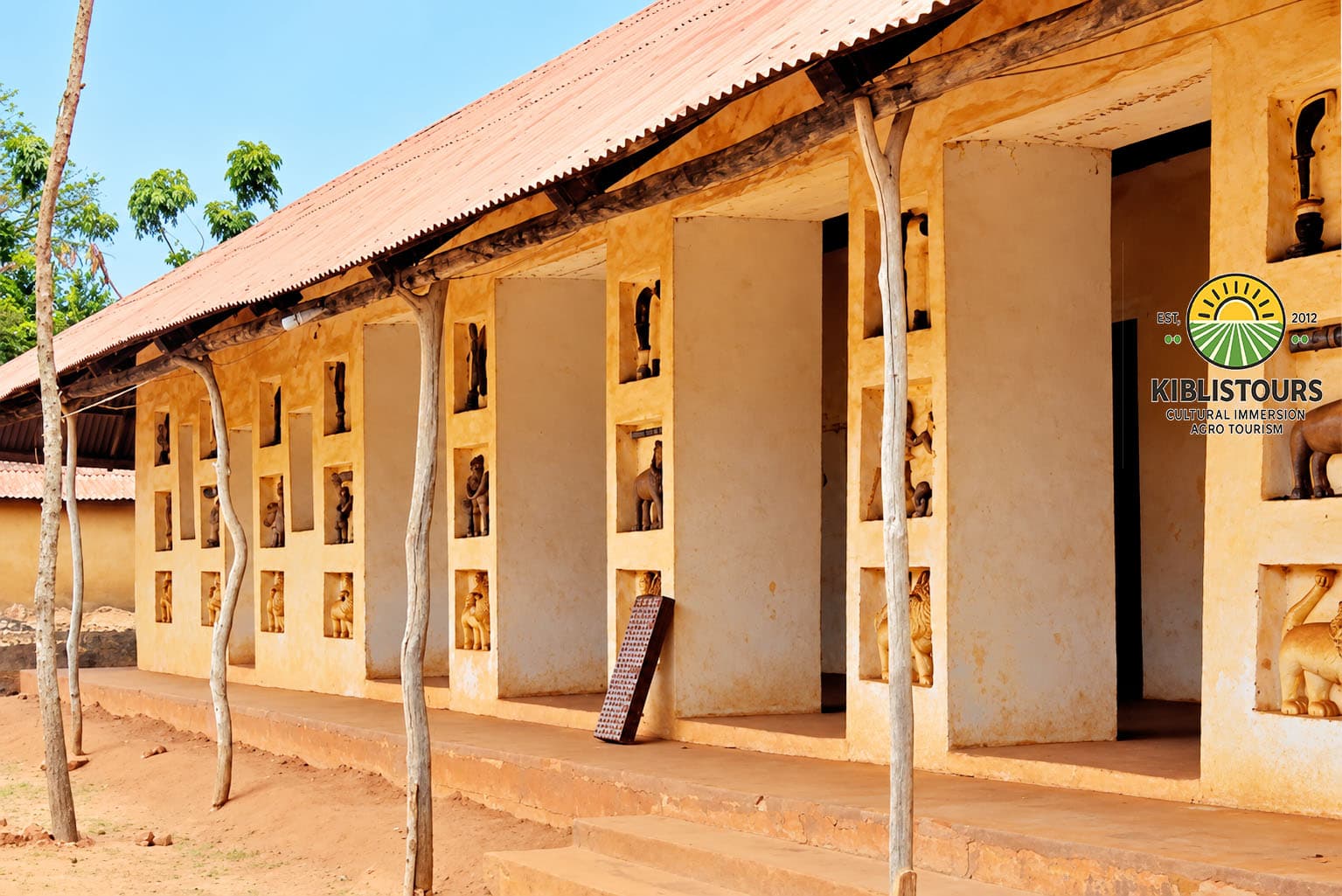
The site is one of Benin’s most important historical heritage landmarks. The UNESCO (Royal Palaces of Abomey, 1985) states that the property covers 47.6 hectares. The historic complex comprises several palaces organised according to principles associated with Aja-Fon culture. UNESCO notably describes an arrangement based on three types of courtyards outer, inner and private as well as the use of traditional materials and polychrome bas-reliefs.
However, you should avoid arriving with the mental image of a European palace.
Here, the architecture, organisation of space, materials and symbolic functions correspond to a different conception of power.
You are therefore not simply looking at façades. You learn to understand the relationships between courtyards, passageways, ceremonial spaces, buildings, walls, representations and objects associated with the monarchy.
At first glance, some elements may appear modest. Then the explanation is given and everything changes.
A doorway may carry political significance. A courtyard may reveal how power was organised. A symbol may refer to a particular ruler. An animal representation may communicate a message. A seemingly empty space may once have served an essential ceremonial function.
This is precisely why a guided visit adds so much value to the Abomey experience.
Without interpretation, you may pass quickly through certain areas. With the right keys to understanding, every element becomes part of a much broader story.
Why Are the Royal Palaces of Abomey Listed as a UNESCO World Heritage Site ?
The Royal Palaces of Abomey have been inscribed on the World Heritage List since 1985, under cultural criteria (iii) and (iv). The official UNESCO page currently indicates that the property covers 47.6 hectares and has a buffer zone of 181.4 hectares.
Criterion (iii) notably recognises the site’s outstanding historical and cultural value, while criterion (iv) highlights the unique character of its architecture, organised around a succession of hierarchically arranged courtyards. Click here to understand why Abomey is considered a UNESCO gem.
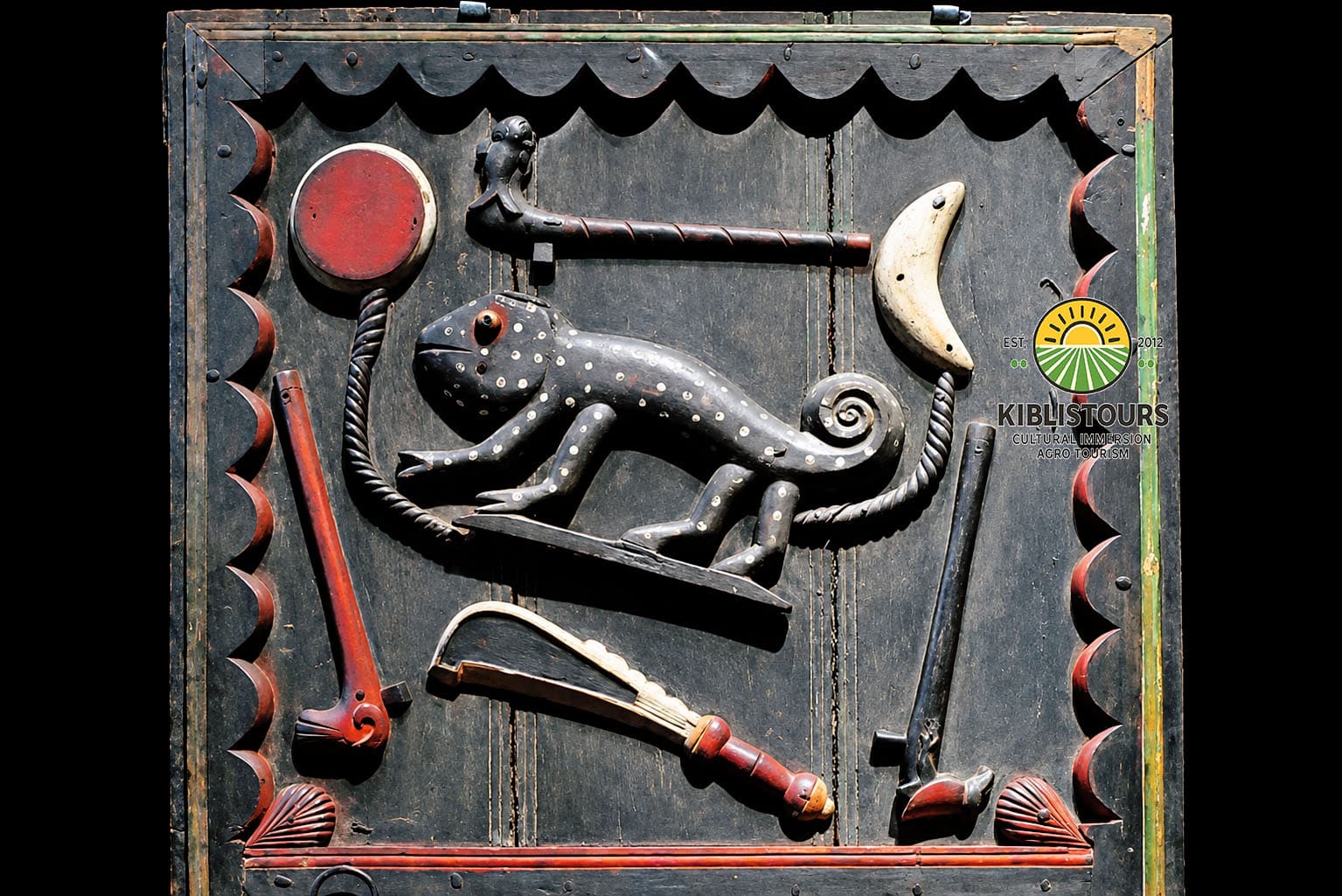
The Bas-Reliefs When the Walls Tell Stories
Among the most captivating elements of Abomey’s royal heritage are its polychrome bas-reliefs, whose architectural importance is also acknowledged by UNESCO.
Their shapes and representations naturally attract attention, but their true richness becomes apparent when you understand that they form part of a symbolic language.
An animal is not necessarily represented merely for its beauty. A weapon is not simply decorative. A scene may refer to a historical episode, a motif to a ruler and a representation to a motto or political message.
The visit then becomes almost an introduction to the symbolic alphabet of the kingdom.
B. Thoma's testimonial when the bas-reliefs become a historical treasure hunt
Interpreting these symbols can sometimes lead to moments that are as entertaining as they are educational.
Standing before a bas-relief, Thomas, a Belgian traveller, tries to guess its meaning. Kodjo, his local guide, smiles before telling him the true story behind the symbol.
Surprised by the difference between his own interpretation and Kodjo’s explanation, Thomas jokes :
“Now I want to decipher all of them !”
The visit has suddenly turned into a genuine historical treasure hunt.
This is precisely what makes the bas-reliefs of Abomey so fascinating: behind every representation may lie a story that the eye alone cannot uncover.
This approach works particularly well with children and teenagers. Rather than overwhelming them with a succession of dates, they can be encouraged to observe the animals, objects, shapes and symbols, and then investigate what they might mean.
The visit becomes a historical adventure.
Benin received 26 artworks previously held at the Quai Branly Museum on November 10, 2021.
Documentary reference on royal works and emblems: Musée du quai Branly - Jacques Chirac - Restitution of 26 works to the Republic of Benin: royal treasures and symbols.
The Kings of Dahomey : giving faces to the Past
Several rulers shaped the history of Abomey and Dahomey : Houegbadja, Agadja, Tegbesu, Ghezo, Glele, Behanzin and others.
It would be easy to reduce their history to a simple chronology. Yet what matters more are the differences between their periods of rule, their strategies, wars, alliances, relations with external powers and the transformations the kingdom underwent under their authority.
UNESCO notes that twelve kings succeeded one another between 1625 and 1900. With the exception of King Akaba, who had a separate enclosure, the rulers built their palaces within the same complex of earthen walls, maintaining certain organisational principles and construction materials.
Some figures naturally occupy a particularly important place. Ghezo remains central to understanding several transformations that occurred during the nineteenth century, while Behanzin is closely associated with resistance to French colonial expansion.
Beyond the most famous rulers, however, the visit benefits from showing the continuity of royal authority and the transformations that occurred across generations.
History then becomes human: rather than a list of frozen royal figures, it becomes a succession of leaders facing the realities of their time and making decisions whose consequences are sometimes still debated today.
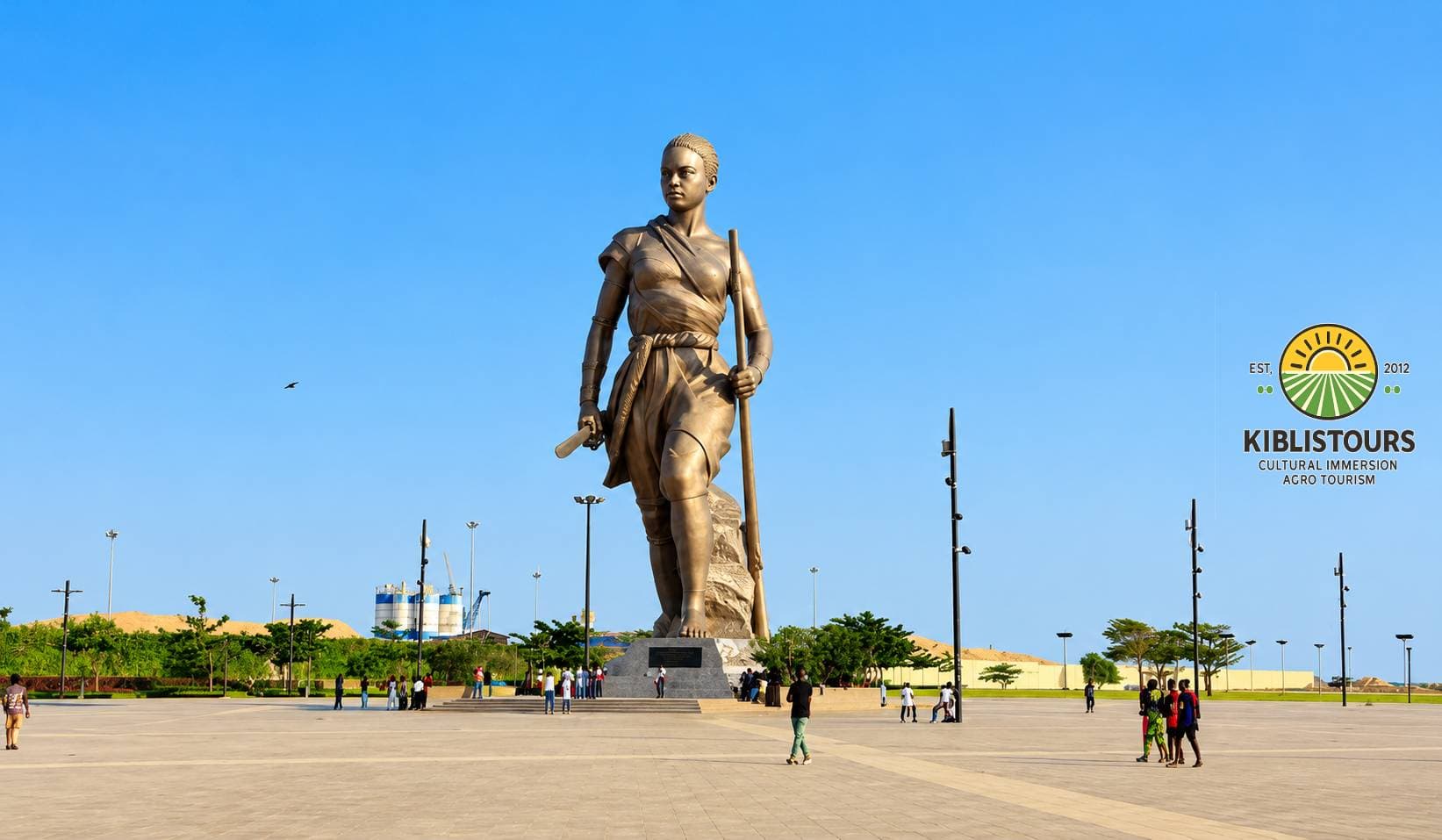
The Agojie Discovering the Women Warriors Beyond the Cinema
For many travellers, their first introduction to the history of Dahomey now comes through popular culture.
The female military units known as the Agojie, with different spellings depending on the form of transcription have gained considerable international recognition. In the Western world, they are also widely known as the “Amazons of Dahomey.”
Cinema and popular culture have helped introduce their existence to audiences who may never previously have heard of the kingdom.
This visibility provides a remarkable gateway. But Abomey allows you to go further.
Who were these women in reality ? How did their military role develop ? What place did they occupy within the kingdom’s organisation ? How were they trained ? In which military campaigns did they participate ? And how can historically established knowledge be distinguished from representations created later ?
These questions demonstrate why visiting Abomey itself is so valuable.
A film must tell a story within a limited amount of time. A heritage destination offers something different : context.
You can therefore appreciate how the Agojie became internationally recognised figures while also seeking to understand the historical women behind their contemporary image.
Abomey, Ouidah and the transatlantic slave trade : addressing a difficult history without oversimplifying it (Transatlantic Slave Trade, 2012)
It would be impossible to present the history of the Kingdom of Dahomey honestly without addressing its participation, during certain periods, in the networks through which enslaved people were traded.
This dimension is painful, but essential.
People captured notably during wars and raids were incorporated into systems of enslavement, and some were sold towards the coast within the context of Atlantic trade.
The Slave Routes in Ouidah (Benin): The Ultimate 2026 Guide to a Journey of Remembrance, History, and Emotion
(Significant sites along the Slave Route in Benin, 24/02/2021)
Understanding this history makes it possible to appreciate more clearly the relationship between Abomey and Ouidah.
Abomey was the centre of royal authority. Ouidah was one of the principal points of connection with the Atlantic coast and international trading networks.
When the two cities are visited during the same journey, geography itself becomes a key to interpreting the history.
For travellers of African descent coming from the Caribbean, the Americas, Europe or other parts of the world, this geographical continuity can provoke a particularly powerful emotional response.
However, it must be approached with great sensitivity.
Historical suffering should never be transformed into a tourism product, nor should any visitor be promised that they will automatically find their ancestors in a particular city.
Forced migrations, individual journeys and family origins are far too complex for such simplifications.
What Abomey can offer instead is something more meaningful and firmly grounded : a space for historical understanding, remembrance and, for some travellers, cultural reconnection.
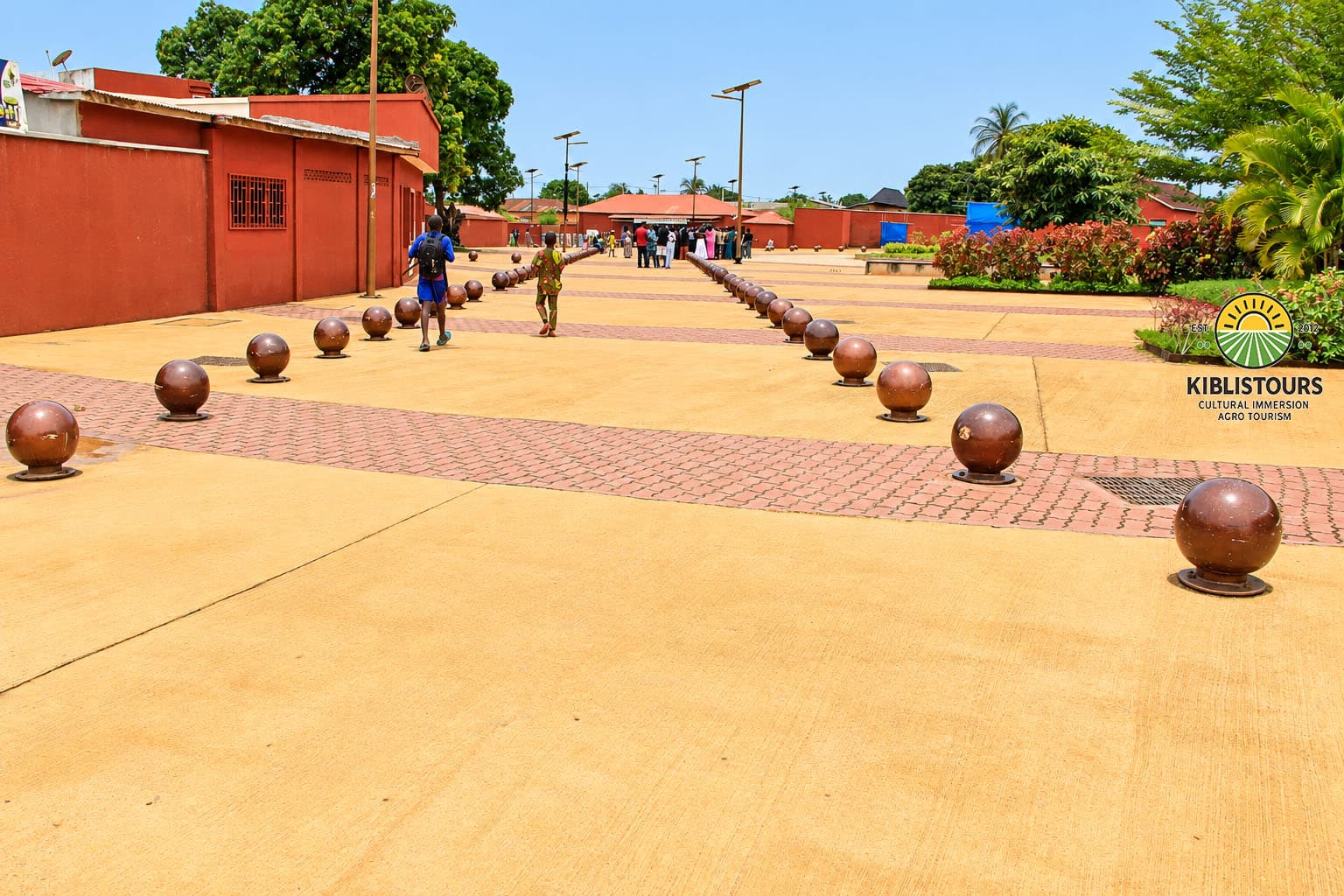
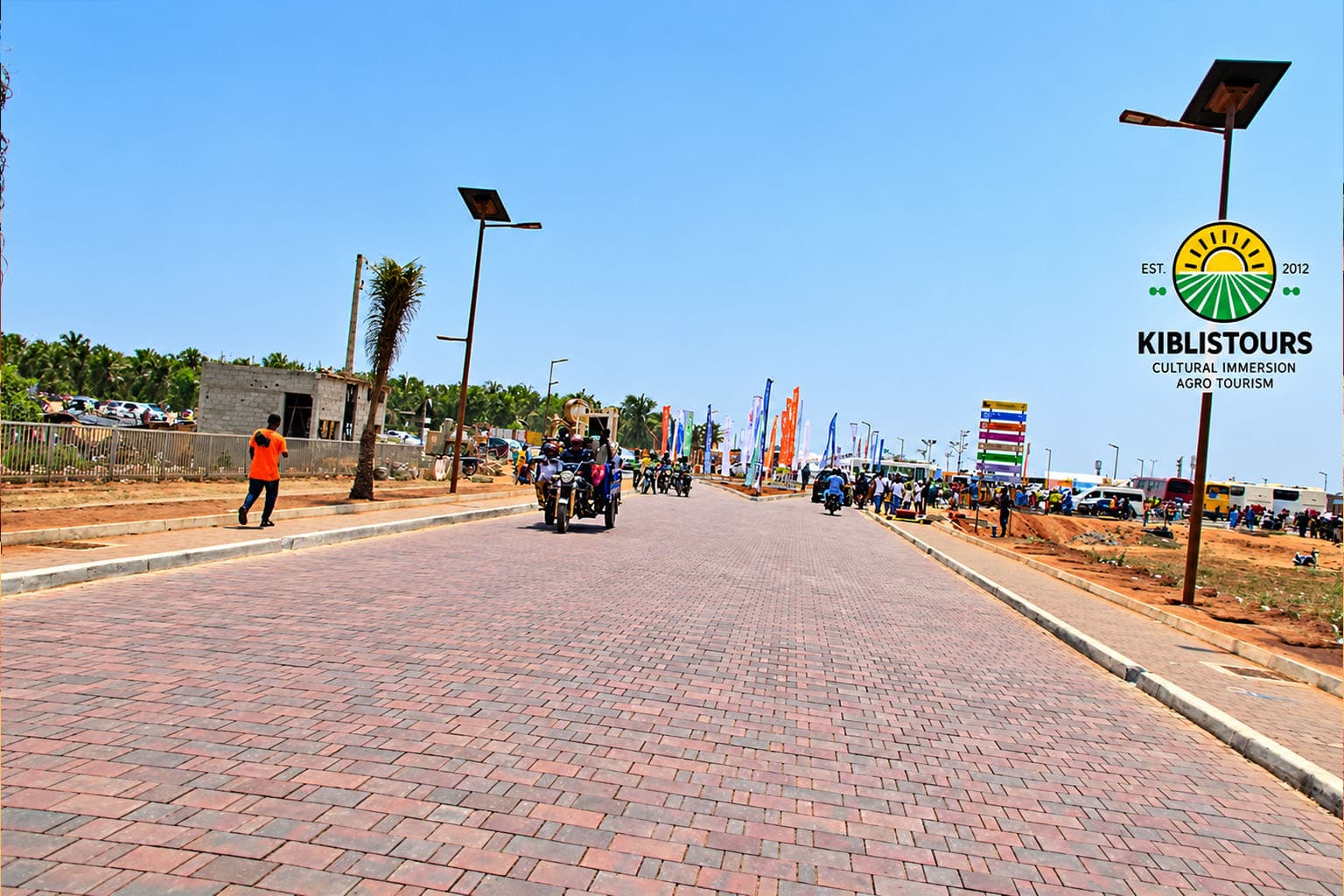
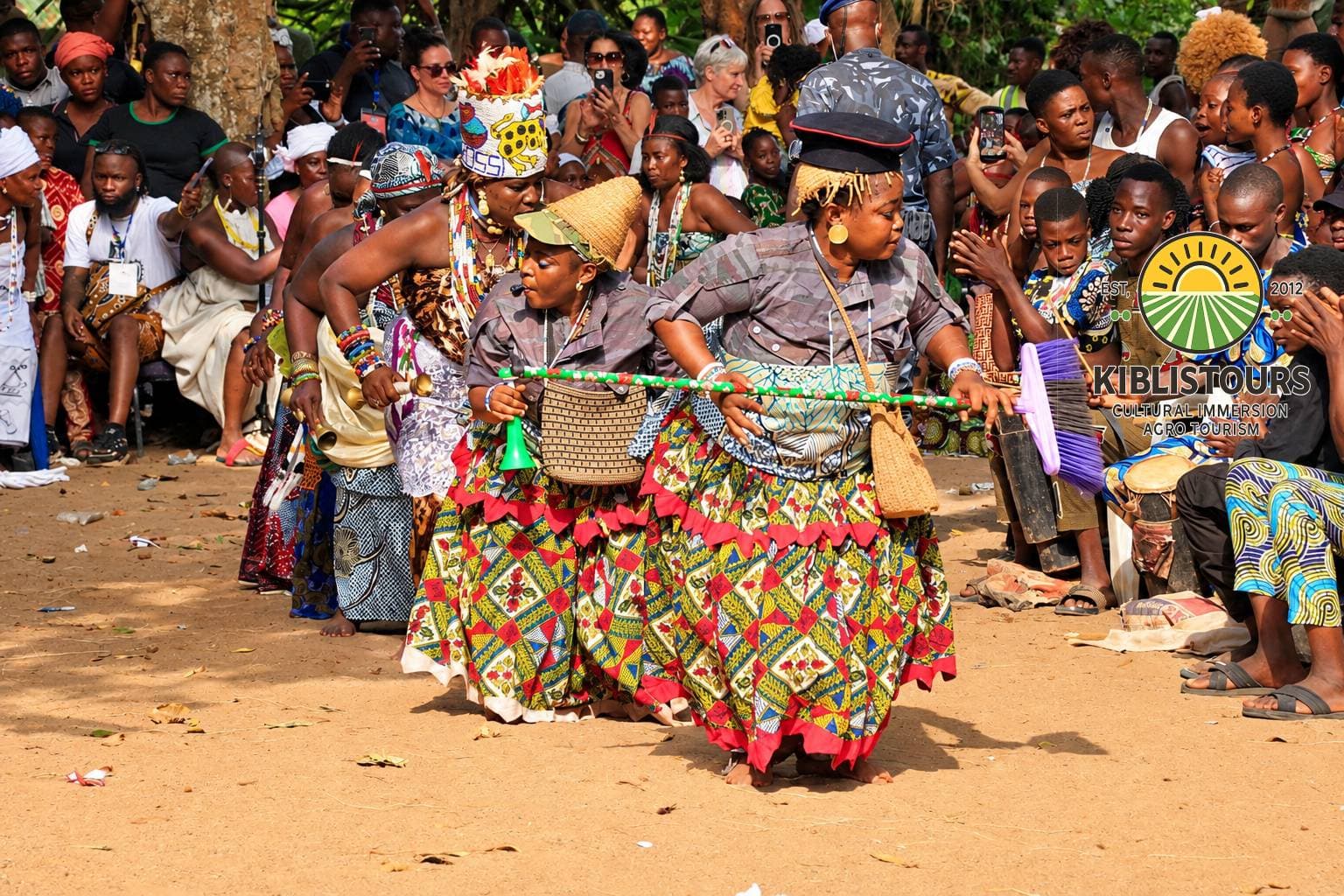
Vodun in Abomey : moving beyond stereotypes to understand a living tradition
The word “Vodun” often triggers immediate reactions among travellers discovering Benin.
Some think of films, while others picture objects or practices popularised by Western fiction. Others imagine a mysterious world they know mainly through outside representations.
These images are often far removed from the diversity of Beninese realities.
Vodun belongs to complex religious, social, cultural and philosophical traditions. It may involve relationships between human beings, deities, ancestors, nature and the community, as well as different understandings of the visible and invisible worlds. (King Jah, “Benin: The Cradle of Voodoo and African Culture”, 1 December 2025.)
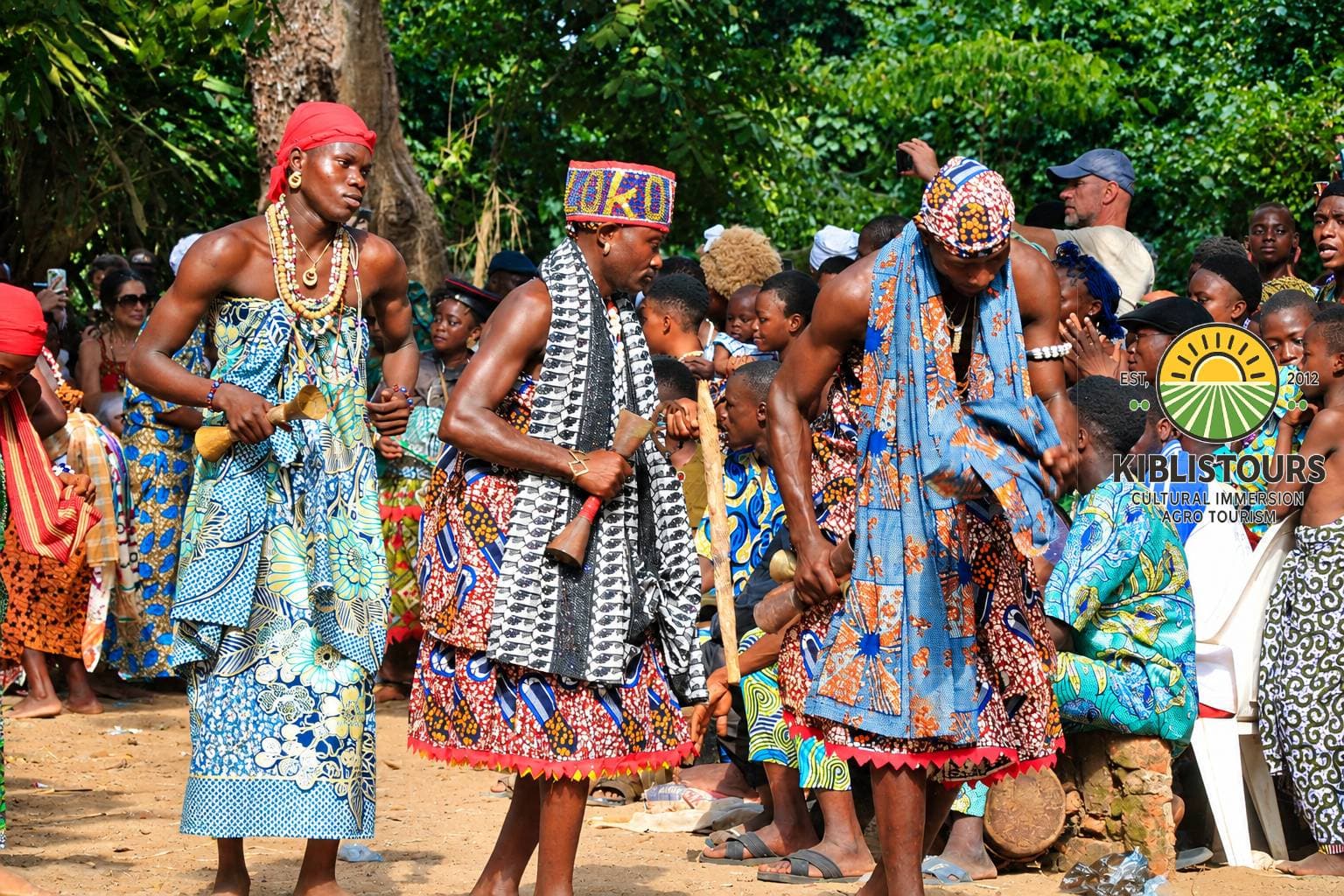
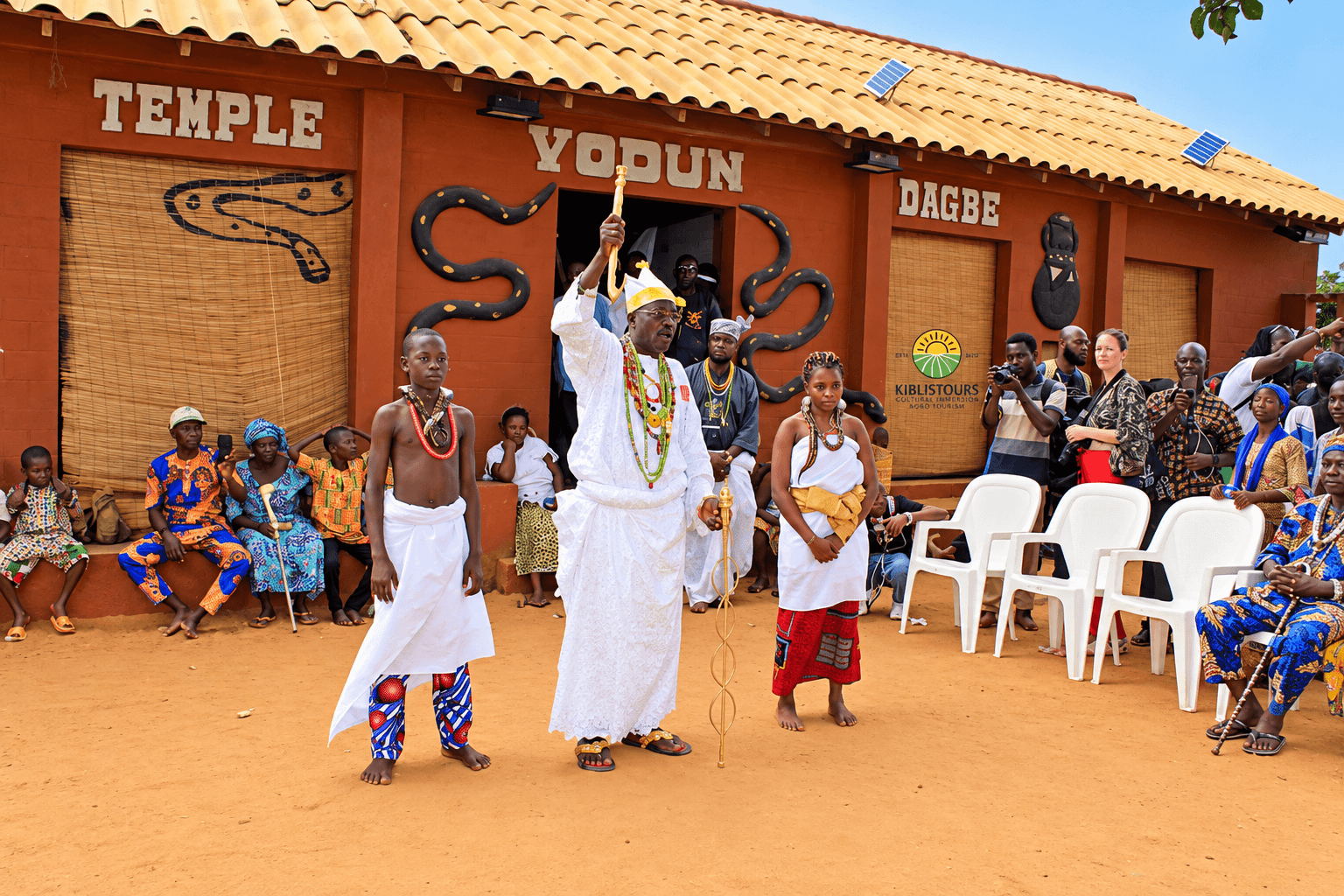
Abomey’s history is deeply connected to some of these spiritual dimensions. The UNESCO also points out that sacred spaces remain within the Royal Palaces site and continue to receive particular attention from royal families and local communities.
Discovering them, however, requires one essential rule :
Respect must come before curiosity.
Not everything is intended for visitors. Some ceremonies are public; others are private. Certain places may be accessible, while others are not. Photography may be permitted in some circumstances and prohibited in others.
These boundaries do not diminish the experience. On the contrary, they give it greater depth.
Travelling responsibly means accepting that a community’s traditions are not entirely available for tourist consumption.
When an encounter connected to Vodun can be organised with the consent of the people concerned and in accordance with local customs, it can become an extraordinarily powerful experience. However, it should never be sold as a guaranteed performance.
This is precisely what distinguishes genuine cultural immersion from a staged attraction.
Becoming a guest rather than a mere spectator
There is a way of travelling in which every place becomes a backdrop: the market becomes a backdrop, the craftsperson becomes a backdrop, the ceremony becomes a backdrop and local people almost become extras in the visitor’s photographs.
We prefer a different approach.
The traveller naturally remains a visitor, but can learn to behave like a guest: asking permission before taking photographs, listening before speaking, accepting a cultural rule even when it is not immediately understood, respecting sacred spaces and never assuming that payment grants unlimited rights. These attitudes may seem simple, but they profoundly transform the quality of a journey.
Someone who feels respected may spontaneously share far more than any tourism programme could ever have planned. (UNESCO, “Ethics and Intangible Cultural Heritage”)
This is often where authenticity begins.
In Ouidah, you have the opportunity to explore Vodun spirituality through : Ouidah - Discovery & Spirituality Offer
Meeting the people Abomey is more than its Kings
After spending several hours exploring royal history, it is important to return to the present.
Abomey is a living city.
Families work here, young people study, entrepreneurs develop their businesses, women traders bring the markets to life and craftspeople adapt their skills to contemporary realities.
Smartphones, social media and modern culture coexist with an environment shaped by several centuries of history.
This coexistence between heritage and modernity is fascinating.
What does royal history mean today to an elder ? To a student ? To a market trader ? To a craftsperson ? To a young female entrepreneur ?
Their answers will not necessarily be the same and that is precisely what makes them interesting.
A living heritage is never interpreted in exactly the same way by every generation.
The best visit to Abomey may therefore be one that allows you to hear several voices: those of the guide, the craftsperson, the trader, the elder, the young person, the guardian of a tradition or the woman working in the market.
Each person has a different relationship with the city.
Laura J.'s testimonial : encountering the kings of the past and present-day Abomey.
“I came to Abomey to explore the royal palaces and learn more about the history of the kings of Dahomey. The guide’s explanations helped me understand the symbols, the stories and the place these sites hold in the city’s collective memory.
But present-day Abomey also left a lasting impression on me. As the visit unfolded, I realised that there was more to this city than its royal past: its everyday life, craftsmanship and traditions added another dimension to the experience.
Of course, I’m leaving with images of the palaces, but above all, with a desire to learn more about this history and the people who keep it alive.”
The market : Discovering everyday life in Abomey
After the palaces and royal stories, a walk through a market may seem much simpler.
Yet it offers an essential perspective on the city.
The aromas change, conversations overlap, women traders arrange their goods, customers negotiate and the colours of the fabrics mingle with those of fruit, vegetables, spices and everyday objects.
A market was not created to be photographed. It exists first and foremost for local residents, and that is precisely what makes it so interesting.
With a local guide, you can learn to recognise a fruit, flour, spice, dish or plant used in cooking or in certain traditional practices.
How is this ingredient prepared ? Why is it more abundant during a particular season ? In which dishes is it used ?
These brief conversations are among the simplest and most sincere forms of cultural discovery.
Tasting Abomey : understanding Benin through its flavours
Lunch is not merely a break between two visits. It can become a cultural activity in its own right. Beninese cuisine draws on a wide variety of ingredients and preparations that differ according to region, family and season.
In Abomey, a meal can provide an opportunity to discover dishes made from maize, cassava, yam, beans, vegetables, sauces and other local ingredients.
But instead of simply eating, ask questions.
How is this dish prepared ? Is it eaten throughout Benin ? Are there several variations ? Is it an everyday meal or a dish associated with particular occasions ? How is the recipe passed down ?
Conversations around food are often more natural than formal exchanges.
People share a meal, compare flavours and joke together. You may discover that an ingredient you thought you knew is prepared here in a completely different way.
These are often the moments that remain in your memory for a very long time.
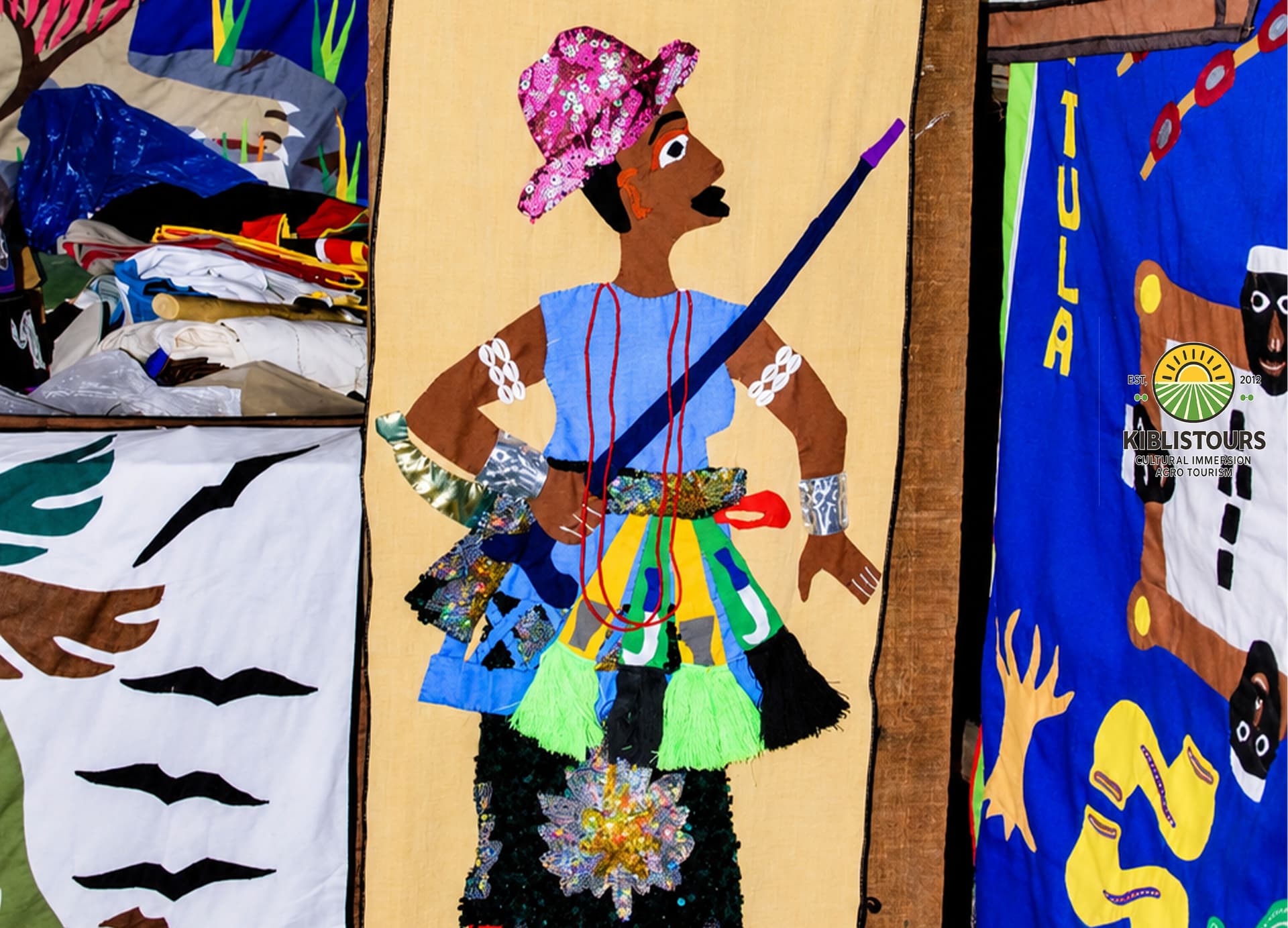
The Craftspeople when heritage passes from the palaces into human hands
A handcrafted object becomes far more interesting when you meet the person who made it.
In Abomey, some craftspeople work with inherited skills or symbols associated with the history and culture of the region.
This dimension is not secondary : UNESCO highlights the fact that the palaces were also a centre for the development of craft techniques.
At first, the visitor sees the finished object. Then they discover the gesture, the raw material, the tools, the time devoted to the work and the possible meaning of the design.
Imagine recognising, on a contemporary work of art, a symbol you observed a few hours earlier in a royal space.
You ask the craftsperson what it represents and suddenly the symbol you thought belonged exclusively to the past still exists in their hands.
Heritage is no longer confined behind a wall or inside a display case. It continues to be interpreted, crafted and transmitted.
If you then purchase an item directly from the craftsperson, your souvenir takes on a different meaning. Once you return home, you no longer own merely “an object purchased in Benin.” You remember the workshop, the gesture, the conversation and the story you were told.
Your souvenir has an origin.
An Ideal day trip to Abomey from Cotonou
If your stay in Benin is short, a one-day excursion is possible, provided the available time is carefully organised.
An early morning departure
The day begins early to ensure that you have enough time to properly discover Abomey.
During the journey, your guide can provide some essential background on the Kingdom of Dahomey, its rulers, the Agojie and its connections with Ouidah.
The purpose is not to tell the kingdom’s entire history in the vehicle, but to give you enough context for your arrival to be meaningful.
Arrival and the main historical visit
Once in Abomey, the morning is devoted to the principal heritage sites.
Resist the temptation to photograph everything immediately.
Listen first. Observe. When you notice that a symbol appears in several places, ask why. When a story surprises you or exists in several versions, question your guide.
A good tour is not a monologue.
It is a conversation with the past.
Lunch as a Transition
After several hours of discovery, lunch provides an opportunity to slow down.
The conversations often become more informal. Do royal families still play a role? How do young people in Abomey perceive this history? Are traditions still being passed down ? What place does Vodun occupy today?
The meal therefore extends the visit without appearing to do so.
The Afternoon Returning to the Present
The afternoon may be devoted to a more contemporary aspect of the city : a market, a craft workshop, a neighbourhood, a meeting or another experience available at the time of your visit.
The programme should be adaptable to each traveller’s interests.
A photographer will not experience Abomey in exactly the same way as a history enthusiast. A family travelling with teenagers will not have the same expectations as a solo traveller. A person from the African diaspora may wish to explore questions of memory in greater depth, while someone interested in African spiritual traditions may prefer to devote more time to understanding the context of Vodun.
This is why personalisation is essential.
Returning to Cotonou
On the return journey, tiredness often mingles with memories from the day: a bas-relief, a courtyard, a symbol, an object created before your eyes, a story connected to Behanzin, a flavour discovered at lunch or a question you had never considered before your visit.
Then the lights of Cotonou reappear.
The excursion comes to an end.
But Abomey often continues to live in your memory.
Why spending a night in Abomey can transform the experience
If your itinerary allows it, spending one night in Abomey is an excellent option.
An overnight stay changes the pace.
You no longer need to think about the return journey from the middle of the afternoon onward. You can extend an interesting encounter, take more time and discover the city as visitors who came only for the day begin to leave.
In the evening, the light changes and the city gradually returns to its ordinary rhythm.
The following morning, you do not arrive after several hours on the road. You wake up in Abomey.
The first day primarily allows you to discover the grand historical narrative. The second gives you more space to encounter the contemporary city.
Two Days in Abomey An Itinerary for Deeper Understanding
Day 1 The Grand History
Leave Cotonou early in the morning, receive a historical introduction during the journey and arrive in Abomey for an in-depth exploration of the principal royal sites.
Discover the symbols and bas-reliefs, enjoy a local lunch and then take part in a craft encounter or an additional cultural experience.
The day ends with check-in at your accommodation for the night.
Day 2 Living Memory
The following day can unfold at a gentler pace.
You can explore a subject left unfinished the previous day, visit a market or workshop, meet residents when possible, learn more about living traditions and observe Abomey as a contemporary city rather than solely as a former royal capital.
Then comes the return to Cotonou or the continuation of your journey towards another destination.
On the first day, you discover Abomey. On the second, you begin to understand why it continues to stay with you.
Abomey for Travellers of African Descent An Encounter That Requires Sensitivity
Some journeys possess a dimension that cannot be measured solely in kilometres.
For a person of African descent travelling from the United States, Canada, France, the United Kingdom, Brazil, the Caribbean or elsewhere, discovering certain parts of West Africa can be a profoundly emotional experience.
That emotion should never be turned into a simplistic marketing argument.
No one should promise travellers that they will automatically find “their ancestors” in a particular city. Historical journeys and genealogical origins are infinitely more complex.
In Abomey, however, travellers can discover structured African political institutions that existed before colonisation, a military organisation, systems of representation, religious traditions, diplomatic relations, political codes and sophisticated artistic production.
They also encounter the contradictions within this history, particularly the kingdom’s participation in slave-trading networks.
Confronting this complexity can be powerful.
It sometimes allows travellers to move beyond two equally reductive representations of African history : one that reduces it entirely to suffering and another that completely idealises the precolonial past.
History then regains its human depth, with its creativity, violence, resistance, ambitions and transformations.
For some travellers, this understanding constitutes a form of reconnection not necessarily with an identified ancestor, but with a greater historical depth.
Marcus’s Testimonial A Different Way of Reconnecting with African History
Marcus's testimonial : a different way of reconnecting with african history.
For some members of the African diaspora, the emotion comes precisely from discovering a history that is broader, more human and more complex.
Marcus, an African American traveller, later shared his experience while waiting for his return flight :
“I did not come looking for one specific ancestor. I wanted to understand. In Abomey, I discovered an African history that was much more complex than the one I had learned. That is what touched me so deeply.”
His testimony accurately illustrates what a journey of remembrance can offer when it avoids artificial promises of “finding one’s ancestors” and instead prioritises historical understanding, an encounter with a territory and the discovery of the depth of African societies.
Abomey and Ouidah : A particularly powerful cultural itinerary (UNESCO, significant sites along the slave route in Benin, 2021)
If you have several days available, combining Abomey and Ouidah is particularly worthwhile. The two cities tell different but historically connected stories.
Abomey provides insight into royal authority and its organisation. Ouidah opens onto the Atlantic Ocean, the memories of the slave trade and other dimensions of Vodun traditions.
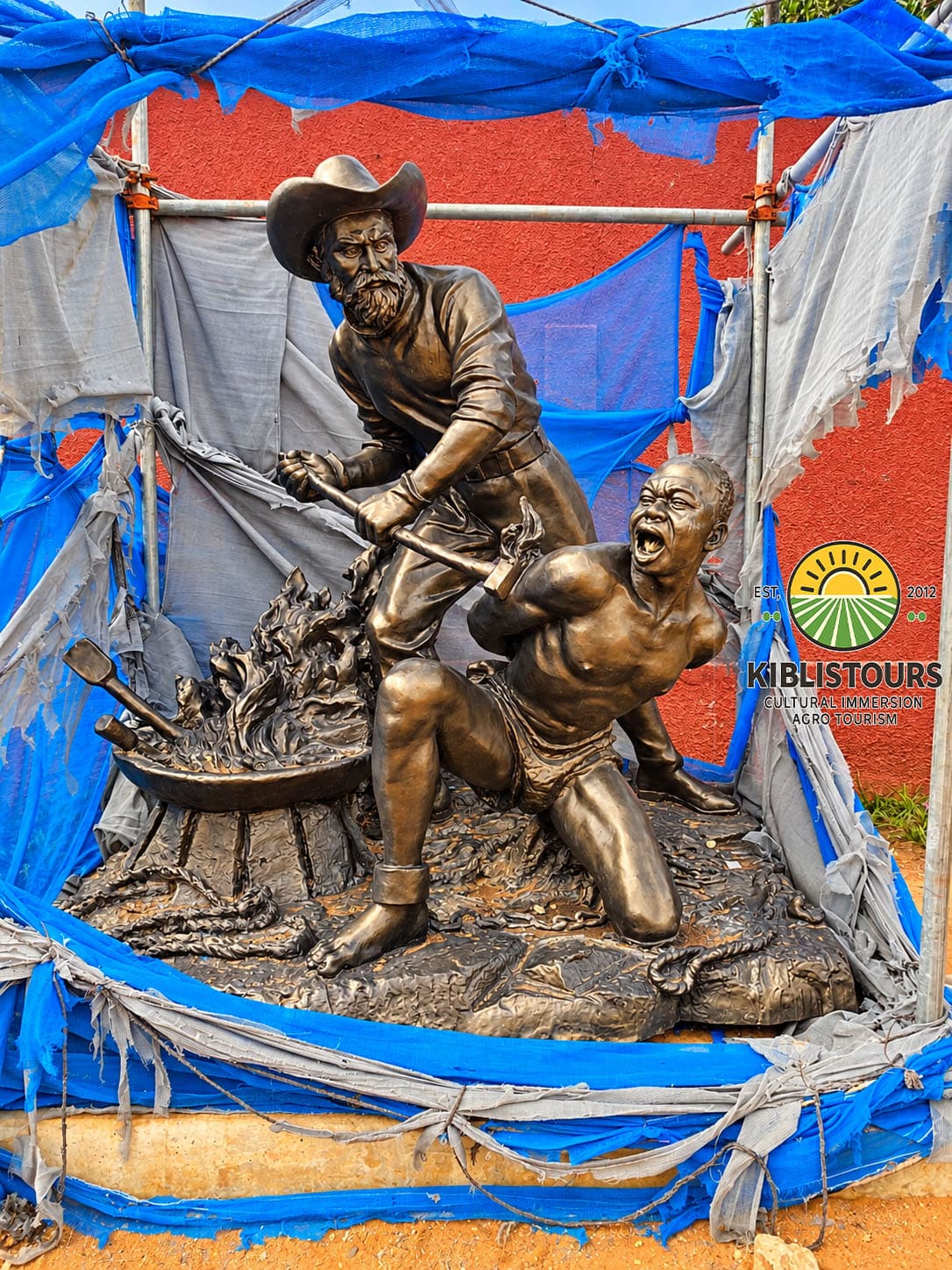
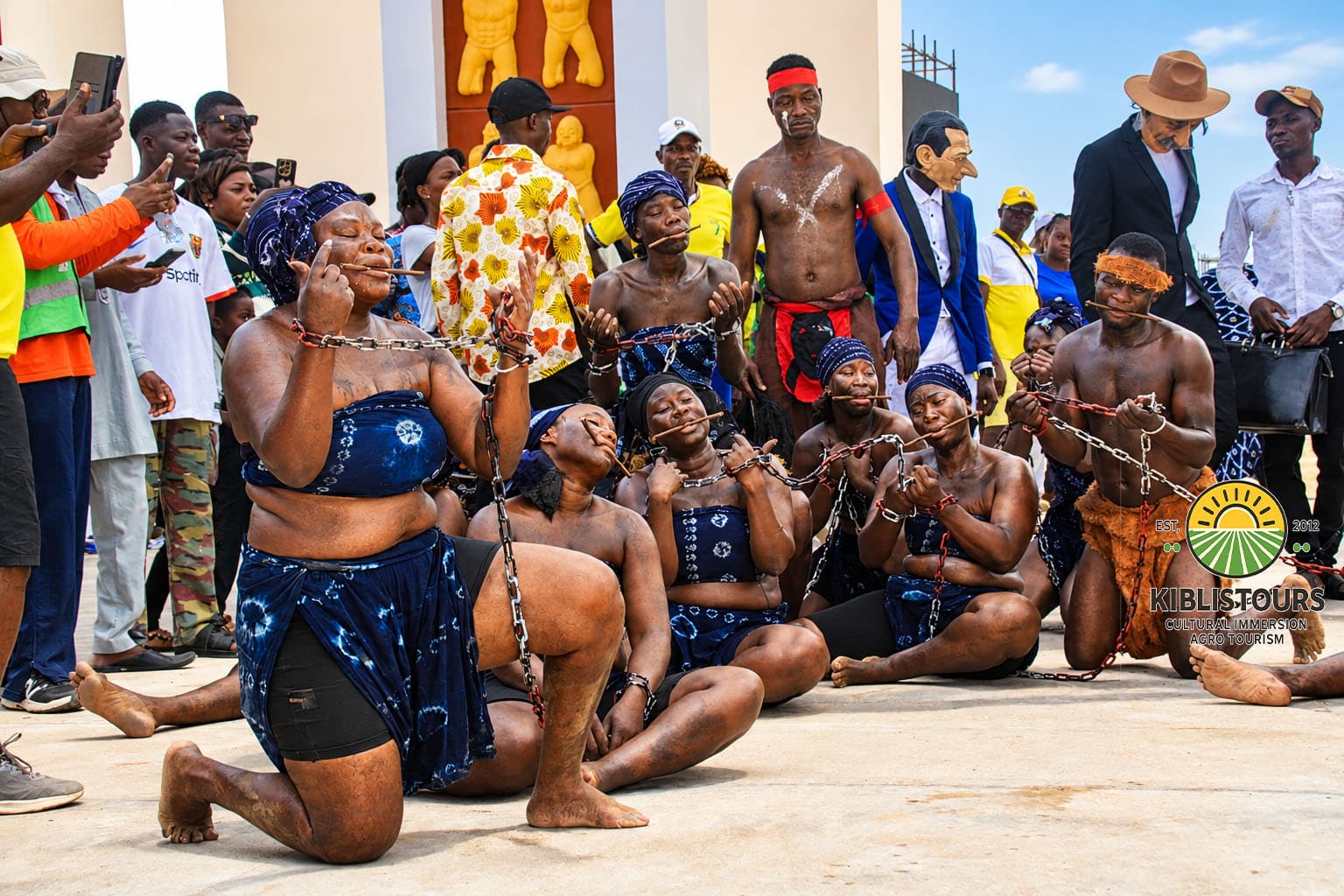
Visited separately, both destinations are already fascinating. Together, they begin to engage in dialogue.
The map becomes history. The distance between the interior and the ocean becomes a key to understanding the past.
For travellers passionate about Atlantic history and for some members of the African diaspora, this combination can become one of the most powerful experiences of their stay.
Abomey and Ganvié (The Venice of Africa) : Two worlds within the same country
Another particularly fascinating contrast can be experienced by combining Abomey with Ganvié.
Ganvié takes you into a lakeside world where water shapes much of daily life and movement.
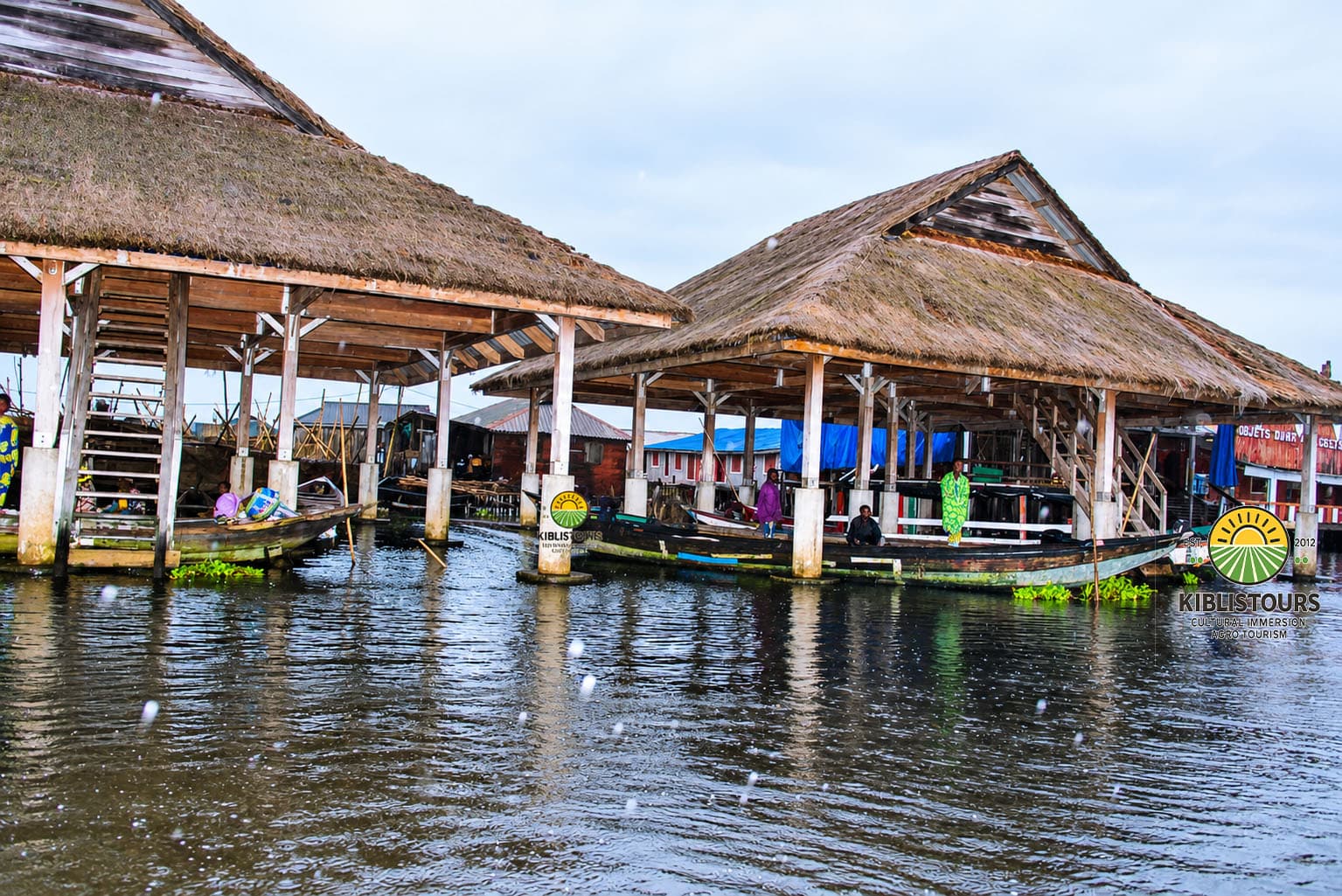
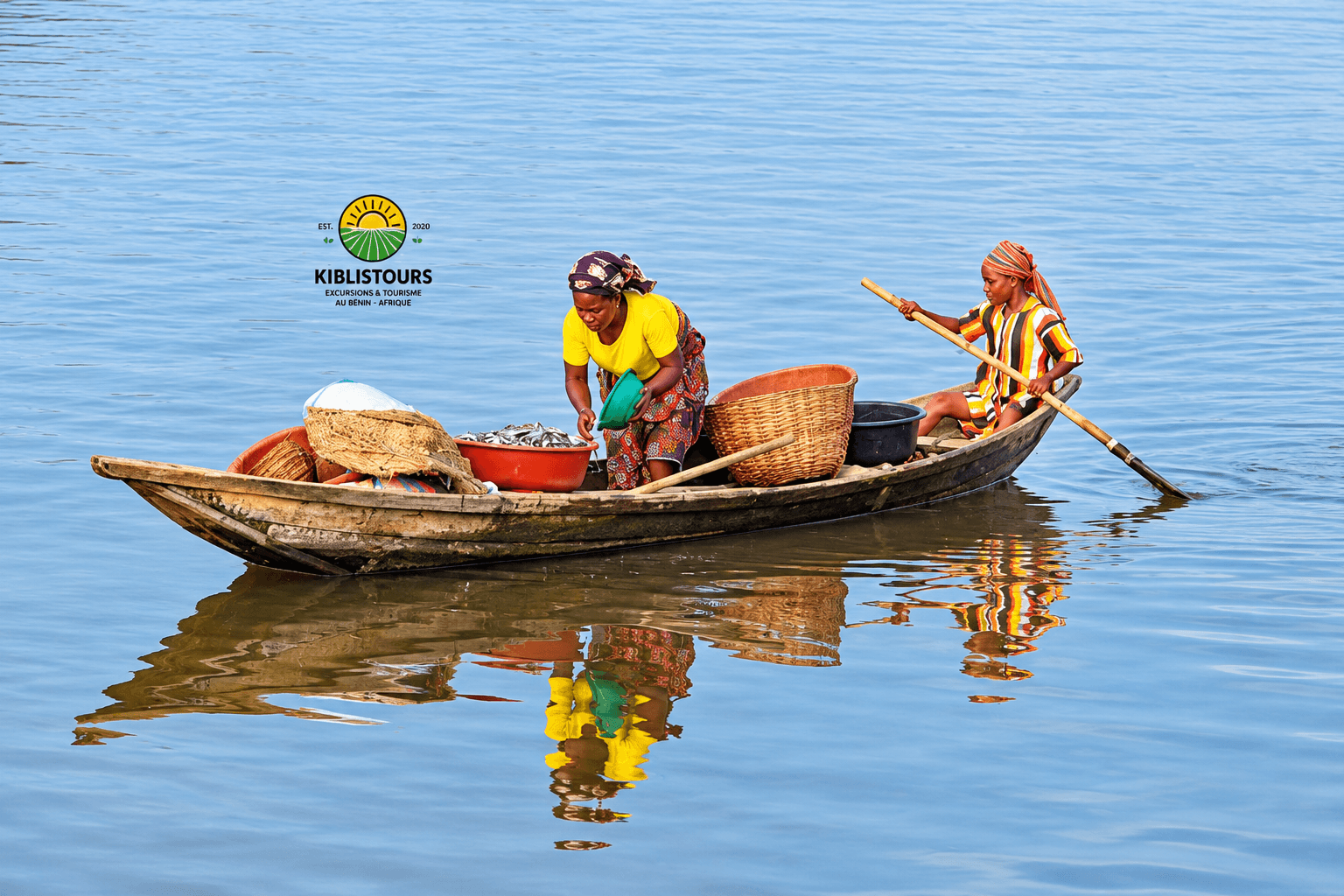
Abomey brings you back to an ancient royal capital on land.
The landscapes, histories and atmospheres are different, yet both destinations belong to the same Benin.
Within a few days, you can therefore move from the energy of Cotonou to the waterways of Ganvié, from the Atlantic memories of Ouidah to the palaces of Abomey.
Benin may not be immense in terms of its surface area, but it is remarkably rich in experiences.
Abomey and Porto-Novo : Several histories for understanding Benin
Porto-Novo and Abomey can also be combined within a cultural itinerary.
Visiting both cities helps prevent an oversimplified understanding of Beninese history.
The territory that now forms Benin experienced different political entities, influences and historical paths. Visiting several former centres of power therefore reveals that the country’s history cannot be reduced to a single dynasty.
The more you travel through Benin, the more these stories intersect.
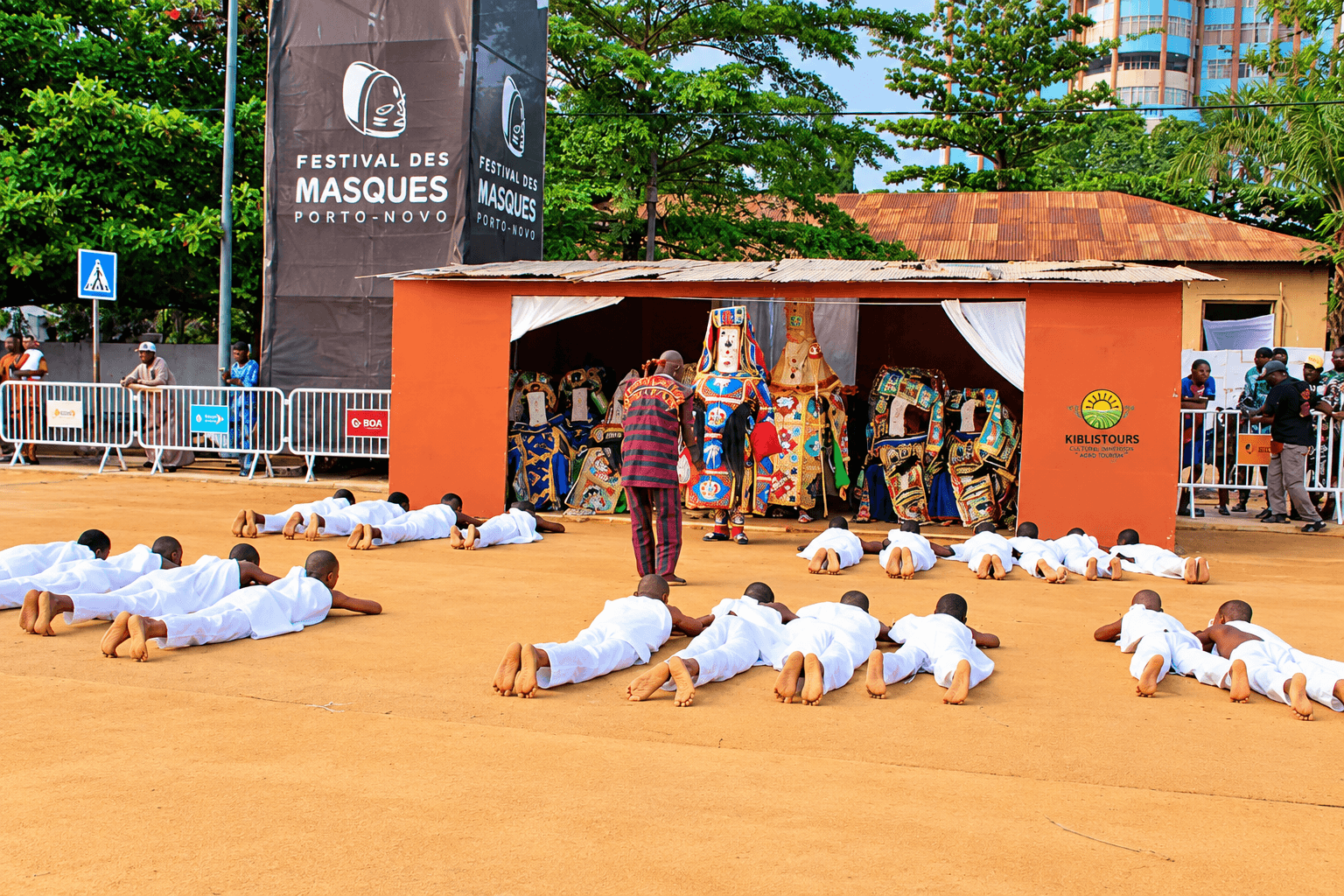
When is the best time to visit Abomey ?
Abomey can be visited throughout much of the year.
The best time depends on your preferences, your itinerary and travel conditions.
Some travellers prefer the relatively dry periods because they make outdoor visits easier. Others appreciate the greener landscapes of the rainy seasons.
If you wish to attend an event or discover a particular cultural practice, always verify what will genuinely be possible at the time of your visit.
An authentic ceremony is not a performance that can automatically be arranged simply because a traveller booked it several months in advance.
Some experiences must remain connected to the calendar, the circumstances and the decisions of the communities concerned.
Contact us today to organize your visit :
📱 WhatsApp : https://wa.me/0190721761
📧 Email : [email protected]
🌍 Website : www.kiblistours.com
What Should You Wear When Visiting Abomey ?
Choose lightweight, comfortable clothing and shoes suitable for walking.
Sun protection, a hat or cap and drinking water may also be useful, depending on the conditions.
Comfort, however, is not the only consideration.
Some places possess particular cultural or spiritual significance. Modest and respectful clothing is therefore a wise choice.
Whenever specific rules apply, always follow the instructions provided locally.
Can You Take Photographs Freely in Abomey ?
No.
Restrictions may apply within heritage, museum, religious or ceremonial spaces.
When photographing a person, ask for permission. When photographing a craftsperson at work, ask first. When a child is involved, even greater caution is required.
A portrait has no value if it is obtained at the expense of the dignity of the person being photographed.
When permission is granted and a genuine interaction has taken place, the image itself becomes more meaningful.
You are no longer simply photographing a “subject.”
You are photographing someone you have met.
Visiting Abomey with Children Turning History into an Adventure
Some families hesitate to include historical sites in their programme because they fear their children may become bored.
In Abomey, everything depends on how the history is presented.
A long succession of dates can indeed become tiring. However, royal symbols, bas-reliefs, stories about the rulers, the Agojie and historical objects can turn the visit into an adventure.
Children can be encouraged to find a particular symbol, identify an animal, imagine what a representation might mean, compare two emblems or observe how a craftsperson creates an object.
The child is no longer a passive spectator. They investigate, imagine and gradually understand.
This approach also works with teenagers, particularly when connections are made with contemporary popular culture.
How Much Does an Excursion from Cotonou to Abomey Cost ?
There is no single price.
The budget depends on several factors, including the type of vehicle, the number of travellers, the duration of the tour, the level of guidance, meals, visits, possible accommodation and additional experiences.
A private excursion for two people will not cost the same as a small-group tour, and a one-day return trip cannot be compared with an overnight stay.
You should therefore request a quotation that clearly specifies the services included : transport, guidance, admission fees, meals, activities, possible accommodation and additional services.
This transparency allows you to compare what is genuinely comparable.
The lowest price will not necessarily provide the best experience at a cultural destination.
There is a significant difference between returning to Cotonou and saying, “I saw the palaces,” and returning to say, “I finally understand why this city is important.”
Why Choose Kiblistours to Visit Abomey from Cotonou ?
You can, of course, organise the journey yourself.
So why travel with Kiblistours ?
Because we do not measure the value of a tour solely by the number of sites included.
Our work consists of creating connections : between Cotonou and Abomey, the present and the past, travellers and their guides, monuments and their history, craftspeople and the objects they make, and traditions and the context that gives them meaning.
We want to prepare your perspective before the visit, facilitate respectful encounters whenever possible, adapt the experience to your interests and give you enough space to ask your own questions.
Guides Who Tell a Story Rather Than Recite a List of Dates
Knowing history is essential. Knowing how to communicate it is equally important.
A good guide must provide reference points without overwhelming visitors with information. They should know when to expand on an explanation and when to allow a few moments of silence. As far as possible, they should distinguish between historical facts, transmitted memories and legends.
They should also be prepared to address difficult questions and be able to say, “I do not know,” when an answer has not been sufficiently established.
This honesty is essential in a historical destination.
The more fascinating a story is, the greater the temptation to embellish it.
We prefer a complex and credible history to a spectacular legend invented merely to impress visitors.

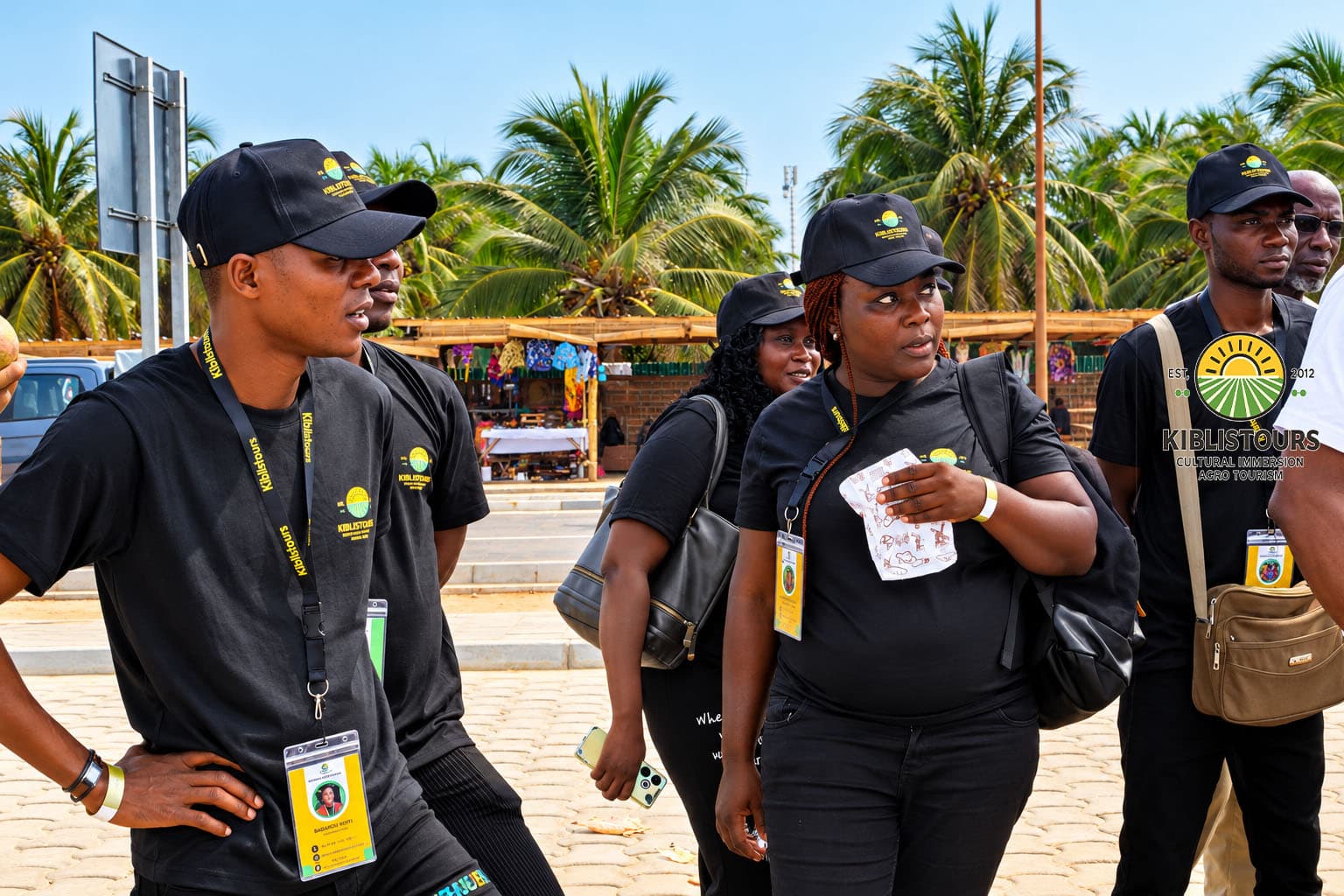
Seeing More Slowly to Experience Much More
Modern travel sometimes suffers from the fear of not having “seen everything.”
One site is added, then another, until the day becomes a race.
At Kiblistours, whenever the programme allows, we defend another idea : seeing things more slowly in order to experience them far more deeply.
Stay a few extra minutes in a courtyard because the conversation has become fascinating. Sit with a craftsperson instead of merely photographing the workshop. Taste a product at the market because someone recommended it to you. Listen to an entire story.
These moments may not fill a checklist of “things to see.”
Yet they are often the experiences people continue talking about several years later.
Responsible Tourism Making Sure Your Presence Has a Positive Impact
Tourism holds considerable potential.
It can create employment, support guides and restaurants, allow craftspeople to sell their creations directly, contribute to the promotion of heritage and encourage the transmission of certain skills.
However, it can also produce undesirable effects: turning ceremonies into performances, treating residents as objects to be photographed, concentrating tourism revenue in a few hands or simplifying cultural practices to satisfy visitors’ expectations.
Responsible tourism seeks to achieve a balance.
It requires respect for local rules, the use of local service providers whenever possible, direct purchases from craftspeople when appropriate, a refusal to demand that communities stage their spirituality and respectful behaviour towards the people encountered.
Travellers therefore have a genuine role to play.
Authenticity is not a service that can simply be ordered. It often emerges from the quality of the relationship.
How Abomey Can Change the Way You See Africa
Some international travellers still arrive on the continent with perceptions shaped by school, the media or popular culture.
Some reduce African history to colonisation, as though nothing significant had existed before it.
Others, in reaction, sometimes idealise precolonial kingdoms.
Abomey allows visitors to move beyond both caricatures.
You discover an organised system of power, a capital city, institutions, an army, artistic traditions, diplomatic relations, religious systems and architecture connected to the representation of authority.
But you also encounter wars, violence, rivalries and participation in human-trafficking networks.
You therefore rediscover something essential :
Complexity.
Dahomey does not need to be presented as a perfect kingdom to be fascinating. Nor should it be reduced to the darkest chapters of its history.
It deserves to be studied like every great human history: through its strengths, contradictions, transformations and legacies.
Abomey Is Not a Historical Backdrop
It would be unfair to its residents to speak of the city only in the past tense.
Abomey is a contemporary city.
Businesses are developing, young people are building their futures, artists are creating new forms and traditions continue to evolve. Some practices disappear, while others change or are reinvented.
Smartphones, social media and contemporary music coexist with references inherited from several centuries of history.
This raises a particularly interesting question :
How does a new generation live surrounded by a heritage that visitors from all over the world come to discover ?
There is no single answer.
That is precisely why encountering present-day Abomey is just as important as understanding the Abomey of the past.
Practical Advice for a Successful Visit to Abomey from Cotonou
Leave Early
This is particularly important if you are returning to Cotonou on the same day. You will have more time to enjoy the destination and feel less pressured by the clock.
Wear Comfortable Clothes
The climate can be hot, and some visits involve walking. You should also choose clothing that is respectful of the places you will visit.
Carry Drinking Water
Proper hydration makes a genuine difference during a full day of cultural discovery.
Ask Questions
Do not simply follow behind your guide. The best visits are interactive.
Respect Photography Restrictions
These rules may protect a heritage site, a spiritual practice or simply a person’s right not to be photographed.
Avoid Overloading Your Programme
A few experiences enjoyed fully are often more valuable than a long succession of places visited too quickly.
Buy Locally When You Find Something You Like
Purchasing an item directly from a craftsperson can contribute more directly to the local economy and give greater meaning to the souvenir you take home.
Leave Room for the Unexpected
Not everything that becomes memorable was necessarily included in the original programme.
Private Excursion or Small Group Which Should You Choose ?
A private excursion offers considerable freedom.
It allows the pace to be adjusted, gives you more time to explore the subjects that interest you and makes it easier to personalise certain aspects of the programme.
This option is particularly suitable for couples, families, photographers, travellers from the African diaspora and people with highly specific interests.
A small group, however, has its own appeal.
Other people’s questions may enrich your own experience. One person may notice a detail you overlooked, while another may ask a question that had not occurred to you. Conversations may then continue over lunch.
No single option is therefore better in every situation.
The essential consideration is to maintain a group size that allows genuine interaction.
Can Abomey Be Combined with Northern Benin ?
Yes.
After discovering the palaces and history of Abomey, continuing north allows you to encounter other landscapes, forms of architecture, cultures and ways of life.
The journey from south to north reveals just how diverse Benin is.
Your stay then becomes more than a journey devoted to a single history : it gradually becomes a journey across the country.
Why Book Your Excursion Before Arriving in Cotonou ?
Certain arrangements can be made after you arrive, but booking in advance makes preparation easier.
It allows the availability of the vehicle and guide to be confirmed, gives the team time to understand your interests, makes it possible to arrange an overnight stay and enables the feasibility of certain encounters to be assessed.
When contacting Kiblistours, tell us what genuinely interests you.
Are you passionate about the Agojie ? Are you travelling with children ? Would you like to explore questions of history and memory ? Are you a photographer ? Do you want to understand Vodun more deeply ? Are you interested in crafts ?
This information allows us to design the experience around your curiosity, rather than offering the same programme to everyone.
Three Ways to Experience Abomey with Kiblistours
The Essential Excursion One Day from Cotonou
Ideal for : travellers with limited time.
Experience : an early morning departure from Cotonou, private transportation depending on the selected package, background information during the journey, discovery of the royal heritage, cultural guidance, lunch according to the chosen programme and an additional experience depending on the available time.
Why choose it : it provides a solid introduction to Abomey without disrupting the rest of your stay in Benin.
To be confirmed in your quotation : the vehicle, guidance, admission fees, meals, activities and any other services actually included.
The Immersive Experience Two Days and One Night
Ideal for : travellers passionate about history, heritage and cultural encounters.
Experience : a first day devoted mainly to history and heritage, one night in Abomey and a second day at a more relaxed pace, allowing you to explore certain subjects more deeply, encounter more of the contemporary city, discover local craftsmanship or explore other dimensions according to the available opportunities.
Why choose it : it removes the pressure of returning immediately to Cotonou and leaves more room for genuine interaction.
To be confirmed in your quotation : transport, accommodation, guidance, meals, admission fees and planned activities.
The Grand Cultural Tour
Ideal for : travellers who want to understand several aspects of the country.
Abomey can become one stage in an itinerary that includes Cotonou, Ouidah, Ganvié, Porto-Novo and, depending on the available time, other destinations in Benin.
Why choose it : the destinations are no longer visited in isolation. They begin to engage in dialogue, providing a deeper understanding of the country’s historical, cultural, spiritual and geographical diversity.
Personalisation : the duration, accommodation, pace, interests, group size and experiences are defined according to the traveller’s needs.
FAQ Visiting Abomey from Cotonou
Where Is Abomey Located ?
Abomey is located in south-central Benin. It was once the political centre of the Kingdom of Dahomey and is notably home to the Royal Palaces of Abomey, a UNESCO World Heritage Site.
How Far Is Abomey from Cotonou ?
The road distance is generally around 130 to 140 kilometres, depending on your departure point and the route taken.
How Long Does It Take to Travel from Cotonou to Abomey ?
The journey time varies according to traffic, stops and road conditions. It is advisable to allow sufficient flexibility and leave early for a one-day excursion.
Can Abomey Be Visited in One Day from Cotonou ?
Yes. A one-day excursion is possible when it is properly organised. However, spending one night in Abomey allows for a more in-depth discovery.
What Must You Absolutely See in Abomey?
The Royal Palaces are the city’s principal heritage attraction. However, a more complete visit should also include, depending on the available time and opportunities, local craftsmanship, the contemporary city, a market or encounters with residents.
Why Are the Royal Palaces Famous ?
They provide exceptional testimony to the Kingdom of Abomey and have been inscribed on the UNESCO World Heritage List since 1985. The UNESCO (Royal Palaces of Abomey,1985) provides direct access to the inscription criteria and the site’s principal heritage information.
Who Were the Agojie ?
The Agojie were female military units within the Kingdom of Dahomey. In many Western sources, they are also known as the “Amazons of Dahomey.”
Does the Film About the Women Warriors of Dahomey Tell the Whole Story ?
No. A film necessarily constructs a narrative. Visiting Abomey makes it possible to place these women within a much broader historical context.
Can You Discover Vodun During a Visit to Abomey ?
Abomey possesses an important spiritual heritage. However, access to certain places or ceremonies depends on local rules, the calendar and particular circumstances. An authentic experience cannot always be scheduled like a tourist attraction.
Are Photographs Allowed Everywhere ?
No. Restrictions may apply in certain heritage, religious or ceremonial spaces. Permission should also be requested before photographing people.
Can Abomey Be Visited with Children ?
Yes. The symbols, bas-reliefs, royal stories and history of the Agojie can be particularly engaging when the visit is adapted to the children’s ages.
Is a Guide Compulsory ?
You do not need a guide simply to travel to Abomey. However, competent guidance adds considerable value when it comes to understanding the meaning of the spaces, symbols and stories.
Can You Stay Overnight in Abomey ?
Yes. Spending a night there is an excellent option for travellers who want to slow down and explore the city more deeply.
What Clothing Should You Bring ?
Lightweight and comfortable clothing, suitable shoes and an outfit that respects local cultural customs are generally good choices.
Is Abomey Suitable for Travellers from the African Diaspora ?
Yes. The city can be an important stop on a journey exploring West African political history, remembrance and the relationship between the interior of the territory and the Atlantic slave trade. However, this experience must be approached without oversimplified genealogical claims.
Can Abomey and Ouidah Be Visited on the Same Tour ?
Yes, and the combination is particularly relevant. Abomey provides insight into the kingdom’s political centre, while Ouidah opens onto the coast, the Atlantic Ocean, the memories of the slave trade and other dimensions of Vodun.
Can Abomey Be Combined with Ganvié ?
Yes. The two destinations offer very different worlds and reveal the diversity of Benin.
Is a Private Excursion Preferable ?
That depends on your travel style. A private package offers greater personalisation, while a small group can create an interesting and engaging social dynamic.
How Much Does a Visit to Abomey with Kiblistours Cost ?
The price depends on the number of travellers, the vehicle, the duration, the services, the activities and whether an overnight stay is included. A personalised proposal will clearly specify all the services provided.
Is Abomey Really Worth the Journey from Cotonou ?
If you are interested in history, heritage, African cultures, remembrance or simply destinations with a powerful identity, yes.
Kiblistours Do Not Collect Destinations ; Experience Them
At Kiblistours, we believe that a successful journey should not be measured solely by the number of places visited.
We prefer to ask: which story will you still remember five years from now? Which conversation will you share with your family and friends? Which flavour will make you want to return to Benin ? Which idea will have changed after your visit ?
That is the kind of experience we want to create.
An experience in which the transfer from Cotonou to Abomey is already part of the journey; the guide shares knowledge rather than reciting a script; local residents never become mere background figures; Vodun is not reduced to folklore; and the history of Dahomey is neither artificially glorified nor reduced to its darkest chapters.
An experience in which craftsmanship has a human face, your curiosity can influence the programme and you are free to ask questions.
Because authentic Africa is not something to be observed from a distance.
It is something you encounter.
Book Your Excursion from Cotonou to Abomey with Kiblistours
Would you like to discover the Royal Palaces without reducing your visit to a few photographs ?
Would you like to understand the Kingdom of Dahomey rather than simply hear a succession of dates ?
Would you like to discover the Agojie beyond their portrayal in popular culture, approach Vodun respectfully, travel with your children, organise a journey of remembrance or simply take the time to understand Abomey ?
Kiblistours can design the experience around your journey.
Whether you choose a one-day excursion from Cotonou, a two-day stay with an overnight visit, a private tour or a broader cultural itinerary combining Abomey with Ouidah, Ganvié, Porto-Novo and other destinations, the programme can be adapted to your pace, interests and length of stay.
Tell us what interests you, how you like to travel and what you would like to understand.
We will design an experience that does not merely show you Abomey, but allows you to truly encounter it.
You deserve more than a superficial visit.
You deserve to understand the stories that these places have to tell and meet the people who continue to bring them to life.
Come and discover Abomey with Kiblistours. Enter its history, interpret its symbols, listen to its voices, meet its people, taste Benin and take your time.
When the road takes you back to Cotonou, carry with you far more than a tourist souvenir.
Carry with you a story that you have truly experienced.
Kiblistours Experience Authentic Africa
Ready to Experience Abomey Differently ?
Discover the experiences offered by Kiblistours and contact our team to design an excursion or tour adapted to the length of your stay, your interests and your preferred way of travelling.
Contact us today to organize your visit :
📱 WhatsApp : https://wa.me/0190721761
📧 Email : [email protected]
🌍 Website : www.kiblistours.com
→ Discover Kiblistours and Start Planning Your Trip to Benin