What if true luxury was no longer what you imagined it to be ?
Imagine your next trip to Africa. You could choose a comfortable room, drop your bags at a hotel, enjoy breakfast by the pool, get into an air-conditioned vehicle, visit a few must-see attractions, photograph iconic landscapes, and return to your room in the evening.
It would certainly be enjoyable. But a few months later, what would truly remain from that journey ? Perhaps the memory of a monument, a particularly beautiful photograph, the name of a restaurant, a beach, a sunset, or a few souvenirs purchased before heading home.
Now imagine a different kind of day.
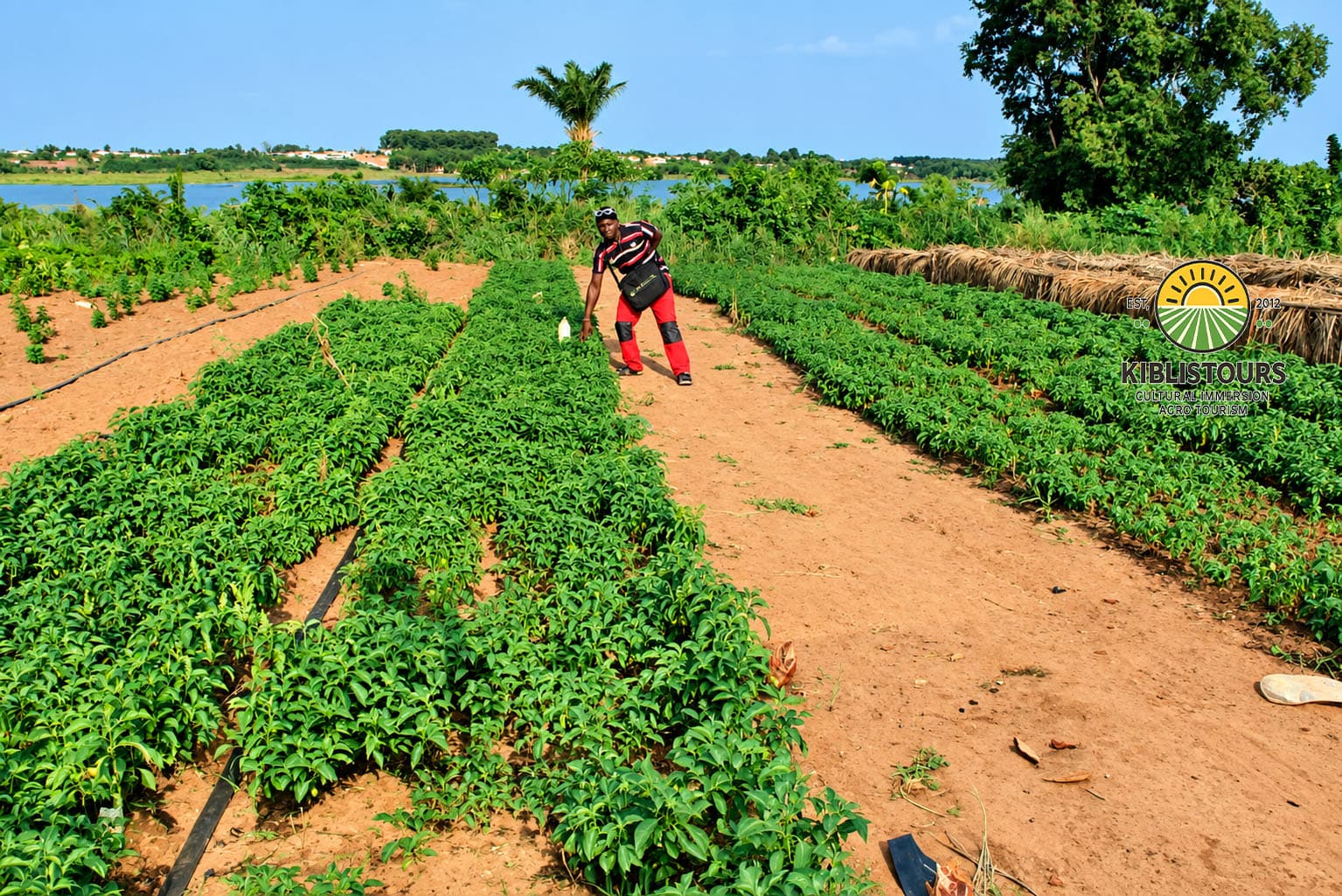
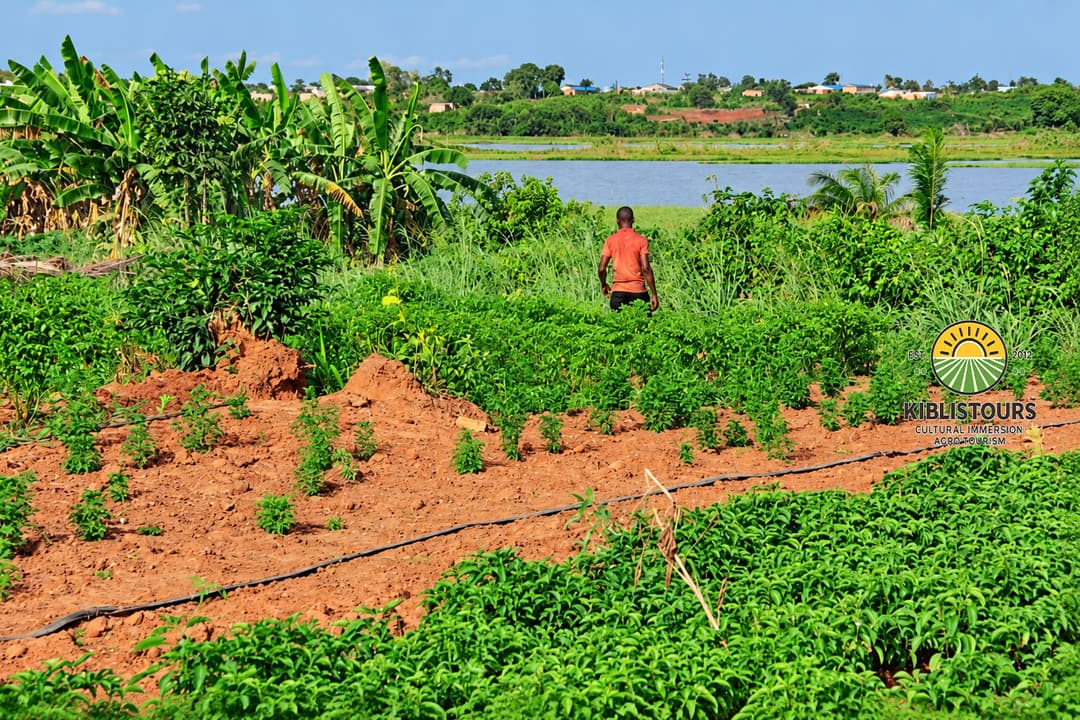
You leave the city in the morning. Gradually, the buildings disappear, traffic becomes lighter, and the landscape opens up. Fields appear on both sides of the road, followed by villages, plantations, fruit trees, and dirt paths.
When you arrive, there is no hotel lobby and no impersonal reception desk. A family welcomes you and introduces you not only to the place, but above all to the people who live and work there. You discover how certain crops are grown, how harvests are organized, and how products you may only know in their commercial form are transformed through techniques learned, refined, and passed down through generations.
You begin by observing. Then someone hands you a tool and invites you to try. One question leads to another and, a few minutes later, the conversation is no longer only about agriculture. You talk about family, food, the seasons, the village, the challenges of the profession, the changes seen over the years, and sometimes even your own country.
At lunchtime, you are no longer simply ordering a dish from a menu. You discover foods produced locally, recognize ingredients you saw only a few hours earlier, and suddenly realize that between a field and a plate lies an entire human story.
At that moment, something changes : you no longer really feel that you are visiting a place. You feel that you have been welcomed into it.
And that difference can completely transform the way you travel.
Traditional tourism has not disappeared, but expectations are changing
For a long time, having a successful holiday often meant checking as many places as possible off a list: seeing the main monument, photographing the iconic landscape, visiting the recommended museum, staying in a beautiful hotel, buying a few souvenirs, and then moving on to the next stop.
That model has obviously not disappeared and still offers many advantages. Hotels provide comfort, traditional tours make it possible to discover several places in a short amount of time, and tourism infrastructure makes travel considerably easier.
The problem begins when the entire journey is reduced to that.
A visitor may travel hundreds of kilometers, photograph several cities, and still leave with only a superficial understanding of the country they have crossed. They may have seen many things, certainly, but who did they truly speak with ? Which family did they meet ? Which farmer explained their profession ? Which artisan told them why they continue using a technique learned from their parents ?
This is where immersive tourism truly makes sense. It does not seek to replace monuments, hotels, or major tourist attractions. It adds a dimension to travel that traditional itineraries do not always allow enough time to explore : human connection.
This evolution reflects international thinking on rural tourism. UN Tourism associates rural tourism with experiences connected, among other things, to nature, agriculture, rural lifestyles, and local cultures, while the FAO and UN Tourism emphasize its potential for economic diversification, job creation, and the preservation of rural heritage. (OMT, 2019 ; FAO, 2020).
Traditional tourism hasn’t disappeared, but expectations are changing : experience a different way to travel in Benin, exploring nature, local craftsmanship and traditions.
Why travelers are looking for more authentic experiences
We live in a paradoxical age: it has never been easier to see the world without leaving your sofa. In just a few seconds, you can watch aerial footage of an African beach, virtually explore the streets of a capital city, step inside a museum, or browse hundreds of photographs of a destination.
This changes our relationship with travel.
A video may show a plantation, but it cannot reproduce the feeling of walking among the crops. A photograph may show a family gathered around a meal, but it cannot recreate the conversation taking place around the table. A documentary may explain how an agricultural product is processed, but it cannot replace the moment when a farmer personally shows you a skill they have mastered over many years.
The traveler seeking immersion wants precisely this invisible dimension : an unexpected conversation, an unfamiliar flavor, a skill, an emotion, the feeling of learning something new, or simply the pleasure of spending a few hours with people they would probably never have met otherwise.
It is within this space that agritourism becomes especially meaningful.
What exactly is agritourism ?
Agritourism lies at the intersection of two worlds : agriculture and travel.
It allows visitors to discover a farm, plantation, livestock operation, processing workshop, or, more broadly, a rural area while meeting the people who work there.
Experiences can take many forms: discovering crops, taking part in supervised agricultural activities, tasting local products, joining cooking workshops, learning about processing methods, walking through plantations, meeting farmers, or immersing yourself in the daily life of a rural community.
This connection between agriculture and tourism also carries economic potential. The FAO highlights that bringing agriculture and tourism closer together can generate income opportunities for farmers, support employment, strengthen rural economies, and contribute to preserving culinary and agricultural heritage. (FAO, 2023 ; Linking agriculture and tourism to strengthen agrifood systems in Asia and the Pacific. FAO.)
But one distinction is essential : a farm should never become merely a tourist backdrop.
A genuine agritourism experience must respect agricultural work, take the seasons into account, protect private spaces, and allow communities to decide what they wish to share. Authenticity therefore does not mean staging an artificial version of rural life for visitors. It means allowing them to respectfully discover a reality that exists independently of their presence. (UNESCO, 2015).
Why Africa has exceptional potential for agritourism
Talking about “African agritourism” as though there were only one reality would be a mistake. Africa is vast, and farming systems, climates, food cultures, landscapes, and traditions vary significantly from one country to another and even between regions within the same country.
That diversity is precisely what makes the continent so fascinating.
In some areas, the experience may focus on staple food crops. Elsewhere, it may revolve around plantations, livestock, food processing, beekeeping, medicinal plants, fishing, market gardening, or culinary know-how.
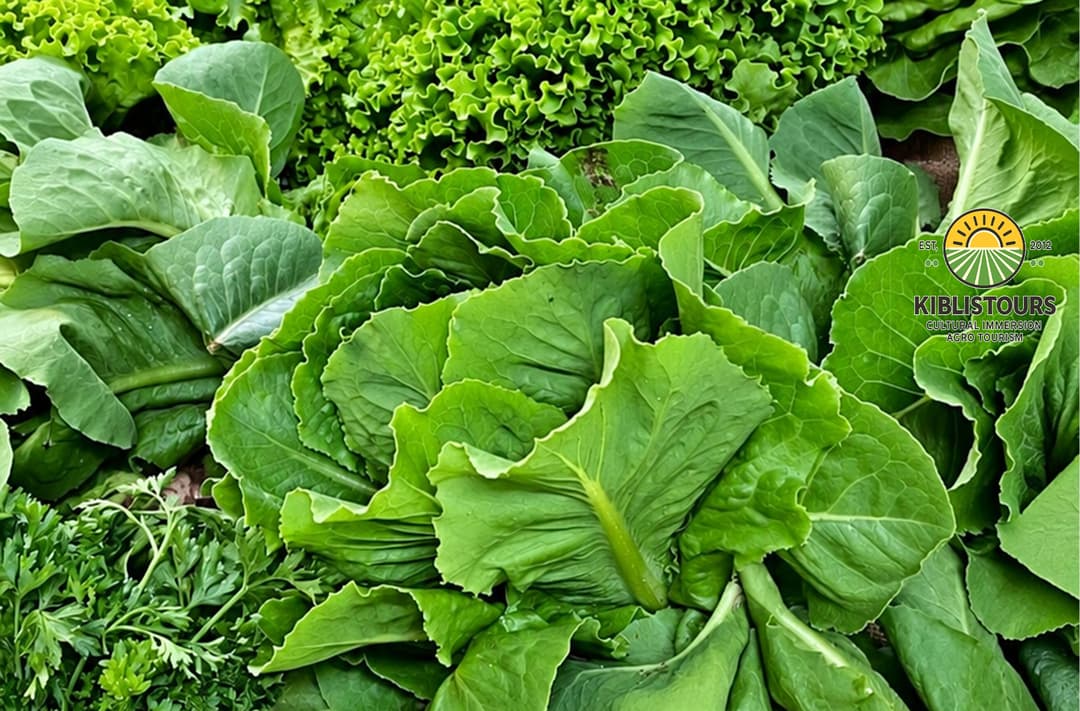
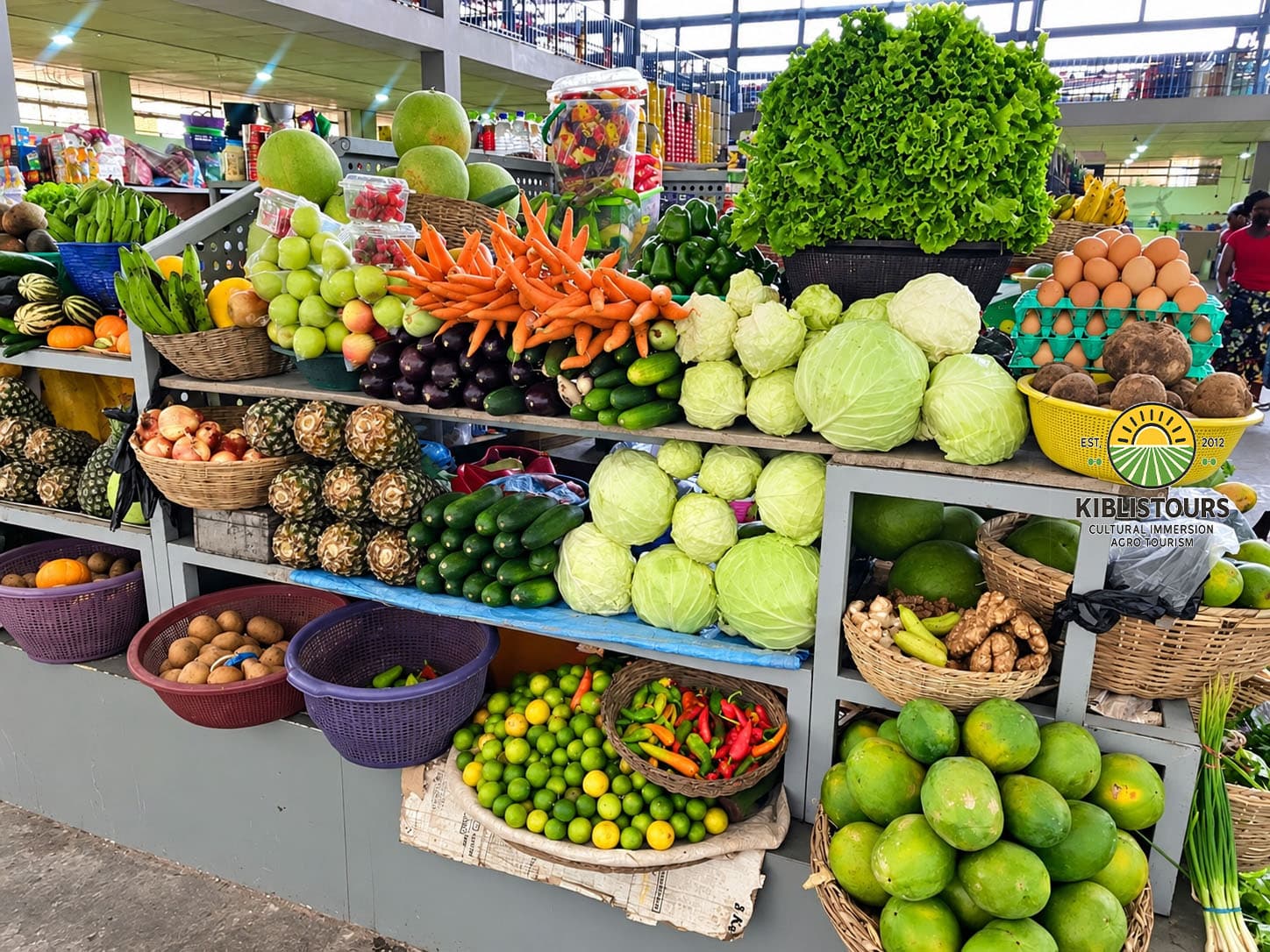
Visitors therefore discover more than simply how things are grown. They begin to understand how agriculture shapes food, landscapes, economic exchange, family life, and certain forms of cultural heritage.
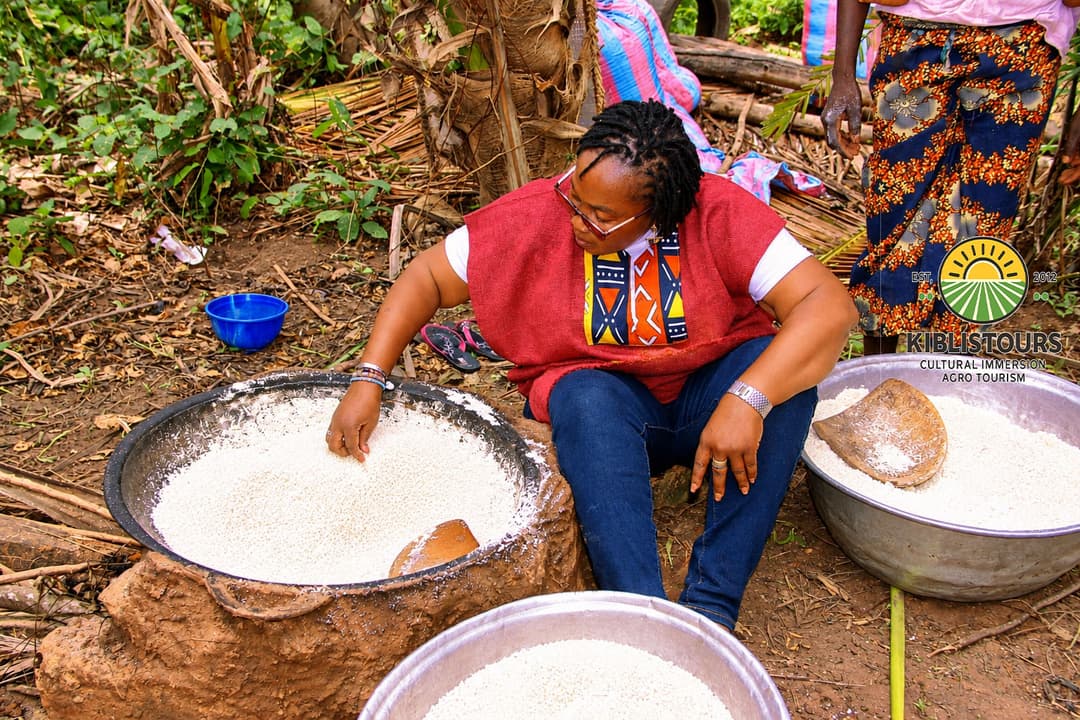
In sub-Saharan Africa, where agrifood systems remain essential to employment and rural economies, diversifying activities can also create new opportunities around farming, processing, tourism, and related services.
In Benin, the relationship between agriculture, culture, gastronomy, and everyday life offers particularly fertile ground for developing immersive experiences that respect local communities. (FAO. (s. d.). Youth in Agriculture. Bureau régional pour l’Afrique. Consulté le 19 octobre 2026.)
Africa therefore has exceptional potential for agritourism, which can contribute to sustainable tourism in Africa by showcasing agricultural know-how, local heritage and meaningful encounters with rural communities.
In Benin, a farm tells a story far beyond agriculture
Entering a Beninese farm often means opening several doors at once.
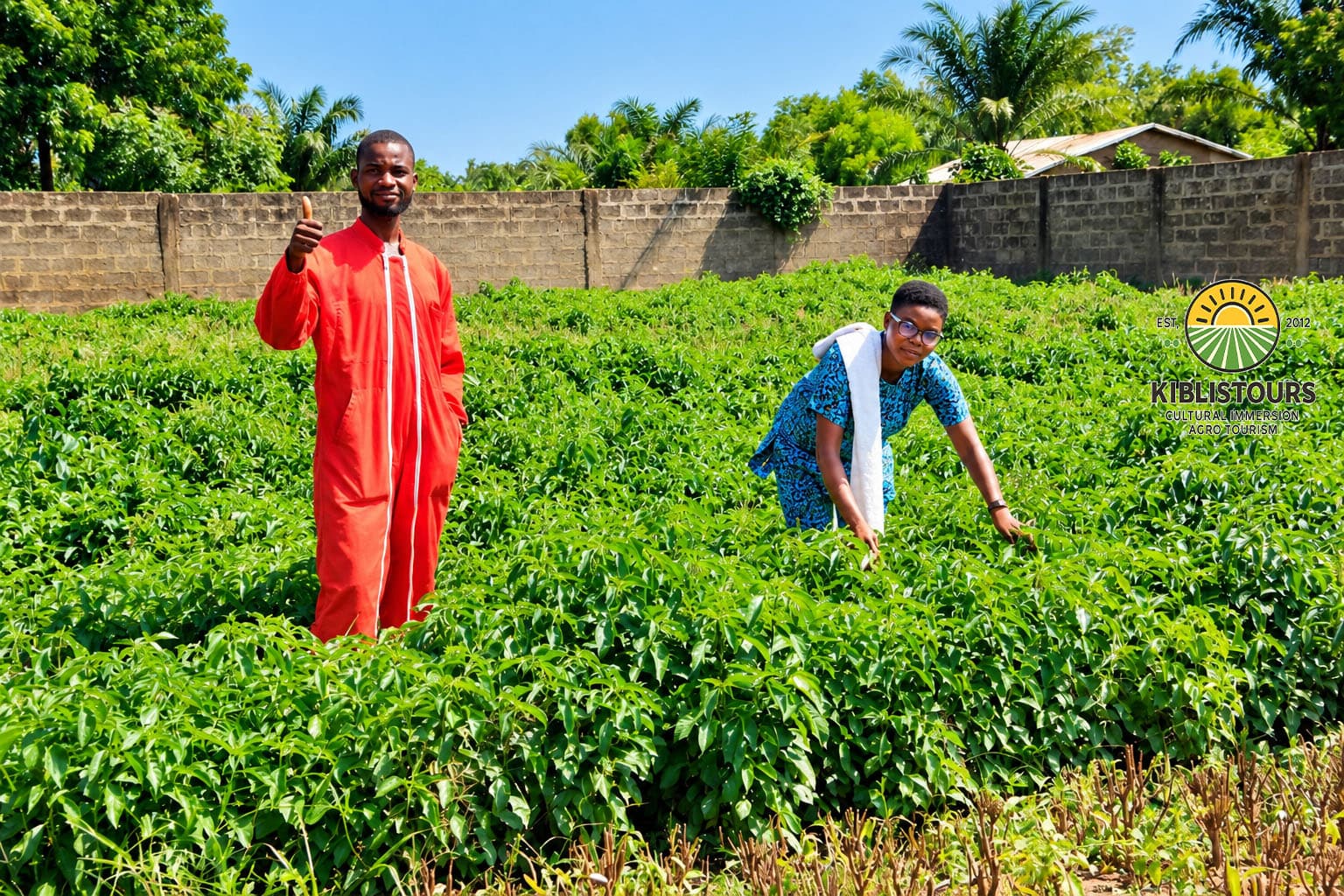
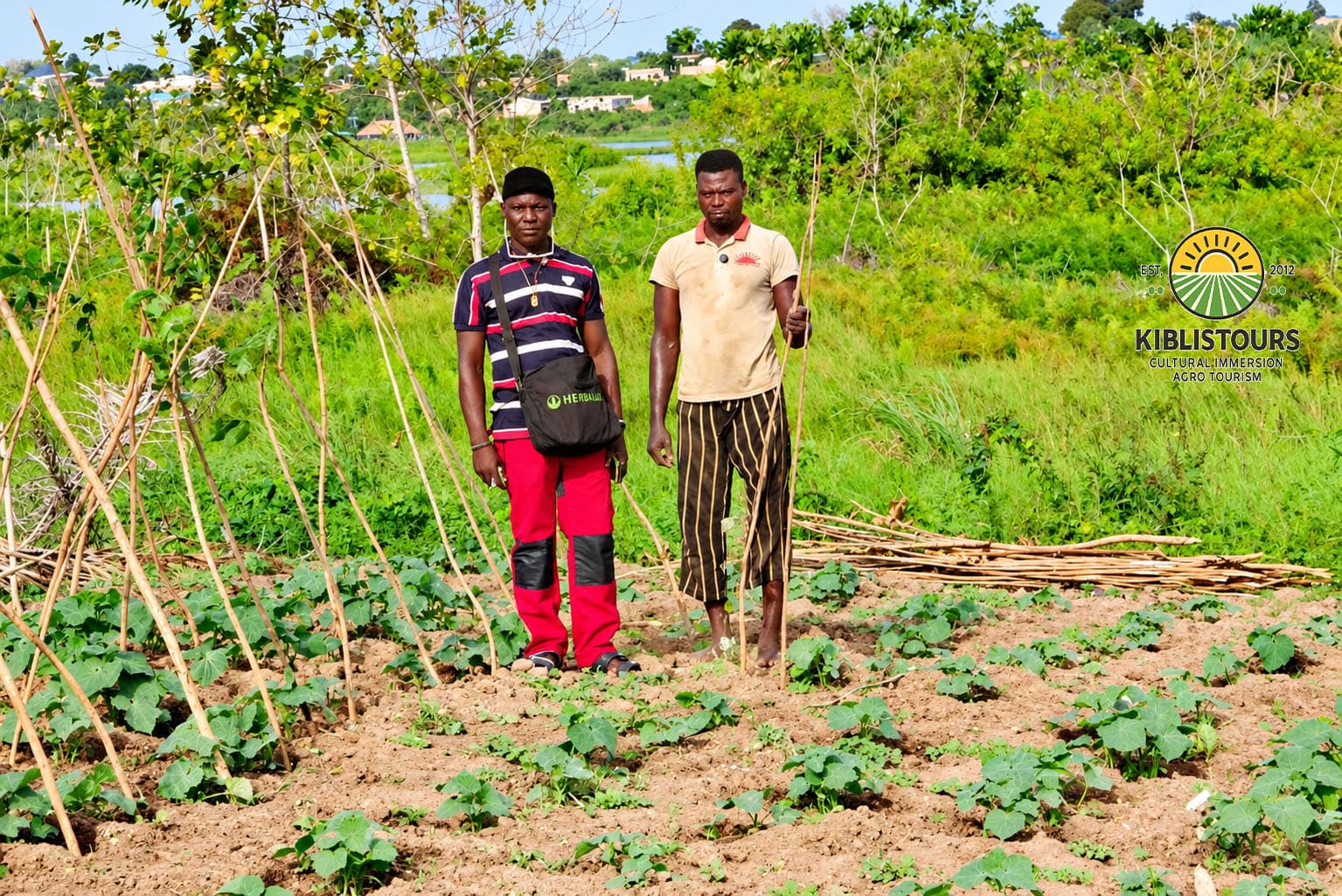
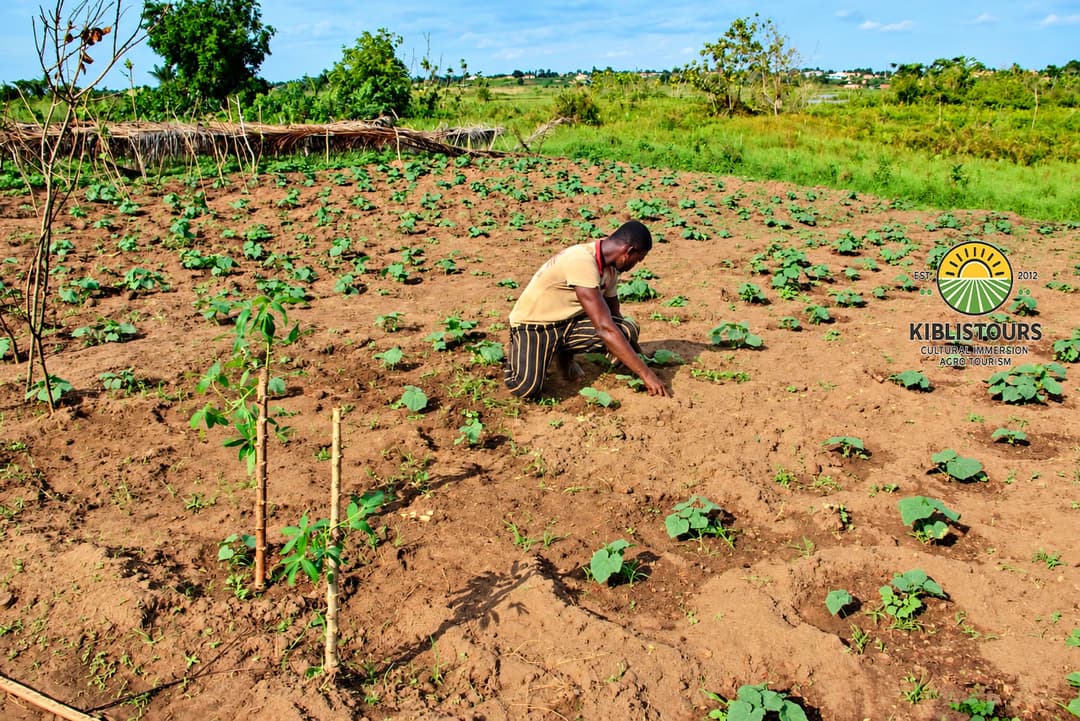
The first naturally leads to production. You discover the crops, the seasons, the tools, the methods used, and the challenges farmers must constantly adapt to.
A second door quickly appears: processing. How does a harvested product become something ready to eat? Why are certain steps carried out in a particular way? Which tools were used in the past ? What has changed, and which practices have stood the test of time ?
Then comes a third door : culture.
Behind many products are culinary, family, and social traditions. Food is not merely a raw material. It may be associated with a dish, a region, a season, a celebration, a family habit, or a childhood memory.
That is when the experience becomes much deeper than a simple technical visit.
Arthur : when observing is no longer enough
Arthur, a French traveler, particularly remembers the moment when he stopped simply watching and began participating. At the beginning of the experience, he carefully observed the farmer, listened to the explanations, and tried to understand movements that seemed almost effortless when performed by someone who had practiced them for years.
Then the farmer handed him a tool and invited him to try.
Arthur recalls:
“At first, I was just watching. Then the farmer handed me the tools and told me to try. That was when I really felt that I was discovering the farm from the inside.”
A few minutes were enough to change his perspective. Watching allows you to understand a movement intellectually; trying it yourself reveals the precision, experience, and patience it requires.
What had seemed simple from the outside suddenly revealed its technical complexity.
And this is precisely one of agritourism’s strengths : turning travellers from spectators into participants, even if only for a few moments. In Benin, this immersion takes many forms, shaped by crops, seasons and encounters. Here are 7 agritourism experiences that take you beyond the usual tourist routes, bringing you closer to the people who farm the land and pass on their traditional knowledge and skills.
Palm oil : understanding a product by meeting the people who make it
Take traditional palm oil as an example.
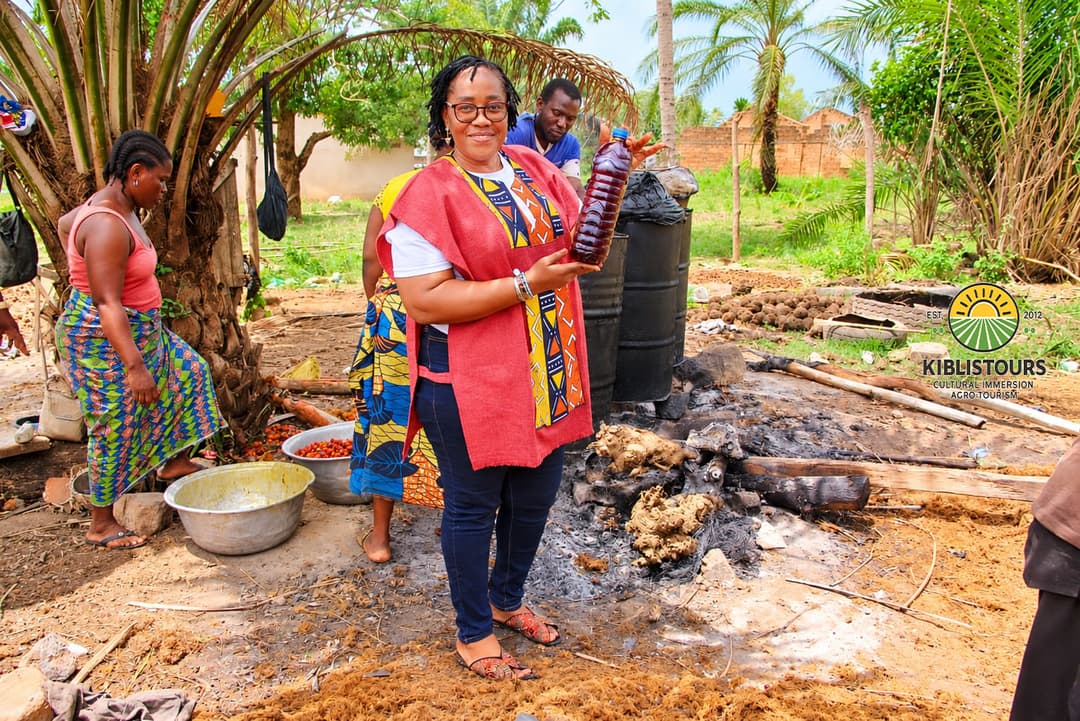
For many international visitors, palm oil is first and foremost a product encountered on supermarket shelves, food labels, or in environmental debates. Discovering it in its local context, however, reveals a much more complex reality.
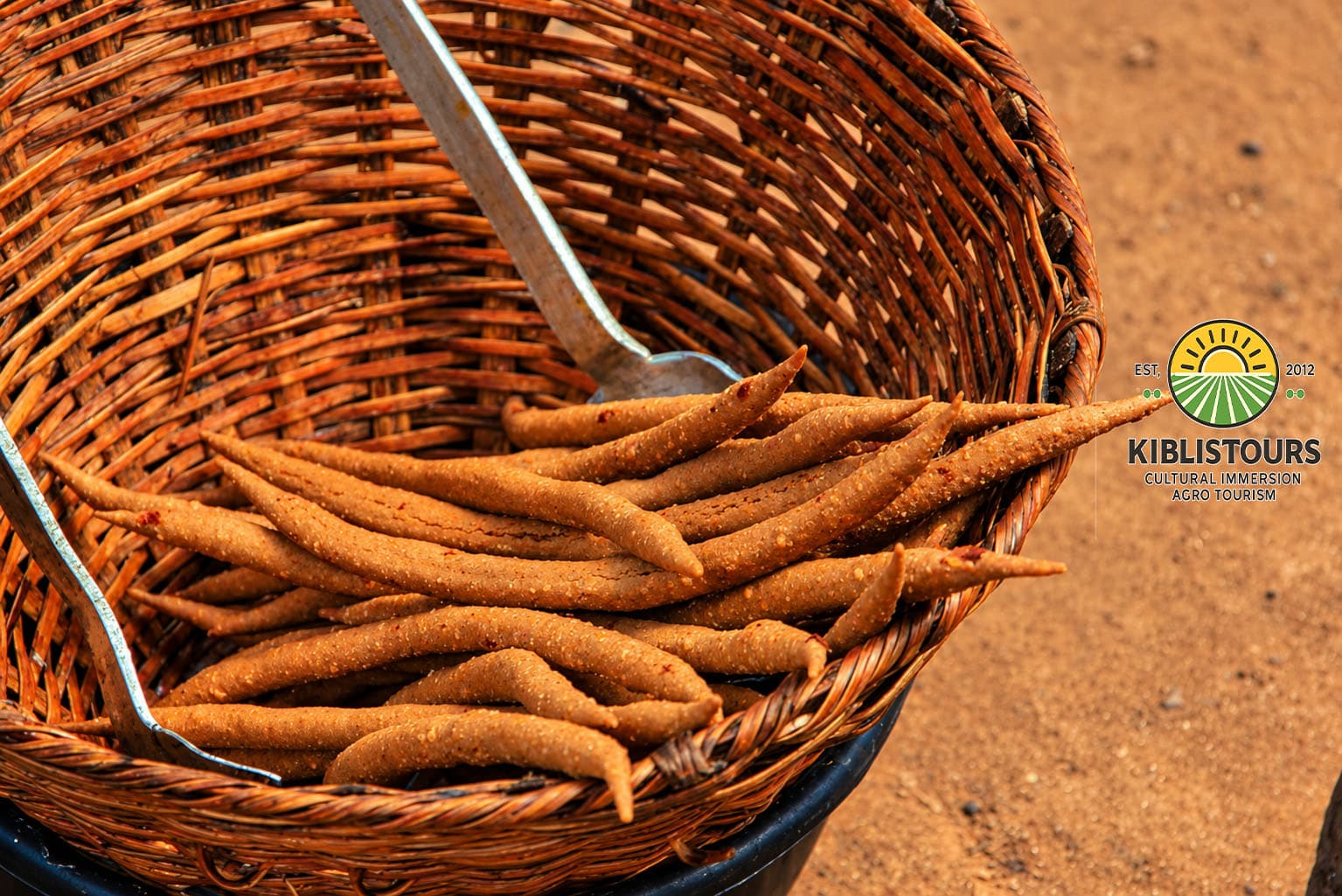
Before the oil can be obtained, the fruit must be harvested, transported, prepared, and processed while carefully controlling techniques, temperatures, quantities, and working time. At every stage, knowledge acquired through experience comes into play.
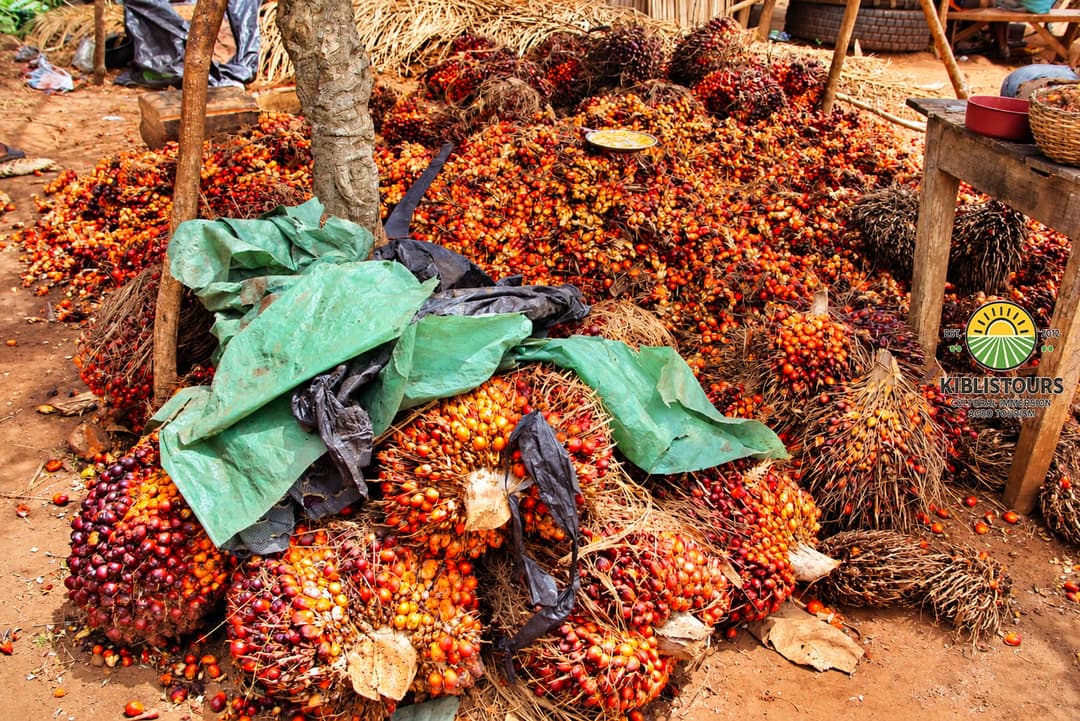
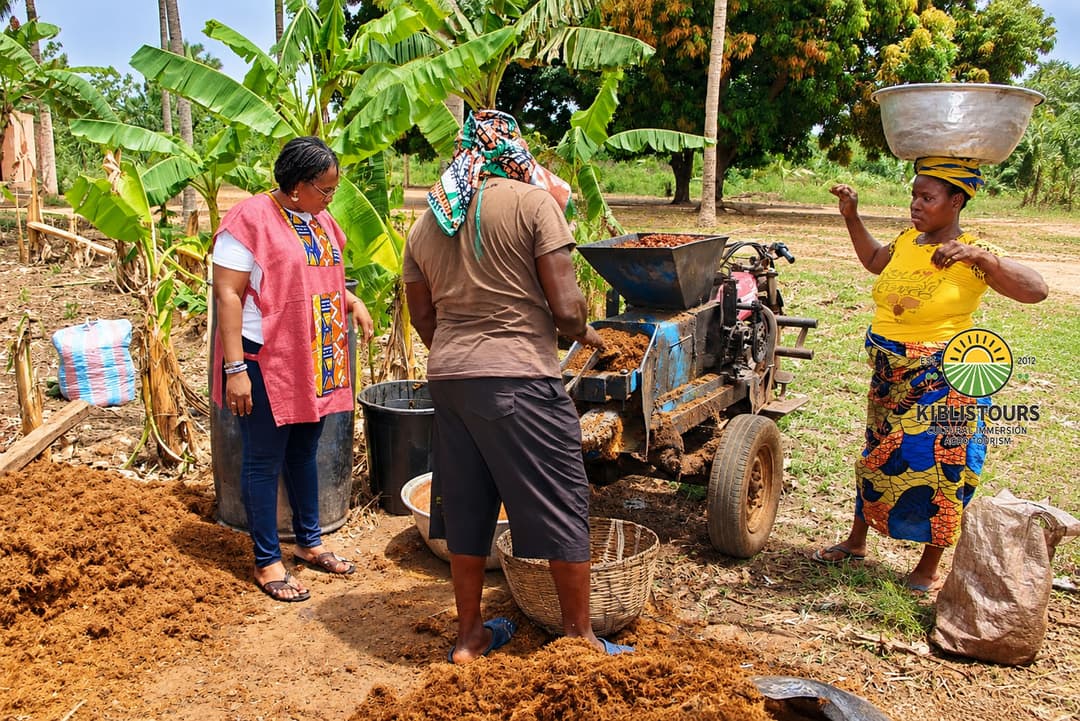
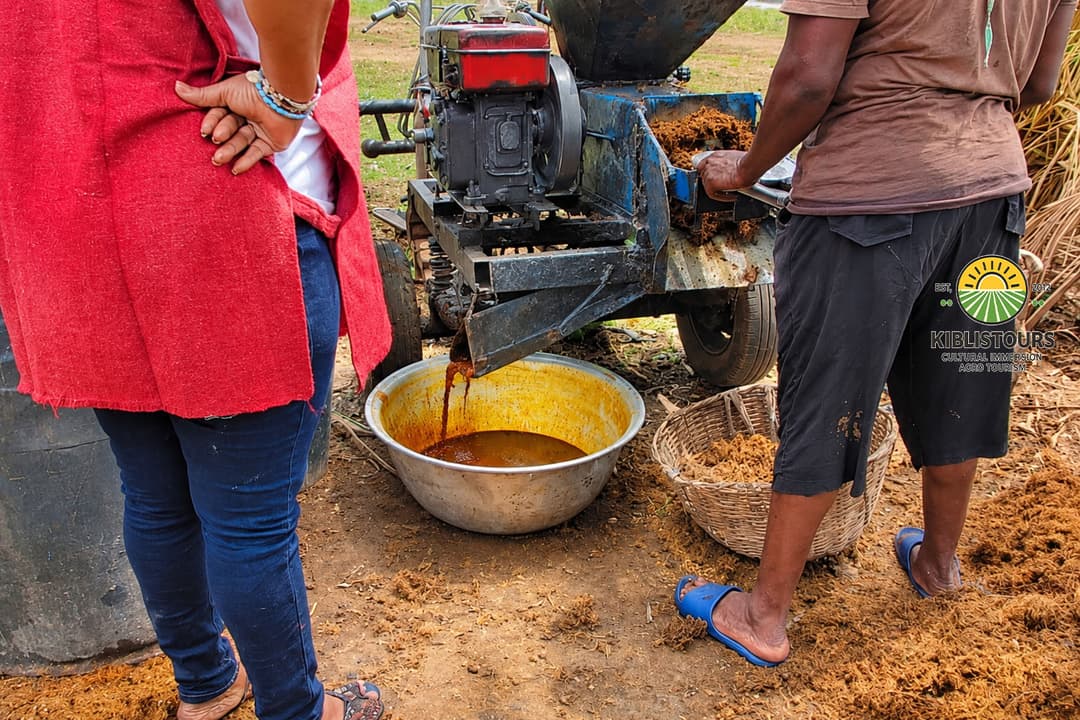
In communities where these methods have been practiced for generations, they represent genuine know-how that has been transmitted and adapted over time.
Watching this process changes the way you see the final product. You no longer see only a bottle. You begin to see the people, time, effort, and knowledge behind it.
Paul : The experience behind the gesture.
Paul, a local farmer, has known these techniques for years. To him, some movements have become almost instinctive. Yet when a visitor tries to reproduce them for the first time, their true complexity becomes immediately apparent.
Watching one such first attempt, Paul sums it up simply:
“Sometimes, one first attempt is enough to understand everything that observation alone cannot show.”
The visitor tries again. Paul corrects the position of their hands, demonstrates the movement once more, and encourages them.
This time, the gesture becomes more precise, and smiles appear.
The scene may seem insignificant, but it reveals something essential : behind a product we sometimes purchase without a second thought are years of practice, knowledge, and transmitted skills.
Agritourism helps put a face and a story back onto the work that comes before the finished product.
From plantation to plate : when a meal tells the story of a place
One of the most powerful moments of a rural immersion is often the meal, not because it must be spectacular, but because it connects everything discovered throughout the day.
You have seen certain products growing in their environment and may even have taken part in one stage of their preparation.
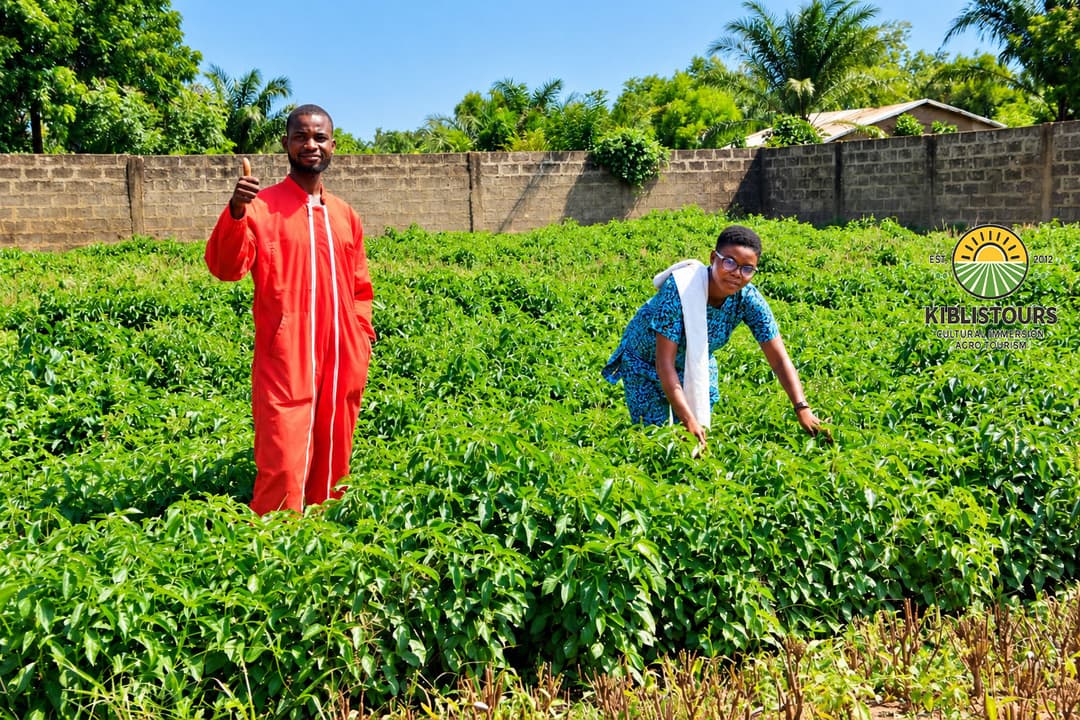
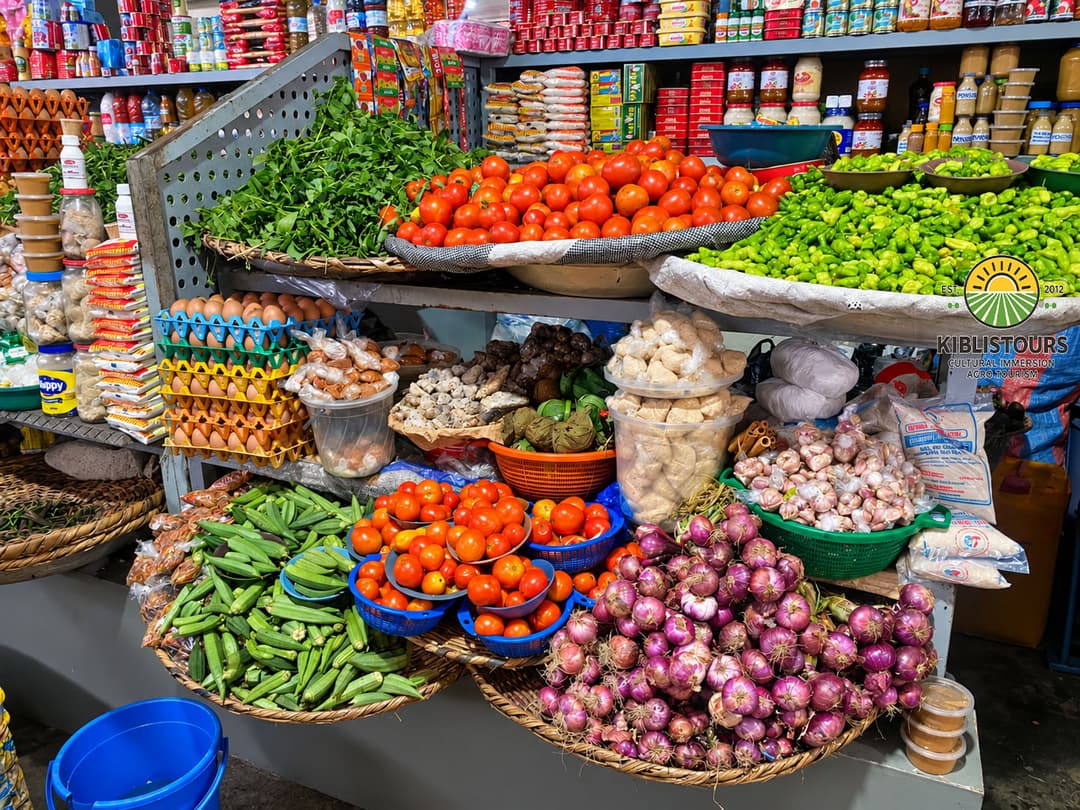
A few hours later, you find them on your plate.
The meal is no longer simply a break between activities. It becomes a continuation of the experience.
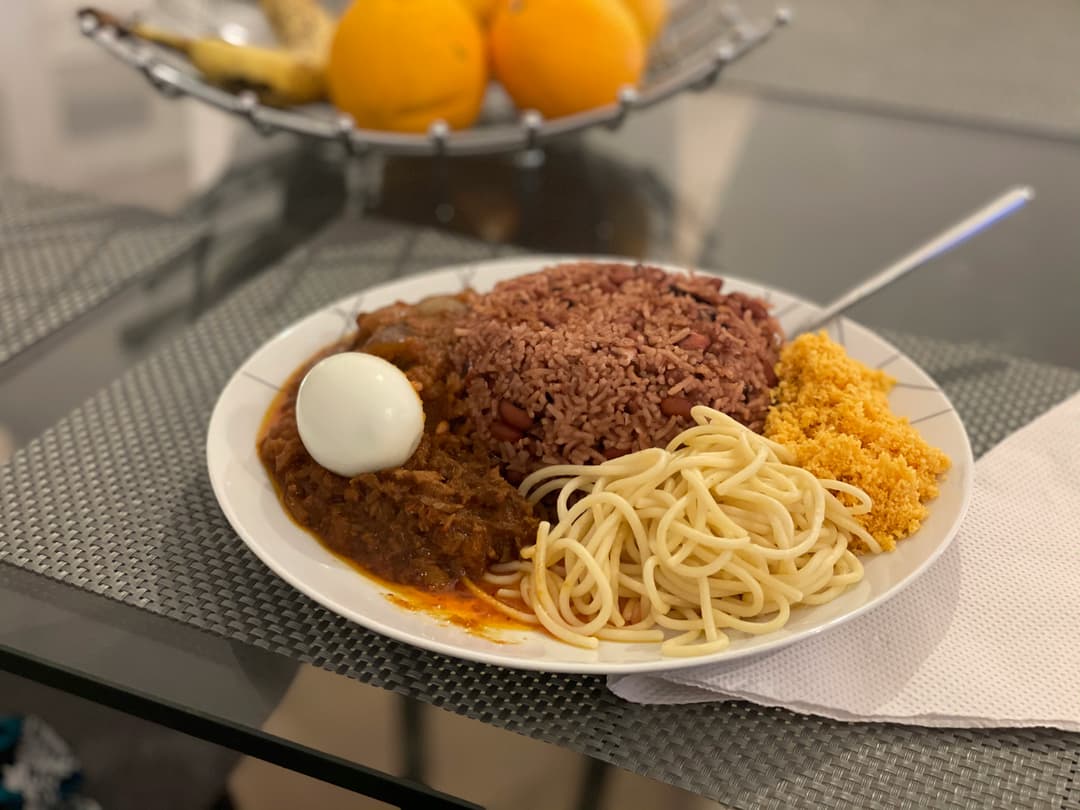
You begin asking how the dish is prepared, why certain ingredients are preferred, and how the recipe may vary from one family or region to another. Gradually, food becomes a gateway to agriculture, family history, and the territory itself. (OMT, 2019).
Théodore : Understanding the connection between the land and the plate.
For Théodore, a Greek traveler, one of the most memorable moments of the experience came during the meal.
Only a few hours earlier, he had discovered the crops and spoken with the people who produced them. At lunchtime, some of those same products were sitting in front of him.
He recalls:
“In the morning, I had discovered the crops. At lunchtime, some of those products were on my plate. I had never felt so clearly the connection between the land, the people who work it, and what we eat.”
The realization may seem simple, but it touches on something our modern consumption habits often make almost invisible : the origin of our food.
The meal then takes on another meaning. You no longer ask only whether the food tastes good. You want to know where the ingredients came from, how they were prepared, why the recipe exists here, and how it has been passed down.
And sometimes the most precious memories come from almost nothing: a visitor tries to pronounce the name of a local dish, gets it wrong, everyone laughs, and the conversation begins again.
Only a few hours after arriving, the traveler is no longer simply someone being guided through a farm.
They become a guest.
The moment when the tourist becomes a guest
Every immersive journey may contain a special moment that cannot be scheduled precisely.
After a few hours, questions become more spontaneous and exchanges less formal. Conversations are no longer only about the farm. People begin talking about family, work, the future, and sometimes the visitor’s own life.
This is often when the boundary between a tourism activity and a genuine human encounter begins to fade.
Victoria : When a visit becomes a meaningful encounter
Victoria, an American traveler, particularly remembers this almost imperceptible shift.
At first, the conversations naturally focused on agriculture, crops, and daily work. Then the subjects changed. They talked about family, projects, difficulties, the future, and eventually their own lives.
Victoria recalls :
“We were talking about agriculture, then family, then our lives. At one point, I completely forgot that I had come for a tourist visit. I was simply sitting with people who were sharing their daily life with me.”
Perhaps this is the precise moment when an immersion truly succeeds.
The program still exists, of course, but it stops taking up all the space. The encounter becomes more important than the activity itself.
This moment cannot be bought and cannot be guaranteed by an itinerary. It grows from the time given to people, from trust, and from the mutual curiosity that gradually turns two strangers into people genuinely speaking with one another.
True luxury can take another form
Agritourism also invites us to rethink what we call “luxury.”
In a high-end hotel, luxury may take the form of a suite, a private pool, highly personalized service, or sophisticated cuisine.
In a rural immersion, it can look completely different: the time someone is willing to give you, access to knowledge rarely presented on conventional tours, an unscripted conversation, a meal prepared with products from the land you have just explored, or simply the silence of a rural setting after several days spent in a busy city.
These two forms of luxury are not incompatible at all. A traveler may enjoy a very comfortable hotel room and, the next day, seek a deeply local experience.
The real question is therefore not whether to choose the hotel or the farm. It is rather how much room your journey leaves for human encounters.
Michael : the luxury of experiencing something rare
Michael, a British traveler, returned from his immersion with another thought: what if luxury were not defined only by comfort ?
He explains:
“I realized that luxury was not limited to a five-star hotel. It could also mean having the opportunity to experience a rare human moment that could never be reproduced in exactly the same way.”
This reflection does not oppose comfort and authenticity.
A traveler can perfectly enjoy an elegant suite, an excellent restaurant, or a private vehicle and still consider an unexpected conversation with a farmer one of the most valuable moments of the trip.
Some experiences possess a form of luxury that no hotel rating can measure : they are unique because they depend on the people, the moment, and the encounter.
And what stays in our memory the longest is not necessarily what cost the most.
Sometimes, it is what was impossible to reproduce exactly.
A day of agritourism in Benin : what might it look like ?
There is no universal program because genuine agricultural activity depends on the region, the season, the weather, farmers’ schedules, and the work actually taking place.
That is precisely what makes the experience interesting.
8 : 00 a.m. : gradually leaving the city behind
The journey itself already marks a transition. As the landscape changes, the guide can introduce the area, the main agricultural activities, the communities living there, and the essential rules to respect during the immersion.
9 : 30 a.m. : meeting the people who welcome you
Before any activity comes the introduction. Who is hosting you? What is the history of the farm? What does it produce? How long has it existed? Who works there?
These questions immediately help you understand that you are not entering an attraction, but a place where people live and work.
10 : 00 a.m. : discovering the crops
The farmer introduces the environment, and questions naturally arise : how long does this crop take to mature ? When is it harvested ? What are the main challenges ? How are the products sold ?
Behind every plant gradually appears a world of decisions, knowledge, and risk.
11 : 30 a.m. : trying in order to understand
When conditions allow, visitors may be invited to try simple activities under supervision.
The purpose is never to turn demanding agricultural work into a tourist game, but to help travelers understand through experience what observation alone cannot reveal.
1 : 00 p.m. : sharing a meal and conversation
Lunch provides a pause, but it is also one of the best moments to broaden the conversation : what is life like here? How do young people see the profession ? What has changed over the years? What are the main challenges ? How are products marketed?
The conversation becomes a real window into the territory.
3 : 00 p.m. : discovering processing methods and know-how
The afternoon may be devoted to transforming an agricultural product.
This sequence connects agriculture and food particularly well because it allows visitors to discover the often invisible steps between harvest and the product they already know.
5 : 00 p.m. : returning with a different perspective
The road back is the same, but your way of seeing it may have changed.
A field is no longer simply a stretch of green.
It now represents work, knowledge, decisions, risks, income, and families.
Contact us today to plan your visit and experience agritourism in Benin :
📱 WhatsApp : https://wa.me/0190721761
📧 Email : [email protected]
🌍 Website : www.kiblistours.com
Why small groups completely change the experience
Immersion depends on closeness, and that becomes difficult when too many visitors arrive at the same time.
Imagine fifty people surrounding a farmer: not everyone can ask questions, demonstrations become impersonal, and conversation gradually turns into a presentation.
With a smaller group, the dynamic is different.
Visitors can get closer, observe techniques, ask more questions, and participate more easily when conditions allow. Farmers, in turn, have more time to explain their work.
That is why Kiblistours favors small, human-scale groups for this type of immersion : the quality of the encounter must come before the number of visitors.
What agritourism can genuinely bring to communities
It is important to avoid an overly idealistic view: the presence of tourists in a community is not automatically beneficial.
The results depend on how the activity is designed, how residents are involved, how income is distributed, and whether local resources and ways of life are respected.
When it is properly organized, rural tourism can nevertheless help diversify income, create new activities, and strengthen market opportunities for producers.
The FAO and UN Tourism have highlighted that rural tourism can support the diversification of agricultural income, job creation, rural economies, and the preservation of culinary, cultural, and natural heritage. (FAO, 2020).
Scientific research also points in this direction while highlighting the challenges the sector may face.
A systematic review published in 2025, entitled Agritourism and Rural Livelihood Sustainability : A Systematic Literature Review, analyzed 1,330 publications from the Scopus database before identifying 220 relevant studies.
The authors notably found links between agritourism, income diversification, job creation, environmental conservation, and cultural heritage preservation. They also identified several barriers, including insufficient infrastructure, financial constraints, and certain regulatory obstacles. This nuance matters: agritourism has real potential, but that potential depends on the quality of its design and governance.
In practice, the benefits can extend beyond the farm itself. Depending on how the tour is organized, guides, cooks, artisans, drivers, processors, local accommodation providers, and neighboring farmers may all become part of the experience.
An additional source of income, not a forced change of profession
Tourism should not force a farmer to abandon agriculture and become a tourism entertainer.
The most coherent approach is to make tourism a complementary activity.
The farmer continues their profession and, when conditions are appropriate, welcomes visitors, shares the knowledge they wish to pass on, and may also sell certain products directly.
The objective is to enhance the value of agriculture rather than replace it.
Women and young people can also find new opportunities
The connections between agriculture and tourism can create opportunities in food processing, catering, crafts, guiding, marketing, and other services.
The FAO has highlighted agritourism’s potential to diversify income and create economic opportunities for rural women. It also pays particular attention to employment, training, and entrepreneurship opportunities for young people within agrifood systems and rural economies. (FAO et OMT, 2023 ; FAO, s. d.).
Here again, the benefits are not automatic.
They depend on communities genuinely taking part in decisions and receiving a meaningful share of the value created.
Preserving traditions without turning them into a spectacle
Visitors’ interest can strengthen recognition of certain forms of knowledge and craftsmanship.
Imagine a farmer repeating every day a gesture learned from their father. To them, it has become ordinary. Then a traveler asks who taught them.
The answer reveals a family story and, behind that story, several generations of transmission.
That is the power of intangible heritage.
It does not exist only in museums. It lives in techniques, recipes, words, knowledge, and ways of working.
But preserving a tradition does not mean freezing it in time.
A community must remain free to allow its practices to evolve.
Living heritage is not a static backdrop created for tourists.
Responsible travel : visitors also have responsibilities
A responsible experience does not depend only on the agency or the farmer. The traveler’s behavior matters greatly.
Ask before taking photographs
A scene may look beautiful, someone may be wearing fascinating clothing, and a child may smile.
None of this automatically means you have permission to take a photograph.
Asking takes only a few seconds and demonstrates essential respect for the people you meet.
Do not turn hardship into a spectacle
A rural immersion should never become a form of voyeurism.
Communities are not attractions, and possible economic difficulties never define an entire person or place.
The traveler’s role is to meet, understand, and respect, not to collect images designed to provoke pity on social media.
Accept the rhythm of nature and agriculture
You may want to take part in a harvest, but it is not harvest season. You may wish to see a particular processing activity, but it is not happening that day.
That is normal.
A real farm does not operate according to a permanent tourism schedule.
This unpredictability is precisely one sign of its authenticity.
Mistakes that can spoil an immersive experience
The first is trying to see everything too quickly.
Immersion takes time and loses its meaning when visitors check their watches every ten minutes because five other activities are waiting.
The second is experiencing the entire visit through a phone screen.
Of course photographs have their place, but some moments deserve simply to be lived.
The third is constantly comparing local infrastructure, habits, or techniques with those of your own country.
Comparison can enrich a conversation when it comes from curiosity. It becomes problematic when it is used to establish a permanent hierarchy.
Travel also means accepting that the world does not work the same way everywhere.
Agritourism with children : an open-air classroom
For families, a farm can become an extraordinary learning environment.
Children often encounter food only once it has already been packaged or processed.
On a farm, they discover where it comes from and learn that fruit follows a growing cycle, certain crops take time, weather matters, and producing food requires labor and knowledge.
Most importantly, they can ask questions directly to the people who grow, raise, or process food.
The experience naturally encourages curiosity and helps children better understand the links between agriculture, food, the environment, and everyday life.
Naturally, not every activity is suitable for every age. The program should therefore be adapted, and the instructions of guides and farmers must be respected.
And what about comfort ?
Choosing a rural experience does not mean giving up comfort.
You can stay in an excellent hotel and devote one day to an agricultural immersion. You can choose private air-conditioned transport while still seeking authentic local encounters. You can enjoy high-end accommodation and then, the next day, share a lunch prepared with locally sourced ingredients.
Authenticity does not require discomfort.
What matters is that the experience remains connected to the territory and the people who live there.
How to prepare for your agricultural immersion in Benin
Wear appropriate clothing
Choose lightweight, comfortable clothing suited to the climate while respecting local customs. Depending on the terrain, closed shoes or walking shoes may be preferable.
Protect yourself from the sun and stay hydrated
A hat or cap, sunscreen, and enough water are especially useful during outdoor activities.
Follow safety instructions
A farm remains a working environment.
Certain tools, animals, or areas may require special precautions.
Always follow the instructions given by the guide and farmers.
Ask questions
Ask how, why, since when, what has changed, what is difficult, and what makes the farmer proud of their profession.
A visit becomes truly enriching when the traveler stops waiting to be told everything and begins showing genuine curiosity.
Why Kiblistours wants to develop this different way of discovering Benin
At Kiblistours, we believe a country can never be reduced to its monuments.
Heritage also exists in gestures, recipes, fields, markets, family stories, transmitted techniques, and the way communities work, eat, welcome visitors, and share their knowledge.
Our ambition is therefore to design experiences in which travelers do not simply pass through Benin : they take the time to understand it.
This requires a different relationship with partner communities.
A farmer is not part of the scenery.
An artisan is not an extra in a performance.
A family is not an attraction.
They are people, partners, and holders of knowledge.
Authenticity cannot simply be declared
The word “authentic” has become extremely common in tourism. Yet authenticity does not come from a slogan.
It appears when a genuine relationship exists between those who organize the experience and those who host it; when residents can decide what they wish to share; when certain activities change because the season requires it; when the program leaves enough time for conversation; and when visitors understand that they are entering a real place rather than a setting created especially for them.
That is the kind of authenticity Kiblistours wants to defend. Click here to discover the hidden secrets of rural life in Benin.
Why a single day can change the way you travel
You do not need to spend several weeks in a community to experience something different.
One well-designed day can be enough to change your perspective.
In the morning, you arrive with assumptions.
By evening, you leave with faces in mind.
You no longer think simply about “Beninese agriculture,” but about the person who showed you their plantation. You no longer think only about “palm oil,” but about the process you observed and the explanations you received. You no longer think of “local cuisine” as a tourism category, but as a particular dish, its aroma, and the conversation that accompanied it.
Travel becomes personal.
And that may be the best measure of a successful immersion.
FAQ : Everything You Need to Know Before an Agritourism Experience in Benin
What is agritourism ?
Agritourism is a form of tourism directly connected to agriculture and rural life. It allows visitors to discover farms, crops, processing methods, and traditional knowledge while encouraging meaningful encounters with producers.
Do I need any agricultural knowledge ?
No. The experience is specifically designed to allow people with little knowledge of agriculture to discover this world gradually.
Can visitors actually take part in activities?
It depends on the season, the farm, and the work taking place. When conditions allow, certain simple tasks may be offered under the supervision of farmers and the guide.
Is the experience suitable for children ?
Some immersions are very suitable for families. Activities must nevertheless be adapted to the children’s ages, and safety instructions must be followed.
Can I take photographs ?
Yes, when conditions allow, but always with respect for the people present. Ask permission before photographing someone, especially in private or family spaces.
Are the visits guided ?
Experiences offered by Kiblistours are accompanied in order to facilitate understanding of the territory, communication with communities, and respect for local guidelines.
Can a private experience be arranged ?
Yes. Depending on the selected offer and the availability of local partners, a private or customized experience can be arranged.
Do I need to be physically fit ?
Most experiences do not require exceptional physical fitness. Some may nevertheless involve walking on natural terrain. Specific conditions should therefore be checked before booking.
Are meals included ?
It depends on the chosen package. When a local meal is part of the program, it generally becomes an important opportunity to discover the area’s products and culinary traditions.
Can I buy directly from producers ?
When products are available for sale, buying directly from producers can extend the experience while supporting local economic benefits.
What is the best time of year for an agricultural immersion in Benin ?
There is no single best period because activities vary according to crops, regions, and seasons. Some periods correspond to harvests, others to planting or particular processing activities.
The program should therefore be adapted to your travel dates.
Can international travelers communicate with local communities ?
Yes. The guide facilitates communication when language becomes a barrier. Demonstrations, gestures, and mutual curiosity also help create connections beyond linguistic differences.
Does agritourism really benefit communities ?
It can benefit communities when it is organized with their participation, when economic benefits remain local, and when their choices are respected.
International organizations and available research identify income diversification, employment, product promotion, and the preservation of certain forms of heritage among the potential benefits associated with sustainable rural tourism.
Do not simply visit Benin. Meet it.
Kiblistours - Experience Authentic Africa.
Contact us today to organize your visit :
📱 WhatsApp : https://wa.me/0190721761
📧 Email : [email protected]
🌍 Website : www.kiblistours.com